talk-data.com talk-data.com

Topic

Delta

Delta Lake

data_lake acid_transactions time_travel file_format storage

347

tagged

Activity Trend

117 peak/qtr
2020-Q1 2026-Q1

Activities

347 activities · Newest first

Lakehouse Federation: Access and Governance of External Data Sources from Unity Catalog

Are you tired of spending time and money moving data across multiple sources and platforms to access the right data at the right time? Join our session and discover Databricks new Lakehouse Federation feature, which allows you to access, query, and govern your data in place without leaving the Lakehouse. Our experts will demonstrate how you can leverage the latest enhancements in Unity Catalog, including query federation, Hive interface, and Delta Sharing, to discover and govern all your data in one place, regardless of where it lives.

Talk by: Can Efeoglu and Todd Greenstein

Connect with us: Website: https://databricks.com Twitter: https://twitter.com/databricks LinkedIn: https://www.linkedin.com/company/databricks Instagram: https://www.instagram.com/databricksinc Facebook: https://www.facebook.com/databricksinc

Using DMS and DLT for Change Data Capture

Bringing in Relational Data Store (RDS) data into your data lake is a critical and important process to facilitate use cases. By leveraging AWS Database Migration Services (DMS) and Databricks Delta Live Tables (DLT) we can simplify change data capture from your RDS. In this talk, we will be breaking down this complex process by discussing the fundamentals and best practices. There will also be a demo where we bring this all together.

Talk by: Neil Patel and Ganesh Chand

Connect with us: Website: https://databricks.com Twitter: https://twitter.com/databricks LinkedIn: https://www.linkedin.com/company/databricks Instagram: https://www.instagram.com/databricksinc Facebook: https://www.facebook.com/databricksinc

Databricks Asset Bundles: A Standard, Unified Approach to Deploying Data Products on Databricks

In this session, we will introduce Databricks Asset Bundles, provide a demonstration of how they work for a variety of data products, and how to fit them into an overall CICD strategy for the well-architected Lakehouse.

Data teams produce a variety of assets; datasets, reports and dashboards, ML models, and business applications. These assets depend upon code (notebooks, repos, queries, pipelines), infrastructure (clusters, SQL warehouses, serverless endpoints), and supporting services/resources like Unity Catalog, Databricks Workflows, and DBSQL dashboards. Today, each organization must figure out a deployment strategy for the variety of data products they build on Databricks as there is no consistent way to describe the infrastructure and services associated with project code.

Databricks Asset Bundles is a new capability on Databricks that standardizes and unifies the deployment strategy for all data products developed on the platform. It allows developers to describe the infrastructure and resources of their project through a YAML configuration file, regardless of whether they are producing a report, dashboard, online ML model, or Delta Live Tables pipeline. Behind the scenes, these configuration files use Terraform to manage resources in a Databricks workspace, but knowledge of Terraform is not required to use Databricks Asset Bundles.

Talk by: Rafi Kurlansik and Pieter Noordhuis

Connect with us: Website: https://databricks.com Twitter: https://twitter.com/databricks LinkedIn: https://www.linkedin.com/company/databricks Instagram: https://www.instagram.com/databricksinc Facebook: https://www.facebook.com/databricksinc

Introduction to Data Engineering on the Lakehouse

Data engineering is a requirement for any data, analytics or AI workload. With the increased complexity of data pipelines, the need to handle real-time streaming data and the challenges of orchestrating reliable pipelines, data engineers require the best tools to help them achieve their goals. The Databricks Lakehouse Platform offers a unified platform to ingest, transform and orchestrate data and simplifies the task of building reliable ETL pipelines.

This session will provide an introductory overview of the end-to-end data engineering capabilities of the platform, including Delta Live Tables and Databricks Workflows. We’ll see how these capabilities come together to provide a complete data engineering solution and how they are used in the real world by organizations leveraging the lakehouse turning raw data into insights.

Talk by: Jibreal Hamenoo and Ori Zohar

Connect with us: Website: https://databricks.com Twitter: https://twitter.com/databricks LinkedIn: https://www.linkedin.com/company/databricks Instagram: https://www.instagram.com/databricksinc Facebook: https://www.facebook.com/databricksinc

Delta Live Tables A to Z: Best Practices for Modern Data Pipelines

Join Databricks' Distinguished Principal Engineer Michael Armbrust for a technical deep dive into how Delta Live Tables (DLT) reduces the complexity of data transformation and ETL. Learn what’s new; what’s coming; and how to easily master the ins-and-outs of DLT.

Michael will describe and demonstrate:

  • What’s new in Delta Live Tables (DLT) - Enzyme, Enhanced Autoscaling, and more
  • How to easily create and maintain your DLT pipelines
  • How to monitor pipeline operations
  • How to optimize data for analytics and ML
  • Sneak Peek into the DLT roadmap

Talk by: Michael Armbrust

Connect with us: Website: https://databricks.com Twitter: https://twitter.com/databricks LinkedIn: https://www.linkedin.com/company/databricks Instagram: https://www.instagram.com/databricksinc Facebook: https://www.facebook.com/databricksinc

Live from the Lakehouse: Lakehouse observability, and Delta Lake. With Michael Milirud and Denny Lee

Hear from two guests. First, Michael Milirud (Sr Manager, Product Management, Databricks) on Lakehouse monitoring and observability. Second guest, Denny Lee (Sr Staff Developer Advocate, Databricks), discusses Delta Lake. Hosted by Holly Smith (Sr Resident Solutions Architect, Databricks) and Jimmy Obeyeni (Strategic Account Executive, Databricks)

Connect with us: Website: https://databricks.com Twitter: https://twitter.com/databricks LinkedIn: https://www.linkedin.com/company/databricks Instagram: https://www.instagram.com/databricksinc Facebook: https://www.facebook.com/databricksinc

Live from the Lakehouse: Machine Learning, LLM, Delta Lake, and data engineering

Hear from two guests. First, Caryl Yuhas (Global Practice Lead, Solutions Architect, Databricks) on Machine Learning & LLMs. Second guest, Jason Pohl (Sr. Director, Field Engineering), discusses Delta Lake and data engineering. Hosted by Holly Smith (Sr Resident Solutions Architect, Databricks) and Jimmy Obeyeni (Strategic Account Executive, Databricks)

Connect with us: Website: https://databricks.com Twitter: https://twitter.com/databricks LinkedIn: https://www.linkedin.com/company/databricks Instagram: https://www.instagram.com/databricksinc Facebook: https://www.facebook.com/databricksinc

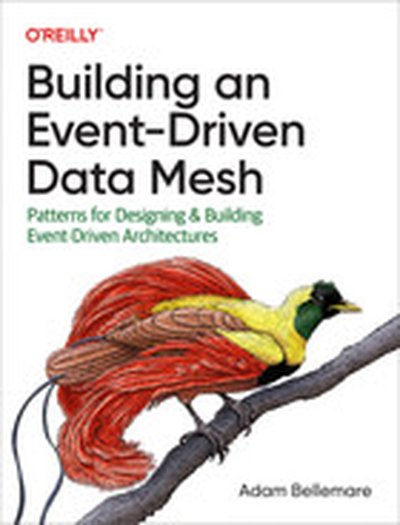
Building an Event-Driven Data Mesh

The exponential growth of data combined with the need to derive real-time business value is a critical issue today. An event-driven data mesh can power real-time operational and analytical workloads, all from a single set of data product streams. With practical real-world examples, this book shows you how to successfully design and build an event-driven data mesh. Building an Event-Driven Data Mesh provides: Practical tips for iteratively building your own event-driven data mesh, including hurdles you'll experience, possible solutions, and how to obtain real value as soon as possible Solutions to pitfalls you may encounter when moving your organization from monoliths to event-driven architectures A clear understanding of how events relate to systems and other events in the same stream and across streams A realistic look at event modeling options, such as fact, delta, and command type events, including how these choices will impact your data products Best practices for handling events at scale, privacy, and regulatory compliance Advice on asynchronous communication and handling eventual consistency

Summary

Data is a team sport, but it's often difficult for everyone on the team to participate. For a long time the mantra of data tools has been "by developers, for developers", which automatically excludes a large portion of the business members who play a crucial role in the success of any data project. Quilt Data was created as an answer to make it easier for everyone to contribute to the data being used by an organization and collaborate on its application. In this episode Aneesh Karve shares the journey that Quilt has taken to provide an approachable interface for working with versioned data in S3 that empowers everyone to collaborate.

Announcements

Hello and welcome to the Data Engineering Podcast, the show about modern data management Truly leveraging and benefiting from streaming data is hard - the data stack is costly, difficult to use and still has limitations. Materialize breaks down those barriers with a true cloud-native streaming database - not simply a database that connects to streaming systems. With a PostgreSQL-compatible interface, you can now work with real-time data using ANSI SQL including the ability to perform multi-way complex joins, which support stream-to-stream, stream-to-table, table-to-table, and more, all in standard SQL. Go to dataengineeringpodcast.com/materialize today and sign up for early access to get started. If you like what you see and want to help make it better, they're hiring across all functions! Your host is Tobias Macey and today I'm interviewing Aneesh Karve about how Quilt Data helps you bring order to your chaotic data in S3 with transactional versioning and data discovery built in

Interview

Introduction How did you get involved in the area of data management? Can you describe what Quilt is and the story behind it?

How have the goals and features of the Quilt platform changed since I spoke with Kevin in June of 2018?

What are the main problems that users are trying to solve when they find Quilt?

What are some of the alternative approaches/products that they are coming from?

How does Quilt compare with options such as LakeFS, Unstruk, Pachyderm, etc.? Can you describe how Quilt is implemented? What are the types of tools and systems that Quilt gets integrated with?

How do you manage the tension between supporting the lowest common denominator, while providing options for more advanced capabilities?

What is a typical workflow for a team that is using Quilt to manage their data? What are the most interesting, innovative, or unexpected ways that you have seen Quilt used? What are the most interesting, unexpected, or challenging lessons that you have learned while working on Quilt? When is Quilt the wrong choice? What do you have planned for the future of Quilt?

Contact Info

LinkedIn @akarve on Twitter

Parting Question

From your perspective, what is the biggest gap in the tooling or technology for data management today?

Closing Announcements

Thank you for listening! Don't forget to check out our other shows. Podcast.init covers the Python language, its community, and the innovative ways it is being used. The Machine Learning Podcast helps you go from idea to production with machine learning. Visit the site to subscribe to the show, sign up for the mailing list, and read the show notes. If you've learned something or tried out a project from the show then tell us about it! Email [email protected]) with your story. To help other people find the show please leave a review on Apple Podcasts and tell your friends and co-workers

Links

Quilt Data

Podcast Episode

UW Madison Docker Swarm Kaggle open.quiltdata.com FinOS Perspective LakeFS

Podcast Episode

Pachyderm

Podcast Episode

Unstruk

Podcast Episode

Parquet Avro ORC Cloudformation Troposphere CDK == Cloud Development Kit Shadow IT

Podcast Episode

Delta Lake

Podcast Episode

Apache Iceberg

Podcast Episode

Datasette Frictionless DVC

Podcast.init Episode

The in

podcast_episode
by Justin Fletcher (United States Space Force Space Systems Command)

We have had many guests on the show to discuss how different industries leverage data science to transform the way they do business, but arguably one of the most important applications of data science is in space research and technology.

Justin Fletcher joins the show to talk about how the US Space Force is using deep learning with telescope data to monitor satellites, potentially lethal space debris, and identify and prevent catastrophic collisions. Justin is responsible for artificial intelligence and autonomy technology development within the Space Domain Awareness Delta of the United States Space Force Space Systems Command. With over a decade of experience spanning space domain awareness, high performance computing, and air combat effectiveness, Justin is a recognized leader in defense applications of artificial intelligence and autonomy.

In this episode, we talk about how the US Space Force utilizes deep learning, how the US Space Force publishes its research and data to find high-quality peer review, the must-have skills aspiring practitioners need in order to pursue a career in Defense, and much more.

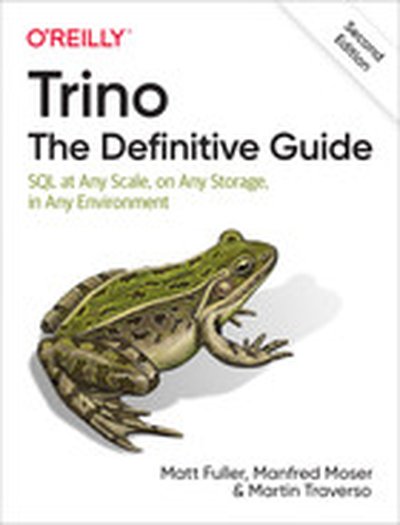
Trino: The Definitive Guide, 2nd Edition

Perform fast interactive analytics against different data sources using the Trino high-performance distributed SQL query engine. In the second edition of this practical guide, you'll learn how to conduct analytics on data where it lives, whether it's a data lake using Hive, a modern lakehouse with Iceberg or Delta Lake, a different system like Cassandra, Kafka, or SingleStore, or a relational database like PostgreSQL or Oracle. Analysts, software engineers, and production engineers learn how to manage, use, and even develop with Trino and make it a critical part of their data platform. Authors Matt Fuller, Manfred Moser, and Martin Traverso show you how a single Trino query can combine data from multiple sources to allow for analytics across your entire organization. Explore Trino's use cases, and learn about tools that help you connect to Trino for querying and processing huge amounts of data Learn Trino's internal workings, including how to connect to and query data sources with support for SQL statements, operators, functions, and more Deploy and secure Trino at scale, monitor workloads, tune queries, and connect more applications Learn how other organizations apply Trino successfully

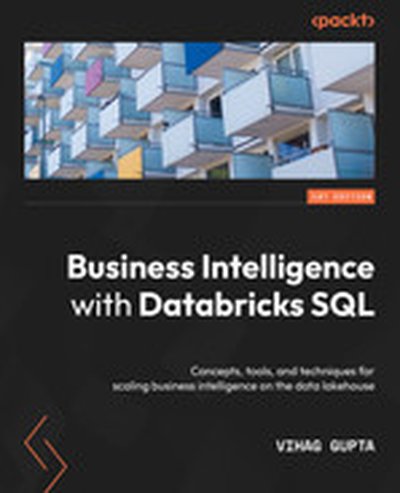
Business Intelligence with Databricks SQL

Discover the power of business intelligence through Databricks SQL. This comprehensive guide explores the features and tools of the Databricks Lakehouse Platform, emphasizing how it leverages data lakes and warehouses for scalable analytics. You'll gain hands-on experience with Databricks SQL, enabling you to manage data efficiently and implement cutting-edge analytical solutions. What this Book will help me do Comprehend the core features of Databricks SQL and its role in the Lakehouse architecture. Master the use of Databricks SQL for conducting scalable and efficient data queries. Implement data management techniques, including security and cataloging, with Databricks. Optimize data performance using Delta Lake and Photon technologies with Databricks SQL. Compose advanced SQL scripts for robust data ingestion and analytics workflows. Author(s) Vihag Gupta, acclaimed data engineer and BI expert, brings a wealth of experience in large-scale data analytics to this work. With a career deeply rooted in cutting-edge data warehousing technologies, Vihag combines expertise with an approachable teaching style. This book reflects his commitment to empowering data professionals with tools for next-gen analytics. Who is it for? Ideal for data engineers, business intelligence analysts, and warehouse administrators aiming to enhance their practice with Databricks SQL. This book suits those with fundamental knowledge of SQL and data platforms seeking to adopt Lakehouse methodologies. Whether a novice to Databricks or looking to master advanced features, this guide will support professional growth.

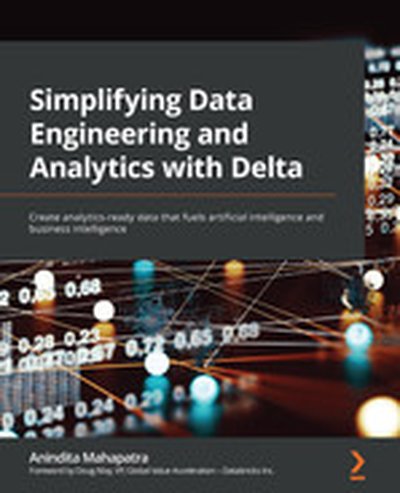
Simplifying Data Engineering and Analytics with Delta

This book will guide you through mastering Delta, a robust and versatile protocol for data engineering and analytics. You'll discover how Delta simplifies data workflows, supports both batch and streaming data, and is optimized for analytics applications in various industries. By the end, you will know how to create high-performing, analytics-ready data pipelines. What this Book will help me do Understand Delta's unique offering for unifying batch and streaming data processing. Learn approaches to address data governance, reliability, and scalability challenges. Gain technical expertise in building data pipelines optimized for analytics and machine learning use. Master core concepts like data modeling, distributed computing, and Delta's schema evolution features. Develop and deploy production-grade data engineering solutions leveraging Delta for business intelligence. Author(s) Anindita Mahapatra is an experienced data engineer and author with years of expertise in working on Delta and data-driven solutions. Her hands-on approach to explaining complex data concepts makes this book an invaluable resource for professionals in data engineering and analytics. Who is it for? Ideal for data engineers, data analysts, and anyone involved in AI/BI workflows, this book suits learners with some basic knowledge of SQL and Python. Whether you're an experienced professional or looking to upgrade your skills with Delta, this book will provide practical insights and actionable knowledge.

Cutting the Edge in Fighting Cybercrime: Reverse-Engineering a Search Language to Cross-Compile

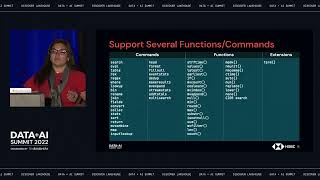
Traditional cybersecurity Security Information and Event Management (SIEM) ways do not scale well for data sources with 30TiB per day, leading HSBC to create a Cybersecurity Lakehouse with Delta and Spark. Creating a platform to overcome several conventional technical constraints, the limitation in the amount of data for long-term analytics available in traditional platforms and query languages is difficult to scale and time-consuming to run. In this talk, we’ll learn how to implement (or actually reverse-engineer) a language with Scala and translate it into what Apache Spark understands, the Catalyst engine. We’ll guide you through the technical journey of building equivalents of a query language into Spark. We’ll learn how HSBC business benefited from this cutting-edge innovation, like decreasing time and resources for Cyber data processing migration, improving Cyber threat Incident Response, and fast onboarding of HSBC Cyber Analysts on Spark with Cybersecurity Lakehouse platform.

Connect with us: Website: https://databricks.com Facebook: https://www.facebook.com/databricksinc Twitter: https://twitter.com/databricks LinkedIn: https://www.linkedin.com/company/data... Instagram: https://www.instagram.com/databricksinc/

Connecting the Dots with DataHub: Lakehouse and Beyond

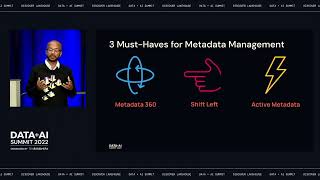
You’ve successfully built your data lakehouse. Congratulations! But what happens when your operational data stores, streaming systems like Apache Kafka or data ingestion systems produce bad data into the lakehouse? Can you be proactive when it comes to preventing bad data from affecting your business? How can you take advantage of automation to ensure that raw data assets become well maintained data products (clear ownership, documentation and sensitivity classification) without requiring people to do redundant work across operational, ingestion and lakehouse systems? How do you get live and historical visibility into your entire data ecosystem (schemas, pipelines, data lineage, models, features and dashboards) within and across your production services, ingestion pipelines and data lakehouse? Data engineers struggle with data quality and data governance issues constantly interrupting their day and limiting their upside impact on the business.

In this talk, we will share how data engineers from our 3K+ strong DataHub community are using DataHub to track lineage, understand data quality, and prevent failures from impacting their important dashboards, ML models and features. The talk will include details of how DataHub extracts lineage automatically from Spark, schema and statistics from Delta Lake and shift-left strategies for developer-led governance.

Connect with us: Website: https://databricks.com Facebook: https://www.facebook.com/databricksinc Twitter: https://twitter.com/databricks LinkedIn: https://www.linkedin.com/company/data... Instagram: https://www.instagram.com/databricksinc/

Open Source Powers the Modern Data Stack

Lakehouses like Databricks’ Delta Lake are becoming the central brain for all data systems. But Lakehouses are only one component of the data stack. There are many building blocks required for tackling data needs, including data integrations, data transformation, data quality, observability, orchestration etc.

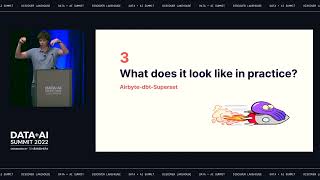
In this session, we will present how open source powers companies' approach to building a modern data stack. We will talk about technologies like Airbyte, Airflow, dbt, Preset, and how to connect them in order to build a customized and extensible data platform centered around Databricks.

Connect with us: Website: https://databricks.com Facebook: https://www.facebook.com/databricksinc Twitter: https://twitter.com/databricks LinkedIn: https://www.linkedin.com/company/data... Instagram: https://www.instagram.com/databricksinc/

Powering Up the Business with a Lakehouse

Within Wehkamp we required a uniform way to provide reliable and on time data to the business, while making this access compliant with GDPR. Unlocking all the data sources that we have scattered across the company and democratize the data access was of the utmost importance, allowing us to empower the business with more, better and faster data.

Focusing on open source technologies, we've built a data platform almost from the ground up that focuses on 3 levels of data curation - bronze, silver and gold - which follows the LakeHouse Architecture. The ingestion into bronze is where the PII fields are pseudonymized, making the use of the data within the delta lake compliant and, since there is no visible user data, it means everyone can use the entire delta lake for exploration and new use cases. Naturally, specific teams are allowed to see some user data that is necessary for their use cases. Besides the standard architecture, we've developed a library that allows us to ingest new data sources by adding a JSON config file with the characteristics. This combined with the ACID transactions that delta provides and the efficient Structured Stream provided through Auto Loader has allowed a small team to maintain 100+ streams with insignificant downtime.

Some other components of this platform are the following: - Alerting to Slack - Data quality checks - CI/CD - Stream processing with the delta engine

The feedback so far has been encouraging, as more and more teams across the company are starting to use the new platform and taking advantage of all its perks. It is still a long time until we get to turn off some of the components of the old data platform, but it has come a long way.

Connect with us: Website: https://databricks.com Facebook: https://www.facebook.com/databricksinc Twitter: https://twitter.com/databricks LinkedIn: https://www.linkedin.com/company/data... Instagram: https://www.instagram.com/databricksinc/

Turning Fan Data Into an Asset

The sports industry is evolving, with organizations investing heavily into their tech stack. Simply connecting data, however, is not enough. Unexpected insights can come from anyone — but only if they have tools they can easily use.

Enter Pumpjack Dataworks, the world’s leading fan data refinery. This platform enables clubs, leagues, and sponsors to discover digital revenue channels by joining consumer data while assuring its protection. Powered by Databricks’ Delta Sharing protocol and governed by Immuta’s data access platform, this solution democratizes fan data, making it immediately accessible.

Join us to learn how automating access control provides scalable, rule-driven assurance that data is properly managed and analyzed.

You’ll discover: How Pumpjack Dataworks uses attribute-based access control to meet privacy regulations and data sharing requirements How Databricks and Immuta’s partnership enables robust governance Why ABAC is critical for scale within modern data stacks

Connect with us: Website: https://databricks.com Facebook: https://www.facebook.com/databricksinc Twitter: https://twitter.com/databricks LinkedIn: https://www.linkedin.com/company/data... Instagram: https://www.instagram.com/databricksinc/

How unsupervised machine learning can scale data quality monitoring in Databricks

Technologies like Databricks Delta Lake and Databricks SQL enable enterprises to store and query their data. But existing rules and metrics approaches to monitoring the quality of this data are tedious to set up and maintain, fail to catch unexpected issues, and generate false positive alerts that lead to alert fatigue.

In this talk, Jeremy will describe a set of fully unsupervised machine learning algorithms for monitoring data quality at scale in Databricks. He will cover how the algorithms work, their strengths and weaknesses, and how they are tested and calibrated.

Participants will leave this talk with an understanding of unsupervised data quality monitoring, its strengths and weaknesses, and how to begin monitoring data using it in Databricks.

Connect with us: Website: https://databricks.com Facebook: https://www.facebook.com/databricksinc Twitter: https://twitter.com/databricks LinkedIn: https://www.linkedin.com/company/data... Instagram: https://www.instagram.com/databricksinc/

Amgen’s Journey To Building a Global 360 View of its Customers with the Lakehouse

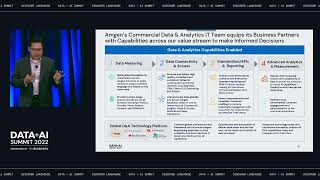
Serving patients in over 100 countries, Amgen is a leading global biotech company focused on developing therapies that have the power to save lives. Delivering on this mission requires our commercial teams to regularly meet with healthcare providers to discuss new treatments that can help patients in need. With the onset of the pandemic, where face-to-face interactions with doctors and other Healthcare Providers (HCPs) were severely impacted, Amgen had to rethink these interactions. With that in mind, the Amgen Commercial Data and Analytics team leveraged a modern data and AI architecture built on the Databricks Lakehouse to help accelerate its digital and data insights capabilities. This foundation enabled Amgen’s teams to develop a comprehensive, customer-centric view to support flexible go-to-market models and provide personalized experiences to our customers. In this presentation, we will share our recent journey of how we took an agile approach to bringing together over 2.2 petabytes of internally generated and externally sourced vendor data , and onboard into our AWS Cloud and Databricks environments to enable a standardized, scalable and robust capabilities to meet the business requirements in our fast-changing life sciences environment. We will share use cases of how we harmonized and managed our diverse sets of data to deliver efficiency, simplification, and performance outcomes for the business. We will cover the following aspects of our journey along with best practices we learned over time: • Our architecture to support Amgen’s Commercial Data & Analytics constant processing around the globe • Engineering best practices for building large scale Data Lakes and Analytics platforms such as Team organization, Data Ingestion and Data Quality Frameworks, DevOps Toolkit and Maturity Frameworks, and more • Databricks capabilities adopted such as Delta Lake, Workspace policies, SQL workspace endpoints, and MLflow for model registry and deployment. Also, various tools were built for Databricks workspace administration • Databricks capabilities being explored for future, such as Multi-task Orchestration, Container-based Apache Spark Processing, Feature Store, Repos for Git integration, etc. • The types of commercial analytics use cases we are building on the Databricks Lakehouse platform Attendees building global and Enterprise scale data engineering solutions to meet diverse sets of business requirements will benefit from learning about our journey. Technologists will learn how we addressed specific Business problems via reusable capabilities built to maximize value.

Connect with us: Website: https://databricks.com Facebook: https://www.facebook.com/databricksinc Twitter: https://twitter.com/databricks LinkedIn: https://www.linkedin.com/company/data... Instagram: https://www.instagram.com/databricksinc/