talk-data.com talk-data.com

Topic

GCP

Google Cloud Platform (GCP)

cloud cloud_provider infrastructure services

1670

tagged

Activity Trend

31 peak/qtr
2020-Q1 2026-Q1

Activities

1670 activities · Newest first

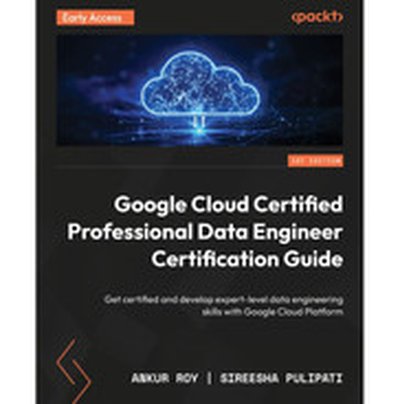
Google Cloud Certified Professional Data Engineer Certification Guide

A guide to pass the GCP Professional Data Engineer exam on your first attempt and upgrade your data engineering skills on GCP. Key Features Fully understand the certification exam content and exam objectives Consolidate your knowledge of all essential exam topics and key concepts Get realistic experience of answering exam-style questions Develop practical skills for everyday use Purchase of this book unlocks access to web-based exam prep resources including mock exams, flashcards, exam tips Book Description The GCP Professional Data Engineer certification validates the fundamental knowledge required to perform data engineering tasks and use GCP services to enhance data engineering processes and further your career in the data engineering/architecting field. This book is a best-in-class study guide that fully covers the GCP Professional Data Engineer exam objectives and helps you pass the exam first time. Complete with clear explanations, chapter review questions, realistic mock exams, and pragmatic solutions, this guide will help you master the core exam concepts and build the understanding you need to go into the exam with the skills and confidence to get the best result you can. With the help of relevant examples, you'll learn fundamental data engineering concepts such as data warehousing and data security. As you progress, you'll delve into the important domains of the exam, including data pipelining, data migration, and data processing. Unlike other study guides, this book contains logical reasoning behind the choice of correct answers based in scenarios and provide you with excellent tips regarding the optimal use of each service, and gives you everything you need to pass the exam and enhance your prospects in the data engineering field. What you will learn Create data solutions and pipelines in GCP Analyze and transform data into useful information Apply data engineering concepts to real scenarios Create secure, cost-effective, valuable GCP workloads Work in the GCP environment with industry best practices Who this book is for This book is for data engineers who want a reliable source for the key concepts and terms present in the most prestigious and highly-sought-after cloud-based data engineering certification. This book will help you improve your data engineering in GCP skills to give you a better chance at earning the GCP Professional Data Engineer Certification. You will already be familiar with the Google Cloud Platform, having either explored it (professionally or personally) for at least a year. You should also have some familiarity with basic data concepts (such as types of data and basic SQL knowledge).
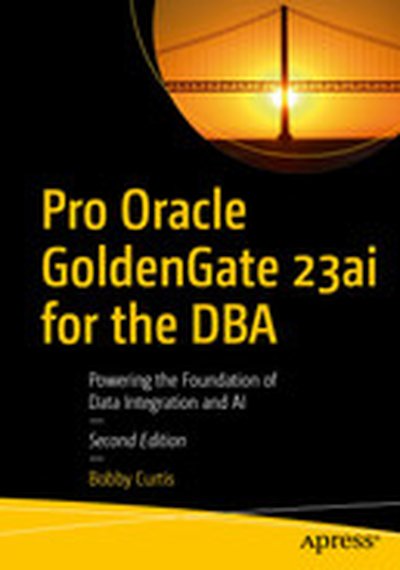
Pro Oracle GoldenGate 23ai for the DBA: Powering the Foundation of Data Integration and AI

Transform your data replication strategy into a competitive advantage with Oracle GoldenGate 23ai. This comprehensive guide delivers the practical knowledge DBAs and architects need to implement, optimize , and scale Oracle GoldenGate 23ai in production environments. Written by Oracle ACE Director Bobby Curtis, it blends deep technical expertise with real-world business insights from hundreds of implementations across manufacturing, financial services, and technology sectors. Beyond traditional replication, this book explores the groundbreaking capabilities that make GoldenGate 23ai essential for modern AI initiatives. Learn how to implement real-time vector replication for RAG systems, integrate with cloud platforms like GCP and Snowflake, and automate deployments using REST APIs and Python. Each chapter offers proven strategies to deliver measurable ROI while reducing operational risk. Whether you're upgrading from Classic GoldenGate , deploying your first cloud data pipeline, or building AI-ready data architectures, this book provides the strategic guidance and technical depth to succeed. With Bobby's signature direct approach, you'll avoid common pitfalls and implement best practices that scale with your business. What You Will Learn Master the microservices architecture and new capabilities of Oracle GoldenGate 23ai Implement secure, high-performance data replication across Oracle, PostgreSQL, and cloud databases Configure vector replication for AI and machine learning workloads, including RAG systems Design and build multi-master replication models with automatic conflict resolution Automate deployments and management using RESTful APIs and Python Optimize performance for sub-second replication lag in production environments Secure your replication environment with enterprise-grade features and compliance Upgrade from Classic to Microservices architecture with zero downtime Integrate with cloud platforms including OCI, GCP, AWS, and Azure Implement real-time data pipelines to BigQuery , Snowflake, and other cloud targets Navigate Oracle licensing models and optimize costs Who This Book Is For Database administrators, architects, and IT leaders working with Oracle GoldenGate —whether deploying for the first time, migrating from Classic architecture, or enabling AI-driven replication—will find actionable guidance on implementation, performance tuning, automation, and cloud integration. Covers unidirectional and multi-master replication and is packed with real-world use cases.

Brought to You By: •⁠ Statsig ⁠ — ⁠ The unified platform for flags, analytics, experiments, and more. Something interesting is happening with the latest generation of tech giants. Rather than building advanced experimentation tools themselves, companies like Anthropic, Figma, Notion and a bunch of others… are just using Statsig. Statsig has rebuilt this entire suite of data tools that was available at maybe 10 or 15 giants until now. Check out Statsig. •⁠ Linear – The system for modern product development. Linear is just so fast to use – and it enables velocity in product workflows. Companies like Perplexity and OpenAI have already switched over, because simplicity scales. Go ahead and check out Linear and see why it feels like a breeze to use. — What is it really like to be an engineer at Google? In this special deep dive episode, we unpack how engineering at Google actually works. We spent months researching the engineering culture of the search giant, and talked with 20+ current and former Googlers to bring you this deepdive with Elin Nilsson, tech industry researcher for The Pragmatic Engineer and a former Google intern. Google has always been an engineering-driven organization. We talk about its custom stack and tools, the design-doc culture, and the performance and promotion systems that define career growth. We also explore the culture that feels built for engineers: generous perks, a surprisingly light on-call setup often considered the best in the industry, and a deep focus on solving technical problems at scale. If you are thinking about applying to Google or are curious about how the company’s engineering culture has evolved, this episode takes a clear look at what it was like to work at Google in the past versus today, and who is a good fit for today’s Google. Jump to interesting parts: (13:50) Tech stack (1:05:08) Performance reviews (GRAD) (2:07:03) The culture of continuously rewriting things — Timestamps (00:00) Intro (01:44) Stats about Google (11:41) The shared culture across Google (13:50) Tech stack (34:33) Internal developer tools and monorepo (43:17) The downsides of having so many internal tools at Google (45:29) Perks (55:37) Engineering roles (1:02:32) Levels at Google  (1:05:08) Performance reviews (GRAD) (1:13:05) Readability (1:16:18) Promotions (1:25:46) Design docs (1:32:30) OKRs (1:44:43) Googlers, Nooglers, ReGooglers (1:57:27) Google Cloud (2:03:49) Internal transfers (2:07:03) Rewrites (2:10:19) Open source (2:14:57) Culture shift (2:31:10) Making the most of Google, as an engineer (2:39:25) Landing a job at Google — The Pragmatic Engineer deepdives relevant for this episode: •⁠ Inside Google’s engineering culture •⁠ Oncall at Google •⁠ Performance calibrations at tech companies •⁠ Promotions and tooling at Google •⁠ How Kubernetes is built •⁠ The man behind the Big Tech comics: Google cartoonist Manu Cornet — Production and marketing by ⁠⁠⁠⁠⁠⁠⁠⁠https://penname.co/⁠⁠⁠⁠⁠⁠⁠⁠. For inquiries about sponsoring the podcast, email [email protected].

Get full access to The Pragmatic Engineer at newsletter.pragmaticengineer.com/subscribe

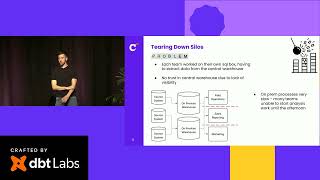
From merge to momentum: How Virgin Media O2 built scalable self-service with dbt across two orgs

Merging two large organizations with different tools, teams, and data practices is never simple. At Virgin Media O2, we used dbt to help bring consistency to that complexity, building a hybrid data mesh that supported self-serve analytics across domains. In this session, we’ll share how we gave teams clearer ownership, put governance in place using dbt, and set up secure data sharing through GCP’s Analytics Hub. If you’re working in a federated or fast-changing environment, this session offers practical lessons for making self-serve work at scale.

Unleash the power of dbt on Google Cloud: BigQuery, Iceberg, DataFrames and beyond

The data world has long been divided, with data engineers and data scientists working in silos. This fragmentation creates a long, difficult journey from raw data to machine learning models. We've unified these worlds through the Google Cloud and dbt partnership. In this session, we'll show you an end-to-end workflow that simplifies data to AI journey. The availability of dbt Cloud on Google Cloud Marketplace streamlines getting started, and its integration with BigQuery's new Apache Iceberg tables creates an open foundation. We'll also highlight how BigQuery DataFrames' integration with dbt Python models lets you perform complex data science at scale, all within a single, streamlined process. Join us to learn how to build a unified data and AI platform with dbt on Google Cloud.

EQT, a global investment organization specializing in private capital, infrastructure, and real assets, has transformed its data operations by fully adopting the modern data stack. As a cloud-native company with hundreds of internal and external data sources — from YouTube to Google Cloud Storage — EQT needed a scalable, centralized solution to ingest and transform data for complex financial use cases. Their journey took them from fragmented, Excel-based workflows to a robust, integrated data pipeline powered by Fivetran.

In this session, you’ll learn how:

•EQT streamlined external data ingestion and broke down data silos •How a unified data pipeline supports scalable financial analytics and decision-making •Fivetran’s ease of use, connector maintenance, and cost-effectiveness made it the clear choice

Nous transformons vos données en un capital maîtrisé et fiable, en plaçant le pilotage des usages au cœur de notre démarche. 

Notre expertise en gouvernance des données s’appuie sur la compréhension fine des usages métiers, afin d’identifier les enjeux de qualité et de garantir l’accès à une information réellement fiable et pertinente pour chaque utilisateur.

Nos équipes accompagnent votre Data Office pour piloter et encadrer les usages de la donnée, assurant ainsi conformité, fiabilité et adoption. 

Grâce à des contrôles rigoureux, des indicateurs adaptés et une méthodologie éprouvée chez nos clients, nous couvrons l’ensemble du cycle de vie de la donnée : Data Management, MDM, qualité et catalogues de données.

Optimisez la gestion de vos données et renforcez votre stratégie d’entreprise en gouvernant la data par les usages, avec notre expérience reconnue.

Pour cela venez voir un de nos accélérateurs Data lors du prochain Salon Data & IA de Paris !

The Generative AI revolution is here, but so is the operational headache. For years, teams have matured their MLOps practices for traditional models, but the rapid adoption of LLMs has introduced a parallel, often chaotic, world of LLMOps. This results in fragmented toolchains, duplicated effort, and a state of "Ops Overload" that slows down innovation.

This session directly confronts this challenge. We will demonstrate how a unified platform like Google Cloud's Vertex AI can tame this complexity by providing a single control plane for the entire AI lifecycle.

In this talk, we will introduce Ordeq, a cutting-edge data pipeline development framework used by data engineers, scientists and analysts across ING. Ordeq helps you modularise pipeline logic and abstract IO, elevating projects from proof-of-concepts to maintainable production-level applications. We will demonstrate how Ordeq integrates seamlessly with popular data processing tools like Spark, Polars, Matplotlib, DSPy, and orchestration tools such as Airflow. Additionally, we showcase how you can leverage Ordeq on public cloud offering like GCP. Ordeq has 0 dependencies and is available under MIT license.

The world has never been more connected. Today, customers demand near-perfect uptime, responsive networks, and personalized digital experiences from their telecommunications providers. 

The industry has reached an inflection point. Legacy architectures, fragmented customer data, and batch-based analytics are no longer sufficient. Now is the time for Telcos to embrace real-time, when the speed of insights and the ability to remain agile determine competitive advantage.

In this session, leaders from Orange Belgium, Google Cloud, and Striim explore how telcos can rethink their data foundations to become real-time, intelligence-driven enterprises. From centralizing data in BigQuery and Spanner to enabling dynamic customer engagement and scalable operations, Orange Belgium shares how its cloud-first strategy is enabling agility, trust, and innovation.

This isn’t just a story of technology migration—it’s about building a data culture that prioritizes immediacy, empathy, and evolution. Join us for a forward-looking conversation on how telcos can align infrastructure, intelligence, and customer intent.

Discover how to build a powerful AI Lakehouse and unified data fabric natively on Google Cloud. Leverage BigQuery's serverless scale and robust analytics capabilities as the core, seamlessly integrating open data formats with Apache Iceberg and efficient processing using managed Spark environments like Dataproc. Explore the essential components of this modern data environment, including data architecture best practices, robust integration strategies, high data quality assurance, and efficient metadata management with Google Cloud Data Catalog. Learn how Google Cloud's comprehensive ecosystem accelerates advanced analytics, preparing your data for sophisticated machine learning initiatives and enabling direct connection to services like Vertex AI.