talk-data.com talk-data.com

Topic

Marketing

advertising branding customer_acquisition

743

tagged

Activity Trend

49 peak/qtr
2020-Q1 2026-Q1

Activities

743 activities · Newest first

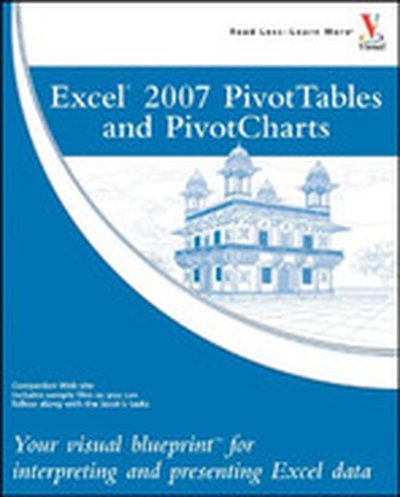
Excel® 2007 PivotTables and PivotCharts

Though many consumers know the basics of using Excel, few users understand the powerful capabilities of the PivotTable and PivotChart features. These tools can help turn long lists of unreadable data into dynamically generated, easy-to-read tables and charts that highlight useful and pertinent business information. Companies rely on this type of data from marketing, accounting, and finance to help make better decisions about products, sales and even human resources. Charts are interactive, allowing the consumer to tweak results with the click of a mouse and PivotTables allow you to fuse data from several sources into one document. This book shows users how to work with PivotTables and PivotCharts to make sense of their data. It covers features such as: understanding PivotTable benefits and uses; creating and customizing PivotTables; using PivotTables to analyze business data; building custom calculations; linking to external data sources, including Access databases, Word tables, Web pages, XML data, SQL Server databases, and OLAP cubes; publishing PivotTables to the Web; multiple consolidation of data, for example, summarizing annual fiscal data by quarters; preparing financial reporting, budgeting, and data analysis across departments; and using VBA to create macros that automate frequently used PivotTable tasks.

Strategic Modelling and Business Dynamics: A Feedback Systems Approach

John Morecroft's book is an ideal text for students interested in system modelling and its application to a range of real world problems. The book covers all that is necessary to develop expertise in system dynamics modelling and through the range of applications makes a persuasive case for the power and scope of the approach. As such it will appeal to practitioners as well as students. Robert Dyson, Professor of Operational Research, Associate Dean, Warwick Business School. Much more than an introduction, John Morecroft's Strategic Modelling and Business Dynamics uses interactive "management flight simulators" to create an engaging and effective learning environment in which readers, whatever their background, can develop their intuition about complex dynamic systems. The numerous examples provide a rich test-bed for the development of systems thinking and modelling skills John Sterman, Jay W. Forrester Professor of Management, MIT Sloan School of Management This book, with its vivid examples and simulators, will help to bring modelling, system dynamics and simulation into the mainstream of management education where they now belong. John A. Quelch, Professor of Marketing, Harvard Business School, Former Dean of London Business School This text fills the gap between texts focusing on the purely descriptive systems approach and the more technical system dynamics ones. Ann van Ackere, Professor of Decision Sciences, HEC Lausanne, Universit? de Lausanne Strategic modelling based on system dynamics is a powerful tool for understanding how firms adapt to a changing environment. The author demonstrates the appeal and power of business modelling to make sense of strategic initiatives and to anticipate their impacts through simulation. The book offers various simulators that allow readers to conduct their own policy experiments. Dr. Erich Zahn, Professor of Strategic Management, Betriebswirtschaftliches Institut, University of Stuttgart A website to accompany the book can be found at www.wiley.com/college/morecroft housing supplementary material for both students and lecturers.

Business and Competitive Analysis: Effective Application of New and Classic Methods

“I believe that this book will fill a great need for both full-time competitive intelligence practitioners, and those looking to add analytical skills to their managerial tool kit.” --Bill Fiora, Partner and Founder, Outward Insights “All practicing managers and business decision makers should be grateful to Fleisher and Bensoussan for showing them how their analysis work can become more rigorous and their approach less casual. Accept no imitations. This is the genuine article.” --Sheila Wright, Director of the Competitive Intelligence-Marketing Interface Teaching and Research Initiative (CIMITRI) at Leicester Business School, De Montfort University The Definitive How-To Guide for Business and Competitive Analysis Transform raw data into compelling, actionable business recommendations Answer the questions executives ask–“What?” “So What?” and “Now What?” Today’s 24 most valuable techniques: how to choose them, how to use them For everyone who performs analysis: managers, consultants, functional specialists, and strategists A completely new book by the authors of the popular Strategic and Competitive Analysis Business success begins with deep clarity about your competition and your business environment. But, even as data gathering has improved dramatically, few business professionals know the state-of-the-art techniques for analyzing their data. Now there’s a comprehensive, immensely practical guide to today’s best tools and techniques for answering tough questions and making actionable recommendations. begins with end-to-end guidance on the analysis process, including defining problems, avoiding analytical pitfalls, choosing tools, and communicating results. Next, the authors offer detailed guides on 24 of today’s most valuable analysis models: techniques that have never been brought together in one book before.They offer in-depth, step-by-step guidance for using every technique–along with realistic assessments of strengths, weaknesses, feasibility, and business value. Business and Competitive Analysis You are flooded with data. This book will help you transform that data into actionable insights and recommendations that enterprise decision makers cannot and will not ignore. Craig S. Fleisher and Babette E. Bensoussan begin with a practical primer on the process and context of business and competitive analysis: how it works, how to avoid pitfalls, and how to communicate results. Next, they introduce their unique FAROUT method for choosing the right tools for each assignment. The authors then present 24 of today’s most valuable analysis methods.They cover “classic” techniques, such as McKinsey 7S and industry analysis, as well as emerging techniques from multiple disciplines:economics,corporate finance, sociology, anthropology, and the intelligence and futurist communities. For each, they present clear descriptions, background context, strategic rationales, strengths, weaknesses, step-by-step instructions, and references. The result is a book you can rely on to meet any analysis challenge, no matter how complex or novel. The fundamentals of business and competitive analysis Goals, processes, pitfalls, deliverables, and benefits Competitive analysis techniques Nine Forces, Competitive Positioning, Business Model, SERVO, and Supply Chain Analyses Enterprise analysis techniques Benchmarking, McKinsey 7S, Shadowing, Product Line, and Win/Loss Analyses Environmental analysis techniques Strategic Relationships, Corporate Reputation, Critical Success Factors, Driving Forces, and Country Risk Analyses Evolutionary analysis techniques Technology Forecasting,War Gaming, Event/Timeline, Indications and Warning Analyses, and more Financial, probabilistic, and statistical techniques Basic Statistics, Competitor Cash Flow, Analysis of Competing Hypothesis (ACH), and Linchpin Analyses Table of Contents: Preface 1. Business and Competitive Analysis: Definition, Context, and Benefits 2. Performing the Analysis Process 3. Avoiding Analysis Pitfalls 4. Communicating Analysis Results 5. Applying the FAROUT method 6. Industry Analysis (The Nine Forces) 7. Competitive Positioning Analysis 8. Business Model Analysis 9. SERVO Analysis 10. Supply Chain Management (SCM) Analysis 11. Benchmarking Analysis 12. McKinsey 7S Analysis 13. Shadowing 14. Product Line Analysis 15. Win/Loss Analysis 16. Strategic Relationship Analysis 17. Corporate Reputation Analysis 18. Critical Success Factors Analysis 19. Country Risk Analysis 20. Driving Forces Analysis 21. Event and Timeline Analysis 22. Technology Forecasting 23. War Gaming 24. Indications and Warning Analysis 25. Historiographical Analysis 26. Interpretation of Statistical Analysis 27. Competitor Cash Flow Analysis 28. Analysis of Competing Hypothesis 29. Linchpin Analysis Index

Oracle® Data Warehousing and Business Intelligence Solutions

Up-to-date, comprehensive coverage of the Oracle database and business intelligence tools Written by a team of Oracle insiders, this authoritative book provides you with the most current coverage of the Oracle data warehousing platform as well as the full suite of business intelligence tools. You'll learn how to leverage Oracle features and how those features can be used to provide solutions to a variety of needs and demands. Plus, you'll get valuable tips and insight based on the authors' real-world experiences and their own implementations. Avoid many common pitfalls while learning best practices for: Leveraging Oracle technologies to design, build, and manage data warehouses Integrating specific database and business intelligence solutions from other vendors Using the new suite of Oracle business intelligence tools to analyze data for marketing, sales, and more Handling typical data warehouse performance challenges Uncovering initiatives by your business community, security business sponsorship, project staffing, and managing risk

Inside SQL Server 2005 Tools

Direct from Microsoft Insiders: the Complete Hands-On Guide to SQL Server 2005’s Powerful Tools! Microsoft SQL Server 2005’s high-powered management tools can dramatically improve DBA productivity and effectiveness. Now there’s a comprehensive guide to SQL Server 2005’s toolset, straight from the Microsoft team that created it. This book covers the entire toolset in unprecedented depth, guides database professionals in choosing the right tools, and shows them how to use various tools collectively to solve real-world problems. The authors present “how-to” solutions and never-before-published tips for SQL Server 2005 installation, upgrades, configuration, authoring, schema design, development, deployment, optimization, troubleshooting, and more. Coverage includes  Understanding how SQL Server 2005 tools differ from their predecessors  Leveraging the new Business Intelligence Development Studio and Management Studio to accomplish dozens of common tasks  Improving security by reducing the “surface area” you expose  Executing queries with the new Query Editor and SQLCMD query tools  Optimizing with the revamped SQL Server Profiler and Database Engine Tuning Advisor  Scheduling maintenance tasks with the SQL Server Agent  Monitoring with the Activity Monitor, SQL Server Agent, and other tools  Moving data efficiently and reliably with Integration Services  Using SQL Server’s new e-mail tool, Database Mail  Managing replication in complex distributed environments  Mastering SQL Server’s Analysis Services’ OLAP and Data Mining tools  Using Notification Services 2.0, Reporting Services, and more  Extending functionality using underlying APIs and the included CD-ROM’s sample code. MICHAEL RAHEEM is the senior product manager of the Microsoft SQL Server team and led the design and implementation of several SQL Server tools, such as SQL Server Management Studio, Database Mail, Upgrade Advisors, and Surface Area Configuration. He currently leads the SQL Server enterprise marketing efforts including high availability, scalability, and performance. DIMA SONKIN is development lead in the SQL Server Tools group responsible for SQL Server Agent, SMO, DMO, SQL Profiler, Database Engine Tuning Advisor, Database Mail, SQLMail, SqlCmd, and OSQL. THIERRY D’HERS is the lead program manager on Microsoft’s SQL BI Analysis Services team and has spent five years designing and specifying Analysis Services tools. KAMI LEMONDS is the documentation manager for Microsoft’s SQL Server User Education team and contributed to the SQL Server 2000 Resource Kit. CD-ROM contains all sample code from the book and corresponding Visual Studio project files. Contents Foreword . . . . . . . . . . . . . . . . . . . . . . . . . . . . . . . xvii Preface . . . . . . . . . . . . . . . . . . . . . . . . . . . . . . . . xix Acknowledgments . . . . . . . . . . . . . . . . . . . . . . . xxvi About the Authors . . . . . . . . . . . . . . . . . . . . . . . xxvii Chapter 1 Inside the Fundamentals. . . . . . . . . . . . . . . . . . . . . 1 Chapter 2 Inside the Installation and Upgrade Tools. . . . . . . 23 Chapter 3 Inside the Configuration Tools . . . . . . . . . . . . . . . 73 Chapter 4 Inside Management and Administration Tools . . 129 Chapter 5 Inside Data Authoring Tools . . . . . . . . . . . . . . . . 181 Chapter 6 Inside SQLCMD Query Tools . . . . . . . . . . . . . . . . 199 Chapter 7 Inside Tuning and Optimization Tools . . . . . . . . . 237 Chapter 8 Inside Scheduling Tools . . . . . . . . . . . . . . . . . . . 273 Chapter 9 Inside Monitoring Tools. . . . . . . . . . . . . . . . . . . . 305 Chapter 10 Inside Email Tools . . . . . . . . . . . . . . . . . . . . . . . . 337 Chapter 11 Inside Programming Object Models . . . . . . . . . . 357 Chapter 12 Inside Replication Tools . . . . . . . . . . . . . . . . . . . 385 Chapter 13 Inside Analysis Services OLAP Tools . . . . . . . . . 429 Chapter 14 Inside Analysis Services Data Mining Tools . . . . . . . . . . . . . . . . . . . . . . . . . . . . 519 Chapter 15 Inside Notification Services Tools . . . . . . . . . . . 543 Chapter 16 Inside Integration Services Tools . . . . . . . . . . . . 601 Chapter 17 Inside the Reporting Services Tools . . . . . . . . . . 679 Appendix A Sample KPI Client Code— Retrieving and Exposing Your First KPI. . . . . . . . . . . . . . . . . . . . 711 Appendix B KPI Utilities—Code for Parsing Display Folders and Getting Image Indexes . . . . . . . . . . 713 Appendix C KPI Viewer . . . . . . . . . . . . . . . . . . . . . . . . . . . . . 721 Appendix D Complete List of Data Mining Stored Procedures . . . . . . . . . . . . . . . . . . . . . . . . . . . . . 723 Index . . . . . . . . . . . . . . . . . . . . . . . . . . . . . . . . . . 733

Statistics Hacks

Want to calculate the probability that an event will happen? Be able to spot fake data? Prove beyond doubt whether one thing causes another? Or learn to be a better gambler? You can do that and much more with 75 practical and fun hacks packed into Statistics Hacks. These cool tips, tricks, and mind-boggling solutions from the world of statistics, measurement, and research methods will not only amaze and entertain you, but will give you an advantage in several real-world situations-including business. This book is ideal for anyone who likes puzzles, brainteasers, games, gambling, magic tricks, and those who want to apply math and science to everyday circumstances. Several hacks in the first chapter alone-such as the "central limit theorem,", which allows you to know everything by knowing just a little-serve as sound approaches for marketing and other business objectives. Using the tools of inferential statistics, you can understand the way probability works, discover relationships, predict events with uncanny accuracy, and even make a little money with a well-placed wager here and there. Statistics Hacks presents useful techniques from statistics, educational and psychological measurement, and experimental research to help you solve a variety of problems in business, games, and life. You'll learn how to: Play smart when you play Texas Hold 'Em, blackjack, roulette, dice games, or even the lottery Design your own winnable bar bets to make money and amaze your friends Predict the outcomes of baseball games, know when to "go for two" in football, and anticipate the winners of other sporting events with surprising accuracy Demystify amazing coincidences and distinguish the truly random from the only seemingly random--even keep your iPod's "random" shuffle honest Spot fraudulent data, detect plagiarism, and break codes How to isolate the effects of observation on the thing observed Whether you're a statistics enthusiast who does calculations in your sleep or a civilian who is entertained by clever solutions to interesting problems, Statistics Hacks has tools to give you an edge over the world's slim odds.

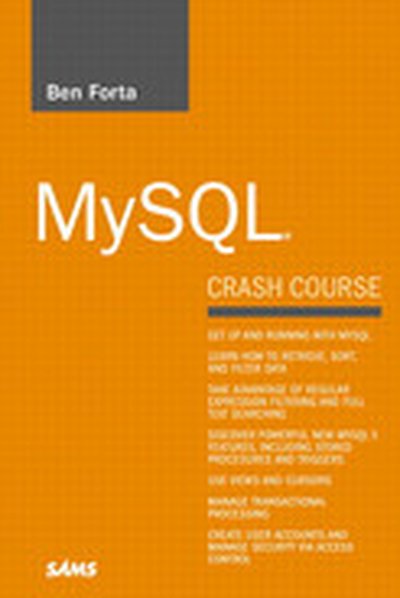
MySQL® Crash Course

MySQL is one of the most popular database management systems available, powering everything from Internet powerhouses to individual corporate databases to simple end-user applications, and everything in between. And this book will teach you all you need to know to be immediately productive with MySQL. By working through 30 highly focused hands-on lessons, your MySQL Crash Course will be both easier and more effective than you'd have thought possible. Learn how to: Retrieve and sort data Filter data using comparisons, regular expressions, full text search, and much more Join relational data Create and alter tables Insert, update, and delete data Leverage the power of stored procedures and triggers Use views and Cursors Manage transactional processing Create user accounts and manage security via access control Ben Forta is Macromedia's Senior Technical Evangelist, and has almost 20 years of experience in the computer industry in product development, support, training, and product marketing. Ben is the author of the best-selling Sams Teach Yourself SQL in 10 Minutes (now in its third edition, and translated into over a dozen languages), ColdFusion Web Application Construction Kit, and Advanced ColdFusion Development (both published by Que Publishing), Sams Teach Yourself Regular Expressions in 10 Minutes, as well as books on SQL, Flash, JSP, HomeSite, WAP, Windows 2000, and other subjects.

Ambient Findability

How do you find your way in an age of information overload? How can you filter streams of complex information to pull out only what you want? Why does it matter how information is structured when Google seems to magically bring up the right answer to your questions? What does it mean to be "findable" in this day and age? This eye-opening new book examines the convergence of information and connectivity. Written by Peter Morville, author of the groundbreaking Information Architecture for the World Wide Web, the book defines our current age as a state of unlimited findability. In other words, anyone can find anything at any time. Complete navigability. Morville discusses the Internet, GIS, and other network technologies that are coming together to make unlimited findability possible. He explores how the melding of these innovations impacts society, since Web access is now a standard requirement for successful people and businesses. But before he does that, Morville looks back at the history of wayfinding and human evolution, suggesting that our fear of being lost has driven us to create maps, charts, and now, the mobile Internet. The book's central thesis is that information literacy, information architecture, and usability are all critical components of this new world order. Hand in hand with that is the contention that only by planning and designing the best possible software, devices, and Internet, will we be able to maintain this connectivity in the future. Morville's book is highlighted with full color illustrations and rich examples that bring his prose to life. Ambient Findability doesn't preach or pretend to know all the answers. Instead, it presents research, stories, and examples in support of its novel ideas. Are we truly at a critical point in our evolution where the quality of our digital networks will dictate how we behave as a species? Is findability indeed the primary key to a successful global marketplace in the 21st century and beyond. Peter Morville takes you on a thought-provoking tour of these memes and more -- ideas that will not only fascinate but will stir your creativity in practical ways that you can apply to your work immediately. "A lively, enjoyable and informative tour of a topic that's only going to become more important." --David Weinberger, Author, Small Pieces Loosely Joined and The Cluetrain Manifesto "I envy the young scholar who finds this inventive book, by whatever strange means are necessary. The future isn't just unwritten--it's unsearched." --Bruce Sterling, Writer, Futurist, and Co-Founder, The Electronic Frontier Foundation "Search engine marketing is the hottest thing in Internet business, and deservedly so. Ambient Findability puts SEM into a broader context and provides deeper insights into human behavior. This book will help you grow your online business in a world where being found is not at all certain." --Jakob Nielsen, Ph.D., Author, Designing Web Usability: The Practice of Simplicity "Information that's hard to find will remain information that's hardly found--from one of the fathers of the discipline of information architecture, and one of its most experienced practitioners, come penetrating observations on why findability is elusive and how the act of seeking changes us." --Steve Papa, Founder and Chairman, Endeca "Whether it's a fact or a figure, a person or a place, Peter Morville knows how to make it findable. Morville explores the possibilities of a world where everything can always be found--and the challenges in getting there--in this wide-ranging, thought-provoking book." --Jesse James Garrett, Author, The Elements of User Experience "It is easy to assume that current searching of the World Wide Web is the last word in finding and using information. Peter Morville shows us that search engines are just the beginning. Skillfully weaving together information science research with his own extensive experience, he develops for the reader a feeling for the near future when information is truly findable all around us. There are immense implications, and Morville's lively and humorous writing brings them home." --Marcia J. Bates, Ph.D., University of California Los Angeles "I've always known that Peter Morville was smart. After reading Ambient Findability, I now know he's (as we say in Boston) wicked smart. This is a timely book that will have lasting effects on how we create our future. --Jared Spool, Founding Principal, User Interface Engineering "In Ambient Findability, Peter Morville has put his mind and keyboard on the pulse of the electronic noosphere. With tangible examples and lively writing, he lays out the challenges and wonders of finding our way in cyberspace, and explains the mutually dependent evolution of our changing world and selves. This is a must read for everyone and a practical guide for designers." --Gary Marchionini, Ph.D., University of North Carolina "Find this book! Anyone interested in making information easier to find, or understanding how finding and being found is changing, will find this thoroughly researched, engagingly written, literate, insightful and very, very cool book well worth their time. Myriad examples from rich and varied domains and a valuable idea on nearly every page. Fun to read, too! --Joseph Janes, Ph.D., Founder, Internet Public Library

THE POWER OF THE PURSE: HOW SMART BUSINESSES ARE ADAPTING TO THE WORLD'S MOST IMPORTANT CONSUMERS—WOMEN

Women now drive some 80% of all buying decisions. By 2010, they'll account for half of America's private wealth: $13 trillion dollars. A few remarkable companies have learned how to refocus on women -- and, in so doing, have achieved truly stunning results. In The Power of the Purse, top journalist Fara Warner takes you behind the scenes at those companies, revealing how they did it -- and how you can, too. Unlike previous books on marketing to women, this one doesn't settle for generalities: it offers in-depth, start-to-finish case studies. Discover how McDonald's turned around its business by recognizing women as full-fledged consumers, not just 'Moms.' Learn how Kodak's digital camera business soared from fourth to first by recognizing women's importance as family 'memory makers'. See how P G built Swiffer into a cultural revolution, and how the diamond industry did the same for right-hand rings. Watch Bratz topple Barbie, Torrid create its enormously successful plus-size stores for teenagers, and Avon connect with a radically new generation of women. From Nike to Home Depot, each story is unique -- but in every case, these companies put women at the center of their strategies, and listened intently to what real women consumers were telling them. It's not about 'painting your products pink': it's about transforming the way you think about women. Do that, and you'll create products that sell better to everyone.

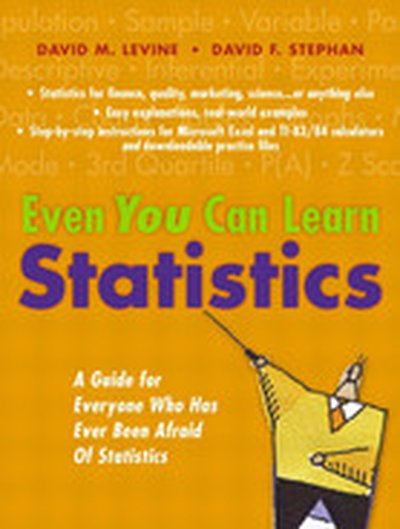
Even You Can Learn Statistics A Guide for Everyone Who Has Ever Been Afraid of Statistics

Even You Can Learn Statistics A Guide for Everyone Who Has Ever Been Afraid Of Statistics One easy step at a time, this book will teach you the key statistical techniques you'll need for finance, quality, marketing, the social sciences, or just about any other field. Each technique is introduced with a simple, jargon-free explanation, practical examples, and hands-on guidance for solving real problems with Excel or a TI-83/84 series calculator, including Plus models. Hate math? No sweat. You'll be amazed how little you need! For those who do have an interest in mathematics, optional "Equation Blackboard" sections review the equations that provide the foundations for important concepts. David M. Levine is a much-honored innovator in statistics education. He is Professor Emeritus of Statistics and Computer Information Systems at Bernard M. Baruch College (CUNY), and co-author of several best-selling books, including Statistics for Managers using Microsoft Excel, Basic Business Statistics, Quality Management, and Six Sigma for Green Belts and Champions. Instructional designer David F. Stephan pioneered the classroom use of personal computers, and is a leader in making Excel more accessible to statistics students. He has co-authored several textbooks with David M. Levine. Here's just some of what you'll learn how to do... Use statistics in your everyday work or study Perform common statistical tasks using a Texas Instruments statistical calculator or Microsoft Excel Build and interpret statistical charts and tables "Test Yourself" at the end of each chapter to review the concepts and methods that you learned in the chapter Work with mean, median, mode, standard deviation, Z scores, skewness, and other descriptive statistics Use probability and probability distributions Work with sampling distributions and confidence intervals Test hypotheses and decision-making risks with Z, t, Chi-Square, ANOVA, and other techniques Perform regression analysis and modeling The easy, practical introduction to statistics–for everyone! Thought you couldn't learn statistics? Think again. You can–and you will! Complementary Web site Downloadable practice files at http://www.ftpress.com/youcanlearnstatistics

Packaged Composite Applications

Today's corporate computing environment is too often characterized by silos of data in enterprise applications like ERP, CRM, and supply chain management. Integrating these applications involves hardwiring connections between them, often resulting in a rigid and inefficient IT infrastructure.Packaged Composite Applications (PCAs) are an innovative answer to this dysfunctional scenario. Originated by SAP, one of the worlds foremost technology companies, PCAs represent a new architectural paradigm for enterprise computing. Using web services, they combine new functionality with services from existing applications to enable flexible, cross-functional automation. But is this new model right for your business? That's where this book comes in.Packaged Composite Applications is the result of a systematic search through the brain trust of SAP for all of the relevant arguments, examples, concepts, and analogies related to Packaged Composite Applications. This book is not a marketing treatise about neatly-shaped colored boxes. It is not a backward-looking, outdated description of a product without context. This book, rather, combines the approach of a forward-looking analyst with the perspective of an executive who must make things work, without skimping on the relevant technical details. The author examines the ideas driving PCAs forward in the marketplace and the problems and solutions that an executive and technologist will encounter in implementation. The result is an authoritative text that allows all interested parties to assess the value of PCAs for their lives as executives, technologists, analysts, sales representatives, and users.

Service- and Component-based Development: Using Select Perspective™ and UML

This book presents the approaches and practices for the construction of software systems using Select Perspective. It details the key workflows for a contemporary approach to supplying, managing, and consuming software assets to deliver business IT systems. This book provides a comprehensive development lifecycle (Select Perspective) for component and web service based IT solutions, that supports parallel development activities, to reduce time-to-market. It introduces the Select Perspective as a Supply, Manage, Consume software development process. It provides a real world project experience and examples. Technology: Unlike other development processes, Select Perspective is focused on a small number of key deliverables within an organizational framework of suppliers and consumers, of solution driven components. Audience: For CIOs, IT Directors, Project Managers, and solution developers. Level Intermediate. Hedley Apperly is Vice President, Product Marketing and Development with Aonix Hedley has graduate and post-graduate qualifications in production engineering, business computing and strategic marketing. His 19 years experience in IT, have focused on the design and development of relational, object-oriented and component-bases systems. He is also a committee member of the British Computer Societies (BCS), Object-Oriented Programming and Systems (OOPS) specialist group. As well as his involvement Component Based Development for Enterprise Systems, published by Cambridge University Press, Hedley co-authored Component Based Software Engineering; Putting the Pieces Together, published by Addison Wesley. Ralph Hofman works in Manager Services (Benelux) at Aonix. Ralph studied computer science at the University of Twente in the Netherlands. He started as a freelance consultant for different companies and specialized in methods and tools for system development. Ralph initiated component-based development as a way of working within a major international Bank. He joined Aonix in 2000, where he is responsible for the consultancy and services in the Benelux. Steve Latchem is Director of International Services with Aonix. Steve has been within the IT industry for over 18 years, holding positions in large consultancy groups and IT Departments ranging from business analyst to object oriented consultant, architect and project manager. Steve now directs the global professional services group at Aonix. Steve collaborated on AntiPatterns: Refactoring Software & Projects in Crisis and co-authored Component Based Software Engineering; Putting the Pieces Together, published by Addison Wesley. Barry Maybank is Principal Consultant with Aonix . Barry has been within the IT industry for over 17 years, holding positions in consultancy groups, IT Product Companies and Engineering companies with roles ranging from software engineer to architect. Barry McGibbon is Associate Consultant with Aonix. Barry has worked in the IT industry for over 35 years, holding very senior management positions with leading computing services providers. He has been involved in component-based development initiatives for significant enterprises in the UK and Europe. As well as a frequent contributor to major journals, he is author of Managing Your Move To Object Technology: Guidelines & Strategies for a Smooth Transition published by SIGS Books Inc. He is also Technical Chair for Europe's largest CBD/OO conference and a series editor for Cambridge University Press. David Piper is a Principal Consultant with Aonix. David has been working in the IT industry for over 20 years holding positions in manufacturing, financial services and IT consultancy with roles ranging from analyst to quality assurance manager and project manager. Chris Simons is a Senior Consultant with Aonix. Christopher has been within the IT industry for over 12 years, holding positions in real-time, defense, retail, public sector and finance domains, with roles ranging from software engineer, lead analyst to technical architect. He has also taught object-orientation and development process at various universities as a visiting lecturer.

Mobile Location Services: The Definitive Guide

The first comprehensive guide to building and deploying mobile location-based services Detailed coverage of mobile location servers, client platforms, protocols, and standards Mapping, geocoding, mobile positioning, security, personalization, privacy, and more Foreword by Joe Astroth, Executive Vice President, Autodesk Location Services "I expect this comprehensive book to inspire a new generation of engineers and to help propel a new wave of independent software vendors. I only wish it was available to our staff as we developed some of our earliest services." —Joe Astroth, Executive Vice President, Autodesk Location Services The first start-to-finish guide to developing location-based services. Tomorrow's mobile applications must be smarter than ever, accessing and intelligently using a wide range of location data. In Mobile Location Services, leading mobile application consultant Andrew Jagoe presents the first end-to-end solutions guide to building and deploying location-based services and applications. Jagoe addresses every key development challenge and presents insightful case studies and interviews with key industry leaders. Mobile location servers and the components of an end-to-end location-based solution Spatial analysis: digital mapping, geocoding, routing, map image generation, and point-of-interest searches Mobile positioning: using and augmenting GPS technology Authentication and security in location-based applications Personalization, profiling, and privacy Mobile location clients: platform, protocols, languages, and localization issues Key applications: navigation, emergency assistance, travel services, advertising/marketing, and more Includes detailed appendices on the Geography Markup Language (GML), the Location Interoperability Forum's Mobile Location Protocol, and P3P privacy standards CD-ROM INCLUDED The accompanying CD-ROM contains several useful tools for developing mobile location services, as well as a list of important resources on the Internet.

Corporate Information Factory

The "father of data warehousing" incorporates the latest technologies into his blueprint for integrated decision support systems Today's corporate IT and data warehouse managers are required to make a small army of technologies work together to ensure fast and accurate information for business managers. Bill Inmon created the to solve the needs of these managers. Since the First Edition, the design of the factory has grown and changed dramatically. This Second Edition, revised and expanded by 40% with five new chapters, incorporates these changes. This step-by-step guide will enable readers to connect their legacy systems with the data warehouse and deal with a host of new and changing technologies, including Web access mechanisms, e-commerce systems, ERP (Enterprise Resource Planning) systems. The book also looks closely at exploration and data mining servers for analyzing customer behavior and departmental data marts for finance, sales, and marketing. Corporate Information Factory

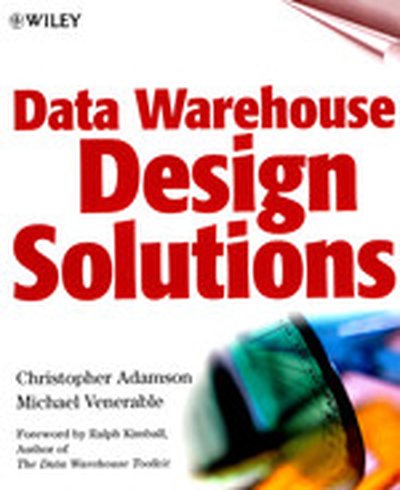
Data Warehouse Design Solutions

"Each chapter is... a practice run for the way we all ought to design our data marts and hence our data warehouses."-Ralph Kimball, from the Foreword. Let the experts show you how to customize data warehouse designs for real business needs in Data Warehouse Design Solutions. To effectively design a data warehouse, you have to understand its many business uses. This guidebook shows you how business managers in different corporate functions actually use data warehouses to make decisions. You'll get a rich set of data warehouse designs that flow from realistic business cases. Two top experts show you how to customize your data warehouse designs for real-life business needs including: Sales and marketing Production and inventory management Budgeting and financial reporting Quality control Product delivery and fulfillment Strategic business analysis such as determining market share, rates of return on investment, and other key analytic ratios. CD-ROM includes All sample data warehouse designs with accompanying preformatted reports in HTML for specific business uses such as marketing, sales, and financial analysis. This title includes additional digital media when purchased in print format. For this digital book edition, media content may not be included. Contact the publisher's customer service directly for assistance.

Join experts from Box, Typeface, Glean, CitiBank, and Securiti AI for actionable tips to effectively implement AI-powered apps across your enterprise. We'll discuss real use cases, implementation best practices, and how to measure returns on investment — whether that's in marketing, financial services, HR, or beyond.

Click the blue “Learn more” button above to tap into special offers designed to help you implement what you are learning at Google Cloud Next 25.

AI at the Frontier: Transforming Public Sector and Healthcare

Join us for a conversation with Kees Hertogh, Microsoft’s Vice President for Public Sector & Healthcare Marketing, as we explore how AI is reshaping education, government, and healthcare. Kees will share what he’s hearing most from leaders in these sectors—from empowering educators and building trust in AI, to modernizing public services, and accelerating clinical breakthroughs. Discover the real-world challenges, opportunities, and future trends at the intersection of AI and mission-driven industries.

AI in action: powering the next era of partner growth

In this session, by Colleen Tyler, GM, Global Partner Marketing & GTM at Microsoft, and Shane Edmonds, Chief Product & Technology Officer at Structured, you’ll get a first look at the next generation of partner marketing technology—built to strip away the friction and put growth back at the center of your program. Think drag-and-drop ease, smarter insights, and the ability to engage the long tail without sacrificing the human touch.

Becoming Frontier in Every Industry with Agentic AI

As Satya Nadella unveils the next steps in integrating AI agents across business functions, Kathleen Mitford, CVP of Industry Marketing, and Satish Thomas, CVP of Business and Industry Solutions Engineering, explore how Microsoft Cloud for Industry enables customers and partners to build, adapt, deploy, and manage solutions tailored to each industry’s unique needs. Focusing on Copilot and Generative AI, this broadcast will highlight AI’s transformative impact on productivity, efficiency, and innovation across industries. By combining the power of the Microsoft Cloud, with industry-specific AI insights and capabilities, and the expertise of a robust partner ecosystem, Microsoft’s approach unlocks AI’s full potential, driving significant outcomes for every industry.

CTERA in action: Building the data fabric of global enterprises

Discover how enterprises are building their data fabric with CTERA. In this session, Technical Product Marketing Manager and former CTERA customer Kyle Edsall will show how organizations are eliminating data silos, empowering collaboration across sites, and securing critical data. See how CTERA enables IT leaders to scale with confidence and set the foundation for future data-driven innovation.