talk-data.com talk-data.com

Topic

Modern Data Stack

298

tagged

Activity Trend

28 peak/qtr
2020-Q1 2026-Q1

Activities

298 activities · Newest first

Summary The core of any data platform is the centralized storage and processing layer. For many that is a data warehouse, but in order to support a diverse and constantly changing set of uses and technologies the data lakehouse is a paradigm that offers a useful balance of scale and cost, with performance and ease of use. In order to make the data lakehouse available to a wider audience the team at Iomete built an all-in-one service that handles management and integration of the various technologies so that you can worry about answering important business questions. In this episode Vusal Dadalov explains how the platform is implemented, the motivation for a truly open architecture, and how they have invested in integrating with the broader ecosystem to make it easy for you to get started.

Announcements

Hello and welcome to the Data Engineering Podcast, the show about modern data management When you’re ready to build your next pipeline, or want to test out the projects you hear about on the show, you’ll need somewhere to deploy it, so check out our friends at Linode. With their new managed database service you can launch a production ready MySQL, Postgres, or MongoDB cluster in minutes, with automated backups, 40 Gbps connections from your application hosts, and high throughput SSDs. Go to dataengineeringpodcast.com/linode today and get a $100 credit to launch a database, create a Kubernetes cluster, or take advantage of all of their other services. And don’t forget to thank them for their continued support of this show! Atlan is the metadata hub for your data ecosystem. Instead of locking your metadata into a new silo, unleash its transformative potential with Atlan’s active metadata capabilities. Push information about data freshness and quality to your business intelligence, automatically scale up and down your warehouse based on usage patterns, and let the bots answer those questions in Slack so that the humans can focus on delivering real value. Go to dataengineeringpodcast.com/atlan today to learn more about how Atlan’s active metadata platform is helping pioneering data teams like Postman, Plaid, WeWork & Unilever achieve extraordinary things with metadata and escape the chaos. Prefect is the modern Dataflow Automation platform for the modern data stack, empowering data practitioners to build, run and monitor robust pipelines at scale. Guided by the principle that the orchestrator shouldn’t get in your way, Prefect is the only tool of its kind to offer the flexibility to write code as workflows. Prefect specializes in glueing together the disparate pieces of a pipeline, and integrating with modern distributed compute libraries to bring power where you need it, when you need it. Trusted by thousands of organizations and supported by over 20,000 community members, Prefect powers over 100MM business critical tasks a month. For more information on Prefect, visit dataengineeringpodcast.com/prefect. Data engineers don’t enjoy writing, maintaining, and modifying ETL pipelines all day, every day. Especially once they realize 90% of all major data sources like Google Analytics, Salesforce, Adwords, Facebook, Spreadsheets, etc., are already available as plug-and-play connectors with reliable, intuitive SaaS solutions. Hevo Data is a highly reliable and intuitive data pipeline platform used by data engineers from 40+ countries to set up and run low-latency ELT pipelines with zero maintenance. Boasting more than 150 out-of-the-box connectors that can be set up in minutes, Hevo also allows you to monitor and control your pipelines. You get: real-time data flow visibility, fail-safe mechanisms, and alerts if anything breaks; preload transformations and auto-schema mapping precisely control how data lands in your destination; models and workflows to transform data for analytics; and reverse-ETL capability to move the transformed data back to your business software to inspire timely action. All of this, plus its transpar
Summary The global economy is dependent on complex and dynamic networks of supply chains powered by sophisticated logistics. This requires a significant amount of data to track shipments and operational characteristics of materials and goods. Roambee is a platform that collects, integrates, and analyzes all of that information to provide companies with the critical insights that businesses need to stay running, especially in a time of such constant change. In this episode Roambee CEO, Sanjay Sharma, shares the types of questions that companies are asking about their logistics, the technical work that they do to provide ways to answer those questions, and how they approach the challenge of data quality in its many forms.

Announcements

Hello and welcome to the Data Engineering Podcast, the show about modern data management When you’re ready to build your next pipeline, or want to test out the projects you hear about on the show, you’ll need somewhere to deploy it, so check out our friends at Linode. With their new managed database service you can launch a production ready MySQL, Postgres, or MongoDB cluster in minutes, with automated backups, 40 Gbps connections from your application hosts, and high throughput SSDs. Go to dataengineeringpodcast.com/linode today and get a $100 credit to launch a database, create a Kubernetes cluster, or take advantage of all of their other services. And don’t forget to thank them for their continued support of this show! Atlan is the metadata hub for your data ecosystem. Instead of locking your metadata into a new silo, unleash its transformative potential with Atlan’s active metadata capabilities. Push information about data freshness and quality to your business intelligence, automatically scale up and down your warehouse based on usage patterns, and let the bots answer those questions in Slack so that the humans can focus on delivering real value. Go to dataengineeringpodcast.com/atlan today to learn more about how Atlan’s active metadata platform is helping pioneering data teams like Postman, Plaid, WeWork & Unilever achieve extraordinary things with metadata and escape the chaos. Prefect is the modern Dataflow Automation platform for the modern data stack, empowering data practitioners to build, run and monitor robust pipelines at scale. Guided by the principle that the orchestrator shouldn’t get in your way, Prefect is the only tool of its kind to offer the flexibility to write code as workflows. Prefect specializes in glueing together the disparate pieces of a pipeline, and integrating with modern distributed compute libraries to bring power where you need it, when you need it. Trusted by thousands of organizations and supported by over 20,000 community members, Prefect powers over 100MM business critical tasks a month. For more information on Prefect, visit dataengineeringpodcast.com/prefect. Data engineers don’t enjoy writing, maintaining, and modifying ETL pipelines all day, every day. Especially once they realize 90% of all major data sources like Google Analytics, Salesforce, Adwords, Facebook, Spreadsheets, etc., are already available as plug-and-play connectors with reliable, intuitive SaaS solutions. Hevo Data is a highly reliable and intuitive data pipeline platform used by data engineers from 40+ countries to set up and run low-latency ELT pipelines with zero maintenance. Boasting more than 150 out-of-the-box connectors that can be set up in minutes, Hevo also allows you to monitor and control your pipelines. You get: real-time data flow visibility, fail-safe mechanisms, and alerts if anything breaks; preload transformations and auto-schema mapping precisely control how data lands in your destination; models and workflows to transform data for analytics; and reverse-ETL capability to move the transformed data back to your business software to inspire timely action. All of this, plus its transparent pricing and 24*7 live support, makes it consistently voted by user

Summary Regardless of how data is being used, it is critical that the information is trusted. The practice of data reliability engineering has gained momentum recently to address that question. To help support the efforts of data teams the folks at Soda Data created the Soda Checks Language and the corresponding Soda Core utility that acts on this new DSL. In this episode Tom Baeyens explains their reasons for creating a new syntax for expressing and validating checks for data assets and processes, as well as how to incorporate it into your own projects.

Announcements

Hello and welcome to the Data Engineering Podcast, the show about modern data management When you’re ready to build your next pipeline, or want to test out the projects you hear about on the show, you’ll need somewhere to deploy it, so check out our friends at Linode. With their new managed database service you can launch a production ready MySQL, Postgres, or MongoDB cluster in minutes, with automated backups, 40 Gbps connections from your application hosts, and high throughput SSDs. Go to dataengineeringpodcast.com/linode today and get a $100 credit to launch a database, create a Kubernetes cluster, or take advantage of all of their other services. And don’t forget to thank them for their continued support of this show! Atlan is the metadata hub for your data ecosystem. Instead of locking your metadata into a new silo, unleash its transformative potential with Atlan’s active metadata capabilities. Push information about data freshness and quality to your business intelligence, automatically scale up and down your warehouse based on usage patterns, and let the bots answer those questions in Slack so that the humans can focus on delivering real value. Go to dataengineeringpodcast.com/atlan today to learn more about how Atlan’s active metadata platform is helping pioneering data teams like Postman, Plaid, WeWork & Unilever achieve extraordinary things with metadata and escape the chaos. Prefect is the modern Dataflow Automation platform for the modern data stack, empowering data practitioners to build, run and monitor robust pipelines at scale. Guided by the principle that the orchestrator shouldn’t get in your way, Prefect is the only tool of its kind to offer the flexibility to write code as workflows. Prefect specializes in glueing together the disparate pieces of a pipeline, and integrating with modern distributed compute libraries to bring power where you need it, when you need it. Trusted by thousands of organizations and supported by over 20,000 community members, Prefect powers over 100MM business critical tasks a month. For more information on Prefect, visit dataengineeringpodcast.com/prefect. Data engineers don’t enjoy writing, maintaining, and modifying ETL pipelines all day, every day. Especially once they realize 90% of all major data sources like Google Analytics, Salesforce, Adwords, Facebook, Spreadsheets, etc., are already available as plug-and-play connectors with reliable, intuitive SaaS solutions. Hevo Data is a highly reliable and intuitive data pipeline platform used by data engineers from 40+ countries to set up and run low-latency ELT pipelines with zero maintenance. Boasting more than 150 out-of-the-box connectors that can be set up in minutes, Hevo also allows you to monitor and control your pipelines. You get: real-time data flow visibility, fail-safe mechanisms, and alerts if anything breaks; preload transformations and auto-schema mapping precisely control how data lands in your destination; models and workflows to transform data for analytics; and reverse-ETL capability to move the transformed data back to your business software to inspire timely action. All of this, plus its transparent pricing and 24*7 live support, makes it consistently voted by users as the Leader in the Data Pipeline category on review platforms like G2. Go to dataengineeringpodcast.com/hevodata and sign up for a free 14-day trial that also comes

Summary There is a constant tension in business data between growing siloes, and breaking them down. Even when a tool is designed to integrate information as a guard against data isolation, it can easily become a silo of its own, where you have to make a point of using it to seek out information. In order to help distribute critical context about data assets and their status into the locations where work is being done Nicholas Freund co-founded Workstream. In this episode he discusses the challenge of maintaining shared visibility and understanding of data work across the various stakeholders and his efforts to make it a seamless experience.

Announcements

Hello and welcome to the Data Engineering Podcast, the show about modern data management When you’re ready to build your next pipeline, or want to test out the projects you hear about on the show, you’ll need somewhere to deploy it, so check out our friends at Linode. With their new managed database service you can launch a production ready MySQL, Postgres, or MongoDB cluster in minutes, with automated backups, 40 Gbps connections from your application hosts, and high throughput SSDs. Go to dataengineeringpodcast.com/linode today and get a $100 credit to launch a database, create a Kubernetes cluster, or take advantage of all of their other services. And don’t forget to thank them for their continued support of this show! Atlan is the metadata hub for your data ecosystem. Instead of locking your metadata into a new silo, unleash its transformative potential with Atlan’s active metadata capabilities. Push information about data freshness and quality to your business intelligence, automatically scale up and down your warehouse based on usage patterns, and let the bots answer those questions in Slack so that the humans can focus on delivering real value. Go to dataengineeringpodcast.com/atlan today to learn more about how Atlan’s active metadata platform is helping pioneering data teams like Postman, Plaid, WeWork & Unilever achieve extraordinary things with metadata and escape the chaos. Prefect is the modern Dataflow Automation platform for the modern data stack, empowering data practitioners to build, run and monitor robust pipelines at scale. Guided by the principle that the orchestrator shouldn’t get in your way, Prefect is the only tool of its kind to offer the flexibility to write code as workflows. Prefect specializes in glueing together the disparate pieces of a pipeline, and integrating with modern distributed compute libraries to bring power where you need it, when you need it. Trusted by thousands of organizations and supported by over 20,000 community members, Prefect powers over 100MM business critical tasks a month. For more information on Prefect, visit dataengineeringpodcast.com/prefect. Data engineers don’t enjoy writing, maintaining, and modifying ETL pipelines all day, every day. Especially once they realize 90% of all major data sources like Google Analytics, Salesforce, Adwords, Facebook, Spreadsheets, etc., are already available as plug-and-play connectors with reliable, intuitive SaaS solutions. Hevo Data is a highly reliable and intuitive data pipeline platform used by data engineers from 40+ countries to set up and run low-latency ELT pipelines with zero maintenance. Boasting more than 150 out-of-the-box connectors that can be set up in minutes, Hevo also allows you to monitor and control your pipelines. You get: real-time data flow visibility, fail-safe mechanisms, and alerts if anything breaks; preload transformations and auto-schema mapping precisely control how data lands in your destination; models and workflows to transform data for analytics; and reverse-ETL capability to move the transformed data back to your business software to inspire timely action. All of this, plus its transparent pricing and 24*7 live support, makes it consistently voted by users as the Leader in the Data Pipeline category on review platforms like G2. Go to

Summary Data engineering systems are complex and interconnected with myriad and often opaque chains of dependencies. As they scale, the problems of visibility and dependency management can increase at an exponential rate. In order to turn this into a tractable problem one approach is to define and enforce contracts between producers and consumers of data. Ananth Packildurai created Schemata as a way to make the creation of schema contracts a lightweight process, allowing the dependency chains to be constructed and evolved iteratively and integrating validation of changes into standard delivery systems. In this episode he shares the design of the project and how it fits into your development practices.

Announcements

Hello and welcome to the Data Engineering Podcast, the show about modern data management

When you’re ready to build your next pipeline, or want to test out the projects you hear about on the show, you’ll need somewhere to deploy it, so check out our friends at Linode. With their new managed database service you can launch a production ready MySQL, Postgres, or MongoDB cluster in minutes, with automated backups, 40 Gbps connections from your application hosts, and high throughput SSDs. Go to dataengineeringpodcast.com/linode today and get a $100 credit to launch a database, create a Kubernetes cluster, or take advantage of all of their other services. And don’t forget to thank them for their continued support of this show!

Atlan is the metadata hub for your data ecosystem. Instead of locking your metadata into a new silo, unleash its transformative potential with Atlan’s active metadata capabilities. Push information about data freshness and quality to your business intelligence, automatically scale up and down your warehouse based on usage patterns, and let the bots answer those questions in Slack so that the humans can focus on delivering real value. Go to dataengineeringpodcast.com/atlan today to learn more about how Atlan’s active metadata platform is helping pioneering data teams like Postman, Plaid, WeWork & Unilever achieve extraordinary things with metadata and escape the chaos.

Prefect is the modern Dataflow Automation platform for the modern data stack, empowering data practitioners to build, run and monitor robust pipelines at scale. Guided by the principle that the orchestrator shouldn’t get in your way, Prefect is the only tool of its kind to offer the flexibility to write code as workflows. Prefect specializes in glueing together the disparate pieces of a pipeline, and integrating with modern distributed compute libraries to bring power where you need it, when you need it. Trusted by thousands of organizations and supported by over 20,000 community members, Prefect powers over 100MM business critical tasks a month. For more information on Prefect, visit dataengineeringpodcast.com/prefect.

Your host is Tobias Macey and today I’m interviewing Ananth Packkildurai about Schemata, a modelling framework for decentralised domain-driven ownership of data.

Interview

Introduction How did you get involved in the area of data management? Can you describe what Schemata is and the story behind it?

How does the garbage in/garbage out problem manifest in data warehouse/data lake environments?

What are the different places in a data system that schema definitions need to be established?

What are the different ways that schema management gets complicated across those various points of interaction?

Can you walk me through the end-to-end flow of how Schemata integrates with engineering practices across an organization’s data lifecycle?

How does the use of Schemata help with capturing and propagating context that would otherwise be lost or siloed?

How is the Schemata utility implemented?

What are some of the design and scope questions that you had to work through while developing Schemata?

What is the broad vision that you have for Schemata and its impact on data practices? How

Summary Data mesh is a frequent topic of conversation in the data community, with many debates about how and when to employ this architectural pattern. The team at AgileLab have first-hand experience helping large enterprise organizations evaluate and implement their own data mesh strategies. In this episode Paolo Platter shares the lessons they have learned in that process, the Data Mesh Boost platform that they have built to reduce some of the boilerplate required to make it successful, and some of the considerations to make when deciding if a data mesh is the right choice for you.

Announcements

Hello and welcome to the Data Engineering Podcast, the show about modern data management When you’re ready to build your next pipeline, or want to test out the projects you hear about on the show, you’ll need somewhere to deploy it, so check out our friends at Linode. With their new managed database service you can launch a production ready MySQL, Postgres, or MongoDB cluster in minutes, with automated backups, 40 Gbps connections from your application hosts, and high throughput SSDs. Go to dataengineeringpodcast.com/linode today and get a $100 credit to launch a database, create a Kubernetes cluster, or take advantage of all of their other services. And don’t forget to thank them for their continued support of this show! Atlan is the metadata hub for your data ecosystem. Instead of locking your metadata into a new silo, unleash its transformative potential with Atlan’s active metadata capabilities. Push information about data freshness and quality to your business intelligence, automatically scale up and down your warehouse based on usage patterns, and let the bots answer those questions in Slack so that the humans can focus on delivering real value. Go to dataengineeringpodcast.com/atlan today to learn more about how Atlan’s active metadata platform is helping pioneering data teams like Postman, Plaid, WeWork & Unilever achieve extraordinary things with metadata and escape the chaos. Prefect is the modern Dataflow Automation platform for the modern data stack, empowering data practitioners to build, run and monitor robust pipelines at scale. Guided by the principle that the orchestrator shouldn’t get in your way, Prefect is the only tool of its kind to offer the flexibility to write code as workflows. Prefect specializes in glueing together the disparate pieces of a pipeline, and integrating with modern distributed compute libraries to bring power where you need it, when you need it. Trusted by thousands of organizations and supported by over 20,000 community members, Prefect powers over 100MM business critical tasks a month. For more information on Prefect, visit dataengineeringpodcast.com/prefect. The only thing worse than having bad data is not knowing that you have it. With Bigeye’s data observability platform, if there is an issue with your data or data pipelines you’ll know right away and can get it fixed before the business is impacted. Bigeye let’s data teams measure, improve, and communicate the quality of your data to company stakeholders. With complete API access, a user-friendly interface, and automated yet flexible alerting, you’ve got everything you need to establish and maintain trust in your data. Go to dataengineeringpodcast.com/bigeye today to sign up and start trusting your analyses. Your host is Tobias Macey and today I’m interviewing Paolo Platter about Agile Lab’s lessons learned through helping large enterprises establish their own data mesh

Interview

Introduction How did you get involved in the area of data management? Can you share your experiences working with data mesh implementations? What were the stated goals of project engagements that led to data mesh implementations? What are some examples of projects where you explored data mesh as an option and decided that it was a poor fit? What are some of the technical and process investments that are necessary to support a mesh str

Summary Data lineage is the roadmap for your data platform, providing visibility into all of the dependencies for any report, machine learning model, or data warehouse table that you are working with. Because of its centrality to your data systems it is valuable for debugging, governance, understanding context, and myriad other purposes. This means that it is important to have an accurate and complete lineage graph so that you don’t have to perform your own detective work when time is in short supply. In this episode Ernie Ostic shares the approach that he and his team at Manta are taking to build a complete view of data lineage across the various data systems in your organization and the useful applications of that information in the work of every data stakeholder.

Announcements

Hello and welcome to the Data Engineering Podcast, the show about modern data management When you’re ready to build your next pipeline, or want to test out the projects you hear about on the show, you’ll need somewhere to deploy it, so check out our friends at Linode. With their new managed database service you can launch a production ready MySQL, Postgres, or MongoDB cluster in minutes, with automated backups, 40 Gbps connections from your application hosts, and high throughput SSDs. Go to dataengineeringpodcast.com/linode today and get a $100 credit to launch a database, create a Kubernetes cluster, or take advantage of all of their other services. And don’t forget to thank them for their continued support of this show! Atlan is the metadata hub for your data ecosystem. Instead of locking your metadata into a new silo, unleash its transformative potential with Atlan’s active metadata capabilities. Push information about data freshness and quality to your business intelligence, automatically scale up and down your warehouse based on usage patterns, and let the bots answer those questions in Slack so that the humans can focus on delivering real value. Go to dataengineeringpodcast.com/atlan today to learn more about how Atlan’s active metadata platform is helping pioneering data teams like Postman, Plaid, WeWork & Unilever achieve extraordinary things with metadata and escape the chaos. The only thing worse than having bad data is not knowing that you have it. With Bigeye’s data observability platform, if there is an issue with your data or data pipelines you’ll know right away and can get it fixed before the business is impacted. Bigeye let’s data teams measure, improve, and communicate the quality of your data to company stakeholders. With complete API access, a user-friendly interface, and automated yet flexible alerting, you’ve got everything you need to establish and maintain trust in your data. Go to dataengineeringpodcast.com/bigeye today to sign up and start trusting your analyses. Prefect is the modern Dataflow Automation platform for the modern data stack, empowering data practitioners to build, run and monitor robust pipelines at scale. Guided by the principle that the orchestrator shouldn’t get in your way, Prefect is the only tool of its kind to offer the flexibility to write code as workflows. Prefect specializes in glueing together the disparate pieces of a pipeline, and integrating with modern distributed compute libraries to bring power where you need it, when you need it. Trusted by thousands of organizations and supported by over 20,000 community members, Prefect powers over 100MM business critical tasks a month. For more information on Prefect, visit dataengineeringpodcast.com/prefect. Your host is Tobias Macey and today I’m interviewing Ernie Ostic about Manta, an automated data lineage service for managing visibility and quality of your data workflows

Interview

Introduction How did you get involved in the area of data management? Can you describe what Manta is and the story behind it? What are the core problems that Manta aims to solve? Data lineage and metadata systems are a hot topic right now. What i

Summary Data engineering is a difficult job, requiring a large number of skills that often don’t overlap. Any effort to understand how to start a career in the role has required stitching together information from a multitude of resources that might not all agree with each other. In order to provide a single reference for anyone tasked with data engineering responsibilities Joe Reis and Matt Housley took it upon themselves to write the book "Fundamentals of Data Engineering". In this episode they share their experiences researching and distilling the lessons that will be useful to data engineers now and into the future, without being tied to any specific technologies that may fade from fashion.

Announcements

Hello and welcome to the Data Engineering Podcast, the show about modern data management When you’re ready to build your next pipeline, or want to test out the projects you hear about on the show, you’ll need somewhere to deploy it, so check out our friends at Linode. With their new managed database service you can launch a production ready MySQL, Postgres, or MongoDB cluster in minutes, with automated backups, 40 Gbps connections from your application hosts, and high throughput SSDs. Go to dataengineeringpodcast.com/linode today and get a $100 credit to launch a database, create a Kubernetes cluster, or take advantage of all of their other services. And don’t forget to thank them for their continued support of this show! Atlan is the metadata hub for your data ecosystem. Instead of locking your metadata into a new silo, unleash its transformative potential with Atlan’s active metadata capabilities. Push information about data freshness and quality to your business intelligence, automatically scale up and down your warehouse based on usage patterns, and let the bots answer those questions in Slack so that the humans can focus on delivering real value. Go to dataengineeringpodcast.com/atlan today to learn more about how Atlan’s active metadata platform is helping pioneering data teams like Postman, Plaid, WeWork & Unilever achieve extraordinary things with metadata and escape the chaos. Prefect is the modern Dataflow Automation platform for the modern data stack, empowering data practitioners to build, run and monitor robust pipelines at scale. Guided by the principle that the orchestrator shouldn’t get in your way, Prefect is the only tool of its kind to offer the flexibility to write code as workflows. Prefect specializes in glueing together the disparate pieces of a pipeline, and integrating with modern distributed compute libraries to bring power where you need it, when you need it. Trusted by thousands of organizations and supported by over 20,000 community members, Prefect powers over 100MM business critical tasks a month. For more information on Prefect, visit dataengineeringpodcast.com/prefect today. Your host is Tobias Macey and today I’m interviewing Joe Reis and Matt Housley about their new book on the Fundamentals of Data Engineering

Interview

Introduction How did you get involved in the area of data management? Can you explain what possessed you to write such an ambitious book? What are your goals with this book? What was your process for determining what subject areas to include in the book?

How did you determine what level of granularity/detail to use for each subject area?

Closely linked to what subjects are necessary to be effective as a data engineer is the concept of what that title encompasses. How have the definitions shifted over the past few decades?

In your experiences working in industry and researching for the book, what is the prevailing view on what data engineers do? In the book you focus on what you term the "data lifecycle engineer". What are the skills and background that are needed to be successful in that role?

Any discussion of technological concepts and how to build systems tends to drift toward specific tools. How did you balance the need to be agnostic to speci

Open Source Powers the Modern Data Stack

Lakehouses like Databricks’ Delta Lake are becoming the central brain for all data systems. But Lakehouses are only one component of the data stack. There are many building blocks required for tackling data needs, including data integrations, data transformation, data quality, observability, orchestration etc.

In this session, we will present how open source powers companies' approach to building a modern data stack. We will talk about technologies like Airbyte, Airflow, dbt, Preset, and how to connect them in order to build a customized and extensible data platform centered around Databricks.

Connect with us: Website: https://databricks.com Facebook: https://www.facebook.com/databricksinc Twitter: https://twitter.com/databricks LinkedIn: https://www.linkedin.com/company/data... Instagram: https://www.instagram.com/databricksinc/

Leveraging ML-Powered Analytics for Rapid Insights and Action (a demonstration)

The modern data stack makes it possible to query high-volume data with extremely high granularity, dimensionality, and cardinality. Operationalized machine learning is a great way to address this complex data, focusing the scope of analyst inquiry and quickly exposing dimensions, groups, and sub-groups of data with the greatest impact on key metrics.

This session will discuss how to leverage operationalized AI/ML to automatically define millions of features and perform billions of simultaneous hypothesis tests across a wide dataset to identify key drivers of metric change. A technical demonstration will include an overview of leveraging the Databricks Lakehouse using Sisu’s AI/ML-powered decision intelligence platform: connecting to Databricks, defining metrics, automated AI/ML-powered analysis, and exposing actionable business insights.

Connect with us: Website: https://databricks.com Facebook: https://www.facebook.com/databricksinc Twitter: https://twitter.com/databricks LinkedIn: https://www.linkedin.com/company/data... Instagram: https://www.instagram.com/databricksinc/

Rethinking Orchestration as Reconciliation: Software-Defined Assets in Dagster

This talk discusses “software-defined assets”, a declarative approach to orchestration and data management that makes it drastically easier to trust and evolve datasets and ML models. Dagster is an open source orchestrator built for maintaining software-defined assets.

In traditional data platforms, code and data are only loosely coupled. As a consequence, deploying changes to data feels dangerous, backfills are error-prone and irreversible, and it’s difficult to trust data, because you don’t know where it comes from or how it’s intended to be maintained. Each time you run a job that mutates a data asset, you add a new variable to account for when debugging problems.

Dagster proposes an alternative approach to data management that tightly couples data assets to code - each table or ML model corresponds to the function that’s responsible for generating it. This results in a “Data as Code” approach that mimics the “Infrastructure as Code” approach that’s central to modern DevOps. Your git repo becomes your source of truth on your data, so pushing data changes feels as safe as pushing code changes. Backfills become easy to reason about. You trust your data assets because you know how they’re computed and can reproduce them at any time. The role of the orchestrator is to ensure that physical assets in the data warehouse match the logical assets that are defined in code, so each job run is a step towards order.

Software-defined assets is a natural approach to orchestration for the modern data stack, in part because dbt models are a type of software-defined asset.

Attendees of this session will learn how to build and maintain lakehouses of software-defined assets with Dagster.

Connect with us: Website: https://databricks.com Facebook: https://www.facebook.com/databricksinc Twitter: https://twitter.com/databricks LinkedIn: https://www.linkedin.com/company/data... Instagram: https://www.instagram.com/databricksinc/

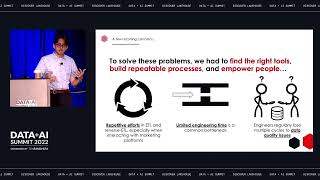
Constraints, Democratization, and the Modern Data Stack - Building a Data Platform At Red Ventures

The time and attention of skilled engineers are some of the most constrained, valuable resources at Red Digital, a marketing agency embedded within Red Ventures. Acknowledging that constraint, the team at Red Digital has taken a deliberate, product-first approach to modernize and democratize their data platform. With the help of modern tools like Databricks, Fivetran, dbt, Monte Carlo, and Airflow, Red Digital has increased its development velocity and the size of the available talent pool to continue to grow the business.

This talk will walk through some of the key challenges, decisions, and solutions that the Red Digital team has made to build a suite of parallel data stacks capable of supporting its growing business.

Connect with us: Website: https://databricks.com Facebook: https://www.facebook.com/databricksinc Twitter: https://twitter.com/databricks LinkedIn: https://www.linkedin.com/company/data... Instagram: https://www.instagram.com/databricksinc/

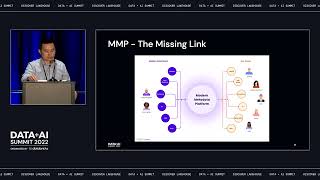
The Modern Metadata Platform: What, Why, and How?

Recently there has been a lot of buzz in the data community on the topic of metadata management. It’s often discussed in the context of data discovery, data provenance, data governance, and data privacy. Even Gartner and Forrester have created the new Active Metadata Management and Enterprise Data Fabric categories to highlight the development in this area.

However, metadata management isn’t actually a new problem. It has just taken on a whole new dimension with the widespread adoption of the Modern Data Stack. What used to be a small, esoteric issue that only concerned the core data team has exploded into complex, organizational challenges that plagued companies large and small.

In this talk, we’ll explain how a Modern Metadata Platform (MMP) can help solve these new challenges and the key ingredients to building a scalable and extensible MMP.

Connect with us: Website: https://databricks.com Facebook: https://www.facebook.com/databricksinc Twitter: https://twitter.com/databricks LinkedIn: https://www.linkedin.com/company/data... Instagram: https://www.instagram.com/databricksinc/

Databricks SQL Under the Hood: What's New with Live Demos

With serverless SQL compute and built-in governance, Databricks SQL lets every analyst and analytics engineer easily ingest, transform, and query the freshest data directly on your data lake, using their tools of choice like Fivetran, dbt, PowerBI or Tableau, and standard SQL. There is no need to move data to another system. All this takes place at virtually any scale, at a fraction of the cost of traditional cloud data warehouses. Join this session for a deep dive into how Databricks SQL works under the hood, and see a live end-to-end demo of the data and analytics on Databricks from data ingestion, transformation, and consumption, using the modern data stack along with Databricks SQL.

Connect with us: Website: https://databricks.com Facebook: https://www.facebook.com/databricksinc Twitter: https://twitter.com/databricks LinkedIn: https://www.linkedin.com/company/data... Instagram: https://www.instagram.com/databricksinc/

Emerging Data Architectures & Approaches for Real-Time AI using Redis

As more applications harness the power of real-time data, it’s important to architect and implement a data stack to meet the broad requirements of operational ML and be able to seamlessly integrate neural embeddings into applications.

Real-time ML requires more than just deploying ML models to production using MLOps tooling; it requires a fast and scalable operational database that easily integrates into the MLOps workflow. Milliseconds matter and can make the difference in delivering fast online predictions whether it’s personalized recommendations, detecting fraud, or figuring out the most optimal food delivery route.

Attend this session to explore how a modern data stack can be used for real-time operational ML and building AI-infused applications. The session will over the following topics:

Emerging architectural components for operational ML such as the online feature store for real-time serving.

Operational excellence in managing globally distributed ML data and feature pipelines

Foundational data types of Redis including the representation of data using vector embeddings.

Using Redis as a vector database to build vector similarity search applications.

Connect with us: Website: https://databricks.com Facebook: https://www.facebook.com/databricksinc Twitter: https://twitter.com/databricks LinkedIn: https://www.linkedin.com/company/data... Instagram: https://www.instagram.com/databricksinc/

Summary The ecosystem for data tools has been going through rapid and constant evolution over the past several years. These technological shifts have brought about corresponding changes in data and platform architectures for managing data and analytical workflows. In this episode Colleen Tartow shares her insights into the motivating factors and benefits of the most prominent patterns that are in the popular narrative; data mesh and the modern data stack. She also discusses her views on the role of the data lakehouse as a building block for these architectures and the ongoing influence that it will have as the technology matures.

Announcements

Hello and welcome to the Data Engineering Podcast, the show about modern data management When you’re ready to build your next pipeline, or want to test out the projects you hear about on the show, you’ll need somewhere to deploy it, so check out our friends at Linode. With their new managed database service you can launch a production ready MySQL, Postgres, or MongoDB cluster in minutes, with automated backups, 40 Gbps connections from your application hosts, and high throughput SSDs. Go to dataengineeringpodcast.com/linode today and get a $100 credit to launch a database, create a Kubernetes cluster, or take advantage of all of their other services. And don’t forget to thank them for their continued support of this show! Atlan is the metadata hub for your data ecosystem. Instead of locking your metadata into a new silo, unleash its transformative potential with Atlan’s active metadata capabilities. Push information about data freshness and quality to your business intelligence, automatically scale up and down your warehouse based on usage patterns, and let the bots answer those questions in Slack so that the humans can focus on delivering real value. Go to dataengineeringpodcast.com/atlan today to learn more about how Atlan’s active metadata platform is helping pioneering data teams like Postman, Plaid, WeWork & Unilever achieve extraordinary things with metadata and escape the chaos. Modern data teams are dealing with a lot of complexity in their data pipelines and analytical code. Monitoring data quality, tracing incidents, and testing changes can be daunting and often takes hours to days or even weeks. By the time errors have made their way into production, it’s often too late and damage is done. Datafold built automated regression testing to help data and analytics engineers deal with data quality in their pull requests. Datafold shows how a change in SQL code affects your data, both on a statistical level and down to individual rows and values before it gets merged to production. No more shipping and praying, you can now know exactly what will change in your database! Datafold integrates with all major data warehouses as well as frameworks such as Airflow & dbt and seamlessly plugs into CI workflows. Visit dataengineeringpodcast.com/datafold today to book a demo with Datafold. Tired of deploying bad data? Need to automate data pipelines with less red tape? Shipyard is the premier data orchestration platform built to help your data team quickly launch, monitor, and share workflows in a matter of minutes. Build powerful workflows that connect your entire data stack end-to-end with a mix of your code and their open-source, low-code templates. Once launched, Shipyard makes data observability easy with logging, alerting, and retries that will catch errors before your business team does. So whether you’re ingesting data from an API, transforming it with dbt, updating BI tools, or sending data alerts, Shipyard centralizes these operations and handles the heavy lifting so your data team can finally focus on what they’re good at — solving problems with data. Go to dataengineeringpodcast.com/shipyard to get started automating with their free developer plan today! Your host is Tobias Macey and today I’m interviewing Colleen Tartow about her views on the forces shaping th

The use of version control and continuous deployment in a data pipeline is one of the biggest features unlocked by the modern data stack. In this talk, I’ll demonstrate how to use Airbyte to pull data into your data warehouse, dbt to generate insights from your data, and Airflow to orchestrate every step of the pipeline. The complete project will be managed by version control and continuously deployed by Github. This talk will share how to achieve a more secure, scalable, and manageable workflow for your data projects.

This talk tells the story of how we have approached data and analytics as a startup at Preset and how the need for a data orchestrator grew over time. Our stack is (loosely) Fivetran/Segment/dbt/BigQuery/Hightouch, and we finally got to a place where we suffer quite a bit from not having an orchestrator and are bringing in Airflow to address our orchestration needs. This talk is about how startups approach solving data challenges, the shifting role of the orchestrator in the modern data stack, and the growing need for an orchestrator as your data platform becomes more complex.

Summary Metadata is the lifeblood of your data platform, providing information about what is happening in your systems. A variety of platforms have been developed to capture and analyze that information to great effect, but they are inherently limited in their utility due to their nature as storage systems. In order to level up their value a new trend of active metadata is being implemented, allowing use cases like keeping BI reports up to date, auto-scaling your warehouses, and automated data governance. In this episode Prukalpa Sankar joins the show to talk about the work she and her team at Atlan are doing to push this capability into the mainstream.

Announcements

Hello and welcome to the Data Engineering Podcast, the show about modern data management When you’re ready to build your next pipeline, or want to test out the projects you hear about on the show, you’ll need somewhere to deploy it, so check out our friends at Linode. With their new managed database service you can launch a production ready MySQL, Postgres, or MongoDB cluster in minutes, with automated backups, 40 Gbps connections from your application hosts, and high throughput SSDs. Go to dataengineeringpodcast.com/linode today and get a $100 credit to launch a database, create a Kubernetes cluster, or take advantage of all of their other services. And don’t forget to thank them for their continued support of this show! RudderStack helps you build a customer data platform on your warehouse or data lake. Instead of trapping data in a black box, they enable you to easily collect customer data from the entire stack and build an identity graph on your warehouse, giving you full visibility and control. Their SDKs make event streaming from any app or website easy, and their state-of-the-art reverse ETL pipelines enable you to send enriched data to any cloud tool. Sign up free… or just get the free t-shirt for being a listener of the Data Engineering Podcast at dataengineeringpodcast.com/rudder. Data teams are increasingly under pressure to deliver. According to a recent survey by Ascend.io, 95% in fact reported being at or over capacity. With 72% of data experts reporting demands on their team going up faster than they can hire, it’s no surprise they are increasingly turning to automation. In fact, while only 3.5% report having current investments in automation, 85% of data teams plan on investing in automation in the next 12 months. 85%!!! That’s where our friends at Ascend.io come in. The Ascend Data Automation Cloud provides a unified platform for data ingestion, transformation, orchestration, and observability. Ascend users love its declarative pipelines, powerful SDK, elegant UI, and extensible plug-in architecture, as well as its support for Python, SQL, Scala, and Java. Ascend automates workloads on Snowflake, Databricks, BigQuery, and open source Spark, and can be deployed in AWS, Azure, or GCP. Go to dataengineeringpodcast.com/ascend and sign up for a free trial. If you’re a data engineering podcast listener, you get credits worth $5,000 when you become a customer. Today’s episode is Sponsored by Prophecy.io – the low-code data engineering platform for the cloud. Prophecy provides an easy-to-use visual interface to design & deploy data pipelines on Apache Spark & Apache Airflow. Now all the data users can use software engineering best practices – git, tests and continuous deployment with a simple to use visual designer. How does it work? – You visually design the pipelines, and Prophecy generates clean Spark code with tests on git; then you visually schedule these pipelines on Airflow. You can observe your pipelines with built in metadata search and column level lineage. Finally, if you have existing workflows in AbInitio, Informatica or other ETL formats that you want to move to the cloud, you can import them automatically into Prophecy making them run productively on Spark. Create your free account today at dataengineeringpodcast.com/prophecy. Your host is Tobias Macey and today I’m interviewing Prukalpa Sankar about how data platforms can benefit from the idea of "active metadata" and the work that she and her team at Atlan are doing to make it a reality

Interview

Introduction How did you get involved in the area of data management? Can you describe what "active metadata" is and how it differs from the current approaches to metadata systems? What are some of the use cases that "active metadata" can enable for data producers and consumers?

What are the points of friction that those users encounter in the current formulation of metadata systems?

Central metadata systems/data catalogs came about as a solution to the challenge of integrating every data tool with every other data tool, giving a single place to integrate. What are the lessons that are being learned from the "modern data stack" that can be applied to centralized metadata? Can you describe the approach that you are taking at Atlan to enable the adoption of "active metadata"?

What are the architectural capabilities that you had to build to power the outbound traffic flows?

How are you addressing the N x M integration problem for pushing metadata into the necessary contexts at Atlan?

What are the interfaces that are necessary for receiving systems to be able to make use of the metadata that is being delivered? How does the type/category of metadata impact the type of integration that is necessary?

What are some of the automation possibilities that metadata activation offers for data teams?

What are the cases where you still need a human in the loop?

What are the most interesting, innovative, or unexpected ways that you have seen active metadata capabilities used? What are the most interesting, unexpected, or challenging lessons that you have learned while working on activating metadata for your users? When is an active approach to metadata the wrong choice? What do you have planned for the future of Atlan and active metadata?

Contact Info

LinkedIn @prukalpa on Twitter

Parting Question

From your perspective, what is the biggest gap in the tooling or technology for data management today?

Closing Announcements

Thank you for listening! Don’t forget to check out our other shows. Podcast.init covers the Python language, its community, and the innovative ways it is being used. The Machine Learning Podcast helps you go from idea to production with machine learning. Visit the site to subscribe to the show, sign up for the mailing list, and read the show notes. If you’ve learned something or tried out a project from the show then tell us about it! Email [email protected]) with your story. To help other people find the show please leave a review on Apple Podcasts and tell your friends and co-workers

Links

Atlan What is Active Metadata? Segment

Podcast Episode

Zapier ArgoCD Kubernetes Wix AWS Lambda Modern Data Culture Blog Post

The intro and outro music is from The Hug by The Freak Fandango Orchestra / CC BY-SA

Support Data Engineering Podcast

Summary Unstructured data takes many forms in an organization. From a data engineering perspective that often means things like JSON files, audio or video recordings, images, etc. Another category of unstructured data that every business deals with is PDFs, Word documents, workstation backups, and countless other types of information. Aparavi was created to tame the sprawl of information across machines, datacenters, and clouds so that you can reduce the amount of duplicate data and save time and money on managing your data assets. In this episode Rod Christensen shares the story behind Aparavi and how you can use it to cut costs and gain value for the long tail of your unstructured data.

Announcements

Hello and welcome to the Data Engineering Podcast, the show about modern data management When you’re ready to build your next pipeline, or want to test out the projects you hear about on the show, you’ll need somewhere to deploy it, so check out our friends at Linode. With their new managed database service you can launch a production ready MySQL, Postgres, or MongoDB cluster in minutes, with automated backups, 40 Gbps connections from your application hosts, and high throughput SSDs. Go to dataengineeringpodcast.com/linode today and get a $100 credit to launch a database, create a Kubernetes cluster, or take advantage of all of their other services. And don’t forget to thank them for their continued support of this show! This episode is brought to you by Acryl Data, the company behind DataHub, the leading developer-friendly data catalog for the modern data stack. Open Source DataHub is running in production at several companies like Peloton, Optum, Udemy, Zynga and others. Acryl Data provides DataHub as an easy to consume SaaS product which has been adopted by several companies. Signup for the SaaS product at dataengineeringpodcast.com/acryl RudderStack helps you build a customer data platform on your warehouse or data lake. Instead of trapping data in a black box, they enable you to easily collect customer data from the entire stack and build an identity graph on your warehouse, giving you full visibility and control. Their SDKs make event streaming from any app or website easy, and their state-of-the-art reverse ETL pipelines enable you to send enriched data to any cloud tool. Sign up free… or just get the free t-shirt for being a listener of the Data Engineering Podcast at dataengineeringpodcast.com/rudder. Data teams are increasingly under pressure to deliver. According to a recent survey by Ascend.io, 95% in fact reported being at or over capacity. With 72% of data experts reporting demands on their team going up faster than they can hire, it’s no surprise they are increasingly turning to automation. In fact, while only 3.5% report having current investments in automation, 85% of data teams plan on investing in automation in the next 12 months. 85%!!! That’s where our friends at Ascend.io come in. The Ascend Data Automation Cloud provides a unified platform for data ingestion, transformation, orchestration, and observability. Ascend users love its declarative pipelines, powerful SDK, elegant UI, and extensible plug-in architecture, as well as its support for Python, SQL, Scala, and Java. Ascend automates workloads on Snowflake, Databricks, BigQuery, and open source Spark, and can be deployed in AWS, Azure, or GCP. Go to dataengineeringpodcast.com/ascend and sign up for a free trial. If you’re a data engineering podcast listener, you get credits worth $5,000 when you become a customer. Your host is Tobias Macey and today I’m interviewing Rod Christensen about Aparavi, a platform designed to find and unlock the value of data, no matter where it lives

Interview

Introduction How did you get involved in the area of data management? Can you describe what Aparavi is and the story behind it? Who are the target customers for Aparavi and how does that inform your product roadmap and messaging? What are some of th