talk-data.com talk-data.com

Topic

Microsoft

technology software cloud

407

tagged

Activity Trend

556 peak/qtr
2020-Q1 2026-Q1

Activities

Showing filtered results

Filtering by: O'Reilly Data Engineering Books ×
Pro SQL Server on Linux: Including Container-Based Deployment with Docker and Kubernetes

Get SQL Server up and running on the Linux operating system and containers. No database professional managing or developing SQL Server on Linux will want to be without this deep and authoritative guide by one of the most respected experts on SQL Server in the industry. Get an inside look at how SQL Server for Linux works through the eyes of an engineer on the team that made it possible. Microsoft SQL Server is one of the leading database platforms in the industry, and SQL Server 2017 offers developers and administrators the ability to run a database management system on Linux, offering proven support for enterprise-level features and without onerous licensing terms. Organizations invested in Microsoft and open source technologies are now able to run a unified database platform across all their operating system investments. Organizations are further able to take full advantage of containerization through popular platforms such as Docker and Kubernetes. Pro SQL Server on Linux walks you through installing and configuring SQL Server on the Linux platform. The author is one of the principal architects of SQL Server for Linux, and brings a corresponding depth of knowledge that no database professional or developer on Linux will want to be without. Throughout this book are internals of how SQL Server on Linux works including an in depth look at the innovative architecture. The book covers day-to-day management and troubleshooting, including diagnostics and monitoring, the use of containers to manage deployments, and the use of self-tuning and the in-memory capabilities. Also covered are performance capabilities, high availability, and disaster recovery along with security and encryption. The book covers the product-specific knowledge to bring SQL Server and its powerful features to life on the Linux platform, including coverage of containerization through Docker and Kubernetes. What You'll Learn Learn about the history and internal of the unique SQL Server on Linux architecture. Install and configure Microsoft’s flagship database product on the Linux platform Manage your deployments using container technology through Docker and Kubernetes Know the basics of building databases, the T-SQL language, and developing applications against SQL Server on Linux Use tools and features to diagnose, manage, and monitor SQL Server on Linux Scale your application by learning the performance capabilities of SQL Server Deliver high availability and disaster recovery to ensure business continuity Secure your database from attack, and protect sensitive data through encryption Take advantage of powerful features such as Failover Clusters, Availability Groups, In-Memory Support, and SQL Server’sSelf-Tuning Engine Learn how to migrate your database from older releases of SQL Server and other database platforms such as Oracle and PostgreSQL Build and maintain schemas, and perform management tasks from both GUI and command line Who This Book Is For Developers and IT professionals who are new to SQL Server and wish to configure it on the Linux operating system. This book is also useful to those familiar with SQL Server on Windows who want to learn the unique aspects of managing SQL Server on the Linux platform and Docker containers. Readers should have a grasp of relational database concepts and be comfortable with the SQL language.
SQL Server 2017 Query Performance Tuning: Troubleshoot and Optimize Query Performance

Identify and fix causes of poor performance. You will learn Query Store, adaptive execution plans, and automated tuning on the Microsoft Azure SQL Database platform. Anyone responsible for writing or creating T-SQL queries will find valuable the insight into bottlenecks, including how to recognize them and eliminate them. This book covers the latest in performance optimization features and techniques and is current with SQL Server 2017. If your queries are not running fast enough and you’re tired of phone calls from frustrated users, then this book is the answer to your performance problems. SQL Server 2017 Query Performance Tuning is about more than quick tips and fixes. You’ll learn to be proactive in establishing performance baselines using tools such as Performance Monitor and Extended Events. You’ll recognize bottlenecks and defuse them before the phone rings. You’ll learn some quick solutions too, but emphasis is on designing for performance and getting it right. The goal is to head off trouble before it occurs. What You'll Learn Use Query Store to understand and easily change query performance Recognize and eliminate bottlenecks leading to slow performance Deploy quick fixes when needed, following up with long-term solutions Implement best practices in T-SQL to minimize performance risk Design in the performance that you need through careful query and index design Utilize the latest performance optimization features in SQL Server 2017 Protect query performance during upgrades to the newer versions of SQL Server Who This Book Is For Developers and database administrators with responsibility for application performance in SQL Server environments. Anyone responsible for writing or creating T-SQL queries will find valuable the insight into bottlenecks, including how to recognize them and eliminate them.

BizTalk

Why do businesses continue to use Microsoft’s BizTalk Server as the backbone to integrate line-of-business applications with their trading partners and how do recent changes make it even more effective? With the advent of Azure, we have a unique opportunity to enhance BizTalk functionality including reducing the cost of operations and maintenance. This book offers three solutions for the reader on ways to leverage BizTalk to get more from existing deployments or find ways to modernize the deployment via Azure. Microsoft partners are playing a significant role in enhancing the capabilities of BizTalk and this book includes sections that provide an in-depth review of BizTalk 360 © and the WPC HIPAA DB Toolkit ©. Over the recent past, Web 3.0 has also introduced many new concepts and open source technologies and this book covers ways to leverage these to enhance your BizTalk deployment. The authors start with a survey of the existing BizTalk Server – its history, patterns, and state of affairs –and go on to provide an in-depth elaboration of three messaging patterns that customers use for BizTalk; the advantages of updating to SQL Server 2016; a review of partner solutions that enhance BizTalk; and BizTalk with Web 3.0 for custom solutions. The book concludes with a comparison of the three viable BizTalk Azure application solutions that will enable you to make the best choice for your business.

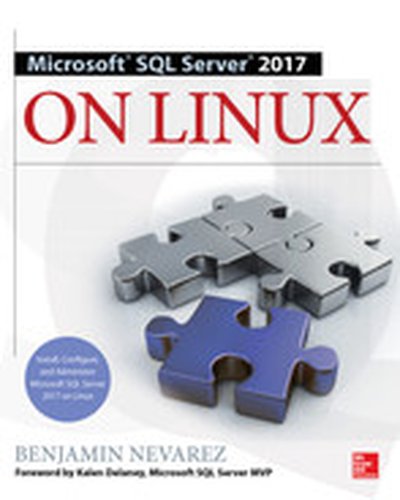
Microsoft SQL Server 2017 on Linux

Essential Microsoft® SQL Server® 2017 installation, configuration, and management techniques for Linux Foreword by Kalen Delaney, Microsoft SQL Server MVP This comprehensive guide shows, step-by-step, how to set up, configure, and administer SQL Server 2017 on Linux for high performance and high availability. Written by a SQL Server expert and respected author, Microsoft SQL Server 2017 on Linux teaches valuable Linux skills to Windows-based SQL Server professionals. You will get clear coverage of both Linux and SQL Server and complete explanations of the latest features, tools, and techniques. The book offers clear instruction on adaptive query processing, automatic tuning, disaster recovery, security, and much more. •Understand how SQL Server 2017 on Linux works •Install and configure SQL Server on Linux •Run SQL Server on Docker containers •Learn Linux Administration •Troubleshoot and tune query performance in SQL Server •Learn what is new in SQL Server 2017 •Work with adaptive query processing and automatic tuning techniques •Implement high availability and disaster recovery for SQL Server on Linux •Learn the security features available in SQL Server

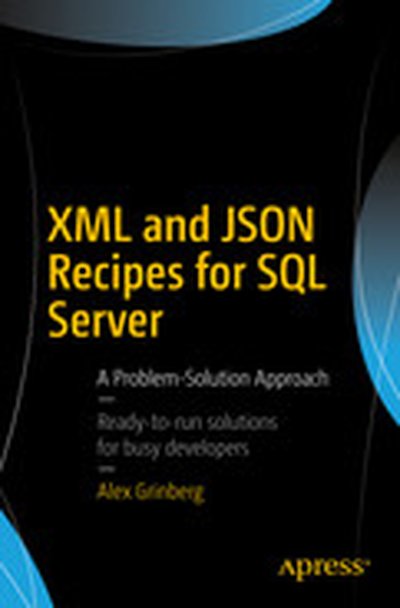
XML and JSON Recipes for SQL Server: A Problem-Solution Approach

Quickly find solutions to dozens of common problems encountered while using XML and JSON features that are built into SQL Server. Content is presented in the popular problem-solution format. Look up the problem that you want to solve. Read the solution. Apply the solution directly in your own code. Problem solved! This book shows how to take advantage of XML and JSON to share data and automate tasks. JSON is commonly used to move data back and forth between the database and front-end applications, often running in a browser. This book shows all you need to know about transforming query results into JSON format, and back again. Also covered are the processes and techniques for moving data into and out of XML format for business intelligence and other purposes, such as when transferring data from a reporting system into a data warehouse, or between different database brands such as between SQL Server and Oracle. Microsoft intensively implements XML in SQL Server, and in many related products. Execution plans are generated in XML format, and this book shows you how to parse those plans and automate the detection of performance problems. The relatively new Extended Events feature writes tracing data into XML files, and the recipes in this book help in parsing those files. XML is also used in SQL Server's BI tool set, including in SSIS, SSR, and SSAS. XML is used in many configuration files, and is even behind the construction of DDL triggers. In reading this book you’ll dive deeply into the features that allow you to build and parse XML, and also JSON, which is a specific format of XML used to transmit objects in a web-friendly format between a database and its front-end applications. What You Will Learn Build XML and JSON objects in support of automation and data transfer Import and parse XML and JSON from operating system files Build appropriate indexes on XML objects to improve query performance Move data from query result sets into JSON format, and back again Automate the detection of database performance problems by querying and parsing the database’s own execution plans Replace external and manual JSON processes with SQL Server's internal, JSON functionality Who This Book Is For Database administrators, .NET developers, business intelligence developers, and other professionals who want a deep and detailed skill set around working with XML and JSON in a SQL Server database environment. Web developers will particularly find the book useful for its coverage of transforming database result sets into JSON text that can be transmitted to front-end web applications.

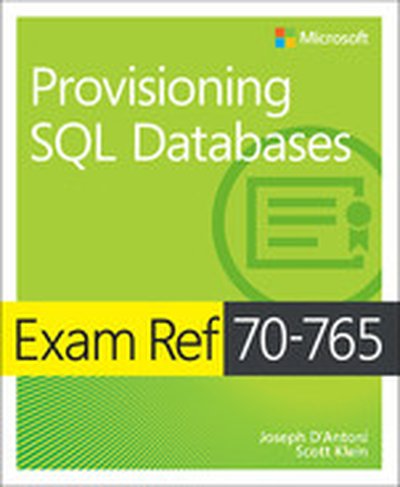
Exam Ref 70-765 Provisioning SQL Databases, First Edition

Prepare for Microsoft Exam 70-765–and help demonstrate your real-world mastery of provisioning SQL Server databases both on premise and in SQL Azure. Designed for experienced IT professionals ready to advance their status, Exam Ref focuses on the critical thinking and decision-making acumen needed for success at the MCSA level. Focus on the expertise measured by these objectives: • Implement SQL in Azure • Manage databases and instances • Manage storage This Microsoft Exam Ref: • Organizes its coverage by exam objectives • Features strategic, what-if scenarios to challenge you • Assumes you have working knowledge of SQL Server administration and maintenance, as well as Azure skills Provisioning SQL Databases About the Exam Exam 70-765 focuses on skills and knowledge for provisioning, upgrading, and configuring SQL Server; managing databases and files; and provisioning, migrating, and managing databases in the Microsoft Azure cloud. About Microsoft Certification Passing this exam as well as Exam 70-764: Administering a SQL Database Infrastructure earns you MCSA: SQL 2016 Database Administration certification, qualifying you for a position as a database administrator or infrastructure specialist. See full details at: microsoft.com/learning

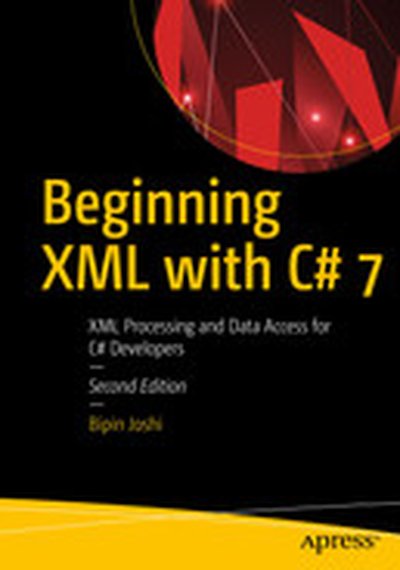
Beginning XML with C# 7: XML Processing and Data Access for C# Developers

Master the basics of XML as well as the namespaces and objects you need to know in order to work efficiently with XML. You’ll learn extensive support for XML in everything from data access to configuration, from raw parsing to code documentation. You will see clear, practical examples that illustrate best practices in implementing XML APIs and services as part of your C#-based Windows 10 applications. Beginning XML with C# 7 is completely revised to cover the XML features of .NET Framework 4.7 using C# 7 programming language. In this update, you’ll discover the tight integration of XML with ADO.NET and LINQ as well as additional .NET support for today’s RESTful web services and Web API. Written by a Microsoft Most Valuable Professional and developer, this book demystifies everything to do with XML and C# 7. What You Will Learn: Discover how XML works with the .NET Framework Read, write, access, validate, and manipulate XML documents Transform XML with XSLT Use XML serialization and web services Combine XML in ADO.NET and SQL Server Create services using Windows Communication Foundation Work with LINQ Use XML with Web API and more Who This Book Is For : Those with experience in C# and .NET new to the nuances of using XML. Some XML experience is helpful.

Exam Ref 70-767 Implementing a SQL Data Warehouse

Prepare for Microsoft Exam 70-767–and help demonstrate your real-world mastery of skills for managing data warehouses. This exam is intended for Extract, Transform, Load (ETL) data warehouse developers who create business intelligence (BI) solutions. Their responsibilities include data cleansing as well as ETL and data warehouse implementation. The reader should have experience installing and implementing a Master Data Services (MDS) model, using MDS tools, and creating a Master Data Manager database and web application. The reader should understand how to design and implement ETL control flow elements and work with a SQL Service Integration Services package. Focus on the expertise measured by these objectives: • Design, and implement, and maintain a data warehouse • Extract, transform, and load data • Build data quality solutionsThis Microsoft Exam Ref: • Organizes its coverage by exam objectives • Features strategic, what-if scenarios to challenge you • Assumes you have working knowledge of relational database technology and incremental database extraction, as well as experience with designing ETL control flows, using and debugging SSIS packages, accessing and importing or exporting data from multiple sources, and managing a SQL data warehouse. Implementing a SQL Data Warehouse About the Exam Exam 70-767 focuses on skills and knowledge required for working with relational database technology. About Microsoft Certification Passing this exam earns you credit toward a Microsoft Certified Professional (MCP) or Microsoft Certified Solutions Associate (MCSA) certification that demonstrates your mastery of data warehouse management Passing this exam as well as Exam 70-768 (Developing SQL Data Models) earns you credit toward a Microsoft Certified Solutions Associate (MCSA) SQL 2016 Business Intelligence (BI) Development certification. See full details at: microsoft.com/learning

Exam Ref 70-764 Administering a SQL Database Infrastructure

Prepare for Microsoft Exam 70-764—and help demonstrate your real-world mastery of skills for database administration. This exam is intended for database administrators charged with installation, maintenance, and configuration tasks. Their responsibilities also include setting up database systems, making sure those systems operate efficiently, and regularly storing, backing up, and securing data from unauthorized access. Focus on the expertise measured by these objectives: Configure data access and auditing Manage backup and restore of databases Manage and monitor SQL Server instances Manage high availability and disaster recovery This Microsoft Exam Ref: Organizes its coverage by exam objectives Features strategic, what-if scenarios to challenge you Assumes you have working knowledge of database installation, configuration, and maintenance tasks. You should also have experience with setting up database systems, ensuring those systems operate efficiently, regularly storing and backing up data, and securing data from unauthorized access. About the Exam Exam 70-764 focuses on skills and knowledge required for database administration. About Microsoft Certification Passing both Exam 70-764 and Exam 70-765 (Provisioning SQL Databases) earns you credit toward an MCSA: SQL 2016 Database Administration certification. See full details at: microsoft.com/learning

Web Development with MongoDB and Node - Third Edition

Explore the power of combining Node.js and MongoDB to build modern, scalable web applications in 'Web Development with MongoDB and Node.' You'll not only learn how to integrate these two technologies effectively, but you'll also gain practical insights into using modern frameworks like Express and Angular to build feature-rich web apps. What this Book will help me do Master core concepts of Node.js and MongoDB for efficient web development. Learn to build and configure a web server using the Express.js framework. Implement data persistence with MongoDB using the Mongoose ODM library. Automate testing using tools like Mocha and streamline workflows with Gulp. Deploy applications to cloud platforms like Heroku, AWS, and Microsoft Azure. Author(s) Jason Krol and None Joseph D'mello, along with None Satheesh, bring extensive experience in web development and technical writing to this book. The authors have collectively worked on cutting-edge web technologies for years and are passionate about sharing their expertise to help developers create efficient web applications. Who is it for? This book is perfect for JavaScript developers at any proficiency level who are looking to expand their skills into full-stack development with Node.js and MongoDB. Even if you have a basic understanding of JavaScript and HTML, this book will guide you through building complete web applications from scratch. If you're eager to learn and create performant, scalable web apps, this book is for you.

SQL Server 2016 High Availability Unleashed (includes Content Update Program)

Book + Content Update Program SQL Server 2016 High Availability Unleashed provides start-to-finish coverage of SQL Server’s powerful high availability (HA) solutions for your traditional on-premise databases, cloud-based databases (Azure or AWS), hybrid databases (on-premise coupled with the cloud), and your emerging Big Data solutions. This complete guide introduces an easy-to-follow, formal HA methodology that has been refined over the past several years and helps you identity the right HA solution for your needs. There is also additional coverage of both disaster recovery and business continuity architectures and considerations. You are provided with step-by-step guides, examples, and sample code to help you set up, manage, and administer these highly available solutions. All examples are based on existing production deployments at major Fortune 500 companies around the globe. This book is for all intermediate-to-advanced SQL Server and Big Data professionals, but is also organized so that the first few chapters are great foundation reading for CIOs, CTOs, and even some tech-savvy CFOs. Learn a formal, high availability methodology for understanding and selecting the right HA solution for your needs Deep dive into Microsoft Cluster Services Use selective data replication topologies Explore thorough details on AlwaysOn and availability groups Learn about HA options with log shipping and database mirroring/ snapshots Get details on Microsoft Azure for Big Data and Azure SQL Explore business continuity and disaster recovery Learn about on-premise, cloud, and hybrid deployments Provide all types of database needs, including online transaction processing, data warehouse and business intelligence, and Big Data Explore the future of HA and disaster recovery In addition, this book is part of InformIT’s exciting Content Update Program, which provides content updates for major technology improvements! As significant updates are made to SQL Server, sections of this book will be updated or new sections will be added to match the updates to the technologies. As updates become available, they will be delivered to you via a free Web Edition of this book, which can be accessed with any Internet connection. To learn more, visit informit.com/cup. How to access the Web Edition: Follow the instructions inside to learn how to register your book to access the FREE Web Edition. * The companion material is not available with the online edition on O'Reilly Learning

Moving Hadoop to the Cloud

Until recently, Hadoop deployments existed on hardware owned and run by organizations. Now, of course, you can acquire the computing resources and network connectivity to run Hadoop clusters in the cloud. But there’s a lot more to deploying Hadoop to the public cloud than simply renting machines. This hands-on guide shows developers and systems administrators familiar with Hadoop how to install, use, and manage cloud-born clusters efficiently. You’ll learn how to architect clusters that work with cloud-provider features—not just to avoid pitfalls, but also to take full advantage of these services. You’ll also compare the Amazon, Google, and Microsoft clouds, and learn how to set up clusters in each of them. Learn how Hadoop clusters run in the cloud, the problems they can help you solve, and their potential drawbacks Examine the common concepts of cloud providers, including compute capabilities, networking and security, and storage Build a functional Hadoop cluster on cloud infrastructure, and learn what the major providers require Explore use cases for high availability, relational data with Hive, and complex analytics with Spark Get patterns and practices for running cloud clusters, from designing for price and security to dealing with maintenance

Building Custom Tasks for SQL Server Integration Services

Learn to build custom SSIS tasks using Visual Studio Community Edition and Visual Basic. Bring all the power of Microsoft .NET to bear on your data integration and ETL processes, and for no added cost over what you’ve already spent on licensing SQL Server. If you already have a license for SQL Server, then you do not need to spend more money to extend SSIS with custom tasks and components. Why are custom components necessary? Because even though the SSIS catalog of built-in tasks and components is a marvel of engineering, there do remain gaps in the functionality that is provided. These gaps are especially relevant to enterprises practicing Data Integration Lifecycle Management (DILMS) and/or DevOps. One of the gaps is a limitation of the SSIS Execute Package task. Developers using the stock version of that task are unable to select SSIS packages from other projects. Yet it’s useful to be able to select and execute tasks across projects, and the example used throughout this book will help you to create an Execute Catalog Package task that does in fact allow you to execute a task from another project. Building on the example’s pattern, you can create any task that you like, custom tailored to your specific, data integration and ETL needs. What You Will Learn Configure and execute Visual Studio in the way that best supports SSIS task development Create a class library as the basis for an SSIS task, and reference the needed SSIS assemblies Properly sign assemblies that you create in order to invoke them from your task Implement source code control via Visual Studio Team Services, or your own favorite tool set Code not only your tasks themselves, but also the associated task editors Troubleshoot and then execute your custom tasks as part of your own project Who This Book Is For Database administrators and developers who are involved in ETL projects built around SQL Server Integration Services (SSIS). Readers should have a background in programming along with a desire to optimize their ETL efforts by creating custom-tailored tasks for execution from SSIS packages.

IBM DB2 Web Query for i: The Nuts and Bolts

Abstract Business Intelligence (BI) is a broad term that relates to applications that analyze data to understand and act on the key metrics that drive profitability in an enterprise. Key to analyzing that data is providing fast, easy access to it while delivering it in formats or tools that best fit the needs of the user. At the core of any BI solution are user query and reporting tools that provide intuitive access to data supporting a spectrum of users from executives to “power users,” from spreadsheet aficionados to the external Internet consumer. IBM® DB2® Web Query for i offers a set of modernized tools for a more robust, extensible, and productive reporting solution than the popular IBM Query for System i® tool (also known as IBM Query/400). IBM DB2 Web Query for i preserves investments in the reports that are developed with Query/400 by offering a choice of importing definitions into the new technology or continuing to run existing Query/400 reports as is. But, it also offers significant productivity and performance enhancements by leveraging the latest in DB2 for i query optimization technology. The DB2 Web Query for i product is a web-based query and report writing product that offers enhanced capabilities over the IBM Query for iSeries product (also commonly known as Query/400). IBM DB2 Web Query for i includes Query for iSeries technology to assist customers in their transition to DB2 Web Query. It offers a more modernized, Java based solution for a more robust, extensible, and productive reporting solution. DB2 Web Query provides the ability to query or build reports against data that is stored in DB2 for i (or Microsoft SQL Server) databases through browser-based user interface technologies: Build reports with ease through the web-based, ribbon-like InfoAssist tool that leverages a common look and feel that can extend the number of personnel that can generate their own reports. Simplify the management of reports by significantly reducing the number of report definitions that are required through the use of parameter driven reports. Deliver data to users in many different formats, including directly into spreadsheets, or in boardroom-quality PDF format, or viewed from the browser in HTML. Leverage advanced reporting functions, such as matrix reporting, ranking, color coding, drill-down, and font customization to enhance the visualization of DB2 data. DB2 Web Query offers features to import Query/400 definitions and enhance their look and functions. By using it, you can add OLAP-like slicing and dicing to the reports or view reports in disconnected mode for users on the go. This IBM Redbooks® publication provides a broad understanding of what can be done with the DB2 Web Query product. This publication is a companion of DB2 Web Query Tutorials, SG24-8378, which has a group of self-explanatory tutorials to help you get up to speed quickly.

Exam Ref 70-768 Developing SQL Data Models, First Edition

Prepare for Microsoft Exam 70-768–and help demonstrate your real-world mastery of Business Intelligence (BI) solutions development with SQL Server 2016 Analysis Services (SSAS), including modeling and queries. Designed for experienced IT professionals ready to advance their status, Exam Ref focuses on the critical thinking and decision-making acumen needed for success at the MCSA level. Focus on the expertise measured by these objectives: • Design a multidimensional BI semantic model • Design a tabular BI semantic model • Develop queries using Multidimensional Expressions (MDX) and Data Analysis Expressions (DAX) • Configure and maintain SSAS This Microsoft Exam Ref: • Organizes its coverage by exam objectives • Features strategic, what-if scenarios to challenge you • Assumes you are a database or BI professional with experience creating models, writing MDX or DAX queries, and using SSAS

Tabular Modeling in Microsoft SQL Server Analysis Services, Second Edition

Build agile and responsive business intelligence solutions Create a semantic model and analyze data using the tabular model in SQL Server 2016 Analysis Services to create corporate-level business intelligence (BI) solutions. Led by two BI experts, you will learn how to build, deploy, and query a tabular model by following detailed examples and best practices. This hands-on book shows you how to use the tabular model’s in-memory database to perform rapid analytics—whether you are new to Analysis Services or already familiar with its multidimensional model. Discover how to: • Determine when a tabular or multidimensional model is right for your project • Build a tabular model using SQL Server Data Tools in Microsoft Visual Studio 2015 • Integrate data from multiple sources into a single, coherent view of company information • Choose a data-modeling technique that meets your organization’s performance and usability requirements • Implement security by establishing administrative and data user roles • Define and implement partitioning strategies to reduce processing time • Use Tabular Model Scripting Language (TMSL) to execute and automate administrative tasks • Optimize your data model to reduce the memory footprint for VertiPaq • Choose between in-memory (VertiPaq) and pass-through (DirectQuery) engines for tabular models • Select the proper hardware and virtualization configurations • Deploy and manipulate tabular models from C# and PowerShell using AMO and TOM libraries Get code samples, including complete apps, at: https://aka.ms/tabular/downloads About This Book • For BI professionals who are new to SQL Server 2016 Analysis Services or already familiar with previous versions of the product, and who want the best reference for creating and maintaining tabular models. • Assumes basic familiarity with database design and business analytics concepts.

Exam Ref 70-761 Querying Data with Transact-SQL, 1st Edition

Prepare for Microsoft Exam 70-761–and help demonstrate your real-world mastery of SQL Server 2016 Transact-SQL data management, queries, and database programming. Designed for experienced IT professionals ready to advance their status, Exam Ref focuses on the critical-thinking and decision-making acumen needed for success at the MCSA level. Focus on the expertise measured by these objectives: Filter, sort, join, aggregate, and modify data Use subqueries, table expressions, grouping sets, and pivoting Query temporal and non-relational data, and output XML or JSON Create views, user-defined functions, and stored procedures Implement error handling, transactions, data types, and nulls This Microsoft Exam Ref: Organizes its coverage by exam objectives Features strategic, what-if scenarios to challenge you Assumes you have experience working with SQL Server as a database administrator, system engineer, or developer Includes downloadable sample database and code for SQL Server 2016 SP1 (or later) and Azure SQL Database Querying Data with Transact-SQL About the Exam Exam 70-761 focuses on the skills and knowledge necessary to manage and query data and to program databases with Transact-SQL in SQL Server 2016. About Microsoft Certification Passing this exam earns you credit toward a Microsoft Certified Solutions Associate (MCSA) certification that demonstrates your mastery of essential skills for building and implementing on-premises and cloud-based databases across organizations. Exam 70-762 (Developing SQL Databases) is also required for MCSA: SQL 2016 Database Development certification. See full details at: microsoft.com/learning

Introduction to Bayesian Estimation and Copula Models of Dependence

Presents an introduction to Bayesian statistics, presents an emphasis on Bayesian methods (prior and posterior), Bayes estimation, prediction, MCMC,Bayesian regression, and Bayesian analysis of statistical modelsof dependence, and features a focus on copulas for risk management Introduction to Bayesian Estimation and Copula Models of Dependence emphasizes the applications of Bayesian analysis to copula modeling and equips readers with the tools needed to implement the procedures of Bayesian estimation in copula models of dependence. This book is structured in two parts: the first four chapters serve as a general introduction to Bayesian statistics with a clear emphasis on parametric estimation and the following four chapters stress statistical models of dependence with a focus of copulas. A review of the main concepts is discussed along with the basics of Bayesian statistics including prior information and experimental data, prior and posterior distributions, with an emphasis on Bayesian parametric estimation. The basic mathematical background of both Markov chains and Monte Carlo integration and simulation is also provided. The authors discuss statistical models of dependence with a focus on copulas and present a brief survey of pre-copula dependence models. The main definitions and notations of copula models are summarized followed by discussions of real-world cases that address particular risk management problems. In addition, this book includes: • Practical examples of copulas in use including within the Basel Accord II documents that regulate the world banking system as well as examples of Bayesian methods within current FDA recommendations • Step-by-step procedures of multivariate data analysis and copula modeling, allowing readers to gain insight for their own applied research and studies • Separate reference lists within each chapter and end-of-the-chapter exercises within Chapters 2 through 8 • A companion website containing appendices: data files and demo files in Microsoft® Office Excel®, basic code in R, and selected exercise solutions Introduction to Bayesian Estimation and Copula Models of Dependence is a reference and resource for statisticians who need to learn formal Bayesian analysis as well as professionals within analytical and risk management departments of banks and insurance companies who are involved in quantitative analysis and forecasting. This book can also be used as a textbook for upper-undergraduate and graduate-level courses in Bayesian statistics and analysis. ARKADY SHEMYAKIN, PhD, is Professor in the Department of Mathematics and Director of the Statistics Program at the University of St. Thomas. A member of the American Statistical Association and the International Society for Bayesian Analysis, Dr. Shemyakin's research interests include informationtheory, Bayesian methods of parametric estimation, and copula models in actuarial mathematics, finance, and engineering. ALEXANDER KNIAZEV, PhD, is Associate Professor and Head of the Department of Mathematics at Astrakhan State University in Russia. Dr. Kniazev's research interests include representation theory of Lie algebras and finite groups, mathematical statistics, econometrics, and financial mathematics.

Professional Microsoft SQL Server 2016 Reporting Services and Mobile Reports

Optimize reporting and BI with Microsoft SQL Server 2016 Professional Microsoft SQL Server 2016 Reporting Services and Mobile Reports provides a comprehensive lesson in business intelligence (BI), operational reporting and Reporting Services architecture using a clear, concise tutorial approach. You'll learn effective report solution design based upon many years of experience with successful report solutions. Improve your own reports with advanced, best-practice design, usability, query design, and filtering techniques. Expert guidance provides insight into common report types and explains where each could be made more efficient, while providing step-by step instruction on Microsoft SQL Server 2016. All changes to the 2016 release are covered in detail, including improvements to the Visual Studio Report Designer (SQL Server Data Tools) and Report Builder, Mobile Dashboard Designer, the new Report Portal Interface, HTML-5 Rendering, Power BI integration, Custom Parameters Pane, and more. The Microsoft SQL Server 2016 release will include significant changes. New functionality, new capabilities, re-tooled processes, and changing support require a considerable update to existing knowledge. Whether you're starting from scratch or simply upgrading, this book is an essential guide to report design and business intelligence solutions. Understand BI fundamentals and Reporting Services architecture Learn the ingredients to a successful report design Get up to speed on Microsoft SQL Server 2016 Grasp the purpose behind common designs to optimize your reporting Microsoft SQL Server Reporting Services makes reporting faster, easier, and more powerful than ever in web, desktop and portal solutions. Compatibility with an extensive variety of data sources makes it a go-to solution for organizations across the globe. The 2016 release brings some of the biggest changes in years, and the full depth and breadth of these changes can create a serious snag in your workflow. For a clear tutorial geared toward the working professional, Professional Microsoft SQL Server 2016 Reporting Services and Mobile Reports is the ideal guide for getting up to speed and producing successful reports.

Exam Ref 70-762 Developing SQL Databases

Prepare for Microsoft Exam 70-762, Developing SQL Databases –and help demonstrate your real-world mastery of skills for building and implementing databases across organizations. Designed for database professionals who build and implement databases across organizations and who ensure high levels of data availability, Exam Ref focuses on the critical-thinking and decision-making acumen needed for success at the MCSA level. Focus on the expertise measured by these objectives: Design and implement database objects Implement programmability objects Manage database concurrency Optimize database objects and SQL infrastructure This Microsoft Exam Ref: Organizes its coverage by exam objectives Features strategic, what-if scenarios to challenge you Assumes you have working knowledge of Microsoft Windows, Transact-SQL, and relational databases About the Exam Exam 70-762 focuses on skills and knowledge for building and implementing databases across organizations and ensuring high levels of data availability. About Microsoft Certification Passing this exam earns you credit toward a Microsoft Certified Solutions Associate (MCSA) certification that demonstrates your mastery of modern database development. Exam 70-761 (Querying Data with Transact-SQL) is also required for MCSA: SQL 2016 Database Development. See full details at: microsoft.com/learning