talk-data.com talk-data.com

Topic

Microsoft

technology software cloud

1606

tagged

Activity Trend

556 peak/qtr
2020-Q1 2026-Q1

Activities

1606 activities · Newest first

R in Action, Third Edition

R is the most powerful tool you can use for statistical analysis. This definitive guide smooths R’s steep learning curve with practical solutions and real-world applications for commercial environments. In R in Action, Third Edition you will learn how to: Set up and install R and RStudio Clean, manage, and analyze data with R Use the ggplot2 package for graphs and visualizations Solve data management problems using R functions Fit and interpret regression models Test hypotheses and estimate confidence Simplify complex multivariate data with principal components and exploratory factor analysis Make predictions using time series forecasting Create dynamic reports and stunning visualizations Techniques for debugging programs and creating packages R in Action, Third Edition makes learning R quick and easy. That’s why thousands of data scientists have chosen this guide to help them master the powerful language. Far from being a dry academic tome, every example you’ll encounter in this book is relevant to scientific and business developers, and helps you solve common data challenges. R expert Rob Kabacoff takes you on a crash course in statistics, from dealing with messy and incomplete data to creating stunning visualizations. This revised and expanded third edition contains fresh coverage of the new tidyverse approach to data analysis and R’s state-of-the-art graphing capabilities with the ggplot2 package. About the Technology Used daily by data scientists, researchers, and quants of all types, R is the gold standard for statistical data analysis. This free and open source language includes packages for everything from advanced data visualization to deep learning. Instantly comfortable for mathematically minded users, R easily handles practical problems without forcing you to think like a software engineer. About the Book R in Action, Third Edition teaches you how to do statistical analysis and data visualization using R and its popular tidyverse packages. In it, you’ll investigate real-world data challenges, including forecasting, data mining, and dynamic report writing. This revised third edition adds new coverage for graphing with ggplot2, along with examples for machine learning topics like clustering, classification, and time series analysis. What's Inside Clean, manage, and analyze data Use the ggplot2 package for graphs and visualizations Techniques for debugging programs and creating packages A complete learning resource for R and tidyverse About the Reader Requires basic math and statistics. No prior experience with R needed. About the Author Dr. Robert I Kabacoff is a professor of quantitative analytics at Wesleyan University and a seasoned data scientist with more than 20 years of experience. Quotes Kabacoff has outdone himself by significantly improving on the already excellent previous edition. - Alain Lompo, ISO-Gruppe R in Action has been my go-to reference on R for years. The third edition contains timely updates on the tidyverse and other new tools. I would recommend this book without hesitation. - Daniel Kenney-Jung MD, Department of Pediatrics, Duke University Outstandingly well-written. The best book on R programming that I have ever read. - Kelvin Meeks, International Technology Ventures Takes the reader through a series of essential methods from basic to complex. The only R book you will ever need. - Martin Perry, Microsoft
SAP S/4HANA Systems in Hyperscaler Clouds: Deploying SAP S/4HANA in AWS, Google Cloud, and Azure

This book helps SAP architects and SAP Basis administrators deploy and operate SAP S/4HANA systems on the most common public cloud platforms. Market-leading cloud offerings are covered, including Amazon Web Services, Microsoft Azure, and Google Cloud. You will gain an end-to-end understanding of the initial implementation of SAP S/4HANA systems on those platforms. You will learn how to move away from the big monolithic SAP ERP systems and arrive at an environment with a central SAP S/4HANA system as the digital core surrounded by cloud-native services. The book begins by introducing the core concepts of Hyperscaler cloud platforms that are relevant to SAP. You will learn about the architecture of SAP S/4HANA systems on public cloud platforms, with specific content provided for each of the major platforms. The book simplifies the deployment of SAP S/4HANA systems in public clouds by providing step-by-step instructions and helping you deal with thecomplexity of such a deployment. Content in the book is based on best practices, industry lessons learned, and architectural blueprints, helping you develop deep insights into the operations of SAP S/4HANA systems on public cloud platforms. Reading this book enables you to build and operate your own SAP S/4HANA system in the public cloud with a minimum of effort. What You Will Learn Choose the right Hyperscaler platform for your future SAP S/4HANA workloads Start deploying your first SAP S/4HANA system in the public cloud Avoid typical pitfalls during your implementation Apply and leverage cloud-native services for your SAP S/4HANA system Save costs by choosing the right architecture and build a robust architecture for your most critical SAP systems Meet your business’ criteria for availability and performance by having the right sizing in place Identify further use cases whenoperating SAP S/4HANA in the public cloud Who This Book Is For SAP architects looking for an answer on how to move SAP S/4HANA systems from on-premises into the cloud; those planning to deploy to one of the three major platforms from Amazon Web Services, Microsoft Azure, and Google Cloud Platform; and SAP Basis administrators seeking a detailed and realistic description of how to get started on a migration to the cloud and how to drive that cloud implementation to completion

SQL Server Advanced Troubleshooting and Performance Tuning

This practical book provides a comprehensive overview of troubleshooting and performance tuning best practices for Microsoft SQL Server. Database engineers, including database developers and administrators, will learn how to identify performance issues, troubleshoot the system in a holistic fashion, and properly prioritize tuning efforts to attain the best system performance possible. Author Dmitri Korotkevitch, Microsoft Data Platform MVP and Microsoft Certified Master (MCM), explains the interdependencies between SQL Server database components. You'll learn how to quickly diagnose your system and discover the root cause of any issue. Techniques in this book are compatible with all versions of SQL Server and cover both on-premises and cloud-based SQL Server installations. Discover how performance issues present themselves in SQL Server Learn about SQL Server diagnostic tools, methods, and technologies Perform health checks on SQL Server installations Learn the dependencies between SQL Server components Tune SQL Server to improve performance and reduce bottlenecks Detect poorly optimized queries and inefficiencies in query execution plans Find inefficient indexes and common database design issues Use these techniques with Microsoft Azure SQL databases, Azure SQL Managed Instances, and Amazon RDS for SQL Server

An estimated 80 to 90 percent of the data in an enterprise is text. Sadly, this rich information is mostly neglected for analytical purposes. Textual data is typically full of information, but also very complex to interpret computationally and statistically. Why? Because textual data is both content and context. The same words and sentences can have very different meanings depending on the context. Textual data is truly a goldmine, but how can we mine it without being digital superpowers like Google, Microsoft or Facebook? To answer this question and many more relating to interpretation of textual data, I recently spoke to Bill Inmon. Bill is the Founder, Chairman and CEO of Forest Rim Technology and author of more than 60 books on data warehousing. He is often described as the Father of Data Warehousing due to his pioneering efforts in making data and data technologies available to organisations across all industries and sizes. In this episode of Leaders of Analytics, we discuss: How Bill became the Father of Data WarehousingThe history of data warehousing and the most exciting developments in this space todayThe typical challenges holding us back from extracting value from textual dataThe concept of the “Textual ETL” and it’s benefits over other text data storage and analytics approachesWhy NLP is not the best approach for textual data analyticsThe biggest opportunities for textual analytics today and in the future, and much more.Connect with Bill: Forest Rim Technnology: https://www.forestrimtech.com/ Bill on LinkedIn: https://www.linkedin.com/in/billinmon/

Amit Prakash is Co-founder and CTO at ThoughtSpot. He has a deep background in search, having previously led the AdSense engineering team at Google and served on the early Bing team at Microsoft. In this conversation with Tristan and Julia, Amit gets real about the promise of AI in data: which applications are being widely used today, and which are still a few years out? For full show notes and to read 6+ years of back issues of the podcast's companion newsletter, head to https://roundup.getdbt.com.  The Analytics Engineering Podcast is sponsored by dbt Labs.

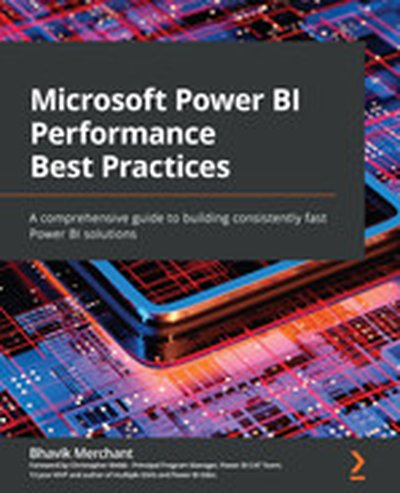
Microsoft Power BI Performance Best Practices

"Microsoft Power BI Performance Best Practices" is a thorough guide to mastering efficiently operating Power BI solutions. This book walks you through optimizing every layer of a Power BI project, from data transformations to architecture, equipping you with the ability to create robust and scalable analytics solutions. What this Book will help me do Understand how to set realistic performance goals for Power BI projects and implement ongoing performance monitoring. Apply effective architectural and configuration strategies to improve Power BI solution efficiency. Learn practices for constructing and optimizing data models and implementing Row-Level Security effectively. Utilize tools like DAX Studio and VertiPaq Analyzer to detect and resolve common performance bottlenecks. Gain deep knowledge of Power BI Premium and techniques for handling large-scale data solutions using Azure. Author(s) Bhavik Merchant is a recognized expert in business intelligence and analytics solutions. With extensive experience in designing and implementing Power BI solutions across industries, he brings a pragmatic approach to solving performance issues in Power BI. Bhavik's writing style reflects his passion for teaching, ensuring readers gain practical knowledge they can directly apply to their work. Who is it for? This book is designed for data analysts, BI developers, and data professionals who have foundational knowledge of Power BI and aim to elevate their skills to construct high-performance analytics solutions. It is particularly suited to individuals seeking guidance on best practices and tools for optimizing Power BI applications.

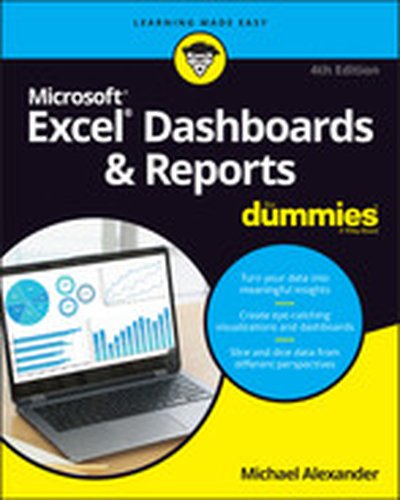
Excel Dashboards & Reports For Dummies, 4th Edition

It’s time for some truly “Excel-lent” spreadsheet reporting Beneath the seemingly endless rows and columns of cells, the latest version of Microsoft Excel boasts an astonishing variety of features and capabilities. But how do you go about tapping into some of that power without spending all of your days becoming a spreadsheet guru? It’s easy. You grab a copy of the newest edition of Excel Dashboards & Reports For Dummies and get ready to blow the pants off your next presentation audience! With this book, you’ll learn how to transform those rows and columns of data into dynamic reports, dashboards, and visualizations. You’ll draw powerful new insights from your company’s numbers to share with your colleagues – and seem like the smartest person in the room while you’re doing it. Excel Dashboards & Reports For Dummies offers: Complete coverage of the latest version of Microsoft Excel provided in the Microsoft 365 subscription Strategies to automate your reporting so you don’t have to manually crunch the numbers every week, month, quarter, or year Ways to get new perspectives on old data, visualizing it so you can find solutions no one else has seen before If you’re ready to make your company’s numbers and spreadsheets dance, it’s time to get the book that’ll have them moving to your tune in no time. Get Excel Dashboards & Reports For Dummies today.

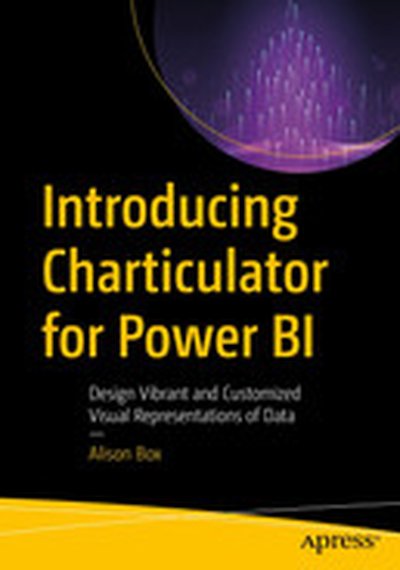
Introducing Charticulator for Power BI: Design Vibrant and Customized Visual Representations of Data

Create stunning and complex visualizations using the amazing Charticulator custom visuals in Power BI. Charticulator offers users immense power to generate visuals and graphics. To a beginner, there are myriad settings and options that can be combined in what feels like an unlimited number of combinations, giving it the unfair label, “the DAX of the charting world”. This is not true. This book is your start-to-finish guide to using Charticulator, a custom visualization software that Microsoft integrated into Power BI Desktop so that Power BI users can create incredibly powerful, customized charts and graphs. You will learn the concepts that underpin the software, journeying through every building block of chart design, enabling you to combine these parts to create spectacular visuals that represent the story of your data. Unlike other custom Power BI visuals, Charticulator runs in a separate application window within Power BI with its own interface and requires a different set of interactions and associated knowledge. This book covers the ins and outs of all of them. What You Will Learn Generate inspirational and technically competent visuals with no programming or other specialist technical knowledge Create charts that are not restricted to conventional chart types such as bar, line, or pie Limit the use of diverse Power BI custom visuals to one Charticulator custom visual Alleviate frustrations with the limitations of default chart types in Power BI, such as being able to plot data on only one categorical axis Use a much richer set of options to compare different sets of data Re-use your favorite or most often used chart designs with Charticulator templates Who This Book Is For The average Power BI user. It assumes no prior knowledge on the part of the reader other than being able to open Power BI desktop, import data, and create a simple Power BI visual. User experiences may vary, from people attending a Power BI training course to those with varying skills and abilities, from SQL developers and advanced Excel users to people with limited data analysis experience and technical skills.

Data Analysis with Python and PySpark

Think big about your data! PySpark brings the powerful Spark big data processing engine to the Python ecosystem, letting you seamlessly scale up your data tasks and create lightning-fast pipelines. In Data Analysis with Python and PySpark you will learn how to: Manage your data as it scales across multiple machines Scale up your data programs with full confidence Read and write data to and from a variety of sources and formats Deal with messy data with PySpark’s data manipulation functionality Discover new data sets and perform exploratory data analysis Build automated data pipelines that transform, summarize, and get insights from data Troubleshoot common PySpark errors Creating reliable long-running jobs Data Analysis with Python and PySpark is your guide to delivering successful Python-driven data projects. Packed with relevant examples and essential techniques, this practical book teaches you to build pipelines for reporting, machine learning, and other data-centric tasks. Quick exercises in every chapter help you practice what you’ve learned, and rapidly start implementing PySpark into your data systems. No previous knowledge of Spark is required. About the Technology The Spark data processing engine is an amazing analytics factory: raw data comes in, insight comes out. PySpark wraps Spark’s core engine with a Python-based API. It helps simplify Spark’s steep learning curve and makes this powerful tool available to anyone working in the Python data ecosystem. About the Book Data Analysis with Python and PySpark helps you solve the daily challenges of data science with PySpark. You’ll learn how to scale your processing capabilities across multiple machines while ingesting data from any source—whether that’s Hadoop clusters, cloud data storage, or local data files. Once you’ve covered the fundamentals, you’ll explore the full versatility of PySpark by building machine learning pipelines, and blending Python, pandas, and PySpark code. What's Inside Organizing your PySpark code Managing your data, no matter the size Scale up your data programs with full confidence Troubleshooting common data pipeline problems Creating reliable long-running jobs About the Reader Written for data scientists and data engineers comfortable with Python. About the Author As a ML director for a data-driven software company, Jonathan Rioux uses PySpark daily. He teaches the software to data scientists, engineers, and data-savvy business analysts. Quotes A clear and in-depth introduction for truly tackling big data with Python. - Gustavo Patino, Oakland University William Beaumont School of Medicine The perfect way to learn how to analyze and master huge datasets. - Gary Bake, Brambles Covers both basic and more advanced topics of PySpark, with a good balance between theory and hands-on. - Philippe Van Bergenl, P² Consulting For beginner to pro, a well-written book to help understand PySpark. - Raushan Kumar Jha, Microsoft

Excel Power Pivot & Power Query For Dummies, 2nd Edition

Learn to crunch huge amounts of data with PowerPivot and Power Query Do you have a ton of data you need to make sense of? Microsoft’s Excel program can handle amazingly large data sets, but you’ll need to get familiar with PowerPivot and Power Query to get started. And that’s where Dummies comes in. With step-by-step instructions—accompanied by ample screenshots—Excel PowerPivot & Power Query For Dummies will teach you how to save time, simplify your processes, and enhance your data analysis and reporting. Use Power Query to discover, connect to, and import your organization’s data. Then use PowerPivot to model it in Excel. You’ll also learn to: Make use of databases to store large amounts of data Use custom functions to extend and enhance Power Query Add the functionality of formulas to PowerPivot and publish data to SharePoint If you’re expected to wrangle, interpret, and report on large amounts of data, Excel PowerPivot & Power Query For Dummies gives you the tools you need to get up to speed quickly.

Practical SQL, 2nd Edition

Practical SQL is an approachable and fast-paced guide to SQL (Structured Query Language), the standard programming language for defining, organizing, and exploring data in relational databases. Anthony DeBarros, a journalist and data analyst, focuses on using SQL to find the story within your data. The examples and code use the open-source database PostgreSQL and its companion pgAdmin interface, and the concepts you learn will apply to most database management systems, including MySQL, Oracle, SQLite, and others.* You’ll first cover the fundamentals of databases and the SQL language, then build skills by analyzing data from real-world datasets such as US Census demographics, New York City taxi rides, and earthquakes from US Geological Survey. Each chapter includes exercises and examples that teach even those who have never programmed before all the tools necessary to build powerful databases and access information quickly and efficiently. You’ll learn how to: •Create databases and related tables using your own data •Aggregate, sort, and filter data to find patterns •Use functions for basic math and advanced statistical operations •Identify errors in data and clean them up •Analyze spatial data with a geographic information system (PostGIS) •Create advanced queries and automate tasks This updated second edition has been thoroughly revised to reflect the latest in SQL features, including additional advanced query techniques for wrangling data. This edition also has two new chapters: an expanded set of instructions on for setting up your system plus a chapter on using PostgreSQL with the popular JSON data interchange format. Learning SQL doesn’t have to be dry and complicated. Practical SQL delivers clear examples with an easy-to-follow approach to teach you the tools you need to build and manage your own databases. * Microsoft SQL Server employs a variant of the language called T-SQL, which is not covered by Practical SQL.

Analytics Optimization with Columnstore Indexes in Microsoft SQL Server: Optimizing OLAP Workloads

Meet the challenge of storing and accessing analytic data in SQL Server in a fast and performant manner. This book illustrates how columnstore indexes can provide an ideal solution for storing analytic data that leads to faster performing analytic queries and the ability to ask and answer business intelligence questions with alacrity. The book provides a complete walk through of columnstore indexing that encompasses an introduction, best practices, hands-on demonstrations, explanations of common mistakes, and presents a detailed architecture that is suitable for professionals of all skill levels. With little or no knowledge of columnstore indexing you can become proficient with columnstore indexes as used in SQL Server, and apply that knowledge in development, test, and production environments. This book serves as a comprehensive guide to the use of columnstore indexes and provides definitive guidelines. You will learn when columnstore indexes shouldbe used, and the performance gains that you can expect. You will also become familiar with best practices around architecture, implementation, and maintenance. Finally, you will know the limitations and common pitfalls to be aware of and avoid. As analytic data can become quite large, the expense to manage it or migrate it can be high. This book shows that columnstore indexing represents an effective storage solution that saves time, money, and improves performance for any applications that use it. You will see that columnstore indexes are an effective performance solution that is included in all versions of SQL Server, with no additional costs or licensing required. What You Will Learn Implement columnstore indexes in SQL Server Know best practices for the use and maintenance of analytic data in SQL Server Use metadata to fully understand the size and shape of data stored in columnstore indexes Employ optimal ways to load, maintain, and delete data from large analytic tables Know how columnstore compression saves storage, memory, and time Understand when a columnstore index should be used instead of a rowstore index Be familiar with advanced features and analytics Who This Book Is For Database developers, administrators, and architects who are responsible for analytic data, especially for those working with very large data sets who are looking for new ways to achieve high performance in their queries, and those with immediate or future challenges to analytic data and query performance who want a methodical and effective solution

Learn Power BI - Second Edition

Learn Power BI is a comprehensive guide to mastering Microsoft Power BI. With step-by-step instructions, this book equips you to analyze and visualize data effectively, delivering actionable business insights. Whether you're new to Power BI or seeking to deepen your knowledge, you'll find practical examples and hands-on exercises to enhance your skills. What this Book will help me do Master the basics of using Microsoft Power BI for data analysis. Learn to clean and transform datasets effectively using Power Query. Build analytical models and perform calculations using DAX. Design professional-quality reports, dashboards, and visualizations. Understand governance and deploy Power BI in organizational environments. Author(s) Greg Deckler is a recognized expert in business intelligence and analytics, bringing years of practical experience in using Microsoft Power BI for data-driven decision-making. As an accomplished author, Greg's approachable writing style helps readers of all levels. In his book, he conveys complex concepts in a clear, structured, and user-friendly manner. Who is it for? This book is ideal for IT professionals, data analysts, and individuals interested in business intelligence using Power BI. Whether you're a beginner or transitioning from other tools, it guides you through the basics to advanced features. If you want to harness Power BI to create impactful reports or dashboards, this book is for you.

Extreme DAX

Delve into advanced Data Analysis Expressions (DAX) concepts and Power BI capabilities with Extreme DAX, designed to elevate your skills in Microsoft's Business Intelligence tools. This book guides you through solving intricate business problems, improving your reporting, and leveraging data modeling principles to their fullest potential. What this Book will help me do Master advanced DAX functions and leverage their full potential in data analysis. Develop a solid understanding of context and filtering within Power BI models. Employ strategies for dynamic visualizations and secure data access via row-level security. Apply financial DAX functions for precise investment evaluations and forecasts. Utilize alternative calendars and advanced time-intelligence for comprehensive temporal analyses. Author(s) Michiel Rozema and Henk Vlootman bring decades of deep experience in data analytics and business intelligence to your learning journey. Both authors are seasoned practitioners in using DAX and Microsoft BI tools, with numerous practical deployments of their expertise in business solutions. Their approachable writing reflects their teaching style, ensuring you can easily grasp even challenging concepts. This book combines their comprehensive technical knowledge with real-world, hands-on examples, offering an invaluable resource for refining your skills. Who is it for? This book is perfect for intermediate to advanced analysts who have a foundational knowledge of DAX and Power BI and wish to deepen their expertise. If you are striving to improve performance and accuracy in your reports or aiming to handle advanced modeling scenarios, this book is for you. Prior experience with DAX, Power BI, or equivalent analytical tools is recommended to maximize the benefit. Whether you're a business analyst, data professional, or enthusiast, this book will elevate your analytical capabilities to new heights.

Statistical Analysis with Excel For Dummies, 5th Edition

Become a stats superstar by using Excel to reveal the powerful secrets of statistics Microsoft Excel offers numerous possibilities for statistical analysis—and you don’t have to be a math wizard to unlock them. In Statistical Analysis with Excel For Dummies, fully updated for the 2021 version of Excel, you’ll hit the ground running with straightforward techniques and practical guidance to unlock the power of statistics in Excel. Bypass unnecessary jargon and skip right to mastering formulas, functions, charts, probabilities, distributions, and correlations. Written for professionals and students without a background in statistics or math, you’ll learn to create, interpret, and translate statistics—and have fun doing it! In this book you’ll find out how to: Understand, describe, and summarize any kind of data, from sports stats to sales figures Confidently draw conclusions from your analyses, make accurate predictions, and calculate correlations Model the probabilities of future outcomes based on past data Perform statistical analysis on any platform: Windows, Mac, or iPad Access additional resources and practice templates through Dummies.com For anyone who’s ever wanted to unleash the full potential of statistical analysis in Excel—and impress your colleagues or classmates along the way—Statistical Analysis with Excel For Dummies walks you through the foundational concepts of analyzing statistics and the step-by-step methods you use to apply them.

Send us a text Want to be featured as a guest on Making Data Simple? Reach out to us at [[email protected]] and tell us why you should be next.

Abstract Making Data Simple Podcast is hosted by Al Martin, VP, IBM Expert Services Delivery, where we explore trending technologies, business innovation, and leadership ... while keeping it simple & fun. This week on Making Data Simple, we have Benn Stancil, Chief Analytics Officer + Founder @ Mode. Benn is an accomplished data analyst with deep expertise in collaborative Business Intelligence and Interactive Data Science. Benn is Co-founder, President, and Chief  Analytics Officer of Mode, an award-winning SaaS company that combines the best elements of Business Intelligence (ABI), Data Science (DS) and Machine Learning (ML) to empower data teams to answer impactful questions and collaborate on analysis across a range of business functions. Under Benn’s leadership, the Mode platform has evolved to enable data teams to explore, visualize, analyze and share data in a powerful end-to-end workflow. Prior to founding Mode, Benn served in senior Analytics positions at Microsoft and Yammer, and worked as a  researcher for the International Economics Program at the Carnegie Endowment for International Peace. Benn also served as an Undergraduate Research Fellow at Wake Forest University,  where he received his B.S. in Mathematics and Economics. Benn believes in fostering a shared sense of humility and gratitude.

Show Notes 1:22 – Benn’s history 7:09 – Tell us how you got to where you are today 9:14 – Tell us about Mode 12:08 – What is your definition of the Chief Analytics Officer? 21:53 – Why do we need another BI tool? 24:09 – What’s your secret sauce? 27:48 – Where did the name Mode come from? 28:41 – How do we use Mode? 31:08 – What is you goto market strategy?  32:38 – Any client references? 34:58 – “The missing piece in the modern data stack” tell us about this Mode  Email: [email protected] [email protected] Twitter: benn stancil Connect with the Team Producer Kate Brown - LinkedIn. Producer Steve Templeton - LinkedIn. Host Al Martin - LinkedIn and Twitter.  Want to be featured as a guest on Making Data Simple? Reach out to us at [email protected] and tell us why you should be next. The Making Data Simple Podcast is hosted by Al Martin, WW VP Technical Sales, IBM, where we explore trending technologies, business innovation, and leadership ... while keeping it simple & fun.

Access For Dummies

Become a database boss —and have fun doing it—with this accessible and easy-to-follow guide to Microsoft Access Databases hold the key to organizing and accessing all your data in one convenient place. And you don’t have to be a data science wizard to build, populate, and organize your own. With Microsoft Access For Dummies, you’ll learn to use the latest version of Microsoft’s Access software to power your database needs. Need to understand the essentials before diving in? Check out our Basic Training in Part 1 where we teach you how to navigate the Access workspace and explore the foundations of databases. Ready for more advanced tutorials? Skip right to the sections on Data Management, Queries, or Reporting where we walk you through Access’s more sophisticated capabilities. Not sure if you have Access via Office 2021 or Office 365? No worries – this book covers Access now matter how you access it. The book also shows you how to: Handle the most common problems that Access users encounter Import, export, and automatically edit data to populate your next database Write powerful and accurate queries to find exactly what you’re looking for, exactly when you need it Microsoft Access For Dummies is the perfect resource for anyone expected to understand, use, or administer Access databases at the workplace, classroom, or any other data-driven destination.

How to Lead in Data Science

A field guide for the unique challenges of data science leadership, filled with transformative insights, personal experiences, and industry examples. In How To Lead in Data Science you will learn: Best practices for leading projects while balancing complex trade-offs Specifying, prioritizing, and planning projects from vague requirements Navigating structural challenges in your organization Working through project failures with positivity and tenacity Growing your team with coaching, mentoring, and advising Crafting technology roadmaps and championing successful projects Driving diversity, inclusion, and belonging within teams Architecting a long-term business strategy and data roadmap as an executive Delivering a data-driven culture and structuring productive data science organizations How to Lead in Data Science is full of techniques for leading data science at every seniority level—from heading up a single project to overseeing a whole company's data strategy. Authors Jike Chong and Yue Cathy Chang share hard-won advice that they've developed building data teams for LinkedIn, Acorns, Yiren Digital, large asset-management firms, Fortune 50 companies, and more. You'll find advice on plotting your long-term career advancement, as well as quick wins you can put into practice right away. Carefully crafted assessments and interview scenarios encourage introspection, reveal personal blind spots, and highlight development areas. About the Technology Lead your data science teams and projects to success! To make a consistent, meaningful impact as a data science leader, you must articulate technology roadmaps, plan effective project strategies, support diversity, and create a positive environment for professional growth. This book delivers the wisdom and practical skills you need to thrive as a data science leader at all levels, from team member to the C-suite. About the Book How to Lead in Data Science shares unique leadership techniques from high-performance data teams. It’s filled with best practices for balancing project trade-offs and producing exceptional results, even when beginning with vague requirements or unclear expectations. You’ll find a clearly presented modern leadership framework based on current case studies, with insights reaching all the way to Aristotle and Confucius. As you read, you’ll build practical skills to grow and improve your team, your company’s data culture, and yourself. What's Inside How to coach and mentor team members Navigate an organization’s structural challenges Secure commitments from other teams and partners Stay current with the technology landscape Advance your career About the Reader For data science practitioners at all levels. About the Authors Dr. Jike Chong and Yue Cathy Chang build, lead, and grow high-performing data teams across industries in public and private companies, such as Acorns, LinkedIn, large asset-management firms, and Fortune 50 companies. Quotes Spot-on as a career resource! Captures what’s important to be successful as a data scientist. - Eric Colson, Former Data Executive at Stitch Fix, Netflix The first-of-its-kind book to discuss data science career development in a systematic way! Highly valuable and timely in a world that generates more and more data!” - Michael Li, VP of Data at Coinbase A valuable reference filled with new and useful coaching and techniques. A must-have. - Jesse Bridgewater, VP Data Science at Brightline, formerly Livongo, Twitter, eBay A great book providing frameworks and tools that help contemplate and address key problems faced by data science leaders. - Ron Kohavi, Best-selling Author, Former Executive at Airbnb, Microsoft, Amazon

The Language of SQL, 3rd Edition

Get Started Fast with SQL! The only book you need to gain a quick working knowledge of SQL and relational databases. Many SQL texts attempt to serve as an encyclopedic reference on SQL syntaxan approach that is often counterproductive because that information is readily available in online references published by the major database vendors. For SQL beginners, its more important for a book to focus on general concepts and to offer clear explanations and examples of what various SQL statements can accomplish. This is that book. Several features make The Language of SQL unique among introductory SQL books. First, you will not be required to download software or sit with a computer as you read the text. The intent of this book is to provide examples of SQL usage that can be understood simply by reading. Second, topics are organized in an intuitive and logical sequence. SQL keywords are introduced one at a time, allowing you to grow your understanding as you encounter new terms and concepts. Finally, this book covers the syntax of the latest releases of three widely used databases: Microsoft SQL Server 2019, MySQL 8.0, and Oracle 18c. Special Database Differences sidebars clearly show you any differences in syntax among these three databases, and instructions are included on how to obtain and install free versions of the databases. Use SQL to retrieve data from relational databases Apply functions and calculations to data Group and summarize data in a variety of useful ways Use complex logic to retrieve only the data you need Design relational databases so that data retrieval is easy and intuitive Update data and create new tables Use spreadsheets to transform your data into meaningful displays Retrieve data from multiple tables via joins, subqueries, views, and set logic Create, modify, and execute stored procedures Install Microsoft SQL Server, MySQL, or Oracle