talk-data.com talk-data.com

Topic

Microsoft

technology software cloud

1606

tagged

Activity Trend

556 peak/qtr
2020-Q1 2026-Q1

Activities

1606 activities · Newest first

Data Lake Analytics on Microsoft Azure: A Practitioner's Guide to Big Data Engineering

Get a 360-degree view of how the journey of data analytics solutions has evolved from monolithic data stores and enterprise data warehouses to data lakes and modern data warehouses. You will This book includes comprehensive coverage of how: To architect data lake analytics solutions by choosing suitable technologies available on Microsoft Azure The advent of microservices applications covering ecommerce or modern solutions built on IoT and how real-time streaming data has completely disrupted this ecosystem These data analytics solutions have been transformed from solely understanding the trends from historical data to building predictions by infusing machine learning technologies into the solutions Data platform professionals who have been working on relational data stores, non-relational data stores, and big data technologies will find the content in this book useful. The book also can help you start your journey into the data engineer world as it provides an overview of advanced data analytics and touches on data science concepts and various artificial intelligence and machine learning technologies available on Microsoft Azure. What Will You Learn You will understand the: Concepts of data lake analytics, the modern data warehouse, and advanced data analytics Architecture patterns of the modern data warehouse and advanced data analytics solutions Phases—such as Data Ingestion, Store, Prep and Train, and Model and Serve—of data analytics solutions and technology choices available on Azure under each phase In-depth coverage of real-time and batch mode data analytics solutions architecture Various managed services available on Azure such as Synapse analytics, event hubs, Stream analytics, CosmosDB, and managed Hadoop services such as Databricks and HDInsight Who This Book Is For Data platform professionals, database architects, engineers, and solution architects
Pro Microsoft Power Platform: Solution Building for the Citizen Developer

Become a self-sufficient citizen developer by learning the tools within the Microsoft Power Platform and how they can be used together to drive change and multiply your productivity. Learn about PowerApps for building applications, Power Automate for automating business processes across those applications, and Power BI for analyzing results and communicating business intelligence through compelling visuals. By understanding the purpose and capabilities of these tools, you will be able to enhance your organization’s visibility into key areas and make informed business decisions in a timely matter. This book is divided into four parts and begins in Part I by showing you how to build applications through PowerApps. You will learn about screens and controls, application sharing and administration, and how to make your applications accessible from mobile devices such as phones and tablets. Part II is about creating workflows using Power Automate that implement business logic across your applications. Part III brings in dashboards and data analysis, showing you how to connect to a data source, cleanse the data from that source, and drive decision making through interactive reports and storytelling. Part IV brings together all the pieces by showing the integrations that are possible when all three tools are combined into a single solution. What You Will Learn Understand the need for the citizen developer in today’s business environment Organize and plan the building of line-of-business applications with PowerApps solutions Replace wasteful paper processes with automated applications built in PowerApps Automate workflows across processes with Power Automate Communicate analytical results through visualizations and storytelling Integrate PowerApps, Power Automate, and Power BI into solutions that multiply productivity Who This Book Is For Power users and analysts with strong Excel skills who need a more comprehensive set of tools that can better help them accomplish their vision on projects, those familiar with one of the Power Platform tools who wish to learn how all three can fit together, and those who are seen as as “rogue IT” problem solvers who get things done when others have tried but failed

Microsoft Power Platform Enterprise Architecture

This comprehensive guide dives into the intricacies of designing enterprise-grade solutions using Microsoft Power Platform. You'll learn how to leverage the tools in the suite, such as Power Apps, Power Automate, and Power BI, alongside Microsoft 365 and Azure services. By exploring practical examples and methodologies, you will be equipped to handle complex requirements and business challenges. What this Book will help me do Master the integration of Microsoft 365 and Azure components to enhance Power Platform applications. Learn advanced security implementations to safeguard enterprise architecture solutions. Gain proficiency in data migration strategies for robust and seamless data handling across platforms. Understand application lifecycle management and best practices for enterprise-grade Power Platform solutions. Extend and customize Power Platform tools for tailored business applications. Author(s) Robert Rybaric is an experienced enterprise architect specializing in Microsoft technologies. With years of experience crafting complex architecture solutions for dynamic business environments, Robert brings insights that simplify and clarify the challenges of enterprise architecture. His hands-on experience and practical approach make him a trusted voice in the IT solutions space. Who is it for? This book is ideal for enterprise architects and IT decision-makers seeking to use Microsoft Power Platform to address complex business needs. It caters to professionals with a foundational understanding of the platform, aiming to enhance their ability to implement scalable, efficient solutions in competitive business environments.

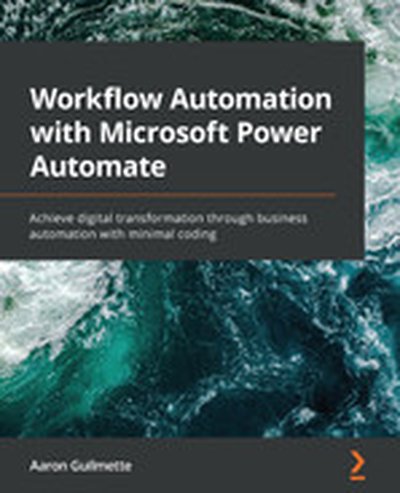
Workflow Automation with Microsoft Power Automate

Discover how Microsoft Power Automate can transform business processes by enabling you to automate workflows with minimal coding. This book introduces the core concepts and practical applications of workflow automation using Power Automate, making it an essential guide for enhancing productivity and efficiency in digital processes. What this Book will help me do Gain foundational knowledge of Microsoft Power Automate and how its components work together. Build automation flows that integrate with popular Microsoft 365 and third-party applications. Create efficient workflows like automated email processes and file management systems. Learn to enhance workflows with features like approvals, conditions, and triggers. Understand the basics of robotic process automation and artificial intelligence applications. Author(s) Aaron Guilmette leverages his extensive experience with Microsoft 365 to provide practical, user-friendly guides to the platform's tools. His expertise in workflow optimization ensures that readers can efficiently implement the concepts discussed. Aaron's teaching style emphasizes clarity and accessibility, making complex topics understandable for readers of all levels. Who is it for? This book is for technologists, system administrators, and power users eager to learn Microsoft Power Automate from scratch or enhance their workflow capabilities. It is ideal for those familiar with Microsoft 365 looking to streamline business processes. The book aims to help readers achieve automation goals, from simple workflows to more complex solutions.

podcast_episode
by Mico Yuk (Data Storytelling Academy) , Patrick Leblanc (Microsoft)

Just a few years can be a lifetime in the data world, but there's reason to expect that PowerBI, which has already taken the business intelligence world by storm, is set up for at least a ten-year reign? Why is that? What do you need to know about PowerBI? That's exactly what today's guest Patrick Leblanc is going to cover! As the co-host of the famous Guy in a Cube YouTube channel (with over 100,000 followers), and Principal Program Manager at Microsoft, Patrick share's his unbiased view of whether or not he feels that PowerBI is here to stay. He also shares practical ways to embrace PowerBI in your organization and gives some of his thoughts about the future about PowerBI! Whether you have Power BI or your considering it this episode is a must listen and share! Enjoy!

  [32:41] - Patrick on getting started in Power BI: "I say you take a really slow step toward that solution, and the first thing you need to do is really look at your data." [33:50] - Patrick on Power BI Adoption: "That's the big tip, you have to be gradual with these people." [43:58] - Patrick on trying Power BI: "You can honestly just get into PowerBI desktop, which is free, do everything you need globally, kick the tires on it if it doesn't work, it cost you some time, because of your human resource cost, but for the most part, you're going to pay them anyway. So it costs you nothing." For full show notes, and the links mentioned visit: https://bibrainz.com/podcast/65

Enjoyed the Show?  Please leave us a review on iTunes. Free Data Storytelling Training Register before it sells out again! Our BI Data Storytelling Mastery Accelerator 3-Day Live Workshop new dates are finally available. Many BI teams are still struggling to deliver consistent, high-engaging analytics their users love. At the end of the workshop, you'll leave with a clear BI delivery action plan. Register today!

Send us a text Want to be featured as a guest on Making Data Simple? Reach out to us at [[email protected]] and tell us why you should be next.

Abstract Hosted by Al Martin, VP, Data and AI Expert Services and Learning at IBM, Making Data Simple provides the latest thinking on big data, A.I., and the implications for the enterprise from a range of experts. This week on Making Data Simple, we have Nick Caldwell. Nick is the Chief Product Officer at Looker now Google, with careers at Reddit as VP of Engineering, and various positions at Microsoft. Nick holds a degree in computer science and electrical engineering from MIT and an MBA from UC Berkeley. He’s a native of P.G. County, Maryland but is happy to call San Francisco home. Show Notes 6:07 - Nick’s background 9:10 – Nick discusses leadership 16:45 - Building trust with product team 18:55 – Great leaders 21:05 – Water fall 24:25 – Discussion on data 25:38 – Nick explains Looker

Nick Caldwell - Twitter Nick Caldwell - Medium Nick Caldwell - LinkedIn ColorCode  https://www.youtube.com/watch?v=n8WwwWLdgTQ https://www.youtube.com/watch?v=lfxW4hC9a0U Blue Flame Devcolor.org Nick Caldwell

Connect with the Team Producer Kate Brown - LinkedIn. Producer Steve Templeton - LinkedIn. Host Al Martin - LinkedIn and Twitter.    Want to be featured as a guest on Making Data Simple? Reach out to us at [email protected] and tell us why you should be next. The Making Data Simple Podcast is hosted by Al Martin, WW VP Technical Sales, IBM, where we explore trending technologies, business innovation, and leadership ... while keeping it simple & fun.

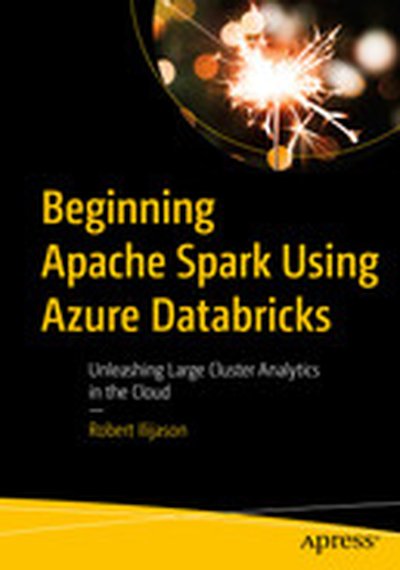
Beginning Apache Spark Using Azure Databricks: Unleashing Large Cluster Analytics in the Cloud

Analyze vast amounts of data in record time using Apache Spark with Databricks in the Cloud. Learn the fundamentals, and more, of running analytics on large clusters in Azure and AWS, using Apache Spark with Databricks on top. Discover how to squeeze the most value out of your data at a mere fraction of what classical analytics solutions cost, while at the same time getting the results you need, incrementally faster. This book explains how the confluence of these pivotal technologies gives you enormous power, and cheaply, when it comes to huge datasets. You will begin by learning how cloud infrastructure makes it possible to scale your code to large amounts of processing units, without having to pay for the machinery in advance. From there you will learn how Apache Spark, an open source framework, can enable all those CPUs for data analytics use. Finally, you will see how services such as Databricks provide the power of Apache Spark, without you having to know anything aboutconfiguring hardware or software. By removing the need for expensive experts and hardware, your resources can instead be allocated to actually finding business value in the data. This book guides you through some advanced topics such as analytics in the cloud, data lakes, data ingestion, architecture, machine learning, and tools, including Apache Spark, Apache Hadoop, Apache Hive, Python, and SQL. Valuable exercises help reinforce what you have learned. What You Will Learn Discover the value of big data analytics that leverage the power of the cloud Get started with Databricks using SQL and Python in either Microsoft Azure or AWS Understand the underlying technology, and how the cloud and Apache Spark fit into the bigger picture See how these tools are used in the real world Run basic analytics, including machine learning, on billions of rows at a fraction of a cost or free Who This Book Is For Data engineers, data scientists, and cloud architects who want or need to run advanced analytics in the cloud. It is assumed that the reader has data experience, but perhaps minimal exposure to Apache Spark and Azure Databricks. The book is also recommended for people who want to get started in the analytics field, as it provides a strong foundation.

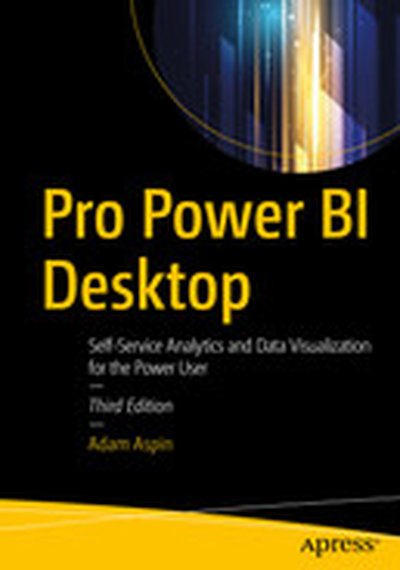
Pro Power BI Desktop: Self-Service Analytics and Data Visualization for the Power User

Deliver eye-catching and insightful business intelligence with Microsoft Power BI Desktop. This new edition has been updated to cover all the latest features of Microsoft’s continually evolving visualization product. New in this edition is help with storytelling—adapted to PCs, tablets, and smartphones—and the building of a data narrative. You will find coverage of templates and JSON style sheets, data model annotations, and the use of composite data sources. Also provided is an introduction to incorporating Python visuals and the much awaited Decomposition Tree visual. Pro Power BI Desktop shows you how to use source data to produce stunning dashboards and compelling reports that you mold into a data narrative to seize your audience’s attention. Slice and dice the data with remarkable ease and then add metrics and KPIs to project the insights that create your competitive advantage. Convert raw data into clear, accurate, and interactive information with Microsoft’s free self-service BI tool. This book shows you how to choose from a wide range of built-in and third-party visualization types so that your message is always enhanced. You will be able to deliver those results on PCs, tablets, and smartphones, as well as share results via the cloud. The book helps you save time by preparing the underlying data correctly without needing an IT department to prepare it for you. What You Will Learn Deliver attention-grabbing information, turning data into insight Find new insights as you chop and tweak your data as never before Build a data narrative through interactive reports with drill-through and cross-page slicing Mash up data from multiple sources into a cleansed and coherent data model Build interdependent charts, maps, and tables to deliver visually stunninginformation Create dashboards that help in monitoring key performance indicators of your business Adapt delivery to mobile devices such as phones and tablets Who This Book Is For Power users who are ready to step up to the big leagues by going beyond what Microsoft Excel by itself can offer. The book also is for line-of-business managers who are starved for actionable data needed to make decisions about their business. And the book is for BI analysts looking for an easy-to-use tool to analyze data and share results with C-suite colleagues they support.

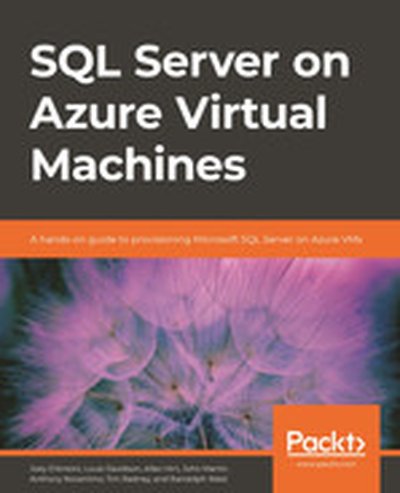
SQL Server on Azure Virtual Machines

Would you like to master deploying SQL Server in the cloud using Microsoft's Azure platform? With the hands-on guidance in this book, you'll explore how to set up and configure SQL Server on Azure Virtual Machines effectively. By the end, you'll have the knowledge to optimize, manage, and deploy your solutions. What this Book will help me do Understand platform availability for SQL Server in Azure Explore SQL Server IaaS and optimize its configuration Master deploying SQL Server on Linux and Windows in Azure Configure high-performance storage options tailored to SQL Server Learn disaster recovery strategies for SQL Server in Azure Author(s) Joey D'Antoni, Louis Davidson, Allan Hirt, and their co-authors bring years of experience in database management, cloud architecture, and technical writing. They aim to provide clear and actionable advice for working efficiently with SQL Server on Azure. Their insights come from real-world projects. Who is it for? This book is for developers, database administrators, and cloud architects who are looking to learn how to deploy SQL Server solutions on Azure Virtual Machines. If you are transitioning workloads to the cloud or need to manage or optimize such environments, this book will equip you with the skills you need. Basic SQL Server knowledge is helpful.

MOS Study Guide for Microsoft Access Expert Exam MO-500

Advance your everyday proficiency with Access 2019. And earn the credential that proves it! Demonstrate your expertise with Microsoft Access! Designed to help you practice and prepare for Microsoft Office Specialist (MOS): Access 2019 certification, this official Study Guide delivers: In-depth preparation for each MOS objective Detailed procedures to help build the skills measured by the exam Hands-on tasks to practice what you've learned Practice files and sample solutions Sharpen the skills measured by these objectives: Create and manage databases Build tables Create queries Create forms Create reports About MOS A Microsoft Office Specialist (MOS) certification validates your proficiency with Microsoft Office programs, demonstrating that you can meet globally recognized performance standards. Hands-on experience with the technology is required to successfully pass Microsoft Certification exams.

Introducing Microsoft SQL Server 2019

Introducing Microsoft SQL Server 2019 is the must-have guide for database professionals eager to leverage the latest advancements in SQL Server 2019. This book covers the features and capabilities that make SQL Server 2019 a powerful tool for managing and analyzing data both on-premises and in the cloud. What this Book will help me do Understand the new features introduced in SQL Server 2019 and their practical applications. Confidently manage and analyze relational, NoSQL, and big data within SQL Server 2019. Implement containerization for SQL Server using Docker and Kubernetes. Migrate and integrate your databases effectively to use Power BI Report Server. Query data from Hadoop Distributed File System with Azure Data Studio. Author(s) The authors of 'Introducing Microsoft SQL Server 2019' are subject matter experts including Kellyn Gorman, Allan Hirt, and others. With years of professional experience in database management and SQL Server, they bring a wealth of practical insight and knowledge to the book. Their experience spans roles as administrators, architects, and educators in the field. Who is it for? This book is aimed at database professionals such as DBAs, architects, and big data engineers who are currently using earlier versions of SQL Server or other database platforms. It is particularly well-suited for professionals aiming to understand and implement SQL Server 2019's new features. Readers should have basic familiarity with SQL Server and RDBMS concepts. If you're looking to explore SQL Server 2019 to improve data management and analytics in your organization, this book is for you.

Beginning Microsoft Power BI: A Practical Guide to Self-Service Data Analytics

Analyze company data quickly and easily using Microsoft’s powerful data tools. Learn to build scalable and robust data models, clean and combine different data sources effectively, and create compelling and professional visuals. Beginning Power BI is a hands-on, activity-based guide that takes you through the process of analyzing your data using the tools that that encompass the core of Microsoft’s self-service BI offering. Starting with Power Query, you will learn how to get data from a variety of sources, and see just how easy it is to clean and shape the data prior to importing it into a data model. Using Power BI tabular and the Data Analysis Expressions (DAX), you will learn to create robust scalable data models which will serve as the foundation of your data analysis. From there you will enter the world of compelling interactive visualizations to analyze and gain insight into your data. You will wrap up your Power BI journey by learning how to package and share your reports and dashboards with your colleagues. Author Dan Clark takes you through each topic using step-by-step activities and plenty of screen shots to help familiarize you with the tools. This third edition covers the new and evolving features in the Power BI platform and new chapters on data flows and composite models. This book is your hands-on guide to quick, reliable, and valuable data insight. What You Will Learn Simplify data discovery, association, and cleansing Build solid analytical data models Create robust interactive data presentations Combine analytical and geographic data in map-based visualizations Publish and share dashboards and reports Who This Book Is For Business analysts, database administrators, developers, and other professionals looking to better understand and communicate with data

SAP on Azure Implementation Guide

SAP on Azure Implementation Guide is your essential companion for transitioning your SAP infrastructure to Microsoft Azure. The book takes a practical and detailed approach, providing step-by-step guidance to help you leverage Azure for migrating, scaling, and transforming your SAP solutions effectively. What this Book will help me do Understand and implement different SAP to Azure migration strategies, such as lift-and-shift and database transformations. Learn to ensure high availability and scalability for your SAP systems using Azure's capabilities. Gain insight into securing SAP workloads on Azure for compliance and safety. Achieve operational excellence by leveraging cloud-native features of Azure for SAP. Acquire the skills to optimize SAP infrastructure on Azure for enhanced business value. Author(s) Nick Morgan and Bartosz Jarkowski are experienced consultants with extensive knowledge of SAP systems and cloud implementations. With backgrounds in designing and deploying SAP on cloud platforms, they have a thorough understanding of transitioning business-critical applications to modern infrastructures. They bring a wealth of practical experience to this comprehensive guide. Who is it for? This book is ideal for SAP architects and IT professionals who are looking to migrate their SAP infrastructures to Azure. Whether you are moderately familiar with SAP or an experienced architect evaluating advanced migration strategies, you'll find the information in this guide precise and actionable to help you achieve your objectives.

Experimentation Works

Don't fly blind. See how the power of experiments works for you. When it comes to improving customer experiences, trying out new business models, or developing new products, even the most experienced managers often get it wrong. They discover that intuition, experience, and big data alone don't work. What does? Running disciplined business experiments. And what if companies roll out new products or introduce new customer experiences without running these experiments? They fly blind. That's what Harvard Business School professor Stefan Thomke shows in this rigorously researched and eye-opening book. It guides you through best practices in business experimentation, illustrates how these practices work at leading companies, and answers some fundamental questions: What makes a good experiment? How do you test in online and brick-and-mortar businesses? In B2B and B2C? How do you build an experimentation culture? Also, best practice means running many experiments. Indeed, some hugely successful companies, such as Amazon, Booking.com, and Microsoft, run tens of thousands of controlled experiments annually, engaging millions of users. Thomke shows us how these and many other organizations prove that experimentation provides significant competitive advantage. How can managers create this capability at their own companies? Essential is developing an experimentation organization that prizes the science of testing and puts the discipline of experimentation at the center of its innovation process. While it once took companies years to develop the tools for such large-scale experiments, advances in technology have put these tools at the fingertips of almost any business professional. By combining the power of software and the rigor of controlled experiments, today's managers can make better decisions, create magical customer experiences, and generate big financial returns. Experimentation Works is your guidebook to a truly new way of thinking and innovating.

Implementing a VersaStack Solution by Cisco and IBM with IBM FlashSystem 5030, Cisco UCS Mini, Hyper-V, and SQL Server

VersaStack, an IBM® and Cisco integrated infrastructure solution, combines computing, networking, and storage into a single integrated system. It combines the Cisco Unified Computing System (Cisco UCS) Integrated Infrastructure with IBM Spectrum Virtualize™, which includes IBM FlashSystem® storage offerings, for quick deployment and rapid time to value for the implementation of modern infrastructures. This IBM Redbooks® publication covers the preferred practices for implementing a VersaStack Solution with IBM FlashSystem 5030, Cisco UCS Mini, Hyper-V 2016, and Microsoft SQL Server. Cisco UCS Mini is optimized for branch and remote offices, point-of-sale locations, and smaller IT environments. It is the ideal solution for customers who need fewer servers but still want the comprehensive management capabilities provided by Cisco UCS Manager. The IBM FlashSystem 5030 delivers efficient, entry-level configurations that are designed to meet the needs of small and midsize businesses. Designed to provide organizations with the ability to consolidate and share data at an affordable price, the IBM FlashSystem 5030 offers advanced software capabilities such as clustering, IBM Easy Tier®, replication and snapshots that are found in more expensive systems. This book is intended for pre-sales and post-sales technical support professionals and storage administrators who are tasked with deploying a VersaStack solution with Hyper-V 2016 and Microsoft SQL Server.

Sams Teach Yourself SQL in 10 Minutes a Day, 5th Edition

Sams Teach Yourself SQL in 10 Minutes offers straightforward, practical answers when you need fast results. By working through the book’s 22 lessons of 10 minutes or less, you’ll learn what you need to know to take advantage of the SQL language. Lessons cover IBM DB2, Microsoft SQL Server and SQL Server Express, MariaDB, MySQL, Oracle and Oracle express, PostgreSQL, and SQLite. Full-color code examples help you understand how SQL statements are structured Tips point out shortcuts and solutions Cautions help you avoid common pitfalls Notes explain additional concepts, and provide additional information 10 minutes is all you need to learn how to… Use the major SQL statements Construct complex SQL statements using multiple clauses and operators Retrieve, sort, and format database contents Pinpoint the data you need using a variety of filtering techniques Use aggregate functions to summarize data Join two or more related tables Insert, update, and delete data Create and alter database tables Work with views, stored procedures, and more

Data Analysis with Microsoft Power BI

Publisher's Note: Products purchased from Third Party sellers are not guaranteed by the publisher for quality, authenticity, or access to any online entitlements included with the product. Explore, create, and manage highly interactive data visualizations using Microsoft Power BI Extract meaningful business insights from your disparate enterprise data using the detailed information contained in this practical guide. Written by a recognized BI expert and bestselling author, Data Analysis with Microsoft Power BI teaches you the skills you need to interact with, author, and maintain robust visualizations and custom data models. Hands-on exercises based on real-life business scenarios clearly demonstrate each technique. Publishing your results to the Power BI Service (PowerBI.com) and Power BI Report Server are also fully covered. Inside, you will discover how to: •Understand Business Intelligence and self-service analytics •Explore the tools and features of Microsoft Power BI •Create and format effective data visualizations •Incorporate advanced interactivity and custom graphics •Build and populate accurate data models •Transform data using the Power BI Query Editor •Work with measures, calculated columns, and tabular models •Write powerful DAX language scripts •Share content on the PowerBI Service (PowerBI.com) •Store your visualizations on the Power BI Report Server

Microsoft SQL Server 2019: A Beginner's Guide, Seventh Edition, 7th Edition

Publisher's Note: Products purchased from Third Party sellers are not guaranteed by the publisher for quality, authenticity, or access to any online entitlements included with the product. Get Up to Speed on Microsoft® SQL Server® 2019 Quickly and Easily Start working with Microsoft SQL Server 2019 in no time with help from this thoroughly revised, practical resource. Filled with real-world examples and hands-on exercises, Microsoft SQL Server 2019: A Beginner’s Guide, Seventh Edition starts by explaining fundamental relational database system concepts. From there, you’ll learn how to write Transact-SQL statements, execute simple and complex database queries, handle system administration and security, and use powerful analysis and reporting tools. New topics such as SQL and JSON support, graph databases, and support for machine learning with R and Python are also covered in this step-by-step tutorial. • Install, configure, and customize Microsoft SQL Server 2019 • Create and modify database objects with Transact-SQL statements • Write stored procedures and user-defined functions • Handle backup and recovery, and automate administrative tasks • Tune your database system for optimal availability and reliability • Secure your system using authentication, encryption, and authorization • Work with SQL Server Analysis Services, Reporting Services, and other BI tools • Gain knowledge of relational storage, presentation, and retrieval of data stored in the JSON format • Manage graphs using SQL Server Graph Databases • Learn about machine learning support for R and Python

Jumpstart Snowflake: A Step-by-Step Guide to Modern Cloud Analytics

Explore the modern market of data analytics platforms and the benefits of using Snowflake computing, the data warehouse built for the cloud. With the rise of cloud technologies, organizations prefer to deploy their analytics using cloud providers such as Amazon Web Services (AWS), Microsoft Azure, or Google Cloud Platform. Cloud vendors are offering modern data platforms for building cloud analytics solutions to collect data and consolidate into single storage solutions that provide insights for business users. The core of any analytics framework is the data warehouse, and previously customers did not have many choices of platform to use. Snowflake was built specifically for the cloud and it is a true game changer for the analytics market. This book will help onboard you to Snowflake, present best practices to deploy, and use the Snowflake data warehouse. In addition, it covers modern analytics architecture and use cases. It provides use cases of integration with leading analytics software such as Matillion ETL, Tableau, and Databricks. Finally, it covers migration scenarios for on-premise legacy data warehouses. What You Will Learn Know the key functionalities of Snowflake Set up security and access with cluster Bulk load data into Snowflake using the COPY command Migrate from a legacy data warehouse to Snowflake integrate the Snowflake data platform with modern business intelligence (BI) and data integration tools Who This Book Is For Those working with data warehouse and business intelligence (BI) technologies, and existing and potential Snowflake users

PolyBase Revealed: Data Virtualization with SQL Server, Hadoop, Apache Spark, and Beyond

Harness the power of PolyBase data virtualization software to make data from a variety of sources easily accessible through SQL queries while using the T-SQL skills you already know and have mastered. PolyBase Revealed shows you how to use the PolyBase feature of SQL Server 2019 to integrate SQL Server with Azure Blob Storage, Apache Hadoop, other SQL Server instances, Oracle, Cosmos DB, Apache Spark, and more. You will learn how PolyBase can help you reduce storage and other costs by avoiding the need for ETL processes that duplicate data in order to make it accessible from one source. PolyBase makes SQL Server into that one source, and T-SQL is your golden ticket. The book also covers PolyBase scale-out clusters, allowing you to distribute PolyBase queries among several SQL Server instances, thus improving performance. With great flexibility comes great complexity, and this book shows you where to look when queries fail, complete with coverageof internals, troubleshooting techniques, and where to find more information on obscure cross-platform errors. Data virtualization is a key target for Microsoft with SQL Server 2019. This book will help you keep your skills current, remain relevant, and build new business and career opportunities around Microsoft’s product direction. What You Will Learn Install and configure PolyBase as a stand-alone service, or unlock its capabilities with a scale-out cluster Understand how PolyBase interacts with outside data sources while presenting their data as regular SQL Server tables Write queries combining data from SQL Server, Apache Hadoop, Oracle, Cosmos DB, Apache Spark, and more Troubleshoot PolyBase queries using SQL Server Dynamic Management Views Tune PolyBase queries using statistics and execution plans Solve common business problems, including "cold storage" of infrequentlyaccessed data and simplifying ETL jobs Who This Book Is For SQL Server developers working in multi-platform environments who want one easy way of communicating with, and collecting data from, all of these sources