talk-data.com talk-data.com

Topic

NoSQL

databases big_data non_relational

111

tagged

Activity Trend

7 peak/qtr
2020-Q1 2026-Q1

Activities

Showing filtered results

Filtering by: O'Reilly Data Engineering Books ×
MongoDB 4 Quick Start Guide

"MongoDB 4 Quick Start Guide" is your gateway into understanding and utilizing MongoDB, the world's leading NoSQL database alternative. Through this approachable guide, you will quickly learn how to install, secure, and effectively perform database operations using MongoDB Version 4. What this Book will help me do Master the installation and configuration of MongoDB to prepare for secure database setups. Execute CRUD operations seamlessly to manage your data through the MongoDB shell. Construct queries using the aggregation pipeline for robust data analysis. Implement replication and sharding to ensure data safety and scaleability. Use the PHP MongoDB driver to integrate MongoDB effectively with web applications. Author(s) None Bierer is an expert in database technologies with extensive experience in NoSQL solutions, particularly MongoDB. Their passion for teaching developers new and efficient ways to work with databases shines through in this practical and hands-on guide. Who is it for? This book is perfect for web developers looking to enhance their understanding of modern databases, IT professionals interested in NoSQL solutions, and DBAs transitioning from relational databases to document-oriented databases. Prior experience with databases can be helpful, but this guide is accessible even for enthusiastic beginners seeking to learn MongoDB.
Cosmos DB for MongoDB Developers: Migrating to Azure Cosmos DB and Using the MongoDB API

Learn Azure Cosmos DB and its MongoDB API with hands-on samples and advanced features such as the multi-homing API, geo-replication, custom indexing, TTL, request units (RU), consistency levels, partitioning, and much more. Each chapter explains Azure Cosmos DB’s features and functionalities by comparing it to MongoDB with coding samples. Cosmos DB for MongoDB Developers starts with an overview of NoSQL and Azure Cosmos DB and moves on to demonstrate the difference between geo-replication of Azure Cosmos DB compared to MongoDB. Along the way you’ll cover subjects including indexing, partitioning, consistency, and sizing, all of which will help you understand the concepts of read units and how this calculation is derived from an existing MongoDB’s usage. The next part of the book shows you the process and strategies for migrating to Azure Cosmos DB. You will learn the day-to-day scenarios of using Azure Cosmos DB, its sizing strategies, and optimizing techniques for the MongoDB API. This information will help you when planning to migrate from MongoDB or if you would like to compare MongoDB to the Azure Cosmos DB MongoDB API before considering the switch. What You Will Learn Migrate to MongoDB and understand its strategies Develop a sample application using MongoDB’s client driver Make use of sizing best practices and performance optimization scenarios Optimize MongoDB’s partition mechanism and indexing Who This Book Is For MongoDB developers who wish to learn Azure Cosmos DB. It specifically caters to a technical audience, working on MongoDB.

Introducing the MySQL 8 Document Store

Learn the new Document Store feature of MySQL 8 and build applications around a mix of the best features from SQL and NoSQL database paradigms. Don’t allow yourself to be forced into one paradigm or the other, but combine both approaches by using the Document Store. MySQL 8 was designed from the beginning to bridge the gap between NoSQL and SQL. Oracle recognizes that many solutions need the capabilities of both. More specifically, developers need to store objects as loose collections of schema-less documents, but those same developers also need the ability to run structured queries on their data. With MySQL 8, you can do both! Introducing the MySQL 8 Document Store presents new tools and features that make creating a hybrid database solution far easier than ever before. This book covers the vitally important MySQL Document Store, the new X Protocol for developing applications, and a new client shell called the MySQL Shell. Also covered are supporting technologies and concepts such as JSON, schema-less documents, and more. The book gives insight into how features work and how to apply them to get the most out of your MySQL experience. The book covers topics such as: The headline feature in MySQL 8 MySQL's answer to NoSQL New APIs and client protocols What You'll Learn Create NoSQL-style applications by using the Document Store Mix the NoSQL and SQL approaches by using each to its best advantage in a hybrid solution Work with the new X Protocol for application connectivity in MySQL 8 Master the new X Developer Application Programming Interfaces Combine SQL and JSON in the same database and application Migrate existing applications to MySQL Document Store Who This Book Is For Developers and database professionals wanting to learn about the most profound paradigm-changing features of the MySQL 8 Document Store

Data Analytics with Spark Using Python, First edition

Spark for Data Professionals introduces and solidifies the concepts behind Spark 2.x, teaching working developers, architects, and data professionals exactly how to build practical Spark solutions. Jeffrey Aven covers all aspects of Spark development, including basic programming to SparkSQL, SparkR, Spark Streaming, Messaging, NoSQL and Hadoop integration. Each chapter presents practical exercises deploying Spark to your local or cloud environment, plus programming exercises for building real applications. Unlike other Spark guides, Spark for Data Professionals explains crucial concepts step-by-step, assuming no extensive background as an open source developer. It provides a complete foundation for quickly progressing to more advanced data science and machine learning topics. This guide will help you: Understand Spark basics that will make you a better programmer and cluster “citizen” Master Spark programming techniques that maximize your productivity Choose the right approach for each problem Make the most of built-in platform constructs, including broadcast variables, accumulators, effective partitioning, caching, and checkpointing Leverage powerful tools for managing streaming, structured, semi-structured, and unstructured data

A Deep Dive into NoSQL Databases: The Use Cases and Applications

A Deep Dive into NoSQL Databases: The Use Cases and Applications, Volume 109, the latest release in the Advances in Computers series first published in 1960, presents detailed coverage of innovations in computer hardware, software, theory, design and applications. In addition, it provides contributors with a medium in which they can explore their subjects in greater depth and breadth. This update includes sections on NoSQL and NewSQL databases for big data analytics and distributed computing, NewSQL databases and scalable in-memory analytics, NoSQL web crawler application, NoSQL Security, a Comparative Study of different In-Memory (No/New)SQL Databases, NoSQL Hands On-4 NoSQLs, the Hadoop Ecosystem, and more. Provides a very comprehensive, yet compact, book on the popular domain of NoSQL databases for IT professionals, practitioners and professors Articulates and accentuates big data analytics and how it gets simplified and streamlined by NoSQL database systems Sets a stimulating foundation with all the relevant details for NoSQL database researchers, developers and administrators

Seven NoSQL Databases in a Week

Learn the fundamentals of seven essential NoSQL databases in just one week with this book. Covering MongoDB, DynamoDB, Redis, Cassandra, Neo4j, InfluxDB, and HBase, you'll explore their functionalities and practical applications. Designed to give you a working understanding of NoSQL database types, this guide helps aspiring DBAs and developers comprehend and utilize modern data solutions. What this Book will help me do Master the fundamentals of MongoDB, including high-performance, high-availability, and scaling features. Gain hands-on experience with Neo4j to perform database queries and integrate with Python and Java applications. Learn efficient querying with Redis for storage and retrieval tasks. Understand Cassandra's powerful solution for scalable and fault-tolerant systems. Get well-versed with HBase for creating tables, and reading and writing data efficiently. Author(s) Sudarshan Kadambi and Xun (Brian) Wu bring a wealth of experience in database technologies. They have worked extensively in the software development and database management fields. With their practical and concise teaching approach, the authors make complex topics accessible for readers. Who is it for? This book is ideal for budding DBAs and developers looking to understand NoSQL databases. It is particularly useful for those transitioning from relational databases who want to learn about modern database technologies. Suitable for both beginners and those with some database knowledge, it aims to bridge skill gaps and expand the reader's technical expertise.

Mastering MongoDB 3.x

"Mastering MongoDB 3.x" is your comprehensive guide to mastering the world of MongoDB, the leading NoSQL database. This book equips you with both foundational and advanced skills to effectively design, develop, and manage MongoDB-powered applications. Discover how to build fault-tolerant systems and dive deep into database internals, deployment strategies, and much more. What this Book will help me do Gain expertise in advanced querying using indexing and data expressions for efficient data retrieval. Master MongoDB administration for both on-premise and cloud-based environments efficiently. Learn data sharding and replication techniques to ensure scalability and fault tolerance. Understand the intricacies of MongoDB internals, including performance optimization techniques. Leverage MongoDB for big data processing by integrating with complex data pipelines. Author(s) Alex Giamas is a seasoned database developer and administrator with strong expertise in NoSQL technologies, particularly MongoDB. With years of experience guiding teams on creating and optimizing database structures, Alex ensures clear and practical methods for learning the essential aspects of MongoDB. His writing focuses on actionable knowledge and practical solutions for modern database challenges. Who is it for? This book is perfect for database developers, system architects, and administrators who are already familiar with database concepts and are looking to deepen their knowledge in NoSQL databases, specifically MongoDB. Whether you're working on building web applications, scaling data systems, or ensuring fault tolerance, this book provides the guidance to optimize your database management skill set.

MongoDB Administrator's Guide

The "MongoDB Administrator's Guide" is an indispensable resource for database administrators and developers looking to gain mastery over administrating MongoDB systems. This book offers over 100 practical recipes, designed to simplify the tasks of maintaining, optimizing, and securing MongoDB deployments. What this Book will help me do Deploy and configure production-grade MongoDB environments efficiently. Manage and optimize MongoDB indexing to improve query performance. Implement and maintain high availability through replication and sharding. Ensure database security with robust authentication and authorization. Perform efficient backups, recovery, and database performance monitoring. Author(s) None Dasadia is a seasoned MongoDB expert with extensive experience in database administration and optimization. Having worked extensively in developing and managing high-performance database systems, None ensures a hands-on and practical approach in their writing. Their aim is to guide readers to effectively solve real-world database challenges with MongoDB. Who is it for? This book is ideal for database administrators with a foundational understanding of MongoDB, as well as developers aiming to enhance their administration skills in this NoSQL ecosystem. Whether you're seeking best practices for routine tasks or scalable solutions for enterprise-level applications, this guide has comprehensive coverage tailored for you.

Learning Apache Cassandra - Second Edition

Learning Apache Cassandra is an engaging and in-depth guide to understanding the concepts and practical applications of Apache Cassandra, one of the most robust distributed NoSQL databases available. By the end of this book, you will have the necessary skills to design and manage scalable, high-performance database solutions tailored for modern applications. What this Book will help me do Set up Apache Cassandra and its multi-node clusters confidently and efficiently. Master schema design principles, including the use of composite keys, collections, and user-defined types. Implement efficient query strategies with secondary indexes and materialized views. Understand data distribution strategies and tune consistency levels for different application requirements. Dive into advanced topics like user-defined functions, batch operations, and Java client optimizations for scalable database architecture. Author(s) None Yarabarla brings practical expertise and deep knowledge to the subject of Apache Cassandra. With hands-on industry experience designing scalable database solutions, the author ensures complex topics are presented through clear and actionable insights. This is coupled with real-world scenarios to help you apply your learning effectively. Who is it for? This book is ideal for developers and IT professionals interested in learning Apache Cassandra from scratch or enhancing their NoSQL database expertise. It is particularly suited for those transitioning from relational databases to NoSQL systems. Even without prior coding experience, readers can expect to follow along and achieve practical results.

Usage-Driven Database Design: From Logical Data Modeling through Physical Schema Definition

Design great databases—from logical data modeling through physical schema definition. You will learn a framework that finally cracks the problem of merging data and process models into a meaningful and unified design that accounts for how data is actually used in production systems. Key to the framework is a method for taking the logical data model that is a static look at the definition of the data, and merging that static look with the process models describing how the data will be used in actual practice once a given system is implemented. The approach solves the disconnect between the static definition of data in the logical data model and the dynamic flow of the data in the logical process models. The design framework in this book can be used to create operational databases for transaction processing systems, or for data warehouses in support of decision support systems. The information manager can be a flat file, Oracle Database, IMS, NoSQL, Cassandra, Hadoop, or any other DBMS. Usage-Driven Database Design emphasizes practical aspects of design, and speaks to what works, what doesn't work, and what to avoid at all costs. Included in the book are lessons learned by the author over his 30+ years in the corporate trenches. Everything in the book is grounded on good theory, yet demonstrates a professional and pragmatic approach to design that can come only from decades of experience. Presents an end-to-end framework from logical data modeling through physical schema definition. Includes lessons learned, techniques, and tricks that can turn a database disaster into a success. Applies to all types of database management systems, including NoSQL such as Cassandra and Hadoop, and mainstream SQL databases such as Oracle and SQL Server What You'll Learn Create logical data models that accurately reflect the real world of the user Create usage scenarios reflecting how applications will use a new database Merge static data models with dynamic process models to create resilient yet flexible database designs Support application requirements by creating responsive database schemas in any database architecture Cope with big data and unstructured data for transaction processing and decision support systems Recognize when relational approaches won't work, and when to turn toward NoSQL solutions such as Cassandra or Hadoop Who This Book Is For System developers, including business analysts, database designers, database administrators, and application designers and developers who must design or interact with database systems

Designing Data-Intensive Applications

Data is at the center of many challenges in system design today. Difficult issues need to be figured out, such as scalability, consistency, reliability, efficiency, and maintainability. In addition, we have an overwhelming variety of tools, including relational databases, NoSQL datastores, stream or batch processors, and message brokers. What are the right choices for your application? How do you make sense of all these buzzwords? In this practical and comprehensive guide, author Martin Kleppmann helps you navigate this diverse landscape by examining the pros and cons of various technologies for processing and storing data. Software keeps changing, but the fundamental principles remain the same. With this book, software engineers and architects will learn how to apply those ideas in practice, and how to make full use of data in modern applications. Peer under the hood of the systems you already use, and learn how to use and operate them more effectively Make informed decisions by identifying the strengths and weaknesses of different tools Navigate the trade-offs around consistency, scalability, fault tolerance, and complexity Understand the distributed systems research upon which modern databases are built Peek behind the scenes of major online services, and learn from their architectures

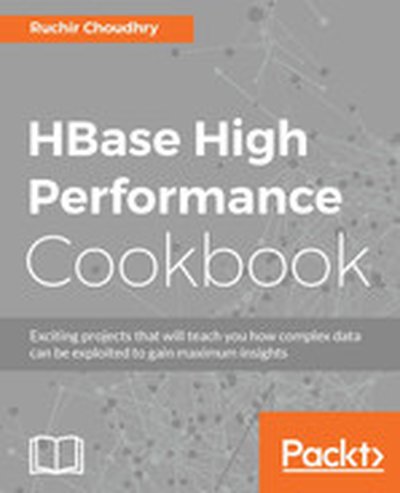
HBase High Performance Cookbook

"HBase High Performance Cookbook" is your guide to mastering the optimization, scaling, and tuning of HBase systems. Covering everything from configuring HBase clusters to designing scalable table structures and performance tuning, this comprehensive book provides practical advice and strategies for leveraging HBase's full potential. By following this book's recipes, you'll supercharge your HBase expertise. What this Book will help me do Understand how to configure HBase for optimal performance, improving your data system's efficiency. Learn to design table structures to maximize scalability and functionality in HBase. Gain skills in performing CRUD operations and using advanced features like MapReduce within HBase. Discover practices for integrating HBase with other technologies such as ElasticSearch. Master the steps involved in setting up and optimizing HBase in cloud environments for enhanced performance. Author(s) Ruchir Choudhry is a seasoned data management professional with extensive experience in distributed database systems. He possesses deep expertise in HBase, Hadoop, and other big data technologies. His practical and engaging writing style aims to demystify complex technical topics, making them accessible to developers and architects alike. Who is it for? This book is tailored for developers and system architects looking to deepen their understanding of HBase. Whether you are experienced with other NoSQL databases or are new to HBase, this book provides extensive practical knowledge. Ideal for professionals working in big data applications or those eager to optimize and scale their database systems effectively.

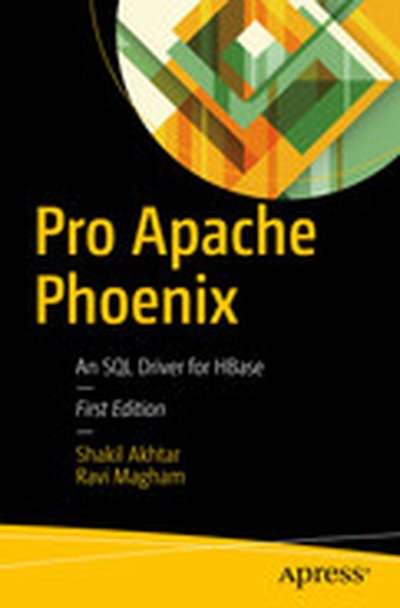
Pro Apache Phoenix: An SQL Driver for HBase, First Edition

Leverage Phoenix as an ANSI SQL engine built on top of the highly distributed and scalable NoSQL framework HBase. Learn the basics and best practices that are being adopted in Phoenix to enable a high write and read throughput in a big data space. This book includes real-world cases such as Internet of Things devices that send continuous streams to Phoenix, and the book explains how key features such as joins, indexes, transactions, and functions help you understand the simple, flexible, and powerful API that Phoenix provides. Examples are provided using real-time data and data-driven businesses that show you how to collect, analyze, and act in seconds. Pro Apache Phoenix covers the nuances of setting up a distributed HBase cluster with Phoenix libraries, running performance benchmarks, configuring parameters for production scenarios, and viewing the results. The book also shows how Phoenix plays well with other key frameworks in the Hadoop ecosystem such as Apache Spark, Pig, Flume, and Sqoop. You will learn how to: Handle a petabyte data store by applying familiar SQL techniques Store, analyze, and manipulate data in a NoSQL Hadoop echo system with HBase Apply best practices while working with a scalable data store on Hadoop and HBase Integrate popular frameworks (Apache Spark, Pig, Flume) to simplify big data analysis Demonstrate real-time use cases and big data modeling techniques Who This Book Is For Data engineers, Big Data administrators, and architects

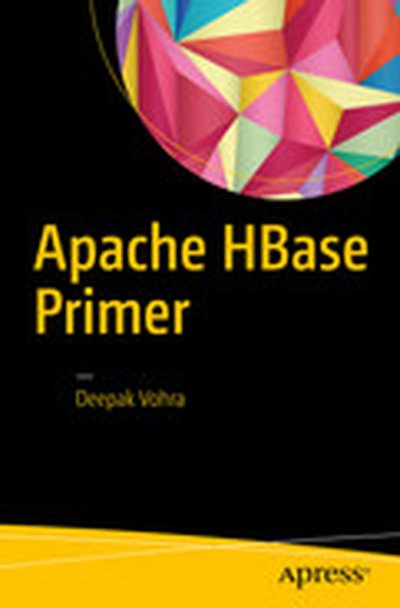
Apache HBase Primer

Learn the fundamental foundations and concepts of the Apache HBase (NoSQL) open source database. It covers the HBase data model, architecture, schema design, API, and administration. Apache HBase is the database for the Apache Hadoop framework. HBase is a column family based NoSQL database that provides a flexible schema model. What You'll Learn Work with the core concepts of HBase Discover the HBase data model, schema design, and architecture Use the HBase API and administration Who This Book Is For Apache HBase (NoSQL) database users, designers, developers, and admins.

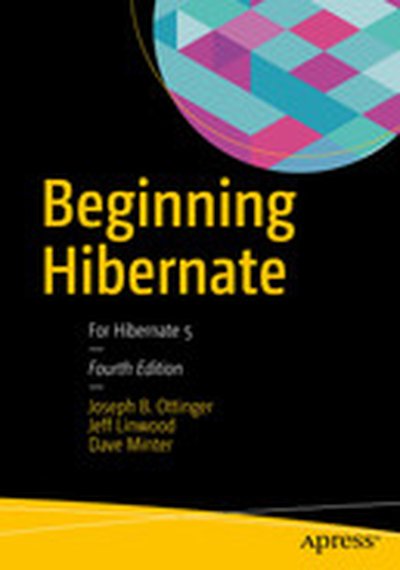
Beginning Hibernate: For Hibernate 5

Get started with the Hibernate 5 persistence layer and gain a clear introduction to the current standard for object-relational persistence in Java. This updated edition includes the new Hibernate 5.0 framework as well as coverage of NoSQL, MongoDB, and other related technologies, ranging from applications to big data. Beginning Hibernate is ideal if you're experienced in Java with databases (the traditional, or connected, approach), but new to open-source, lightweight Hibernate. The book keeps its focus on Hibernate without wasting time on nonessential third-party tools, so you'll be able to immediately start building transaction-based engines and applications. Experienced authors Joseph Ottinger with Dave Minter and Jeff Linwood provide more in-depth examples than any other book for Hibernate beginners. They present their material in a lively, example-based manner—not a dry, theoretical, hard-to-read fashion. What You'll Learn Build enterprise Java-based transaction-type applications that access complex data with Hibernate Work with Hibernate 5 using a present-day build process Use Java 8 features with Hibernate Integrate into the persistence life cycle Map using Java's annotations Search and query with the new version of Hibernate Integrate with MongoDB using NoSQL Keep track of versioned data with Hibernate Envers Who This Book Is For Experienced Java developers interested in learning how to use and apply object-relational persistence in Java and who are new to the Hibernate persistence framework.

Sams Teach Yourself Apache Spark™ in 24 Hours

Apache Spark is a fast, scalable, and flexible open source distributed processing engine for big data systems and is one of the most active open source big data projects to date. In just 24 lessons of one hour or less, Sams Teach Yourself Apache Spark in 24 Hours helps you build practical Big Data solutions that leverage Spark’s amazing speed, scalability, simplicity, and versatility. This book’s straightforward, step-by-step approach shows you how to deploy, program, optimize, manage, integrate, and extend Spark–now, and for years to come. You’ll discover how to create powerful solutions encompassing cloud computing, real-time stream processing, machine learning, and more. Every lesson builds on what you’ve already learned, giving you a rock-solid foundation for real-world success. Whether you are a data analyst, data engineer, data scientist, or data steward, learning Spark will help you to advance your career or embark on a new career in the booming area of Big Data. Learn how to • Discover what Apache Spark does and how it fits into the Big Data landscape • Deploy and run Spark locally or in the cloud • Interact with Spark from the shell • Make the most of the Spark Cluster Architecture • Develop Spark applications with Scala and functional Python • Program with the Spark API, including transformations and actions • Apply practical data engineering/analysis approaches designed for Spark • Use Resilient Distributed Datasets (RDDs) for caching, persistence, and output • Optimize Spark solution performance • Use Spark with SQL (via Spark SQL) and with NoSQL (via Cassandra) • Leverage cutting-edge functional programming techniques • Extend Spark with streaming, R, and Sparkling Water • Start building Spark-based machine learning and graph-processing applications • Explore advanced messaging technologies, including Kafka • Preview and prepare for Spark’s next generation of innovations Instructions walk you through common questions, issues, and tasks; Q-and-As, Quizzes, and Exercises build and test your knowledge; "Did You Know?" tips offer insider advice and shortcuts; and "Watch Out!" alerts help you avoid pitfalls. By the time you're finished, you'll be comfortable using Apache Spark to solve a wide spectrum of Big Data problems.

Architecting for Access

Fragmented, disparate backend data systems have become the norm in today’s enterprise, where you’ll find a mix of relational databases, Hadoop stores, and NoSQL engines, with access and analytics tools bolted on every which way. This mishmash of options presents a real challenge when it comes to choosing frontend analytics and visualization tools. How did we get here? In this O’Reilly report, IT veteran Rich Morrow takes you through the rapid changes to both backend storage and frontend analytics over the past decade, and provides a pragmatic list of requirements for an analytics stack that will centralize access to all of these data systems. You’ll examine current analytics platforms, including Looker—a new breed of analytics and visualization tools built specifically to handle our fragmented data space. Understand why and how data became so fractured so quickly Explore the tangled web of data and backend tools in today’s enterprises Learn the tool requirements for accessing and analyzing the full spectrum of data Examine the relative strengths of popular analytics and visualization tools, including Looker, Tableau, and MicroStrategy Inspect Looker’s unique focus on both the frontend and backend

In Search of Database Nirvana

The database pendulum is in full swing. Ten years ago, web-scale companies began moving away from proprietary relational databases to handle big data use cases with NoSQL and Hadoop. Now, for a variety of reasons, the pendulum is swinging back toward SQL-based solutions. What many companies really want is a system that can handle all of their operational, OLTP, BI, and analytic workloads. Could such an all-in-one database exist? This O’Reilly report examines this quest for database nirvana, or what Gartner recently dubbed Hybrid Transaction/Analytical Processing (HTAP). Author Rohit Jain takes an in-depth look at the possibilities and the challenges for companies that long for a single query engine to rule them all. With this report, you’ll explore: The challenges of having one query engine support operational, BI, and analytical workloads Efforts to produce a query engine that supports multiple storage engines Attempts to support multiple data models with the same query engine Why an HTAP database engine needs to provide enterprise-caliber capabilities, including high availability, security, and manageability How to assess various options for meeting workload requirements with one database engine, or a combination of query and storage engines

Practical Hadoop Migration: How to Integrate Your RDBMS with the Hadoop Ecosystem and Re-Architect Relational Applications to NoSQL

Re-architect relational applications to NoSQL, integrate relational database management systems with the Hadoop ecosystem, and transform and migrate relational data to and from Hadoop components. This book covers the best-practice design approaches to re-architecting your relational applications and transforming your relational data to optimize concurrency, security, denormalization, and performance. Winner of IBM's 2012 Gerstner Award for his implementation of big data and data warehouse initiatives and author of Practical Hadoop Security, author Bhushan Lakhe walks you through the entire transition process. First, he lays out the criteria for deciding what blend of re-architecting, migration, and integration between RDBMS and HDFS best meets your transition objectives. Then he demonstrates how to design your transition model. Lakhe proceeds to cover the selection criteria for ETL tools, the implementation steps for migration with SQOOP- and Flume-based data transfers, and transition optimization techniques for tuning partitions, scheduling aggregations, and redesigning ETL. Finally, he assesses the pros and cons of data lakes and Lambda architecture as integrative solutions and illustrates their implementation with real-world case studies. Hadoop/NoSQL solutions do not offer by default certain relational technology features such as role-based access control, locking for concurrent updates, and various tools for measuring and enhancing performance. Practical Hadoop Migration shows how to use open-source tools to emulate such relational functionalities in Hadoop ecosystem components. What You'll Learn Decide whether you should migrate your relational applications to big data technologies or integrate them Transition your relational applications to Hadoop/NoSQL platforms in terms of logical design and physical implementation Discover RDBMS-to-HDFS integration, data transformation, and optimization techniques Consider when to use Lambda architecture and data lake solutions Select and implement Hadoop-based components and applications to speed transition, optimize integrated performance, and emulate relational functionalities Who This Book Is For Database developers, database administrators, enterprise architects, Hadoop/NoSQL developers, and IT leaders. Its secondary readership is project and program managers and advanced students of database and management information systems.

Beginning SQL Queries: From Novice to Professional, Second Edition

Get started on mastering the one language binding the entire database industry. That language is SQL, and how it works is must-have knowledge for anyone involved with relational databases, and surprisingly also for anyone involved with NoSQL databases. SQL is universally used in querying and reporting on large data sets in order to generate knowledge to drive business decisions. Good knowledge of SQL is crucial to anyone working with databases, because it is with SQL that you retrieve data, manipulate data, and generate business results. Every relational database supports SQL for its expressiveness in writing queries underlying reports and business intelligence dashboards. Knowing how to write good queries is the foundation for all work done in SQL, and it is a foundation that Clare Churcher's book, , 2nd Edition, lays well. Beginning SQL Queries What You Will Learn Write simple queries to extract data from a single table Combine data from many tables into one business result using set operations Translate natural language questions into database queries providing meaningful information to the business Avoid errors associated with duplicated and null values Summarize data with amazing ease using the newly-added feature of window functions Tackle tricky queries with confidence that you are generating correct results Investigate and understand the effects of indexes on the efficiency of queries Who This Book Is For Beginning SQL Queries, 2nd Edition is aimed at intelligent laypeople who need to extract information from a database, and at developers and other IT professionals who are new to SQL. The book is especially useful for business intelligence analysts who must ask more complex questions of their database than their GUI—based reporting software supports. Such people might be business owners wanting to target specific customers, scientists and students needing to extract subsets of their research data, or end users wanting to make the best use of databases for their clubs and societies.