talk-data.com talk-data.com

Topic

Power BI

Microsoft Power BI

bi data_visualization microsoft

201

tagged

Activity Trend

16 peak/qtr
2020-Q1 2026-Q1

Activities

201 activities · Newest first

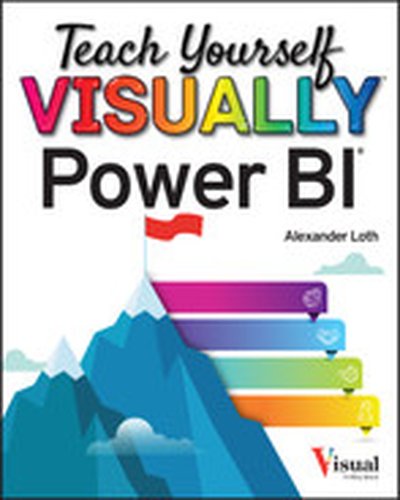
Teach Yourself VISUALLY Power BI

A comprehensive and fully visual guide to Microsoft Power BI Teach Yourself VISUALLY Power BI collects all the resources you need to master the everyday use of Microsoft's powerful data visualization software and delivers them in a single, easy-to-use volume. Fully illustrated, step-by-step instructions are combined with crystal-clear screenshots that walk you through the basic and advanced functions of Microsoft Power BI. Teach Yourself VISUALLY Power BI offers the best visual learning techniques with complete source material about the interface and substance of Power BI, as well as: Stepwise guidance on working with, transforming, and processing data sources Instructions for customizing data visualizations to create informative and presentation-ready charts and graphs Full-color, two-page tutorials on the more advanced features of Power BI, including app integrations and data access with DAX The fastest, easiest way for visual learners to get a handle on Microsoft Power BI, Teach Yourself VISUALLY Power BI is a can't-miss resource, loaded with useful tips for newbies and experts alike.

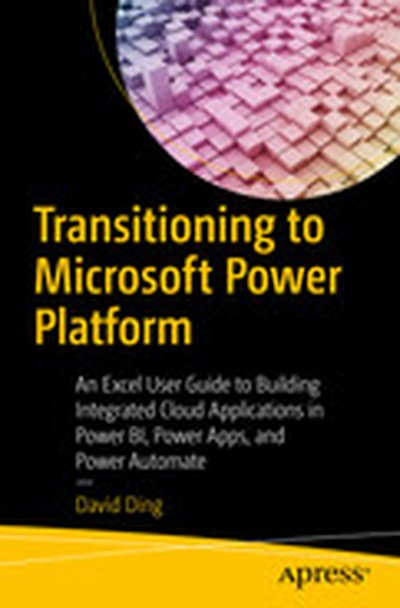
Transitioning to Microsoft Power Platform: An Excel User Guide to Building Integrated Cloud Applications in Power BI, Power Apps, and Power Automate

Welcome to this step-by-step guide for Excel users, data analysts, and finance specialists. It is designed to take you through practical report and development scenarios, including both the approach and the technical challenges. This book will equip you with an understanding of the overall Power Platform use case for addressing common business challenges. While Power BI continues to be an excellent tool of choice in the BI space, Power Platform is the real game changer. Using an integrated architecture, a small team of citizen developers can build solutions for all kinds of business problems. For small businesses, Power Platform can be used to build bespoke CRM, Finance, and Warehouse management tools. For large businesses, it can be used to build an integration point for existing systems to simplify reporting, operation, and approval processes. The author has drawn on his15 years of hands-on analytics experience to help you pivot from the traditional Excel-based reporting environment. By using different business scenarios, this book provides you with clear reasons why a skill is important before you start to dive into the scenarios. You will use a fast prototyping approach to continue to build exciting reporting, automation, and application solutions and improve them while you acquire new skill sets. The book helps you get started quickly with Power BI. It covers data visualization, collaboration, and governance practices. You will learn about the most practical SQL challenges. And you will learn how to build applications in PowerApps and Power Automate. The book ends with an integrated solution framework that can be adapted to solve a wide range of complex business problems. What You Will Learn Develop reporting solutions and business applications Understand the Power Platform licensing and development environment Apply Data ETL and modeling in Power BI Use Data Storytelling and dashboard design to better visualize data Carry out data operations with SQL and SharePoint lists Develop useful applications using Power Apps Develop automated workflows using Power Automate Integrate solutions with Power BI, Power Apps, and Power Automate to build enterprise solutions Who This Book Is For Next-generation data specialists, including Excel-based users who want to learn Power BI and build internal apps; finance specialists who want to take a different approach to traditional accounting reports; and anyone who wants to enhance their skill set for the future job market.

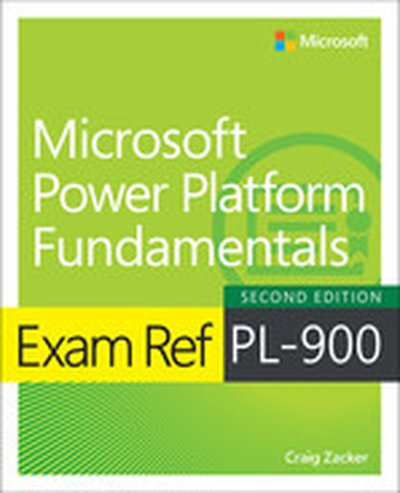
Exam Ref PL-900 Microsoft Power Platform Fundamentals, 2nd Edition

Prepare for Microsoft Exam PL-900. Demonstrate your real-world knowledge of the fundamentals of Microsoft Power Platform, including its business value, core components, and the capabilities and advantages of Power BI, Power Apps, Power Automate, and Power Virtual Agents. Designed for business users, functional consultants, and other professionals, this Exam Ref focuses on the critical thinking and decision-making acumen needed for success at the Microsoft Certified: Power Platform Fundamentals level. Focus on the expertise measured by these objectives: Describe the business value of Power Platform Identify the Core Components of Power Platform Demonstrate the capabilities of Power BI Demonstrate the capabilities of Power Apps Demonstrate the capabilities of Power Automate Demonstrate the capabilities of Power Virtual Agents This Microsoft Exam Ref: Organizes its coverage by exam objectives Features strategic, what-if scenarios to challenge you Assumes you are a business user, functional consultant, or other professional who wants to improve productivity by automating business processes, analyzing data, creating simple app experiences, or developing business enhancements to Microsoft cloud solutions. About the Exam Exam PL-900 focuses on knowledge needed to describe the value of Power Platform services and of extending solutions; describe Power Platform administration and security; describe Common Data Service, Connectors, and AI Builder; identify common Power BI components; connect to and consume data; build basic dashboards with Power BI; identify common Power Apps components; build basic canvas and model-driven apps; describe Power Apps portals; identify common Power Automate components; build basic flows; describe Power Virtual Agents capabilities; and build and publish basic chatbots. About Microsoft Certification Passing this exam fulfills your requirements for the Microsoft Certified: Power Platform Fundamentals certification, demonstrating your understanding of Power Platforms core capabilitiesfrom business value and core product capabilities to building simple apps, connecting data sources, automating basic business processes, creating dashboards, and creating chatbots. With this certification, you can move on to earn specialist certifications covering more advanced aspects of Power Apps and Power BI, including Microsoft Certified: Power Platform App Maker Associate and Power Platform Data Analyst Associate. See full details at: microsoft.com/learn

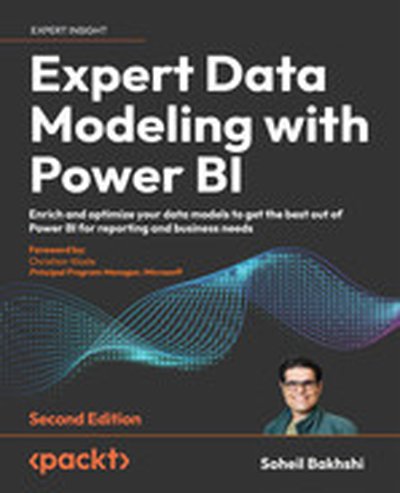
Expert Data Modeling with Power BI - Second Edition

Expert Data Modeling with Power BI, Second Edition, serves as your comprehensive guide to mastering data modeling using Power BI. With clear explanations, actionable examples, and a focus on hands-on learning, this book takes you through the concepts and advanced techniques that will enable you to build high-performing data models tailored to real-world requirements. What this Book will help me do Master time intelligence and virtual tables in DAX to enhance your data models. Understand best practices for creating efficient Star Schemas and preparing data in Power Query. Deploy advanced modeling techniques such as calculation groups, aggregations, and incremental refresh. Manage complex data models and streamline them to improve performance. Leverage data marts and data flows within Power BI for modularity and scalability. Author(s) Soheil Bakhshi is a seasoned expert in data visualization and analytics with extensive experience in leveraging Power BI for business intelligence solutions. Passionate about educating others, he combines practical insights and technical knowledge to make learning accessible and effective. His approachable writing style reflects his commitment to helping readers succeed. Who is it for? This book is ideal for business intelligence professionals, data analysts, or report developers with basic knowledge of Power BI and experience with Star Schema concepts. Whether you're looking to refine your data modeling skills or expand your expertise in advanced features, this guide aims to help you achieve your goals efficiently.

Microsoft Power BI Data Analyst Certification Companion: Preparation for Exam PL-300

Use this book to study for the PL-300 Microsoft Power BI Data Analyst exam. The book follows the “Skills Measured” outline provided by Microsoft to help focus your study. Each topic area from the outline corresponds to an area covered by the exam, and the book helps you build a good base of knowledge in each area. Each topic is presented with a blend of practical explanations, theory, and best practices. Power BI is more than just the Power BI Desktop or the Power BI Service. It is two distinct applications and an online service that, together, enable business users to gather, shape, and analyze data to generate and present insights. This book clearly delineates the purpose of each component and explains the key concepts necessary to use each component effectively. Each chapter provides best practices and tips to help an inexperienced Power BI practitioner develop good habits that will support larger or more complex analyses. Manybusiness analysts come to Power BI with a wealth of experience in Excel and particularly with pivot tables. Some of this experience translates readily into Power BI concepts. This book leverages that overlap in skill sets to help seasoned Excel users overcome the initial learning curve in Power BI, but no prior knowledge of any kind is assumed, terminology is defined in non-technical language, and key concepts are explained using analogies and ideas from experiences common to any reader. After reading this book, you will have the background and capability to learn the skills and concepts necessary both to pass the PL-300 exam and become a confident Power BI practitioner. What You Will Learn Create user-friendly, responsive reports with drill-throughs, bookmarks, and tool tips Construct a star schema with relationships, ensuring that your analysis will be both accurate and responsive Publish reports and datasets to the Power BI Service, enabling the report (and the dataset) to be viewed and used by your colleagues Extract data from a variety of sources, enabling you to leverage the data that your organization has collected and stored in a variety of sources Schedule data refreshes for published datasets so your reports and dashboards stay up to date Develop dashboards with visuals from different reports and streaming content Who This Book Is For Power BI users who are planning to take the PL-300 exam, Power BI users who want help studying the topic areas listed in Microsoft’s outline for the PL-300 exam, and those who are not planning to take the exam but want to close any knowledge gaps they might have

Building Solutions with the Microsoft Power Platform

With the accelerating speed of business and the increasing dependence on technology, companies today are significantly changing the way they build in-house business solutions. Many now use low-code and no code technologies to help them deal with specific issues, but that's just the beginning. With this practical guide, power users and developers will discover ways to resolve everyday challenges by building end-to-end solutions with the Microsoft Power Platform. Author Jason Rivera, who specializes in SharePoint and the Microsoft 365 solution architecture, provides a comprehensive overview of how to use the Power Platform to build end-to-end solutions that address tactical business needs. By learning key components of the platform, including Power Apps, Power Automate, and Power BI, you'll be able to build low-code and no code applications, automate repeatable business processes, and create interactive reports from available data. Learn how the Power Platform apps work together Incorporate AI into the Power Platform without extensive ML or AI knowledge Create end-to-end solutions to solve tactical business needs, including data collection, process automation, and reporting Build AI-based solutions using Power Virtual Agents and AI Builder

In programming, collaboration and experimentation can be very stressful, since sharing code and making it visible to others can be tedious, time-consuming, and nerve-wracking.Tools like Power BI are changing that entirely, by opening up new ways to collaborate between team members, add layers of customized and complex security to the data teams are working with, and making data much more accessible across organizations.

Ginger Grant joins the show to talk about how organizations can utilize Power BI, Dax, and M to their fullest potential and create new opportunities for experimentation, innovation, and collaboration.

Ginger is the Principal Consultant at the Desert Isle Group, working as an expert in advanced analytic solutions, including machine learning, data warehousing, ETL, reporting and cube development, Power BI, Excel Automation, Data Visualization and training. In addition to her consultant work, she is also a blogger at and global keynote speaker on developments and trends in data. Microsoft has also recognized her technical contributions by awarding her a MVP in Data Platform.

In this episode, we talk about what Power BI is, the common mistakes organizations make when implementing Power BI, advanced use cases, and much more.

Microsoft Power BI Quick Start Guide - Third Edition

Discover the power of transforming raw data into actionable insights with "Microsoft Power BI Quick Start Guide." This comprehensive guide introduces you to the core functionalities of Power BI, emphasizing practical demonstration on building data models, visualizations, and streamlining business intelligence processes. By following this book, you'll elevate your data analysis and storytelling skills. What this Book will help me do Connect and import data from various sources into Power BI. Master the usage of Power Query Editor for efficient data cleansing. Create effective and visually appealing Power BI dashboards. Understand and implement data security features, such as row-level and column-level security. Administer a Power BI environment effectively, including tenant management and cloud deployments. Author(s) Devin Knight, Erin Ostrowsky, Mitchell Pearson, and Bradley Schacht are seasoned experts in the field of data analysis and business intelligence. With years of practical experience, they bring a wealth of knowledge in Power BI and data visualization. Their passion for educating others is evident in their clear, approachable, and structured writing style. Who is it for? This book is designed for professionals seeking to delve into Microsoft Power BI's functionalities. Ideal readers include business analysts, data professionals, or enthusiasts aiming to transition from Excel-based solutions to BI platforms. Both beginners wanting to learn BI concepts and intermediate users looking to solidify their Power BI skills will benefit greatly.

Pro DAX and Data Modeling in Power BI: Creating the Perfect Semantic Layer to Drive Your Dashboard Analytics

Develop powerful data models that bind data from disparate sources into a coherent whole. Then extend your data models using DAX–the query language that underpins Power BI–to create reusable measures to deliver finely-crafted custom calculations in your dashboards. This book starts off teaching you how to define and enhance the core structures of your data model to make it a true semantic layer that transforms complex data into familiar business terms. You’ll learn how to create calculated columns to solve basic analytical challenges. Then you’ll move up to mastering DAX measures to finely slice and dice your data. The book also shows how to handle temporal analysis in Power BI using a Date dimension. You will see how DAX Time Intelligence functions can simplify your analysis of data over time. Finally, the book shows how to extend DAX to filter and calculate datasets and develop DAX table functions and variables to handle complex queries. What You Will Learn Create clear and efficient data models that support in-depth analytics Define core attributes such as data types and standardized formatting consistently throughout a data model Define cross-filtering settings to enhance the data model Make use of DAX to create calculated columns and custom tables Extend your data model with custom calculations and reusable measures using DAX Perform time-based analysis using a Date dimension and Time Intelligence functions Who This Book Is For Everyone from the CEO to the Business Intelligence developer and from BI and Data architects and analysts to power users and IT managers can use this book to outshine the competition and create the data framework that they need and interactive dashboards using Power BI

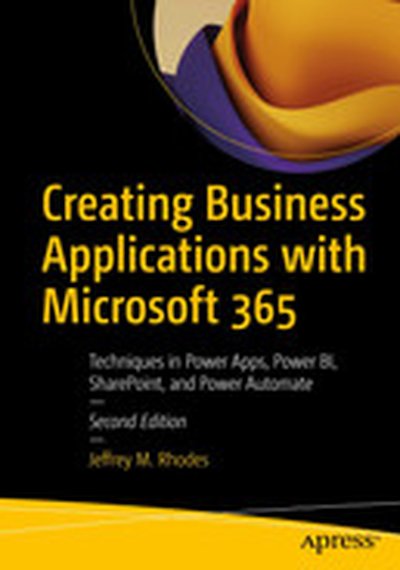
Creating Business Applications with Microsoft 365: Techniques in Power Apps, Power BI, SharePoint, and Power Automate

Learn how to automate processes, visualize your data, and improve productivity using Power Apps, Power Automate, Power BI, SharePoint, Forms, Teams, and more. This book will help you build complete solutions that often involve storing data in SharePoint, creating a front-end application in Power Apps or Forms, adding additional functionality with Power Automate, and effective reports and dashboards in Power BI. This new edition greatly expands the focus on Power Apps, Power BI, Power Automate, and Teams, along with SharePoint and Microsoft Forms. It starts with the basics of programming and shows how to build a simple email application in .NET, HTML/JavaScript, Power Apps on its own, and Power Apps and Power Automate in combination. It then covers how to connect Power Apps to SharePoint, create an approval process in Power Automate, visualize surveys in Power BI, and create your own survey solution with the combination of a number of Microsoft 365 tools. You’ll work with anextended example that shows how to use Power Apps and SharePoint together to create your own help ticketing system. This book offers a deep dive into Power BI, including working with JSON, XML, and Yes/No data, as well as visualizing learning data and using it to detect inconsistencies between Excel files. You’ll also see how to connect to Remedy and to the help system you will have created. Under author Jeffrey Rhodes’s guidance, you’ll delve into the Power Apps collection to learn how to avoid dreaded "delegation" issues with larger data sets. Back on applications, you will create a training class sign-up solution to only allow users to choose classes with available seats. Digging deeper into Teams, you’ll learn how to send chats, posts, and "adaptive cards" from Power Automate. Rounding things out, you’ll save Forms attachments to SharePoint with Power Automate, create your own "Employee Recognition" app with all of the Power Platform and Teams, add or edit weekly status reports, and learn how to create reservation and scoring applications. After reading the book, you will be able to build powerful applications using Power Apps, Power Automate, Power BI, SharePoint, Forms, and Teams. What You Will Learn Create productivity-enhancing applications with Power Apps, Power Automate, SharePoint, Forms, and/or Teams Transform and visualize data with Power BI to include custom columns, measures, and pivots Avoid delegation issues and tackle complicated Power Apps issues like complex columns, filtering, and ForAll loops Build scheduled or triggered Power Automate flows to schedule Teams Meetings, send emails, launch approvals, and much more Who This Book Is For Business and application developers.

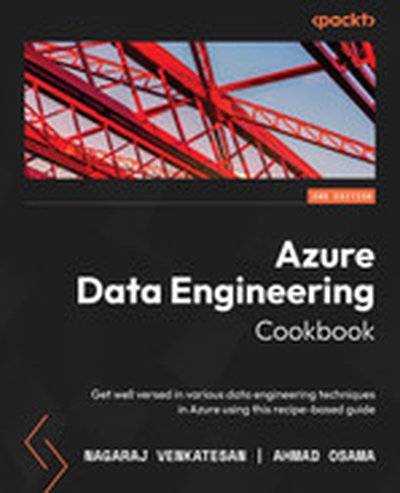
Azure Data Engineering Cookbook - Second Edition

Azure Data Engineering Cookbook is your ultimate guide to mastering data engineering on Microsoft's Azure platform. Through an engaging collection of recipes, this book breaks down procedures to build sophisticated data pipelines, leveraging tools like Azure Data Factory, Data Lake, Databricks, and Synapse Analytics. What this Book will help me do Efficiently process large datasets using Azure Synapse analytics and Azure Databricks pipelines. Transform and shape data within systems by leveraging Azure Synapse data flows. Implement and manage relational databases in Azure with performance tuning and administration. Configure data pipeline solutions integrated with Power BI for insightful reporting. Monitor, optimize, and ensure lineage tracking for your data systems efficiently with Purview and Log analytics. Author(s) Nagaraj Venkatesan is an experienced cloud architect specializing in Microsoft Azure, with years of hands-on data engineering expertise. Ahmad Osama is a seasoned data professional and author's shared emphasis is on practical learning and bridging this with actionable skills effectively. Who is it for? This book is essential for data engineers seeking expertise in Azure's rich engineering capabilities. It's tailored for professionals with a foundational knowledge of cloud services, looking to achieve advanced proficiency in Azure data engineering pipelines.

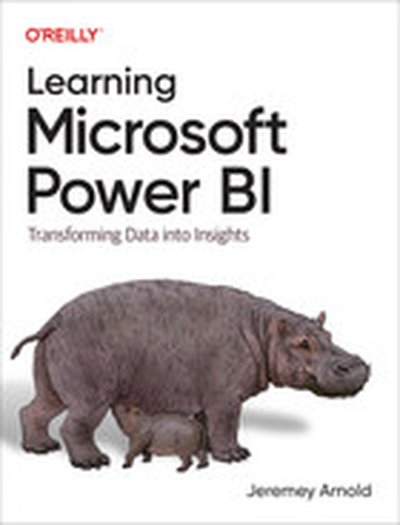
Learning Microsoft Power BI

Microsoft Power BI is a data analytics and visualization tool powerful enough for the most demanding data scientists, but accessible enough for everyday use for anyone who needs to get more from data. The market has many books designed to train and equip professional data analysts to use Power BI, but few of them make this tool accessible to anyone who wants to get up to speed on their own. This streamlined intro to Power BI covers all the foundational aspects and features you need to go from "zero to hero" with data and visualizations. Whether you work with large, complex datasets or work in Microsoft Excel, author Jeremey Arnold shows you how to teach yourself Power BI and use it confidently as a regular data analysis and reporting tool. You'll learn how to: Import, manipulate, visualize, and investigate data in Power BI Approach solutions for both self-service and enterprise BI Use Power BI in your organization's business intelligence strategy Produce effective reports and dashboards Create environments for sharing reports and managing data access with your team Determine the right solution for using Power BI offerings based on size, security, and computational needs

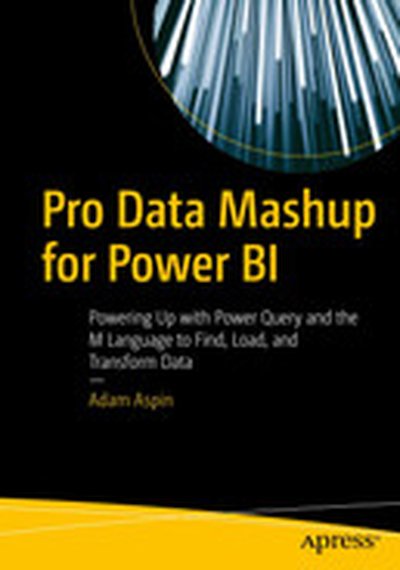
Pro Data Mashup for Power BI: Powering Up with Power Query and the M Language to Find, Load, and Transform Data

This book provides all you need to find data from external sources and load and transform that data into Power BI where you can mine it for business insights and a competitive edge. This ranges from connecting to corporate databases such as Azure SQL and SQL Server to file-based data sources, and cloud- and web-based data sources. The book also explains the use of Direct Query and Live Connect to establish instant connections to databases and data warehouses and avoid loading data. The book provides detailed guidance on techniques for transforming inbound data into normalized data sets that are easy to query and analyze. This covers data cleansing, data modification, and standardization as well as merging source data into robust data structures that can feed into your data model. You will learn how to pivot and transpose data and extrapolate missing values as well as harness external programs such as R and Python into a Power Query data flow. You also will see how to handle errors in source data and extend basic data ingestion to create robust and parameterized data load and transformation processes. Everything in this book is aimed at helping you deliver compelling and interactive insight with remarkable ease using Power BI’s built-in data load and transformation tools. What You Will Learn Connect Power BI to a range of external data sources Prepare data from external sources for easy analysis in Power BI Cleanse data from duplicates, outliers, and other bad values Make live connections from which to refresh data quickly and easily Apply advanced techniques to interpolate missing data Who This Book Is For All Power BI users from beginners to super users. Any user of the world’s leading dashboarding toolcan leverage the techniques explained in this book to turbo-charge their data preparation skills and learn how a wide range of external data sources can be harnessed and loaded into Power BI to drive their analytics. No previous knowledge of working with data, databases, or external data sources is required—merely the need to find, transform, and load data into Power BI..

Today I’m chatting with Emilie Shario, a Data Strategist in Residence at Amplify Partners. Emilie thinks data teams should operate like product teams. But what led her to that conclusion, and how has she put the idea into practice? Emilie answers those questions and more, delving into what kind of pushback and hiccups someone can expect when switching from being data-driven to product-driven and sharing advice for data scientists and analytics leaders.

Highlights / Skip to:

Answering the question “whose job is it” (5:18) Understanding and solving problems instead of just building features people ask for (9:05) Emilie explains what Amplify Partners is and talks about her work experience and how it fuels her perspectives on data teams (11:04) Emilie and I talk about the definition of data product (13:00) Emilie talks about her approach to building and training a data team (14:40) We talk about UX designers and how they fit into Emilie’s data teams (18:40) Emilie talks about the book and blog “Storytelling with Data” (21:00) We discuss the push back you can expect when trying to switch a team from being data driven to being product driven (23:18) What hiccups can people expect when switching to a product driven model (30:36) Emilie’s advice for data scientists and and analyst leaders (35:50) Emilie explains what Locally Optimistic is (37:34)

Quotes from Today’s Episode “Our thesis is…we need to understand the problems we’re solving before we start building solutions, instead of just building the things people are asking for.” — Emilie (2:23)

“I’ve seen this approach of flipping the ask on its head—understanding the problem you’re trying to solve—work and be more successful at helping drive impact instead of just letting your data team fall into this widget builder service trap.” — Emilie (4:43)

“If your answer to any problem to me is, ‘That’s not my job,’ then I don’t want you working for me because that’s not what we’re here for. Your job is whatever the problem in front of you that needs to be solved.” — Emilie (7:14)

“I don’t care if you have all of the data in the world and the most talented machine learning engineers and you’ve got the ability to do the coolest new algorithm fancy thing. If it doesn’t drive business impact, it doesn’t matter.” — Emilie (7:52)

“Data is not just a thing that anyone can do. It’s not just about throwing numbers in a spreadsheet anymore. It’s about driving business impact. But part of how we drive business impact with data is making it accessible. And accessible isn’t just giving people the numbers, it’s also communicating with it effectively, and UX is a huge piece of how we do that.” — Emilie (19:57)

“There are no null choices in design. Someone is deciding what some other human—a customer, a client, an internal stakeholder—is going to use, whether it’s a React app, or a Power BI dashboard, or a spreadsheet dump, or whatever it is, right? There will be an experience that is created, whether it is intentionally created or not.” — Brian (20:28)

“People will think design is just putting in colors that match together, like, or spinning the color wheel and seeing what lands. You know, there’s so much more to it. And it is an expertise; it is a domain that you have to develop.” — Emilie (34:58)

Links Referenced: Blog post by Rifat Majumder storytellingwithdata.com Experiencing Data Episode 28 with Cole Nussbaumer Knaflic locallyoptimistic.com Twitter: @emilieschario

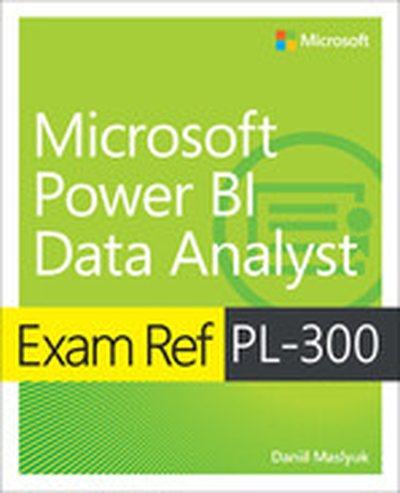
Exam Ref PL-300 Microsoft Power BI Data Analyst

Prepare for Microsoft Exam PL-300 and help demonstrate your real-world ability to deliver actionable insights with Power BI by leveraging available data and domain expertise; to provide meaningful business value through clear data visualizations; to enable others to perform self-service analytics, and to deploy and configure solutions for consumption. Designed for data analysts, business users, and other professionals, this Exam Ref focuses on the critical thinking and decision-making acumen needed for success at the Microsoft Certified: Power BI Data Analyst Associate level. Focus on the expertise measured by these objectives: Prepare the data Model the data Visualize and analyze the data Deploy and maintain assets This Microsoft Exam Ref: Organizes its coverage by exam objectives Features strategic, what-if scenarios to challenge you Assumes you are a data analyst, business intelligence professional, report creator, or other professional seeking to validate your skills and knowledge in analyzing data with Power BI About the Exam Exam PL-300 focuses on knowledge needed to get data from different data sources; clean, transform, and load data; design and develop data models; create model calculations with DAX; optimize model performance; create reports and dashboards; enhance reports for usability and storytelling; identify patterns and trends; and manage files, datasets, and workspaces. About Microsoft Certification Passing this exam fulfills your requirements for the Microsoft Certified: Power BI Data Analyst Associate certification, demonstrating your understanding of data repositories and data processes, and your skills in designing and building scalable data models, cleaning and transforming data, enabling advanced analytic capabilities to provide meaningful business value, and collaborating with key stakeholders to deliver relevant insights based on identified business requirements. See full details at: microsoft.com/learn ...

How To Use Databricks SQL for Analytics on Your Lakehouse

Most organizations run complex cloud data architectures that silo applications, users, and data. As a result, most analysis is performed with stale data and there isn’t a single source of truth of data for analytics.

Join this interactive follow-along deep dive demo to learn how Databricks SQL allows you to operate a multicloud lakehouse architecture that delivers data warehouse performance at data lake economics — with up to 12x better price/performance than traditional cloud data warehouses. Now data analysts and scientists can work with the freshest and most complete data and quickly derive new insights for accurate decision-making.

Here’s what we’ll cover: • Managing data access and permissions and monitoring how the data is being used and accessed in real time across your entire lakehouse infrastructure • Configuring and managing compute resources for fast performance, low latency, and high user concurrency to your data lake • Creating and working with queries, dashboards, query refresh, troubleshooting features and alerts • Creating connections to third-party BI and database tools (Power BI, Tableau, DbVisualizer, etc.) so that you can query your lakehouse without making changes to your analytical and dashboarding workflows

Connect with us: Website: https://databricks.com Facebook: https://www.facebook.com/databricksinc Twitter: https://twitter.com/databricks LinkedIn: https://www.linkedin.com/company/data... Instagram: https://www.instagram.com/databricksinc/

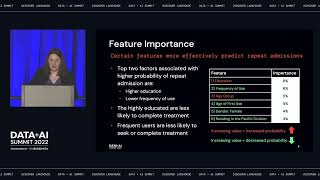
Predicting Repeat Admissions to Substance Abuse Treatment with Machine Learning

In our presentation, we will walk through a model created to predict repeat admissions to substance abuse treatment centers. The goal is to predict early who will be at high risk for relapse so care can be tailored to put additional focus on these patients. We used the Treatment Episode Data Set (TEDS) Admissions data set, which includes every publicly funded substance abuse treatment admission in the US.

While longitudinal data is not available in the data set, we were able to predict with 88% accuracy and an f-score of 0.85 which admissions were first or repeat admissions. Our solution used a scikit-learn Random Forest model and leveraged MLFlow to track model metrics to choose the most effective model. Our pipeline tested over 100 models of different types ranging from Gradient Boosted Trees to Deep Neural Networks in Tensorflow.

To improve model interpretability, we used Shapley values to measure which variables were most important for predicting readmission. These model metrics along with other valuable data are visualized in an interactive Power BI dashboard designed to help practitioners understand who to focus on during treatment. We are in discussions with companies and researchers who may be able to leverage this model in substance abuse treatment centers in the field.

Connect with us: Website: https://databricks.com Facebook: https://www.facebook.com/databricksinc Twitter: https://twitter.com/databricks LinkedIn: https://www.linkedin.com/company/data... Instagram: https://www.instagram.com/databricksinc/

Databricks SQL Under the Hood: What's New with Live Demos

With serverless SQL compute and built-in governance, Databricks SQL lets every analyst and analytics engineer easily ingest, transform, and query the freshest data directly on your data lake, using their tools of choice like Fivetran, dbt, PowerBI or Tableau, and standard SQL. There is no need to move data to another system. All this takes place at virtually any scale, at a fraction of the cost of traditional cloud data warehouses. Join this session for a deep dive into how Databricks SQL works under the hood, and see a live end-to-end demo of the data and analytics on Databricks from data ingestion, transformation, and consumption, using the modern data stack along with Databricks SQL.

Connect with us: Website: https://databricks.com Facebook: https://www.facebook.com/databricksinc Twitter: https://twitter.com/databricks LinkedIn: https://www.linkedin.com/company/data... Instagram: https://www.instagram.com/databricksinc/

Your fastest path to Lakehouse and beyond

Azure Databricks is an easy, open, and collaborative service for data, analytics & AI use cases, enabled by Lakehouse architecture. Join this session to discover how you can get the most out of your Azure investments by combining the best of Azure Synapse Analytics, Azure Databricks and Power BI for building a complete analytics & AI solution based on Lakehouse architecture.

Connect with us: Website: https://databricks.com Facebook: https://www.facebook.com/databricksinc Twitter: https://twitter.com/databricks LinkedIn: https://www.linkedin.com/company/data... Instagram: https://www.instagram.com/databricksinc/

Data Warehousing on the Lakehouse

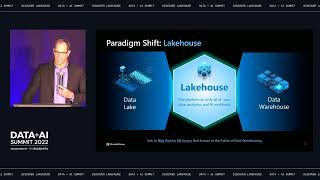
Most organizations routinely operate their business with complex cloud data architectures that silo applications, users and data. As a result, there is no single source of truth of data for analytics, and most analysis is performed with stale data. To solve these challenges, the lakehouse has emerged as the new standard for data architecture, with the promise to unify data, AI and analytic workloads in one place. In this session, we will cover why the data lakehouse is the next best data warehouse. You will hear from the experts success stories, use cases, and best practices learned from the field and discover how the data lakehouse ingests, stores and governs business-critical data at scale to build a curated data lake for data warehousing, SQL and BI workloads. You will also learn how Databricks SQL can help you lower costs and get started in seconds with instant, elastic SQL serverless compute, and how to empower every analytics engineers and analysts to quickly find and share new insights using their favorite BI and SQL tools, like Fivetran, dbt, Tableau or PowerBI.

Connect with us: Website: https://databricks.com Facebook: https://www.facebook.com/databricksinc Twitter: https://twitter.com/databricks LinkedIn: https://www.linkedin.com/company/data... Instagram: https://www.instagram.com/databricksinc/