talk-data.com talk-data.com

Topic

Python

programming_language data_science web_development

1446

tagged

Activity Trend

185 peak/qtr
2020-Q1 2026-Q1

Activities

1446 activities · Newest first

Send us a text Welcome to the cozy corner of the tech world where ones and zeros mingle with casual chit-chat. Datatopics Unplugged is your go-to spot for relaxed discussions around tech, news, data, and society.

Dive into conversations that should flow as smoothly as your morning coffee (but don't), where industry insights meet laid-back banter. Whether you're a data aficionado or just someone curious about the digital age, pull up a chair, relax, and let's get into the heart of data, unplugged style!

In today's episode Murilo & Bart discuss:

AI and Software Insights Introducing Gemini: Google's latest AI modelGoogle BlogFireship Dev TweetTechCrunch Article on Gemini DemoCommunication and Collaboration in Tech 6 tiny wording tweaks to level up your communication as a software engineerCareer CutlerMLOps and Model Development Navigating the chaos: why you don’t need another MLOps toolOpenLayer BlogChatGPT's performance on Julia vs. Python and R for LLM Code GenerationStochastic LifestyleEmerging Tech and Fun Finds JSONB in SQLiteSQLite ForumWizard Zines for a touch of geekinessWizard ZinesSports Illustrated's AI author sagaThe Verge ArticleMonaspace: A superfamily of fonts for codeMonaspaceHot Takes Paper: You Want My Password or a Dead Patient?Cohost ArticleIntro music courtesy of fesliyanstudios.com Check out the episode on YouTube.

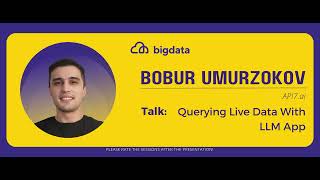
Bobur Umurzokov: Querying Live Data With LLM App

Unlock the secrets of querying live data with Bobur Umurzokov as he presents 'Querying Live Data With LLM App.' 🌐🤖 Discover how to build your own AI app in just 30 lines of code, harnessing the power of OpenAI's API and Pathway Python libraries. 🚀 Explore a revolutionary approach to handling real-time, ever-changing data for information retrieval, content recommendation, and dynamic chatbots! 📈📚 #LiveData #AIApp #openai

✨ H I G H L I G H T S ✨

🙌 A huge shoutout to all the incredible participants who made Big Data Conference Europe 2023 in Vilnius, Lithuania, from November 21-24, an absolute triumph! 🎉 Your attendance and active participation were instrumental in making this event so special. 🌍

Don't forget to check out the session recordings from the conference to relive the valuable insights and knowledge shared! 📽️

Once again, THANK YOU for playing a pivotal role in the success of Big Data Conference Europe 2023. 🚀 See you next year for another unforgettable conference! 📅 #BigDataConference #SeeYouNextYear

Matt Harrison is the author of many of the most successful Python books, including Effective Pandas, Effective XGBoost, The Machine Learning Pocket Reference, and many more. I consider him the top author of Python books and content on the planet.

He stopped by my house to chat about self-publishing technical books, the pros and cons of using a publisher, book piracy, and much more. We both talk about our experiences as best-selling technical authors, and don't hold back in this wide ranging and very candid conversation. Enjoy!

Note - my audio got a bit clippy in spots. Sorry if I blew up your speaker.

A 90-minute hands-on workshop led by Dan Gural on using FiftyOne for computer vision datasets and models. Part 1 covers FiftyOne basics (terms, architecture, installation, and general usage) and useful workflows to explore, understand, and curate data; Part 2 provides a hands-on introduction to FiftyOne (load datasets from the FiftyOne Dataset Zoo, navigate the FiftyOne App, inspect attributes, add new samples and custom attributes, generate and evaluate model predictions, and save insightful views).

A 90-minute hands-on workshop exploring the FiftyOne computer vision toolset. Part 1 covers FiftyOne Basics (terms, architecture, installation, and general usage), an overview of useful workflows to explore, understand, and curate your data, and how FiftyOne represents and semantically slices unstructured computer vision data. Part 2 provides a hands-on introduction to FiftyOne: loading datasets from the FiftyOne Dataset Zoo, navigating the FiftyOne App, programmatically inspecting attributes, adding new samples and custom attributes to a dataset, generating and evaluating model predictions, and saving insightful views into the data. Prerequisites: working knowledge of Python and basic computer vision. Attendees get access to the tutorials, videos, and code examples used in the workshop.

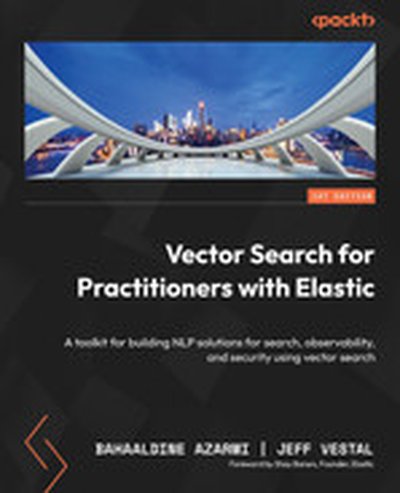
Vector Search for Practitioners with Elastic

The book "Vector Search for Practitioners with Elastic" provides a comprehensive guide to leveraging vector search technology within Elastic for applications in NLP, cybersecurity, and observability. By exploring practical examples and advanced techniques, this book teaches you how to optimize and implement vector search to address complex challenges in modern data management. What this Book will help me do Gain a deep understanding of implementing vector search with Elastic. Learn techniques to optimize vector data storage and retrieval for practical applications. Understand how to apply vector search for image similarity in Elastic. Discover methods for utilizing vector search for security and observability enhancements. Develop skills to integrate modern NLP tools with vector databases and Elastic. Author(s) Bahaaldine Azarmi, with his extensive experience in Elastic and NLP technologies, brings a practitioner's insight into the world of vector search. Co-author None Vestal contributes expertise in observability and system optimization. Together, they deliver practical and actionable knowledge in a clear and approachable manner. Who is it for? This book is designed for data professionals seeking to deepen their expertise in vector search and Elastic technologies. It is ideal for individuals in observability, search technology, or cybersecurity roles. If you have foundational knowledge in machine learning models, Python, and Elastic, this book will enable you to effectively utilize vector search in your projects.

Summary

Building a data platform that is enjoyable and accessible for all of its end users is a substantial challenge. One of the core complexities that needs to be addressed is the fractal set of integrations that need to be managed across the individual components. In this episode Tobias Macey shares his thoughts on the challenges that he is facing as he prepares to build the next set of architectural layers for his data platform to enable a larger audience to start accessing the data being managed by his team.

Announcements

Hello and welcome to the Data Engineering Podcast, the show about modern data management Introducing RudderStack Profiles. RudderStack Profiles takes the SaaS guesswork and SQL grunt work out of building complete customer profiles so you can quickly ship actionable, enriched data to every downstream team. You specify the customer traits, then Profiles runs the joins and computations for you to create complete customer profiles. Get all of the details and try the new product today at dataengineeringpodcast.com/rudderstack You shouldn't have to throw away the database to build with fast-changing data. You should be able to keep the familiarity of SQL and the proven architecture of cloud warehouses, but swap the decades-old batch computation model for an efficient incremental engine to get complex queries that are always up-to-date. With Materialize, you can! It’s the only true SQL streaming database built from the ground up to meet the needs of modern data products. Whether it’s real-time dashboarding and analytics, personalization and segmentation or automation and alerting, Materialize gives you the ability to work with fresh, correct, and scalable results — all in a familiar SQL interface. Go to dataengineeringpodcast.com/materialize today to get 2 weeks free! Developing event-driven pipelines is going to be a lot easier - Meet Functions! Memphis functions enable developers and data engineers to build an organizational toolbox of functions to process, transform, and enrich ingested events “on the fly” in a serverless manner using AWS Lambda syntax, without boilerplate, orchestration, error handling, and infrastructure in almost any language, including Go, Python, JS, .NET, Java, SQL, and more. Go to dataengineeringpodcast.com/memphis today to get started! Data lakes are notoriously complex. For data engineers who battle to build and scale high quality data workflows on the data lake, Starburst powers petabyte-scale SQL analytics fast, at a fraction of the cost of traditional methods, so that you can meet all your data needs ranging from AI to data applications to complete analytics. Trusted by teams of all sizes, including Comcast and Doordash, Starburst is a data lake analytics platform that delivers the adaptability and flexibility a lakehouse ecosystem promises. And Starburst does all of this on an open architecture with first-class support for Apache Iceberg, Delta Lake and Hudi, so you always maintain ownership of your data. Want to see Starburst in action? Go to dataengineeringpodcast.com/starburst and get $500 in credits to try Starburst Galaxy today, the easiest and fastest way to get started using Trino. Your host is Tobias Macey and today I'll be sharing an update on my own journey of building a data platform, with a particular focus on the challenges of tool integration and maintaining a single source of truth

Interview

Introduction How did you get involved in the area of data management? data sharing weight of history

existing integrations with dbt switching cost for e.g. SQLMesh de facto standard of Airflow

Single source of truth

permissions management across application layers Database engine Storage layer in a lakehouse Presentation/access layer (BI) Data flows dbt -> table level lineage orchestration engine -> pipeline flows

task based vs. asset based

Metadata platform as the logical place for horizontal view

Contact Info

LinkedIn Website

Parting Questio

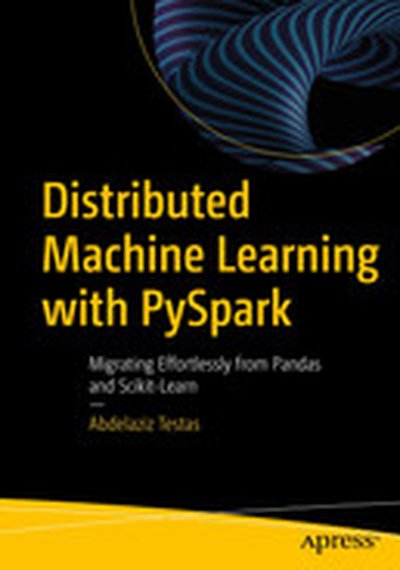
Distributed Machine Learning with PySpark: Migrating Effortlessly from Pandas and Scikit-Learn

Migrate from pandas and scikit-learn to PySpark to handle vast amounts of data and achieve faster data processing time. This book will show you how to make this transition by adapting your skills and leveraging the similarities in syntax, functionality, and interoperability between these tools. Distributed Machine Learning with PySpark offers a roadmap to data scientists considering transitioning from small data libraries (pandas/scikit-learn) to big data processing and machine learning with PySpark. You will learn to translate Python code from pandas/scikit-learn to PySpark to preprocess large volumes of data and build, train, test, and evaluate popular machine learning algorithms such as linear and logistic regression, decision trees, random forests, support vector machines, Naïve Bayes, and neural networks. After completing this book, you will understand the foundational concepts of data preparation and machine learning and will have the skills necessary toapply these methods using PySpark, the industry standard for building scalable ML data pipelines. What You Will Learn Master the fundamentals of supervised learning, unsupervised learning, NLP, and recommender systems Understand the differences between PySpark, scikit-learn, and pandas Perform linear regression, logistic regression, and decision tree regression with pandas, scikit-learn, and PySpark Distinguish between the pipelines of PySpark and scikit-learn Who This Book Is For Data scientists, data engineers, and machine learning practitioners who have some familiarity with Python, but who are new to distributed machine learning and the PySpark framework.

Welcome back to another podcast episode of Data Unchained! Our guest today is Ariel Pohoryles, Head of Product Marketing at #Rivery. In this episode, Ariel and I dived into the evolution of the #data #market, interacting with data in SQL and Python, and the importance of full visibility of the entire #datapipeline.

marketing #datascience #datatools

Cyberpunk by jiglr | https://soundcloud.com/jiglrmusic Music promoted by https://www.free-stock-music.com Creative Commons Attribution 3.0 Unported License https://creativecommons.org/licenses/by/3.0/deed.en_US Hosted on Acast. See acast.com/privacy for more information.

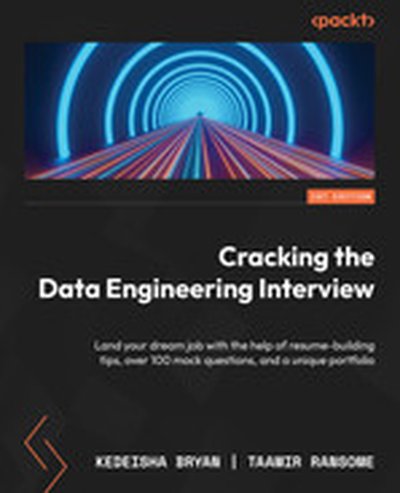
Cracking the Data Engineering Interview

"Cracking the Data Engineering Interview" is your essential guide to mastering the data engineering interview process. This book offers practical insights and techniques to build your resume, refine your skills in Python, SQL, data modeling, and ETL, and confidently tackle over 100 mock interview questions. Gain the knowledge and confidence to land your dream role in data engineering. What this Book will help me do Craft a compelling data engineering portfolio to stand out to employers. Refresh and deepen understanding of essential topics like Python, SQL, and ETL. Master over 100 interview questions that cover both technical and behavioral aspects. Understand data engineering concepts such as data modeling, security, and CI/CD. Develop negotiation, networking, and personal branding skills crucial for job applications. Author(s) None Bryan and None Ransome are seasoned authors with a wealth of experience in data engineering and professional development. Drawing from their extensive industry backgrounds, they provide actionable strategies for aspiring data engineers. Their approachable writing style and real-world insights make complex topics accessible to readers. Who is it for? This book is ideal for aspiring data engineers looking to navigate the job application process effectively. Readers should be familiar with data engineering fundamentals, including Python, SQL, cloud data platforms, and ETL processes. It's tailored for professionals aiming to enhance their portfolios, tackle challenging interviews, and boost their chances of landing a data engineering role.

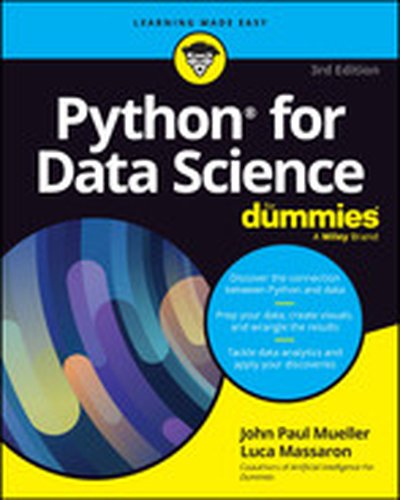
Python for Data Science For Dummies, 3rd Edition

Let Python do the heavy lifting for you as you analyze large datasets Python for Data Science For Dummies lets you get your hands dirty with data using one of the top programming languages. This beginner’s guide takes you step by step through getting started, performing data analysis, understanding datasets and example code, working with Google Colab, sampling data, and beyond. Coding your data analysis tasks will make your life easier, make you more in-demand as an employee, and open the door to valuable knowledge and insights. This new edition is updated for the latest version of Python and includes current, relevant data examples. Get a firm background in the basics of Python coding for data analysis Learn about data science careers you can pursue with Python coding skills Integrate data analysis with multimedia and graphics Manage and organize data with cloud-based relational databases Python careers are on the rise. Grab this user-friendly Dummies guide and gain the programming skills you need to become a data pro.

Curious about the world of #artificialintelligence (#AI)? How is it helping #evolve the #data #industry and #organizations in it? And what #career paths should people be considering when looking into the #technology industry? Find the answer to these questions and more as Matt Fornito '#TheAIGuy,' as dubbed by #NVIDIA #Executives, joins us on this #podcast #episode of Data Unchained!

AIAdvisor #fortune500 #Fortune100 #organizations #business #robotics #NLP #machinelearning #python #PHD #Phsycology #growth #autoML #MLOps #scientist #engineers #datascientists #datascience #dataengineers

Cyberpunk by jiglr | https://soundcloud.com/jiglrmusic Music promoted by https://www.free-stock-music.com Creative Commons Attribution 3.0 Unported License https://creativecommons.org/licenses/by/3.0/deed.en_US Hosted on Acast. See acast.com/privacy for more information.

Send us a text Welcome to the cozy corner of the tech world where ones and zeros mingle with casual chit-chat. Datatopics Unplugged is your go-to spot for relaxed discussions around tech, news, data, and society. Dive into conversations that should flow as smoothly as your morning coffee (but don't), where industry insights meet laid-back banter. Whether you're a data aficionado or just someone curious about the digital age, pull up a chair, relax, and let's get into the heart of data, unplugged style! In today's episode: The Ruff FormatterRuff now has a black-compatible formatterhttps://astral.sh/blog/the-ruff-formatterPEP 703 – Making the Global Interpreter Lock Optional in CPythonProposal for optionally removing the GIL (in Python 3.13)https://peps.python.org/pep-0703/Hey, Computer, Make Me a FontAI-generated fontshttps://serce.me/posts/02-10-2023-hey-computer-make-me-a-font Intro music courtesy of fesliyanstudios.com

Hands-on workshop to learn how to leverage the FiftyOne computer vision toolset. Topics include FiftyOne Basics (terms, architecture, installation, and general usage); overview of useful workflows to explore, understand, and curate data; how FiftyOne represents and semantically slices unstructured computer vision data. The second half is a hands-on introduction to FiftyOne, where you will learn how to load datasets from the FiftyOne Dataset Zoo, navigate the FiftyOne App, programmatically inspect attributes, add new samples and custom attributes, generate and evaluate model predictions, and save insightful views into the data.

A 90-minute hands-on workshop on the FiftyOne computer vision toolset. Part 1 covers FiftyOne Basics (terms, architecture, installation, and general usage), useful workflows to explore, understand, and curate data, and how FiftyOne represents and semantically slices unstructured computer vision data. Part 2 is a hands-on introduction to FiftyOne: load datasets from the FiftyOne Dataset Zoo, navigate the FiftyOne App, programmatically inspect attributes, add new sample and custom attributes to a dataset, generate and evaluate model predictions, and save insightful views into the data. Prerequisites: working knowledge of Python and basic computer vision. Attendees will gain access to tutorials, videos, and code examples used in the workshop.

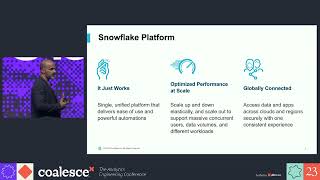
Enhancing the developer experience with the power of Snowflake and dbt - Coalesce 2023

In the rapidly evolving landscape of data technology, the integration of Snowflake and dbt has revolutionized the creation and management of data applications. Now, developers can harness their combined capabilities to build superior, scalable, and sophisticated data applications.

With Snowflake’s cloud-based architecture, developers can access boundless storage, computing, and seamless data sharing. Additionally, Snowpark Python enables the performance of data transformation, analytics, and algorithmic functions within Snowflake, presenting developers with a new realm of opportunities. Incorporating dbt further enhances the synergy, allowing developers to streamline data workflows in an agile, model-driven environment.

This session covers how the Snowflake and dbt partnership can pave the way toward building better, future-proof data applications that cater to the dynamic needs of businesses in the digital era.

Speaker: Tarik Dwiek, Head of Technology and Application Partners, Snowflake

Register for Coalesce at https://coalesce.getdbt.com

A complete beginner's guide to Snowpark in dbt - Coalesce 2023

Now that you can write models in Python, a new world of possibility has opened up. In this session, Christopher Marland introduces you to Snowpark and how it integrates with dbt, before demonstrating a real-world use case where Python transformations outperform SQL, starting from raw data and moving through to a completed analysis.

This talk is ideal for people who are familiar with PySpark but new to dbt, or who are experienced dbt users and curious about taking advantage of their new Pythonic superpowers from inside of a familiar development environment.

Speaker: Christopher Marland, Snowflake Solutions Architect, Aimpoint Digital

Register for Coalesce at https://coalesce.getdbt.com

Summary

Building streaming applications has gotten substantially easier over the past several years. Despite this, it is still operationally challenging to deploy and maintain your own stream processing infrastructure. Decodable was built with a mission of eliminating all of the painful aspects of developing and deploying stream processing systems for engineering teams. In this episode Eric Sammer discusses why more companies are including real-time capabilities in their products and the ways that Decodable makes it faster and easier.

Announcements

Hello and welcome to the Data Engineering Podcast, the show about modern data management Introducing RudderStack Profiles. RudderStack Profiles takes the SaaS guesswork and SQL grunt work out of building complete customer profiles so you can quickly ship actionable, enriched data to every downstream team. You specify the customer traits, then Profiles runs the joins and computations for you to create complete customer profiles. Get all of the details and try the new product today at dataengineeringpodcast.com/rudderstack This episode is brought to you by Datafold – a testing automation platform for data engineers that finds data quality issues before the code and data are deployed to production. Datafold leverages data-diffing to compare production and development environments and column-level lineage to show you the exact impact of every code change on data, metrics, and BI tools, keeping your team productive and stakeholders happy. Datafold integrates with dbt, the modern data stack, and seamlessly plugs in your data CI for team-wide and automated testing. If you are migrating to a modern data stack, Datafold can also help you automate data and code validation to speed up the migration. Learn more about Datafold by visiting dataengineeringpodcast.com/datafold You shouldn't have to throw away the database to build with fast-changing data. You should be able to keep the familiarity of SQL and the proven architecture of cloud warehouses, but swap the decades-old batch computation model for an efficient incremental engine to get complex queries that are always up-to-date. With Materialize, you can! It’s the only true SQL streaming database built from the ground up to meet the needs of modern data products. Whether it’s real-time dashboarding and analytics, personalization and segmentation or automation and alerting, Materialize gives you the ability to work with fresh, correct, and scalable results — all in a familiar SQL interface. Go to dataengineeringpodcast.com/materialize today to get 2 weeks free! As more people start using AI for projects, two things are clear: It’s a rapidly advancing field, but it’s tough to navigate. How can you get the best results for your use case? Instead of being subjected to a bunch of buzzword bingo, hear directly from pioneers in the developer and data science space on how they use graph tech to build AI-powered apps. . Attend the dev and ML talks at NODES 2023, a free online conference on October 26 featuring some of the brightest minds in tech. Check out the agenda and register today at Neo4j.com/NODES. Your host is Tobias Macey and today I'm interviewing Eric Sammer about starting your stream processing journey with Decodable

Interview

Introduction How did you get involved in the area of data management? Can you describe what Decodable is and the story behind it?

What are the notable changes to the Decodable platform since we last spoke? (October 2021) What are the industry shifts that have influenced the product direction?

What are the problems that customers are trying to solve when they come to Decodable? When you launched your focus was on SQL transformations of streaming data. What was the process for adding full Java support in addition to SQL? What are the developer experience challenges that are particular to working with streaming data?

How have you worked to address that in the Decodable platform and interfaces?

As you evolve the technical and product direction, what is your heuristic for balancing the unification of interfaces and system integration against the ability to swap different components or interfaces as new technologies are introduced? What are the most interesting, innovative, or unexpected ways that you have seen Decodable used? What are the most interesting, unexpected, or challenging lessons that you have learned while working on Decodable? When is Decodable the wrong choice? What do you have planned for the future of Decodable?

Contact Info

esammer on GitHub LinkedIn

Parting Question

From your perspective, what is the biggest gap in the tooling or technology for data management today?

Closing Announcements

Thank you for listening! Don't forget to check out our other shows. Podcast.init covers the Python language, its community, and the innovative ways it is being used. The Machine Learning Podcast helps you go from idea to production with machine learning. Visit the site to subscribe to the show, sign up for the mailing list, and read the show notes. If you've learned something or tried out a project from the show then tell us about it! Email [email protected]) with your story. To help other people find the show please leave a review on Apple Podcasts and tell your friends and co-workers

Links

Decodable

Podcast Episode

Understanding the Apache Flink Journey Flink

Podcast Episode

Debezium

Podcast Episode

Kafka Redpanda

Podcast Episode

Kinesis PostgreSQL

Podcast Episode

Snowflake

Podcast Episode

Databricks Startree Pinot

Podcast Episode

Rockset

Podcast Episode

Druid InfluxDB Samza Storm Pulsar

Podcast Episode

ksqlDB

Podcast Episode

dbt GitHub Actions Airbyte Singer Splunk Outbox Pattern

The intro and outro music is from The Hug by The Freak Fandango Orchestra / CC BY-SA Sponsored By: Neo4J: NODES Conference Logo

NODES 2023 is a free online conference focused on graph-driven innovations with content for all skill levels. Its 24 hours are packed with 90 interactive technical sessions from top developers and data scientists across the world covering a broad range of topics and use cases. The event tracks: - Intelligent Applications: APIs, Libraries, and Frameworks – Tools and best practices for creating graph-powered applications and APIs with any software stack and programming language, including Java, Python, and JavaScript - Machine Learning and AI – How graph technology provides context for your data and enhances the accuracy of your AI and ML projects (e.g.: graph neural networks, responsible AI) - Visualization: Tools, Techniques, and Best Practices – Techniques and tools for exploring hidden and unknown patterns in your data and presenting complex relationships (knowledge graphs, ethical data practices, and data representation)

Don’t miss your chance to hear about the latest graph-powered implementations and best practices for free on October 26 at NODES 2023. Go to Neo4j.com/NODES today to see the full agenda and register!Rudderstack: Rudderstack

Introducing RudderStack Profiles. RudderStack Profiles takes the SaaS guesswork and SQL grunt work out of building complete customer profiles so you can quickly ship actionable, enriched data to every downstream team. You specify the customer traits, then Profiles runs the joins and computations for you to create complete customer profiles. Get all of the details and try the new product today at dataengineeringpodcast.com/rudderstackMaterialize: Materialize
You shouldn't have to throw away the database to build with fast-changing data. Keep the familiar SQL, keep the proven architecture of cloud warehouses, but swap the decades-old batch computation model for an efficient incremental engine to get complex queries that are always up-to-date.

That is Materialize, the only true SQL streaming database built from the ground up to meet the needs of modern data products: Fresh, Correct, Scalable — all in a familiar SQL UI. Built on Timely Dataflow and Differential Dataflow, open source frameworks created by cofounder Frank McSherry at Microsoft Research, Materialize is trusted by data and engineering teams at Ramp, Pluralsight, Onward and more to build real-time data products without the cost, complexity, and development time of stream processing.

Go to materialize.com today and get 2 weeks free!Datafold: Datafold

This episode is brought to you by Datafold – a testing automation platform for data engineers that finds data quality issues before the code and data are deployed to production. Datafold leverages data-diffing to compare…

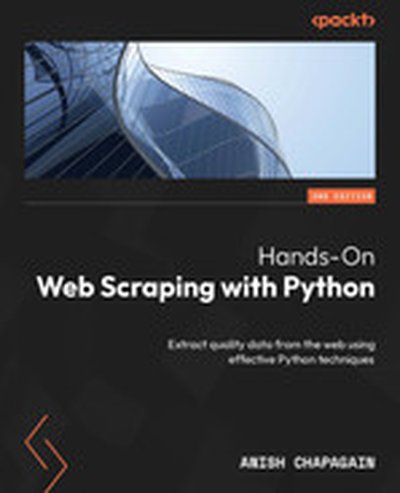
Hands-On Web Scraping with Python - Second Edition

In "Hands-On Web Scraping with Python," you'll learn how to harness the power of Python libraries to extract, process, and analyze data from the web. This book provides a practical, step-by-step guide for beginners and data enthusiasts alike. What this Book will help me do Master the use of Python libraries like requests, lxml, Scrapy, and Beautiful Soup for web scraping. Develop advanced techniques for secure browsing and data extraction using APIs and Selenium. Understand the principles behind regex and PDF data parsing for comprehensive scraping. Analyze and visualize data using data science tools such as Pandas and Plotly. Build a portfolio of real-world scraping projects to demonstrate your capabilities. Author(s) Anish Chapagain, the author of "Hands-On Web Scraping with Python," is an experienced programmer and instructor who specializes in Python and data-related technologies. With his vast experience in teaching individuals from diverse backgrounds, Anish approaches complex concepts with clarity and a hands-on methodology. Who is it for? This book is perfect for aspiring data scientists, Python beginners, and anyone who wants to delve into web scraping. Readers should have a basic understanding of how websites work but no prior coding experience is required. If you aim to develop scraping skills and understand data analysis, this book is the ideal starting point.

Send us a text Microsoft announces Python for ExcelAnnouncing Python in Excel: Combining the power of Python and the flexibility of Excel.https://techcommunity.microsoft.com/t5/excel-blog/announcing-python-in-excel-combining-the-power-of-python-and-the/ba-p/3893439AI-powered Coca ColaCoca‑Cola® Creations Imagines Year 3000 With New Futuristic Flavor and AI-Powered Experiencehttps://www.coca-colacompany.com/media-center/coca-cola-creations-imagines-year-3000-futuristic-flavor-ai-powered-experience40% productivity boost from AI, according to HarvardEnterprise workers gain 40 percent performance boost from GPT-4, Harvard study findshttps://venturebeat.com/ai/enterprise-workers-gain-40-percent-performance-boost-from[…]ewsletter&utm_campaign=ibm-pledges-to-train-two-million-in-aiMicrosoft’s Copilot announcementAnnouncing Microsoft Copilot, your everyday AI companionhttps://blogs.microsoft.com/blog/2023/09/21/announcing-microsoft-copilot-your-everyday-ai-companion/v0 - AI-powered react componentsWhat is v0?https://v0.dev/faq#what-is-v0Microsoft looking for a nuclear energy expertMicrosoft is hiring a nuclear energy expert to help power its AI and cloud data centershttps://www.cnbc.com/2023/09/25/microsoft-is-hiring-a-nuclear-energy-expert-to-help-power-data-centers.htmlIntro music courtesy of fesliyanstudios.com