talk-data.com talk-data.com

Topic

Python

programming_language data_science web_development

1446

tagged

Activity Trend

185 peak/qtr
2020-Q1 2026-Q1

Activities

1446 activities · Newest first

Summary

Data pipelines are the core of every data product, ML model, and business intelligence dashboard. If you're not careful you will end up spending all of your time on maintenance and fire-fighting. The folks at Rivery distilled the seven principles of modern data pipelines that will help you stay out of trouble and be productive with your data. In this episode Ariel Pohoryles explains what they are and how they work together to increase your chances of success.

Announcements

Hello and welcome to the Data Engineering Podcast, the show about modern data management Introducing RudderStack Profiles. RudderStack Profiles takes the SaaS guesswork and SQL grunt work out of building complete customer profiles so you can quickly ship actionable, enriched data to every downstream team. You specify the customer traits, then Profiles runs the joins and computations for you to create complete customer profiles. Get all of the details and try the new product today at dataengineeringpodcast.com/rudderstack This episode is brought to you by Datafold – a testing automation platform for data engineers that finds data quality issues before the code and data are deployed to production. Datafold leverages data-diffing to compare production and development environments and column-level lineage to show you the exact impact of every code change on data, metrics, and BI tools, keeping your team productive and stakeholders happy. Datafold integrates with dbt, the modern data stack, and seamlessly plugs in your data CI for team-wide and automated testing. If you are migrating to a modern data stack, Datafold can also help you automate data and code validation to speed up the migration. Learn more about Datafold by visiting dataengineeringpodcast.com/datafold Your host is Tobias Macey and today I'm interviewing Ariel Pohoryles about the seven principles of modern data pipelines

Interview

Introduction How did you get involved in the area of data management? Can you start by defining what you mean by a "modern" data pipeline? At Rivery you published a white paper identifying seven principles of modern data pipelines:

Zero infrastructure management ELT-first mindset Speaks SQL and Python Dynamic multi-storage layers Reverse ETL & operational analytics Full transparency Faster time to value

What are the applications of data that you focused on while identifying these principles? How do the application of these principles influence the ability of organizations and their data teams to encourage and keep pace with the use of data in the business? What are the technical components of a pipeline infrastructure that are necessary to support a "modern" workflow? How do the technologies involved impact the organizational involvement with how data is applied throughout the business? When using managed services, what are the ways that the pricing model acts to encourage/discourage experimentation/exploration with data? What are the most interesting, innovative, or unexpected ways that you have seen these seven principles implemented/applied? What are the most interesting, unexpected, or challenging lessons that you have learned while working with customers to adapt to these principles? What are the cases where some/all of these principles are undesirable/impractical to implement? What are the opportunities for further advancement/sophistication in the ways that teams work with and gain value from data?

Contact Info

LinkedIn

Parting Question

From your perspective, what is the biggest gap in the tooling or technology for data management today?

Closing Announcements

Thank you for listening! Don't forget to check out our other shows. Podcast.init covers the Python language, its community, and the innovative ways it is being used. The Machine Learning Podcast helps you go from idea to production with machine learning. Visit the site to subscribe to the show, sign up for the mailing list, and read the show notes. If you've learned somethi

Summary

As businesses increasingly invest in technology and talent focused on data engineering and analytics, they want to know whether they are benefiting. So how do you calculate the return on investment for data? In this episode Barr Moses and Anna Filippova explore that question and provide useful exercises to start answering that in your company.

Announcements

Hello and welcome to the Data Engineering Podcast, the show about modern data management Introducing RudderStack Profiles. RudderStack Profiles takes the SaaS guesswork and SQL grunt work out of building complete customer profiles so you can quickly ship actionable, enriched data to every downstream team. You specify the customer traits, then Profiles runs the joins and computations for you to create complete customer profiles. Get all of the details and try the new product today at dataengineeringpodcast.com/rudderstack Your host is Tobias Macey and today I'm interviewing Barr Moses and Anna Filippova about how and whether to measure the ROI of your data team

Interview

Introduction How did you get involved in the area of data management? What are the typical motivations for measuring and tracking the ROI for a data team?

Who is responsible for collecting that information? How is that information used and by whom?

What are some of the downsides/risks of tracking this metric? (law of unintended consequences) What are the inputs to the number that constitutes the "investment"? infrastructure, payroll of employees on team, time spent working with other teams? What are the aspects of data work and its impact on the business that complicate a calculation of the "return" that is generated? How should teams think about measuring data team ROI? What are some concrete ROI metrics data teams can use?

What level of detail is useful? What dimensions should be used for segmenting the calculations?

How can visibility into this ROI metric be best used to inform the priorities and project scopes of the team? With so many tools in the modern data stack today, what is the role of technology in helping drive or measure this impact? How do your respective solutions, Monte Carlo and dbt, help teams measure and scale data value? With generative AI on the upswing of the hype cycle, what are the impacts that you see it having on data teams?

What are the unrealistic expectations that it will produce? How can it speed up time to delivery?

What are the most interesting, innovative, or unexpected ways that you have seen data team ROI calculated and/or used? What are the most interesting, unexpected, or challenging lessons that you have learned while working on measuring the ROI of data teams? When is measuring ROI the wrong choice?

Contact Info

Barr

LinkedIn

Anna

LinkedIn

Parting Question

From your perspective, what is the biggest gap in the tooling or technology for data management today?

Closing Announcements

Thank you for listening! Don't forget to check out our other shows. Podcast.init covers the Python language, its community, and the innovative ways it is being used. The Machine Learning Podcast helps you go from idea to production with machine learning. Visit the site to subscribe to the show, sign up for the mailing list, and read the show notes. If you've learned something or tried out a project from the show then tell us about it! Email [email protected]) with your story. To help other people find the show please leave a review on Apple Podcasts and tell your friends and co-workers

Links

Monte Carlo

Podcast Episode

dbt

Podcast Episode

JetBlue Snowflake Con Presentation Generative AI Large Language Models

The intro and outro music is from The Hug by The Freak Fandango Orchestra / CC BY-SA Sponsored By: Rudderstack: Rudderstack

Introducing RudderStack Profiles. RudderStack Profiles takes the SaaS guessw

Summary

All software systems are in a constant state of evolution. This makes it impossible to select a truly future-proof technology stack for your data platform, making an eventual migration inevitable. In this episode Gleb Mezhanskiy and Rob Goretsky share their experiences leading various data platform migrations, and the hard-won lessons that they learned so that you don't have to.

Announcements

Hello and welcome to the Data Engineering Podcast, the show about modern data management Introducing RudderStack Profiles. RudderStack Profiles takes the SaaS guesswork and SQL grunt work out of building complete customer profiles so you can quickly ship actionable, enriched data to every downstream team. You specify the customer traits, then Profiles runs the joins and computations for you to create complete customer profiles. Get all of the details and try the new product today at dataengineeringpodcast.com/rudderstack Modern data teams are using Hex to 10x their data impact. Hex combines a notebook style UI with an interactive report builder. This allows data teams to both dive deep to find insights and then share their work in an easy-to-read format to the whole org. In Hex you can use SQL, Python, R, and no-code visualization together to explore, transform, and model data. Hex also has AI built directly into the workflow to help you generate, edit, explain and document your code. The best data teams in the world such as the ones at Notion, AngelList, and Anthropic use Hex for ad hoc investigations, creating machine learning models, and building operational dashboards for the rest of their company. Hex makes it easy for data analysts and data scientists to collaborate together and produce work that has an impact. Make your data team unstoppable with Hex. Sign up today at dataengineeringpodcast.com/hex to get a 30-day free trial for your team! Your host is Tobias Macey and today I'm interviewing Gleb Mezhanskiy and Rob Goretsky about when and how to think about migrating your data stack

Interview

Introduction How did you get involved in the area of data management? A migration can be anything from a minor task to a major undertaking. Can you start by describing what constitutes a migration for the purposes of this conversation? Is it possible to completely avoid having to invest in a migration? What are the signals that point to the need for a migration?

What are some of the sources of cost that need to be accounted for when considering a migration? (both in terms of doing one, and the costs of not doing one) What are some signals that a migration is not the right solution for a perceived problem?

Once the decision has been made that a migration is necessary, what are the questions that the team should be asking to determine the technologies to move to and the sequencing of execution? What are the preceding tasks that should be completed before starting the migration to ensure there is no breakage downstream of the changing component(s)? What are some of the ways that a migration effort might fail? What are the major pitfalls that teams need to be aware of as they work through a data platform migration? What are the opportunities for automation during the migration process? What are the most interesting, innovative, or unexpected ways that you have seen teams approach a platform migration? What are the most interesting, unexpected, or challenging lessons that you have learned while working on data platform migrations? What are some ways that the technologies and patterns that we use can be evolved to reduce the cost/impact/need for migraitons?

Contact Info

Gleb

LinkedIn @glebmm on Twitter

Rob

LinkedIn RobGoretsky on GitHub

Parting Question

From your perspective, what is the biggest gap in the tooling or technology for data management today?

Closing Announcements

Thank you for listening! Don't forget to check out our other shows. Podcast.init covers the Python language, its community, and the innovative ways it is being used. The Machine Learning Podcast helps you go from idea to production with machine learning. Visit the site to subscribe to the show, sign up for the mailing list, and read the show notes. If you've learned something or tried out a project from the show then tell us about it! Email [email protected]) with your story. To help other people find the show please leave a review on Apple Podcasts and tell your friends and co-workers

Links

Datafold

Podcast Episode

Informatica Airflow Snowflake

Podcast Episode

Redshift Eventbrite Teradata BigQuery Trino EMR == Elastic Map-Reduce Shadow IT

Podcast Episode

Mode Analytics Looker Sunk Cost Fallacy data-diff

Podcast Episode

SQLGlot Dagster dbt

The intro and outro music is from The Hug by The Freak Fandango Orchestra / CC BY-SA Sponsored By: Hex: Hex Tech Logo

Hex is a collaborative workspace for data science and analytics. A single place for teams to explore, transform, and visualize data into beautiful interactive reports. Use SQL, Python, R, no-code and AI to find and share insights across your organization. Empower everyone in an organization to make an impact with data. Sign up today at [dataengineeringpodcast.com/hex](https://www.dataengineeringpodcast.com/hex} and get 30 days free!Rudderstack: Rudderstack

Introducing RudderStack Profiles. RudderStack Profiles takes the SaaS guesswork and SQL grunt work out of building complete customer profiles so you can quickly ship actionable, enriched data to every downstream team. You specify the customer traits, then Profiles runs the joins and computations for you to create complete customer profiles. Get all of the details and try the new product today at dataengineeringpodcast.com/rudderstackSupport Data Engineering Podcast

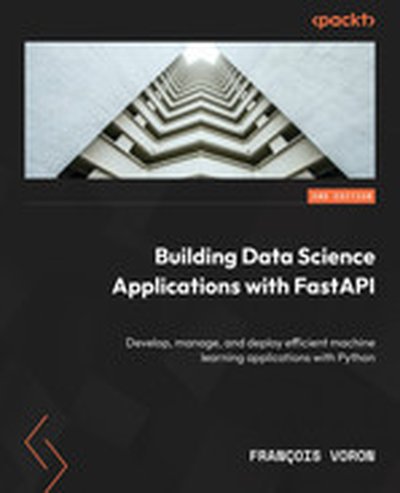
Building Data Science Applications with FastAPI - Second Edition

Building Data Science Applications with FastAPI is your comprehensive guide to mastering the FastAPI framework to build efficient, reliable data science applications and APIs. You'll explore examples and projects that integrate machine learning models, manage databases, and leverage advanced FastAPI features like asynchronous I/O and WebSockets. What this Book will help me do Develop an understanding of the fundamentals and advanced features of the FastAPI framework, like dependency injection and type hinting. Learn how to integrate machine learning models into a FastAPI-based web backend effectively. Master concepts of authentication, database connections, and asynchronous programming in Python. Build and deploy two practical AI applications: a real-time object detection tool and a text-to-image generator. Acquire skills to monitor, log, and maintain software systems for optimal performance and reliability. Author(s) François Voron is an experienced Python developer and data scientist with extensive knowledge of western frameworks including FastAPI. With years of experience designing and deploying machine learning and data science applications, François focuses on empowering developers with practical techniques and real-world applications. His guidance helps readers tackle contemporary challenges in software development. Who is it for? This book is ideal for data scientists and software engineers looking to broaden their skillset by creating robust web APIs for data science applications. Readers are expected to have a working knowledge of Python and basic data science concepts, offering them a chance to expand into backend development. If you're keen to deploy machine learning models and integrate them seamlessly with web technologies, this book is for you. It provides both fundamental insights and advanced techniques to serve a broad range of learners.

Five Things You Didn't Know You Could Do with Databricks Workflows

Databricks workflows has come a long way since the initial days of orchestrating simple notebooks and jar/wheel files. Now we can orchestrate multi-task jobs and create a chain of tasks with lineage and DAG with either fan-in or fan-out among multiple other patterns or even run another Databricks job directly inside another job.

Databricks workflows takes its tag: “orchestrate anything anywhere” pretty seriously and is a truly fully-managed, cloud-native orchestrator to orchestrate diverse workloads like Delta Live Tables, SQL, Notebooks, Jars, Python Wheels, dbt, SQL, Apache Spark™, ML pipelines with excellent monitoring, alerting and observability capabilities as well. Basically, it is a one-stop product for all orchestration needs for an efficient lakehouse. And what is even better is, it gives full flexibility of running your jobs in a cloud-agnostic and cloud-independent way and is available across AWS, Azure and GCP.

In this session, we will discuss and deep dive on some of the very interesting features and will showcase end-to-end demos of the features which will allow you to take full advantage of Databricks workflows for orchestrating the lakehouse.

Talk by: Prashanth Babu

Connect with us: Website: https://databricks.com Twitter: https://twitter.com/databricks LinkedIn: https://www.linkedin.com/company/databricks Instagram: https://www.instagram.com/databricksinc Facebook: https://www.facebook.com/databricksinc

Learnings From the Field: Migration From Oracle DW and IBM DataStage to Databricks on AWS

Legacy data warehouses are costly to maintain, unscalable and cannot deliver on data science, ML and real-time analytics use cases. Migrating from your enterprise data warehouse to Databricks lets you scale as your business needs grow and accelerate innovation by running all your data, analytics and AI workloads on a single unified data platform.

In the first part of this session we will guide you through the well-designed process and tools that will help you from the assessment phase to the actual implementation of an EDW migration project. Also, we will address ways to convert PL/SQL proprietary code to an open standard python code and take advantage of PySpark for ETL workloads and Databricks SQL’s data analytics workload power.

The second part of this session will be based on an EDW migration project of SNCF (French national railways); one of the major enterprise customers of Databricks in France. Databricks partnered with SNCF to migrate its real estate entity from Oracle DW and IBM DataStage to Databricks on AWS. We will walk you through the customer context, urgency to migration, challenges, target architecture, nitty-gritty details of implementation, best practices, recommendations, and learnings in order to execute a successful migration project in a very accelerated time frame.

Talk by: Himanshu Arora and Amine Benhamza

Connect with us: Website: https://databricks.com Twitter: https://twitter.com/databricks LinkedIn: https://www.linkedin.com/company/databricks Instagram: https://www.instagram.com/databricksinc Facebook: https://www.facebook.com/databricksinc

Lineage System Table in Unity Catalog

Unity Catalog provides fully automated data lineage for all workloads in SQL, R, Python, Scala and across all asset types at Databricks. The aggregated view has been available to end users through data explorer and API. In this session, we are excited to share that lineage is available via delta table in their UC metastore. It stores full history of recent lineage records and it is near real time. Additionally, customers can query it through standard SQL interface. With that, customers can get significant operational insights about their workload for impact analysis, troubleshooting, quality assurance, data discovery, and data governance.

Together with the system table platform effort, which provides query history, job run operational data, audit logs and more, lineage table will be a critical piece to link all the data asset and entity asset together, providing better lakehouse observability and unification to customers.

Talk by: Menglei Sun

Connect with us: Website: https://databricks.com Twitter: https://twitter.com/databricks LinkedIn: https://www.linkedin.com/company/databricks Instagram: https://www.instagram.com/databricksinc Facebook: https://www.facebook.com/databricksinc

Building Apps on the Lakehouse with Databricks SQL

BI applications are undoubtedly one of the major consumers of a data warehouse. Nevertheless, the prospect of accessing data using standard SQL is appealing to many more stakeholders than just the data analysts. We’ve heard from customers that they experience an increasing demand to provide access to data in their lakehouse platforms from external applications beyond BI, such as e-commerce platforms, CRM systems, SaaS applications, or custom data applications developed in-house. These applications require an “always on” experience, which makes Databricks SQL Serverless a great fit.

In this session, we give an overview of the approaches available to application developers to connect to Databricks SQL and create modern data applications tailored to needs of users across an entire organization. We discuss when to choose one of the Databricks native client libraries for languages such as Python, Go, or node.js and when to use the SQL Statement Execution API, the newest addition to the toolset. We also explain when ODBC and JDBC might not be the best for the task and when they are your best friends. Live demos are included.

Talk by: Adriana Ispas and Chris Stevens

Connect with us: Website: https://databricks.com Twitter: https://twitter.com/databricks LinkedIn: https://www.linkedin.com/company/databricks Instagram: https://www.instagram.com/databricksinc Facebook: https://www.facebook.com/databricksinc

Python with Spark Connect

PySpark has accomplished many milestones such as Project Zen, and been increasingly growing. We introduced pandas API on Spark, and hugely improved usability such as error messages, type hints, etc., and PySpark has become almost the very standard of distributed computing in Python. With this trend, the kind of PySpark use cases became also very complicated especially for modern data applications such as notebooks, IDEs, even devices such as smart home devices leveraging the power of data, that virtually need a lightweight separate client. However, today’s PySpark client is considerably heavy, and does not allow the separation from its scheduler, optimizer and analyzer as an example.

In Apache Spark 3.4, one of the key features we introduced in PySpark is the Python client for Spark Connect that decouples client-server architecture for Apache Spark that allows remote connectivity to Spark clusters using the DataFrame API and unresolved logical plans as the protocol. The separation between client and server allows Apache Spark and its open ecosystem to be leveraged from everywhere. It can be embedded in modern data applications. In this talk, we will introduce what Spark Connect is, the internals of Spark Connect with Python, how to use Spark Connect with Python in the end-user perspective, and what’s next beyond Apache Spark 3.4.

Talk by: Hyukjin Kwon and Ruifeng Zheng

Connect with us: Website: https://databricks.com Twitter: https://twitter.com/databricks LinkedIn: https://www.linkedin.com/company/databricks Instagram: https://www.instagram.com/databricksinc Facebook: https://www.facebook.com/databricksinc

US Army Corp of Engineers Enhanced Commerce & National Sec Through Data-Driven Geospatial Insight

The US Army Corps of Engineers (USACE) is responsible for maintaining and improving nearly 12,000 miles of shallow-draft (9'-14') inland and intracoastal waterways, 13,000 miles of deep-draft (14' and greater) coastal channels, and 400 ports, harbors, and turning basins throughout the United States. Because these components of the national waterway network are considered assets to both US commerce and national security, they must be carefully managed to keep marine traffic operating safely and efficiently.

The National DQM Program is tasked with providing USACE a nationally standardized remote monitoring and documentation system across multiple vessel types with timely data access, reporting, dredge certifications, data quality control, and data management. Government systems have often lagged commercial systems in modernization efforts, and the emergence of the cloud and Data Lakehouse Architectures have empowered USACE to successfully move into the modern data era.

This session incorporates aspects of these topics: Data Lakehouse Architecture: Delta Lake, platform security and privacy, serverless, administration, data warehouse, Data Lake, Apache Iceberg, Data Mesh GIS: H3, MOSAIC, spatial analysis data engineering: data pipelines, orchestration, CDC, medallion architecture, Databricks Workflows, data munging, ETL/ELT, lakehouses, data lakes, Parquet, Data Mesh, Apache Spark™ internals. Data Streaming: Apache Spark Structured Streaming, real-time ingestion, real-time ETL, real-time ML, real-time analytics, and real-time applications, Delta Live Tables. ML: PyTorch, TensorFlow, Keras, scikit-learn, Python and R ecosystems data governance: security, compliance, RMF, NIST data sharing: sharing and collaboration, delta sharing, data cleanliness, APIs.

Talk by: Jeff Mroz

Connect with us: Website: https://databricks.com Twitter: https://twitter.com/databricks LinkedIn: https://www.linkedin.com/company/databricks Instagram: https://www.instagram.com/databricksinc Facebook: https://www.facebook.com/databricksinc

JoinBoost: In Data Base Machine Learning for Tree-Models

Data and machine learning (ML) are crucial for enterprise operations. Enterprises store data in databases for management and use ML to gain business insights. However, there is a mismatch between the way ML expects data to be organized (a single table) and the way data is organized in databases (a join graph of multiple tables) and leads to inefficiencies when joining and materializing tables.

In this talk, you will see how we successfully address this issue. We introduce JoinBoost, a lightweight python library that trains tree models (such as random forests and gradient boosting) for join graphs in databases. JoinBoost acts as a query rewriting layer that is compatible with cloud databases, and eliminates the need for costly join materialization.

Talk by: Zachary Huang

Here’s more to explore: State of Data + AI Report: https://dbricks.co/44i2HBp Databricks named a Leader in 2022 Gartner® Magic QuadrantTM CDBMS: https://dbricks.co/3phw20d

Connect with us: Website: https://databricks.com Twitter: https://twitter.com/databricks LinkedIn: https://www.linkedin.com/company/databricks Instagram: https://www.instagram.com/databricksinc Facebook: https://www.facebook.com/databricksinc

Using Open Source Tools to Build Privacy-Conscious Data Systems

With the rapid proliferation of consumer data privacy laws across the world, it is becoming a strict requirement for data organizations to be mindful of data privacy risks. Privacy violation fines are reaching record highs and will only get higher as governments continue to crack down on the runaway abuse of user data. To continue producing value without becoming a liability, data systems must include privacy protections at a foundational level.

The most practical way to do this is to enable privacy as code, shifting privacy left and including it as a foundational part of the organization's software development life cycle. The promise of privacy as code is that data organizations can be liberated from inefficient, manual workflows for producing the compliance deliverables their legal teams need, and instead ship at speed with pre-defined privacy guardrails built into the structure of their preferred workflows.

Despite being an emerging and complex problem, there are already powerful open source tools available designed to help organizations of all sizes achieve this outcome. Fides is an open source privacy as code tool, written in Python and Typescript, that is engineered to tackle a variety of privacy problems throughout the application lifecycle. The most relevant feature for data organizations is the ability to annotate systems and their datasets with data privacy metadata, thus enabling automatic rejection of dangerous or illegal uses. Fides empowers data organizations to be proactive, not reactive, in terms of protecting user privacy and reducing organizational risk. Moving forward data privacy will need to be top of mind for data teams.

Talk by: Thomas La Piana

Here’s more to explore: Data, Analytics, and AI Governance: https://dbricks.co/44gu3YU

Connect with us: Website: https://databricks.com Twitter: https://twitter.com/databricks LinkedIn: https://www.linkedin.com/company/databricks Instagram: https://www.instagram.com/databricksinc Facebook: https://www.facebook.com/databricksinc

Going Beyond SQL: Python UDFs in Unity Catalog for All Your Lakehouse

While SQL is powerful, it does have some limits. Fear not, this lightning talk introduces user-defined functions (UDFs) written in Python, managed and governed in Databricks Unity Catalog, and usable across the Lakehouse. This covers the basics from how to create and govern UDFs to more advanced topics including networking, observability and provide a glimpse of how it works under the hood. After this session, you will be equipped to take SQL and the Lakehouse to the next level using Python UDFs.

Talk by: Jakob Mund

Connect with us: Website: https://databricks.com Twitter: https://twitter.com/databricks LinkedIn: https://www.linkedin.com/company/databricks Instagram: https://www.instagram.com/databricksinc Facebook: https://www.facebook.com/databricksinc

Structured Streaming: Demystifying Arbitrary Stateful Operations

Let’s face it -- data is messy. And your company’s business requirements? Even messier. You’re staring at your screen, knowing there is a tool that will let you give your business partners the information they need as quickly as they need it. There’s even a Python version of it now. But…it looks kind of scary. You’ve never used it before, and you don’t know where to start. Yes, we’re talking about the dreaded flatMapGroupsWithState. But fear not - we’ve got you covered.

In this session, we’ll take a real-word use case and use it to show you how to break down flatMapGroupsWithState into its basic building blocks. We’ll explain each piece in both Scala and the newly-released Python, and at the end we’ll illustrate how it all comes together to enable the implementation of arbitrary stateful operations with Spark Structured Streaming.

Talk by: Angela Chu

Connect with us: Website: https://databricks.com Twitter: https://twitter.com/databricks LinkedIn: https://www.linkedin.com/company/databricks Instagram: https://www.instagram.com/databricksinc Facebook: https://www.facebook.com/databricksinc

Unlocking the Power of Databricks SDKs: The Power to Integrate, Streamline, and Automate

In today's data-driven landscape, the demands placed upon data engineers are diverse and multifaceted. With the integration of Java, Python, or Go microservices, Databricks SDKs provide a powerful bridge between the established ecosystems and Databricks. They allow data engineers to unlock new levels of integration and collaboration, as well as integrate Unity Catalog into processes to create advanced workflows straight from notebooks.

In this session, learn best practices for when and how to use SDK, command-line interface, or Terraform integration to seamlessly integrate with Databricks and revolutionize how you integrate with the Databricks Lakehouse. The session covers using shell scripts to automate complex tasks and streamline operations that improve scalability.

Talk by: Serge Smertin

Connect with us: Website: https://databricks.com Twitter: https://twitter.com/databricks LinkedIn: https://www.linkedin.com/company/databricks Instagram: https://www.instagram.com/databricksinc Facebook: https://www.facebook.com/databricksinc

Hands-on workshop led by Allen Lee (Machine Learning Engineer, Voxel51) covering FiftyOne Basics, workflows for exploring, understanding, and curating computer vision data, and how FiftyOne represents and slices unstructured data. The second half is an introduction to FiftyOne hands-on: loading datasets from the FiftyOne Dataset Zoo, navigating the FiftyOne App, programmatically inspecting dataset attributes, adding new samples and custom attributes, generating and evaluating model predictions, and saving insightful views from the data. Prerequisites: working knowledge of Python and basic computer vision.

Two-part hands-on workshop on the FiftyOne computer vision toolset. Part 1 covers FiftyOne basics (terms, architecture, installation, and general usage), useful workflows to explore, understand, and curate data, and how FiftyOne represents and slices unstructured data. Part 2 is a hands-on introduction to FiftyOne, including loading datasets from the FiftyOne Dataset Zoo, navigating the FiftyOne App, programmatically inspecting dataset attributes, adding new samples and custom attributes, generating and evaluating model predictions, and saving insightful views into the data. Prerequisites: working knowledge of Python and basic computer vision.

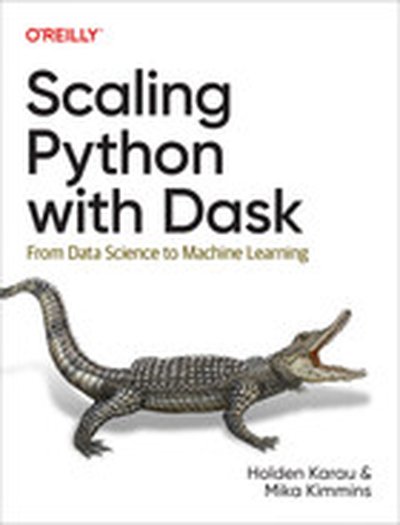
Scaling Python with Dask

Modern systems contain multi-core CPUs and GPUs that have the potential for parallel computing. But many scientific Python tools were not designed to leverage this parallelism. With this short but thorough resource, data scientists and Python programmers will learn how the Dask open source library for parallel computing provides APIs that make it easy to parallelize PyData libraries including NumPy, pandas, and scikit-learn. Authors Holden Karau and Mika Kimmins show you how to use Dask computations in local systems and then scale to the cloud for heavier workloads. This practical book explains why Dask is popular among industry experts and academics and is used by organizations that include Walmart, Capital One, Harvard Medical School, and NASA. With this book, you'll learn: What Dask is, where you can use it, and how it compares with other tools How to use Dask for batch data parallel processing Key distributed system concepts for working with Dask Methods for using Dask with higher-level APIs and building blocks How to work with integrated libraries such as scikit-learn, pandas, and PyTorch How to use Dask with GPUs

Summary

Real-time data processing has steadily been gaining adoption due to advances in the accessibility of the technologies involved. Despite that, it is still a complex set of capabilities. To bring streaming data in reach of application engineers Matteo Pelati helped to create Dozer. In this episode he explains how investing in high performance and operationally simplified streaming with a familiar API can yield significant benefits for software and data teams together.

Announcements

Hello and welcome to the Data Engineering Podcast, the show about modern data management Introducing RudderStack Profiles. RudderStack Profiles takes the SaaS guesswork and SQL grunt work out of building complete customer profiles so you can quickly ship actionable, enriched data to every downstream team. You specify the customer traits, then Profiles runs the joins and computations for you to create complete customer profiles. Get all of the details and try the new product today at dataengineeringpodcast.com/rudderstack Modern data teams are using Hex to 10x their data impact. Hex combines a notebook style UI with an interactive report builder. This allows data teams to both dive deep to find insights and then share their work in an easy-to-read format to the whole org. In Hex you can use SQL, Python, R, and no-code visualization together to explore, transform, and model data. Hex also has AI built directly into the workflow to help you generate, edit, explain and document your code. The best data teams in the world such as the ones at Notion, AngelList, and Anthropic use Hex for ad hoc investigations, creating machine learning models, and building operational dashboards for the rest of their company. Hex makes it easy for data analysts and data scientists to collaborate together and produce work that has an impact. Make your data team unstoppable with Hex. Sign up today at dataengineeringpodcast.com/hex to get a 30-day free trial for your team! Your host is Tobias Macey and today I'm interviewing Matteo Pelati about Dozer, an open source engine that includes data ingestion, transformation, and API generation for real-time sources

Interview

Introduction How did you get involved in the area of data management? Can you describe what Dozer is and the story behind it?

What was your decision process for building Dozer as open source?

As you note in the documentation, Dozer has overlap with a number of technologies that are aimed at different use cases. What was missing from each of them and the center of their Venn diagram that prompted you to build Dozer? In addition to working in an interesting technological cross-section, you are also targeting a disparate group of personas. Who are you building Dozer for and what were the motivations for that vision?

What are the different use cases that you are focused on supporting? What are the features of Dozer that enable engineers to address those uses, and what makes it preferable to existing alternative approaches?

Can you describe how Dozer is implemented?

How have the design and goals of the platform changed since you first started working on it? What are the architectural "-ilities" that you are trying to optimize for?

What is involved in getting Dozer deployed and integrated into an existing application/data infrastructure? How can teams who are using Dozer extend/integrate with Dozer?

What does the development/deployment workflow look like for teams who are building on top of Dozer?

What is your governance model for Dozer and balancing the open source project against your business goals? What are the most interesting, innovative, or unexpected ways that you have seen Dozer used? What are the most interesting, unexpected, or challenging lessons that you have learned while working on Dozer? When is Dozer the wrong choice? What do you have planned for the future of Dozer?

Contact Info

LinkedIn @pelatimtt on Twitter

Parting Question

From your perspective, what is the bigge