talk-data.com talk-data.com

Topic

SaaS

Software as a Service (SaaS)

cloud_computing software_delivery subscription

310

tagged

Activity Trend

23 peak/qtr
2020-Q1 2026-Q1

Activities

310 activities · Newest first

Although cloud computing has the potential to save you money, many organizations face growing IT costs and struggle to keep their spending within budget. As one of the leading SaaS observability platforms, Datadog uses a massive amount of cloud resources and has worked diligently to keep our IT spending constrained. In this session, we’ll share the practices that we use to optimize costs and how you can apply them to reduce your spend, increase performance, and meet your business goals.

By attending this session, your contact information may be shared with the sponsor for relevant follow up for this event only.

Click the blue “Learn more” button above to tap into special offers designed to help you implement what you are learning at Google Cloud Next 25.

This session covers Ambarella Inc's success in using Google's one-click software-as-a-service (SaaS) framework to convert its neural network model into a SaaS Service. Attendees will understand how this customer transformed from a traditional hardware company to a next-generation enterprise by helping customers extend the life of their chip using AI models and train them against new data. The company also enabled the customer to protect their IP while offering its model as SaaS.

Click the blue “Learn more” button above to tap into special offers designed to help you implement what you are learning at Google Cloud Next 25.

This week on Experiencing Data, something new as promised at the beginning of the year. Today, I’m exploring the world of embedded analytics with Zalak Trivedi from Sigma Computing—and this is also the first approved Promoted Episode on the podcast. In today’s episode, Zalak shares his journey as the product lead for Sigma’s embedded analytics and reporting solution which seeks to accelerate and simplify the deployment of decision support dashboards to their SAAS companies’ customers. Right there, we have the first challenge that Zalak was willing to dig into with me: designing a platform UX when we have multiple stakeholder and user types. In Sigma’s case, this means Sigma’s buyers, the developers that work at these SAAS companies to integrate Sigma into their products, and then the actual customers of these SAAS companies who will be the final end users of the resulting dashboards.  also discuss the challenges of creating products that serve both beginners and experts and how AI is being used in the BI industry.  

Highlights/ Skip to:

I introduce Zalak Trivedi from Sigma Computing onto the show (03:15) Zalak shares his journey leading the vision for embedded analytics at Sigma and explains what Sigma looks like when implemented into a customer’s SAAS product . (03:54) Zalak and I discuss the challenge of integrating Sigma's analytics into various companies' software, since they need to account for a variety of stakeholders. (09:53) We explore Sigma's team approach to user experience with product management, design, and technical writing (15:14) Zalak reveals how Sigma leverages telemetry to understand and improve user interactions with their products (19:54) Zalak outlines why Sigma is a faster and more supportive alternative to building your own analytics (27:21) We cover data monetization, specifically looking at how SAAS companies can monetize analytics and insights (32:05) Zalak highlights how Sigma is integratingAI into their BI solution (36:15) Zalak share his customers' current pain points and interests (40:25)  We wrap up with final thoughts and ways to connect with Zalak and learn more about Sigma (49:41) 

Quotes from Today’s Episode "Something I’m really excited about personally that we are working on is [moving] beyond analytics to help customers build entire data applications within Sigma. This is something we are really excited about as a company, and marching towards [achieving] this year." - Zalak Trivedi (04:04)

“The whole point of an embedded analytics application is that it should look and feel exactly like the application it’s embedded in, and the workflow should be seamless.” - Zalak Trivedi (09:29) 

“We [at Sigma] had to switch the way that we were thinking about personas. It was not just about the analysts or the data teams; it was more about how do we give the right tools to the [SAAS] product managers and developers to embed Sigma into their product.” - Zalak Trivedi (11:30)  “You can’t not have a design, and you can’t not have a user experience. There’s always an experience with every tool, solution, product that we use, whether it emerged organically as a byproduct, or it was intentionally created through knowledge data... it was intentional” - Brian O’Neill (14:52) 

“If we find that [in] certain user experiences,people are tripping up, and they’re not able to complete an entire workflow, we flag that, and then we work with the product managers, or [with] our customers essentially, and figure out how we can actually simplify these experiences.” - Zalak Trivedi (20:54)

“We were able to convince many small to medium businesses and startups to sign up with Sigma. The success they experienced after embedding Sigma was tremendous. Many of our customers managed to monetize their existing data within weeks, or at most, a couple of months, with lean development teams of two to three developers and a few business-side personnel, generating seven-figure income streams from that.” - Zalak Trivedi (32:05)

“At Sigma, our stance is, let’s not just add AI for the sake of adding AI. Let’s really identify [where] in the entire user journey does the intelligence really lie, and where are the different friction points, and let’s enhance those experiences.” - Zalak Trivedi (37:38)  “Every time [we at Sigma Computing] think about a new feature or functionality, we have to ensure it works for both the first-degree persona and the second-degree persona, and consider how it will be viewed by these different personas, because that is not the primary persona for which the foundation of the product was built." - Zalak Trivedi (48:08)

Links Sigma Computing: https://sigmacomputing.com

Email: [email protected] 

LinkedIn: https://www.linkedin.com/in/trivedizalak/

Sigma Computing Embedded: https://sigmacomputing.com/embedded

About Promoted Episodes on Experiencing Data: https://designingforanalytics.com/promoted

In this episode of Experiencing Data, I speak with Ellen Chisa, Partner at BoldStart Ventures, about what she’s seeing in the venture capital space around AI-driven products and companies—particularly with all the new GenAI capabilities that have emerged in the last year. Ellen and I first met when we were both engaged in travel tech startups in Boston over a decade ago, so it was great to get her current perspective being on the “other side” of products and companies working as a VC.  Ellen draws on her experience in product management and design to discuss how AI could democratize software creation and streamline backend coding, design integration, and analytics. We also delve into her work at Dark and the future prospects for developer tools and SaaS platforms. Given Ellen’s background in product management, human-centered design, and now VC, I thought she would have a lot to share—and she did!

Highlights/ Skip to: I introduce the show and my guest, Ellen Chisa (00:00) Ellen discusses her transition from product and design to venture capital with BoldStart Ventures. (01:15) Ellen notes a shift from initial AI prototypes to more refined products, focusing on building and testing with minimal data. (03:22) Ellen mentions BoldStart Ventures' focus on early-stage companies providing developer and data tooling for businesses.  (07:00) Ellen discusses what she learned from her time at Dark and Lola about narrowing target user groups for technology products (11:54) Ellen's Insights into the importance of user experience is in product design and the process venture capitalists endure to make sure it meets user needs (15:50) Ellen gives us her take on the impact of AI on creating new opportunities for data tools and engineering solutions, (20:00) Ellen and I explore the future of user interfaces, and how AI tools could enhance UI/UX for end users. (25:28) Closing remarks and the best way to find Ellen on online (32:07)

Quotes from Today’s Episode “It's a really interesting time in the venture market because on top of the Gen AI wave, we obviously had the macroeconomic shift. And so we've seen a lot of people are saying the companies that come out now are going to be great companies because they're a little bit more capital-constrained from the beginning, typically, and they'll grow more thoughtfully and really be thinking about how do they build an efficient business.”- Ellen Chisa (03: 22) 

“We have this big technological shift around AI-enabled companies, and I think one of the things I’ve seen is, if you think back to a year ago, we saw a lot of early prototyping, and so there were like a couple of use cases that came up again and again.”-Ellen Chisa (3:42)

“I don't think I've heard many pitches from founders who consider themselves data scientists first. We definitely get some from ML engineers and people who think about data architecture, for sure..”- Ellen Chisa (05:06)  

“I still prefer GUI interfaces to voice or text usually, but I think that might be an uncanny valley sort of thing where if you think of people who didn’t have technology growing up, they’re more comfortable with the more human interaction, and then you get, like, a chunk of people who are digital natives who prefer it.”- Ellen Chisa (24:51)

[Citing some excellent Boston-area restaurants!] “The Arc browser just shipped a bunch of new functionality, where instead of opening a bunch of tabs, you can say, “Open the recipe pages for Oleana and Sarma,” and it just opens both of them, and so it’s like multiple search queries at once.” - Ellen Chisa (27:22)

“The AI wave of  technology biases towards people who already have products [in the market] and have existing datasets, and so I think everyone [at tech companies] is getting this big, top-down mandate from their executive team, like, ‘Oh, hey, you have to do something with AI now.’”- Ellen Chisa (28:37)

“I think it’s hard to really grasp what an LLM is until you do a fair amount of experimentation on your own. The experience of asking ChatGPT a simple search question compared to the experience of trying to train it to do something specific for you are quite different experiences. Even beyond that, there’s a tool called superwhisper that I like that you can take audio content and end up with transcripts, but you can give it prompts to change your transcripts as you’re going. So, you can record something, and it will give you a different output if you say you’re recording an email compared to [if] you’re recording a journal entry compared to [if] you’re recording the transcript for a podcast.”- Ellen Chisa (30:11)

Links Boldstart ventures: https://boldstart.vc/ LinkedIn: https://www.linkedin.com/in/ellenchisa/ Personal website: https://ellenchisa.com Email: [email protected] 

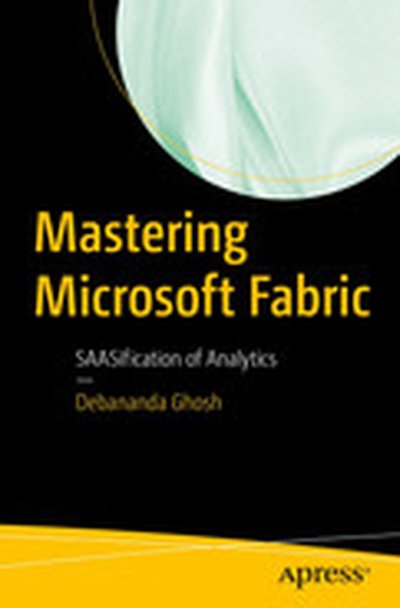
Mastering Microsoft Fabric: SAASification of Analytics

Learn and explore the capabilities of Microsoft Fabric, the latest evolution in cloud analytics suites. This book will help you understand how users can leverage Microsoft Office equivalent experience for performing data management and advanced analytics activity. The book starts with an overview of the analytics evolution from on premises to cloud infrastructure as a service (IaaS), platform as a service (PaaS), and now software as a service (SaaS version) and provides an introduction to Microsoft Fabric. You will learn how to provision Microsoft Fabric in your tenant along with the key capabilities of SaaS analytics products and the advantage of using Fabric in the enterprise analytics platform. OneLake and Lakehouse for data engineering is discussed as well as OneLake for data science. Author Ghosh teaches you about data warehouse offerings inside Microsoft Fabric and the new data integration experience which brings Azure Data Factory and Power Query Editor of Power BI together in a single platform. Also demonstrated is Real-Time Analytics in Fabric, including capabilities such as Kusto query and database. You will understand how the new event stream feature integrates with OneLake and other computations. You also will know how to configure the real-time alert capability in a zero code manner and go through the Power BI experience in the Fabric workspace. Fabric pricing and its licensing is also covered. After reading this book, you will understand the capabilities of Microsoft Fabric and its Integration with current and upcoming Azure OpenAI capabilities. What You Will Learn Build OneLake for all data like OneDrive for Microsoft Office Leverage shortcuts for cross-cloud data virtualization in Azure and AWS Understand upcoming OpenAI integration Discover new event streaming and Kusto query inside Fabric real-time analytics Utilize seamless tooling for machine learning and data science Who This Book Is For Citizen users and experts in the data engineering and data science fields, along with chief AI officers

On today’s episode, we’re joined by John Sarver, Innovation and Technology Consultant at Saaslogic, providers of a next gen SaaS billing and subscription management platform. We talk about:

The impacts of segmentation in optimizing revenue operationsIf early-stage startups need a revenue platformHow startups can best transition from focusing on tech to operationsGenerational gaps in purchasing patternsHelping merchants test pricing strategies

On today’s episode, we’re joined by Baird Hall, SaaS Builder and Co-Founder at Churnkey, the platform which supercharges every part of customer retention, helping companies optimize growth.  We talk about: Advantages & disadvantages of various pricing model & their impact on churnThe 4 different types of churnDos & don’ts for SaaS startups to reduce churnImportant data to capture around customer cancellationsHow customer reactivations are a big, often neglected opportunity for SaaS companies

On today’s episode, we’re joined by Matt Verlaque, Chief Operating Officer at SaaS Academy, the complete business growth system for SaaS founders. We talk about:  How SaaS companies are 10% art, 90% scienceMaking deposits into your customer goodwill account to avert disasterImportant founder attributes for successThe most innovative marketing strategies Matt has seen

Summary

Working with financial data requires a high degree of rigor due to the numerous regulations and the risks involved in security breaches. In this episode Andrey Korchack, CTO of fintech startup Monite, discusses the complexities of designing and implementing a data platform in that sector.

Announcements

Hello and welcome to the Data Engineering Podcast, the show about modern data management Data lakes are notoriously complex. For data engineers who battle to build and scale high quality data workflows on the data lake, Starburst powers petabyte-scale SQL analytics fast, at a fraction of the cost of traditional methods, so that you can meet all your data needs ranging from AI to data applications to complete analytics. Trusted by teams of all sizes, including Comcast and Doordash, Starburst is a data lake analytics platform that delivers the adaptability and flexibility a lakehouse ecosystem promises. And Starburst does all of this on an open architecture with first-class support for Apache Iceberg, Delta Lake and Hudi, so you always maintain ownership of your data. Want to see Starburst in action? Go to dataengineeringpodcast.com/starburst and get $500 in credits to try Starburst Galaxy today, the easiest and fastest way to get started using Trino. Introducing RudderStack Profiles. RudderStack Profiles takes the SaaS guesswork and SQL grunt work out of building complete customer profiles so you can quickly ship actionable, enriched data to every downstream team. You specify the customer traits, then Profiles runs the joins and computations for you to create complete customer profiles. Get all of the details and try the new product today at dataengineeringpodcast.com/rudderstack You shouldn't have to throw away the database to build with fast-changing data. You should be able to keep the familiarity of SQL and the proven architecture of cloud warehouses, but swap the decades-old batch computation model for an efficient incremental engine to get complex queries that are always up-to-date. With Materialize, you can! It’s the only true SQL streaming database built from the ground up to meet the needs of modern data products. Whether it’s real-time dashboarding and analytics, personalization and segmentation or automation and alerting, Materialize gives you the ability to work with fresh, correct, and scalable results — all in a familiar SQL interface. Go to dataengineeringpodcast.com/materialize today to get 2 weeks free! Your host is Tobias Macey and today I'm interviewing Andrey Korchak about how to manage data in a fintech environment

Interview

Introduction How did you get involved in the area of data management? Can you start by summarizing the data challenges that are particular to the fintech ecosystem? What are the primary sources and types of data that fintech organizations are working with?

What are the business-level capabilities that are dependent on this data?

How do the regulatory and business requirements influence the technology landscape in fintech organizations?

What does a typical build vs. buy decision process look like?

Fraud prediction in e.g. banks is one of the most well-established applications of machine learning in industry. What are some of the other ways that ML plays a part in fintech?

How does that influence the architectural design/capabilities for data platforms in those organizations?

Data governance is a notoriously challenging problem. What are some of the strategies that fintech companies are able to apply to this problem given their regulatory burdens? What are the most interesting, innovative, or unexpected approaches to data management that you have seen in the fintech sector? What are the most interesting, unexpected, or challenging lessons that you have learned while working on data in fintech? What do you have planned for the future of your data capabilities at Monite?

Contact Info

LinkedIn

Parting Question

From your perspective, what is the biggest gap in the tooling or technology for data management today?

Closing Announcements

Thank you for listening! Don't forget to check out our other shows. Podcast.init covers the Python language, its community, and the innovative ways it is being used. The Machine Learning Podcast helps you go from idea to production with machine learning. Visit the site to subscribe to the show, sign up for the mailing list, and read the show notes. If you've learned something or tried out a project from the show then tell us about it! Email [email protected]) with your story. To help other people find the show please leave a review on Apple Podcasts and tell your friends and co-workers

Links

Monite ISO 270001 Tesseract GitOps SWIFT Protocol

The intro and outro music is from The Hug by The Freak Fandango Orchestra / CC BY-SA Sponsored By: Starburst: Starburst Logo

This episode is brought to you by Starburst - a data lake analytics platform for data engineers who are battling to build and scale high quality data pipelines on the data lake. Powered by Trino, Starburst runs petabyte-scale SQL analytics fast at a fraction of the cost of traditional methods, helping you meet all your data needs ranging from AI/ML workloads to data applications to complete analytics.

Trusted by the teams at Comcast and Doordash, Starburst delivers the adaptability and flexibility a lakehouse ecosystem promises, while providing a single point of access for your data and all your data governance allowing you to discover, transform, govern, and secure all in one place. Starburst does all of this on an open architecture with first-class support for Apache Iceberg, Delta Lake and Hudi, so you always maintain ownership of your data. Want to see Starburst in action? Try Starburst Galaxy today, the easiest and fastest way to get started using Trino, and get $500 of credits free. dataengineeringpodcast.com/starburstRudderstack: Rudderstack

Introducing RudderStack Profiles. RudderStack Profiles takes the SaaS guesswork and SQL grunt work out of building complete customer profiles so you can quickly ship actionable, enriched data to every downstream team. You specify the customer traits, then Profiles runs the joins and computations for you to create complete customer profiles. Get all of the details and try the new product today at dataengineeringpodcast.com/rudderstackMaterialize: Materialize
You shouldn't have to throw away the database to build with fast-changing data. Keep the familiar SQL, keep the proven architecture of cloud warehouses, but swap the decades-old batch computation model for an efficient incremental engine to get complex queries that are always up-to-date.

That is Materialize, the only true SQL streaming database built from the ground up to meet the needs of modern data products: Fresh, Correct, Scalable — all in a familiar SQL UI. Built on Timely Dataflow and Differential Dataflow, open source frameworks created by cofounder Frank McSherry at Microsoft Research, Materialize is trusted by data and engineering teams at Ramp, Pluralsight, Onward and more to build real-time data products without the cost, complexity, and development time of stream processing.

Go to materialize.com today and get 2 weeks free!Support Data Engineering Podcast

Summary

Kafka has become a ubiquitous technology, offering a simple method for coordinating events and data across different systems. Operating it at scale, however, is notoriously challenging. Elad Eldor has experienced these challenges first-hand, leading to his work writing the book "Kafka: : Troubleshooting in Production". In this episode he highlights the sources of complexity that contribute to Kafka's operational difficulties, and some of the main ways to identify and mitigate potential sources of trouble.

Announcements

Hello and welcome to the Data Engineering Podcast, the show about modern data management Introducing RudderStack Profiles. RudderStack Profiles takes the SaaS guesswork and SQL grunt work out of building complete customer profiles so you can quickly ship actionable, enriched data to every downstream team. You specify the customer traits, then Profiles runs the joins and computations for you to create complete customer profiles. Get all of the details and try the new product today at dataengineeringpodcast.com/rudderstack You shouldn't have to throw away the database to build with fast-changing data. You should be able to keep the familiarity of SQL and the proven architecture of cloud warehouses, but swap the decades-old batch computation model for an efficient incremental engine to get complex queries that are always up-to-date. With Materialize, you can! It’s the only true SQL streaming database built from the ground up to meet the needs of modern data products. Whether it’s real-time dashboarding and analytics, personalization and segmentation or automation and alerting, Materialize gives you the ability to work with fresh, correct, and scalable results — all in a familiar SQL interface. Go to dataengineeringpodcast.com/materialize today to get 2 weeks free! Data lakes are notoriously complex. For data engineers who battle to build and scale high quality data workflows on the data lake, Starburst powers petabyte-scale SQL analytics fast, at a fraction of the cost of traditional methods, so that you can meet all your data needs ranging from AI to data applications to complete analytics. Trusted by teams of all sizes, including Comcast and Doordash, Starburst is a data lake analytics platform that delivers the adaptability and flexibility a lakehouse ecosystem promises. And Starburst does all of this on an open architecture with first-class support for Apache Iceberg, Delta Lake and Hudi, so you always maintain ownership of your data. Want to see Starburst in action? Go to dataengineeringpodcast.com/starburst and get $500 in credits to try Starburst Galaxy today, the easiest and fastest way to get started using Trino. Your host is Tobias Macey and today I'm interviewing Elad Eldor about operating Kafka in production and how to keep your clusters stable and performant

Interview

Introduction How did you get involved in the area of data management? Can you describe your experiences with Kafka?

What are the operational challenges that you have had to overcome while working with Kafka? What motivated to write a book about how to manage Kafka in production?

There are many options now for persistent data queues. What are the factors to consider when determining whether Kafka is the right choice?

In the case where Kafka is the appropriate tool, there are many ways to run it now. What are the considerations that teams need to work through when determining whether/where/how to operate a cluster?

When provisioning a Kafka cluster, what are the requirements that need to be considered when determining the sizing?

What are the axes along which size/scale need to be determined?

The core promise of Kafka is that it is a durable store for continuous data. What are the mechanisms that are available for preventing data loss?

Under what circumstances can data be lost?

What are the different failure conditions that cluster operators need to be aware of?

What are the monitoring strategies that ar

Summary

The "modern data stack" promised a scalable, composable data platform that gave everyone the flexibility to use the best tools for every job. The reality was that it left data teams in the position of spending all of their engineering effort on integrating systems that weren't designed with compatible user experiences. The team at 5X understand the pain involved and the barriers to productivity and set out to solve it by pre-integrating the best tools from each layer of the stack. In this episode founder Tarush Aggarwal explains how the realities of the modern data stack are impacting data teams and the work that they are doing to accelerate time to value.

Announcements

Hello and welcome to the Data Engineering Podcast, the show about modern data management Introducing RudderStack Profiles. RudderStack Profiles takes the SaaS guesswork and SQL grunt work out of building complete customer profiles so you can quickly ship actionable, enriched data to every downstream team. You specify the customer traits, then Profiles runs the joins and computations for you to create complete customer profiles. Get all of the details and try the new product today at dataengineeringpodcast.com/rudderstack You shouldn't have to throw away the database to build with fast-changing data. You should be able to keep the familiarity of SQL and the proven architecture of cloud warehouses, but swap the decades-old batch computation model for an efficient incremental engine to get complex queries that are always up-to-date. With Materialize, you can! It’s the only true SQL streaming database built from the ground up to meet the needs of modern data products. Whether it’s real-time dashboarding and analytics, personalization and segmentation or automation and alerting, Materialize gives you the ability to work with fresh, correct, and scalable results — all in a familiar SQL interface. Go to dataengineeringpodcast.com/materialize today to get 2 weeks free! Data lakes are notoriously complex. For data engineers who battle to build and scale high quality data workflows on the data lake, Starburst powers petabyte-scale SQL analytics fast, at a fraction of the cost of traditional methods, so that you can meet all your data needs ranging from AI to data applications to complete analytics. Trusted by teams of all sizes, including Comcast and Doordash, Starburst is a data lake analytics platform that delivers the adaptability and flexibility a lakehouse ecosystem promises. And Starburst does all of this on an open architecture with first-class support for Apache Iceberg, Delta Lake and Hudi, so you always maintain ownership of your data. Want to see Starburst in action? Go to dataengineeringpodcast.com/starburst and get $500 in credits to try Starburst Galaxy today, the easiest and fastest way to get started using Trino. Your host is Tobias Macey and today I'm welcoming back Tarush Aggarwal to talk about what he and his team at 5x data are building to improve the user experience of the modern data stack.

Interview

Introduction How did you get involved in the area of data management? Can you describe what 5x is and the story behind it?

We last spoke in March of 2022. What are the notable changes in the 5x business and product?

What are the notable shifts in the data ecosystem that have influenced your adoption and product direction?

What trends are you most focused on tracking as you plan the continued evolution of your offerings?

What are the points of friction that teams run into when trying to build their data platform? Can you describe design of the system that you have built?

What are the strategies that you rely on to support adaptability and speed of onboarding for new integrations?

What are some of the types of edge cases that you have to deal with while integrating and operating the platform implementations that you design for your customers? What is your process for selection of vendors to support?

How would you characte

Summary

If your business metrics looked weird tomorrow, would you know about it first? Anomaly detection is focused on identifying those outliers for you, so that you are the first to know when a business critical dashboard isn't right. Unfortunately, it can often be complex or expensive to incorporate anomaly detection into your data platform. Andrew Maguire got tired of solving that problem for each of the different roles he has ended up in, so he created the open source Anomstack project. In this episode he shares what it is, how it works, and how you can start using it today to get notified when the critical metrics in your business aren't quite right.

Announcements

Hello and welcome to the Data Engineering Podcast, the show about modern data management You shouldn't have to throw away the database to build with fast-changing data. You should be able to keep the familiarity of SQL and the proven architecture of cloud warehouses, but swap the decades-old batch computation model for an efficient incremental engine to get complex queries that are always up-to-date. With Materialize, you can! It’s the only true SQL streaming database built from the ground up to meet the needs of modern data products. Whether it’s real-time dashboarding and analytics, personalization and segmentation or automation and alerting, Materialize gives you the ability to work with fresh, correct, and scalable results — all in a familiar SQL interface. Go to dataengineeringpodcast.com/materialize today to get 2 weeks free! Introducing RudderStack Profiles. RudderStack Profiles takes the SaaS guesswork and SQL grunt work out of building complete customer profiles so you can quickly ship actionable, enriched data to every downstream team. You specify the customer traits, then Profiles runs the joins and computations for you to create complete customer profiles. Get all of the details and try the new product today at dataengineeringpodcast.com/rudderstack Data projects are notoriously complex. With multiple stakeholders to manage across varying backgrounds and toolchains even simple reports can become unwieldy to maintain. Miro is your single pane of glass where everyone can discover, track, and collaborate on your organization's data. I especially like the ability to combine your technical diagrams with data documentation and dependency mapping, allowing your data engineers and data consumers to communicate seamlessly about your projects. Find simplicity in your most complex projects with Miro. Your first three Miro boards are free when you sign up today at dataengineeringpodcast.com/miro. That’s three free boards at dataengineeringpodcast.com/miro. Data lakes are notoriously complex. For data engineers who battle to build and scale high quality data workflows on the data lake, Starburst powers petabyte-scale SQL analytics fast, at a fraction of the cost of traditional methods, so that you can meet all your data needs ranging from AI to data applications to complete analytics. Trusted by teams of all sizes, including Comcast and Doordash, Starburst is a data lake analytics platform that delivers the adaptability and flexibility a lakehouse ecosystem promises. And Starburst does all of this on an open architecture with first-class support for Apache Iceberg, Delta Lake and Hudi, so you always maintain ownership of your data. Want to see Starburst in action? Go to dataengineeringpodcast.com/starburst and get $500 in credits to try Starburst Galaxy today, the easiest and fastest way to get started using Trino. Your host is Tobias Macey and today I'm interviewing Andrew Maguire about his work on the Anomstack project and how you can use it to run your own anomaly detection for your metrics

Interview

Introduction How did you get involved in the area of data management? Can you describe what Anomstack is and the story behind it?

What are your goals for this project? What other tools/products might teams be evaluating while they consider Anom

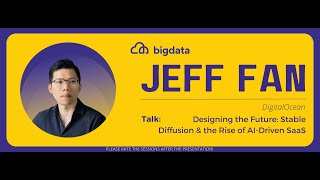
Jeff Fan: Designing the Future: Stable Diffusion & the Rise of AI-Driven SaaS

Dive into the future of AI-driven SaaS with Jeff Fan. Explore Stable Diffusion, authentication, authorization, and payment integrations, all backed by DigitalOcean. Gain a holistic perspective on SaaS innovation. 🚀🧠 #SaaS #AI #innovation

✨ H I G H L I G H T S ✨

🙌 A huge shoutout to all the incredible participants who made Big Data Conference Europe 2023 in Vilnius, Lithuania, from November 21-24, an absolute triumph! 🎉 Your attendance and active participation were instrumental in making this event so special. 🌍

Don't forget to check out the session recordings from the conference to relive the valuable insights and knowledge shared! 📽️

Once again, THANK YOU for playing a pivotal role in the success of Big Data Conference Europe 2023. 🚀 See you next year for another unforgettable conference! 📅 #BigDataConference #SeeYouNextYear

Effective data management has become a cornerstone of success in our digital era. It involves not just collecting and storing information but also organizing, securing, and leveraging data to drive progress and innovation. Many organizations turn to tools like Snowflake for advanced data warehousing capabilities. However, while Snowflake enhances data storage and access, it's not a complete solution for all data management challenges. To address this, tools like Capital One’s Slingshot can be used alongside Snowflake, helping to optimize costs and refine data management strategies. Salim Syed is a VP, Head of engineering for Capital One Slingshot product. He led Capital One’s data warehouse migration to AWS and is a specialist in deploying Snowflake to a large enterprise. Salim’s expertise lies in developing Big Data (Lake) and Data Warehouse strategy on the public cloud. He leads an organization of more than 100 data engineers, support engineers, DBAs and full stack developers in driving enterprise data lake, data warehouse, data management and visualization platform services. Salim has more than 25 years of experience in the data ecosystem. His career started in data engineering where he built data pipelines and then moved into maintenance and administration of large database servers using multi-tier replication architecture in various remote locations. He then worked at CodeRye as a database architect and at 3M Health Information Systems as an enterprise data architect. Salim has been at Capital One for the past six years. In this episode, Adel and Salim explore cloud data management and the evolution of Slingshot into a major multi-tenant SaaS platform, the shift from on-premise to cloud-based data governance, the role of centralized tooling, strategies for effective cloud data management, including data governance, cost optimization, and waste reduction as well as insights into navigating the complexities of data infrastructure, security, and scalability in the modern digital era. Links Mentioned in the Show: Capital One SlingshotSnowflakeCourse: Introduction to Data WarehousingCourse: Introduction to Snowflake

Summary

The first step of data pipelines is to move the data to a place where you can process and prepare it for its eventual purpose. Data transfer systems are a critical component of data enablement, and building them to support large volumes of information is a complex endeavor. Andrei Tserakhau has dedicated his careeer to this problem, and in this episode he shares the lessons that he has learned and the work he is doing on his most recent data transfer system at DoubleCloud.

Announcements

Hello and welcome to the Data Engineering Podcast, the show about modern data management Introducing RudderStack Profiles. RudderStack Profiles takes the SaaS guesswork and SQL grunt work out of building complete customer profiles so you can quickly ship actionable, enriched data to every downstream team. You specify the customer traits, then Profiles runs the joins and computations for you to create complete customer profiles. Get all of the details and try the new product today at dataengineeringpodcast.com/rudderstack You shouldn't have to throw away the database to build with fast-changing data. You should be able to keep the familiarity of SQL and the proven architecture of cloud warehouses, but swap the decades-old batch computation model for an efficient incremental engine to get complex queries that are always up-to-date. With Materialize, you can! It’s the only true SQL streaming database built from the ground up to meet the needs of modern data products. Whether it’s real-time dashboarding and analytics, personalization and segmentation or automation and alerting, Materialize gives you the ability to work with fresh, correct, and scalable results — all in a familiar SQL interface. Go to dataengineeringpodcast.com/materialize today to get 2 weeks free! This episode is brought to you by Datafold – a testing automation platform for data engineers that finds data quality issues for every part of your data workflow, from migration to deployment. Datafold has recently launched a 3-in-1 product experience to support accelerated data migrations. With Datafold, you can seamlessly plan, translate, and validate data across systems, massively accelerating your migration project. Datafold leverages cross-database diffing to compare tables across environments in seconds, column-level lineage for smarter migration planning, and a SQL translator to make moving your SQL scripts easier. Learn more about Datafold by visiting dataengineeringpodcast.com/datafold today! Data lakes are notoriously complex. For data engineers who battle to build and scale high quality data workflows on the data lake, Starburst powers petabyte-scale SQL analytics fast, at a fraction of the cost of traditional methods, so that you can meet all your data needs ranging from AI to data applications to complete analytics. Trusted by teams of all sizes, including Comcast and Doordash, Starburst is a data lake analytics platform that delivers the adaptability and flexibility a lakehouse ecosystem promises. And Starburst does all of this on an open architecture with first-class support for Apache Iceberg, Delta Lake and Hudi, so you always maintain ownership of your data. Want to see Starburst in action? Go to dataengineeringpodcast.com/starburst and get $500 in credits to try Starburst Galaxy today, the easiest and fastest way to get started using Trino. Your host is Tobias Macey and today I'm interviewing Andrei Tserakhau about operationalizing high bandwidth and low-latency change-data capture

Interview

Introduction How did you get involved in the area of data management? Your most recent project involves operationalizing a generalized data transfer service. What was the original problem that you were trying to solve?

What were the shortcomings of other options in the ecosystem that led you to building a new system?

What was the design of your initial solution to the problem?

What are the sharp edges that you had to deal with to operate and use that i

Summary

Building a data platform that is enjoyable and accessible for all of its end users is a substantial challenge. One of the core complexities that needs to be addressed is the fractal set of integrations that need to be managed across the individual components. In this episode Tobias Macey shares his thoughts on the challenges that he is facing as he prepares to build the next set of architectural layers for his data platform to enable a larger audience to start accessing the data being managed by his team.

Announcements

Hello and welcome to the Data Engineering Podcast, the show about modern data management Introducing RudderStack Profiles. RudderStack Profiles takes the SaaS guesswork and SQL grunt work out of building complete customer profiles so you can quickly ship actionable, enriched data to every downstream team. You specify the customer traits, then Profiles runs the joins and computations for you to create complete customer profiles. Get all of the details and try the new product today at dataengineeringpodcast.com/rudderstack You shouldn't have to throw away the database to build with fast-changing data. You should be able to keep the familiarity of SQL and the proven architecture of cloud warehouses, but swap the decades-old batch computation model for an efficient incremental engine to get complex queries that are always up-to-date. With Materialize, you can! It’s the only true SQL streaming database built from the ground up to meet the needs of modern data products. Whether it’s real-time dashboarding and analytics, personalization and segmentation or automation and alerting, Materialize gives you the ability to work with fresh, correct, and scalable results — all in a familiar SQL interface. Go to dataengineeringpodcast.com/materialize today to get 2 weeks free! Developing event-driven pipelines is going to be a lot easier - Meet Functions! Memphis functions enable developers and data engineers to build an organizational toolbox of functions to process, transform, and enrich ingested events “on the fly” in a serverless manner using AWS Lambda syntax, without boilerplate, orchestration, error handling, and infrastructure in almost any language, including Go, Python, JS, .NET, Java, SQL, and more. Go to dataengineeringpodcast.com/memphis today to get started! Data lakes are notoriously complex. For data engineers who battle to build and scale high quality data workflows on the data lake, Starburst powers petabyte-scale SQL analytics fast, at a fraction of the cost of traditional methods, so that you can meet all your data needs ranging from AI to data applications to complete analytics. Trusted by teams of all sizes, including Comcast and Doordash, Starburst is a data lake analytics platform that delivers the adaptability and flexibility a lakehouse ecosystem promises. And Starburst does all of this on an open architecture with first-class support for Apache Iceberg, Delta Lake and Hudi, so you always maintain ownership of your data. Want to see Starburst in action? Go to dataengineeringpodcast.com/starburst and get $500 in credits to try Starburst Galaxy today, the easiest and fastest way to get started using Trino. Your host is Tobias Macey and today I'll be sharing an update on my own journey of building a data platform, with a particular focus on the challenges of tool integration and maintaining a single source of truth

Interview

Introduction How did you get involved in the area of data management? data sharing weight of history

existing integrations with dbt switching cost for e.g. SQLMesh de facto standard of Airflow

Single source of truth

permissions management across application layers Database engine Storage layer in a lakehouse Presentation/access layer (BI) Data flows dbt -> table level lineage orchestration engine -> pipeline flows

task based vs. asset based

Metadata platform as the logical place for horizontal view

Contact Info

LinkedIn Website

Parting Questio

Summary

The dbt project has become overwhelmingly popular across analytics and data engineering teams. While it is easy to adopt, there are many potential pitfalls. Dustin Dorsey and Cameron Cyr co-authored a practical guide to building your dbt project. In this episode they share their hard-won wisdom about how to build and scale your dbt projects.

Announcements

Hello and welcome to the Data Engineering Podcast, the show about modern data management Data projects are notoriously complex. With multiple stakeholders to manage across varying backgrounds and toolchains even simple reports can become unwieldy to maintain. Miro is your single pane of glass where everyone can discover, track, and collaborate on your organization's data. I especially like the ability to combine your technical diagrams with data documentation and dependency mapping, allowing your data engineers and data consumers to communicate seamlessly about your projects. Find simplicity in your most complex projects with Miro. Your first three Miro boards are free when you sign up today at dataengineeringpodcast.com/miro. That’s three free boards at dataengineeringpodcast.com/miro. Introducing RudderStack Profiles. RudderStack Profiles takes the SaaS guesswork and SQL grunt work out of building complete customer profiles so you can quickly ship actionable, enriched data to every downstream team. You specify the customer traits, then Profiles runs the joins and computations for you to create complete customer profiles. Get all of the details and try the new product today at dataengineeringpodcast.com/rudderstack You shouldn't have to throw away the database to build with fast-changing data. You should be able to keep the familiarity of SQL and the proven architecture of cloud warehouses, but swap the decades-old batch computation model for an efficient incremental engine to get complex queries that are always up-to-date. With Materialize, you can! It’s the only true SQL streaming database built from the ground up to meet the needs of modern data products. Whether it’s real-time dashboarding and analytics, personalization and segmentation or automation and alerting, Materialize gives you the ability to work with fresh, correct, and scalable results — all in a familiar SQL interface. Go to dataengineeringpodcast.com/materialize today to get 2 weeks free! Data lakes are notoriously complex. For data engineers who battle to build and scale high quality data workflows on the data lake, Starburst powers petabyte-scale SQL analytics fast, at a fraction of the cost of traditional methods, so that you can meet all your data needs ranging from AI to data applications to complete analytics. Trusted by teams of all sizes, including Comcast and Doordash, Starburst is a data lake analytics platform that delivers the adaptability and flexibility a lakehouse ecosystem promises. And Starburst does all of this on an open architecture with first-class support for Apache Iceberg, Delta Lake and Hudi, so you always maintain ownership of your data. Want to see Starburst in action? Go to dataengineeringpodcast.com/starburst and get $500 in credits to try Starburst Galaxy today, the easiest and fastest way to get started using Trino. Your host is Tobias Macey and today I'm interviewing Dustin Dorsey and Cameron Cyr about how to design your dbt projects

Interview

Introduction How did you get involved in the area of data management? What was your path to adoption of dbt?

What did you use prior to its existence? When/why/how did you start using it?

What are some of the common challenges that teams experience when getting started with dbt?

How does prior experience in analytics and/or software engineering impact those outcomes?

You recently wrote a book to give a crash course in best practices for dbt. What motivated you to invest that time and effort?

What new lessons did you learn about dbt in the process of writing the book?

The introduction of dbt is largely res

Today I’m joined by Nick Zervoudis, Data Product Manager at CKDelta. As we dive into his career and background, Nick shares insights into his approach when it comes to developing both internal and external data products. Nick explains why he feels that a software engineering approach is the best way to develop a product that could have multiple applications, as well as the unique way his team is structured to best handle the needs of both internal and external customers. He also talks about the UX design course he took, how that affected his data product work and research with users, and his thoughts on dashboard design. We discuss common themes he’s observed when data product teams get it wrong, and how he manages feelings of imposter syndrome in his career as a DPM. 

Highlights/ Skip to:

I introduce Nick, who is a Data Product Manager at CKDelta (00:35) Nick’s mindset around data products and how his early career in consulting shaped his approach (01:30) How Nick defines a data product and why he focuses more on the process rather than the end product (03:59) The types of data products that Nick has helped design and his work on both internal and external projects at CKDelta (07:57) The similarities and differences of working with internal versus external stakeholders (12:37) Nick dives into the details of the data products he has built and how they feed into complex use cases (14:21) The role that Nick plays in the Delta Power SaaS application and how the CKDelta team is structured around that product (17:14) Where Nick sees data products going wrong and how he’s found value in filling those gaps (23:30) Nick’s view on how a digital-first mindset affects the scalability of data products (26:15) Why Nick is often heavily involved in the design element of data product development and the course he took that helped shape his design work (28:55) The imposter syndrome that Nick has experienced when implementing this new strategy to data product design (36:51) Why Nick feels that figuring things out yourself is an inherent part of the DPM role (44:53) Nick shares the origins and information on the London Data Product Management meetup (46:08)

Quotes from Today’s Episode “What I’m always trying to do is see, how can we best balance the customer’s need to get exactly the data point or insight that they’re after to the business need. ... There’s that constant tug of war between customization and standardization that I have the joy of adjudicating. I think it’s quite fun.” — Nick Zervoudis (16:40)

“I’ve had times where I was hired, told, 'You’re going to be the product manager for this data product that we have,' as if it’s already, to some extent built and maybe the challenge is scaling it or bringing it to more customers or improving it, and then within a couple of weeks of starting to peek under the hood, realizing that this thing that is being branded a product is actually a bunch of projects hiding under a trench coat.” — Nick Zervoudis (24:04)

“If I just speak to five users because they’re the users, they’ll give me the insight I need. […] Even when you have a massive product with a huge user base, people face the same issues.” — Nick Zervoudis (33:49)

“For me, it’s more about making sure that you’re bringing that more software engineering way of building things, but also, before you do that, knowing that your users' needs are going to [be varied]. So, it’s a combination of both, are we building the right thing—in other words, a product that’s flexible enough to meet the different needs of different users—but also, are we building it in the right way?” – Nick Zervoudis (27:51)

“It’s not to say I’m the only person thinking about [UX design], but very often, I’m the one driving it.” – Nick Zervoudis (30:55)

“You’re never going to be as good at the thing your colleague does because their job almost certainly is to be a specialist: they’re an architect, they’re a designer, they’re a developer, they’re a salesperson, whereas your job [as a DPM] is to just understand it enough that you can then pass information across other people.” – Nick Zervoudis (41:12)

“Every time I feel like an imposter, good. I need to embrace that, because I need to be working with people that understand something better than me. If I’m not, then maybe something’s gone wrong there. That’s how I’ve actually embraced impostor syndrome.” – Nick Zervoudis (41:35)

Links CKDelta: https://www.ckdelta.ie LinkedIn: https://www.linkedin.com/in/nzervoudis/

Summary

Software development involves an interesting balance of creativity and repetition of patterns. Generative AI has accelerated the ability of developer tools to provide useful suggestions that speed up the work of engineers. Tabnine is one of the main platforms offering an AI powered assistant for software engineers. In this episode Eran Yahav shares the journey that he has taken in building this product and the ways that it enhances the ability of humans to get their work done, and when the humans have to adapt to the tool.

Announcements

Hello and welcome to the Data Engineering Podcast, the show about modern data management Introducing RudderStack Profiles. RudderStack Profiles takes the SaaS guesswork and SQL grunt work out of building complete customer profiles so you can quickly ship actionable, enriched data to every downstream team. You specify the customer traits, then Profiles runs the joins and computations for you to create complete customer profiles. Get all of the details and try the new product today at dataengineeringpodcast.com/rudderstack This episode is brought to you by Datafold – a testing automation platform for data engineers that finds data quality issues before the code and data are deployed to production. Datafold leverages data-diffing to compare production and development environments and column-level lineage to show you the exact impact of every code change on data, metrics, and BI tools, keeping your team productive and stakeholders happy. Datafold integrates with dbt, the modern data stack, and seamlessly plugs in your data CI for team-wide and automated testing. If you are migrating to a modern data stack, Datafold can also help you automate data and code validation to speed up the migration. Learn more about Datafold by visiting dataengineeringpodcast.com/datafold Data lakes are notoriously complex. For data engineers who battle to build and scale high quality data workflows on the data lake, Starburst powers petabyte-scale SQL analytics fast, at a fraction of the cost of traditional methods, so that you can meet all your data needs ranging from AI to data applications to complete analytics. Trusted by teams of all sizes, including Comcast and Doordash, Starburst is a data lake analytics platform that delivers the adaptability and flexibility a lakehouse ecosystem promises. And Starburst does all of this on an open architecture with first-class support for Apache Iceberg, Delta Lake and Hudi, so you always maintain ownership of your data. Want to see Starburst in action? Go to dataengineeringpodcast.com/starburst and get $500 in credits to try Starburst Galaxy today, the easiest and fastest way to get started using Trino. You shouldn't have to throw away the database to build with fast-changing data. You should be able to keep the familiarity of SQL and the proven architecture of cloud warehouses, but swap the decades-old batch computation model for an efficient incremental engine to get complex queries that are always up-to-date. With Materialize, you can! It’s the only true SQL streaming database built from the ground up to meet the needs of modern data products. Whether it’s real-time dashboarding and analytics, personalization and segmentation or automation and alerting, Materialize gives you the ability to work with fresh, correct, and scalable results — all in a familiar SQL interface. Go to dataengineeringpodcast.com/materialize today to get 2 weeks free! Your host is Tobias Macey and today I'm interviewing Eran Yahav about building an AI powered developer assistant at Tabnine

Interview

Introduction How did you get involved in machine learning? Can you describe what Tabnine is and the story behind it? What are the individual and organizational motivations for using AI to generate code?

What are the real-world limitations of generative AI for creating software? (e.g. size/complexity of the outputs, naming conventions, etc.) What are the elements of skepticism/overs

Summary

Databases are the core of most applications, but they are often treated as inscrutable black boxes. When an application is slow, there is a good probability that the database needs some attention. In this episode Lukas Fittl shares some hard-won wisdom about the causes and solution of many performance bottlenecks and the work that he is doing to shine some light on PostgreSQL to make it easier to understand how to keep it running smoothly.

Announcements

Hello and welcome to the Data Engineering Podcast, the show about modern data management Introducing RudderStack Profiles. RudderStack Profiles takes the SaaS guesswork and SQL grunt work out of building complete customer profiles so you can quickly ship actionable, enriched data to every downstream team. You specify the customer traits, then Profiles runs the joins and computations for you to create complete customer profiles. Get all of the details and try the new product today at dataengineeringpodcast.com/rudderstack You shouldn't have to throw away the database to build with fast-changing data. You should be able to keep the familiarity of SQL and the proven architecture of cloud warehouses, but swap the decades-old batch computation model for an efficient incremental engine to get complex queries that are always up-to-date. With Materialize, you can! It’s the only true SQL streaming database built from the ground up to meet the needs of modern data products. Whether it’s real-time dashboarding and analytics, personalization and segmentation or automation and alerting, Materialize gives you the ability to work with fresh, correct, and scalable results — all in a familiar SQL interface. Go to dataengineeringpodcast.com/materialize today to get 2 weeks free! Data lakes are notoriously complex. For data engineers who battle to build and scale high quality data workflows on the data lake, Starburst powers petabyte-scale SQL analytics fast, at a fraction of the cost of traditional methods, so that you can meet all your data needs ranging from AI to data applications to complete analytics. Trusted by teams of all sizes, including Comcast and Doordash, Starburst is a data lake analytics platform that delivers the adaptability and flexibility a lakehouse ecosystem promises. And Starburst does all of this on an open architecture with first-class support for Apache Iceberg, Delta Lake and Hudi, so you always maintain ownership of your data. Want to see Starburst in action? Go to dataengineeringpodcast.com/starburst and get $500 in credits to try Starburst Galaxy today, the easiest and fastest way to get started using Trino. This episode is brought to you by Datafold – a testing automation platform for data engineers that finds data quality issues before the code and data are deployed to production. Datafold leverages data-diffing to compare production and development environments and column-level lineage to show you the exact impact of every code change on data, metrics, and BI tools, keeping your team productive and stakeholders happy. Datafold integrates with dbt, the modern data stack, and seamlessly plugs in your data CI for team-wide and automated testing. If you are migrating to a modern data stack, Datafold can also help you automate data and code validation to speed up the migration. Learn more about Datafold by visiting dataengineeringpodcast.com/datafold Your host is Tobias Macey and today I'm interviewing Lukas Fittl about optimizing your database performance and tips for tuning Postgres

Interview

Introduction How did you get involved in the area of data management? What are the different ways that database performance problems impact the business? What are the most common contributors to performance issues? What are the useful signals that indicate performance challenges in the database?

For a given symptom, what are the steps that you recommend for determining the proximate cause?

What are the potential negative impacts to be aware of when tu