talk-data.com talk-data.com

Topic

Scikit-learn

machine_learning data_science data_analysis

25

tagged

Activity Trend

6 peak/qtr
2020-Q1 2026-Q1

Activities

Showing filtered results

Filtering by: O'Reilly Data Science Books ×
Numerical Python: Scientific Computing and Data Science Applications with Numpy, SciPy and Matplotlib

Learn how to leverage the scientific computing and data analysis capabilities of Python, its standard library, and popular open-source numerical Python packages like NumPy, SymPy, SciPy, matplotlib, and more. This book demonstrates how to work with mathematical modeling and solve problems with numerical, symbolic, and visualization techniques. It explores applications in science, engineering, data analytics, and more. Numerical Python, Third Edition, presents many case study examples of applications in fundamental scientific computing disciplines, as well as in data science and statistics. This fully revised edition, updated for each library's latest version, demonstrates Python's power for rapid development and exploratory computing due to its simple and high-level syntax and many powerful libraries and tools for computation and data analysis. After reading this book, readers will be familiar with many computing techniques, including array-based and symbolic computing, visualization and numerical file I/O, equation solving, optimization, interpolation and integration, and domain-specific computational problems, such as differential equation solving, data analysis, statistical modeling, and machine learning. What You'll Learn Work with vectors and matrices using NumPy Review Symbolic computing with SymPy Plot and visualize data with Matplotlib Perform data analysis tasks with Pandas and SciPy Understand statistical modeling and machine learning with statsmodels and scikit-learn Optimize Python code using Numba and Cython Who This Book Is For Developers who want to understand how to use Python and its ecosystem of libraries for scientific computing and data analysis.
Statistics for Data Science and Analytics

Introductory statistics textbook with a focus on data science topics such as prediction, correlation, and data exploration Statistics for Data Science and Analytics is a comprehensive guide to statistical analysis using Python, presenting important topics useful for data science such as prediction, correlation, and data exploration. The authors provide an introduction to statistical science and big data, as well as an overview of Python data structures and operations. A range of statistical techniques are presented with their implementation in Python, including hypothesis testing, probability, exploratory data analysis, categorical variables, surveys and sampling, A/B testing, and correlation. The text introduces binary classification, a foundational element of machine learning, validation of statistical models by applying them to holdout data, and probability and inference via the easy-to-understand method of resampling and the bootstrap instead of using a myriad of “kitchen sink” formulas. Regression is taught both as a tool for explanation and for prediction. This book is informed by the authors’ experience designing and teaching both introductory statistics and machine learning at Statistics.com. Each chapter includes practical examples, explanations of the underlying concepts, and Python code snippets to help readers apply the techniques themselves. Statistics for Data Science and Analytics includes information on sample topics such as: Int, float, and string data types, numerical operations, manipulating strings, converting data types, and advanced data structures like lists, dictionaries, and sets Experiment design via randomizing, blinding, and before-after pairing, as well as proportions and percents when handling binary data Specialized Python packages like numpy, scipy, pandas, scikit-learn and statsmodels—the workhorses of data science—and how to get the most value from them Statistical versus practical significance, random number generators, functions for code reuse, and binomial and normal probability distributions Written by and for data science instructors, Statistics for Data Science and Analytics is an excellent learning resource for data science instructors prescribing a required intro stats course for their programs, as well as other students and professionals seeking to transition to the data science field.

Distributed Machine Learning with PySpark: Migrating Effortlessly from Pandas and Scikit-Learn

Migrate from pandas and scikit-learn to PySpark to handle vast amounts of data and achieve faster data processing time. This book will show you how to make this transition by adapting your skills and leveraging the similarities in syntax, functionality, and interoperability between these tools. Distributed Machine Learning with PySpark offers a roadmap to data scientists considering transitioning from small data libraries (pandas/scikit-learn) to big data processing and machine learning with PySpark. You will learn to translate Python code from pandas/scikit-learn to PySpark to preprocess large volumes of data and build, train, test, and evaluate popular machine learning algorithms such as linear and logistic regression, decision trees, random forests, support vector machines, Naïve Bayes, and neural networks. After completing this book, you will understand the foundational concepts of data preparation and machine learning and will have the skills necessary toapply these methods using PySpark, the industry standard for building scalable ML data pipelines. What You Will Learn Master the fundamentals of supervised learning, unsupervised learning, NLP, and recommender systems Understand the differences between PySpark, scikit-learn, and pandas Perform linear regression, logistic regression, and decision tree regression with pandas, scikit-learn, and PySpark Distinguish between the pipelines of PySpark and scikit-learn Who This Book Is For Data scientists, data engineers, and machine learning practitioners who have some familiarity with Python, but who are new to distributed machine learning and the PySpark framework.

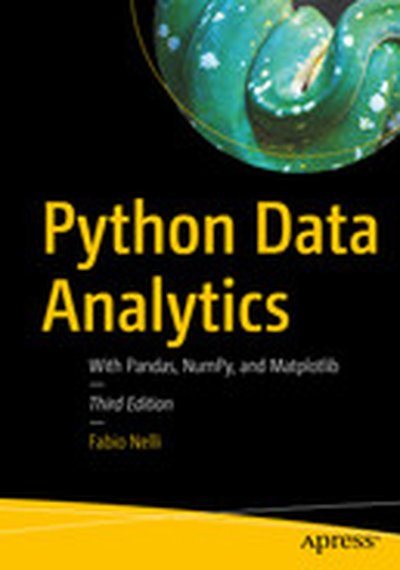
Python Data Analytics: With Pandas, NumPy, and Matplotlib

Explore the latest Python tools and techniques to help you tackle the world of data acquisition and analysis. You'll review scientific computing with NumPy, visualization with matplotlib, and machine learning with scikit-learn. This third edition is fully updated for the latest version of Python and its related libraries, and includes coverage of social media data analysis, image analysis with OpenCV, and deep learning libraries. Each chapter includes multiple examples demonstrating how to work with each library. At its heart lies the coverage of pandas, for high-performance, easy-to-use data structures and tools for data manipulation Author Fabio Nelli expertly demonstrates using Python for data processing, management, and information retrieval. Later chapters apply what you've learned to handwriting recognition and extending graphical capabilities with the JavaScript D3 library. Whether you are dealing with sales data, investment data, medical data, web page usage, or other data sets, Python Data Analytics, Third Edition is an invaluable reference with its examples of storing, accessing, and analyzing data. What You'll Learn Understand the core concepts of data analysis and the Python ecosystem Go in depth with pandas for reading, writing, and processing data Use tools and techniques for data visualization and image analysis Examine popular deep learning libraries Keras, Theano,TensorFlow, and PyTorch Who This Book Is For Experienced Python developers who need to learn about Pythonic tools for data analysis

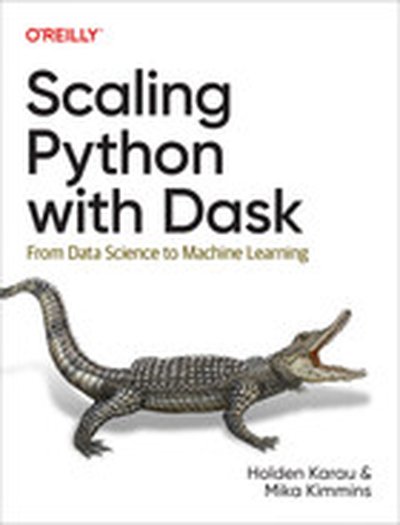
Scaling Python with Dask

Modern systems contain multi-core CPUs and GPUs that have the potential for parallel computing. But many scientific Python tools were not designed to leverage this parallelism. With this short but thorough resource, data scientists and Python programmers will learn how the Dask open source library for parallel computing provides APIs that make it easy to parallelize PyData libraries including NumPy, pandas, and scikit-learn. Authors Holden Karau and Mika Kimmins show you how to use Dask computations in local systems and then scale to the cloud for heavier workloads. This practical book explains why Dask is popular among industry experts and academics and is used by organizations that include Walmart, Capital One, Harvard Medical School, and NASA. With this book, you'll learn: What Dask is, where you can use it, and how it compares with other tools How to use Dask for batch data parallel processing Key distributed system concepts for working with Dask Methods for using Dask with higher-level APIs and building blocks How to work with integrated libraries such as scikit-learn, pandas, and PyTorch How to use Dask with GPUs

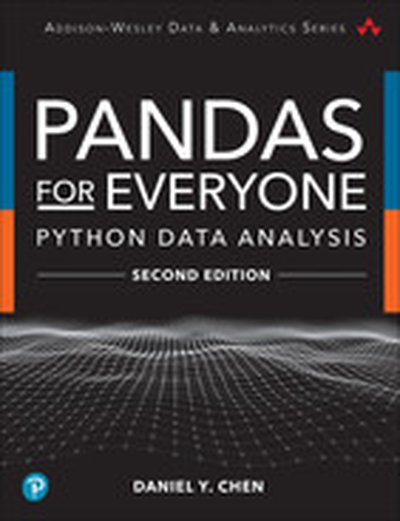
Pandas for Everyone: Python Data Analysis, 2nd Edition

Manage and Automate Data Analysis with Pandas in Python Today, analysts must manage data characterized by extraordinary variety, velocity, and volume. Using the open source Pandas library, you can use Python to rapidly automate and perform virtually any data analysis task, no matter how large or complex. Pandas can help you ensure the veracity of your data, visualize it for effective decision-making, and reliably reproduce analyses across multiple data sets. Pandas for Everyone, 2nd Edition, brings together practical knowledge and insight for solving real problems with Pandas, even if youre new to Python data analysis. Daniel Y. Chen introduces key concepts through simple but practical examples, incrementally building on them to solve more difficult, real-world data science problems such as using regularization to prevent data overfitting, or when to use unsupervised machine learning methods to find the underlying structure in a data set. New features to the second edition include: Extended coverage of plotting and the seaborn data visualization library Expanded examples and resources Updated Python 3.9 code and packages coverage, including statsmodels and scikit-learn libraries Online bonus material on geopandas, Dask, and creating interactive graphics with Altair Chen gives you a jumpstart on using Pandas with a realistic data set and covers combining data sets, handling missing data, and structuring data sets for easier analysis and visualization. He demonstrates powerful data cleaning techniques, from basic string manipulation to applying functions simultaneously across dataframes. Once your data is ready, Chen guides you through fitting models for prediction, clustering, inference, and exploration. He provides tips on performance and scalability and introduces you to the wider Python data analysis ecosystem. Work with DataFrames and Series, and import or export data Create plots with matplotlib, seaborn, and pandas Combine data sets and handle missing data Reshape, tidy, and clean data sets so theyre easier to work with Convert data types and manipulate text strings Apply functions to scale data manipulations Aggregate, transform, and filter large data sets with groupby Leverage Pandas advanced date and time capabilities Fit linear models using statsmodels and scikit-learn libraries Use generalized linear modeling to fit models with different response variables Compare multiple models to select the best one Regularize to overcome overfitting and improve performance Use clustering in unsupervised machine learning ...

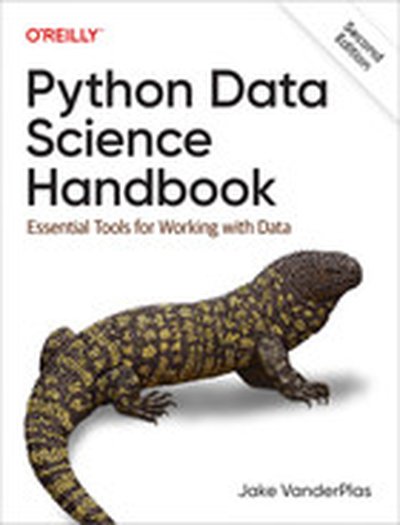
Python Data Science Handbook, 2nd Edition

Python is a first-class tool for many researchers, primarily because of its libraries for storing, manipulating, and gaining insight from data. Several resources exist for individual pieces of this data science stack, but only with the new edition of Python Data Science Handbook do you get them all—IPython, NumPy, pandas, Matplotlib, Scikit-Learn, and other related tools. Working scientists and data crunchers familiar with reading and writing Python code will find the second edition of this comprehensive desk reference ideal for tackling day-to-day issues: manipulating, transforming, and cleaning data; visualizing different types of data; and using data to build statistical or machine learning models. Quite simply, this is the must-have reference for scientific computing in Python. With this handbook, you'll learn how: IPython and Jupyter provide computational environments for scientists using Python NumPy includes the ndarray for efficient storage and manipulation of dense data arrays Pandas contains the DataFrame for efficient storage and manipulation of labeled/columnar data Matplotlib includes capabilities for a flexible range of data visualizations Scikit-learn helps you build efficient and clean Python implementations of the most important and established machine learning algorithms

Python for Data Science

Python is an ideal choice for accessing, manipulating, and gaining insights from data of all kinds. Python for Data Science introduces you to the Pythonic world of data analysis with a learn-by-doing approach rooted in practical examples and hands-on activities. Youâ??ll learn how to write Python code to obtain, transform, and analyze data, practicing state-of-the-art data processing techniques for use cases in business management, marketing, and decision support. You will discover Pythonâ??s rich set of built-in data structures for basic operations, as well as its robust ecosystem of open-source libraries for data science, including NumPy, pandas, scikit-learn, matplotlib, and more. Examples show how to load data in various formats, how to streamline, group, and aggregate data sets, and how to create charts, maps, and other visualizations. Later chapters go in-depth with demonstrations of real-world data applications, including using location data to power a taxi service, market basket analysis to identify items commonly purchased together, and machine learning to predict stock prices.

Building Data Science Applications with FastAPI

This comprehensive guide to FastAPI walks readers through developing modern web backends optimized for data science applications. By mastering key concepts like dependency injection and asynchronous programming, you will create high-performing REST APIs and machine learning powered systems. What this Book will help me do Master asynchronous programming and type hinting in Python for efficient coding. Design comprehensive RESTful APIs for machine learning with FastAPI. Build, test, and maintain scalable data science applications. Integrate Python libraries like NumPy and scikit-learn into web backends. Deploy modular and efficient FastAPI-backed systems to production. Author(s) None Voron is a seasoned software developer specialized in web frameworks and data science applications. With a strong background in building scalable systems, they bring invaluable insights on utilizing FastAPI. Voron emphasizes clarity and hands-on learning, sharing their expertise to help developers master the technology efficiently. Who is it for? This book is ideal for data scientists and Python developers interested in creating efficient data science backends. If you have groundwork knowledge of machine learning concepts and Python programming, this book will enhance your ability to deploy and manage APIs for data-driven applications.

Data Science Projects with Python - Second Edition

Data Science Projects with Python offers a hands-on, project-based approach to learning data science using real-world data sets and tools. You will explore data using Python libraries like pandas and Matplotlib, build machine learning models with scikit-learn, and apply advanced techniques like XGBoost and SHAP values. This book equips you to confidently extract insights, evaluate models, and deliver results with clarity. What this Book will help me do Learn to load, clean, and preprocess data using Python and pandas. Build and evaluate predictive models, including logistic regression and random forests. Visualize data effectively using Python libraries like Matplotlib. Master advanced techniques like XGBoost and algorithmic fairness. Communicate data-driven insights to aid decision making in practical scenarios. Author(s) Stephen Klosterman is an experienced data scientist with a strong focus on practical applications of machine learning in business. Combining a rich academic background with hands-on industry experience, he excels at explaining complex concepts in an approachable way. As the author of 'Data Science Projects with Python,' his goal is to provide learners with the skills needed for real-world data science challenges. Who is it for? This book is ideal for beginners in data science and machine learning who have some basic programming knowledge in Python. Aspiring data scientists will benefit from its practical, end-to-end examples. Professionals seeking to expand their skillset in predictive modeling and delivering business insights will find this book invaluable. Some foundation in statistics and programming is recommended.

Machine Learning and Data Science Blueprints for Finance

Over the next few decades, machine learning and data science will transform the finance industry. With this practical book, analysts, traders, researchers, and developers will learn how to build machine learning algorithms crucial to the industry. You'll examine ML concepts and over 20 case studies in supervised, unsupervised, and reinforcement learning, along with natural language processing (NLP). Ideal for professionals working at hedge funds, investment and retail banks, and fintech firms, this book also delves deep into portfolio management, algorithmic trading, derivative pricing, fraud detection, asset price prediction, sentiment analysis, and chatbot development. You'll explore real-life problems faced by practitioners and learn scientifically sound solutions supported by code and examples. This book covers: Supervised learning regression-based models for trading strategies, derivative pricing, and portfolio management Supervised learning classification-based models for credit default risk prediction, fraud detection, and trading strategies Dimensionality reduction techniques with case studies in portfolio management, trading strategy, and yield curve construction Algorithms and clustering techniques for finding similar objects, with case studies in trading strategies and portfolio management Reinforcement learning models and techniques used for building trading strategies, derivatives hedging, and portfolio management NLP techniques using Python libraries such as NLTK and scikit-learn for transforming text into meaningful representations

The Data Science Workshop - Second Edition

The Data Science Workshop provides a comprehensive introduction to building real-world data science projects. Through a hands-on approach, you will learn how to analyze data, build machine learning models, and deploy them effectively in various scenarios. This book is designed to equip you with the skills to confidently tackle data science challenges. What this Book will help me do Understand the differences between supervised and unsupervised learning to select the appropriate technique. Master data manipulation and analysis using popular Python libraries like pandas and scikit-learn. Develop skills in regression, classification, and clustering to solve diverse data science problems. Learn advanced methods to improve model accuracy, including hyperparameter tuning and feature engineering. Implement and deploy machine learning models efficiently in production workflows. Author(s) The authors of The Data Science Workshop are experienced professionals and educators in the field of data science and machine learning. They have extensive expertise in using practical methods to solve data challenges and have a passion for teaching others through engaging and clear instructional material. Who is it for? This book is ideal for aspiring data analysts, data scientists, and business analysts who wish to build foundational skills in data science. It caters to those new to the field and professionals transitioning to a data-centric role, providing practical knowledge without requiring an advanced mathematical background. Familiarity with Python is recommended.

The Data Science Workshop

The Data Science Workshop is designed for beginners looking to step into the rigorous yet rewarding world of data science. By leveraging a hands-on approach, this book demystifies key concepts and guides you gently into creating practical machine learning models with Python. What this Book will help me do Understand supervised and unsupervised learning and their applications. Gain hands-on experience with Python libraries like scikit-learn and pandas for data manipulation. Learn practical use cases of machine learning techniques such as regression and clustering. Discover techniques to ensure robustness in machine learning with hyperparameter tuning and ensembling. Develop efficiency in feature engineering with automated tools to accelerate workflows. Author(s) Anthony So None, Thomas Joseph, Robert Thas John, and Andrew Worsley are seasoned experts in data science and Python programming. Along with Dr. Samuel Asare None, they bring decades of experience and practical knowledge to this book, delivering an engaging and approachable learning experience. Who is it for? This book is targeted toward individuals who are beginners in data science and are eager to acquire foundational knowledge and practical skills. It appeals to those who prefer a structured, hands-on approach to learning, possibly having some prior programming experience or interest in Python. Professionals aspiring to pivot into data-oriented roles or students aiming to strengthen their understanding of data science concepts will find this book particularly valuable. If you're looking to gain confidence in implementing data science projects and solving real-world problems, this text is for you.

Learn Python by Building Data Science Applications

Learn Python by Building Data Science Applications takes a hands-on approach to teaching Python programming by guiding you through building engaging real-world data science projects. This book introduces Python's rich ecosystem and equips you with the skills to analyze data, train models, and deploy them as efficient applications. What this Book will help me do Get proficient in Python programming by learning core topics like data structures, loops, and functions. Explore data science libraries such as NumPy, Pandas, and scikit-learn to analyze and process data. Learn to create visualizations with Matplotlib and Altair, simplifying data communication. Build and deploy machine learning models using Python and share them as web services. Understand development practices such as testing, packaging, and continuous integration for professional workflows. Author(s) None Kats and None Katz are seasoned Python developers with years of experience in teaching programming and deploying data science applications. Their expertise spans providing learners with practical knowledge and versatile skills. They combine clear explanations with engaging projects to ensure a rewarding learning experience. Who is it for? This book is ideal for individuals new to programming or data science who want to learn Python through practical projects. Researchers, analysts, and ambitious students with minimal coding background but a keen interest in data analysis and application development will find this book beneficial. It's a perfect choice for anyone eager to explore and leverage Python for real-world solutions.

Hands-On Data Analysis with Pandas

Hands-On Data Analysis with Pandas provides an intensive dive into mastering the pandas library for data science and analysis using Python. Through a combination of conceptual explanations and practical demonstrations, readers will learn how to manipulate, visualize, and analyze data efficiently. What this Book will help me do Understand and apply the pandas library for efficient data manipulation. Learn to perform data wrangling tasks such as cleaning and reshaping datasets. Create effective visualizations using pandas and libraries like matplotlib and seaborn. Grasp the basics of machine learning and implement solutions with scikit-learn. Develop reusable data analysis scripts and modules in Python. Author(s) Stefanie Molin is a seasoned data scientist and software engineer with extensive experience in Python and data analytics. She specializes in leveraging the latest data science techniques to solve real-world problems. Her engaging and detailed writing draws from her practical expertise, aiming to make complex concepts accessible to all. Who is it for? This book is ideal for data analysts and aspiring data scientists who are at the beginning stages of their careers or looking to enhance their toolset with pandas and Python. It caters to Python developers eager to delve into data analysis workflows. Readers should have some programming knowledge to fully benefit from the examples and exercises.

Data Science with Python and Dask

Dask is a native parallel analytics tool designed to integrate seamlessly with the libraries you’re already using, including Pandas, NumPy, and Scikit-Learn. With Dask you can crunch and work with huge datasets, using the tools you already have. And Data Science with Python and Dask is your guide to using Dask for your data projects without changing the way you work! About the Technology An efficient data pipeline means everything for the success of a data science project. Dask is a flexible library for parallel computing in Python that makes it easy to build intuitive workflows for ingesting and analyzing large, distributed datasets. Dask provides dynamic task scheduling and parallel collections that extend the functionality of NumPy, Pandas, and Scikit-learn, enabling users to scale their code from a single laptop to a cluster of hundreds of machines with ease. About the Book Data Science with Python and Dask teaches you to build scalable projects that can handle massive datasets. After meeting the Dask framework, you’ll analyze data in the NYC Parking Ticket database and use DataFrames to streamline your process. Then, you’ll create machine learning models using Dask-ML, build interactive visualizations, and build clusters using AWS and Docker. What's Inside Working with large, structured and unstructured datasets Visualization with Seaborn and Datashader Implementing your own algorithms Building distributed apps with Dask Distributed Packaging and deploying Dask apps About the Reader For data scientists and developers with experience using Python and the PyData stack. About the Author Jesse Daniel is an experienced Python developer. He taught Python for Data Science at the University of Denver and leads a team of data scientists at a Denver-based media technology company. We interviewed Jesse as a part of our Six Questions series. Check it out here. Quotes The most comprehensive coverage of Dask to date, with real-world examples that made a difference in my daily work. - Al Krinker, United States Patent and Trademark Office An excellent alternative to PySpark for those who are not on a cloud platform. The author introduces Dask in a way that speaks directly to an analyst. - Jeremy Loscheider, Panera Bread A greatly paced introduction to Dask with real-world datasets. - George Thomas, R&D Architecture Manhattan Associates The ultimate resource to quickly get up and running with Dask and parallel processing in Python. - Gustavo Patino, Oakland University William Beaumont School of Medicine

Data Science Projects with Python

Data Science Projects with Python introduces you to data science and machine learning using Python through practical examples. In this book, you'll learn to analyze, visualize, and model data, applying techniques like logistic regression and random forests. With a case-study method, you'll build confidence implementing insights in real-world scenarios. What this Book will help me do Set up a data science environment with necessary Python libraries such as pandas and scikit-learn. Effectively visualize data insights through Matplotlib and summary statistics. Apply machine learning models including logistic regression and random forests to solve data problems. Identify optimal models through evaluation metrics like k-fold cross-validation. Develop confidence in data preparation and modeling techniques for real-world data challenges. Author(s) Stephen Klosterman is a seasoned data scientist with a keen interest in practical applications of machine learning. He combines a strong academic foundation with real-world experience to craft relatable content. Stephen excels in breaking down complex topics into approachable lessons, helping learners grow their data science expertise step by step. Who is it for? This book is ideal for data analysts, scientists, and business professionals looking to enhance their skills in Python and data science. If you have some experience in Python and a foundational understanding of algebra and statistics, you'll find this book approachable. It offers an excellent gateway to mastering advanced data analysis techniques. Whether you're seeking to explore machine learning or apply data insights, this book supports your growth.

Numerical Python: Scientific Computing and Data Science Applications with Numpy, SciPy and Matplotlib

Leverage the numerical and mathematical modules in Python and its standard library as well as popular open source numerical Python packages like NumPy, SciPy, FiPy, matplotlib and more. This fully revised edition, updated with the latest details of each package and changes to Jupyter projects, demonstrates how to numerically compute solutions and mathematically model applications in big data, cloud computing, financial engineering, business management and more. Numerical Python, Second Edition, presents many brand-new case study examples of applications in data science and statistics using Python, along with extensions to many previous examples. Each of these demonstrates the power of Python for rapid development and exploratory computing due to its simple and high-level syntax and multiple options for data analysis. After reading this book, readers will be familiar with many computing techniques including array-based and symbolic computing, visualization and numerical file I/O, equation solving, optimization, interpolation and integration, and domain-specific computational problems, such as differential equation solving, data analysis, statistical modeling and machine learning. What You'll Learn Work with vectors and matrices using NumPy Plot and visualize data with Matplotlib Perform data analysis tasks with Pandas and SciPy Review statistical modeling and machine learning with statsmodels and scikit-learn Optimize Python code using Numba and Cython Who This Book Is For Developers who want to understand how to use Python and its related ecosystem for numerical computing.

Python Data Science Essentials - Third Edition

Learn the essentials of data science with Python through this comprehensive guide. By the end of this book, you'll have an in-depth understanding of core data science workflows, tools, and techniques. What this Book will help me do Understand and apply data manipulation techniques with pandas and NumPy. Build and optimize machine learning models with scikit-learn. Analyze and visualize complex datasets for derived insights. Implement exploratory data analysis to uncover trends in data. Leverage advanced techniques like graph analysis and deep learning for sophisticated projects. Author(s) Alberto Boschetti and Luca Massaron combine their extensive expertise in data science and Python programming to guide readers effectively. With hands-on knowledge and a passion for teaching, they provide practical insights across the data science lifecycle. Who is it for? This book is ideal for aspiring data scientists, data analysts, and software developers aiming to enhance their data analysis skills. Suited for beginners familiar with Python and basic statistics, this guide bridges the gap to real-world applications. Advance your career by unlocking crucial data science expertise.

Python Data Analytics: With Pandas, NumPy, and Matplotlib

Explore the latest Python tools and techniques to help you tackle the world of data acquisition and analysis. You'll review scientific computing with NumPy, visualization with matplotlib, and machine learning with scikit-learn. This revision is fully updated with new content on social media data analysis, image analysis with OpenCV, and deep learning libraries. Each chapter includes multiple examples demonstrating how to work with each library. At its heart lies the coverage of pandas, for high-performance, easy-to-use data structures and tools for data manipulation Author Fabio Nelli expertly demonstrates using Python for data processing, management, and information retrieval. Later chapters apply what you've learned to handwriting recognition and extending graphical capabilities with the JavaScript D3 library. Whether you are dealing with sales data, investment data, medical data, web page usage, or other data sets, Python Data Analytics, Second Edition is an invaluable reference with its examples of storing, accessing, and analyzing data. What You'll Learn Understand the core concepts of data analysis and the Python ecosystem Go in depth with pandas for reading, writing, and processing data Use tools and techniques for data visualization and image analysis Examine popular deep learning libraries Keras, Theano,TensorFlow, and PyTorch Who This Book Is For Experienced Python developers who need to learn about Pythonic tools for data analysis