talk-data.com talk-data.com

Topic

Cyber Security

cybersecurity information_security data_security privacy

615

tagged

Activity Trend

297 peak/qtr
2020-Q1 2026-Q1

Activities

Showing filtered results

Filtering by: O'Reilly Data Engineering Books ×
XML and Related Technologies

About The Author – Atul Kahate has over 13 years of experience in Information Technology in India and abroad in various capacities. He has done his Bachelor of Science degree in Statistics and his Master of Business Administration in Computer Systems. He has authored 17 highly acclaimed books on various areas of Information Technology. Several of his books are being used as course textbooks or sources of reference in a number of universities/colleges/IT companies all over the world. Atul has been writing articles in newspapers about cricket, since the age of 12. He has also authored two books on cricket and has written over 2000 articles on IT and cricket. He has a deep interest in teaching, music, and cricket besides technology. He has conducted several training programs, in a number of educational institutions and IT organisations, on a wide range of technologies. Some of the prestigious institutions where he has conducted training programs, include IIT, Symbiosis, I2IT, MET, Indira Institute of Management, Fergusson College, MIT, VIIT, MIT, Walchand Government Engineering College besides numerous other colleges in India.

Book Content – 1. Introduction to XML, 2. XML Syntaxes, 3. Document Type Definitions, 4. XML Schemas 5. Cascading Style Sheets, 6. Extensible Stylesheet Language, 7. XML and Java, 8. XML and ASP.NET, 9. Web Services and AJAX, 10. XML Security, Appendix – Miscellaneous Topics

Mastering MySQL Administration: High Availability, Security, Performance, and Efficiency

This book is your one-stop resource on MySQL database installation and server management for administrators. It covers installation, upgrades, monitoring, high availability, disaster recovery, security, and performance and troubleshooting. You will become fluent in MySQL 8.2, the latest version of the highly scalable and robust relational database system. With a hands-on approach, the book offers step-by-step guidance on installing, upgrading, and establishing robust high availability and disaster recovery capabilities for MySQL databases. It also covers high availability with InnoDB and NDB clusters, MySQL routers and enterprise MySQL tools, along with robust security design and performance techniques. Throughout, the authors punctuate concepts with examples taken from their experience with large-scale implementations at companies such as Meta and American Airlines, anchoring this practical guide to MySQL 8.2 administration in the real world. What YouWill Learn Understand MySQL architecture and best practices for administration of MySQL server Configure high availability, replication, disaster recovery with InnoDB and NDB engines Back up and restore with MySQL utilities and tools, and configure the database for zero data loss Troubleshoot with steps for real-world critical errors and detailed solutions Who This Book Is For Technical professionals, database administrators, developers, and engineers seeking to optimize MySQL databases for scale, security, and performance

IBM Storage FlashSystem 9500 Product Guide for IBM Storage Virtualize 8.6

This IBM® Redpaper® Product Guide describes the IBM Storage FlashSystem® 9500 solution, which is a next-generation IBM Storage FlashSystem control enclosure. It combines the performance of flash and a Non-Volatile Memory Express (NVMe)-optimized architecture with the reliability and innovation of IBM FlashCore® technology and the rich feature set and high availability (HA) of IBM Storage Virtualize. Often, applications exist that are foundational to the operations and success of an enterprise. These applications might function as prime revenue generators, guide or control important tasks, or provide crucial business intelligence, among many other jobs. Whatever their purpose, they are mission critical to the organization. They demand the highest levels of performance, functionality, security, and availability. They also must be protected against the newer threat of cyberattacks. To support such mission-critical applications, enterprises of all types and sizes turn to the IBM Storage FlashSystem 9500. IBM Storage FlashSystem 9500 provides a rich set of software-defined storage (SDS) features that are delivered by IBM Storage Virtualize, including the following examples: Data reduction and deduplication Dynamic tiering Thin-provisioning Snapshots Cloning Replication and data copy services Cyber resilience Transparent Cloud Tiering IBM HyperSwap® including 3-site replication for HA Scale-out and scale-up configurations that further enhance capacity and throughput for better availability This Redpaper applies to IBM Storage Virtualize V8.6.

Practical MongoDB Aggregations

Dive into the capabilities of the MongoDB aggregation framework with this official guide, "Practical MongoDB Aggregations". You'll learn how to design and optimize efficient aggregation pipelines for MongoDB 7.0, empowering you to handle complex data analysis and processing tasks directly within the database. What this Book will help me do Gain expertise in crafting advanced MongoDB aggregation pipelines for custom data workflows. Learn to perform time series analysis for financial datasets and IoT applications. Discover optimization techniques for working with sharded clusters and large datasets. Master array manipulation and other specific operations essential for MongoDB data models. Build pipelines that ensure data security and distribution while maintaining performance. Author(s) Paul Done, a recognized expert in MongoDB, brings his extensive experience in database technologies to this book. With years of practice in helping companies leverage MongoDB for big data solutions, Paul shares his deep knowledge in an accessible and logical manner. His approach to writing is hands-on, focusing on practical insights and clear explanations. Who is it for? This book is tailored for intermediate-level developers, database architects, data analysts, engineers, and scientists who use MongoDB. If you are familiar with MongoDB and looking to expand your understanding specifically around its aggregation capabilities, this guide is for you. Whether you're analyzing time series data or need to optimize pipelines for performance, you'll find actionable tips and examples here to suit your needs.

IBM TS7700 Release 5.3 Guide

This IBM Redbooks® publication covers IBM TS7700 R5.3. The IBM TS7700 is part of a family of IBM Enterprise tape products. This book is intended for system architects and storage administrators who want to integrate their storage systems for optimal operation. Building on over 25 years of experience, the R5.3 release includes many features that enable improved performance, usability, and security. Highlights include the IBM TS7700 Advanced Object Store, an all flash TS7770, grid resiliency enhancements, and Logical WORM retention. By using the same hierarchical storage techniques, the TS7700 (TS7770 and TS7760) can also off load to object storage. Because object storage is cloud-based and accessible from different regions, the TS7700 Cloud Storage Tier support essentially allows the cloud to be an extension of the grid. As of this writing, the TS7700C supports the ability to off load to IBM Cloud Object Storage, Amazon S3, and RSTOR. This publication explains features and concepts that are specific to the IBM TS7700 as of release R5.3. The R5.3 microcode level provides IBM TS7700 Cloud Storage Tier enhancements, IBM DS8000 Object Storage enhancements, Management Interface dual control security, and other smaller enhancements. The R5.3 microcode level can be installed on the IBM TS7770 and IBM TS7760 models only. TS7700 provides tape virtualization for the IBM Z® environment. Off loading to physical tape behind a TS7700 is used by hundreds of organizations around the world. New and existing capabilities of the TS7700 5.3 release includes the following highlights: Support for IBM TS1160 Tape Drives and JE/JM media Eight-way Grid Cloud, which consists of up to three generations of TS7700 Synchronous and asynchronous replication of virtual tape and TCT objects Grid access to all logical volume and object data independent of where it resides An all flash TS7770 option for improved performance Full Advanced Object Store Grid Cloud support of DS8000 Transparent Cloud Tier Full AES256 encryption for data that is in-flight and at-rest Tight integration with IBM Z and DFSMS policy management DS8000 Object Store with AES256 in-flight encryption and compression Regulatory compliance through Logical WORM and LWORM Retention support Cloud Storage Tier support for archive, logical volume versions, and disaster recovery Optional integration with physical tape 16 Gb IBM FICON® throughput that exceeds 4 GBps per TS7700 cluster Grid Resiliency Support with Control Unit Initiated Reconfiguration (CUIR) support IBM Z hosts view up to 3,968 3490 devices per TS7700 grid TS7770 Cache On Demand feature that uses capacity-based licensing TS7770 support of SSD within the VED server The TS7700T writes data by policy to physical tape through attachment to high-capacity, high-performance IBM TS1160, IBM TS1150, and IBM TS1140 tape drives that are installed in an IBM TS4500 or TS3500 tape library. The TS7770 models are based on high-performance and redundant IBM Power9® technology. They provide improved performance for most IBM Z tape workloads when compared to the previous generations of IBM TS7700.

IBM Storage Virtualize, IBM Storage FlashSystem, and IBM SAN Volume Controller Security Feature Checklist - For IBM Storage Virtualize 8.6

IBM® Storage Virtualize based storage systems are secure storage platforms that implement various security-related features, in terms of system-level access controls and data-level security features. This document outlines the available security features and options of IBM Storage Virtualize based storage systems. It is not intended as a "how to" or best practice document. Instead, it is a checklist of features that can be reviewed by a user security team to aid in the definition of a policy to be followed when implementing IBM FlashSystem®, IBM SAN Volume Controller, and IBM Storage Virtualize for Public Cloud. IBM Storage Virtualize features the following levels of security to protect against threats and to keep the attack surface as small as possible: The first line of defense is to offer strict verification features that stop unauthorized users from using login interfaces and gaining access to the system and its configuration. The second line of defense is to offer least privilege features that restrict the environment and limit any effect if a malicious actor does access the system configuration. The third line of defense is to run in a minimal, locked down, mode to prevent damage spreading to the kernel and rest of the operating system. The fourth line of defense is to protect the data at rest that is stored on the system from theft, loss, or corruption (malicious or accidental). The topics that are discussed in this paper can be broadly split into two categories: System security: This type of security encompasses the first three lines of defense that prevent unauthorized access to the system, protect the logical configuration of the storage system, and restrict what actions users can perform. It also ensures visibility and reporting of system level events that can be used by a Security Information and Event Management (SIEM) solution, such as IBM QRadar®. Data security: This type of security encompasses the fourth line of defense. It protects the data that is stored on the system against theft, loss, or attack. These data security features include Encryption of Data At Rest (EDAR) or IBM Safeguarded Copy (SGC). This document is correct as of IBM Storage Virtualize 8.6.

Mastering MongoDB 7.0 - Fourth Edition

Discover the many capabilities of MongoDB 7.0 with this comprehensive guide designed to take your database skills to new heights. By exploring advanced features like aggregation pipelines, role-based security, and MongoDB Atlas, you will gain in-depth expertise in modern data management. This book empowers you to create secure, high-performance database applications. What this Book will help me do Understand and implement advanced MongoDB queries for detailed data analysis. Apply optimized indexing techniques to maximize query performance. Leverage MongoDB Atlas for robust monitoring, efficient backups, and advanced integrations. Develop secure applications with role-based access control, auditing, and encryption. Create scalable and innovative solutions using the latest features in MongoDB 7.0. Author(s) Marko Aleksendrić, Arek Borucki, and their co-authors are accomplished experts in database engineering and MongoDB development. They bring collective experience in teaching and practical application of MongoDB solutions across various industries. Their goal is to simplify complex topics, making them approachable and actionable for developers worldwide. Who is it for? This book is written for developers, software engineers, and database administrators with experience in MongoDB who want to deepen their expertise. An understanding of basic database operations and queries is recommended. If you are looking to master advanced concepts and create secure, optimized, and scalable applications, this is the book for you.

Take Control of iOS & iPadOS Privacy and Security, 4th Edition

Master networking, privacy, and security for iOS and iPadOS! Version 4.2, updated January 29, 2024 Ensuring that your iPhone or iPad’s data remains secure and in your control and that your private data remains private isn’t a battle—if you know what boxes to check and how to configure iOS and iPadOS to your advantage. Take Control of iOS & iPadOS Privacy and Security takes you into the intricacies of Apple’s choices when it comes to networking, data sharing, and encryption—and protecting your personal safety. Substantially updated to cover dozens of changes and new features in iOS 17 and iPadOS 17! Your iPhone and iPad have become the center of your digital identity, and it’s easy to lose track of all the ways in which Apple and other parties access your data legitimately—or without your full knowledge and consent. While Apple nearly always errs on the side of disclosure and permission, many other firms don’t. This book comprehensively explains how to configure iOS 17, iPadOS 17, and iCloud-based services to best protect your privacy with messaging, email, browsing, and much more. The book also shows you how to ensure your devices and data are secure from intrusion from attackers of all types. You’ll get practical strategies and configuration advice to protect yourself against psychological and physical threats, including restrictions on your freedom and safety. For instance, you can now screen images that may contain nude images, while Apple has further enhanced Lockdown Mode to block potential attacks by governments, including your own. Take Control of iOS & iPadOS Privacy and Security covers how to configure the hundreds of privacy and data sharing settings Apple offers in iOS and iPadOS, and which it mediates for third-party apps. Safari now has umpteen different strategies built in by Apple to protect your web surfing habits, personal data, and identity, and new features in Safari, Mail, and Messages that block tracking of your movement across sites, actions on ads, and even when you open and view an email message. In addition to privacy and security, this book also teaches you everything you need to know about networking, whether you’re using 3G, 4G LTE, or 5G cellular, Wi-Fi or Bluetooth, or combinations of all of them; as well as about AirDrop, AirPlay, Airplane Mode, Personal Hotspot, and tethering. You’ll learn how to:

Twiddle 5G settings to ensure the best network speeds on your iPhone or iPad. Master the options for a Personal Hotspot for yourself and in a Family Sharing group. Set up a device securely from the moment you power up a new or newly restored iPhone or iPad. Manage Apple’s built-in second factor verification code generator for extra-secure website and app logins. Create groups of passwords and passkeys you can share securely with other iPhone, iPad, and Mac users. Decide whether Advanced Data Protection in iCloud, an enhanced encryption option that makes nearly all your iCloud data impossible for even Apple to view, makes sense for you. Use passkeys, a high-security but easy-to-use website login system with industry-wide support. Block unknown (and unwanted) callers, iMessage senders, and phone calls, now including FaceTime. Protect your email by using Hide My Email, a iCloud+ tool to generate an address Apple manages and relays messages through for you—now including email used with Apple Pay transactions. Use Safari’s blocking techniques and how to review websites’ attempts to track you, including the latest improvements in iOS 17 and iPadOS 17. Use Communication Safety, a way to alert your children about sensitive images—but now also a tool to keep unsolicited and unwanted images of private parts from appearing on your devices. Understand why Apple might ask for your iPhone, iPad, or Mac password when you log in on a new device using two-factor authentication. Keep yourself safe when en route to a destination by creating a Check In partner who will be alerted if you don’t reach your intended end point or don’t respond within a period of time. Dig into Private Browsing’s several new features in iOS 17/iPadOS 17, designed to let you leave no trace of your identity or actions behind, while protecting your iPhone or iPad from prying eyes, too. Manage data usage across two phone SIMs (or eSIMS) at home and while traveling. Use a hardware encryption key to strongly protect your Apple ID account. Share a Wi-Fi password with nearby contacts and via a QR Code. Differentiate between encrypted data sessions and end-to-end encryption. Stream music and video to other devices with AirPlay 2. Use iCloud+’s Private Relay, a privacy-protecting browsing service that keeps your habits and locations from prying marketing eyes. Deter brute-force cracking by relying on an Accessories timeout for devices physically being plugged in that use USB and other standards. Configure Bluetooth devices. Enjoy enhanced AirDrop options that let you tap two iPhones to transfer files and continue file transfers over the internet when you move out of range. Protect Apple ID account and iCloud data from unwanted access at a regular level and via the new Safety Check, designed to let you review or sever digital connections with people you know who may wish you harm.

Mastering MongoDB 7.0 - Fourth Edition

Mastering MongoDB 7.0 is your in-depth resource for learning MongoDB 7.0, the powerful NoSQL database designed for developers. Gain expertise in database architecture, data management, and modern features like MongoDB Atlas. By reading this book, you'll acquire the essential skills needed for building efficient, scalable, and secure applications. What this Book will help me do Develop expert-level skills in crafting advanced queries and managing complex data tasks in MongoDB. Learn to design efficient schemas and optimize indexing to maximize database performance. Integrate applications seamlessly with MongoDB Atlas, mastering its monitoring and backup tools. Implement robust security with RBAC, auditing strategies, and comprehensive encryption. Explore the latest MongoDB 7.0 features, including Atlas Vector Search, for modern applications. Author(s) Marko Aleksendrić, Arek Borucki, and co-authors are recognized MongoDB experts with years of hands-on experience. They bring together their expertise to deliver a practical guide filled with real-world insights that help developers advance their MongoDB skills. Their collaborative writing ensures comprehensive coverage of MongoDB 7.0 tools and techniques. Who is it for? This book is written for software developers, database administrators, and engineers who have intermediate knowledge of MongoDB and want to extend their expertise. Whether you are developing scalable applications, managing data systems, or ensuring database security, this book offers advanced guidance for achieving your professional goals with MongoDB.

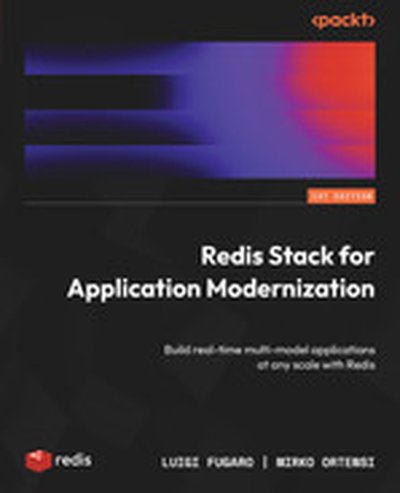
Redis Stack for Application Modernization

In "Redis Stack for Application Modernization," you will explore how the Redis Stack extends traditional Redis capabilities, allowing you to innovate in building real-time, scalable, multi-model applications. Through practical examples and hands-on sessions, this book equips you with skills to manage, implement, and optimize data flows and database features. What this Book will help me do Learn how to use Redis Stack for handling real-time data with JSON, hash, and other document types. Discover modern techniques for performing vector similarity searches and hybrid workflows. Become proficient in integrating Redis Stack with programming languages like Java, Python, and Node.js. Gain skills to configure Redis Stack server for scalability, security, and high availability. Master RedisInsight for data visualization, analysis, and efficient database management. Author(s) Luigi Fugaro and None Ortensi are experienced software professionals with deep expertise in database systems and application architecture. They bring years of experience working with Redis and developing real-world applications. Their hands-on approach to teaching and real-world examples make this book a valuable resource for professionals in the field. Who is it for? This book is ideal for database administrators, developers, and architects looking to leverage Redis Stack for real-time multi-model applications. It requires a basic understanding of Redis and any programming language such as Python or Java. If you wish to modernize your applications and efficiently manage databases, this book is for you.

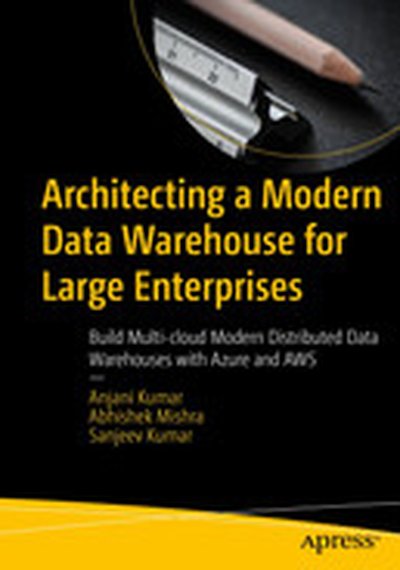
Architecting a Modern Data Warehouse for Large Enterprises: Build Multi-cloud Modern Distributed Data Warehouses with Azure and AWS

Design and architect new generation cloud-based data warehouses using Azure and AWS. This book provides an in-depth understanding of how to build modern cloud-native data warehouses, as well as their history and evolution. The book starts by covering foundational data warehouse concepts, and introduces modern features such as distributed processing, big data storage, data streaming, and processing data on the cloud. You will gain an understanding of the synergy, relevance, and usage data warehousing standard practices in the modern world of distributed data processing. The authors walk you through the essential concepts of Data Mesh, Data Lake, Lakehouse, and Delta Lake. And they demonstrate the services and offerings available on Azure and AWS that deal with data orchestration, data democratization, data governance, data security, and business intelligence. After completing this book, you will be ready to design and architect enterprise-grade, cloud-based modern data warehouses using industry best practices and guidelines. What You Will Learn Understand the core concepts underlying modern data warehouses Design and build cloud-native data warehousesGain a practical approach to architecting and building data warehouses on Azure and AWS Implement modern data warehousing components such as Data Mesh, Data Lake, Delta Lake, and Lakehouse Process data through pandas and evaluate your model’s performance using metrics such as F1-score, precision, and recall Apply deep learning to supervised, semi-supervised, and unsupervised anomaly detection tasks for tabular datasets and time series applications Who This Book Is For Experienced developers, cloud architects, and technology enthusiasts looking to build cloud-based modern data warehouses using Azure and AWS

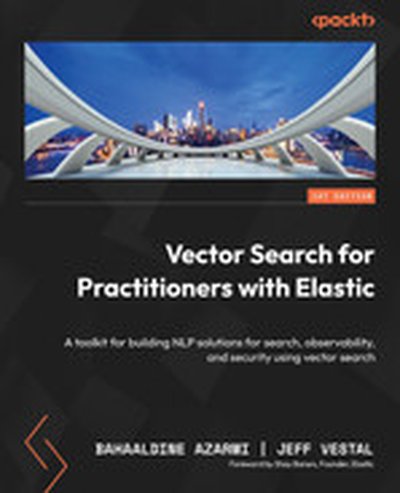
Vector Search for Practitioners with Elastic

The book "Vector Search for Practitioners with Elastic" provides a comprehensive guide to leveraging vector search technology within Elastic for applications in NLP, cybersecurity, and observability. By exploring practical examples and advanced techniques, this book teaches you how to optimize and implement vector search to address complex challenges in modern data management. What this Book will help me do Gain a deep understanding of implementing vector search with Elastic. Learn techniques to optimize vector data storage and retrieval for practical applications. Understand how to apply vector search for image similarity in Elastic. Discover methods for utilizing vector search for security and observability enhancements. Develop skills to integrate modern NLP tools with vector databases and Elastic. Author(s) Bahaaldine Azarmi, with his extensive experience in Elastic and NLP technologies, brings a practitioner's insight into the world of vector search. Co-author None Vestal contributes expertise in observability and system optimization. Together, they deliver practical and actionable knowledge in a clear and approachable manner. Who is it for? This book is designed for data professionals seeking to deepen their expertise in vector search and Elastic technologies. It is ideal for individuals in observability, search technology, or cybersecurity roles. If you have foundational knowledge in machine learning models, Python, and Elastic, this book will enable you to effectively utilize vector search in your projects.

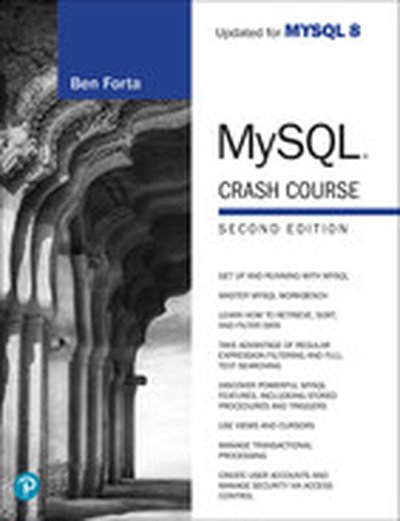
MySQL Crash Course, 2nd Edition

MySQL is one of the most popular database management systems available, powering everything from Internet powerhouses to individual corporate databases to simple end-user applications, and everything in between. This book will teach you all you need to know to be immediately productive with the latest version of MySQL. By working through 30 highly focused hands-on lessons, your MySQL Crash Course will be both easier and more effective than youd have thought possible. Learn How To Retrieve and Sort Data Filter Data Using Comparisons, Regular Expressions, Full Text Search, and Much More Join Relational Data Create and Alter Tables Insert, Update, and Delete Data Leverage the Power of Stored Procedures and Triggers Use Views and Cursors Manage Transactional Processing Create User Accounts and Manage Security via Access Control ...

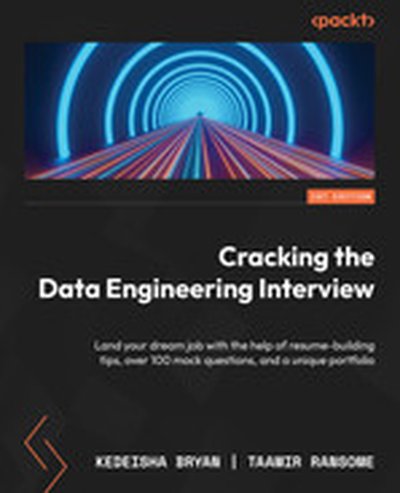
Cracking the Data Engineering Interview

"Cracking the Data Engineering Interview" is your essential guide to mastering the data engineering interview process. This book offers practical insights and techniques to build your resume, refine your skills in Python, SQL, data modeling, and ETL, and confidently tackle over 100 mock interview questions. Gain the knowledge and confidence to land your dream role in data engineering. What this Book will help me do Craft a compelling data engineering portfolio to stand out to employers. Refresh and deepen understanding of essential topics like Python, SQL, and ETL. Master over 100 interview questions that cover both technical and behavioral aspects. Understand data engineering concepts such as data modeling, security, and CI/CD. Develop negotiation, networking, and personal branding skills crucial for job applications. Author(s) None Bryan and None Ransome are seasoned authors with a wealth of experience in data engineering and professional development. Drawing from their extensive industry backgrounds, they provide actionable strategies for aspiring data engineers. Their approachable writing style and real-world insights make complex topics accessible to readers. Who is it for? This book is ideal for aspiring data engineers looking to navigate the job application process effectively. Readers should be familiar with data engineering fundamentals, including Python, SQL, cloud data platforms, and ETL processes. It's tailored for professionals aiming to enhance their portfolios, tackle challenging interviews, and boost their chances of landing a data engineering role.

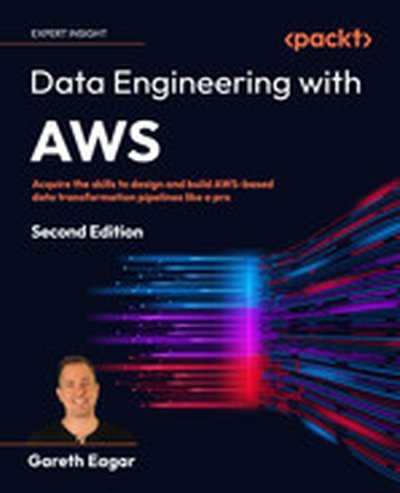
Data Engineering with AWS - Second Edition

Learn data engineering and modern data pipeline design with AWS in this comprehensive guide! You will explore key AWS services like S3, Glue, Redshift, and QuickSight to ingest, transform, and analyze data, and you'll gain hands-on experience creating robust, scalable solutions. What this Book will help me do Understand and implement data ingestion and transformation processes using AWS tools. Optimize data for analytics with advanced AWS-powered workflows. Build end-to-end modern data pipelines leveraging cutting-edge AWS technologies. Design data governance strategies using AWS services for security and compliance. Visualize data and extract insights using Amazon QuickSight and other tools. Author(s) Gareth Eagar is a Senior Data Architect with over 25 years of experience in designing and implementing data solutions across various industries. He combines his deep technical expertise with a passion for teaching, aiming to make complex concepts approachable for learners at all levels. Who is it for? This book is intended for current or aspiring data engineers, data architects, and analysts seeking to leverage AWS for data engineering. It suits beginners with a basic understanding of data concepts who want to gain practical experience as well as intermediate professionals aiming to expand into AWS-based systems.

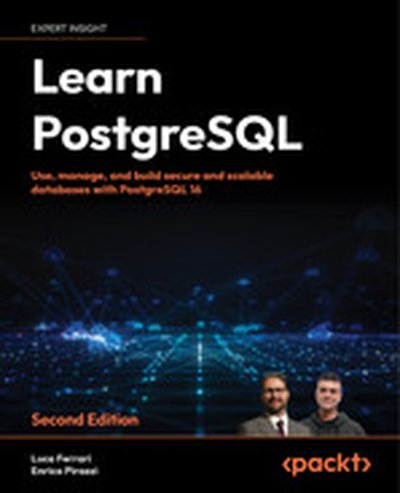
Learn PostgreSQL - Second Edition

Learn PostgreSQL, a comprehensive guide to mastering PostgreSQL 16, takes readers on a journey from the fundamentals to advanced concepts, such as replication and database optimization. With hands-on exercises and practical examples, this book provides all you need to confidently use, manage, and build secure and scalable databases. What this Book will help me do Master the essentials of PostgreSQL 16, including advanced SQL features and performance tuning. Understand database replication methods and manage a scalable architecture. Enhance database security through roles, schemas, and strict privilege management. Learn how to personalize your experience with custom extensions and functions. Acquire practical skills in backup, restoration, and disaster recovery planning. Author(s) Luca Ferrari and Enrico Pirozzi are experienced database engineers and PostgreSQL enthusiasts with years of experience using and teaching PostgreSQL technology. They specialize in creating learning content that is practical and focused on real-world situations. Their writing emphasizes clarity and systematically equips readers with professional skills. Who is it for? This book is perfect for database professionals, software developers, and system administrators looking to develop their PostgreSQL expertise. Beginners with an interest in databases will also find this book highly approachable. Ideal for readers seeking to improve their database scalability and robustness. If you aim to hone practical PostgreSQL skills, this guide is essential.

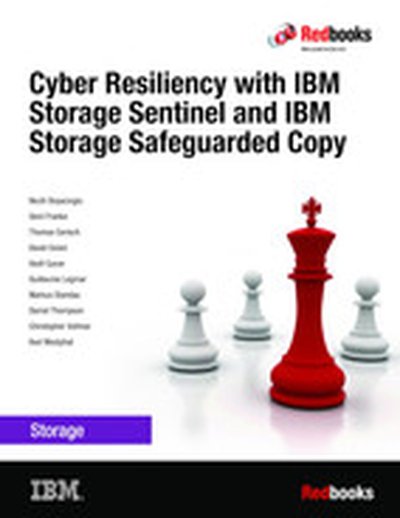
Cyber Resiliency with IBM Storage Sentinel and IBM Storage Safeguarded Copy

IBM Storage Sentinel is a cyber resiliency solution for SAP HANA, Oracle, and Epic healthcare systems, designed to help organizations enhance ransomware detection and incident recovery. IBM Storage Sentinel automates the creation of immutable backup copies of your data, then uses machine learning to detect signs of possible corruption and generate forensic reports that help you quickly diagnose and identify the source of the attack. Because IBM Storage Sentinel can intelligently isolate infected backups, your organization can identify the most recent verified and validated backup copies, greatly accelerating your time to recovery. This IBM Redbooks publication explains how to implement a cyber resiliency solution for SAP HANA, Oracle, and Epic healthcare systems using IBM Storage Sentinel and IBM Storage Safeguarded Copy. Target audience of this document is cyber security and storage specialists.

IBM Storage Virtualize, IBM Storage FlashSystem, and IBM SAN Volume Controller Security Feature Checklist - For IBM Storage Virtualize 8.5.3

IBM® Storage Virtualize based storage systems are secure storage platforms that implement various security-related features, in terms of system-level access controls and data-level security features. This document outlines the available security features and options of IBM Storage Virtualize based storage systems. It is not intended as a "how to" or best practice document. Instead, it is a checklist of features that can be reviewed by a user security team to aid in the definition of a policy to be followed when implementing IBM FlashSystem®, IBM SAN Volume Controller, and IBM Storage Virtualize for Public Cloud. IBM Storage Virtualize features the following levels of security to protect against threats and to keep the attack surface as small as possible: The first line of defense is to offer strict verification features that stop unauthorized users from using login interfaces and gaining access to the system and its configuration. The second line of defense is to offer least privilege features that restrict the environment and limit any effect if a malicious actor does access the system configuration. The third line of defense is to run in a minimal, locked down, mode to prevent damage spreading to the kernel and rest of the operating system. The fourth line of defense is to protect the data at rest that is stored on the system from theft, loss, or corruption (malicious or accidental). The topics that are discussed in this paper can be broadly split into two categories: System security: This type of security encompasses the first three lines of defense that prevent unauthorized access to the system, protect the logical configuration of the storage system, and restrict what actions users can perform. It also ensures visibility and reporting of system level events that can be used by a Security Information and Event Management (SIEM) solution, such as IBM QRadar®. Data security: This type of security encompasses the fourth line of defense. It protects the data that is stored on the system against theft, loss, or attack. These data security features include Encryption of Data At Rest (EDAR) or IBM Safeguarded Copy (SGC). This document is correct as of IBM Storage Virtualize 8.5.3.

Amazon Redshift: The Definitive Guide

Amazon Redshift powers analytic cloud data warehouses worldwide, from startups to some of the largest enterprise data warehouses available today. This practical guide thoroughly examines this managed service and demonstrates how you can use it to extract value from your data immediately, rather than go through the heavy lifting required to run a typical data warehouse. Analytic specialists Rajesh Francis, Rajiv Gupta, and Milind Oke detail Amazon Redshift's underlying mechanisms and options to help you explore out-of-the box automation. Whether you're a data engineer who wants to learn the art of the possible or a DBA looking to take advantage of machine learning-based auto-tuning, this book helps you get the most value from Amazon Redshift. By understanding Amazon Redshift features, you'll achieve excellent analytic performance at the best price, with the least effort. This book helps you: Build a cloud data strategy around Amazon Redshift as foundational data warehouse Get started with Amazon Redshift with simple-to-use data models and design best practices Understand how and when to use Redshift Serverless and Redshift provisioned clusters Take advantage of auto-tuning options inherent in Amazon Redshift and understand manual tuning options Transform your data platform for predictive analytics using Redshift ML and break silos using data sharing Learn best practices for security, monitoring, resilience, and disaster recovery Leverage Amazon Redshift integration with other AWS services to unlock additional value

Practical Implementation of a Data Lake: Translating Customer Expectations into Tangible Technical Goals

This book explains how to implement a data lake strategy, covering the technical and business challenges architects commonly face. It also illustrates how and why client requirements should drive architectural decisions. Drawing upon a specific case from his own experience, author Nayanjyoti Paul begins with the consideration from which all subsequent decisions should flow: what does your customer need? He also describes the importance of identifying key stakeholders and the key points to focus on when starting a new project. Next, he takes you through the business and technical requirement-gathering process, and how to translate customer expectations into tangible technical goals. From there, you’ll gain insight into the security model that will allow you to establish security and legal guardrails, as well as different aspects of security from the end user’s perspective. You’ll learn which organizational roles need to be onboarded into the data lake, their responsibilities, the services they need access to, and how the hierarchy of escalations should work. Subsequent chapters explore how to divide your data lakes into zones, organize data for security and access, manage data sensitivity, and techniques used for data obfuscation. Audit and logging capabilities in the data lake are also covered before a deep dive into designing data lakes to handle multiple kinds and file formats and access patterns. The book concludes by focusing on production operationalization and solutions to implement a production setup. After completing this book, you will understand how to implement a data lake, the best practices to employ while doing so, and will be armed with practical tips to solve business problems. What You Will Learn Understand the challenges associated with implementing a data lake Explore the architectural patterns and processes used to design a new data lake Design and implement data lake capabilities Associate business requirements with technical deliverables to drive success Who This Book Is For Data Scientists and Architects, Machine Learning Engineers, and Software Engineers.