talk-data.com talk-data.com

Topic

Cyber Security

cybersecurity information_security data_security privacy

2078

tagged

Activity Trend

297 peak/qtr
2020-Q1 2026-Q1

Activities

2078 activities · Newest first

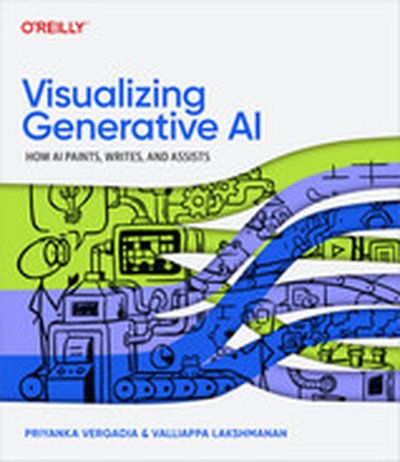
Visualizing Generative AI

Generative AI has the potential to innovate and evolve business processes, but workers are still figuring out how to build with, optimize, and prompt GenAI tools to fit their needs. And of course, there are pitfalls to avoid, like security risks and hallucinations. Getting it right requires an intuitive understanding of the technology’s capabilities and limitations. This approachable guidebook helps learners of all levels navigate GenAI—and have fun while doing it. Loaded with insightful diagrams and illustrations, Visualizing Generative AI is the perfect entry point for curious IT professionals, business leaders who want to stay on top of the latest technologies, students exploring careers in cloud computing and AI, and anyone else interested in getting started with GenAI. You’ll traverse the generative AI landscape, exploring everything from how this technology works to the ways organizations are already leveraging it to great success. Understand how generative AI has evolved, with a focus on major breakthroughs Get acquainted with the available tools and platforms for GenAI workloads Examine real-world applications, such as chatbots and workflow automation Learn fundamentals that you can build upon as you continue your GenAI journey
This is the introductory course for dbt Architects. Learn foundational concepts covered in the dbt Architect exam including setting up dbt projects according to best practices, manage dbt connections and environments, and leverage dbt features to enhance security, observability and cross-department collaborations After this course, you will be able to: Explain how dbt integrates with data platforms and git providers Configure environments for different git promotion strategies Manage a multi-project account in dbt. Prerequisites for this course include: dbt fundamentals What to Bring: You will need to bring your own laptop to complete the hands-on exercises. We will provide all the other sandbox environments for dbt and data platform. Duration: 4 hours Fee: $400 Trainings and certifications are not offered separately and must be purchased with a Coalesce pass Trainings and certifications are not available for Coalesce Online passes

See how Snyk, the leader in secure AI software development, evolved an internal AI tool into Snyk Assist, a secure, customer-facing assistant powered by Snowflake.

This session will dive into the architecture and design patterns, showing how Snowflake enables scalable data ingestion and powers retrieval through the Cortex Search service. Expect a joint demo that highlights real-world integration between Snyk and Snowflake and learn about the key considerations when building customer-facing AI products.

Key takeaways:

•From Idea to Impact: How an internal-facing tool became a customer product with Snowflake as the data foundation. •Security by Design: Why embedding guardrails into AI workflows is critical, and how Snowflake makes it repeatable. •Hands-On Demo: Watch Snyk + Snowflake in action, collecting, preparing, and serving data to power an AI assistant.

Financial services organisations have access to more data than ever before, but many struggle with getting to the right data for advanced analytics and evermore complex outputs. This session will explore how organizations should approach strengthening their data foundation by modernising legacy architectures and prioritizing an end-to-end enterprise data strategy for better data access, governance, and collaboration in mind. We'll show how organizations can scale with migrations, access external data with security and ease, and tap into unstructured data with Snowflake Openflow.

In this talk, we present our Proof of Concept (PoC) for Cortex Analyst on Snowflake, enabling interactive queries on complex geospatial data enriched with sociodemographic, market, and infrastructure information. An AI-powered text-to-SQL interface translates natural language queries into SQL in real time, with results shown in tables and visualizations. All of this leverages Snowflake’s built-in security and governance features.

Rethink how you build open, connected, and governed data lakehouses: integrate any Iceberg REST compatible catalog to Snowflake to securely read from and write to any Iceberg table with Catalog Linked Databases. Unlock insights and AI from semi-structured data with support for VARIANT data types. And enjoy enterprise-grade security with Snowflake's managed service for Apache Polaris™, Snowflake Open Catalog.

Send us a text Replay Episode: Python, Anaconda, and the AI Frontier with Peter Wang Peter Wang — Chief AI & Innovation Officer and Co-founder of Anaconda — is back on Making Data Simple! Known for shaping the open-source ecosystem and making Python a powerhouse, Peter dives into Anaconda’s new AI incubator, the future of GenAI, and why Python isn’t just “still a thing”… it’s the thing. From branding and security to leadership and philosophy, this episode is a wild ride through the biggest opportunities (and risks) shaping AI today. Timestamps:  01:27 Meet Peter Wang 05:10 Python or R? 05:51 Anaconda’s Differentiation 07:08 Why the Name Anaconda 08:24 The AI Incubator 11:40 GenAI 14:39 Enter Python 16:08 Anaconda Commercial Services 18:40 Security 20:57 Common Points of Failure 22:53 Branding 24:50 watsonx Partnership 28:40 AI Risks 34:13 Getting Philosophical 36:13 China 44:52 Leadership Style

Linkedin: linkedin.com/in/pzwang Website: https://www.linkedin.com/company/anacondainc/, https://www.anaconda.com/ Want to be featured as a guest on Making Data Simple? Reach out to us at [email protected] and tell us why you should be next. The Making Data Simple Podcast is hosted by Al Martin, WW VP Technical Sales, IBM, where we explore trending technologies, business innovation, and leadership ... while keeping it simple & fun.

Navigating the security compliance maze of an ML service

While everyone is talking about the m(e/a)ss of bureaucracy, we want to show you hands-on what you could need to be doing to operate an ML service. We will give an overview of things like ISO-27001 certifications, Cyber Resilience Act or AIBOMs. We want to highlight their impact/intention and give advice on how integrate them into your development workflow.

This talk is written from a practiconer's perspective and will help you set up your project to make your compliance department happy. It isn't meant as a deep-dive into the individual standards.

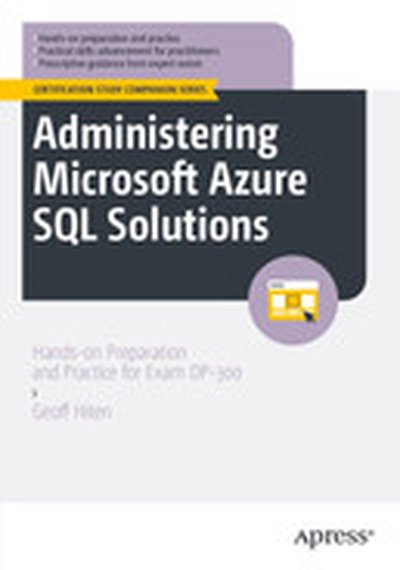
Administering Microsoft Azure SQL Solutions: Hands-on Preparation and Practice for Exam DP-300

Ace the DP-300 Exam with this essential study companion, chock-full of insights and tips you cannot find online. This book will help you build a comprehensive understanding of Azure SQL systems and their role in supporting business solutions, and it will equip you with the mental models and technical knowledge needed to confidently answer exam questions. Structured to align with Microsoft’s published study guide, the book spans five major sections that correspond to the skills measured by the exam, covering topics vital to modern cloud operations and including HA/DR, security, compliance, performance, and scalability. [if !supportAnnotations]You’ll also learn about the ways cloud operations have changed the focus of operating database systems from task execution to platform configuration—and how to configure your data platforms to meet this new reality. [if !supportAnnotations] By the end of this book, you’ll be prepared to navigate exam scenarios with finesse, pass the exam with confidence, and advance in your career with a solid foundation of knowledge. What You Will Learn Maximize your ability to benefit from the online learning tools for Exam DP-300 Gain depth and context for Azure SQL technical solutions relevant to Exam DP-300 Boost your confidence in Azure SQL Database skills Extend your on-premises SQL Server skill set into the Azure SQL cloud Enhance your overall understanding of Azure SQL administration and operations Develop your Azure SQL skill set to increase your value as an employee or contractor Adopt a new mindset for cloud-based solutions versus on-premises solutions Who This Book Is For Anyone planning to take the DP-300: Administering Microsoft Azure SQL Solutions exam, and those who wish to understand Azure SQL and how to successfully migrate and manage SQL solutions using all Azure SQL Technologies

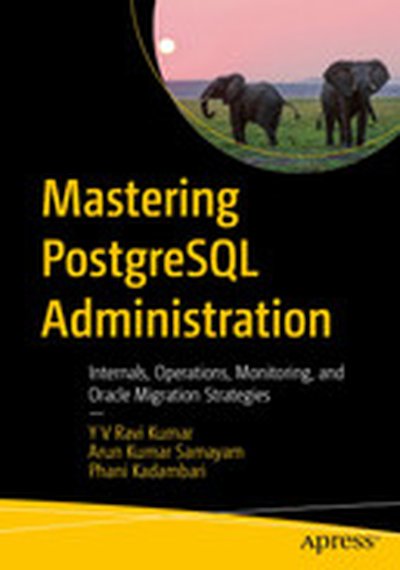
Mastering PostgreSQL Administration: Internals, Operations, Monitoring, and Oracle Migration Strategies

This book is your one-stop resource on PostgreSQL system architecture, installation, management, maintenance, and migration. It will help you address the critical needs driving successful database management today: reliability and availability, performance and scalability, security and compliance, cost-effectiveness and flexibility, disaster recovery, and real-time analytics—all in one volume. Each topic in the book is thoroughly explained by industry experts and includes step-by-step instructions for configuring the features, a discussion of common issues and their solutions, and an exploration of real-world scenarios and case studies that illustrate how concepts work in practice. You won't find the book's comprehensive coverage of advanced topics, including migration from Oracle to PostgreSQL, heterogeneous replication, and backup & recovery, in one place—online or anywhere else. What You Will Learn Install PostgreSQL using source code and yum installation Back up and recover Migrate from Oracle database to PostgreSQL using ora2pg utility Replicate from PostgreSQL to Oracle database and vice versa using Oracle GoldenGate Monitor using Grafana, PGAdmin, and command line tools Maintain with VACUUM, REINDEX, etc. Who This Book Is For Intermediate and advanced PostgreSQL users, including PostgreSQL administrators, architects, developers, analysts, disaster recovery system engineers, high availability engineers, and migration engineers

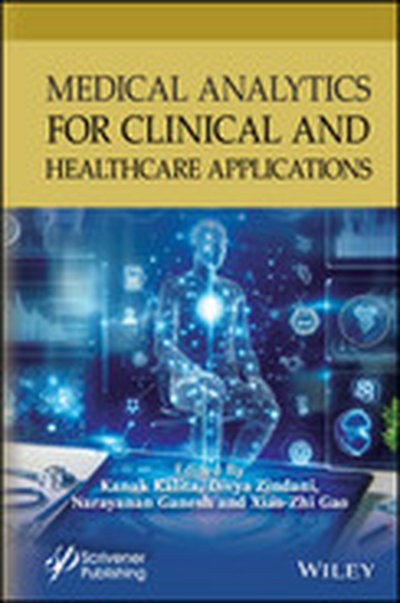
Medical Analytics for Clinical and Healthcare Applications

The book is essential for anyone exploring the forefront of healthcare innovation, as it offers a thorough exploration of transformative data-driven methodologies that can significantly enhance patient outcomes and clinical efficiency in today’s evolving medical landscape. In today’s rapidly advancing healthcare landscape, the integration of medical analytics has become essential for improving patient outcomes, clinical efficiency, and decision-making. Medical Analytics for Clinical and Healthcare Applications provides a comprehensive examination of how data-driven methodologies are revolutionizing the medical field. This book offers a deep dive into innovative techniques, real-world applications, and emerging trends in medical analytics, showcasing how these advancements are transforming disease detection, diagnosis, treatment planning, and healthcare management. Spanning sixteen chapters across five subsections, this edited volume covers a wide array of topics—from foundational principles of medical data analysis to cutting-edge applications in predictive healthcare and medical data security. Readers will encounter state-of-the-art methodologies, including machine learning models, predictive analytics, and deep learning techniques applied to various healthcare challenges such as mental health disorders, cancer detection, and hospital mortality predictions. Medical Analytics for Clinical and Healthcare Applications equips readers with the knowledge to harness the power of medical analytics and its potential to shape the future of healthcare. Through its interdisciplinary approach and expert insights, this volume is poised to serve as a valuable resource for advancing healthcare technologies and improving the overall quality of care. Readers will find the volume: Explores the latest medical analytics techniques applied across clinical settings, from diagnosis to treatment optimization; Features real-world case studies and tools for implementing data-driven solutions in healthcare; Bridges the gap between healthcare professionals, data scientists, and engineers for collaborative innovation in medical technologies; Provides foresight into emerging trends and technologies shaping the future of healthcare analytics. Audience Healthcare professionals, clinical researchers, medical data scientists, biomedical engineers, IT professionals, academics, and policymakers focused on the intersection of medicine and data analytics.

This talk presents an end-to-end solution for detecting unattended objects in public transport hubs to enhance social security. The project, developed in a three-week challenge, focuses on proactively identifying unattended items using existing camera infrastructure. We will cover the entire pipeline, from data anonymization and preprocessing to building a data labeling platform, object detection with YOLO, and tracking objects over time. The presentation will also discuss the evaluation of the system.

Model Context Protocol: Principles and Practice

Large‑language‑model agents are only as useful as the context and tools they can reach.

Anthropic’s Model Context Protocol (MCP) proposes a universal, bidirectional interface that turns every external system—SQL databases, Slack, Git, web browsers, even your local file‑system—into first‑class “context providers.”

In just 30 minutes we’ll step from high‑level buzzwords to hands‑on engineering details:

  • How MCP’s JSON‑RPC message format, streaming channels, and version‑negotiation work under the hood.
  • Why per‑tool sandboxing via isolated client processes hardens security (and what happens when an LLM tries rm ‑rf /).
  • Techniques for hierarchical context retrieval that stretch a model’s effective window beyond token limits.
  • Real‑world patterns for accessing multiple tools—Postgres, Slack, GitHub—and plugging MCP into GenAI applications.

Expect code snippets and lessons from early adoption.

You’ll leave ready to wire your own services into any MCP‑aware model and level‑up your GenAI applications—without the N×M integration nightmare.

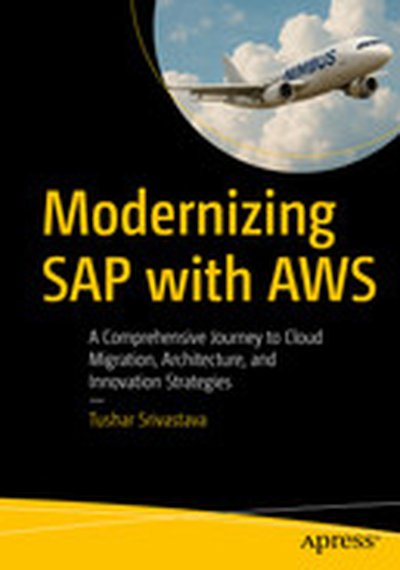
Modernizing SAP with AWS: A Comprehensive Journey to Cloud Migration, Architecture, and Innovation Strategies

Follow the cloud journey of a fictional company Nimbus Airlines and the process it goes through to modernize its SAP systems. This book provides a detailed guide for those looking to transition their SAP systems to the cloud using Amazon Web Services (AWS). Through the lens of various characters, the book is structured in three parts — starting with an introduction to SAP and AWS fundamentals, followed by technical architecture insights, and concluding with migration strategies and case studies, the book covers technical aspects of modernizing SAP with AWS. You’ll review the partnership between SAP and AWS, highlighted by their long-standing collaboration and shared innovations. Then design an AWS architecture tailored for SAP workloads, including high availability, disaster recovery, and operations automation. The book concludes with a tour of the migration process, offering various strategies, tools, and frameworks reinforced with real-world customer case studies that showcase successful SAP migrations to AWS. Modernizing SAP with AWS equips business leaders and technical architects with the knowledge to leverage AWS for their SAP systems, ensuring a smooth transition and unlocking new opportunities for innovation. What You Will Learn Understand the fundamentals of AWS and its key components, including computing, storage, networking, and microservices, for SAP systems. Explore the technical partnership between SAP and AWS, learning how their collaboration drives innovation and delivers business value. Design an optimized AWS architecture for SAP workloads, focusing on high availability, disaster recovery, and operations automation. Discover innovative ways to enhance and extend SAP functionality using AWS tools for better system performance and automation. Who This Book Is For SAP professionals and consultants interested in learning how AWS can enhance SAP performance, security, and automation. Cloud engineers and developers involved in SAP migration projects, looking for best practices and real-world case studies for successful implementation. Enterprise architects seeking to design optimized, scalable, and secure SAP infrastructure on AWS. CIOs, CTOs, and IT managers aiming to modernize SAP systems and unlock innovation through cloud technology.

It’s no secret that AI is reliant on ‘rock solid’ data. However given the vast amounts of data that companies now have spread across a distributed SaaS, on-premises and multi-cloud data estate, many companies they are a million miles away from this. We are also well past the point where people can govern data on their own. They need help and a total rethink is now needed to conquer data complexity and create a high quality, compliant data foundation for AI Success.


In this watershed keynote, conference char Mike Ferguson details what needs to be done to govern data in the era of AI, how companies can conquer the complexity they face, by implementing an always on, active and unified approach to data governance to continuously detect, automate and consistently enforce multiple types of policies across a distributed data estate. The session will cover:

• Current problems with data governance today and why old approaches are broken

• Requirements to dramatically improve data governance using AI and AI automation

• The need for an integrated and unified data governance platform

• Why a data catalog, data intelligence, data observability, AI Agents and orchestration all need to be integrated for AI-Assisted active data governance

• Understanding the AI-assisted data governance services and AI-Agents you need

• Establishing health metrics to measure effectiveness of your data governance program

• Creating a Data Governance Action Framework for your enterprise

• Monitoring the health and security of your data using data governance observability

• Enabling continuous reporting and AI-Assisted data governance action automation

• Implementing data governance AI Agents for different data governance disciplines

Today’s shifting security dynamics call for data-driven insights that pre-empt dangers and guide swift, informed choices.

In this joint session led by commercial and public defence experts, we’ll unpack how cutting-edge AI solutions and flexible data platforms illuminate operations across land, sea, air, and cyber.

Join us to hear how these methods can be applied in any fast-paced setting to amplify adaptability, strengthen safeguards, and outpace new challenges.

Powered by: Women in Data®