Today, we’re joined by Chris McHenry, Chief Product Officer at Aviatrix, a cloud native network security company. We talk about: Prerequisites to driving operational efficiency with agentic AIBridging the gap between security & engineering so organizations can go fast & be secure What’s required in order for agentic AI to create a magical momentWith cloud powering so much of our society, the need to get security right The security challenges introduced by agentic AI apps, including new attack vectors
 talk-data.com
Topic
Cyber Security
cybersecurity
information_security
data_security
privacy
2078
tagged
Activity Trend
297
peak/qtr
2020-Q1
2026-Q1
Top Events
O'Reilly Data Engineering Books
615
Google Cloud Next '25
246
Microsoft Ignite 2025
216
Google Cloud Next '24
170
O'Reilly Data Science Books
92
Data + AI Summit 2025
85
AWS re:Invent 2024
66
Data Engineering Podcast
57
Databricks DATA + AI Summit 2023
48
SaaS Scaled - Interviews about SaaS Startups, Analytics, & Operations
38
DataFramed
27
O'Reilly SQL Books
22
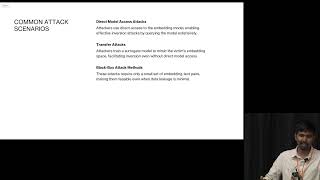
Modern LLM applications rely heavily on embeddings and vector databases for retrieval-augmented generation (RAG). But in 2025, researchers and OWASP flagged vector databases as a new attack surface — from embedding inversion (recovering sensitive training text) to poisoned vectors that hijack prompts. This talk demystifies these threats for practitioners and shows how to secure your RAG pipeline with real-world techniques like encrypted stores, anomaly detection, and retrieval validation. Attendees will leave with a practical security checklist for keeping embeddings safe while still unlocking the power of retrieval.
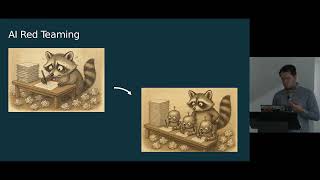
As generative AI systems become more powerful and widely deployed, ensuring safety and security is critical. This talk introduces AI red teaming—systematically probing AI systems to uncover potential risks—and demonstrates how to get started using PyRIT (Python Risk Identification Toolkit), an open-source framework for automated and semi-automated red teaming of generative AI systems. Attendees will leave with a practical understanding of how to identify and mitigate risks in AI applications, and how PyRIT can help along the way.
In this episode, Conor and Bryce record live from NDC TechTown in Norway! We interview Vittorio Romeo and JF Bastien about C++, training, their talks and more! Link to Episode 259 on WebsiteDiscuss this episode, leave a comment, or ask a question (on GitHub)Socials ADSP: The Podcast: TwitterConor Hoekstra: Twitter | BlueSky | MastodonBryce Adelstein Lelbach: TwitterAbout the Guests: Vittorio is a passionate C++ expert with over a decade of professional and personal experience. His expertise covers library development, high-performance financial backends, game development, open-source contributions, and active participation in ISO C++ standardization. He is the coauthor of "Embracing Modern C++ Safely" and is a speaker at over 25 international conferences. JF Bastien has worked on hardware, compilers, security, performance, web browsers, and airplanes. As chair of the C++ language evolution working group and co-designer of WebAssembly, his contributions have helped shape modern software development. Show Notes Date Recorded: 2025-09-24 Date Released: 2025-11-07 camomilla by Vittorio Romeoromeo.trainingRoku rostdASDP Episode 136: 🇬🇧 C++ On Sea Live 🇬🇧 CppCast, TLB HIT & Two's Complement!TLB.hitJAXOpenXLA[LATTE '22] Chris Leary: X-istentialism: Supercomputers, Silicon Atoms, and the Science Between!Guest Lecture - XLS (Chris Leary)Project DenverIntel pays NVIDIA $1.5BNDC TechTown JF Talk(char)0 = 0; - What Does the C++ Programmer Intend With This Code? - JF Bastien - C++ on Sea 2023Keynote: Safety and Security: The Future of C++ - JF Bastien - CppNow 2023All the Safeties: Safety in C++ - Sean Parent - CppNow 2023NDC TechTown Vittorio Romeo TalkMore Speed & Simplicity: Practical Data-Oriented Design in C++ - Vittorio Romeo - CppCon 2025CppCon 2014: Mike Acton "Data-Oriented Design and C++"Intro Song Info Miss You by Sarah Jansen https://soundcloud.com/sarahjansenmusic Creative Commons — Attribution 3.0 Unported — CC BY 3.0 Free Download / Stream: http://bit.ly/l-miss-you Music promoted by Audio Library https://youtu.be/iYYxnasvfx8
Configuring authentication and authorization for an OpenSearch cluster is often named as one of the bigger challenges in setup. However, by keeping a few key points in mind, you can avoid many issues and make the configuration process less stressful. We will walk through the important aspects.
Arno will explore the evolution of search technology in the age of AI. From large language models and “LLM Wars” to enterprise-scale challenges in observability and security, he’ll share practical insights on how Elastic customers are experimenting with AI, what works today, and why the answer often depends on context.
Managing dbt for 150 analytics engineers meant evolving from fragmented dbt Core projects to unified standards, migrating to dbt Cloud. We solved security risks and inconsistent practices through standardization and centralized workflows, while maintaining our Airflow orchestration. Challenges remain in balancing governance with analyst autonomy at scale.
In this episode of Data Skeptic's Recommender Systems series, Kyle sits down with Aditya Chichani, a senior machine learning engineer at Walmart, to explore the darker side of recommendation algorithms. The conversation centers on shilling attacks—a form of manipulation where malicious actors create multiple fake profiles to game recommender systems, either to promote specific items or sabotage competitors. Aditya, who researched these attacks during his undergraduate studies at SPIT before completing his master's in computer science with a data science specialization at UC Berkeley, explains how these vulnerabilities emerge particularly in collaborative filtering systems. From promoting a friend's ska band on Spotify to inflating product ratings on e-commerce platforms, shilling attacks represent a significant threat in an industry where approximately 4% of reviews are fake, translating to $800 billion in annual sales in the US alone. The discussion delves deep into collaborative filtering, explaining both user-user and item-item approaches that create similarity matrices to predict user preferences. However, these systems face various shilling attacks of increasing sophistication: random attacks use minimal information with average ratings, while segmented attacks strategically target popular items (like Taylor Swift albums) to build credibility before promoting target items. Bandwagon attacks focus on highly popular items to connect with genuine users, and average attacks leverage item rating knowledge to appear authentic. User-user collaborative filtering proves particularly vulnerable, requiring as few as 500 fake profiles to impact recommendations, while item-item filtering demands significantly more resources. Aditya addresses detection through machine learning techniques that analyze behavioral patterns using methods like PCA to identify profiles with unusually high correlation and suspicious rating consistency. However, this remains an evolving challenge as attackers adapt strategies, now using large language models to generate more authentic-seeming fake reviews. His research with the MovieLens dataset tested detection algorithms against synthetic attacks, highlighting how these concerns extend to modern e-commerce systems. While companies rarely share attack and detection data publicly to avoid giving attackers advantages, academic research continues advancing both offensive and defensive strategies in recommender systems security.

This book is a comprehensive guide for anyone in the aeronautical and aerospace fields who wants to understand and leverage the transformative power of artificial intelligence to enhance safety, optimize performance, and drive innovation. The field of aeronautical and aerospace engineering is on the brink of a transformative revolution driven by rapid advancements in artificial intelligence (AI). This book analyzes AI’s multifaceted impact on the industry, exploring AI’s potential to address complex challenges, optimize processes, and push technological boundaries with a focus on enhancing safety, security, innovation, and performance. By blending technical insights with practical applications, it provides readers with a roadmap for harnessing AI to solve complex challenges and improve efficiency in aeronautics. Ideal for those seeking a deeper understanding of AI’s role in aeronautical and aerospace engineering, this book offers real-world applications, case studies, and expert insights, making it a valuable resource for anyone aiming to stay at the forefront of this rapidly evolving field. Readers will find this book: Examines AI’s transformative role in aerospace and aeronautics, from enhancing safety to driving innovation and optimizing performance; Highlights real-time applications, addressing AI’s role in boosting operational efficiency and safety in the aerospace and aeronautical industries; Offers insights into emerging AI technologies shaping the future of aerospace and aeronautical systems; Features real-world case studies on AI applications in autonomous navigation, predictive maintenance of aircraft, and air traffic management. Audience Aeronautical and aerospace engineers, AI researchers, students, and industry professionals seeking to understand and apply AI solutions in areas like safety, security, and performance optimization.
The promise of AI in enterprise settings is enormous, but so are the privacy and security challenges. How do you harness AI's capabilities while keeping sensitive data protected within your organization's boundaries? Private AI—using your own models, data, and infrastructure—offers a solution, but implementation isn't straightforward. What governance frameworks need to be in place? How do you evaluate non-deterministic AI systems? When should you build in-house versus leveraging cloud services? As data and software teams evolve in this new landscape, understanding the technical requirements and workflow changes is essential for organizations looking to maintain control over their AI destiny. Manasi Vartak is Chief AI Architect and VP of Product Management (AI Platform) at Cloudera. She is a product and AI leader with more than a decade of experience at the intersection of AI infrastructure, enterprise software, and go-to-market strategy. At Cloudera, she leads product and engineering teams building low-code and high-code generative AI platforms, driving the company’s enterprise AI strategy and enabling trusted AI adoption across global organizations. Before joining Cloudera through its acquisition of Verta, Manasi was the founder and CEO of Verta, where she transformed her MIT research into enterprise-ready ML infrastructure. She scaled the company to multi-million ARR, serving Fortune 500 clients in finance, insurance, and capital markets, and led the launch of enterprise MLOps and GenAI products used in mission-critical workloads. Manasi earned her PhD in Computer Science from MIT, where she pioneered model management systems such as ModelDB — foundational work that influenced the development of tools like MLflow. Earlier in her career, she held research and engineering roles at Twitter, Facebook, Google, and Microsoft. In the episode, Richie and Manasi explore AI's role in financial services, the challenges of AI adoption in enterprises, the importance of data governance, the evolving skills needed for AI development, the future of AI agents, and much more. Links Mentioned in the Show: ClouderaCloudera Evolve ConferenceCloudera Agent StudioConnect with ManasiCourse: Introduction to AI AgentsRelated Episode: RAG 2.0 and The New Era of RAG Agents with Douwe Kiela, CEO at Contextual AI & Adjunct Professor at Stanford UniversityRewatch RADAR AI New to DataCamp? Learn on the go using the DataCamp mobile appEmpower your business with world-class data and AI skills with DataCamp for business
Summary In this episode of the Data Engineering Podcast Matt Topper, president of UberEther, talks about the complex challenge of identity, credentials, and access control in modern data platforms. With the shift to composable ecosystems, integration burdens have exploded, fracturing governance and auditability across warehouses, lakes, files, vector stores, and streaming systems. Matt shares practical solutions, including propagating user identity via JWTs, externalizing policy with engines like OPA/Rego and Cedar, and using database proxies for native row/column security. He also explores catalog-driven governance, lineage-based label propagation, and OpenTDF for binding policies to data objects. The conversation covers machine-to-machine access, short-lived credentials, workload identity, and constraining access by interface choke points, as well as lessons from Zanzibar-style policy models and the human side of enforcement. Matt emphasizes the need for trust composition - unifying provenance, policy, and identity context - to answer questions about data access, usage, and intent across the entire data path.
Announcements Hello and welcome to the Data Engineering Podcast, the show about modern data managementData teams everywhere face the same problem: they're forcing ML models, streaming data, and real-time processing through orchestration tools built for simple ETL. The result? Inflexible infrastructure that can't adapt to different workloads. That's why Cash App and Cisco rely on Prefect. Cash App's fraud detection team got what they needed - flexible compute options, isolated environments for custom packages, and seamless data exchange between workflows. Each model runs on the right infrastructure, whether that's high-memory machines or distributed compute. Orchestration is the foundation that determines whether your data team ships or struggles. ETL, ML model training, AI Engineering, Streaming - Prefect runs it all from ingestion to activation in one platform. Whoop and 1Password also trust Prefect for their data operations. If these industry leaders use Prefect for critical workflows, see what it can do for you at dataengineeringpodcast.com/prefect.Data migrations are brutal. They drag on for months—sometimes years—burning through resources and crushing team morale. Datafold's AI-powered Migration Agent changes all that. Their unique combination of AI code translation and automated data validation has helped companies complete migrations up to 10 times faster than manual approaches. And they're so confident in their solution, they'll actually guarantee your timeline in writing. Ready to turn your year-long migration into weeks? Visit dataengineeringpodcast.com/datafold today for the details.Composable data infrastructure is great, until you spend all of your time gluing it together. Bruin is an open source framework, driven from the command line, that makes integration a breeze. Write Python and SQL to handle the business logic, and let Bruin handle the heavy lifting of data movement, lineage tracking, data quality monitoring, and governance enforcement. Bruin allows you to build end-to-end data workflows using AI, has connectors for hundreds of platforms, and helps data teams deliver faster. Teams that use Bruin need less engineering effort to process data and benefit from a fully integrated data platform. Go to dataengineeringpodcast.com/bruin today to get started. And for dbt Cloud customers, they'll give you $1,000 credit to migrate to Bruin Cloud.Your host is Tobias Macey and today I'm interviewing Matt Topper about the challenges of managing identity and access controls in the context of data systemsInterview IntroductionHow did you get involved in the area of data management?The data ecosystem is a uniquely challenging space for creating and enforcing technical controls for identity and access control. What are the key considerations for designing a strategy for addressing those challenges?For data acess the off-the-shelf options are typically on either extreme of too coarse or too granular in their capabilities. What do you see as the major factors that contribute to that situation?Data governance policies are often used as the primary means of identifying what data can be accesssed by whom, but translating that into enforceable constraints is often left as a secondary exercise. How can we as an industry make that a more manageable and sustainable practice?How can the audit trails that are generated by data systems be used to inform the technical controls for identity and access?How can the foundational technologies of our data platforms be improved to make identity and authz a more composable primitive?How does the introduction of streaming/real-time data ingest and delivery complicate the challenges of security controls?What are the most interesting, innovative, or unexpected ways that you have seen data teams address ICAM?What are the most interesting, unexpected, or challenging lessons that you have learned while working on ICAM?What are the aspects of ICAM in data systems that you are paying close attention to?What are your predictions for the industry adoption or enforcement of those controls?Contact Info LinkedInParting Question From your perspective, what is the biggest gap in the tooling or technology for data management today?Closing Announcements Thank you for listening! Don't forget to check out our other shows. Podcast.init covers the Python language, its community, and the innovative ways it is being used. The AI Engineering Podcast is your guide to the fast-moving world of building AI systems.Visit the site to subscribe to the show, sign up for the mailing list, and read the show notes.If you've learned something or tried out a project from the show then tell us about it! Email [email protected] with your story.Links UberEtherJWT == JSON Web TokenOPA == Open Policy AgentRegoPingIdentityOktaMicrosoft EntraSAML == Security Assertion Markup LanguageOAuthOIDC == OpenID ConnectIDP == Identity ProviderKubernetesIstioAmazon CEDAR policy languageAWS IAMPII == Personally Identifiable InformationCISO == Chief Information Security OfficerOpenTDFOpenFGAGoogle ZanzibarRisk Management FrameworkModel Context ProtocolGoogle Data ProjectTPM == Trusted Platform ModulePKI == Public Key InfrastructurePassskeysDuckLakePodcast EpisodeAccumuloJDBCOpenBaoHashicorp VaultLDAPThe intro and outro music is from The Hug by The Freak Fandango Orchestra / CC BY-SA
Summary In this episode Kate Shaw, Senior Product Manager for Data and SLIM at SnapLogic, talks about the hidden and compounding costs of maintaining legacy systems—and practical strategies for modernization. She unpacks how “legacy” is less about age and more about when a system becomes a risk: blocking innovation, consuming excess IT time, and creating opportunity costs. Kate explores technical debt, vendor lock-in, lost context from employee turnover, and the slippery notion of “if it ain’t broke,” especially when data correctness and lineage are unclear. Shee digs into governance, observability, and data quality as foundations for trustworthy analytics and AI, and why exit strategies for system retirement should be planned from day one. The discussion covers composable architectures to avoid monoliths and big-bang migrations, how to bridge valuable systems into AI initiatives without lock-in, and why clear success criteria matter for AI projects. Kate shares lessons from the field on discovery, documentation gaps, parallel run strategies, and using integration as the connective tissue to unlock data for modern, cloud-native and AI-enabled use cases. She closes with guidance on planning migrations, defining measurable outcomes, ensuring lineage and compliance, and building for swap-ability so teams can evolve systems incrementally instead of living with a “bowl of spaghetti.”
Announcements Hello and welcome to the Data Engineering Podcast, the show about modern data managementData teams everywhere face the same problem: they're forcing ML models, streaming data, and real-time processing through orchestration tools built for simple ETL. The result? Inflexible infrastructure that can't adapt to different workloads. That's why Cash App and Cisco rely on Prefect. Cash App's fraud detection team got what they needed - flexible compute options, isolated environments for custom packages, and seamless data exchange between workflows. Each model runs on the right infrastructure, whether that's high-memory machines or distributed compute. Orchestration is the foundation that determines whether your data team ships or struggles. ETL, ML model training, AI Engineering, Streaming - Prefect runs it all from ingestion to activation in one platform. Whoop and 1Password also trust Prefect for their data operations. If these industry leaders use Prefect for critical workflows, see what it can do for you at dataengineeringpodcast.com/prefect.Data migrations are brutal. They drag on for months—sometimes years—burning through resources and crushing team morale. Datafold's AI-powered Migration Agent changes all that. Their unique combination of AI code translation and automated data validation has helped companies complete migrations up to 10 times faster than manual approaches. And they're so confident in their solution, they'll actually guarantee your timeline in writing. Ready to turn your year-long migration into weeks? Visit dataengineeringpodcast.com/datafold today for the details.Your host is Tobias Macey and today I'm interviewing Kate Shaw about the true costs of maintaining legacy systemsInterview IntroductionHow did you get involved in the area of data management?What are your crtieria for when a given system or service transitions to being "legacy"?In order for any service to survive long enough to become "legacy" it must be serving its purpose and providing value. What are the common factors that prompt teams to deprecate or migrate systems?What are the sources of monetary cost related to maintaining legacy systems while they remain operational?Beyond monetary cost, economics also have a concept of "opportunity cost". What are some of the ways that manifests in data teams who are maintaining or migrating from legacy systems?How does that loss of productivity impact the broader organization?How does the process of migration contribute to issues around data accuracy, reliability, etc. as well as contributing to potential compromises of security and compliance?Once a system has been replaced, it needs to be retired. What are some of the costs associated with removing a system from service?What are the most interesting, innovative, or unexpected ways that you have seen teams address the costs of legacy systems and their retirement?What are the most interesting, unexpected, or challenging lessons that you have learned while working on legacy systems migration?When is deprecation/migration the wrong choice?How have evolutionary architecture patterns helped to mitigate the costs of system retirement?Contact Info LinkedInParting Question From your perspective, what is the biggest gap in the tooling or technology for data management today?Closing Announcements Thank you for listening! Don't forget to check out our other shows. Podcast.init covers the Python language, its community, and the innovative ways it is being used. The AI Engineering Podcast is your guide to the fast-moving world of building AI systems.Visit the site to subscribe to the show, sign up for the mailing list, and read the show notes.If you've learned something or tried out a project from the show then tell us about it! Email [email protected] with your story.Links SnapLogicSLIM == SnapLogic Intelligent ModernizerOpportunity CostSunk Cost FallacyData GovernanceEvolutionary ArchitectureThe intro and outro music is from The Hug by The Freak Fandango Orchestra / CC BY-SA
Microsoft 365 Copilot is already changing the way we work — turning apps like Word, Excel, and Teams into AI assistants. But here’s the challenge: if Copilot isn’t governed with the right guardrails, it can just as easily overshare sensitive data or create compliance headaches. This session looks at what it takes to keep Copilot both useful and secure. From identity and access policies, to data protection and collaboration settings, to decisions about public web access discover how to avoid common pitfalls and build lasting trust in your deployment. Key Takeaways: - Why Copilot needs governance to deliver safe productivity gains. - Practical steps to prepare and manage your Microsoft 365 environment with Copilot. - How to balance AI innovation with security, compliance, and trust.
How AI can help maintain compliance and resilience in cloud security on AWS.
Discussion on predicting security threats in AWS cloud environments using AI insights.
Send us a text We're joined by Douwe Kiela, CEO of Contextual.ai and pioneer in RAG research. From deploying AI agents at Fortune 500 companies to shedding light on data privacy and security, Douwe shares his expertise and insights on how to make data simple, effective, and secure. 00:46 Introducing Douwe Kiela 01:37 RAG - Here to Stay or Go? 06:59 LLMs with Context 08:20 Making AI Successful 10:34 Why Contextual AI? 17:18 LLM versus SLMs 20:28 Speed over Perfection 22:07 Hallucinations 26:02 Making AI Easy to Consume 28:50 Defining an Agent 32:53 Reaching Contextual AI 33:14 The Contrarian View 34:37 The Risks of AI 36:53 For Fun
LinkedIn: linkedin.com/in/douwekiela Website: https://contextual.ai/ Want to be featured as a guest on Making Data Simple? Reach out to us at [email protected] and tell us why you should be next. The Making Data Simple Podcast is hosted by Al Martin, WW VP Technical Sales, IBM, where we explore trending technologies, business innovation, and leadership ... while keeping it simple & fun. Want to be featured as a guest on Making Data Simple? Reach out to us at [email protected] and tell us why you should be next. The Making Data Simple Podcast is hosted by Al Martin, WW VP Technical Sales, IBM, where we explore trending technologies, business innovation, and leadership ... while keeping it simple & fun.
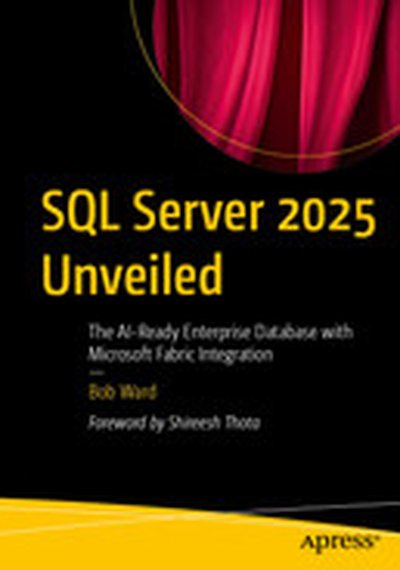
Unveil the data platform of the future with SQL Server 2025—guided by one of its key architects . With built-in AI for application development and advanced analytics powered by Microsoft Fabric, SQL Server 2025 empowers you to innovate—securely and confidently. This book shows you how. Author Bob Ward, Principal Architect for the Microsoft Azure Data team, shares exclusive insights drawn from over three decades at Microsoft. Having worked on every version of SQL Server since OS/2 1.1, Ward brings unmatched expertise and practical guidance to help you navigate this transformative release. Ward covers everything from setup and upgrades to advanced features in performance, high availability, and security. He also highlights what makes this the most developer-friendly release in a decade: support for JSON, RegEx, REST APIs, and event streaming. Most critically, Ward explores SQL Server 2025’s advanced, scalable AI integrations, showing you how to build AI-powered applications deeply integrated with the SQL engine—and elevate your analytics to the next level. But innovation doesn’t come at the cost of safety: this release is built on a foundation of enterprise-grade security, helping you adopt AI safely and responsibly. You control which models to use, how they interact with your data, and where they run—from ground to cloud, or integrated with Microsoft Fabric. With built-in features like Row-Level Security (RLS), Transparent Data Encryption (TDE), Dynamic Data Masking, and SQL Server Auditing, your data remains protected at every layer. The AI age is here. Make sure your SQL Server databases are ready—and built for secure, scalable innovation . What You Will Learn [if !supportLists] · [endif]Grasp the fundamentals of AI to leverage AI with your data, using the industry-proven security and scale of SQL Server [if !supportLists] · [endif]Utilize AI models of your choice, services, and frameworks to build new AI applications [if !supportLists] · [endif]Explore new developer features such as JSON, Regular Expressions, REST API, and Change Event Streaming [if !supportLists] · [endif]Discover SQL Server 2025's powerful new engine capabilities to increase application concurrency [if !supportLists] · [endif]Examine new high availability features to enhance uptime and diagnose complex HADR configurations [if !supportLists] · Use new query processing capabilities to extend the performance of your application [if !supportLists] · [endif]Connect SQL Server to Azure with Arc for advanced management and security capabilities [if !supportLists] · [endif]Secure and govern your data using Microsoft Entra [if !supportLists] · [endif]Achieve near-real-time analytics with the unified data platform Microsoft Fabric [if !supportLists] · [endif]Integrate AI capabilities with SQL Server for enterprise AI [if !supportLists] · [endif]Leverage new tools such as SQL Server Management Studio and Copilot experiences to assist your SQL Server journey Who This Book Is For The SQL Server community, including DBAs, architects, and developers eager to stay ahead with the latest advancements in SQL Server 2025, and those interested in the intersection of AI and data, particularly how artificial intelligence (AI) can be seamlessly integrated with SQL Server to unlock deeper insights and smarter solutions