talk-data.com talk-data.com

Topic

SQL

Structured Query Language (SQL)

database_language data_manipulation data_definition programming_language

103

tagged

Activity Trend

107 peak/qtr
2020-Q1 2026-Q1

Activities

Showing filtered results

Filtering by: O'Reilly SQL Books ×
Introducing Microsoft SQL Server 2019

Introducing Microsoft SQL Server 2019 is the must-have guide for database professionals eager to leverage the latest advancements in SQL Server 2019. This book covers the features and capabilities that make SQL Server 2019 a powerful tool for managing and analyzing data both on-premises and in the cloud. What this Book will help me do Understand the new features introduced in SQL Server 2019 and their practical applications. Confidently manage and analyze relational, NoSQL, and big data within SQL Server 2019. Implement containerization for SQL Server using Docker and Kubernetes. Migrate and integrate your databases effectively to use Power BI Report Server. Query data from Hadoop Distributed File System with Azure Data Studio. Author(s) The authors of 'Introducing Microsoft SQL Server 2019' are subject matter experts including Kellyn Gorman, Allan Hirt, and others. With years of professional experience in database management and SQL Server, they bring a wealth of practical insight and knowledge to the book. Their experience spans roles as administrators, architects, and educators in the field. Who is it for? This book is aimed at database professionals such as DBAs, architects, and big data engineers who are currently using earlier versions of SQL Server or other database platforms. It is particularly well-suited for professionals aiming to understand and implement SQL Server 2019's new features. Readers should have basic familiarity with SQL Server and RDBMS concepts. If you're looking to explore SQL Server 2019 to improve data management and analytics in your organization, this book is for you.
Learning SQL, 3rd Edition

As data floods into your company, you need to put it to work right away—and SQL is the best tool for the job. With the latest edition of this introductory guide, author Alan Beaulieu helps developers get up to speed with SQL fundamentals for writing database applications, performing administrative tasks, and generating reports. You’ll find new chapters on SQL and big data, analytic functions, and working with very large databases. Each chapter presents a self-contained lesson on a key SQL concept or technique using numerous illustrations and annotated examples. Exercises let you practice the skills you learn. Knowledge of SQL is a must for interacting with data. With Learning SQL, you’ll quickly discover how to put the power and flexibility of this language to work. Move quickly through SQL basics and several advanced features Use SQL data statements to generate, manipulate, and retrieve data Create database objects, such as tables, indexes, and constraints with SQL schema statements Learn how datasets interact with queries; understand the importance of subqueries Convert and manipulate data with SQL’s built-in functions and use conditional logic in data statements

Sams Teach Yourself SQL in 10 Minutes a Day, 5th Edition

Sams Teach Yourself SQL in 10 Minutes offers straightforward, practical answers when you need fast results. By working through the book’s 22 lessons of 10 minutes or less, you’ll learn what you need to know to take advantage of the SQL language. Lessons cover IBM DB2, Microsoft SQL Server and SQL Server Express, MariaDB, MySQL, Oracle and Oracle express, PostgreSQL, and SQLite. Full-color code examples help you understand how SQL statements are structured Tips point out shortcuts and solutions Cautions help you avoid common pitfalls Notes explain additional concepts, and provide additional information 10 minutes is all you need to learn how to… Use the major SQL statements Construct complex SQL statements using multiple clauses and operators Retrieve, sort, and format database contents Pinpoint the data you need using a variety of filtering techniques Use aggregate functions to summarize data Join two or more related tables Insert, update, and delete data Create and alter database tables Work with views, stored procedures, and more

Microsoft SQL Server 2019: A Beginner's Guide, Seventh Edition, 7th Edition

Publisher's Note: Products purchased from Third Party sellers are not guaranteed by the publisher for quality, authenticity, or access to any online entitlements included with the product. Get Up to Speed on Microsoft® SQL Server® 2019 Quickly and Easily Start working with Microsoft SQL Server 2019 in no time with help from this thoroughly revised, practical resource. Filled with real-world examples and hands-on exercises, Microsoft SQL Server 2019: A Beginner’s Guide, Seventh Edition starts by explaining fundamental relational database system concepts. From there, you’ll learn how to write Transact-SQL statements, execute simple and complex database queries, handle system administration and security, and use powerful analysis and reporting tools. New topics such as SQL and JSON support, graph databases, and support for machine learning with R and Python are also covered in this step-by-step tutorial. • Install, configure, and customize Microsoft SQL Server 2019 • Create and modify database objects with Transact-SQL statements • Write stored procedures and user-defined functions • Handle backup and recovery, and automate administrative tasks • Tune your database system for optimal availability and reliability • Secure your system using authentication, encryption, and authorization • Work with SQL Server Analysis Services, Reporting Services, and other BI tools • Gain knowledge of relational storage, presentation, and retrieval of data stored in the JSON format • Manage graphs using SQL Server Graph Databases • Learn about machine learning support for R and Python

SQL for Data Analytics

SQL for Data Analytics provides readers with the tools and knowledge to use SQL effectively for extracting, analyzing, and interpreting complex datasets. Whether you're working with time-series data, geospatial data, or textual data, this book combines insightful explanations with practical guidance to enhance your data analysis capabilities. What this Book will help me do Perform advanced statistical calculations using SQL functions like WINDOW. Develop and optimize queries for better performance and faster results. Analyze and work with geospatial, time-series, and text datasets effectively. Debug problematic SQL queries and ensure their correctness. Create robust SQL pipelines and integrate them with other analytics tools. Author(s) The authors of SQL for Data Analytics, Upom Malik, Matt Goldwasser, and Benjamin Johnston, are seasoned professionals experienced in both the practical and theoretical aspects of SQL and data analysis. They bring their collective expertise to guide readers through the essentials and advanced usage of SQL in analytics. Who is it for? This book is aimed at database engineers aspiring to delve into analytics, backend developers wanting to improve their data handling skills, and data professionals aiming to enhance their SQL proficiency. A basic understanding of SQL and databases will help readers follow along and maximize their learning.

Definitive Guide to DAX, The: Business intelligence for Microsoft Power BI, SQL Server Analysis Services, and Excel, 2nd Edition

Now expanded and updated with modern best practices, this is the most complete guide to Microsoft's DAX language for business intelligence, data modeling, and analytics. Expert Microsoft BI consultants Marco Russo and Alberto Ferrari help you master everything from table functions through advanced code and model optimization. You'll learn exactly what happens under the hood when you run a DAX expression, and use this knowledge to write fast, robust code. This edition focuses on examples you can build and run with the free Power BI Desktop, and helps you make the most of the powerful syntax of variables (VAR) in Power BI, Excel, or Analysis Services. Want to leverage all of DAX's remarkable capabilities? This no-compromise "deep dive" is exactly what you need. Related Content Video: Introduction to Microsoft Power BI (Video), Data Analysis Fundamentals with Excel (Video) Perform powerful data analysis with DAX for Power BI, SQL Server, and Excel · Master core DAX concepts, including calculated columns, measures, and calculation groups · Work efficiently with basic and advanced table functions · Understand evaluation contexts and the CALCULATE and CALCULATETABLE functions · Perform time-based calculations · Use calculation groups and calculation items · Use syntax of variables (VAR) to write more readable, maintainable code · Express diverse and unusual relationships with DAX, including many-to-many relationships and bidirectional filters · Master advanced optimization techniques, and improve performance in aggregations · Optimize data models to achieve better compression · Measure DAX query performance with DAX Studio and learn how to optimize your DAX

SQL For Dummies, 9th Edition

Get ready to make SQL easy! Updated for the latest version of SQL, the new edition of this perennial bestseller shows programmers and web developers how to use SQL to build relational databases and get valuable information from them. Covering everything you need to know to make working with SQL easier than ever, topics include how to use SQL to structure a DBMS and implement a database design; secure a database; and retrieve information from a database; and much more. SQL is the international standard database language used to create, access, manipulate, maintain, and store information in relational database management systems (DBMS) such as Access, Oracle, SQL Server, and MySQL. SQL adds powerful data manipulation and retrieval capabilities to conventional languages—and this book shows you how to harness the core element of relational databases with ease. Server platform that gives you choices of development languages, data types, on-premises or cloud, and operating systems Find great examples on the use of temporal data Jump right in—without previous knowledge of database programming or SQL As database-driven websites continue to grow in popularity—and complexity— SQL For Dummies is the easy-to-understand, go-to resource you need to use it seamlessly.

Expert SQL Server Transactions and Locking: Concurrency Internals for SQL Server Practitioners

Master SQL Server’s Concurrency Model so you can implement high-throughput systems that deliver transactional consistency to your application customers. This book explains how to troubleshoot and address blocking problems and deadlocks, and write code and design database schemas to minimize concurrency issues in the systems you develop. SQL Server’s Concurrency Model is one of the least understood parts of the SQL Server Database Engine. Almost every SQL Server system experiences hard-to-explain concurrency and blocking issues, and it can be extremely confusing to solve those issues without a base of knowledge in the internals of the Engine. While confusing from the outside, the SQL Server Concurrency Model is based on several well-defined principles that are covered in this book. Understanding the internals surrounding SQL Server’s Concurrency Model helps you build high-throughput systems in multi-user environments. This book guides you through the Concurrency Model and elaborates how SQL Server supports transactional consistency in the databases. The book covers all versions of SQL Server, including Microsoft Azure SQL Database, and it includes coverage of new technologies such as In-Memory OLTP and Columnstore Indexes. What You'll Learn Know how transaction isolation levels affect locking behavior and concurrency Troubleshoot and address blocking issues and deadlocks Provide required data consistency while minimizing concurrency issues Design efficient transaction strategies that lead to scalable code Reduce concurrency problems through good schema design Understand concurrency models for In-Memory OLTP and Columnstore Indexes Reduce blocking during index maintenance, batch data load, and similar tasks Who This Book Is For SQL Server developers, database administrators, and application architects who are developing highly-concurrent applications. The book is for anyone interested in the technical aspects of creating and troubleshooting high-throughput systems that respond swiftly to user requests.

SQL Primer: An Accelerated Introduction to SQL Basics

Build a core level of competency in SQL so you can recognize the parts of queries and write simple SQL statements. SQL knowledge is essential for anyone involved in programming, data science, and data management. This book covers features of SQL that are standardized and common across most database vendors. You will gain a base of knowledge that will prepare you to go deeper into the specifics of any database product you might encounter. Examples in the book are worked in PostgreSQL and SQLite, but the bulk of the examples are platform agnostic and will work on any database platform supporting SQL. Early in the book you learn about table design, the importance of keys as row identifiers, and essential query operations. You then move into more advanced topics such as grouping and summarizing, creating calculated fields, joining data from multiple tables when it makes business sense to do so, and more. Throughout the book, you are exposed to a set-based approachto the language and are provided a good grounding in subtle but important topics such as the effects of null value on query results. With the explosion of data science, SQL has regained its prominence as a top skill to have for technologists and decision makers worldwide. SQL Primer will guide you from the very basics of SQL through to the mainstream features you need to have a solid, working knowledge of this important, data-oriented language. What You'll Learn Create and populate your own database tables Read SQL queries and understand what they are doing Execute queries that get correct results Bring together related rows from multiple tables Group and sort data in support of reporting applications Get a grip on nulls, normalization, and other key concepts Employ subqueries, unions, and other advanced features Who This Book Is For Anyone new to SQL who is looking for step-by-step guidance toward understanding and writing SQL queries. The book is aimed at those who encounter SQL statements often in their work, and provides a sound baseline useful across all SQL database systems. Programmers, database managers, data scientists, and business analysts all can benefit from the baseline of SQL knowledge provided in this book.

Practical SQL

"Practical SQL is an approachable and fast-paced guide to SQL (Structured Query Language), the standard programming language for defining, organizing, and exploring data in relational databases. The book focuses on using SQL to find the story your data tells, with the popular open-source database PostgreSQL and the pgAdmin interface as its primary tools. You’ll first cover the fundamentals of databases and the SQL language, then build skills by analyzing data from the U.S. Census and other federal and state government agencies. With exercises and real-world examples in each chapter, this book will teach even those who have never programmed before all the tools necessary to build powerful databases and access information quickly and efficiently. You’ll learn how to: • Create databases and related tables using your own data• Define the right data types for your information• Aggregate, sort, and filter data to find patterns• Use basic math and advanced statistical functions• Identify errors in data and clean them up• Import and export data using delimited text files• Write queries for geographic information systems (GIS)• Create advanced queries and automate tasks Learning SQL doesn’t have to be dry and complicated. Practical SQL delivers clear examples with an easy-to-follow approach to teach you the tools you need to build and manage your own databases. This book uses PostgreSQL, but the SQL syntax is applicable to many database applications, including Microsoft SQL Server and MySQL."

SQL Queries for Mere Mortals: A Hands-On Guide to Data Manipulation in SQL, 4th Edition

The #1 Easy, Common-Sense Guide to SQL Queries—Updated with More Advanced Techniques and Solutions Foreword by Keith W. Hare, Vice Chair, USA SQL Standards Committee SQL Queries for Mere Mortals has earned worldwide praise as the clearest, simplest tutorial on writing effective queries with the latest SQL standards and database applications. Now, author John L. Viescas has updated this hands-on classic with even more advanced and valuable techniques. Step by step, Viescas guides you through creating reliable queries for virtually any current SQL-based database. He demystifies all aspects of SQL query writing, from simple data selection and filtering to joining multiple tables and modifying sets of data. Building on the basics, Viescas shows how to solve challenging real-world problems, including applying multiple complex conditions on one table, performing sophisticated logical evaluations, and using unlinked tables to think “outside the box.” In two brand-new chapters, you learn how to perform complex calculations on groups for sophisticated reporting, and how to partition data into windows for more flexible aggregation. Practice all you want with downloadable sample databases for today’s versions of Microsoft Office Access, Microsoft SQL Server, and the open source MySQL and PostgreSQL databases. Whether you’re a DBA, developer, user, or student, there’s no better way to master SQL. Coverage includes: Getting started: understanding what relational databases are, and ensuring that your database structures are sound SQL basics: using SELECT statements, creating expressions, sorting information with ORDER BY, and filtering data using WHERE Summarizing and grouping data with GROUP BY and HAVING clauses Drawing data from multiple tables: using INNER JOIN, OUTER JOIN, and UNION operators, and working with subqueries Modifying data sets with UPDATE, INSERT, and DELETE statements Advanced queries: complex NOT and AND, conditions, if-then-else using CASE, unlinked tables, driver tables, and more NEW! Using advanced GROUP BY keywords to create subtotals, roll-ups, and more NEW! Applying window functions to answer more sophisticated questions, and gain deeper insight into your data Software-Independent Approach! If you work with database software such as Access, MS SQL Server, Oracle, DB2, MySQL, Ingres, or any other SQL-based program, this book could save you hours of time and aggravation—before you write a single query! .

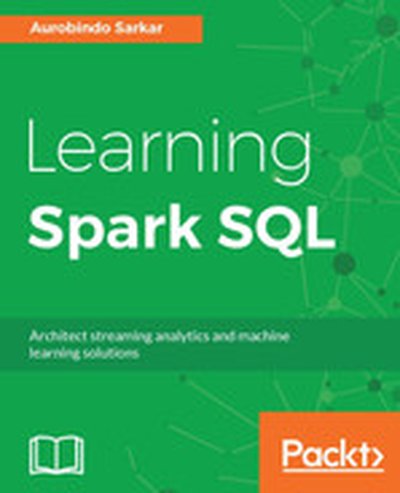
Learning Spark SQL

"Learning Spark SQL" takes you from data exploration to designing scalable applications with Apache Spark SQL. Through hands-on examples, you will comprehend real-world use cases and gain practical skills crucial for working with Spark SQL APIs, data frames, streaming data, and optimizing Spark applications. What this Book will help me do Understand the principles of Spark SQL and its APIs for building scalable distributed applications. Gain hands-on experience performing data wrangling and visualization using Spark SQL and real-world datasets. Learn how to design and optimize applications for performance and scalability with Spark SQL. Develop the skills to integrate Spark SQL with other frameworks like Apache Kafka for streaming analytics. Master the techniques required to architect machine learning and deep learning solutions using Spark SQL. Author(s) None Sarkar is an experienced technologist and trainer specializing in big data, streaming analytics, and scalable architectures using Apache Spark. With years of practical experience in implementing Spark solutions, Sarkar draws from real-world projects to provide readers with valuable insights. Sarkar's approachable and detailed writing style ensures readers grasp both the theory and the practice of Spark SQL. Who is it for? This book is ideal for software developers, data engineers, and architects aspiring to harness Apache Spark for robust, scalable applications. It suits readers with some SQL querying experience and a basic knowledge of programming in languages like Scala, Java, or Python. Whether you're a Spark newcomer or advancing your capabilities in scalable data processing, this resource will accelerate your learning journey.

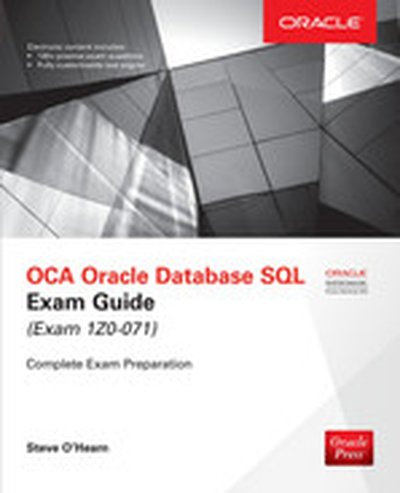
OCA Oracle Database SQL Exam Guide (Exam 1Z0-071)

A fully updated, integrated self-study system for the Oracle Database SQL Exam This thoroughly revised Oracle Press guide offers 100% coverage of all objectives on the latest version of the Oracle Database SQL Exam. Ideal both as a study guide and on-the-job reference, OCA Oracle Database SQL Exam Guide (Exam 1Z0-071) features detailed explanations, examples, practice questions, and chapter summaries. “Certification Objectives,” “Exam Watch,” and “On the Job” sections reinforce salient points throughout. You will gain access to two complete practice exams that match the tone, tenor, and format of the live test. Get complete coverage every topic on Exam 1Z0-071, including: • DDL and SQL SELECT statements • Manipulating, restricting, and sorting data • Single-row and group functions • Displaying data from multiple tables • Subqueries • Schema objects • Set operators • Grouping related data • Report creation • Data dictionary views • Large data sets • Hierarchical retrieval • Regular expression support • User access control The electronic includes: • Two full practice exams • Detailed answers and explanations

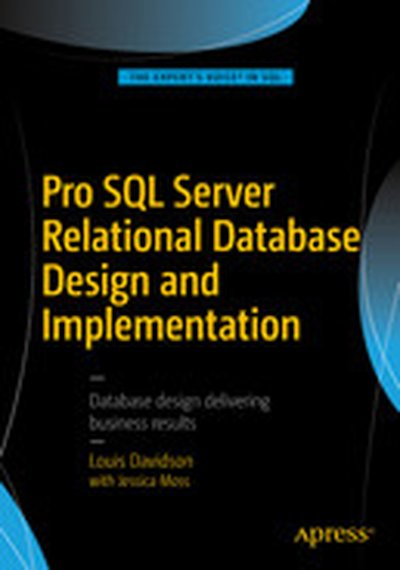
Pro SQL Server Relational Database Design and Implementation, Fifth Edition

Learn effective and scalable database design techniques in a SQL Server 2016 and higher environment. This book is revised to cover in-memory online transaction processing, temporal data storage, row-level security, durability enhancements, and other design-related features that are new or changed in SQL Server 2016. Designing an effective and scalable database using SQL Server is a task requiring skills that have been around for forty years coupled with technology that is constantly changing. and Implementation covers everything from design logic that business users will understand, all the way to the physical implementation of design in a SQL Server database. Grounded in best practices and a solid understanding of the underlying theory, Louis Davidson shows how to "get it right" in SQL Server database design and lay a solid groundwork for the future use of valuable business data. Pro SQL Server Relational Database Design The pace of change in relational database management systems has been tremendous these past few years. Whereas in the past it was enough to think about optimizing data residing on spinning hard drives, today one also must consider solid-state storage as well as data that are constantly held in memory and never written to disk at all except as a backup. Furthermore, there is a trend toward hybrid cloud and on-premise database configurations as well a move toward preconfigured appliances. guides in the understanding of these massive changes and in their application toward sound database design. Pro SQL Server Relational Database Design and Implementation Gives a solid foundation in best practices and relational theory Covers the latest implementation features in SQL Server 2016 Helps you master in-memory OLTP and use it effectively Takes you from conceptual design to an effective, physical implementation What You Will Learn Develop conceptual models of client data using interviews and client documentation Recognize and apply common database design patterns Normalize data models to enhance scalability and the long term use of valuable data Translate conceptual models into high–performing SQL Server databases Secure and protect data integrity as part of meeting regulatory requirements Create effective indexing to speed query performance Who This Book Is For Programmers and database administrators of all types who want to use SQL Server to store data. The book is especially useful to those wanting to learn the very latest design features in SQL Server 2016, features that include an improved approach to in-memory OLTP, durability enhancements, temporal data support, and more. Chapters on fundamental concepts, the language of database modeling, SQL implementation, and of course, the normalization process, lay a solid groundwork for readers who are just entering the field of database design. More advanced chapters serve the seasoned veteran by tackling the very latest in physical implementation features that SQL Server has to offer. The book has been carefully revised to cover all the design-related features that are new in SQL Server 2016.

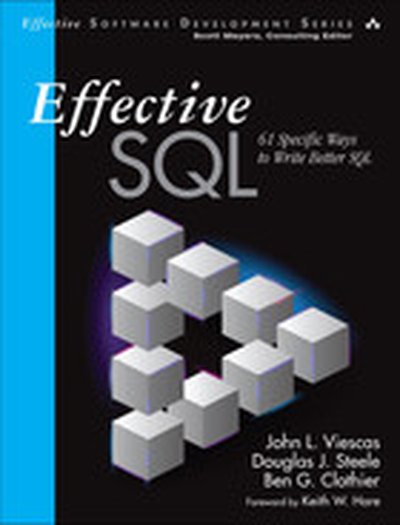
Effective SQL: 61 Specific Ways to Write Better SQL, First Edition

“Given the authors’ reputations, I expected to be impressed. I was blown away! . . . Most SQL books sit on my shelf. This one will live on my desk.” –Roger Carlson, Microsoft Access MVP (2006-2015) “Rather than stumble around reinventing wheels or catching glimpses of the proper approaches, do yourself a favor: Buy this book.” —Dave Stokes, MySQL Community Manager, Oracle Corporation brings together practical solutions and insights so you can solve complex problems with SQL and design databases that simplify data management in the future. It’s the only modern book that brings together advanced best practices and realistic example code for all of these versions of SQL: IBM DB2, Microsoft Access, Microsoft SQL Server, MySQL, Oracle Database, and PostgreSQL. Effective SQL Drawing on their immense experience as world-class database consultants and instructors, the authors identify 61 proven approaches to writing better SQL. Wherever SQL versions vary, the authors illuminate the key nuances, so you can get the most out of whatever version you prefer. This full-color guide provides clear, practical explanations; expert tips; and plenty of usable code. Going far beyond mere syntax, it addresses issues ranging from optimizing database designs to managing hierarchies and metadata. If you already know SQL’s basics, this guide will help you become a world-class SQL problem-solver. Craft better logical data models, and fix flawed models Implement indexes that improve query performance Handle external data from sources you don’t control Extract and aggregate the information you need, as efficiently as possible Write more flexible subqueries Analyze and retrieve metadata using your database platform of choice Use Cartesian Products and Tally Tables to solve problems you can’t address with conventional JOINs Model hierarchical data: managing SQL’s tradeoffs and shortcomings

Sams Teach Yourself Microsoft® SQL Server T-SQL in 10 Minutes, Second Edition

Sams Teach Yourself Microsoft SQL Server T-SQL in 10 Minutes offers straightforward, practical answers when you need fast results. By working through the book’s 30 lessons of 10 minutes or less, you’ll learn what you need to know to take advantage of Microsoft SQL Server’s T-SQL language. This handy pocket guide starts with simple data retrieval and moves on to more complex topics, including the use of joins, subqueries, full text-based searches, functions and stored procedures, cursors, triggers, table constraints, XML, JSON, and much more. Learn how to… Use T-SQL in the Microsoft SQL Server environment Construct complex T-SQL statements using multiple clauses and operators Filter data so you get the information you need quickly Retrieve, sort, and format database contents Join two or more related tables Make SQL Server work for you with globalization and localization Create subqueries to pinpoint your data Automate your workload with triggers Create and alter database tables Work with views, stored procedures, and more Contents at a Glance 1 Understanding SQL 2 Introducing SQL Server 3 Working with SQL Server 4 Retrieving Data 5 Sorting Retrieved Data 6 Filtering Data 7 Advanced Data Filtering 8 Using Wildcard Filtering 9 Creating Calculated Fields 10 Using Data Manipulation Functions 11 Summarizing Data 12 Grouping Data 13 Working with Subqueries 14 Joining Tables 15 Creating Advanced Joins 16 Combining Queries 17 Full-Text Searching 18 Inserting Data 19 Updating and Deleting Data 20 Creating and Manipulating Tables 21 Using Views 22 Programming with T-SQL 23 Working with Stored Procedures 24 Using Cursors 25 Using Triggers 26 Managing Transaction Processing 27 Working with XML and JSON 28 Globalization and Localization 29 Managing Security 30 Improving Performance A The Example Tables B T-SQL Statement Syntax C T-SQL Datatypes D T-SQL Reserved Words

Pro SQL Server Internals, Second Edition

Improve your ability to develop, manage, and troubleshoot SQL Server solutions by learning how different components work "under the hood," and how they communicate with each other. The detailed knowledge helps in implementing and maintaining high-throughput databases critical to your business and its customers. You'll learn how to identify the root cause of each problem and understand how different design and implementation decisions affect performance of your systems. New in this second edition is coverage of SQL Server 2016 Internals, including In-Memory OLTP, columnstore enhancements, Operational Analytics support, Query Store, JSON, temporal tables, stretch databases, security features, and other improvements in the new SQL Server version. The knowledge also can be applied to Microsoft Azure SQL Databases that share the same code with SQL Server 2016. Pro SQL Server Internals is a book for developers and database administrators, and it covers multiple SQL Server versions starting with SQL Server 2005 and going all the way up to the recently released SQL Server 2016. The book provides a solid road map for understanding the depth and power of the SQL Server database server and teaches how to get the most from the platform and keep your databases running at the level needed to support your business. The book: Provides detailed knowledge of new SQL Server 2016 features and enhancements Includes revamped coverage of columnstore indexes and In-Memory OLTP Covers indexing and transaction strategies Shows how various database objects and technologies are implemented internally, and when they should or should not be used Demonstrates how SQL Server executes queries and works with data and transaction log What You Will Learn Design and develop database solutions with SQL Server. Troubleshoot design, concurrency, and performance issues. Choose the right database objects and technologies for the job. Reduce costs and improve availability and manageability. Design disaster recovery and high-availability strategies. Improve performance of OLTP and data warehouse systems through in-memory OLTP and Columnstore indexes. Who This Book Is For Developers and database administrators who want to design, develop, and maintain systems in a way that gets the most from SQL Server. This book is an excellent choice for people who prefer to understand and fix the root cause of a problem rather than applying a 'band aid' to it.

Getting Started with SQL

Businesses are gathering data today at exponential rates and yet few people know how to access it meaningfully. If you’re a business or IT professional, this short hands-on guide teaches you how to pull and transform data with SQL in significant ways. You will quickly master the fundamentals of SQL and learn how to create your own databases. Author Thomas Nield provides exercises throughout the book to help you practice your newfound SQL skills at home, without having to use a database server environment. Not only will you learn how to use key SQL statements to find and manipulate your data, but you’ll also discover how to efficiently design and manage databases to meet your needs. You’ll also learn how to: Explore relational databases, including lightweight and centralized models Use SQLite and SQLiteStudio to create lightweight databases in minutes Query and transform data in meaningful ways by using SELECT, WHERE, GROUP BY, and ORDER BY Join tables to get a more complete view of your business data Build your own tables and centralized databases by using normalized design principles Manage data by learning how to INSERT, DELETE, and UPDATE records

Data Analysis Using SQL and Excel, 2nd Edition

A practical guide to data mining using SQL and Excel Data Analysis Using SQL and Excel, 2nd Edition shows you how to leverage the two most popular tools for data query and analysis—SQL and Excel—to perform sophisticated data analysis without the need for complex and expensive data mining tools. Written by a leading expert on business data mining, this book shows you how to extract useful business information from relational databases. You'll learn the fundamental techniques before moving into the "where" and "why" of each analysis, and then learn how to design and perform these analyses using SQL and Excel. Examples include SQL and Excel code, and the appendix shows how non-standard constructs are implemented in other major databases, including Oracle and IBM DB2/UDB. The companion website includes datasets and Excel spreadsheets, and the book provides hints, warnings, and technical asides to help you every step of the way. Data Analysis Using SQL and Excel, 2nd Edition shows you how to perform a wide range of sophisticated analyses using these simple tools, sparing you the significant expense of proprietary data mining tools like SAS. Understand core analytic techniques that work with SQL and Excel Ensure your analytic approach gets you the results you need Design and perform your analysis using SQL and Excel Data Analysis Using SQL and Excel, 2nd Edition shows you how to best use the tools you already know to achieve expert results.

SQL in 24 Hours, Sams Teach Yourself, Sixth Edition

Includes Coverage of Oracle and Microsoft SQL Implementations In just 24 lessons of one hour or less, Sams Teach Yourself SQL in 24 Hours, Sixth Edition, helps you use SQL to build effective databases, efficiently retrieve data, and manage everything from performance to security. This book’s straightforward, step-by-step approach shows you how to work with database structures, objects, queries, tables, and more. In just hours, you will be applying advanced techniques, including views, transactions, web connections, and powerful Oracle and SQL Server extensions. Every lesson builds on what you’ve already learned, giving you a rock-solid foundation for real-world success. Step-by-step instructions carefully walk you through the most common SQL tasks. Practical, hands-on examples show you how to apply what you learn. Quizzes and exercises help you test your knowledge and stretch your skills. Notes and tips point out shortcuts and solutions. Learn how to… • Define efficient database structures and objects • “Normalize” raw databases into logically organized tables • Edit relational data and tables with DML • Manage transactions • Write effective, well-performing queries • Categorize, summarize, sort, group, and restructure data • Work with dates and times • Join tables in queries, use subqueries, and combine multiple queries • Master powerful query optimization techniques • Administer databases and manage users • Secure databases and protect data • Use views, synonyms, and the system catalog • Extend SQL to the enterprise and Internet • Master important Oracle and Microsoft extensions to ANSI SQL Register your product at informit.com/register for convenient access to downloads, updates, and corrections as they become available.