talk-data.com talk-data.com

Topic

SQL

Structured Query Language (SQL)

database_language data_manipulation data_definition programming_language

1751

tagged

Activity Trend

107 peak/qtr
2020-Q1 2026-Q1

Activities

1751 activities · Newest first

OCA Oracle Database 12c SQL Fundamentals I Exam Guide (Exam 1Z0-061), 2nd Edition

A Complete Study System for OCA Exam 1Z0-061 Prepare for the Oracle Certified Associate Oracle Database 12 c SQL Fundamentals I exam with this Oracle Press guide. Each chapter features challenging exercises, a certification summary, a two-minute drill, and a self-test to reinforce the topics presented. This authoritative resource helps you pass the exam and also serves as an essential, on-the-job reference. Get complete coverage of all OCA objectives for exam 1Z0-061, including: Data retrieval using the SQL SELECT statement Restricting and sorting data Single-row functions Using conversion functions and conditional expressions Reporting aggregated data with the group functions Displaying data from multiple tables with joins Using subqueries to solve problems Using the set operators Manipulating data with DML statements Using DDL statements to create and manage tables Electronic content includes: 150+ practice exam questions with detailed answers and explanations Score report performance assessment tool
Professional Microsoft SQL Server 2014 Integration Services

Fill the gap between planning and doing with SSIS 2014 The 2014 release of Microsoft's SQL Server Integration Services provides enhancements for managing extraction, transformation, and load operations, plus expanded in-memory capabilities, improved disaster recovery, increased scalability, and much more. The increased functionality will streamline your ETL processes and smooth out your workflow, but the catch is that your workflow must change. New tools come with new best practices, and Professional Microsoft SQL Server 2014 Integration Services will keep you ahead of the curve. SQL Server MVP Brian Knight is the most respected name in the business, and your ultimate guide to navigating the changes to use Microsoft SQL Server Integration Services 2014 to your utmost advantage. Implement new best practices for effective use of SSIS Work through tutorials for hands-on learning of complex techniques Read case studies that illustrate the more advanced concepts Learn directly from the foremost authority on SSIS SQL Server Integration Services is a complex tool, but it's the lifeblood of your work. You need to know it inside out, and you must understand the full potential of its capabilities in order to use it effectively. You need to make sure the right architecture is in place. Professional Microsoft SQL Server 2014 Integration Services is your roadmap to understanding SSIS on a fundamental level, and setting yourself up for success.

Google Maps

Create custom applications with the Google Maps API Featuring step-by-step examples, this practical resource gets you started programming the Google Maps API with JavaScript in no time. Learn how to embed maps on web pages, annotate the embedded maps with your data, generate KML files to store and reuse your map data, and enable client applications to request spatial data through web services. Google Maps: Power Tools for Maximizing the API explains techniques for visualizing masses of data and animating multiple items on the map. You’ll also find out how to embed Google maps in desktop applications to combine the richness of the Windows interface with the unique features of the API. You can use the numerous samples included throughout this hands-on guide as your starting point for building customized applications. Create map-enabled web pages with a custom look Learn the JavaScript skills required to exploit the Google Maps API Create highly interactive interfaces for mapping applications Embed maps in desktop applications written in .NET Annotate maps with labels, markers, and shapes Understand geodesic paths and shapes and perform geodesic calculations Store geographical data in KML format Add GIS features to mapping applications Store large sets of geography data in databases and perform advanced spatial queries Use web services to request spatial data from within your script on demand Automate the generation of standalone web pages with annotated maps Use the Geocoding and Directions APIs Visualize large data sets using symbols and heatmaps Animate items on a map Bonus online content includes: A tutorial on The SQL Spatial application A bonus chapter on animating multiple airplanes Three appendices: debugging scripts in the browser; scalable vector graphics; and applying custom styles

Beginning Oracle SQL: for Oracle Database 12c, Third Edition

Beginning Oracle SQL is your introduction to the interactive query tools and specific dialect of SQL used with Oracle Database. These tools include SQLPlus and SQL Developer. SQLPlus is the one tool any Oracle developer or database administrator can always count on, and it is widely used in creating scripts to automate routine tasks. SQL Developer is a powerful, graphical environment for developing and debugging queries. Oracle's is possibly the most valuable dialect of SQL from a career standpoint. Oracle's database engine is widely used in corporate environments worldwide. It is also found in many government applications. Oracle SQL implements many features not found in competing products. No developer or DBA working with Oracle can afford to be without knowledge of these features and how they work, because of the performance and expressiveness they bring to the table. Written in an easygoing and example-based style, Beginning Oracle SQL is the book that will get you started down the path to successfully writing SQL statements and getting results from Oracle Database. Takes an example-based approach, with clear and authoritative explanations Introduces both SQL and the query tools used to execute SQL statements Shows how to create tables, populate them with data, and then query that data to generate business results What you'll learn Create database tables and define their relationships. Add data to your tables. Then change and delete that data. Write database queries that generate accurate results. Avoid common traps and pitfalls in writing SQL queries, especially from nulls. Reap the performance and expressiveness of analytic and window functions. Make use of Oracle Database's support for object types. Write recursive queries to query hierarchical data. Who this book is for Beginning Oracle SQL is aimed at developers and database administrators who must write SQL statements to execute against an Oracle database. No prior knowledge of SQL is assumed.

Microsoft Big Data Solutions

Tap the power of Big Data with Microsoft technologies Big Data is here, and Microsoft's new Big Data platform is a valuable tool to help your company get the very most out of it. This timely book shows you how to use HDInsight along with HortonWorks Data Platform for Windows to store, manage, analyze, and share Big Data throughout the enterprise. Focusing primarily on Microsoft and HortonWorks technologies but also covering open source tools, Microsoft Big Data Solutions explains best practices, covers on-premises and cloud-based solutions, and features valuable case studies. Best of all, it helps you integrate these new solutions with technologies you already know, such as SQL Server and Hadoop. Walks you through how to integrate Big Data solutions in your company using Microsoft's HDInsight Server, HortonWorks Data Platform for Windows, and open source tools Explores both on-premises and cloud-based solutions Shows how to store, manage, analyze, and share Big Data through the enterprise Covers topics such as Microsoft's approach to Big Data, installing and configuring HortonWorks Data Platform for Windows, integrating Big Data with SQL Server, visualizing data with Microsoft and HortonWorks BI tools, and more Helps you build and execute a Big Data plan Includes contributions from the Microsoft and HortonWorks Big Data product teams If you need a detailed roadmap for designing and implementing a fully deployed Big Data solution, you'll want Microsoft Big Data Solutions.

2013 Data Science Salary Survey

What tools do successful data scientists and analysts use, and how much money do they make? We surveyed hundreds of attendees at the O'Reilly Strata Conferences in Santa Clara, California and New York to understand. Findings from the survey include: Average number of tools and median income for all respondents Distribution of responses by age, location, industry, and position Detailed analysis of tools used by respondents and correlation to their salaries - including by tool clusters (Hadoop, SQL/Excel, and other) Correlation of specialized big data tools usage and salary What tools should you be learning and using? Read this valuable report to gain insight from these potentially career-changing findings.

Oracle Database 12c PL/SQL Programming

Master Oracle Database 12 c PL/SQL Application Development Develop, debug, and administer robust database programs. Filled with detailed examples and expert strategies from an Oracle ACE, Oracle Database 12c PL/SQL Programming explains how to retrieve and process data, write PL/SQL statements, execute effective queries, incorporate PHP and Java, and work with dynamic SQL. Code testing, security, and object-oriented programming techniques are fully covered in this comprehensive Oracle Press guide. Explore new SQL and PL/SQL features in Oracle Database 12 c Build control structures, cursors, and loop statements Work with collections, varrays, tables, and associative array collections Locate and repair errors and employ exception handlers Execute black box, white box, and integration tests Configure and manage stored packages and libraries Handle security with authentication and encryption Use LOBs to store text and multimedia content Write and implement PL/SQL and Java triggers Extend functionality using dynamic SQL statements Understand object types, nested tables, and unnesting queries

Oracle PL/SQL Programming, 6th Edition

Considered the best Oracle PL/SQL programming guide by the Oracle community, this definitive guide is precisely what you need to make the most of Oracle’s powerful procedural language. The sixth edition describes the features and capabilities of PL/SQL up through Oracle Database 12 c Release 1. Hundreds of thousands of PL/SQL developers have benefited from this book over the last twenty years; this edition continues that tradition. With extensive code examples and a lively sense of humor, this book explains language fundamentals, explores advanced coding techniques, and offers best practices to help you solve real-world problems. Get PL/SQL programs up and running quickly, with clear instructions for executing, tracing, testing, debugging, and managing code Understand new 12.1 features, including the ACCESSIBLE_BY clause, WITH FUNCTION and UDF pragma, BEQUEATH CURRENT_USER for views, and new conditional compilation directives Take advantage of extensive code samples, from easy-to-follow examples to reusable packaged utilities Optimize PL/SQL performance with features like the function result cache and Oracle utilities such as PL/Scope and the PL/SQL hierarchical profiler Build modular, easy-to-maintain PL/SQL applications using packages, procedures, functions, and triggers

Leveraging DB2 10 for High Performance of Your Data Warehouse

Building on the business intelligence (BI) framework and capabilities that are outlined in InfoSphere Warehouse: A Robust Infrastructure for Business Intelligence, SG24-7813, this IBM® Redbooks® publication focuses on the new business insight challenges that have arisen in the last few years and the new technologies in IBM DB2® 10 for Linux, UNIX, and Windows that provide powerful analytic capabilities to meet those challenges. This book is organized in to two parts. The first part provides an overview of data warehouse infrastructure and DB2 Warehouse, and outlines the planning and design process for building your data warehouse. The second part covers the major technologies that are available in DB2 10 for Linux, UNIX, and Windows. We focus on functions that help you get the most value and performance from your data warehouse. These technologies include database partitioning, intrapartition parallelism, compression, multidimensional clustering, range (table) partitioning, data movement utilities, database monitoring interfaces, infrastructures for high availability, DB2 workload management, data mining, and relational OLAP capabilities. A chapter on BLU Acceleration gives you all of the details about this exciting DB2 10.5 innovation that simplifies and speeds up reporting and analytics. Easy to set up and self-optimizing, BLU Acceleration eliminates the need for indexes, aggregates, or time-consuming database tuning to achieve top performance and storage efficiency. No SQL or schema changes are required to take advantage of this breakthrough technology. This book is primarily intended for use by IBM employees, IBM clients, and IBM Business Partners.

SQL Server Analysis Services 2012 Cube Development Cookbook

The 'SQL Server Analysis Services 2012 Cube Development Cookbook' equips you with the practical skills needed to design and implement OLAP cubes using both multidimensional and tabular models. By working through hands-on recipes, you'll quickly gain the expertise to create robust Business Intelligence solutions with SQL Server Analysis Services. What this Book will help me do Build and enhance multidimensional and tabular models for effective data analysis. Implement key OLAP features like dimensions, cubes, actions, and aggregations. Scale and optimize your Business Intelligence solutions for enterprise-level performance. Utilize MDX and DAX languages proficiently to query and manipulate data. Develop skills in securing, monitoring, and troubleshooting SQL Server Analysis Services. Author(s) None Dewald is an experienced business intelligence professional with years of hands-on expertise with SQL Server Analysis Services. His approach to teaching focuses on practical application and equipping his audience with tools to be successful in deploying and maintaining BI solutions. Who is it for? This book is perfect for BI and ETL developers who work with SQL Server Analysis Services to build OLAP cubes. It assumes familiarity with relational database management systems, Excel, and SQL. If you're looking to deepen your understanding of Microsoft's BI stack and improve your practical skills in SSAS, this book is for you.

SAP HANA Cookbook

"SAP HANA Cookbook" is a hands-on guide to learning SAP HANA, a powerful in-memory database platform. Through over 50 practical recipes, you'll understand the inner workings of SAP HANA's architecture, and learn techniques to optimize operations and analytics. What this Book will help me do Understand SAP HANA's architecture and in-memory capabilities. Effectively load and integrate data from various source systems. Develop and optimize SAP HANA models such as attribute, analytical, and calculation views. Gain proficiency in using the SAP HANA SQL scripting language. Master user and role management for secure and efficient SAP HANA operation. Author(s) This book is authored by industry specialists with extensive experience in SAP HANA technology. Drawing from real-world projects, the authors provide nuanced insights and practical guidance, enabling readers to implement SAP HANA solutions effectively. Who is it for? This book is suited for solution architects, developers, and managers seeking to develop expertise in SAP HANA. Whether you are new to SAP technologies or looking to deepen your skillset, this resource provides comprehensive and actionable guidance.

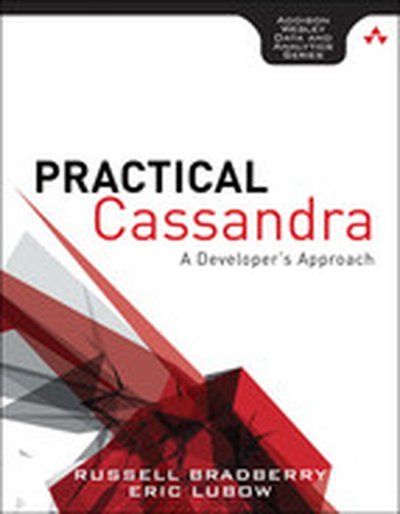
Practical Cassandra: A Developer’s Approach

Build and Deploy Massively Scalable, Super-fast Data Management Applications with Apache Cassandra is the first hands-on developer’s guide to building Cassandra systems and applications that deliver breakthrough speed, scalability, reliability, and performance. Fully up to date, it reflects the latest versions of Cassandra–including Cassandra Query Language (CQL), which dramatically lowers the learning curve for Cassandra developers. Practical Cassandra Pioneering Cassandra developers and Datastax MVPs Russell Bradberry and Eric Lubow walk you through every step of building a real production application that can store enormous amounts of structured, semi-structured, and unstructured data. Drawing on their exceptional expertise, Bradberry and Lubow share practical insights into issues ranging from querying to deployment, management, maintenance, monitoring, and troubleshooting. The authors cover key issues, from architecture to migration, and guide you through crucial decisions about configuration and data modeling. They provide tested sample code, detailed explanations of how Cassandra works ”under the covers,” and new case studies from three cutting-edge users: Ooyala, Hailo, and eBay. Coverage includes Understanding Cassandra’s approach, architecture, key concepts, and primary use cases– and why it’s so blazingly fast Getting Cassandra up and running on single nodes and large clusters Applying the new design patterns, philosophies, and features that make Cassandra such a powerful data store Leveraging CQL to simplify your transition from SQL-based RDBMSes Deploying and provisioning through the cloud or on bare-metal hardware Choosing the right configuration options for each type of workload Tweaking Cassandra to get maximum performance from your hardware, OS, and JVM Mastering Cassandra’s essential tools for maintenance and monitoring Efficiently solving the most common problems with Cassandra deployment, operation, and application development

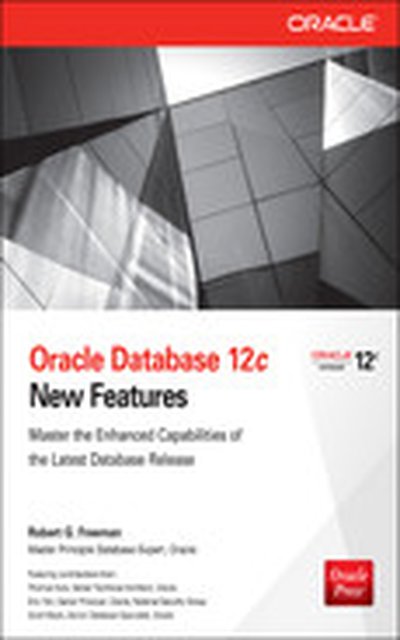
Oracle Database 12c New Features

Maximize the New and Improved Features of Oracle Database 12 c Written by Master Principle Database Expert, Oracle, and Oracle ACE Robert G. Freeman, this Oracle Press guide describes the myriad new and enhanced capabilities available in the latest Oracle Database release. Inside, you’ll find everything you need to know to get up and running quickly on Oracle Database 12 c. Supported by running commentary from world-renowned Oracle expert Tom Kyte, and with additional contributions by Oracle experts Eric Yen and Scott Black, Oracle Database 12c New Features offers detailed coverage of: Installing Oracle Database 12 c Architectural changes, such as Oracle Multitenant The most current information on upgrading and migrating to Oracle Database 12 c The pre-upgrade information tool and parallel processing for database upgrades Oracle Real Application Clusters new features, such as Oracle Flex Cluster, Oracle Flex Automatic Storage Management, and Oracle Automatic Storage Management Cluster File System Oracle RMAN enhancements, including cross-platform backup and recovery Oracle Data Guard improvements, such as Fast Sync, and Oracle Active Data Guard new features, such as Far Sync SQL, PL/SQL, DML, and DDL new features Improvements to partitioning manageability, performance, and availability Advanced business intelligence and data warehousing capabilities Security enhancements, including privileges analysis, data redaction, and new administrative-level privileges Manageability, performance, and optimization improvements

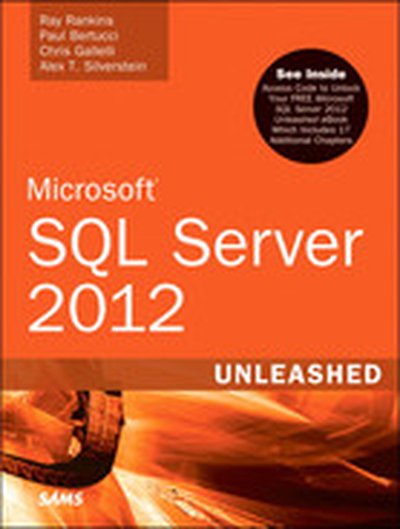
Microsoft® SQL Server 2012 Unleashed

Buy the print version of¿ and get the eBook version for free! eBook version includes chapters 44-60 not included in the print. See inside the book for access code and details. Microsoft SQL Server 2012 Unleashed ¿ With up-to-the-minute content, this is the industry’s most complete, useful guide to SQL Server 2012. ¿ You’ll find start-to-finish coverage of SQL Server’s core database server and management capabilities: all the real-world information, tips, guidelines, and samples you’ll need to create and manage complex database solutions. The additional online chapters add extensive coverage of SQL Server Integration Services, Reporting Services, Analysis Services, T-SQL programming, .NET Framework integration, and much more. ¿ Authored by four expert SQL Server administrators, designers, developers, architects, and consultants, this book reflects immense experience with SQL Server in production environments. Intended for intermediate-to-advanced-level SQL Server professionals, it focuses on the product’s most complex and powerful capabilities, and its newest tools and features. Understand SQL Server 2012’s newest features, licensing changes, and capabilities of each edition Manage SQL Server 2012 more effectively with SQL Server Management Studio, the SQLCMD command-line query tool, and Powershell Use Policy-Based Management to centrally configure and operate SQL Server Utilize the new Extended Events trace capabilities within SSMS Maximize performance by optimizing design, queries, analysis, and workload management Implement new best practices for SQL Server high availability Deploy AlwaysOn Availability Groups and Failover Cluster Instances to achieve enterprise-class availability and disaster recovery Leverage new business intelligence improvements, including Master Data Services, Data Quality Services and Parallel Data Warehouse Deliver better full-text search with SQL Server 2012’s new Semantic Search Improve reporting with new SQL Server 2012 Reporting Services features Download the following from informit.com/title/9780672336928: Sample databases and code examples ¿ ¿

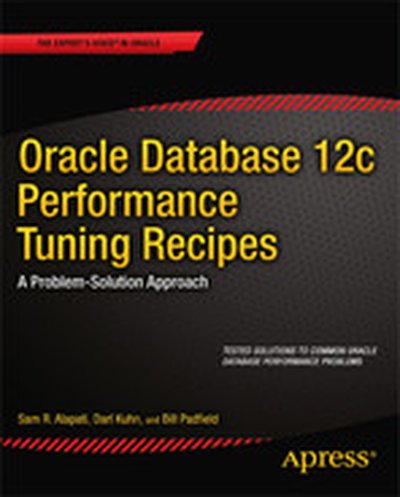
Oracle Database 12c Performance Tuning Recipes: A Problem-Solution Approach

Performance problems are rarely "problems" per se. They are more often "crises" during which you're pressured for results by a manager standing outside your cubicle while your phone rings with queries from the help desk. You won't have the time for a leisurely perusal of the manuals, nor to lean back and read a book on theory. What you need in that situation is a book of solutions, and solutions are precisely what Oracle Database 12c Performance Tuning Recipes delivers. Oracle Database 12c Performance Tuning Recipes is a ready reference for database administrators in need of immediate help with performance issues relating to Oracle Database. The book takes an example-based approach, wherein each chapter covers a specific problem domain. Within each chapter are "recipes," showing by example how to perform common tasks in that chapter's domain. Solutions in the recipes are backed by clear explanations of background and theory from the author team. Whatever the task, if it's performance-related, you'll probably find a recipe and a solution in this book. Provides proven solutions to real-life Oracle performance problems Offers relevant background and theory to support each solution Gets straight to the point for when you're under pressure for results What you'll learn Optimize the use of memory and storage Monitor performance and troubleshoot problems Identify and improve poorly-performing SQL statements Adjust the most important optimizer parameters to your advantage Create indexes that get used and make a positive impact upon performance Automate and stabilize using key features such as SQL Tuning Advisor and SQL Plan Baselines Who this book is for Oracle Database 12c Performance Tuning Recipes is aimed squarely at Oracle Database administrators. The book especially appeals to those administrators desiring to have at their side a ready-to-go set of solutions to common database performance problems.

Cloudera Impala

Learn about Cloudera Impala--an open source project that's opening up the Apache Hadoop software stack to a wide audience of database analysts, users, and developers. The Impala massively parallel processing (MPP) engine makes SQL queries of Hadoop data simple enough to be accessible to analysts familiar with SQL and to users of business intelligence tools--and it’s fast enough to be used for interactive exploration and experimentation.

Microsoft SQL Server 2012 Internals

Dive deep inside the architecture of SQL Server 2012 Explore the core engine of Microsoft SQL Server 2012—and put that practical knowledge to work. Led by a team of SQL Server experts, you’ll learn the skills you need to exploit key architectural features. Go behind the scenes to understand internal operations for creating, expanding, shrinking, and moving databases—whether you’re a database developer, architect, or administrator. Discover how to: Dig into SQL Server 2012 architecture and configuration Use the right recovery model and control transaction logging Reduce query execution time through proper index design Track events, from triggers to the Extended Event Engine Examine internal structures with database console commands Transcend row-size limitations with special storage capabilities Choose the right transaction isolation level and concurrency model Take control over query plan caching and reuse

Oracle Exadata Survival Guide

Oracle Exadata Survival Guide is a hands-on guide for busy Oracle database administrators who are migrating their skill sets to Oracle's Exadata database appliance. The book covers the concepts behind Exadata, and the available configurations for features such as smart scans, storage indexes, Smart Flash Cache, hybrid columnar compression, and more. You'll learn about performance metrics and execution plans, and how to optimize SQL running in Oracle's powerful, new environment. The authors also cover migration from other servers. Oracle Exadata is fast becoming the standard for large installations such as those running data warehouse, business intelligence, and large-scale OLTP systems. Exadata is like no other platform, and is new ground even for experienced Oracle database administrators. The Oracle Exadata Survival Guide helps you navigate the ins and outs of this new platform, de-mystifying this amazing appliance and its exceptional performance. The book takes a highly practical approach, not diving too deeply into the details, but giving you just the right depth of information to quickly transfer your skills to Oracle's important new platform. Helps transfer your skills to the platform of the future Covers the important ground without going too deep Takes a practical and hands-on approach to everyday tasks What you'll learn Learn the components and basic architecture of an Exadata machine Reduce data transfer overhead by processing queries in the storage layer Examine and take action on Exadata-specific performance metrics Deploy Hybrid Columnar Compression to reduce storage and I/O needs Create worry-free migrations from existing databases into Exadata Understand and address issues specific to ERP migrations Who this book is for Oracle Exadata Survival Guide is for the busy enterprise Oracle DBA who has suddenly been thrust into the Exadata arena. Readers should have a sound grasp of traditional Oracle database administration, and be prepared to learn new aspects that are specific to the Exadata appliance.

The Definitive Guide to MongoDB: A complete guide to dealing with Big Data using MongoDB, Second Edition

The Definitive Guide to MongoDB, Second Edition, is updated for the latest version and includes all of the latest MongoDB features, including the aggregation framework introduced in version 2.2 and hashed indexes in version 2.4. MongoDB is the most popular of the "Big Data" NoSQL database technologies, and it's still growing. David Hows from 10gen, along with experienced MongoDB authors Peter Membrey and Eelco Plugge, provide their expertise and experience in teaching you everything you need to know to become a MongoDB pro. The Definitive Guide to MongoDB, Second Edition, starts with the basics, including how to install on Windows, Linux, and OS X, and how MongoDB handles your data. Then you'll learn how to develop with MongoDB with both PHP and Python, including an example application using a PHP driver to create a blog application. Finally, you'll dig into more advanced but extremely important MongoDB features, including optimization, replication, and sharding -- load-balancing that makes MongoDB ideal for dealing with Big Data. If you're dealing with data, MongoDB should be on your must-learn list. The Definitive Guide to MongoDB, Second Edition, is just the book you need. What you'll learn Set up MongoDB on all major server platforms, including Windows, Linux, OS X, and cloud platforms like Rackspace, Azure, and Amazon EC2 Work with GridFS and the new aggregation framework Work with your data using non-SQL commands Write applications using either PHP or Python Optimize MongoDB Master MongoDB administration, including replication, replication tagging, and tag-aware sharding Who this book is for Database admins and developers who need to get up to speed on MongoDB and its Big Data, NoSQL approach to dealing with data management.

Pro Oracle SQL, Second Edition

Pro Oracle SQL, Second Edition unlocks the power of SQL in the Oracle database—one of the most potent SQL implementations on the market today. To master it requires a multi-pronged approach: learn the language features, learn how and why the language features work, learn the supporting features that Oracle provides to help use the language effectively, and learn to think and work in sets. Karen Morton has updated the content for Oracle version 12c and helps you master powerful aspects of Oracle SQL from the inside-out. You'll learn analytic functions, the MODEL clause, and advanced grouping syntax—features that will help in creating good queries for reporting and business intelligence applications. Pro Oracle SQL, Second Edition also helps you minimize parsing overhead, read execution plans, test for correct results, understand performance management, and exert control over SQL execution in your database. You'll learn when to create indexes, how to verify that they make a difference, how to use SQL Baselines and Profiles to optimize and stabilize SQL execution plans, and much more. You'll also understand how SQL is optimized for working in sets, and that the key to getting accurate results lies in making sure that queries ask clear and precise questions. Pro Oracle SQL, Second Edition helps you work at a truly professional level in the Oracle dialect of SQL. You'll master the language, the tools to work effectively with the language, and the right way to think about a problem in SQL. Endorsed by the OakTable Network, a group of Oracle technologists well-known for their rigorous and scientific approach to Oracle Database performance Comprehensive—goes beyond the language with a focus on what you need to know to write successful queries and data manipulation statements. Performance focused—teaches you how to measure the performance of your SQL statements and not just the syntax. What you'll learn Master powerful SQL features implemented in the Oracle Database Understand how the Oracle Optimizer develops execution plans Read and interpret SQL execution plans Quickly diagnose and fix badly performing SQL Control execution plans through hints, profiles, and plan baselines Optimize queries within packaged applications without touching the code Recognize when not to waste time on SQL that is performing optimally Who this book is for Pro Oracle SQL, Second Edition is aimed at developers and database administrators who submit SQL for execution by an Oracle database. Readers should already know the basic four SQL statements, and be ready to learn deeply about Oracle's specific implementation of the language, including Oracle-specific features and syntax. Readers should also want to learn about Oracle Database features such as analytic queries, the MODEL clause, and the WITH clause (subquery factoring) that are designed to help developers and database administrators exert control over their SQL environment and its execution.