talk-data.com talk-data.com

Topic

SQL

Structured Query Language (SQL)

database_language data_manipulation data_definition programming_language

1751

tagged

Activity Trend

107 peak/qtr
2020-Q1 2026-Q1

Activities

1751 activities · Newest first

Learning Spark

Data in all domains is getting bigger. How can you work with it efficiently? Recently updated for Spark 1.3, this book introduces Apache Spark, the open source cluster computing system that makes data analytics fast to write and fast to run. With Spark, you can tackle big datasets quickly through simple APIs in Python, Java, and Scala. This edition includes new information on Spark SQL, Spark Streaming, setup, and Maven coordinates.

Extend Microsoft Access Applications to the Cloud

Learn how to create an Access web app, and move your database into the cloud. This practical book shows you how to design an Access web app for Microsoft Office 365, and convert existing Access desktop databases to a web app as well. You’ll quickly learn your way around the web app design environment, including how to capitalize on its strengths and avoid the pitfalls. You don’t need any special web skills to get started. Discover how to: Make your desktop database compatible with web app table structures Create tables, views, and queries Customize the table selector and work with popup views to provide a navigation interface Implement business rules using the Macro Programming Tools Develop using Office 365 and SharePoint 2013 Use SQL Azure to investigate how your web app is structured Design, test, and troubleshoot Data Macros Understand how security links between a web app and Office 365 Deploy a public facing web app on your Office 365 public website

Computer Science Illuminated, 6th Edition

Each new print copy includes Navigate 2 Advantage Access that unlocks a comprehensive and interactive eBook, student practice activities and assessments, a full suite of instructor resources, and learning analytics reporting tools.

Fully revised and updated, the Sixth Edition of the best-selling text Computer Science Illuminated retains the accessibility and in-depth coverage of previous editions, while incorporating all-new material on cutting-edge issues in computer science. Authored by the award-winning Nell Dale and John Lewis, Computer Science Illuminated’s unique and innovative layered approach moves through the levels of computing from an organized, language-neutral perspective.

Designed for the introductory computing and computer science course, this student-friendly Sixth Edition provides students with a solid foundation for further study, and offers non-majors a complete introduction to computing.

Key Features of the Sixth Edition include:

Access to Navigate 2 online learning materials including a comprehensive and interactive eBook, student practice activities and assessments, learning analytics reporting tools, and more
Completely revised sections on HTML and CSS
Updates regarding Top Level Domains, Social Networks, and Google Analytics
All-new section on Internet management, including ICANN control and net neutrality 
New design, including fully revised figures and tables
New and updated Did You Know callouts are included in the chapter margins
New and revised Ethical Issues and Biographies throughout emphasize the history and breadth of computing
Available in our customizable PUBLISH platform

A collection of programming language chapters are available as low-cost bundling options. Available chapters include: Java, C++, Python, Alice, SQL, VB.NET, RUBY, Perl, Pascal, and JavaScript.

With Navigate 2, technology and content combine to expand the reach of your classroom. Whether you teach an online, hybrid, or traditional classroom-based course, Navigate 2 delivers unbeatable value. Experience Navigate 2 today at www.jblnavigate.com/2

Automated Data Collection with R: A Practical Guide to Web Scraping and Text Mining

A hands on guide to web scraping and text mining for both beginners and experienced users of R Introduces fundamental concepts of the main architecture of the web and databases and covers HTTP, HTML, XML, JSON, SQL. Provides basic techniques to query web documents and data sets (XPath and regular expressions). An extensive set of exercises are presented to guide the reader through each technique. Explores both supervised and unsupervised techniques as well as advanced techniques such as data scraping and text management. Case studies are featured throughout along with examples for each technique presented. R code and solutions to exercises featured in the book are provided on a supporting website.

Getting Started with IBM InfoSphere Optim Workload Replay for DB2

This IBM® Redbooks® publication will help you install, configure, and use IBM InfoSphere® Optim™ Workload Replay (InfoSphere Workload Replay), a web-based tool that lets you capture real production SQL workload data and then replay the workload data in a pre-production environment. With InfoSphere Workload Replay, you can set up and run realistic tests for enterprise database changes without the need to create a complex client and application infrastructure to mimic your production environment. The publication goes through the steps to install and configure the InfoSphere Workload Replay appliance and related database components for IBM DB2® for Linux, UNIX, and Windows and for DB2 for IBM z/OS®. The capture, replay, and reporting process, including user ID and roles management, is described in detail to quickly get you up and running. Ongoing operations, such as appliance health monitoring, starting and stopping the product, and backup and restore in your day-to-day management of the product, extensive troubleshooting information, and information about how to integrate InfoSphere Workload Replay with other InfoSphere products are covered in separate chapters.

Visio Services Quick Guide: Using Visio with Sharepoint 2013 and Office 365

In this fast-paced 100-page guide, you’ll learn to load, display and interact with dynamic, data-powered Visio diagrams in SharePoint 2013 or Office 365. Visio Services Quick Guide gives you the tools to build anything from a simple project workflow to an organizational infrastructure diagram, powered by real data from SharePoint or SQL Server. Colleagues can load your diagrams entirely in the browser, meaning that a single Visio client installation is enough to get started. Readers with JavaScript experience will also find out how to get additional control over Visio diagrams using the JavaScript mashup API, and how to build a custom data provider. The final chapter covers some useful information on administering Visio Services. Get started bringing your Visio diagrams to life with the Visio Services Quick Guide.

PHP and MySQL Web Development: A Beginner’s Guide

Essential Skills—Made Easy! PHP and MySQL Web Development: A Beginner's Guide takes you from building static web pages to creating comprehensive database-driven web applications. The book reviews HTML, CSS, and JavaScript and then explores PHP--its structure, control statements, arrays, functions, use with forms, and file handling capabilities. Next, the book examines MySQL, including SQL, the MySQL command set, and how to use it with PHP to create a relational database and build secure, databasedriven web applications. This practical resource features complete, step-by-step examples with code that you can use as templates for your own projects. Designed for Easy Learning Key Skills & Concepts--Chapter-opening lists of specific skills covered in the chapter Try This--Hands-on exercises that show you how to apply your skills Notes--Extra information related to the topic being covered Tips--Helpful reminders or alternate ways of doing things Cautions--Errors and pitfalls to avoid Self Tests--End-of-chapter quizzes to reinforce your skills Annotated Syntax--Example code with commentary that describes the programming techniques being illustrated Ready-to-use code at www.mhprofessional.com

Beginning SQL Server for Developers, Fourth Edition

Beginning SQL Server for Developers is the perfect book for developers new to SQL Server and planning to create and deploy applications against Microsoft’s market-leading database system for the Windows platform. Now in its fourth edition, the book is enhanced to cover the very latest developments in SQL Server, including the in-memory features that are introduced in SQL Server 2014. Within the book, there are plenty of examples of tasks that developers routinely perform. You’ll learn to create tables and indexes, and be introduced to best practices for securing your valuable data. You’ll learn design tradeoffs and find out how to make sound decisions resulting in scalable databases and maintainable code. SQL Server 2014 introduces in-memory tables and stored procedures. It's now possible to accelerate applications by creating tables (and their indexes) that reside entirely in memory, and never on disk. These new, in-memory structures differ from caching mechanisms of the past, and make possible the extraordinarily swift execution of certain types of queries such as are used in business intelligence applications. Beginning SQL Server for Developers helps you realize the promises of this new feature set while avoiding pitfalls that can occur when mixing in-memory tables and code with traditional, disk-based tables and code. Beginning SQL Server for Developers takes you through the entire database development process, from installing the software to creating a database to writing the code to connect to that database and move data in and out. By the end of the book, you’ll be able to design and create solid and reliable database solutions using SQL Server. Takes you through the entire database application development lifecycle Includes brand new coverage of the in-memory features Introduces the freely-available Express Edition

Big Data Made Easy: A Working Guide to the Complete Hadoop Toolset

Many corporations are finding that the size of their data sets are outgrowing the capability of their systems to store and process them. The data is becoming too big to manage and use with traditional tools. The solution: implementing a big data system. As Big Data Made Easy: A Working Guide to the Complete Hadoop Toolset shows, Apache Hadoop offers a scalable, fault-tolerant system for storing and processing data in parallel. It has a very rich toolset that allows for storage (Hadoop), configuration (YARN and ZooKeeper), collection (Nutch and Solr), processing (Storm, Pig, and Map Reduce), scheduling (Oozie), moving (Sqoop and Avro), monitoring (Chukwa, Ambari, and Hue), testing (Big Top), and analysis (Hive). The problem is that the Internet offers IT pros wading into big data many versions of the truth and some outright falsehoods born of ignorance. What is needed is a book just like this one: a wide-ranging but easily understood set of instructions to explain where to get Hadoop tools, what they can do, how to install them, how to configure them, how to integrate them, and how to use them successfully. And you need an expert who has worked in this area for a decade—someone just like author and big data expert Mike Frampton. Big Data Made Easy approaches the problem of managing massive data sets from a systems perspective, and it explains the roles for each project (like architect and tester, for example) and shows how the Hadoop toolset can be used at each system stage. It explains, in an easily understood manner and through numerous examples, how to use each tool. The book also explains the sliding scale of tools available depending upon data size and when and how to use them. Big Data Made Easy shows developers and architects, as well as testers and project managers, how to: Store big data Configure big data Process big data Schedule processes Move data among SQL and NoSQL systems Monitor data Perform big data analytics Report on big data processes and projects Test big data systems Big Data Made Easy also explains the best part, which is that this toolset is free. Anyone can download it and—with the help of this book—start to use it within a day. With the skills this book will teach you under your belt, you will add value to your company or client immediately, not to mention your career.

SQL Server Integration Services Design Patterns, Second Edition

SQL Server Integration Services Design Patterns is newly-revised for SQL Server 2014, and is a book of recipes for SQL Server Integration Services (SSIS). Design patterns in the book help to solve common problems encountered when developing data integration solutions. The patterns and solution examples in the book increase your efficiency as an SSIS developer, because you do not have to design and code from scratch with each new problem you face. The book's team of expert authors take you through numerous design patterns that you'll soon be using every day, providing the thought process and technical details needed to support their solutions. SQL Server Integration Services Design Patterns goes beyond the surface of the immediate problems to be solved, delving into why particular problems should be solved in certain ways. You'll learn more about SSIS as a result, and you'll learn by practical example. Where appropriate, the book provides examples of alternative patterns and discusses when and where they should be used. Highlights of the book include sections on ETL Instrumentation, SSIS Frameworks, Business Intelligence Markup Language, and Dependency Services. Takes you through solutions to common data integration challenges Provides examples involving Business Intelligence Markup Language Teaches SSIS using practical examples

Beginning Apache Cassandra Development

Beginning Apache Cassandra Development introduces you to one of the most robust and best-performing NoSQL database platforms on the planet. Apache Cassandra is a document database following the JSON document model. It is specifically designed to manage large amounts of data across many commodity servers without there being any single point of failure. This design approach makes Apache Cassandra a robust and easy-to-implement platform when high availability is needed. Apache Cassandra can be used by developers in Java, PHP, Python, and JavaScript—the primary and most commonly used languages. In Beginning Apache Cassandra Development, author and Cassandra expert Vivek Mishra takes you through using Apache Cassandra from each of these primary languages. Mishra also covers the Cassandra Query Language (CQL), the Apache Cassandra analog to SQL. You'll learn to develop applications sourcing data from Cassandra, query that data, and deliver it at speed to your application's users. Cassandra is one of the leading NoSQL databases, meaning you get unparalleled throughput and performance without the sort of processing overhead that comes with traditional proprietary databases. Beginning Apache Cassandra Development will therefore help you create applications that generate search results quickly, stand up to high levels of demand, scale as your user base grows, ensure operational simplicity, and—not least—provide delightful user experiences.

Joe Celko's SQL for Smarties, 5th Edition

SQL for Smarties was hailed as the first book devoted explicitly to the advanced techniques needed to transform an experienced SQL programmer into an expert. Now, 20 years later and in its fifth edition, this classic reference still reigns supreme as the only book written by a SQL master that teaches programmers and practitioners to become SQL masters themselves! These are not just tips and techniques; also offered are the best solutions to old and new challenges. Joe Celko conveys the way you need to think in order to get the most out of SQL programming efforts for both correctness and performance. New to the fifth edition, Joe features new examples to reflect the ANSI/ISO Standards so anyone can use it. He also updates data element names to meet new ISO-11179 rules with the same experience-based teaching style that made the previous editions the classics they are today. You will learn new ways to write common queries, such as finding coverings, partitions, runs in data, auctions and inventory, relational divisions and so forth. SQL for Smarties explains some of the principles of SQL programming as well as the code. A new chapter discusses design flaws in DDL, such as attribute splitting, non-normal forum redundancies and tibbling. There is a look at the traditional acid versus base transaction models, now popular in NoSQL products. You’ll learn about computed columns and the DEFERRABLE options in constraints. An overview of the bi-temporal model is new to this edition and there is a longer discussion about descriptive statistic aggregate functions. The book finishes with an overview of SQL/PSM that is applicable to proprietary 4GL vendor extensions. New to the 5th Edition: Overview of the bitemporal model Extended coverage of descriptive statistic aggregate functions New chapter covers flaws in DDL Examination of traditional acid versus base transaction models Reorganized to help you navigate related topics with ease Expert advice from a noted SQL authority and award-winning columnist Joe Celko, who served on the ANSI SQL standards committee for over a decade Teaches scores of advanced techniques that can be used with any product, in any SQL environment, whether it is SQL 92 or SQL 2011 Offers tips for working around deficiencies and gives insight into real-world challenges

Create Web Charts with D3

Create Web Charts with D3 shows how to convert your data into eye-catching, innovative, animated, and highly interactive browser-based charts. This book is suitable for developers of all experience levels and needs: if you want power and control and need to create data visualization beyond traditional charts, then D3 is the JavaScript library for you. By the end of the book, you will have a good knowledge of all the elements needed to manage data from every possible source, from high-end scientific instruments to Arduino boards, from PHP SQL databases queries to simple HTML tables, and from Matlab calculations to reports in Excel. This book contains content previously published in Beginning JavaScript Charts. Create all kinds of charts using the latest technologies available on browsers Full of step-by-step examples, Create Web Charts with D3 introduces you gradually to all aspects of chart development, from the data source to the choice of which solution to apply. This book provides a number of tools that can be the starting point for any project requiring graphical representations of data, whether using commercial libraries or your own

SAS Certification Prep Guide, 4th Edition
Businesses rely on career professionals with strong SAS knowledge and skills. Set yourself apart from the competition by earning the only globally recognized credential endorsed by SAS.

The SAS Certification Prep Guide: Advanced Programming for SAS 9, Fourth Edition, prepares you to take the Advanced Programming for SAS 9 exam. Major topics include SQL processing with SAS, the SAS macro language, advanced SAS programming techniques, and optimizing SAS programs, as well as a new chapter on creating functions with PROC FCMP. You will also become familiar with the enhancements and new functionality that are available in SAS 9.

New or experienced SAS users will find this guide to be an invaluable resource that covers the objectives tested on the exam. The text contains quizzes that enable you to test your understanding of material in each chapter. Quiz solutions are included at the end of the book. Candidates must earn the SAS Certified Base Programmer for SAS 9 Credential before taking the SAS Advanced Programming for SAS 9 exam.

You’ll find instructions on how to obtain sample data when accessing SAS through SAS Enterprise Guide, SAS Studio, SAS University Edition, and the SAS windowing environment. This edition provides significant improvements to numerous examples, making the code even more efficient.

Experience is a critical component to becoming a SAS Certified Professional. This comprehensive guide along with training in SAS SQL1, SAS Macro Language 1, and SAS Programming 3 are valuable resources designed to help you prepare for the Advanced SAS Certification exam.

Oracle Database 12c PL/SQL Advanced Programming Techniques

Take Your PL/SQL Programming Skills to the Next Level Build robust database-centric PL/SQL applications quickly and effectively. Oracle Database 12c PL/SQL Advanced Programming Techniques shows you how to write and deploy Java libraries inside Oracle Database 12c, use the utl_file and DBMS_SCHEDULER packages, and create external tables and external procedures. Application security, performance tuning, and Oracle Database In-Memory are also covered in this Oracle Press guide. Configure, deploy, and troubleshoot Java libraries for Oracle object types Use the utl_file package to manage unstructured and structured data Develop and deploy Java I/O libraries and wrap them with PL/SQL Create and use external tables Implement high-speed data transfer Harden database systems and develop secure applications Manage complex schedules and jobs with the DBMS_SCHEDULER package Optimize PL/SQL for use in performance tuning Create and deploy external procedures Implement the Oracle Database In-Memory column store feature

Microsoft SQL Server 2014 Query Tuning & Optimization

Optimize Microsoft SQL Server 2014 queries and applications Microsoft SQL Server 2014 Query Tuning & Optimization is filled with ready-to-use techniques for creating high-performance queries and applications. The book describes the inner workings of the query processor so you can write better queries and provide the query processor with the quality information it needs to produce efficient execution plans. You’ll also get tips for troubleshooting underperforming queries. In-Memory OLTP (Hekaton), a key new feature of SQL Server 2014, is fully covered in this practical guide. Understand how the query optimizer works Troubleshoot queries using extended events, SQL trace, dynamic management views (DMVs), the data collector, and other tools Work with query operators for data access, joins, aggregations, parallelism, and updates Speed up queries and dramatically improve application performance by creating the right indexes Understand statistics and how to detect and fix cardinality estimation errors Maximize OLTP query performance using In-Memory OLTP (Hekaton) features, including memory-optimized tables and natively compiled stored procedures Monitor and promote plan caching and reuse to improve application performance Improve the performance of data warehouse queries using columnstore indexes Handle query processor limitations with hints and other methods

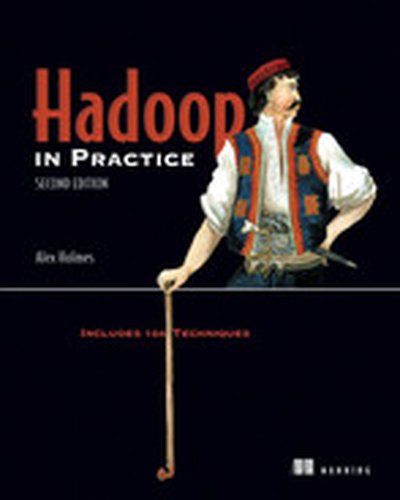
Hadoop in Practice, Second Edition

Hadoop in Practice, Second Edition provides over 100 tested, instantly useful techniques that will help you conquer big data, using Hadoop. This revised new edition covers changes and new features in the Hadoop core architecture, including MapReduce 2. Brand new chapters cover YARN and integrating Kafka, Impala, and Spark SQL with Hadoop. You'll also get new and updated techniques for Flume, Sqoop, and Mahout, all of which have seen major new versions recently. In short, this is the most practical, up-to-date coverage of Hadoop available anywhere About the Technology About the Book It's always a good time to upgrade your Hadoop skills! Hadoop in Practice, Second Edition provides a collection of 104 tested, instantly useful techniques for analyzing real-time streams, moving data securely, machine learning, managing large-scale clusters, and taming big data using Hadoop. This completely revised edition covers changes and new features in Hadoop core, including MapReduce 2 and YARN. You'll pick up hands-on best practices for integrating Spark, Kafka, and Impala with Hadoop, and get new and updated techniques for the latest versions of Flume, Sqoop, and Mahout. In short, this is the most practical, up-to-date coverage of Hadoop available. Readers need to know a programming language like Java and have basic familiarity with Hadoop. What's Inside Thoroughly updated for Hadoop 2 How to write YARN applications Integrate real-time technologies like Storm, Impala, and Spark Predictive analytics using Mahout and RR About the Reader About the Author Alex Holmes works on tough big-data problems. He is a software engineer, author, speaker, and blogger specializing in large-scale Hadoop projects. Quotes Very insightful. A deep dive into the Hadoop world. - Andrea Tarocchi, Red Hat, Inc. The most complete material on Hadoop and its ecosystem known to mankind! - Arthur Zubarev, Vital Insights Clear and concise, full of insights and highly applicable information. - Edward de Oliveira Ribeiro, DataStax, Inc. Comprehensive up-to-date coverage of Hadoop 2. - Muthusamy Manigandan, OzoneMedia

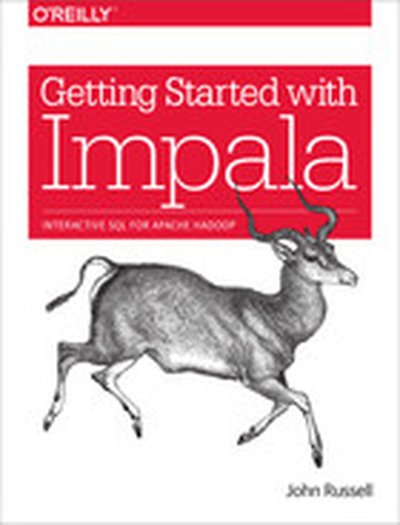
Getting Started with Impala

Learn how to write, tune, and port SQL queries and other statements for a Big Data environment, using Impala—the massively parallel processing SQL query engine for Apache Hadoop. The best practices in this practical guide help you design database schemas that not only interoperate with other Hadoop components, and are convenient for administers to manage and monitor, but also accommodate future expansion in data size and evolution of software capabilities. Written by John Russell, documentation lead for the Cloudera Impala project, this book gets you working with the most recent Impala releases quickly. Ideal for database developers and business analysts, the latest revision covers analytics functions, complex types, incremental statistics, subqueries, and submission to the Apache incubator. Getting Started with Impala includes advice from Cloudera’s development team, as well as insights from its consulting engagements with customers. Learn how Impala integrates with a wide range of Hadoop components Attain high performance and scalability for huge data sets on production clusters Explore common developer tasks, such as porting code to Impala and optimizing performance Use tutorials for working with billion-row tables, date- and time-based values, and other techniques Learn how to transition from rigid schemas to a flexible model that evolves as needs change Take a deep dive into joins and the roles of statistics

Reliability and Performance with IBM DB2 Analytics Accelerator V4.1

The IBM® DB2® Analytics Accelerator for IBM z/OS® is a high-performance appliance that integrates the IBM zEnterprise® infrastructure with IBM PureData™ for Analytics, powered by IBM Netezza® technology. With this integration, you can accelerate data-intensive and complex queries in a DB2 for z/OS highly secure and available environment. DB2 and the Analytics Accelerator appliance form a self-managing hybrid environment running online transaction processing and online transactional analytical processing concurrently and efficiently. These online transactions run together with business intelligence and online analytic processing workloads. DB2 Analytics Accelerator V4.1 expands the value of high-performance analytics. DB2 Analytics Accelerator V4.1 opens to static Structured Query Language (SQL) applications and row set processing, minimizes data movement, reduces latency, and improves availability. This IBM Redbooks® publication provides technical decision-makers with an understanding of the benefits of version 4.1 of the Analytics Accelerator with DB2 11 for z/OS. It describes the installation of the new functions, and the advantages to existing analytical processes as measured in our test environment. This book also introduces the DB2 Analytics Accelerator Loader V1.1, a tool that facilitates the data population of the DB2 Analytics Accelerator.

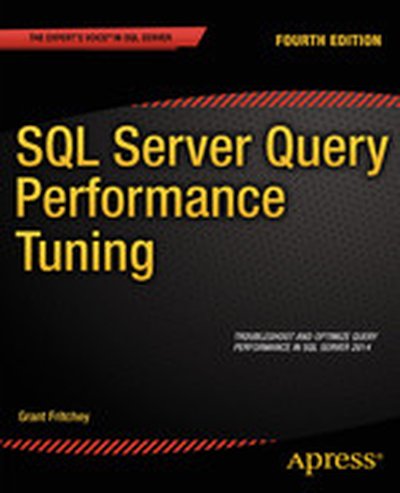
SQL Server Query Performance Tuning,Fourth Edition

Queries not running fast enough? Wondering about the in-memory database features in 2014? Tired of phone calls from frustrated users? Grant Fritchey's book SQL Server Query Performance Tuning is the answer to your SQL Server query performance problems. The book is revised to cover the very latest in performance optimization features and techniques, especially including the newly-added, in-memory database features formerly known under the code name Project Hekaton. This book provides the tools you need to approach your queries with performance in mind. SQL Server Query Performance Tuning leads you through understanding the causes of poor performance, how to identify them, and how to fix them. You’ll learn to be proactive in establishing performance baselines using tools like Performance Monitor and Extended Events. You’ll learn to recognize bottlenecks and defuse them before the phone rings. You’ll learn some quick solutions too, but emphasis is on designing for performance and getting it right, and upon heading off trouble before it occurs. Delight your users. Silence that ringing phone. Put the principles and lessons from SQL Server Query Performance Tuning into practice today. Covers the in-memory features from Project Hekaton Helps establish performance baselines and monitor against them Guides in troubleshooting and eliminating of bottlenecks that frustrate users