talk-data.com talk-data.com

Topic

Analytics

data_analysis insights metrics

528

tagged

Activity Trend

398 peak/qtr
2020-Q1 2026-Q1

Activities

Showing filtered results

Filtering by: O'Reilly Data Science Books ×
API Analytics for Product Managers

In API Analytics for Product Managers, you will learn how to approach APIs as products to drive revenue and business growth. The book provides actionable insights on researching, strategizing, marketing, and evaluating the performance of APIs in SaaS contexts. What this Book will help me do Learn to develop long-term strategies for managing APIs as a product. Master the concepts of the API lifecycle and API maturity for better management. Understand and apply key metrics to measure activation, retention, and engagement of APIs. Design support models for APIs that ensure scalability and efficiency. Gain techniques for deriving actionable business insights from metrics analysis. Author(s) Deepa Goyal is an experienced product manager who specializes in API lifecycle management and analytics strategies. With years of industry experience, she has developed deep expertise in scaling and optimizing APIs to deliver business value. Her practical and results-oriented writing style makes complex topics accessible for professionals looking to enhance their API strategies. Who is it for? Ideal for product managers, engineers, and executives in SaaS companies looking to maximize the potential of APIs. This book is especially suited for individuals with foundational knowledge of APIs aiming to refine their analytical and strategic skills. Readers will gain actionable insights to track API performance effectively and implement metrics-driven decisions. It's a must-read for those focused on leveraging APIs for business growth.
Data Mining and Predictive Analytics for Business Decisions

With many recent advances in data science, we have many more tools and techniques available for data analysts to extract information from data sets. This book will assist data analysts to move up from simple tools such as Excel for descriptive analytics to answer more sophisticated questions using machine learning. Most of the exercises use R and Python, but rather than focus on coding algorithms, the book employs interactive interfaces to these tools to perform the analysis. Using the CRISP-DM data mining standard, the early chapters cover conducting the preparatory steps in data mining: translating business information needs into framed analytical questions and data preparation. The Jamovi and the JASP interfaces are used with R and the Orange3 data mining interface with Python. Where appropriate, Voyant and other open-source programs are used for text analytics. The techniques covered in this book range from basic descriptive statistics, such as summarization and tabulation, to more sophisticated predictive techniques, such as linear and logistic regression, clustering, classification, and text analytics. Includes companion files with case study files, solution spreadsheets, data sets and charts, etc. from the book. Features: Covers basic descriptive statistics, such as summarization and tabulation, to more sophisticated predictive techniques, such as linear and logistic regression, clustering, classification, and text analytics Uses R, Python, Jamovi and JASP interfaces, and the Orange3 data mining interface Includes companion files with the case study files from the book, solution spreadsheets, data sets, etc.

CompTIA Data+ DA0-001 Exam Cram

CompTIA® Data+ DA0-001 Exam Cram is an all-inclusive study guide designed to help you pass the CompTIA Data+ DA0-001 exam. Prepare for test day success with complete coverage of exam objectives and topics, plus hundreds of realistic practice questions. Extensive prep tools include quizzes, Exam Alerts, and our essential last-minute review CramSheet. The powerful Pearson Test Prep practice software provides real-time assessment and feedback with two complete exams. Covers the critical information needed to score higher on your Data+ DA0-001 exam! Understand data concepts, environments, mining, analysis, visualization, governance, quality, and controls Work with databases, data warehouses, database schemas, dimensions, data types, structures, and file formats Acquire data and understand how it can be monetized Clean and profile data so it;s more accurate, consistent, and useful Review essential techniques for manipulating and querying data Explore essential tools and techniques of modern data analytics Understand both descriptive and inferential statistical methods Get started with data visualization, reporting, and dashboards Leverage charts, graphs, and reports for data-driven decision-making Learn important data governance concepts ...

CompTIA Data+: DAO-001 Certification Guide

The "CompTIA Data+: DAO-001 Certification Guide" is your complete resource to approaching and passing the CompTIA Data+ certification exam. This book offers clear explanations, step-by-step exercises, and practical examples designed to help you master the domain concepts essential for the DAO-001 exam. Prepare confidently and expand your career opportunities in data analytics. What this Book will help me do Understand and apply the five domains covered in the DAO-001 certification exam. Learn data preparation techniques such as collection, cleaning, and wrangling. Master descriptive statistical methods and hypothesis testing to analyze data. Create insightful visualizations and professional reports for stakeholders. Grasp the fundamentals of data governance, including data quality standards. Author(s) Cameron Dodd is an experienced data analyst and educator passionate about breaking down complex concepts. With years of teaching and hands-on analytics expertise, he has developed a student-centric approach to helping professionals achieve certification and career advancement. His structured yet relatable writing style makes learning intuitive. Who is it for? The ideal readers of this book are data professionals aiming to achieve CompTIA Data+ certification (DAO-001 exam), individuals entering the growing field of data analytics, and professionals looking to validate or expand their skills. Whether you're starting from scratch or solidifying your knowledge, this book is designed for all levels.

The Art of Data-Driven Business

Learn how to integrate data-driven methodologies and machine learning into your business decision-making processes with 'The Art of Data-Driven Business.' This comprehensive guide shows you how to apply Python-based machine learning techniques to real-world challenges, transforming your organization into an innovative and well-informed enterprise. What this Book will help me do Create professional-quality data visualizations using Python's seaborn library to derive business insights. Analyze customer behavior, including predicting churn, with machine learning techniques. Apply clustering algorithms to segment customers for targeted marketing campaigns. Utilize pandas effectively for pricing and sales analytics to optimize your pricing strategies. Forecast outcomes of promotional strategies to determine costs and benefits and maximize performance. Author(s) None Palacio is an experienced data scientist and educator who specializes in the application of machine learning to solve business problems. With extensive real-world industry experience, Palacio brings practical insights and methodologies to learners. Their teaching connects technical knowledge to actionable business strategies. Who is it for? This book is ideal for business professionals aiming to incorporate data science into their strategies and technical experts seeking to leverage machine learning for business scenarios. Beginners to Python can find foundational help, while data scientists will appreciate the focused practical applications. It's perfect for individuals seeking a strong data-driven perspective in marketing, sales, and customer management.

Fuzzy Computing in Data Science

FUZZY COMPUTING IN DATA SCIENCE This book comprehensively explains how to use various fuzzy-based models to solve real-time industrial challenges. The book provides information about fundamental aspects of the field and explores the myriad applications of fuzzy logic techniques and methods. It presents basic conceptual considerations and case studies of applications of fuzzy computation. It covers the fundamental concepts and techniques for system modeling, information processing, intelligent system design, decision analysis, statistical analysis, pattern recognition, automated learning, system control, and identification. The book also discusses the combination of fuzzy computation techniques with other computational intelligence approaches such as neural and evolutionary computation. Audience Researchers and students in computer science, artificial intelligence, machine learning, big data analytics, and information and communication technology.

Data Literacy in Practice

"Data Literacy in Practice" teaches readers to unlock the power of data for making smarter decisions. You'll learn how to understand and work with data, gain the ability to derive actionable insights, and develop the skills required for data-informed decision-making. What this Book will help me do Understand the basics of data literacy and the importance of data in decision-making. Learn to visualize data effectively using charts and graphs tailored to your audience. Master the application of the four-pillar model for organizational data literacy advancement. Develop proficiency in managing data environments and assessing data quality. Become competent in deriving actionable insights and critical questioning for better analysis. Author(s) Angelika Klidas and Kevin Hanegan are pioneers in the field of data literacy with extensive experience in data analytics. Both are seasoned educators at top universities and bring their expertise to this book to help readers understand and leverage the power of data. Who is it for? "Data Literacy in Practice" is ideal for data analysts, professionals, and teams looking to enhance their data literacy skills. Readers should have a desire to utilize data effectively in their roles, regardless of prior experience. The book is designed to guide both beginners starting out and those who aim to deepen their knowledge.

Pro DAX and Data Modeling in Power BI: Creating the Perfect Semantic Layer to Drive Your Dashboard Analytics

Develop powerful data models that bind data from disparate sources into a coherent whole. Then extend your data models using DAX–the query language that underpins Power BI–to create reusable measures to deliver finely-crafted custom calculations in your dashboards. This book starts off teaching you how to define and enhance the core structures of your data model to make it a true semantic layer that transforms complex data into familiar business terms. You’ll learn how to create calculated columns to solve basic analytical challenges. Then you’ll move up to mastering DAX measures to finely slice and dice your data. The book also shows how to handle temporal analysis in Power BI using a Date dimension. You will see how DAX Time Intelligence functions can simplify your analysis of data over time. Finally, the book shows how to extend DAX to filter and calculate datasets and develop DAX table functions and variables to handle complex queries. What You Will Learn Create clear and efficient data models that support in-depth analytics Define core attributes such as data types and standardized formatting consistently throughout a data model Define cross-filtering settings to enhance the data model Make use of DAX to create calculated columns and custom tables Extend your data model with custom calculations and reusable measures using DAX Perform time-based analysis using a Date dimension and Time Intelligence functions Who This Book Is For Everyone from the CEO to the Business Intelligence developer and from BI and Data architects and analysts to power users and IT managers can use this book to outshine the competition and create the data framework that they need and interactive dashboards using Power BI

Bayesian Analysis with Excel and R

Leverage the full power of Bayesian analysis for competitive advantage Bayesian methods can solve problems you can't reliably handle any other way. Building on your existing Excel analytics skills and experience, Microsoft Excel MVP Conrad Carlberg helps you make the most of Excel's Bayesian capabilities and move toward R to do even more. Step by step, with real-world examples, Carlberg shows you how to use Bayesian analytics to solve a wide array of real problems. Carlberg clarifies terminology that often bewilders analysts, provides downloadable Excel workbooks you can easily adapt to your own needs, and offers sample R code to take advantage of the rethinking package in R and its gateway to Stan. As you incorporate these Bayesian approaches into your analytical toolbox, you'll build a powerful competitive advantage for your organization---and yourself. Explore key ideas and strategies that underlie Bayesian analysis Distinguish prior, likelihood, and posterior distributions, and compare algorithms for driving sampling inputs Use grid approximation to solve simple univariate problems, and understand its limits as parameters increase Perform complex simulations and regressions with quadratic approximation and Richard McElreath's quap function Manage text values as if they were numeric Learn today's gold-standard Bayesian sampling technique: Markov Chain Monte Carlo (MCMC) Use MCMC to optimize execution speed in high-complexity problems Discover when frequentist methods fail and Bayesian methods are essential---and when to use both in tandem ...

Learning Google Analytics

Why is Google Analytics 4 the most modern data model available for digital marketing analytics? Rather than simply reporting what has happened, GA4's new cloud integrations enable more data activation, linking online and offline data across all your streams to provide end-to-end marketing data. This practical book prepares you for the future of digital marketing by demonstrating how GA4 supports these additional cloud integrations. Author Mark Edmondson, Google developer expert for Google Analytics and Google Cloud, provides a concise yet comprehensive overview of GA4 and its cloud integrations. Data, business, and marketing analysts will learn major facets of GA4's powerful new analytics model, with topics including data architecture and strategy, and data ingestion, storage, and modeling. You'll explore common data activation use cases and get the guidance you need to implement them. You'll learn: How Google Cloud integrates with GA4 The potential use cases that GA4 integrations can enable Skills and resources needed to create GA4 integrations How much GA4 data capture is necessary to enable use cases The process of designing dataflows from strategy through data storage, modeling, and activation How to adapt the use cases to fit your business needs

R 4 Data Science Quick Reference: A Pocket Guide to APIs, Libraries, and Packages

In this handy, quick reference book you'll be introduced to several R data science packages, with examples of how to use each of them. All concepts will be covered concisely, with many illustrative examples using the following APIs: readr, dibble, forecasts, lubridate, stringr, tidyr, magnittr, dplyr, purrr, ggplot2, modelr, and more. With R 4 Data Science Quick Reference, you'll have the code, APIs, and insights to write data science-based applications in the R programming language. You'll also be able to carry out data analysis. All source code used in the book is freely available on GitHub.. What You'll Learn Implement applicable R 4 programming language specification features Import data with readr Work with categories using forcats, time and dates with lubridate, and strings with stringr Format data using tidyr and then transform that data using magrittr and dplyr Write functions with R for data science, data mining, and analytics-based applications Visualize data with ggplot2 and fit data to models using modelr Who This Book Is For Programmers new to R's data science, data mining, and analytics packages. Some prior coding experience with R in general is recommended.

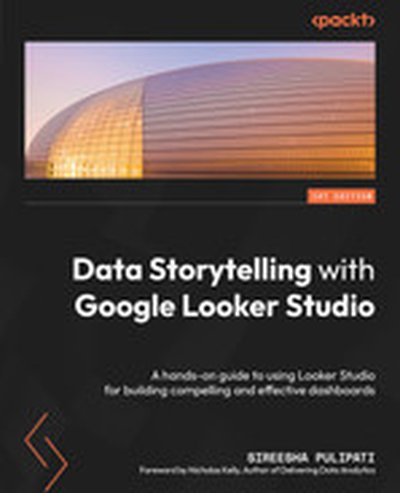
Data Storytelling with Google Looker Studio

Data Storytelling with Google Looker Studio is your definitive guide to creating compelling dashboards using Looker Studio. In this book, you'll journey through the principles of effective data visualization and learn how to harness Looker Studio to convey impactful data stories. Step by step, you'll acquire the skills to design, build, and refine dashboards using real-world data. What this Book will help me do Understand and apply data visualization principles to enhance data analysis and storytelling. Master the features and capabilities of Google Looker Studio for dashboard building. Learn to use a structured 3D approach - determine, design, and develop - for creating dashboards. Explore practical examples to apply your knowledge effectively in real projects. Gain insights into monitoring and measuring the impact of Looker Studio dashboards. Author(s) Sireesha Pulipati is an accomplished data analytics professional with extensive experience in business intelligence tools and data visualization. Leveraging her years of expertise, she has crafted this book to empower readers to effectively use Looker Studio. Sireesha's approachable teaching style and practical insights make complex concepts accessible to learners. Who is it for? This book is perfect for aspiring data analysts eager to master data visualization and dashboard design. It caters to beginners and requires no prior experience, making it a great starting point. Intermediate and seasoned professionals in analytics and business intelligence who are keen on using Looker Studio effectively will find immense value as well. If you aim to create insightful dashboards and refine your data storytelling skills, this book is for you.

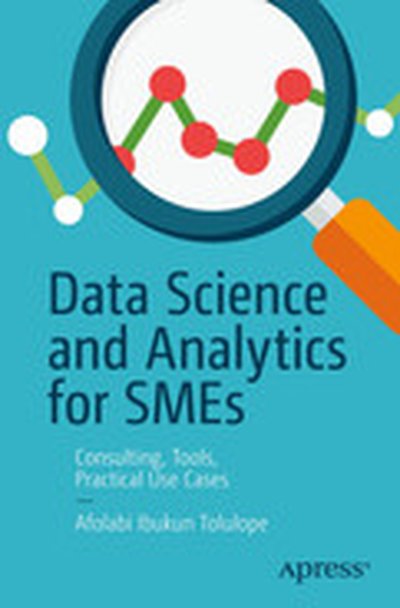
Data Science and Analytics for SMEs: Consulting, Tools, Practical Use Cases

Master the tricks and techniques of business analytics consulting, specifically applicable to small-to-medium businesses (SMEs). Written to help you hone your business analytics skills, this book applies data science techniques to help solve problems and improve upon many aspects of a business' operations. SMEs are looking for ways to use data science and analytics, and this need is becoming increasingly pressing with the ongoing digital revolution. The topics covered in the books will help to provide the knowledge leverage needed for implementing data science in small business. The demand of small business for data analytics are in conjunction with the growing number of freelance data science consulting opportunities; hence this book will provide insight on how to navigate this new terrain. This book uses a do-it-yourself approach to analytics and introduces tools that are easily available online and are non-programming based. Data science will allow SMEs to understand their customer loyalty, market segmentation, sales and revenue increase etc. more clearly. Data Science and Analytics for SMEs is particularly focused on small businesses and explores the analytics and data that can help them succeed further in their business. What You'll Learn Create and measure the success of their analytics project Start your business analytics consulting career Use solutions taught in the book in practical uses cases and problems Who This Book Is For Business analytics enthusiasts who are not particularly programming inclined, small business owners and data science consultants, data science and business students, and SME (small-to-medium enterprise) analysts

Learning Microsoft Power BI

Microsoft Power BI is a data analytics and visualization tool powerful enough for the most demanding data scientists, but accessible enough for everyday use for anyone who needs to get more from data. The market has many books designed to train and equip professional data analysts to use Power BI, but few of them make this tool accessible to anyone who wants to get up to speed on their own. This streamlined intro to Power BI covers all the foundational aspects and features you need to go from "zero to hero" with data and visualizations. Whether you work with large, complex datasets or work in Microsoft Excel, author Jeremey Arnold shows you how to teach yourself Power BI and use it confidently as a regular data analysis and reporting tool. You'll learn how to: Import, manipulate, visualize, and investigate data in Power BI Approach solutions for both self-service and enterprise BI Use Power BI in your organization's business intelligence strategy Produce effective reports and dashboards Create environments for sharing reports and managing data access with your team Determine the right solution for using Power BI offerings based on size, security, and computational needs

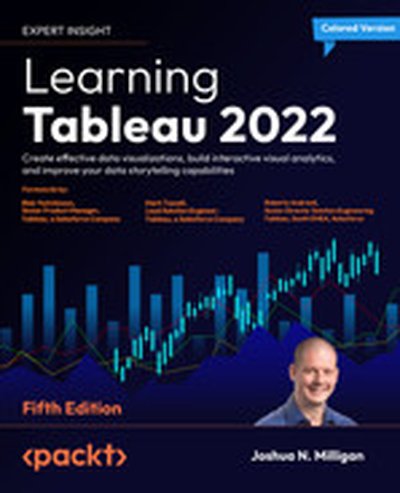
Learning Tableau 2022 - Fifth Edition

Learning Tableau 2022 is your comprehensive guide to mastering Tableau, one of the most popular tools for data visualization and analysis. Through this book, you will understand how to build impactful visualizations, create interactive dashboards, and tell compelling stories with data. With updated coverage of Tableau 2022's latest features, this book will take your data storytelling skills to the next level. What this Book will help me do Develop effective visualizations and dashboards to present complex data intuitively. Enhance data analysis with Tableau's advanced features like clustering, AI extensions, and Explain Data. Utilize calculations and parameters for tailoring and enriching analytics. Optimize workflows for data cleaning and preparation using Tableau Prep Builder. Confidently leverage Tableau for interlinking datasets and performing geospatial analysis. Author(s) Joshua N. Milligan, the author of Learning Tableau 2022, is a seasoned Tableau Zen Master. He has years of experience helping individuals and businesses transform their data into actionable insights through visualization and analysis. With a focus on clarity and practical applications, Joshua explains complex concepts in an approachable manner and equips readers with the skills to bring their ideas to life in Tableau. Who is it for? This book is ideal for business intelligence developers, data analysts, or any professional eager to improve their data visualization skills. Both beginners looking to understand Tableau from the ground up and intermediate users aiming to explore advanced Tableau techniques will find it valuable. A Tableau license and a thirst for learning are all you'll need to embark on this data visualization journey.

Pro Data Mashup for Power BI: Powering Up with Power Query and the M Language to Find, Load, and Transform Data

This book provides all you need to find data from external sources and load and transform that data into Power BI where you can mine it for business insights and a competitive edge. This ranges from connecting to corporate databases such as Azure SQL and SQL Server to file-based data sources, and cloud- and web-based data sources. The book also explains the use of Direct Query and Live Connect to establish instant connections to databases and data warehouses and avoid loading data. The book provides detailed guidance on techniques for transforming inbound data into normalized data sets that are easy to query and analyze. This covers data cleansing, data modification, and standardization as well as merging source data into robust data structures that can feed into your data model. You will learn how to pivot and transpose data and extrapolate missing values as well as harness external programs such as R and Python into a Power Query data flow. You also will see how to handle errors in source data and extend basic data ingestion to create robust and parameterized data load and transformation processes. Everything in this book is aimed at helping you deliver compelling and interactive insight with remarkable ease using Power BI’s built-in data load and transformation tools. What You Will Learn Connect Power BI to a range of external data sources Prepare data from external sources for easy analysis in Power BI Cleanse data from duplicates, outliers, and other bad values Make live connections from which to refresh data quickly and easily Apply advanced techniques to interpolate missing data Who This Book Is For All Power BI users from beginners to super users. Any user of the world’s leading dashboarding toolcan leverage the techniques explained in this book to turbo-charge their data preparation skills and learn how a wide range of external data sources can be harnessed and loaded into Power BI to drive their analytics. No previous knowledge of working with data, databases, or external data sources is required—merely the need to find, transform, and load data into Power BI..

Codeless Time Series Analysis with KNIME

This book, "Codeless Time Series Analysis with KNIME," serves as your practical guide to mastering time series analysis using the KNIME Analytics Platform. By diving into this book, you'll explore a variety of statistical and machine learning techniques applied explicitly to real-world time series scenarios, helping you build predictive and analysis models effectively. What this Book will help me do Leverage KNIME's powerful tools to preprocess and prepare time series data for analysis. Visualize and dissect time series data into its components like trends and seasonality. Apply statistical models like ARIMA to analyze and forecast continuous data. Train and utilize neural networks including LSTM models for predictive analytics. Integrate external tools like Spark and H2O to enhance your forecasting workflows. Author(s) The authors, including experts from KNIME AG, Corey Weisinger, Maarit Widmann, and Daniele Tonini, collectively bring extensive experience in data analytics and time series modeling. Their expertise with KNIME's tools and real-world time series analysis applications ensures readers gain insights into practical, hands-on techniques. Who is it for? This book is ideally suited for data analysts and scientists eager to explore time series analysis through codeless methodologies. Beginners will benefit from the introductory explanations, while seasoned professionals will find value in the advanced topics and real-world examples. A basic understanding of the KNIME platform is recommended to get the most from this book.

Exam Ref PL-300 Microsoft Power BI Data Analyst

Prepare for Microsoft Exam PL-300 and help demonstrate your real-world ability to deliver actionable insights with Power BI by leveraging available data and domain expertise; to provide meaningful business value through clear data visualizations; to enable others to perform self-service analytics, and to deploy and configure solutions for consumption. Designed for data analysts, business users, and other professionals, this Exam Ref focuses on the critical thinking and decision-making acumen needed for success at the Microsoft Certified: Power BI Data Analyst Associate level. Focus on the expertise measured by these objectives: Prepare the data Model the data Visualize and analyze the data Deploy and maintain assets This Microsoft Exam Ref: Organizes its coverage by exam objectives Features strategic, what-if scenarios to challenge you Assumes you are a data analyst, business intelligence professional, report creator, or other professional seeking to validate your skills and knowledge in analyzing data with Power BI About the Exam Exam PL-300 focuses on knowledge needed to get data from different data sources; clean, transform, and load data; design and develop data models; create model calculations with DAX; optimize model performance; create reports and dashboards; enhance reports for usability and storytelling; identify patterns and trends; and manage files, datasets, and workspaces. About Microsoft Certification Passing this exam fulfills your requirements for the Microsoft Certified: Power BI Data Analyst Associate certification, demonstrating your understanding of data repositories and data processes, and your skills in designing and building scalable data models, cleaning and transforming data, enabling advanced analytic capabilities to provide meaningful business value, and collaborating with key stakeholders to deliver relevant insights based on identified business requirements. See full details at: microsoft.com/learn ...

Hands-On Healthcare Data

Healthcare is the next frontier for data science. Using the latest in machine learning, deep learning, and natural language processing, you'll be able to solve healthcare's most pressing problems: reducing cost of care, ensuring patients get the best treatment, and increasing accessibility for the underserved. But first, you have to learn how to access and make sense of all that data. This book provides pragmatic and hands-on solutions for working with healthcare data, from data extraction to cleaning and harmonization to feature engineering. Author Andrew Nguyen covers specific ML and deep learning examples with a focus on producing high-quality data. You'll discover how graph technologies help you connect disparate data sources so you can solve healthcare's most challenging problems using advanced analytics. You'll learn: Different types of healthcare data: electronic health records, clinical registries and trials, digital health tools, and claims data The challenges of working with healthcare data, especially when trying to aggregate data from multiple sources Current options for extracting structured data from clinical text How to make trade-offs when using tools and frameworks for normalizing structured healthcare data How to harmonize healthcare data using terminologies, ontologies, and mappings and crosswalks

Effective Data Science Infrastructure

Simplify data science infrastructure to give data scientists an efficient path from prototype to production. In Effective Data Science Infrastructure you will learn how to: Design data science infrastructure that boosts productivity Handle compute and orchestration in the cloud Deploy machine learning to production Monitor and manage performance and results Combine cloud-based tools into a cohesive data science environment Develop reproducible data science projects using Metaflow, Conda, and Docker Architect complex applications for multiple teams and large datasets Customize and grow data science infrastructure Effective Data Science Infrastructure: How to make data scientists more productive is a hands-on guide to assembling infrastructure for data science and machine learning applications. It reveals the processes used at Netflix and other data-driven companies to manage their cutting edge data infrastructure. In it, you’ll master scalable techniques for data storage, computation, experiment tracking, and orchestration that are relevant to companies of all shapes and sizes. You’ll learn how you can make data scientists more productive with your existing cloud infrastructure, a stack of open source software, and idiomatic Python. The author is donating proceeds from this book to charities that support women and underrepresented groups in data science. About the Technology Growing data science projects from prototype to production requires reliable infrastructure. Using the powerful new techniques and tooling in this book, you can stand up an infrastructure stack that will scale with any organization, from startups to the largest enterprises. About the Book Effective Data Science Infrastructure teaches you to build data pipelines and project workflows that will supercharge data scientists and their projects. Based on state-of-the-art tools and concepts that power data operations of Netflix, this book introduces a customizable cloud-based approach to model development and MLOps that you can easily adapt to your company’s specific needs. As you roll out these practical processes, your teams will produce better and faster results when applying data science and machine learning to a wide array of business problems. What's Inside Handle compute and orchestration in the cloud Combine cloud-based tools into a cohesive data science environment Develop reproducible data science projects using Metaflow, AWS, and the Python data ecosystem Architect complex applications that require large datasets and models, and a team of data scientists About the Reader For infrastructure engineers and engineering-minded data scientists who are familiar with Python. About the Author At Netflix, Ville Tuulos designed and built Metaflow, a full-stack framework for data science. Currently, he is the CEO of a startup focusing on data science infrastructure. Quotes By reading and referring to this book, I’m confident you will learn how to make your machine learning operations much more efficient and productive. - From the Foreword by Travis Oliphant, Author of NumPy, Founder of Anaconda, PyData, and NumFOCUS Effective Data Science Infrastructure is a brilliant book. It’s a must-have for every data science team. - Ninoslav Cerkez, Logit More data science. Less headaches. - Dr. Abel Alejandro Coronado Iruegas, National Institute of Statistics and Geography of Mexico Indispensable. A copy should be on every data engineer’s bookshelf. - Matthew Copple, Grand River Analytics