talk-data.com talk-data.com

Topic

data-science

2252

tagged

Activity Trend

1 peak/qtr
2020-Q1 2026-Q1

Activities

2252 activities · Newest first

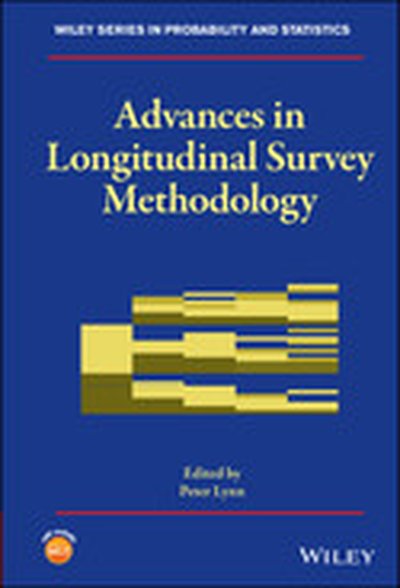
Advances in Longitudinal Survey Methodology

Advances in Longitudinal Survey Methodology Explore an up-to-date overview of best practices in the implementation of longitudinal surveys from leading experts in the field of survey methodology Advances in Longitudinal Survey Methodology delivers a thorough review of the most current knowledge in the implementation of longitudinal surveys. The book provides a comprehensive overview of the many advances that have been made in the field of longitudinal survey methodology over the past fifteen years, as well as extending the topic coverage of the earlier volume, “Methodology of Longitudinal Surveys”, published in 2009. This new edited volume covers subjects like dependent interviewing, interviewer effects, panel conditioning, rotation group bias, measurement of cognition, and weighting. New chapters discussing the recent shift to mixed-mode data collection and obtaining respondents’ consent to data linkage add to the book’s relevance to students and social scientists seeking to understand modern challenges facing data collectors today. Readers will also benefit from the inclusion of: A thorough introduction to refreshment sampling for longitudinal surveys, including consideration of principles, sampling frame, sample design, questionnaire design, and frequency An exploration of the collection of biomarker data in longitudinal surveys, including detailed measurements of ill health, biological pathways, and genetics in longitudinal studies An examination of innovations in participant engagement and tracking in longitudinal surveys, including current practices and new evidence on internet and social media for participant engagement. An invaluable source for post-graduate students, professors, and researchers in the field of survey methodology, Advances in Longitudinal Survey Methodology will also earn a place in the libraries of anyone who regularly works with or conducts longitudinal surveys and requires a one-stop reference for the latest developments and findings in the field.
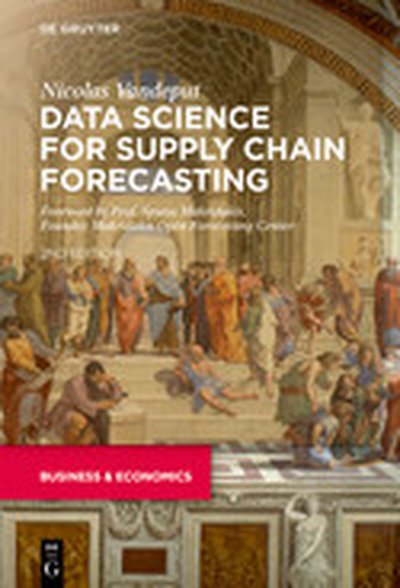
Data Science for Supply Chain Forecasting

Using data science in order to solve a problem requires a scientific mindset more than coding skills. Data Science for Supply Chain Forecasting, Second Edition contends that a true scientific method which includes experimentation, observation, and constant questioning must be applied to supply chains to achieve excellence in demand forecasting. This second edition adds more than 45 percent extra content with four new chapters including an introduction to neural networks and the forecast value added framework. Part I focuses on statistical "traditional" models, Part II, on machine learning, and the all-new Part III discusses demand forecasting process management. The various chapters focus on both forecast models and new concepts such as metrics, underfitting, overfitting, outliers, feature optimization, and external demand drivers. The book is replete with do-it-yourself sections with implementations provided in Python (and Excel for the statistical models) to show the readers how to apply these models themselves. This hands-on book, covering the entire range of forecasting—from the basics all the way to leading-edge models—will benefit supply chain practitioners, forecasters, and analysts looking to go the extra mile with demand forecasting. Events around the book Link to a De Gruyter Online Event in which the author Nicolas Vandeput together with Stefan de Kok, supply chain innovator and CEO of Wahupa; Spyros Makridakis, professor at the University of Nicosia and director of the Institute For the Future (IFF); and Edouard Thieuleux, founder of AbcSupplyChain, discuss the general issues and challenges of demand forecasting and provide insights into best practices (process, models) and discussing how data science and machine learning impact those forecasts. The event will be moderated by Michael Gilliland, marketing manager for SAS forecasting software: https://youtu.be/1rXjXcabW2s

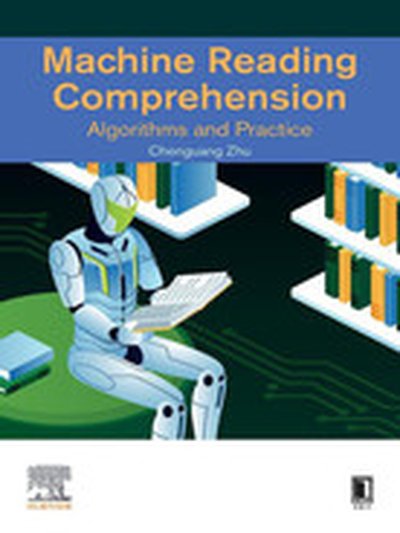
Machine Reading Comprehension

Machine reading comprehension (MRC) is a cutting-edge technology in natural language processing (NLP). MRC has recently advanced significantly, surpassing human parity in several public datasets. It has also been widely deployed by industry in search engine and quality assurance systems. Machine Reading Comprehension: Algorithms and Practice performs a deep-dive into MRC, offering a resource on the complex tasks this technology involves. The title presents the fundamentals of NLP and deep learning, before introducing the task, models, and applications of MRC. This volume gives theoretical treatment to solutions and gives detailed analysis of code, and considers applications in real-world industry. The book includes basic concepts, tasks, datasets, NLP tools, deep learning models and architecture, and insight from hands-on experience. In addition, the title presents the latest advances from the past two years of research. Structured into three sections and eight chapters, this book presents the basis of MRC; MRC models; and hands-on issues in application. This book offers a comprehensive solution for researchers in industry and academia who are looking to understand and deploy machine reading comprehension within natural language processing. Presents the first comprehensive resource on machine reading comprehension (MRC) Performs a deep-dive into MRC, from fundamentals to latest developments Offers the latest thinking and research in the field of MRC, including the BERT model Provides theoretical discussion, code analysis, and real-world applications of MRC Gives insight from research which has led to surpassing human parity in MRC

Tableau Prep Cookbook

Tableau Prep Cookbook is your practical guide to mastering Tableau Prep Builder for data preparation. Through real-world examples, you will learn techniques to clean, combine, and transform your data, enabling you to create robust pipelines for analytics and insights. Gain hands-on experience with concepts like data cleaning, advanced calculations, and preparing data for Business Intelligence tools. What this Book will help me do Master cleaning and combining data sources for analysis using Tableau Prep. Learn to create and deploy workflows for data preparation within your organization. Develop proficiency in building robust datasets for BI and analytics applications. Apply advanced techniques like scripting and custom calculations in Tableau Prep. Get hands-on experience by working through realistic, practical data scenarios. Author(s) None Kleine is an experienced data analytics professional with a passion for empowering organizations through robust data pipelines. Drawing from years of experience in BI tools and data preparation, None presents Tableau Prep Cookbook with a clear, actionable approach to learning. Their expertise ensures that readers gain practical skills to use Tableau Prep effectively. Who is it for? This book is perfect for data analysts, business intelligence professionals, and Tableau users looking to add Tableau Prep to their skills. If you're starting with beginner knowledge in data preparation or are looking to enhance your ability to manage data workflows, this book is designed for you. Gain the skills you need to prepare data effectively using Tableau Prep and elevate your analytics capabilities.

Beginning Power Apps: The Non-Developer's Guide to Building Business Applications

Transform the way your business works with easy-to-build apps. With this updated and expanded second edition, you can build business apps that work with your company's systems and databases, without having to enlist the expertise of costly, professionally trained software developers. In this new edition, business applications expert Tim Leung offers step-by-step guidance on how you can improve all areas of your business. He shows how you can replace manual or paper processes with modern apps that run on phone or tablet devices. For administrative and back-office operations, he covers how to build apps with workflow and dashboard capabilities. To facilitate collaboration with customers and clients, you’ll learn how to build secure web portals with data entry capabilities, including how to customize those portals with code. This hands-on new edition has 10 new chapters—including coverage on model-driven and portal apps, artificial intelligence, building components using the Power Apps Component Framework, using PowerShell for administration, and more—complete with context, explanatory screenshots, and non-technical terminology. What You Will Learn Create offline capable mobile apps and responsive web apps Carry out logic, data access, and data entry through formulas Embellish apps with charting, file handling, photo, barcode, and location features Set up Common Data Service, SharePoint, and SQL data sources Use AI to predict outcomes, recognize images, and analyze sentiment Integrate apps with external web services and automate tasks with Power Automate Build reusable code and canvas components, make customizations with JavaScript Transfer apps and data, and secure, administer, and monitor Power Apps environments Who This Book Is For Beginners and non-developers, and assumes no prior knowledge of Power Apps

Forecasting Time Series Data with Facebook Prophet

Delve into the art of time series forecasting with the comprehensive power of Facebook Prophet. This tool enables users to develop precise forecasting models with simplicity and effectiveness. Through this book, you'll explore Prophet's core functionality and advanced configurations, equipping yourself with the knowledge to proficiently model and predict data trends. What this Book will help me do Build intuitive and effective forecasting models using Facebook Prophet. Understand the role and implementation of seasonality and holiday effects in time series data. Identify and address outliers and special data events effectively. Optimize forecasts using advanced techniques like hyperparameter tuning and additional regressors. Evaluate and deploy forecasting models in production settings for practical applications. Author(s) Greg Rafferty is a seasoned data science professional with extensive experience in time series forecasting. Having worked on diverse forecasting projects, Greg brings a unique perspective that integrates practicality and depth. His approachable writing style makes complex topics accessible and actionable. Who is it for? This book is tailored for data scientists, analysts, and developers seeking to enhance their forecasting capabilities using Python. If you have a grounding in Python and a basic understanding of forecasting principles, you will find this book a valuable resource to sharpen your expertise and achieve new forecasting precision.

Data Science Revealed: With Feature Engineering, Data Visualization, Pipeline Development, and Hyperparameter Tuning

Get insight into data science techniques such as data engineering and visualization, statistical modeling, machine learning, and deep learning. This book teaches you how to select variables, optimize hyper parameters, develop pipelines, and train, test, and validate machine and deep learning models. Each chapter includes a set of examples allowing you to understand the concepts, assumptions, and procedures behind each model. The book covers parametric methods or linear models that combat under- or over-fitting using techniques such as Lasso and Ridge. It includes complex regression analysis with time series smoothing, decomposition, and forecasting. It takes a fresh look at non-parametric models for binary classification (logistic regression analysis) and ensemble methods such as decision trees, support vector machines, and naive Bayes. It covers the most popular non-parametric method for time-event data (the Kaplan-Meier estimator). It also covers ways of solving classification problems using artificial neural networks such as restricted Boltzmann machines, multi-layer perceptrons, and deep belief networks. The book discusses unsupervised learning clustering techniques such as the K-means method, agglomerative and Dbscan approaches, and dimension reduction techniques such as Feature Importance, Principal Component Analysis, and Linear Discriminant Analysis. And it introduces driverless artificial intelligence using H2O. After reading this book, you will be able to develop, test, validate, and optimize statistical machine learning and deep learning models, and engineer, visualize, and interpret sets of data. What You Will Learn Design, develop, train, and validate machine learning and deep learning models Find optimal hyper parameters for superior model performance Improve model performance using techniques such as dimension reduction and regularization Extract meaningful insights for decision making using data visualization Who This Book Is For Beginning and intermediate level data scientists and machine learning engineers

Extending Microsoft Power Apps with Power Apps Component Framework

Extending Microsoft Power Apps with Power Apps Component Framework is your ultimate guide to mastering the creation and deployment of advanced code components within the Microsoft Power Apps environment. You'll explore the framework's fundamentals and advanced techniques through hands-on examples, enabling you to leverage its full capabilities. What this Book will help me do Understand the Power Apps Component Framework and its development lifecycle. Develop custom controls using modern web development technologies. Debug and troubleshoot components effectively with the help of tools like Fiddler. Implement advanced concepts like authentication profiles and data caching. Deploy and configure components across both model-driven and canvas apps. Author(s) None Naglekar is a seasoned software developer specializing in Microsoft Power Platform and has been crafting enterprise solutions using Power Apps for several years. With a strong background in both platform extensibility and modern web development practices, None brings extensive practical knowledge to this book. Their teaching approach focuses on clarity and real-world applications, making complex topics approachable and actionable. Who is it for? This book is written for developers with some experience in Power Apps and web development who are looking to enhance their skills in extending Power Apps functionality. Ideal for professionals aiming to build advanced custom components using the Power Apps Component Framework, this book helps you turn ideas into deployable solutions. It's suited for programmers who want to deepen their understanding of extending Microsoft's low-code platform.

Getting Started with SAS Programming

Get up and running with SAS using Ron Cody’s easy-to-follow, step-by-step guide. Aimed at beginners, Getting Started with SAS Programming: Using SAS Studio in the Cloud uses short examples to teach SAS programming from the basics to more advanced topics in the point-and-click interactive environment of SAS Studio. To begin, you will learn how to register for SAS OnDemand for Academics, an online delivery platform for teaching and learning statistical analysis that provides free access to SAS software via the cloud. The first part of the book shows you how to use SAS Studio built-in tasks to produce a report, summarize data, and create charts and graphs. It also describes how you can perform basic statistical tests using the interactive point-and-click environment. The second part of the book uses easy-to-follow examples to show you how to write your own SAS programs and how to use SAS procedures to perform a variety of tasks. This part of the book also explains how to read data from a variety of sources: text files, Excel workbooks, and CSV files. In order to get familiar with the SAS Studio environment, this book also shows you how to access dozens of interesting data sets that are included with the SAS OnDemand for Academics platform.

Intelligent Data Analytics for Terror Threat Prediction

Intelligent data analytics for terror threat prediction is an emerging field of research at the intersection of information science and computer science, bringing with it a new era of tremendous opportunities and challenges due to plenty of easily available criminal data for further analysis. This book provides innovative insights that will help obtain interventions to undertake emerging dynamic scenarios of criminal activities. Furthermore, it presents emerging issues, challenges and management strategies in public safety and crime control development across various domains. The book will play a vital role in improvising human life to a great extent. Researchers and practitioners working in the fields of data mining, machine learning and artificial intelligence will greatly benefit from this book, which will be a good addition to the state-of-the-art approaches collected for intelligent data analytics. It will also be very beneficial for those who are new to the field and need to quickly become acquainted with the best performing methods. With this book they will be able to compare different approaches and carry forward their research in the most important areas of this field, which has a direct impact on the betterment of human life by maintaining the security of our society. No other book is currently on the market which provides such a good collection of state-of-the-art methods for intelligent data analytics-based models for terror threat prediction, as intelligent data analytics is a newly emerging field and research in data mining and machine learning is still in the early stage of development.

MATLAB Recipes: A Problem-Solution Approach

Learn from state-of-the-art examples in robotics, motors, detection filters, chemical processes, aircraft, and spacecraft. With this book you will review contemporary MATLAB coding including the latest MATLAB language features and use MATLAB as a software development environment including code organization, GUI development, and algorithm design and testing. Features now covered include the new graph and digraph classes for charts and networks; interactive documents that combine text, code, and output; a new development environment for building apps; locally defined functions in scripts; automatic expansion of dimensions; tall arrays for big data; the new string type; new functions to encode/decode JSON; handling non-English languages; the new class architecture; the Mocking framework; an engine API for Java; the cloud-based MATLAB desktop; the memoize function; and heatmap charts. MATLAB Recipes: A Problem-Solution Approach, Second Edition provides practical, hands-on code snippets and guidance for using MATLAB to build a body of code you can turn to time and again for solving technical problems in your work. Develop algorithms, test them, visualize the results, and pass the code along to others to create a functional code base for your firm. What You Will Learn Get up to date with the latest MATLAB up to and including MATLAB 2020b Code in MATLAB Write applications in MATLAB Build your own toolbox of MATLAB code to increase your efficiency and effectiveness Who This Book Is For Engineers, data scientists, and students wanting a book rich in examples using MATLAB.

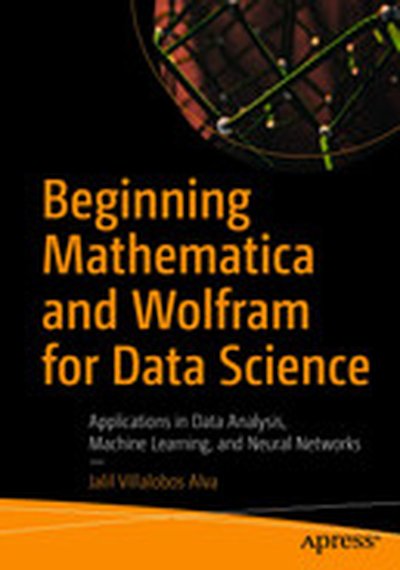
Beginning Mathematica and Wolfram for Data Science: Applications in Data Analysis, Machine Learning, and Neural Networks

Enhance your data science programming and analysis with the Wolfram programming language and Mathematica, an applied mathematical tools suite. The book will introduce you to the Wolfram programming language and its syntax, as well as the structure of Mathematica and its advantages and disadvantages. You’ll see how to use the Wolfram language for data science from a theoretical and practical perspective. Learning this language makes your data science code better because it is very intuitive and comes with pre-existing functions that can provide a welcoming experience for those who use other programming languages. You’ll cover how to use Mathematica where data management and mathematical computations are needed. Along the way you’ll appreciate how Mathematica provides a complete integrated platform: it has a mixed syntax as a result of its symbolic and numerical calculations allowing it to carry out various processes without superfluous lines of code. You’ll learn to use its notebooks as a standard format, which also serves to create detailed reports of the processes carried out. What You Will Learn Use Mathematica to explore data and describe the concepts using Wolfram language commands Create datasets, work with data frames, and create tables Import, export, analyze, and visualize data Work with the Wolfram data repository Build reports on the analysis Use Mathematica for machine learning, with different algorithms, including linear, multiple, and logistic regression; decision trees; and data clustering Who This Book Is For Data scientists new to using Wolfram and Mathematica as a language/tool to program in. Programmers should have some prior programming experience, but can be new to the Wolfram language.

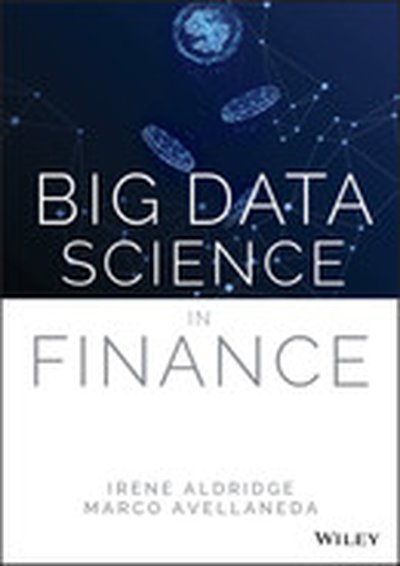
Big Data Science in Finance

Explains the mathematics, theory, and methods of Big Data as applied to finance and investing Data science has fundamentally changed Wall Street—applied mathematics and software code are increasingly driving finance and investment-decision tools. Big Data Science in Finance examines the mathematics, theory, and practical use of the revolutionary techniques that are transforming the industry. Designed for mathematically-advanced students and discerning financial practitioners alike, this energizing book presents new, cutting-edge content based on world-class research taught in the leading Financial Mathematics and Engineering programs in the world. Marco Avellaneda, a leader in quantitative finance, and quantitative methodology author Irene Aldridge help readers harness the power of Big Data. Comprehensive in scope, this book offers in-depth instruction on how to separate signal from noise, how to deal with missing data values, and how to utilize Big Data techniques in decision-making. Key topics include data clustering, data storage optimization, Big Data dynamics, Monte Carlo methods and their applications in Big Data analysis, and more. This valuable book: Provides a complete account of Big Data that includes proofs, step-by-step applications, and code samples Explains the difference between Principal Component Analysis (PCA) and Singular Value Decomposition (SVD) Covers vital topics in the field in a clear, straightforward manner Compares, contrasts, and discusses Big Data and Small Data Includes Cornell University-tested educational materials such as lesson plans, end-of-chapter questions, and downloadable lecture slides Big Data Science in Finance: Mathematics and Applications is an important, up-to-date resource for students in economics, econometrics, finance, applied mathematics, industrial engineering, and business courses, and for investment managers, quantitative traders, risk and portfolio managers, and other financial practitioners.

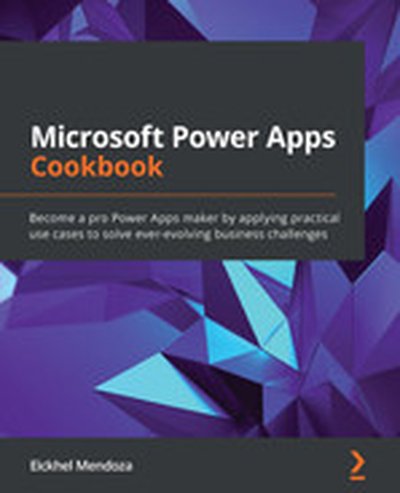
Microsoft Power Apps Cookbook

Microsoft Power Apps Cookbook provides a comprehensive set of step-by-step recipes for creating efficient and customized business applications using Power Apps' low-code capabilities. Through this book, you'll gain practical skills to build apps that address real-world business needs with increased agility and speed. What this Book will help me do Create and integrate canvas apps effectively, enhancing collaborative solutions. Leverage Microsoft Dataverse to design robust, model-driven app solutions. Utilize automated workflows through Power Automate, including business process automations and RPAs. Incorporate advanced components such as AI Builder capabilities into your designed apps. Develop web experiences for users with Microsoft Power Pages, extending the reach beyond the organization. Author(s) Eickhel Mendoza is a seasoned expert in Microsoft Power Platform who has been involved in numerous enterprise projects utilizing Power Apps and related technologies. With extensive experience in low-code solutions, Eickhel is passionate about simplifying complex business processes and empowering readers to achieve business agility through practical application. He focuses on clear guidance and real-world applicability in this hands-on resource to enhance your learning experience. Who is it for? This book is suited for both citizen developers and business users who want to create tailored apps meeting specific organizational needs, and for traditional app developers interested in maximizing productivity with low-code development tools. Beginners in Power Apps with basic familiarity will find actionable knowledge to overcome challenges in real-world cases. Experienced professionals will appreciate the advanced techniques shared.

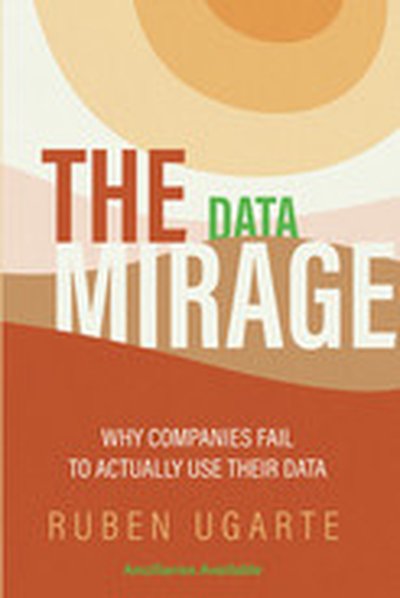
The Data Mirage

The Data Mirage: Why Companies Fail to Actually Use Their Data is a business book for executives and leaders who want to unlock more insights from their data and make better decisions. The importance of data doesn’t need an introduction or a fancy pitch deck. Data plays a critical role in helping companies to better understand their users, beat out their competitors, and breakthrough their growth targets. However, despite significant investments in their data, most organizations struggle to get much value from it. According to Forrester, only 38% of senior executives and decision-makers “have a high level of confidence in their customer insights and only 33% trust the analytics they generate from their business operations.” This reflects the real world that I have experienced. In this book, I will help readers formulate an analytics strategy that works in the real world, show them how to think about KPIs and help them tackle the problems they are bound to come across as they try to use data to make better decisions.

Handbook of Analytical Quality by Design

Handbook of Analytical Quality by Design addresses the steps involved in analytical method development and validation in an effort to avoid quality crises in later stages. The AQbD approach significantly enhances method performance and robustness which are crucial during inter-laboratory studies and also affect the analytical lifecycle of the developed method. Sections cover sample preparation problems and the usefulness of the QbD concept involving Quality Risk Management (QRM), Design of Experiments (DoE) and Multivariate (MVT) Statistical Approaches to solve by optimizing the developed method, along with validation for different techniques like HPLC, UPLC, UFLC, LC-MS and electrophoresis. This will be an ideal resource for graduate students and professionals working in the pharmaceutical industry, analytical chemistry, regulatory agencies, and those in related academic fields. Concise language for easy understanding of the novel and holistic concept Covers key aspects of analytical development and validation Provides a robust, flexible, operable range for an analytical method with greater excellence and regulatory compliance

Predictive Analytics: Data Mining, Machine Learning and Data Science for Practitioners, 2nd Edition

Use Predictive Analytics to Uncover Hidden Patterns and Correlations and Improve Decision-Making Using predictive analytics techniques, decision-makers can uncover hidden patterns and correlations in their data and leverage these insights to improve many key business decisions. In this thoroughly updated guide, Dr. Dursun Delen illuminates state-of-the-art best practices for predictive analytics for both business professionals and students. Delen provides a holistic approach covering key data mining processes and methods, relevant data management techniques, tools and metrics, advanced text and web mining, big data integration, and much more. Balancing theory and practice, Delen presents intuitive conceptual illustrations, realistic example problems, and real-world case studiesincluding lessons from failed projects. It is all designed to help you gain a practical understanding you can apply for profit. * Leverage knowledge extracted via data mining to make smarter decisions * Use standardized processes and workflows to make more trustworthy predictions * Predict discrete outcomes (via classification), numeric values (via regression), and changes over time (via time-series forecasting) * Understand predictive algorithms drawn from traditional statistics and advanced machine learning * Discover cutting-edge techniques, and explore advanced applications ranging from sentiment analysis to fraud detection .

The Data Detective's Toolkit

Reduce the cost and time of cleaning, managing, and preparing research data while also improving data quality! Have you ever wished there was an easy way to reduce your workload and improve the quality of your data? The Data Detective’s Toolkit: Cutting-Edge Techniques and SAS Macros to Clean, Prepare, and Manage Data will help you automate many of the labor-intensive tasks needed to turn raw data into high-quality, analysis-ready data. You will find the right tools and techniques in this book to reduce the amount of time needed to clean, edit, validate, and document your data. These tools include SAS macros as well as ingenious ways of using SAS procedures and functions. The innovative logic built into the book’s macro programs enables you to monitor the quality of your data using information from the formats and labels created for the variables in your data set. The book explains how to harmonize data sets that need to be combined and automate data cleaning tasks to detect errors in data including out-of-range values, inconsistent flow through skip paths, missing data, no variation in values for a variable, and duplicates. By the end of this book, you will be able to automatically produce codebooks, crosswalks, and data catalogs.

Introduction to Business Analytics, Second Edition

This book presents key concepts related to quantitative analysis in business. It is targeted at business students (both undergraduate and graduate) taking an introductory core course. Business analytics has grown to be a key topic in business curricula, and there is a need for stronger quantitative skills and understanding of fundamental concepts. This second edition adds material on Tableau, a very useful software for business analytics. This supplements the tools from Excel covered in the first edition, to include Data Analysis Toolpak and SOLVER.

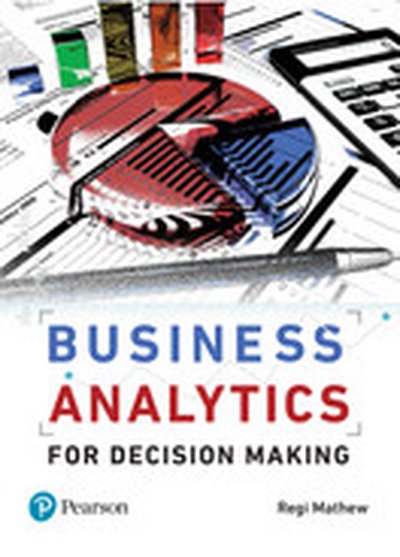
Business Analytics for Decision Making by Pearson

Business Analytics is now a part and parcel of MBA curriculum of most institutions, as business organizations expect the new managers to have a basic knowledge of Analytics. There is also an emerging career opportunity for management graduates with deeper knowledge of Analytics. These professionals would be in Analytics roles, where business knowledge is critical. In this respect, this book will be a suitable textbook for students at postgraduate level. Beyond this, it will be a refresher material for working professionals.

Features –

  1. The book is structured to mimic stages of a typical Analytic process.
  2. This book starts with understanding business problem, data cleaning, exploratory data analysis, model building, model implementation and evaluation.
  3. An in-depth explanation is provided on the concept of ‘Modelling’
  4. The book contain many interesting caselet and box items discussing on interesting facts and figures relevant to the current industrial scenarios.
  5. Resource material for this book includes, Instructor PPT, MCQ, Data sets and Codes for practise and set of research questions to take up mini projects.