talk-data.com talk-data.com

Topic

data

5765

tagged

Activity Trend

3 peak/qtr
2020-Q1 2026-Q1

Activities

5765 activities · Newest first

Red Hat OpenShift Container Platform for IBM zCX

Application modernization is essential for continuous improvements to your business value. Modernizing your applications includes improvements to your software architecture, application infrastructure, development techniques, and business strategies. All of which allows you to gain increased business value from existing application code. IBM® z/OS® Container Extensions (IBM zCX) is a part of the IBM z/OS operating system. It makes it possible to run Linux on IBM Z® applications that are packaged as Docker container images on z/OS. Application developers can develop, and data centers can operate, popular open source packages, Linux applications, IBM software, and third-party software together with z/OS applications and data. This IBM Redbooks® publication presents the capabilities of IBM zCX along with several use cases that demonstrate Red Hat OpenShift Container Platform for IBM zCX and the application modernization benefits your business can realize.

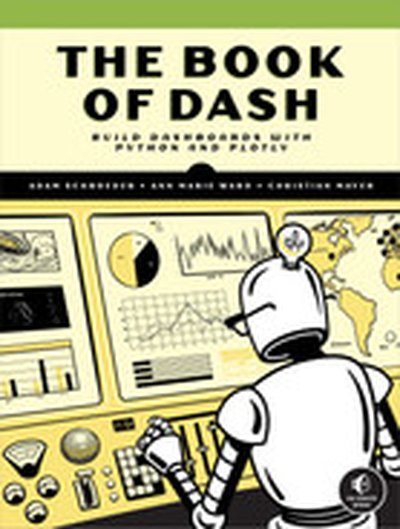
The Book of Dash

A swift and practical introduction to building interactive data visualization apps in Python, known as dashboards. Youâ??ve seen dashboards before; think election result visualizations you can update in real time, or population maps you can filter by demographic. With the Python Dash library youâ??ll create analytic dashboards that present data in effective, usable, elegant ways in just a few lines of code. The book is fast-paced and caters to those entirely new to dashboards. It will talk you through the necessary software, then get straight into building the dashboards themselves. Youâ??ll learn the basic format of a Dash app by building a twitter analysis dashboard that maps the number of likes certain accounts gained over time. Youâ??ll build up skills through three more sophisticated projects. The first is a global analysis app that compares country data in three areas: the percentage of a population using the internet, percentage of parliament seats held by women, and CO2 emissions. Youâ??ll then build an investment portfolio dashboard, and an app that allows you to visualize and explore machine learning algorithms. In this book you will: â?¢Create and run your first Dash apps â?¢Use the pandas library to manipulate and analyze social media data â?¢Use Git to download and build on existing apps written by the pros â?¢Visualize machine learning models in your apps â?¢Create and manipulate statistical and scientific charts and maps using Plotly Dash combines several technologies to get you building dashboards quickly and efficiently. This book will do the same.

Mathematical Foundations of Data Science Using R, 2nd Edition

The aim of the book is to help students become data scientists. Since this requires a series of courses over a considerable period of time, the book intends to accompany students from the beginning to an advanced understanding of the knowledge and skills that define a modern data scientist. The book presents a comprehensive overview of the mathematical foundations of the programming language R and of its applications to data science.

Intelligent Document Processing with AWS AI/ML

Dive into the world of Intelligent Document Processing (IDP) with the power of AWS AI/ML. This book guides you from understanding the challenges of document processing to building effective IDP pipelines using advanced AWS APIs and Python. Through hands-on projects and real-world applications, this book will equip you with the skills needed to automate and unlock value from your document workflows. What this Book will help me do Understand the stages and challenges of the Intelligent Document Processing pipeline. Learn how to automate document processing workflow using AWS AI services. Acquire practical insights into Python libraries for document processing. Discover industry applications including healthcare and financial sectors. Develop the skill to solve real-world IDP problems with AI/ML. Author(s) Sonali Sahu is a seasoned AI/ML consultant and author with a focus on innovative technologies for industry problems. With extensive hands-on project experience and deep expertise in AWS AI/ML tools, she bridges the gap between theory and application. Her writing is approachable and practical, aimed to empower technical practitioners to excel. Who is it for? This book is aimed at developers, data scientists, and technical professionals wanting to leverage AWS AI/ML for document processing. Aimed at intermediate-level professionals, the content helps those with a working knowledge of Python or AI tools to enhance their skills. Whether you're in healthcare, finance, or a similar field, this book equips you to address document-centric problems using cutting-edge solutions.

Nonparametric Statistics with Applications to Science and Engineering with R, 2nd Edition

NONPARAMETRIC STATISTICS WITH APPLICATIONS TO SCIENCE AND ENGINEERING WITH R Introduction to the methods and techniques of traditional and modern nonparametric statistics, incorporating R code Nonparametric Statistics with Applications to Science and Engineering with R presents modern nonparametric statistics from a practical point of view, with the newly revised edition including custom R functions implementing nonparametric methods to explain how to compute them and make them more comprehensible. Relevant built-in functions and packages on CRAN are also provided with a sample code. R codes in the new edition not only enable readers to perform nonparametric analysis easily, but also to visualize and explore data using R’s powerful graphic systems, such as ggplot2 package and R base graphic system. The new edition includes useful tables at the end of each chapter that help the reader find data sets, files, functions, and packages that are used and relevant to the respective chapter. New examples and exercises that enable readers to gain a deeper insight into nonparametric statistics and increase their comprehension are also included. Some of the sample topics discussed in Nonparametric Statistics with Applications to Science and Engineering with R include: Basics of probability, statistics, Bayesian statistics, order statistics, Kolmogorov–Smirnov test statistics, rank tests, and designed experiments Categorical data, estimating distribution functions, density estimation, least squares regression, curve fitting techniques, wavelets, and bootstrap sampling EM algorithms, statistical learning, nonparametric Bayes, WinBUGS, properties of ranks, and Spearman coefficient of rank correlation Chi-square and goodness-of-fit, contingency tables, Fisher exact test, MC Nemar test, Cochran’s test, Mantel–Haenszel test, and Empirical Likelihood Nonparametric Statistics with Applications to Science and Engineering with R is a highly valuable resource for graduate students in engineering and the physical and mathematical sciences, as well as researchers who need a more comprehensive, but succinct understanding of modern nonparametric statistical methods.

Neural Search - From Prototype to Production with Jina

Dive into the world of modern search systems with 'Neural Search - From Prototype to Production with Jina.' This book introduces you to the fundamentals of neural search, exploring how machine learning revolutionizes information retrieval. You'll gain hands-on experience building versatile, scalable search engines using Jina, unraveling the complexities of AI-powered searches. What this Book will help me do Understand the basics of neural search compared to traditional search methods. Develop mastery of vector representation and its application in neural search. Learn to utilize Jina for constructing AI-powered search engines. Enhance your capabilities to handle multi-modal search systems like text, images, and audio. Acquire the skills to deploy and optimize deep learning-powered search systems effectively. Author(s) Bo Wang, Cristian Mitroi, Feng Wang, Shubham Saboo, and Susana Guzmán are experienced technologists and AI researchers passionate about simplifying complex subjects like neural search. With their expertise in Jina and deep learning, their collaborative approach ensures practical, reader-friendly content that empowers learners to excel in creating cutting-edge search systems. Who is it for? This book is perfect for machine learning, AI, or Python developers eager to advance their understanding of neural search. Whether you're building text, image, or other modality-based search systems, it caters to beginners with foundational knowledge and extends to professionals wanting to deepen their skills. Unlock the potential of Jina for your projects.

Proactive Early Threat Detection and Securing SQL Database With IBM QRadar and IBM Spectrum Copy Data Management Using IBM FlashSystem Safeguarded Copy

This IBM® blueprint publication focuses on early threat detection within a database environment by using IBM QRadar®. It also highlights how to proactively start a cyber resilience workflow in response to a cyberattack or potential malicious user actions. The workflow that is presented here uses IBM Spectrum® Copy Data Management as orchestration software to start IBM FlashSystem® Safeguarded Copy functions. The Safeguarded Copy creates an immutable copy of the data in an air-gapped form on the same IBM FlashSystem for isolation and eventual quick recovery. This document describes how to enable and forward SQL database user activities to IBM QRadar. This document also describes how to create various rules to determine a threat, and configure and start a suitable response to the detected threat in IBM QRadar. Finally, this document outlines the steps that are involved to create a Scheduled Job by using IBM Spectrum® Copy Data Management with various actions.

What is New in DFSMSrmm

DFSMSrmm is an IBM z/OS feature that is a fully functioning tape management system to manage your removable media. In the last decade, many enhancements were made to DFSMSrmm. This IBM Redbooks publication is intended to help you configure and use the newer functions and features that are now available. Discussion of the new features is included along with use cases. Hints and tips of various common DFSMSrmm problems and useful configuration and reporting JCL also are included. This publication is intended as a supplement to DFSMSrmm Primer, SG24-5983, which is still the recommended starting point for any users new to DFSMSrmm.

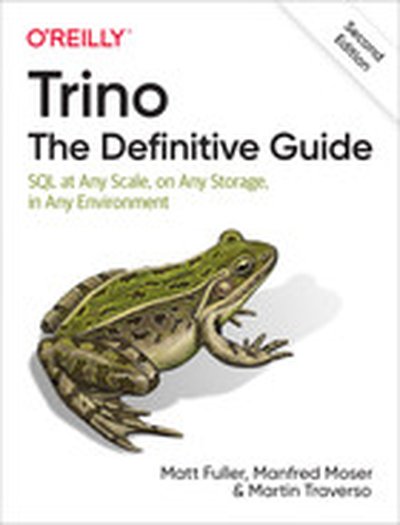
Trino: The Definitive Guide, 2nd Edition

Perform fast interactive analytics against different data sources using the Trino high-performance distributed SQL query engine. In the second edition of this practical guide, you'll learn how to conduct analytics on data where it lives, whether it's a data lake using Hive, a modern lakehouse with Iceberg or Delta Lake, a different system like Cassandra, Kafka, or SingleStore, or a relational database like PostgreSQL or Oracle. Analysts, software engineers, and production engineers learn how to manage, use, and even develop with Trino and make it a critical part of their data platform. Authors Matt Fuller, Manfred Moser, and Martin Traverso show you how a single Trino query can combine data from multiple sources to allow for analytics across your entire organization. Explore Trino's use cases, and learn about tools that help you connect to Trino for querying and processing huge amounts of data Learn Trino's internal workings, including how to connect to and query data sources with support for SQL statements, operators, functions, and more Deploy and secure Trino at scale, monitor workloads, tune queries, and connect more applications Learn how other organizations apply Trino successfully

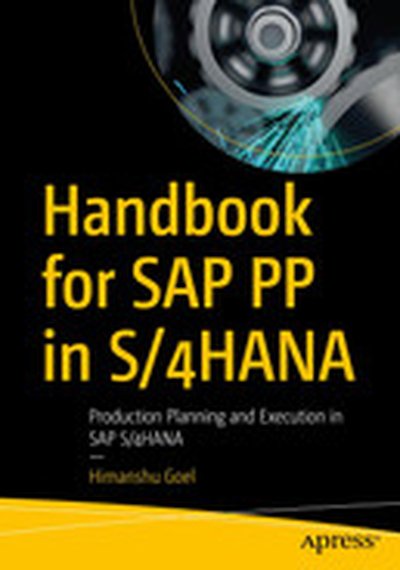
Handbook for SAP PP in S/4HANA: Production Planning and Execution in SAP S/4HANA

If you're looking to increase your knowledge of one of the core modules of SAP S/4HANA, this is the book for you. Settle in and let a long-time SAP professional guide you through the SAP Production Planning and Execution module. Author Himanshu Goel begins by explaining the nuts and bolts of production planning in SAP S/4HANA, before delving into various manufacturing methodologies such as discrete manufacturing, repetitive manufacturing, and process industry. He'll then walk you through setting up master data such as the material master, bill of material, work center, routing, and production version. You'll then learn, step-by-step, how SAP PP processes are established from production order-based manufacturing to process order-based manufacturing. This book explains the complex concepts of production planning and execution in a straightforward manner and makes for an invaluable guide for SAP PP users from production plannersto shop floor managers and even junior/mid-level SAP PP consultants. After reading this book, you'll fully understand the concepts of SAP PP, and have insight into the latest developments in S/4HANA. What You Will Learn Understand master data in SAP PP Study production planning; i.e., SOP and demand management Explore discrete and repetitive manufacturing Acquire knowledge on Process Industry Who Is This Book For Production planners, shop floor managers, and junior or mid-level SAP PP consultants who are looking to understand the concepts of SAP PP in SAP S/4HANA.

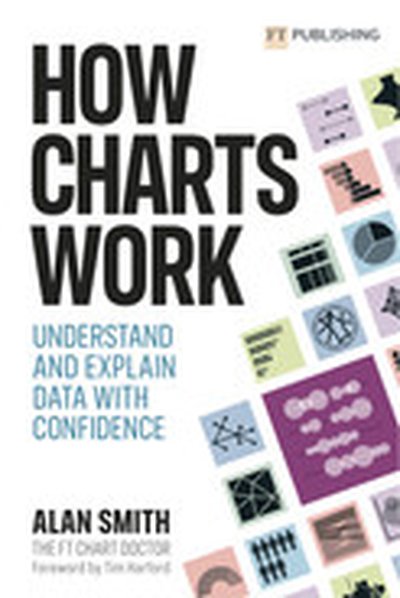
How Charts Work: Understand and explain data with confidence

How Charts Work brings the secrets of effective data visualisation in a way that will help you bring data alive. Charts, graphs and tables are essential devices in business, but all too often they present information poorly. This book will help you: Feel confident understanding different types of charts, graphs and tables – and how to read them Recognise the true story behind the data presented and what the information really shows Know the principles and rules of how best to represent information so you can create your own information-driven (and beautiful) visuals Design visuals that people engage with, understand and act upon Don’t value design over information – present data persuasively. Find the FT Chart Doctor’s columns here - https://www.ft.com/chart-doctor

Data Science and Analytics for SMEs: Consulting, Tools, Practical Use Cases

Master the tricks and techniques of business analytics consulting, specifically applicable to small-to-medium businesses (SMEs). Written to help you hone your business analytics skills, this book applies data science techniques to help solve problems and improve upon many aspects of a business' operations. SMEs are looking for ways to use data science and analytics, and this need is becoming increasingly pressing with the ongoing digital revolution. The topics covered in the books will help to provide the knowledge leverage needed for implementing data science in small business. The demand of small business for data analytics are in conjunction with the growing number of freelance data science consulting opportunities; hence this book will provide insight on how to navigate this new terrain. This book uses a do-it-yourself approach to analytics and introduces tools that are easily available online and are non-programming based. Data science will allow SMEs to understand their customer loyalty, market segmentation, sales and revenue increase etc. more clearly. Data Science and Analytics for SMEs is particularly focused on small businesses and explores the analytics and data that can help them succeed further in their business. What You'll Learn Create and measure the success of their analytics project Start your business analytics consulting career Use solutions taught in the book in practical uses cases and problems Who This Book Is For Business analytics enthusiasts who are not particularly programming inclined, small business owners and data science consultants, data science and business students, and SME (small-to-medium enterprise) analysts

Azure Data Engineering Cookbook - Second Edition

Azure Data Engineering Cookbook is your ultimate guide to mastering data engineering on Microsoft's Azure platform. Through an engaging collection of recipes, this book breaks down procedures to build sophisticated data pipelines, leveraging tools like Azure Data Factory, Data Lake, Databricks, and Synapse Analytics. What this Book will help me do Efficiently process large datasets using Azure Synapse analytics and Azure Databricks pipelines. Transform and shape data within systems by leveraging Azure Synapse data flows. Implement and manage relational databases in Azure with performance tuning and administration. Configure data pipeline solutions integrated with Power BI for insightful reporting. Monitor, optimize, and ensure lineage tracking for your data systems efficiently with Purview and Log analytics. Author(s) Nagaraj Venkatesan is an experienced cloud architect specializing in Microsoft Azure, with years of hands-on data engineering expertise. Ahmad Osama is a seasoned data professional and author's shared emphasis is on practical learning and bridging this with actionable skills effectively. Who is it for? This book is essential for data engineers seeking expertise in Azure's rich engineering capabilities. It's tailored for professionals with a foundational knowledge of cloud services, looking to achieve advanced proficiency in Azure data engineering pipelines.

The Privacy Mission

Future-proof yourself and your organization against known threats to privacy and online safety The subject of data ethics has never been more urgent. This is no longer an academic or niche geek issue as it has been since the inception of the internet and the world wide web. Data ethics is an issue that affects all of us now as our personal and professional lives increasingly take place online. Who controls access to the hardware, who runs the software, who can spy on us, hack us, data farm us? What are the threats that we need to mitigate against democratically, societally, and personally? How can corporations protect us and how can that help their bottom line? The Privacy Mission aims to answer these questions and summarise both the overarching concepts and principles about why data ethics is important. It offers practical solutions for companies, policy makers and individuals to push back against known threats and future proof themselves going forward.

Full Stack FastAPI, React, and MongoDB

Master web development with the FARM stack in this comprehensive guide. You'll learn to harness FastAPI for a secure and efficient backend, React for a dynamic frontend, and MongoDB for flexible data storage. Gain practical experience by building fully functional projects that you can deploy and fine-tune, opening doors to enhanced proficiency in modern web technologies. What this Book will help me do Build secure and performant backends using FastAPI and understand its integration with MongoDB. Develop responsive and dynamic user interfaces with React and incorporate server-side rendering for improved SEO. Explore the intricacies of deploying full-stack applications on platforms like Heroku and Netlify. Implement robust user authentication systems with JSON Web Tokens for securing your applications. Apply caching strategies with Redis to enhance the performance and scalability of applications. Author(s) Marko Aleksendrić, the author of this book, combines years of experience in software development with a passion for teaching. Specializing in full-stack web technologies, Marko has a track record of guiding developers in mastering modern tools like FastAPI and React. His practical approach focuses on equipping readers with real-world skills through projects and best practices. Who is it for? This book is ideal for developers with foundational knowledge in Python, JavaScript, and web basics who want to expand their expertise into full-stack development. Whether you're a professional seeking to enhance your project toolkit or a beginner aiming to tackle modern web applications, this guide provides a step-by-step approach tailored to your growth.

Data Conscience

DATA CONSCIENCE ALGORITHMIC S1EGE ON OUR HUM4N1TY EXPLORE HOW D4TA STRUCTURES C4N HELP OR H1NDER SOC1AL EQU1TY Data has enjoyed ‘bystander’ status as we’ve attempted to digitize responsibility and morality in tech. In fact, data’s importance should earn it a spot at the center of our thinking and strategy around building a better, more ethical world. It’s use—and misuse—lies at the heart of many of the racist, gendered, classist, and otherwise oppressive practices of modern tech. In Data Conscience: Algorithmic Siege on our Humanity, computer science and data inclusivity thought leader Dr. Brandeis Hill Marshall delivers a call to action for rebel tech leaders, who acknowledge and are prepared to address the current limitations of software development. In the book, Dr. Brandeis Hill Marshall discusses how the philosophy of “move fast and break things” is, itself, broken, and requires change. You’ll learn about the ways that discrimination rears its ugly head in the digital data space and how to address them with several known algorithms, including social network analysis, and linear regression A can’t-miss resource for junior-level to senior-level software developers who have gotten their hands dirty with at least a handful of significant software development projects, Data Conscience also provides readers with: Discussions of the importance of transparency Explorations of computational thinking in practice Strategies for encouraging accountability in tech Ways to avoid double-edged data visualization Schemes for governing data structures with law and algorithms

Functional Aesthetics for Data Visualization

What happens when a researcher and a practitioner spend hours crammed in a Fiat discussing data visualization? Beyond creating beautiful charts, they found greater richness in the craft as an integrated whole. Drawing from their unconventional backgrounds, these two women take readers through a journey around perception, semantics, and intent as the triad that influences visualization. This visually engaging book blends ideas from theory, academia, and practice to craft beautiful, yet meaningful visualizations and dashboards. How do you take your visualization skills to the next level? The book is perfect for analysts, research and data scientists, journalists, and business professionals. Functional Aesthetics for Data Visualization is also an indispensable resource for just about anyone curious about seeing and understanding data. Think of it as a coffee book for the data geek in you. https://www.functionalaestheticsbook.com

Introduction to Matrix Analytic Methods in Queues 1

Matrix-analytic methods (MAM) were introduced by Professor Marcel Neuts and have been applied to a variety of stochastic models since. In order to provide a clear and deep understanding of MAM while showing their power, this book presents MAM concepts and explains the results using a number of worked-out examples. This book’s approach will inform and kindle the interest of researchers attracted to this fertile field. To allow readers to practice and gain experience in the algorithmic and computational procedures of MAM, Introduction to Matrix Analytic Methods in Queues 1 provides a number of computational exercises. It also incorporates simulation as another tool for studying complex stochastic models, especially when the state space of the underlying stochastic models under analytic study grows exponentially. The book’s detailed approach will make it more accessible for readers interested in learning about MAM in stochastic models.