talk-data.com talk-data.com

Topic

data

5765

tagged

Activity Trend

3 peak/qtr
2020-Q1 2026-Q1

Activities

5765 activities · Newest first

Pro Data Mashup for Power BI: Powering Up with Power Query and the M Language to Find, Load, and Transform Data

This book provides all you need to find data from external sources and load and transform that data into Power BI where you can mine it for business insights and a competitive edge. This ranges from connecting to corporate databases such as Azure SQL and SQL Server to file-based data sources, and cloud- and web-based data sources. The book also explains the use of Direct Query and Live Connect to establish instant connections to databases and data warehouses and avoid loading data. The book provides detailed guidance on techniques for transforming inbound data into normalized data sets that are easy to query and analyze. This covers data cleansing, data modification, and standardization as well as merging source data into robust data structures that can feed into your data model. You will learn how to pivot and transpose data and extrapolate missing values as well as harness external programs such as R and Python into a Power Query data flow. You also will see how to handle errors in source data and extend basic data ingestion to create robust and parameterized data load and transformation processes. Everything in this book is aimed at helping you deliver compelling and interactive insight with remarkable ease using Power BI’s built-in data load and transformation tools. What You Will Learn Connect Power BI to a range of external data sources Prepare data from external sources for easy analysis in Power BI Cleanse data from duplicates, outliers, and other bad values Make live connections from which to refresh data quickly and easily Apply advanced techniques to interpolate missing data Who This Book Is For All Power BI users from beginners to super users. Any user of the world’s leading dashboarding toolcan leverage the techniques explained in this book to turbo-charge their data preparation skills and learn how a wide range of external data sources can be harnessed and loaded into Power BI to drive their analytics. No previous knowledge of working with data, databases, or external data sources is required—merely the need to find, transform, and load data into Power BI..
VSAM Demystified

Virtual Storage Access Method (VSAM) is one of the access methods used to process data. Many of us have used VSAM and work with VSAM data sets daily, but exactly how it works and why we use it instead of another access method is a mystery. This book helps to demystify VSAM and gives you the information necessary to understand, evaluate, and use VSAM properly. This book also builds upon the subject of Record Level Sharing and DFSMStvs. It clarifies VSAM functions for application programmers who work with VSAM. The practical, straightforward approach should dispel much of the complexity associated with VSAM. Wherever possible an example is used to reinforce a description of a VSAM function. This IBM® Redbooks® publication is intended as a supplement to existing product manuals. It is intended to be used as an initial point of reference for VSAM functions.

Vertical Growth

Learn the secrets to self-awareness, life-changing growth and happy, high-performing teams—from the bestselling author of The Mindful Leader Great leaders and teams don’t know everything, and they don’t get it right every time. What sets them apart is their commitment to continual learning and vertical growth. Vertical growth is about cultivating the self-awareness to see our self-defeating thoughts, assumptions and behaviours, and then consciously creating new behaviours that are aligned with our best intentions and aspirations. By embracing the deliberate practices and processes for vertical growth laid out in this book, you’ll not only radically improve your leadership and personal wellbeing—you’ll also foster the highest levels of trust, psychological safety, motivation, and creativity in the teams and groups you work with. You’ll to discover how to: Identify when, where and how to develop new leadership behaviours to get better results Regulate your emotional responses in real time and handle the most difficult challenges with balance, wisdom and accountability Cultivate practices for self-awareness that foster lifelong internal growth and personal happiness Uncover and change the limiting assumptions and beliefs that keep you, your team and organisation locked in unproductive habits and behaviours Create practices and rituals that enable the highest levels of psychological safety, innovation and growth Filled with fascinating real-life case studies as well as practical tools and strategies, this is your handbook for mastering vertical growth in yourself, your team and your organisation.

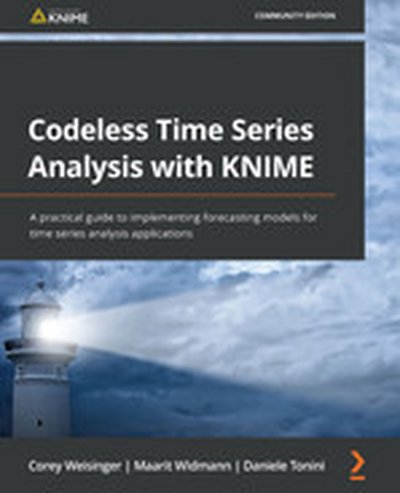
Codeless Time Series Analysis with KNIME

This book, "Codeless Time Series Analysis with KNIME," serves as your practical guide to mastering time series analysis using the KNIME Analytics Platform. By diving into this book, you'll explore a variety of statistical and machine learning techniques applied explicitly to real-world time series scenarios, helping you build predictive and analysis models effectively. What this Book will help me do Leverage KNIME's powerful tools to preprocess and prepare time series data for analysis. Visualize and dissect time series data into its components like trends and seasonality. Apply statistical models like ARIMA to analyze and forecast continuous data. Train and utilize neural networks including LSTM models for predictive analytics. Integrate external tools like Spark and H2O to enhance your forecasting workflows. Author(s) The authors, including experts from KNIME AG, Corey Weisinger, Maarit Widmann, and Daniele Tonini, collectively bring extensive experience in data analytics and time series modeling. Their expertise with KNIME's tools and real-world time series analysis applications ensures readers gain insights into practical, hands-on techniques. Who is it for? This book is ideally suited for data analysts and scientists eager to explore time series analysis through codeless methodologies. Beginners will benefit from the introductory explanations, while seasoned professionals will find value in the advanced topics and real-world examples. A basic understanding of the KNIME platform is recommended to get the most from this book.

Simulation of Power Electronics Circuits with MATLAB®/Simulink®: Design, Analyze, and Prototype Power Electronics

Design and analyze electronic components and systems with the help of powerful software and effective skillsets. Balancing theory with practical exploration of the relevant software, you'll start solving power electronics problems like a pro. Using MATLAB®/Simulink®, you'll analyze the circuit in a laptop charger; interface with the power electronics converter controlling a washing machine's motor; turn on lamps with an electronic ballast; convert AC into DC power; and more! Power electronics are at the bedrock of all the wonderful devices simplifying our daily life. Designing them isn't just about understanding schematics. It also requires measuring twice and cutting once. In order to save time and money, a power electronics circuit must be simulated before construction. So you'll learn how to work with one of the most powerful simulation tools for this purpose. That way you'll know before you even go to make it whether the circuit works as expected. Learnto work with MATLAB®/Simulink® by directly applying and building the projects in this book. Or use it as a lab manual for power electronics and industrial electronics. Either way, using strong simulations and solid design theory, you'll be able to build power electronics that don't fail. What You'll Learn Simulate power electronics effectively before building them Select suitable semiconductor components for your circuit based on simulation waveforms Extract dynamic models of converters and design suitable controllers for them Who This Book Is For Engineers and students who want to simulate power electronics circuits in MATLAB®/Simulink®.

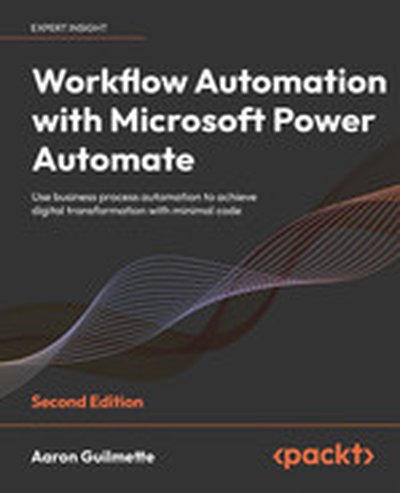
Workflow Automation with Microsoft Power Automate - Second Edition

Master the art of workflow automation with Microsoft Power Automate using this approachable, hands-on guide. By following practical examples and step-by-step tutorials, you'll learn how to streamline your business processes with minimal coding experience. Explore key features like connectors, actions, and triggers, and apply them to real-world applications to enhance productivity. What this Book will help me do Understand the fundamental principles of Microsoft Power Automate and its utility in business process optimization. Learn to create automation flows that seamlessly integrate with Microsoft 365 applications and popular third-party services. Gain practical experience working with Power Automate Desktop for robotic process automation. Acquire knowledge of using AI tools within Power Automate, such as sentiment analysis models. Develop skills to efficiently troubleshoot, monitor, and distribute automation flows. Author(s) Aaron Guilmette is an experienced technical author and Microsoft expert. With a deep understanding of Microsoft Power Automate and the Power Platform, Aaron brings a wealth of knowledge to his teaching. He specializes in helping users transition from basic to advanced automation concepts and is known for his clear, structured, and actionable writing style. Who is it for? This book is for professionals looking to streamline their workflows and embrace automation with the Microsoft 365 suite. No extensive technical knowledge is required, making it ideal for beginners who want to learn practical workflow automation. Experienced users can also benefit from exploring advanced features like AI integrations. If you're aiming to improve productivity and reduce manual tasks, this book is perfect for you.

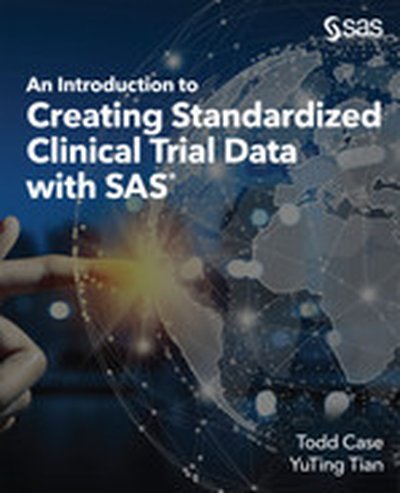
An Introduction to Creating Standardized Clinical Trial Data with SAS

An indispensable guide for statistical programmers in the pharmaceutical industry. Statistical programmers in the pharmaceutical industry need to create standardized clinical data using rules created and governed by the Clinical Data Interchange Standards Consortium (CDISC). This book introduces the basic concepts, pharmaceutical industry knowledge, and SAS programming practices that every programmer needs to know to comply with regulatory requirements. Step-by-step, you will learn how data should be structured at each stage of the process from annotating electronic Case Report Forms (eCRFs) and defining the relationship between SDTM and ADaM, to understanding how to generate a Define-XML file to transmit metadata. Filled with clear explanations and example code, this book focuses only on the essential information that entry-level programmers need to succeed.

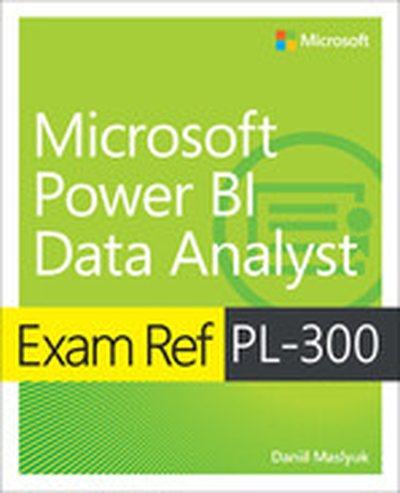
Exam Ref PL-300 Microsoft Power BI Data Analyst

Prepare for Microsoft Exam PL-300 and help demonstrate your real-world ability to deliver actionable insights with Power BI by leveraging available data and domain expertise; to provide meaningful business value through clear data visualizations; to enable others to perform self-service analytics, and to deploy and configure solutions for consumption. Designed for data analysts, business users, and other professionals, this Exam Ref focuses on the critical thinking and decision-making acumen needed for success at the Microsoft Certified: Power BI Data Analyst Associate level. Focus on the expertise measured by these objectives: Prepare the data Model the data Visualize and analyze the data Deploy and maintain assets This Microsoft Exam Ref: Organizes its coverage by exam objectives Features strategic, what-if scenarios to challenge you Assumes you are a data analyst, business intelligence professional, report creator, or other professional seeking to validate your skills and knowledge in analyzing data with Power BI About the Exam Exam PL-300 focuses on knowledge needed to get data from different data sources; clean, transform, and load data; design and develop data models; create model calculations with DAX; optimize model performance; create reports and dashboards; enhance reports for usability and storytelling; identify patterns and trends; and manage files, datasets, and workspaces. About Microsoft Certification Passing this exam fulfills your requirements for the Microsoft Certified: Power BI Data Analyst Associate certification, demonstrating your understanding of data repositories and data processes, and your skills in designing and building scalable data models, cleaning and transforming data, enabling advanced analytic capabilities to provide meaningful business value, and collaborating with key stakeholders to deliver relevant insights based on identified business requirements. See full details at: microsoft.com/learn ...

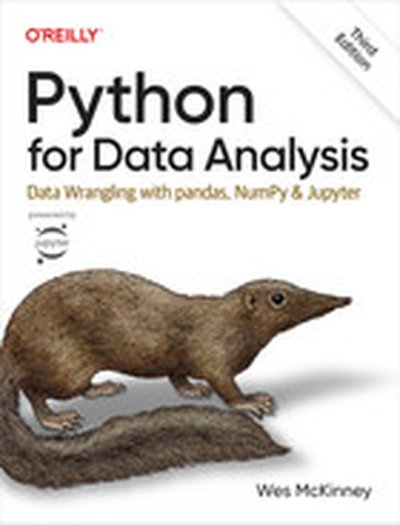
Python for Data Analysis, 3rd Edition

Get the definitive handbook for manipulating, processing, cleaning, and crunching datasets in Python. Updated for Python 3.10 and pandas 1.4, the third edition of this hands-on guide is packed with practical case studies that show you how to solve a broad set of data analysis problems effectively. You'll learn the latest versions of pandas, NumPy, and Jupyter in the process. Written by Wes McKinney, the creator of the Python pandas project, this book is a practical, modern introduction to data science tools in Python. It's ideal for analysts new to Python and for Python programmers new to data science and scientific computing. Data files and related material are available on GitHub. Use the Jupyter notebook and IPython shell for exploratory computing Learn basic and advanced features in NumPy Get started with data analysis tools in the pandas library Use flexible tools to load, clean, transform, merge, and reshape data Create informative visualizations with matplotlib Apply the pandas groupby facility to slice, dice, and summarize datasets Analyze and manipulate regular and irregular time series data Learn how to solve real-world data analysis problems with thorough, detailed examples

Getting Started with Grafana: Real-Time Dashboards for IT and Business Operations

Begin working with the Grafana data visualization platform. This book is a “how-to manual” for deploying and administering Grafana, creating real-time dashboards and alerts, exploring the data you have, and even synthesizing new data by combining and manipulating data from multiple different sources. You’ll be able to see and manage data on any scale, from your laptop or a Raspberry Pi to a production datacenter or even a multi-region cloud environment! Getting Started with Grafana takes a hands-on approach. You’ll learn by doing with easy-to-follow examples along with pointers to more resources to help you go deeper. The skills you’ll learn will help you provide business value by monitoring your operations in real time and reacting to changing circumstances as they occur. You’ll be able to derive new insights from your existing data through Grafana’s powerful and beautiful graphing capabilities, and you’ll be able to share your dashboards with colleagues soeveryone in your organization can benefit. What You Will Learn Connect to data "where it lives” and work with multiple sources of data Build beautiful and informative dashboards that show real-time status Deploy Grafana at any scale and manage it efficiently Integrate with other enterprise systems such as LDAP or Active Directory Automate creation and deployment of Grafana, dashboards, and alerts Understand what is available in the Enterprise version of Grafana Who This Book Is For Anyone who has data that they want to understand visually, IT professionals who work with multiple sources of data on a regular basis and need to make sense of the confusion that this data sprawl causes, and people who learn best by doing and want to get hands-on experience quickly with a project and then grow their knowledge

Hands-On Healthcare Data

Healthcare is the next frontier for data science. Using the latest in machine learning, deep learning, and natural language processing, you'll be able to solve healthcare's most pressing problems: reducing cost of care, ensuring patients get the best treatment, and increasing accessibility for the underserved. But first, you have to learn how to access and make sense of all that data. This book provides pragmatic and hands-on solutions for working with healthcare data, from data extraction to cleaning and harmonization to feature engineering. Author Andrew Nguyen covers specific ML and deep learning examples with a focus on producing high-quality data. You'll discover how graph technologies help you connect disparate data sources so you can solve healthcare's most challenging problems using advanced analytics. You'll learn: Different types of healthcare data: electronic health records, clinical registries and trials, digital health tools, and claims data The challenges of working with healthcare data, especially when trying to aggregate data from multiple sources Current options for extracting structured data from clinical text How to make trade-offs when using tools and frameworks for normalizing structured healthcare data How to harmonize healthcare data using terminologies, ontologies, and mappings and crosswalks

Snowflake: The Definitive Guide

Snowflake's ability to eliminate data silos and run workloads from a single platform creates opportunities to democratize data analytics, allowing users at all levels within an organization to make data-driven decisions. Whether you're an IT professional working in data warehousing or data science, a business analyst or technical manager, or an aspiring data professional wanting to get more hands-on experience with the Snowflake platform, this book is for you. You'll learn how Snowflake users can build modern integrated data applications and develop new revenue streams based on data. Using hands-on SQL examples, you'll also discover how the Snowflake Data Cloud helps you accelerate data science by avoiding replatforming or migrating data unnecessarily. You'll be able to: Efficiently capture, store, and process large amounts of data at an amazing speed Ingest and transform real-time data feeds in both structured and semistructured formats and deliver meaningful data insights within minutes Use Snowflake Time Travel and zero-copy cloning to produce a sensible data recovery strategy that balances system resilience with ongoing storage costs Securely share data and reduce or eliminate data integration costs by accessing ready-to-query datasets available in the Snowflake Marketplace

Building a Red Hat OpenShift Environment on IBM Z

Cybersecurity is the most important arm of defense against cyberattacks. With the recent increase in cyberattacks, corporations must focus on how they are combating these new high-tech threats. When establishing best practices, a corporation must focus on employees' access to specific workspaces and information. IBM Z® focuses on allowing high processing virtual environments while maintaining a high level of security in each workspace. Organizations not only need to adjust their approach to security, but also their approach to IT environments. To meet new customer needs and expectations, organizations must take a more agile approach to their business. IBM® Z allows companies to work with hybrid and multi-cloud environments that allows more ease of use for the user and efficiency overall. Working with IBM Z, organizations can also work with many databases that are included in IBM Cloud Pak® for Data. IBM Cloud Pak for Data allows organizations to make more informed decisions with improved data usage. Along with the improved data usage, organizations can see the effects from working in a Red Hat OpenShift environment. Red Hat OpenShift is compatible across many hardware services and allows the user to run applications in the most efficient manner. The purpose of this IBM Redbooks® publication is to: Introduce IBM Z and LinuxONE platforms and how they work with the Red Hat OpenShift environment and IBMCloud Pak for Data Provide examples and the uses of IBM Z with Cloud Paks for Data that show data gravity, consistent development experience, and consolidation and business resiliency The target audience for this book is IBM Z Technical Specialists, IT Architects, and System Administrators.

Effective Data Science Infrastructure

Simplify data science infrastructure to give data scientists an efficient path from prototype to production. In Effective Data Science Infrastructure you will learn how to: Design data science infrastructure that boosts productivity Handle compute and orchestration in the cloud Deploy machine learning to production Monitor and manage performance and results Combine cloud-based tools into a cohesive data science environment Develop reproducible data science projects using Metaflow, Conda, and Docker Architect complex applications for multiple teams and large datasets Customize and grow data science infrastructure Effective Data Science Infrastructure: How to make data scientists more productive is a hands-on guide to assembling infrastructure for data science and machine learning applications. It reveals the processes used at Netflix and other data-driven companies to manage their cutting edge data infrastructure. In it, you’ll master scalable techniques for data storage, computation, experiment tracking, and orchestration that are relevant to companies of all shapes and sizes. You’ll learn how you can make data scientists more productive with your existing cloud infrastructure, a stack of open source software, and idiomatic Python. The author is donating proceeds from this book to charities that support women and underrepresented groups in data science. About the Technology Growing data science projects from prototype to production requires reliable infrastructure. Using the powerful new techniques and tooling in this book, you can stand up an infrastructure stack that will scale with any organization, from startups to the largest enterprises. About the Book Effective Data Science Infrastructure teaches you to build data pipelines and project workflows that will supercharge data scientists and their projects. Based on state-of-the-art tools and concepts that power data operations of Netflix, this book introduces a customizable cloud-based approach to model development and MLOps that you can easily adapt to your company’s specific needs. As you roll out these practical processes, your teams will produce better and faster results when applying data science and machine learning to a wide array of business problems. What's Inside Handle compute and orchestration in the cloud Combine cloud-based tools into a cohesive data science environment Develop reproducible data science projects using Metaflow, AWS, and the Python data ecosystem Architect complex applications that require large datasets and models, and a team of data scientists About the Reader For infrastructure engineers and engineering-minded data scientists who are familiar with Python. About the Author At Netflix, Ville Tuulos designed and built Metaflow, a full-stack framework for data science. Currently, he is the CEO of a startup focusing on data science infrastructure. Quotes By reading and referring to this book, I’m confident you will learn how to make your machine learning operations much more efficient and productive. - From the Foreword by Travis Oliphant, Author of NumPy, Founder of Anaconda, PyData, and NumFOCUS Effective Data Science Infrastructure is a brilliant book. It’s a must-have for every data science team. - Ninoslav Cerkez, Logit More data science. Less headaches. - Dr. Abel Alejandro Coronado Iruegas, National Institute of Statistics and Geography of Mexico Indispensable. A copy should be on every data engineer’s bookshelf. - Matthew Copple, Grand River Analytics

Proactive EarlyThreat Detection and Securing Oracle Database with IBM QRadar, IBM Security Guardium Data Protection, and IBM Copy Services Manager by using IBM FlashSystem Safeguarded Copy

This IBM® blueprint publication focuses on early threat detection within a database environment by using IBM Security Guardium® Data Protection and IBM QRadar®. It also highlights how to proactively start a cyber resilience workflow in response to a cyberattack or potential malicious user actions. The workflow that is presented here uses IBM Copy Services Manager as orchestration software to start IBM FlashSystem® Safeguarded Copy functions. The Safeguarded Copy creates an immutable copy of the data in an air-gapped form on the same IBM FlashSystem for isolation and eventual quick recovery. This document describes how to enable and forward Oracle database user activities (by using IBM Security Guardium Data Protection) and IBM FlashSystem audit logs by using IBM FlashSystem to IBM QRadar. This document also describes how to create various rules to determine a threat, and configure and launch a suitable response to the detected threat in IBM QRadar. The document also outlines the steps that are involved to create a Scheduled Task by using IBM Copy Services Manager with various actions.

Pro Database Migration to Azure: Data Modernization for the Enterprise

Migrate your existing, on-premises applications into the Microsoft Azure cloud platform. This book covers the best practices to plan, implement, and operationalize the migration of a database application from your organization’s data center to Microsoft’s Azure cloud platform. Data modernization and migration is a technologically complex endeavor that can also be taxing from a leadership and operational standpoint. This book covers not only the technology, but also the most important aspects of organization culture, communication, and politics that so frequently derail such projects. You will learn the most important steps to ensuring a successful migration and see battle-tested wisdom from industry veterans. From executive sponsorship, to executing the migration, to the important steps following migration, you will learn how to effectively conduct future migrations and ensure that your team and your database application delivers on the expected business value of the project. This book is unlike any other currently in the market. It takes you through the most critical business and technical considerations and workflows for moving your data and databases into the cloud, with special attention paid to those who are deploying to the Microsoft Data Platform in Azure, especially SQL Server. Although this book focuses on migrating on-premises SQL Server enterprises to hybrid or fully cloud-based Azure SQL Database and Azure SQL Managed Instances, it also cover topics involving migrating non-SQL Server database platforms such as Oracle, MySQL, and PostgreSQL applications to Microsoft Azure. What You Will Learn Plan a database migration that ensures smooth project progress, optimal performance, low operating cost, and minimal downtime Properly analyze and manage non-technical considerations, such as legal compliance, privacy, and team execution Perform athorough architectural analysis to select the best Azure services, performance tiers, and cost-containment features Avoid pitfalls and common reasons for failure relating to corporate culture, intra-office politics, and poor communications Secure the proper executive champions who can execute the business planning needed for success Apply proven criteria to determine your future-state architecture and your migration method Execute your migration using a process proven by the authors over years of successful projects Who This Book Is For IT leadership, strategic IT decision makers, project owners and managers, and enterprise and application architects. For anyone looking toward cloud migration projects as the next stage of growth in their careers. Also useful for enterprise DBAs and consultants who might be involved in such projects. Readers should have experience and be competent in designing, coding, implementing, and supporting database applications in an on-premises environment.

IBM Power Systems Private Cloud with Shared Utility Capacity: Featuring Power Enterprise Pools 2.0

This IBM® Redbooks® publication is a guide to IBM Power Systems Private Cloud with Shared Utility Capacity featuring Power Enterprise Pools (PEP) 2.0. This technology enables multiple servers in an to share base processor and memory resources and draw on pre-paid credits when the base is exceeded. Previously, the Shared Utility Capacity feature supported IBM Power E950 (9040-MR9) and IBM Power E980 (9080-M9S). The feature was extended in August 2020 to include the scale-out IBM Power servers that were announced on 14 July 2020, and it received dedicated processor support later in the year. The IBM Power S922 (9009-22G), and IBM Power S924 (9009-42G) servers, which use the latest IBM POWER9™ processor-based technology and support the IBM AIX®, IBM i, and Linux operating systems (OSs), are now supported. The previous scale-out models of Power S922 (9009-22A), and Power S924 (9009-42A) servers cannot be added to an enterprise pool. With the availability of the IBM Power E1080 (9080-HEX) in September 2021, support for this system as part of a Shared Utility Pool has become available. The goal of this book is to provide an overview of the solution's environment and guidance for planning a deployment of it. The book also covers how to configure IBM Power Systems Private Cloud with Shared Utility Capacity. There are also chapters about migrating from PEP 1.0 to PEP 2.0 and various use cases. This publication is for professionals who want to acquire a better understanding of IBM Power Systems Private Cloud, and Shared Utility Capacity. The intended audience includes: Clients Sales and marketing professionals Technical support professionals IBM Business Partners This book expands the set of IBM Power documentation by providing a desktop reference that offers a detailed technical description of IBM Power Systems Private Cloud with Shared Utility Capacity.

MySQL Cookbook, 4th Edition

For MySQL, the price of popularity comes with a flood of questions from users on how to solve specific data-related issues. That's where this cookbook comes in. When you need quick solutions or techniques, this handy resource provides scores of short, focused pieces of code, hundreds of worked-out examples, and clear, concise explanations for programmers who don't have the time (or expertise) to resolve MySQL problems from scratch. In this updated fourth edition, authors Sveta Smirnova and Alkin Tezuysal provide more than 200 recipes that cover powerful features in both MySQL 5.7 and 8.0. Beginners as well as professional database and web developers will dive into topics such as MySQL Shell, MySQL replication, and working with JSON. You'll learn how to: Connect to a server, issue queries, and retrieve results Retrieve data from the MySQL Server Store, retrieve, and manipulate strings Work with dates and times Sort query results and generate summaries Assess the characteristics of a dataset Write stored functions and procedures Use stored routines, triggers, and scheduled events Perform basic MySQL administration tasks Understand MySQL monitoring fundamentals

Optimal and Robust State Estimation

A unified and systematic theoretical framework for solving problems related to finite impulse response (FIR) estimate Optimal and Robust State Estimation: Finite Impulse Response (FIR) and Kalman Approaches is a comprehensive investigation into batch state estimators and recursive forms. The work begins by introducing the reader to the state estimation approach and provides a brief historical overview. Next, the work discusses the specific properties of finite impulse response (FIR) state estimators. Further chapters give the basics of probability and stochastic processes, discuss the available linear and nonlinear state estimators, deal with optimal FIR filtering, and consider a limited memory batch and recursive algorithms. Other topics covered include solving the q-lag FIR smoothing problem, introducing the receding horizon (RH) FIR state estimation approach, and developing the theory of FIR state estimation under disturbances. The book closes by discussing the theory of FIR state estimation for uncertain systems and providing several applications where the FIR state estimators are used effectively. Key concepts covered in the work include: A holistic overview of the state estimation approach, which arose from the need to know the internal state of a real system, given that the input and output are both known Optimal, optimal unbiased, maximum likelihood, and unbiased and robust finite impulse response (FIR) structures FIR state estimation approach along with the infinite impulse response (IIR) and Kalman approaches Cost functions and the most critical properties of FIR and IIR state estimates Optimal and Robust State Estimation: Finite Impulse Response (FIR) and Kalman Approaches was written for professionals in the fields of microwave engineering, system engineering, and robotics who wish to move towards solving finite impulse response (FIR) estimate issues in both theoretical and practical applications. Graduate and senior undergraduate students with coursework dealing with state estimation will also be able to use the book to gain a valuable foundation of knowledge and become more adept in their chosen fields of study.