talk-data.com talk-data.com

Topic

Data Science

machine_learning statistics analytics

1516

tagged

Activity Trend

68 peak/qtr
2020-Q1 2026-Q1

Activities

1516 activities · Newest first

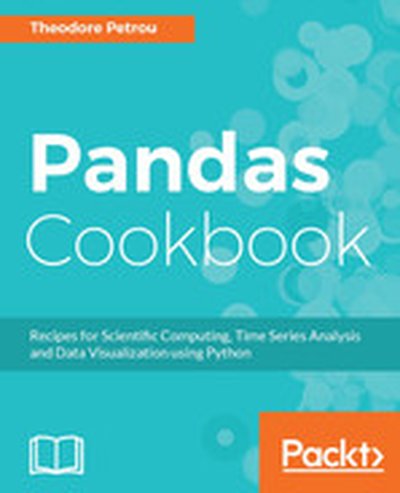
Pandas Cookbook

The Pandas Cookbook offers a collection of practical recipes for mastering data manipulation, analysis, and visualization tasks using pandas. Through a methodological and hands-on approach, you will learn to utilize pandas for handling real-world datasets efficiently. By the end of this book, you will be able to solve complex data science problems and create insightful visual representations in Python. What this Book will help me do Understand the core functionalities of pandas 0.20 for exploring datasets effectively. Master filtering, selecting, and transforming data for targeted analysis. Leverage pandas' features for aggregating and transforming grouped data. Restructure data for analysis and create professional visualizations using integration with Seaborn and Matplotlib. Gain expertise in handling time series data and SQL-like merging operations. Author(s) Theodore Petrou, the author of the Pandas Cookbook, is a data scientist and Python expert with extensive experience teaching and using pandas in professional settings. Known for his practical approach, he meticulously explains each recipe and includes comprehensive examples and datasets in Jupyter notebooks to enhance your learning experience. Who is it for? This book is aimed at data scientists, Python developers, and analysts seeking an in-depth, practical guide to mastering data analysis with pandas. Whether you're a beginner with some knowledge of Python or an experienced analyst looking to refine your skills, this cookbook provides valuable insights and techniques for your data-driven tasks.
In this podcast, John T Langton, Director of Applied Data Science, sat with Vishal, President AnalyticsWeek, and discussed his data analytics journey. He shared his insights, from his startup days to running a data science group within a big enterprise.

Timeline: 0:28 John's journey. 13:28 John's current role. 17:06 Succeeding as a data scientist in different organizations. 26:47 Challenges in putting together a data science company. 38:36 Hacks to selling innovative ideas to clients and customers. 47:20 Defining a good data science hire. 51:50 Maturity level of enterprise AI. 1:00:00 Closing remarks.

John's Recommended Read: Designing Agentive Technology: AI That Works for People Paperback http://amzn.to/2ySDHGp

Podcast Link: https://futureofdata.org/johntlangton-wolters_kluwer-discussed-ai-lead-startup-journey/

John's BIO: John Langton is Director of Applied Data Science at Wolters Kluwer. He was previously worked as Director of Data Science at athenahealth, CEO of VisiTrend, a visual analytics company that was acquired by Carbon Black in 2015. He has a Ph.D. in computer science and an extensive background in AI, machine learning, big data analytics, and visualization. Prior to founding VisiTrend, John was Principal Investigator (PI) on several DoD projects at Charles River Analytics (CRA). He has taught classes at Brandeis University and has several peer-reviewed publications.

About #Podcast:

FutureOfData podcast is a conversation starter to bring leaders, influencers, and lead practitioners to discuss their journey to create the data-driven future.

Wanna Join? If you or any you know wants to join in, Register your interest @ http://play.analyticsweek.com/guest/

Want to sponsor? Email us @ [email protected]

Keywords: FutureOfData Data Analytics Leadership Podcast Big Data Strategy

Jeff Palmucci / @TripAdvisor talk about building a Machine Learning Team and shared some best practices for running a data-driven startup

Timeline: 0:29 Jeff's journey. 8:28 Jeff's experience of working in different eras of data science. 10:34 Challenges in working on a futuristic startup. 13:40 Entrepreneurship and ML solutions. 16:42 Putting together a ML team. 20:32 How to chose the right use case to work on? 22:20 Hacks for putting together a group for ML solutions. 24:40 Convincing the leadership of changing the culture. 29:00 Thought process of putting together an ML group. 31:36 How to gauge the right data science candidate? 35:46 Important KPIs to consider while putting together a ML group. 38:30 The merit of shadow groups within a business unit. 41:05 Jeff's key to success. 42:58 How is having a hobby help a data science leader? 45:05 Appifying is good or bad? 52:07 The fear of what ML throws out. 54:09 Jeff's favorite reads. 55:34 Closing remarks.

Podcast Link: https://futureofdata.org/jeff-palmucci-tripadvisor-discusses-managing-machinelearning-ai-team/

About Jeff Palmucci: As a serial entrepreneur, Jeff has started several companies. He was VP of Software Development for Optimax Systems, a developer of scheduling systems for manufacturing operations acquired by i2 Technologies. As a Founder and CTO of programmatic hedge fund Percipio Capital Management, he helped lead the company to an acquisition by Link Ventures. Jeff is currently leading the Machine Learning group at Tripadvisor, which does various machine learning projects across the company, including natural language processing, review fraud detection, personalization, information retrieval, and machine vision. Jeff has publications in natural language processing, machine learning, genetic algorithms, expert systems, and programming languages. When Jeff is not writing code, he enjoys going to innumerable rock concerts as a professional photographer.

Jeff's Favorite Authors (Genre: Science Fiction): Vernor Vinge http://amzn.to/2ygDPOu Stephen Baxter http://amzn.to/2ygG6cn

About #Podcast:

FutureOfData podcast is a conversation starter to bring leaders, influencers, and lead practitioners to discuss their journey to create the data-driven future.

Wanna Join? If you or any you know wants to join in, Register your interest @ http://play.analyticsweek.com/guest/

Want to sponsor? Email us @ [email protected]

Keywords: FutureOfData Data Analytics Leadership Podcast Big Data Strategy

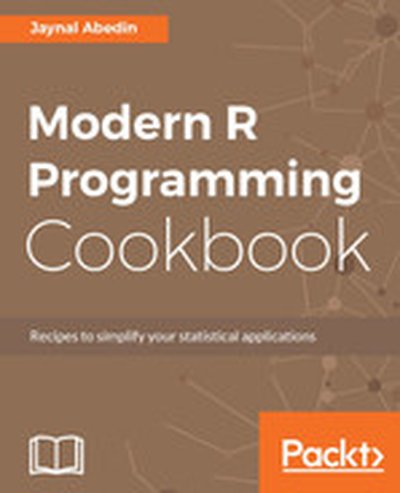
Modern R Programming Cookbook

'Modern R Programming Cookbook' provides an array of practical recipes designed to enhance your R programming skills for statistical, data science, and graphical applications. With this book, you will deepen your understanding of R's syntax and semantics and be able to solve real-world problems using R effectively. What this Book will help me do Understand and configure R's development environment, including IDE setup and library management. Master R's core data structures and best practices for efficient data manipulation. Design and implement custom R functions, handling errors and utilizing recursion effectively. Streamline data processing tasks using modern R packages like dplyr for structured workflows. Efficiently process text and interact with databases to tackle a variety of data science projects. Author(s) Jaynal Abedin is an experienced data scientist and R programmer with a strong background in statistical modeling and data analysis. Over his career, Jaynal has worked on numerous data-intensive projects, helping individuals and organizations transform data insights into actionable strategies. He brings a clear and hands-on approach to teaching and writes with the goal of empowering readers to tackle complex problems using R. Who is it for? This book is perfect for developers looking to enhance their R programming expertise, particularly if they already have a basic understanding of R's fundamentals. Whether you're working in data science, statistics, or software development, this book provides actionable strategies for leveraging R's capabilities. If you're exploring advanced R programming or aiming to upskill in data applications, this book is an excellent resource.

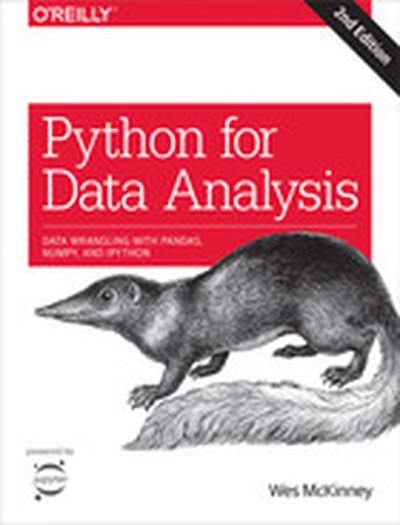
Python for Data Analysis, 2nd Edition

Get complete instructions for manipulating, processing, cleaning, and crunching datasets in Python. Updated for Python 3.6, the second edition of this hands-on guide is packed with practical case studies that show you how to solve a broad set of data analysis problems effectively. You’ll learn the latest versions of pandas, NumPy, IPython, and Jupyter in the process. Written by Wes McKinney, the creator of the Python pandas project, this book is a practical, modern introduction to data science tools in Python. It’s ideal for analysts new to Python and for Python programmers new to data science and scientific computing. Data files and related material are available on GitHub. Use the IPython shell and Jupyter notebook for exploratory computing Learn basic and advanced features in NumPy (Numerical Python) Get started with data analysis tools in the pandas library Use flexible tools to load, clean, transform, merge, and reshape data Create informative visualizations with matplotlib Apply the pandas groupby facility to slice, dice, and summarize datasets Analyze and manipulate regular and irregular time series data Learn how to solve real-world data analysis problems with thorough, detailed examples

In this episode, Microsoft's Corporate Vice President for Cloud Artificial Intelligence, Joseph Sirosh, joins host Kyle Polich to share some of the Microsoft's latest and most exciting innovations in AI development platforms. Last month, Microsoft launched a set of three powerful new capabilities in Azure Machine Learning for advanced developers to exploit big data, GPUs, data wrangling and container-based model deployment. Extended show notes found here. Thanks to our sponsor Springboard.  Check out Springboard's Data Science Career Track Bootcamp.

Last year, the film development and production company End Cue produced a short film, called Sunspring, that was entirely written by an artificial intelligence using neural networks. More specifically, it was authored by a recurrent neural network (RNN) called long short-term memory (LSTM). According to End Cue's Chief Technical Officer, Deb Ray, the company has come a long way in improving the generative AI aspect of the bot. In this episode, Deb Ray joins host Kyle Polich to discuss how generative AI models are being applied in creative processes, such as screenwriting. Their discussion also explores how data science for analyzing development projects, such as financing and selecting scripts, as well as optimizing the content production process.

In this Podcast, Charlie Berger from Oracle discussed some of the challenges of data-driven enterprises.

Timeline: 0:29 Charlie's journey. 6:12 Charlie's current role. 8:55 Oracle's role in the future of data. 13:20 The evolution of ML. 20:41 The need for revaluating mathematical models that data science is based on. 27:50 On the concept of appification of analytics. 36:17 On enterprise IT landscape changing. 43:17 Geekifying analytics. 47:15 Charlie's favorite read. 50:21 Closing remarks.

Charlie's favorite read suggestions: 1. The Naked Future: What Happens in a World That Anticipates Your Every Move?

Podcast link: https://futureofdata.org/futureofdata-charliedatamine-oracle-discussing-running-analytics-enterprise/

Charlie's BIO: Passionate technical professional skilled in building entrepreneurial, start-up initiatives, and environments. Strong technical, product management, communication, marketing, and leadership skills.

• Experienced product management professional with over 30 years of experience in leading-edge technologies in large corporations and entrepreneurial start-ups. • During 15 years at Oracle Corporation, developed an innovative portfolio of “big data analytics” products developed as in-database SQL data mining functions and integrated "predictive analytics" applications. • Strong technical, product management, communication, and leadership skills. • Responsible for product management and direction for the Oracle Database data mining and predictive analytics technology, including Oracle Data Mining, text mining, and statistical functions. • Strong product champion, evangelist, and frequent speaker in the field of predictive analytics and data mining. • Leveraged relationships with customers, development, and sales to communicate product capabilities and value proposition.

About #Podcast:

FutureOfData podcast is a conversation starter to bring leaders, influencers, and lead practitioners to discuss their journey to create the data-driven future.

Wanna Join? If you or any you know wants to join in, Register your interest @ http://play.analyticsweek.com/guest/

Want to sponsor? Email us @ [email protected]

Keywords: FutureOfData Data Analytics Leadership Podcast Big Data Strategy

Practical Time Series Analysis

Discover how to unlock the secrets of time-series data with "Practical Time Series Analysis". With a focus on hands-on learning, this book takes you on a journey through time series data processing, visualization, and modeling. Gain the technical expertise and confidence to tackle real-world datasets using Python. What this Book will help me do Understand the fundamental principles of time series analysis and their application to real-world datasets. Learn to utilize Python for data preparation, visualization, and processing in the context of time series. Master the techniques of evaluating and addressing common challenges such as non-stationarity and autocorrelation. Apply statistical methods and machine learning models, including ARIMA and deep learning approaches, to forecasting tasks. Develop practical skills to implement and deploy end-to-end predictive models for time series data analysis. Author(s) PKS Prakash and Avishek Pal bring decades of combined experience in data science and analytics. Their meticulous approach toward simplifying complex concepts makes learning time series approachable and engaging. Drawing from their professional expertise, they incorporate extensive examples to merge theory with practice. Who is it for? This book is ideal for data scientists and engineers keen on enhancing their abilities to analyze temporal data. Prior knowledge in Python and basic statistics will help you gain the most from this book. Whether advancing your career or solving practical problems, you'll find invaluable insights here.

podcast_episode
by Val Kroll , Corry Prohens (IQ Workforce) , Julie Hoyer , Tim Wilson (Analytics Power Hour - Columbus (OH) , Moe Kiss (Canva) , Michael Helbling (Search Discovery)

Have you learned R yet? No? Well, then Tim is disappointed in you. Or, maybe that's totally okay! Way back on episode #035, we asked the question if data science was the future of digital analytics. We concluded...maybe...for some. On this episode, we dive deeper into what the career options are for digital analysts with longtime digital analytics industry recruiting and staffing maven Corry Prohens, founder and CEO of IQ Workforce. The good news? There are lots of options (if you find your passion and follow it)! For complete show notes, including links to items mentioned in this episode and a transcript of the show, visit the show page.

Apache Spark 2.x Machine Learning Cookbook

This book is your gateway to mastering machine learning with Apache Spark 2.x. Through detailed hands-on recipes, you'll delve into building scalable ML models, optimizing big data processes, and enhancing project efficiency. Gain practical knowledge and explore real-world applications of recommendations, clustering, analytics, and more with Spark's powerful capabilities. What this Book will help me do Understand how to integrate Scala and Spark for effective machine learning development. Learn to create scalable recommendation engines using Spark. Master the development of clustering systems to organize unlabelled data at scale. Explore Spark libraries to implement efficient text analytics and search engines. Optimize large-scale data operations, tackling high-dimensional issues with Spark. Author(s) The team of authors brings expertise in machine learning, data science, and Spark technologies. Their combined industry experience and academic knowledge ensure the book is grounded in practical applications while offering theoretical insights. With clear explanations and a step-by-step approach, they aim to simplify complex concepts for developers and data scientists. Who is it for? This book is crafted for Scala developers familiar with machine learning concepts but seeking practical applications with Spark. If you have been implementing models but want to scale them and leverage Spark's robust ecosystem, this guide will serve you well. It is ideal for professionals seeking to deepen their skills in Spark and data science.

Data Analysis with IBM SPSS Statistics

"Data Analysis with IBM SPSS Statistics" is a comprehensive guide designed to help you master IBM SPSS Statistics for performing robust statistical analyses. Through a practical approach, the book delves into critical techniques like data visualization, regression analysis, and hypothesis testing, enabling you to uncover patterns, make informed decisions, and enhance data interpretation. What this Book will help me do Set up and configure IBM SPSS Statistics for effective data analysis workflows. Perform data cleaning and preparation, including addressing missing data and restructuring datasets. Master statistical techniques such as ANOVA, regression analysis, and clustering to draw insights from data. Generate intuitive visualizations like charts and graphs to communicate findings effectively. Build predictive models and evaluate their effectiveness for decision-making purposes. Author(s) Ken Stehlik-Barry and Anthony Babinec are seasoned data analysts and IBM SPSS experts with extensive experience in statistical methodologies and data science. They have a knack for translating complex concepts into accessible lessons, making this book an ideal resource for learners aiming to build their SPSS aptitude. Their expertise ensures a well-rounded learning journey. Who is it for? This book is tailored for data analysts and researchers who need to analyze and interpret data effectively using IBM SPSS Statistics. Readers should have basic familiarity with statistical concepts, making it ideal for those with a foundational understanding of statistics. If you aim to grasp practical applications of SPSS for real-world data challenges, this book is for you.

R Data Analysis Cookbook, Second Edition - Second Edition

R Data Analysis Cookbook, Second Edition, is your companion for mastering various data analysis techniques using R. Combining powerful R libraries like ggplot2, this book guides you through tasks such as data mining, visualization, and even advanced concepts like time series analysis. Whether you're cleaning and formatting data or generating actionable insights, this book offers hands-on recipes to upskill efficiently. What this Book will help me do Learn how to acquire, prepare, and visualize datasets using popular R libraries. Master exploratory data analysis concepts to discover insights in any data. Get introduced to machine learning algorithms in R such as regression and classification. Develop advanced skills like social network analysis, recommendation systems, and geospatial analysis. Learn to generate dynamic reports and interactive dashboards using tools like Shiny. Author(s) Kuntal Ganguly and Viswa Viswanathan bring a wealth of experience in data science, analytics, and R programming to this book. Their passion for teaching complex topics with clarity and practical insight shines throughout. The co-authors incorporate years of technical expertise to guide readers step-by-step in solving real-world data analysis challenges. Who is it for? This book is ideal for data scientists, analysts, or enthusiasts taking their first or next steps with R. It caters to professionals with a beginner or intermediate understanding of statistics and programming who are seeking practical examples and solutions to complex data tasks. If you want actionable knowledge to address real-world analytics challenges, this book is for you.

In this Podcast Clayton, @theclaymethod from @TiVo sat with Vishal to talk about his experience running analytics group within media landscape and shed light on running analytics in media industry.

Timeline: 0:29 Clayton's journey. 2:50 Clayton's current role as the director of Tivo. 5:13 Clayton's path to become a data scientist. 9:10 Analytics in the media. 12:06 Data in the creative industry. 14:32 Interesting use cases of data in media industry. 17:03 Classifying data for different media platforms. 18:48 Defining a typical data scientist in the media industry. 22:12 Art of doing business and science of doing business. 25:02 Putting together a data science team. 29:26 Successful KPIs in the media industry. 32:47 Interesting companies and products and their data practice. 34:22 Knowing the requirement of an AI/ML model in a business. 37:02 Data science practice in bigger companies. 38:33 Clayton's choice of the media industry. 39:42 Advice for data analysts who want to enter the media industry. 41:42 Mentorship and buddy system. 44:06 Advice for those who are from non engineering background. 47:40 Clayton's favorite reads. 49:40 Clayton's next ideal hire. 51:15 Closing remarks.

Podcast link: https://futureofdata.org/futureofdata-with-theclaymethod-tivo-discussing-running-analytics-in-media-industry/

Bio: Clayton Kim is the Director of Data Science at TiVo, responsible for managing the applications of machine learning and statistical research on TV consumption data. Before TiVo, Clayton was the Sr. Manager of Data Science at Localytics, working on applying predictive intelligence to mobile app analytics and messaging.

About #Podcast:

FutureOfData podcast is a conversation starter to bring leaders, influencers and lead practitioners to come on show and discuss their journey in creating the data driven future.

Wanna Join?

If you or any you know wants to join in,

Register your interest @ http://play.analyticsweek.com/guest/

Want to sponsor?

Email us @ [email protected]

Keywords:

FutureOfData

Data

Analytics

Leadership Podcast

Big Data

Strategy

Infonomics

Infonomics is the theory, study, and discipline of asserting economic significance to information. It strives to apply economic and asset management principles to the valuation, handling, and deployment of information assets. This for the chief data officers and other leaders in their struggle to help their organizations become infosavvy. "Doug Laney masterfully weaves together a collection of great examples with a solid framework to guide readers on how to gain competitive advantage through what he labels "the unruly asset" – data. The framework is comprehensive, the advice practical and the success stories global and across industries and applications." Liz Rowe, Chief Data Officer, State of New Jersey "A must read for anybody who wants to survive in a data centric world." Shaun Adams, Head of Data Science, Betterbathrooms.com "Phenomenal! An absolute must read for data practitioners, business leaders and technology strategists. Doug's lucid style has a set a new standard in providing intelligible material in the field of information economics. His passion and knowledge on the subject exudes thru his literature and inspires individuals like me." Ruchi Rajasekhar, Principal Data Architect, MISO Energy "I highly recommend Infonomics to all aspiring analytics leaders. Doug Laney’s work gives readers a deeper understanding of how and why information should be monetized and managed as an enterprise asset. Laney’s assertion that accounting should recognize information as a capital asset is quite convincing and one I agree with. Infonomics enjoyably echoes that sentiment!" Matt Green, independent business analytics consultant, Atlanta area "If you care about the digital economy, and you should, read this book." Tanya Shuckhart, Analyst Relations Lead, IRI Worldwide

Statistical Application Development with R and Python - Second Edition

This book, 'Statistical Application Development with R and Python', is your gateway to mastering statistical analysis and applying it effectively in real-world contexts. Through integrated R and Python code, you'll learn how to utilize data processing, explore advanced statistical models like regression and CART, and develop applications that solve complex analytical challenges. What this Book will help me do Fully understand data visualization and exploratory analysis methods to uncover insights from datasets. Master techniques such as regression models, clustering, and classification to enhance your analytical toolkit. Gain proficiency in R and Python for data processing and statistical modeling tasks. Apply CART and other machine learning tools to tackle nonlinear data challenges effectively. Equip yourself with a comprehensive approach to data exploration and decision-making for impactful results. Author(s) The author(s) of this book bring extensive experience in statistical analysis, computational modeling, and the use of R and Python for data science. They are professionals and educators passionate about making statistics accessible and practical. Their engaging writing style ensures readers not only understand but also enjoy the journey of learning statistics. Who is it for? This book is perfect for aspiring data scientists or professionals wanting to deepen their understanding of statistical analysis. Whether you're new to R or Python or looking to integrate both into your workflow, this guide provides comprehensive knowledge and practical techniques. It's suitable for beginners with no prior experience as well as seasoned users seeking to enhance their data processing and modeling skills.

Advanced Analytics with R and Tableau

In "Advanced Analytics with R and Tableau," you will learn how to combine the statistical computing power of R with the excellent data visualization capabilities of Tableau to perform advanced analysis and present your findings effectively. This book guides you through practical examples to understand topics such as classification, clustering, and predictive analytics while creating compelling visual dashboards. What this Book will help me do Integrate advanced statistical computations in R with Tableau's visual analysis for comprehensive analytics. Master making R function calls from Tableau through practical applications such as RServe integration. Develop predictive and classification models in R, visualized wonderfully in Tableau dashboards. Understand clustering and unsupervised learning concepts, applied to real-world datasets for business insights. Leverage the combination of Tableau and R for making impactful, data-driven decisions in your organization. Author(s) Ruben Oliva Ramos, Jen Stirrup, and Roberto Rösler are accomplished professionals with extensive experience in data science and analytics. Their combined expertise brings practical insights into combining R and Tableau for advanced analytics. Advocates for hands-on learning, they emphasize clarity and actionable knowledge in their writing. Who is it for? "Advanced Analytics with R and Tableau" is ideal for business analysts, data scientists, and Tableau professionals eager to expand their capabilities into advanced analytics. Readers should be familiar with Tableau and have basic knowledge of R, though the book starts with accessible examples. If you're looking to enhance your analytics with R's statistical power seamlessly integrated into Tableau, this book is for you.

Mastering Predictive Analytics with R, Second Edition - Second Edition

This comprehensive guide dives into predictive analytics with R, exploring the powerful functionality and vast ecosystem of packages available in this programming language. By studying this book, you will gain mastery over predictive modeling techniques and learn how to apply machine learning to real-world problems efficiently and effectively. What this Book will help me do Develop proficiency in predictive modeling processes, from data preparation to model evaluation. Gain hands-on experience with R's diverse packages for machine learning. Understand the theoretical foundations and practical applications of various predictive models. Learn advanced techniques such as deep learning implementations of word embeddings and recurrent neural networks. Acquire the ability to handle large datasets using R for scalable predictive analytics workflows. Author(s) James D. Miller and Rui Miguel Forte are experts in data science and predictive analytics with decades of combined experience in the field. They bring practical insights from their work in both academia and industry. Their clear and engaging writing style aims at making complex concepts accessible to readers by integrating theoretical knowledge with real-world applications. Who is it for? This book is ideal for budding data scientists, predictive modelers, or quantitative analysts with some basic knowledge of R and statistics. Advanced learners aiming to refine their expertise in predictive analytics and those wishing to explore the functionality of R for applied machine learning will also greatly benefit from this resource. The book is suitable for professionals and enthusiasts keen to expand their understanding of predictive modeling and learn advanced techniques.

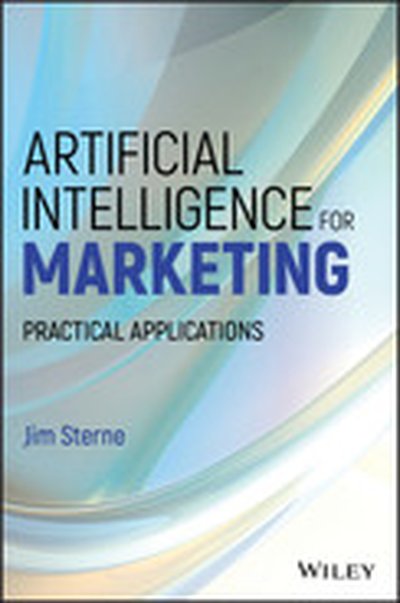
Artificial Intelligence for Marketing

A straightforward, non-technical guide to the next major marketing tool Artificial Intelligence for Marketing presents a tightly-focused introduction to machine learning, written specifically for marketing professionals. This book will not teach you to be a data scientist—but it does explain how Artificial Intelligence and Machine Learning will revolutionize your company's marketing strategy, and teach you how to use it most effectively. Data and analytics have become table stakes in modern marketing, but the field is ever-evolving with data scientists continually developing new algorithms—where does that leave you? How can marketers use the latest data science developments to their advantage? This book walks you through the "need-to-know" aspects of Artificial Intelligence, including natural language processing, speech recognition, and the power of Machine Learning to show you how to make the most of this technology in a practical, tactical way. Simple illustrations clarify complex concepts, and case studies show how real-world companies are taking the next leap forward. Straightforward, pragmatic, and with no math required, this book will help you: Speak intelligently about Artificial Intelligence and its advantages in marketing Understand how marketers without a Data Science degree can make use of machine learning technology Collaborate with data scientists as a subject matter expert to help develop focused-use applications Help your company gain a competitive advantage by leveraging leading-edge technology in marketing Marketing and data science are two fast-moving, turbulent spheres that often intersect; that intersection is where marketing professionals pick up the tools and methods to move their company forward. Artificial Intelligence and Machine Learning provide a data-driven basis for more robust and intensely-targeted marketing strategies—and companies that effectively utilize these latest tools will reap the benefit in the marketplace. Artificial Intelligence for Marketing provides a nontechnical crash course to help you stay ahead of the curve.