talk-data.com talk-data.com

Topic

DWH

Data Warehouse

analytics business_intelligence data_storage

568

tagged

Activity Trend

35 peak/qtr
2020-Q1 2026-Q1

Activities

568 activities · Newest first

In this podcast, Bill Schmarzo talks about the ingredients of successful data science practice, team, and executives. Bill shared his insights on what some leaders in the industries are doing and some challenges seen in the successful deployment. Bill shared his key take on ingredients for some of the successful hires. This podcast is great for growth mindset executives willing to learn about creating a successful data science practice.

Timeline: 0:29 Bill's journey. 5:05:00 Bill's current role. 7:04 Data science adoption challenges for businesses. 9:33 The good side of data science adoption. 11:22 How is data science changing business. 14:34 Strategies behind distributed IT. 18:35 Analysing the current amount of data. 21:50 Who should own the idea of data science? 24:34 The right background for a CDO. 25:52 Bias in IT. 29:35 Hacks to keep yourself bias-free. 31:58 Team vs. tool for putting together a good data-driven practice. 34:54 Value cycle in data science. 37:10 Maturity model. 39:17 Convincing culture heavy businesses to adopt data. 42:47 Keeping oneself sane during the technological disruption. 46:20 Hiring the right talent. 51:46 Ingredients of a good data science hire. 56:00 Bill's success mantra. 59:07 Bill's favorite reads. 1:00:36 Closing remarks.

Bill's Recommended Read: Moneyball: The Art of Winning an Unfair Game by Michael Lewis http://amzn.to/2FqBFg8 Big Data MBA: Driving Business Strategies with Data Science by Bill Schmarzo http://amzn.to/2tlZAvP

Podcast Link: https://futureofdata.org/schmarzo-dellemc-on-ingredients-of-healthy-datascience-practice-futureofdata-podcast/

Bill's BIO: Bill Schmarzo is the CTO for the Big Data Practice, where he is responsible for working with organizations to help them identify where and how to start their big data journeys. He's written several white papers, is an avid blogger, and is a frequent speaker on the use of Big Data and data science to power the organization's key business initiatives. He is a University of San Francisco School of Management Fellow, where he teaches the "Big Data MBA" course.

Bill has over three decades of experience in data warehousing, BI, and analytics. Bill authored EMC's Vision Workshop methodology that links an organization's strategic business initiatives with their supporting data and analytic requirements and co-authored with Ralph Kimball a series of articles on analytic applications. Bill has served on The Data Warehouse Institute's faculty as the head of the analytic applications curriculum.

Bill holds a master's degree in Business Administration from the University of Iowa and a Bachelor of Science degree in Mathematics, Computer Science, and Business Administration from Coe College.

About #Podcast:

FutureOfData podcast is a conversation starter to bring leaders, influencers, and lead practitioners to discuss their journey to create the data-driven future.

Wanna Join? If you or any you know wants to join in, Register your interest @ http://play.analyticsweek.com/guest/

Want to sponsor? Email us @ [email protected]

Keywords:
FutureOfData #DataAnalytics #Leadership #Podcast #BigData #Strategy

Teradata Cookbook

Are you ready to master Teradata, one of the leading relational database management systems for data warehousing? In the "Teradata Cookbook," you will find over 85 recipes covering vital tasks like querying, performance tuning, and administrative operations. With clear and practical instructions, this book will equip you with the skills necessary to optimize data storage and analytics in your organization. What this Book will help me do Master Teradata's advanced features for efficient data warehousing applications. Understand and employ Teradata SQL for effective data manipulation and analytics. Explore practical solutions for Teradata administration tasks, including user and security management. Learn performance tuning techniques to enhance the efficiency of your queries and processes. Acquire detailed knowledge about Teradata's architecture and its unique capabilities. Author(s) The authors of "Teradata Cookbook" are experienced professionals in database management and data warehousing. With a deep understanding of Teradata's architecture and use in real-world applications, they bring a wealth of knowledge to each of the book's recipes. Their focus is to provide practical, actionable insights to help you tackle challenges you may face. Who is it for? This book is ideal for database administrators, data analysts, and professionals working with data warehousing who want to leverage the power of Teradata. Whether you are new to this database management system or looking to enhance your expertise, this cookbook provides practical solutions and in-depth insights, making it an essential resource.

Summary Sharing data across multiple computers, particularly when it is large and changing, is a difficult problem to solve. In order to provide a simpler way to distribute and version data sets among collaborators the Dat Project was created. In this episode Danielle Robinson and Joe Hand explain how the project got started, how it functions, and some of the many ways that it can be used. They also explain the plans that the team has for upcoming features and uses that you can watch out for in future releases.

Preamble

Hello and welcome to the Data Engineering Podcast, the show about modern data infrastructure When you’re ready to launch your next project you’ll need somewhere to deploy it. Check out Linode at dataengineeringpodcast.com/linode and get a $20 credit to try out their fast and reliable Linux virtual servers for running your data pipelines or trying out the tools you hear about on the show. Continuous delivery lets you get new features in front of your users as fast as possible without introducing bugs or breaking production and GoCD is the open source platform made by the people at Thoughtworks who wrote the book about it. Go to dataengineeringpodcast.com/gocd to download and launch it today. Enterprise add-ons and professional support are available for added peace of mind. Go to dataengineeringpodcast.com to subscribe to the show, sign up for the newsletter, read the show notes, and get in touch. You can help support the show by checking out the Patreon page which is linked from the site. To help other people find the show you can leave a review on iTunes, or Google Play Music, and tell your friends and co-workers A few announcements:

There is still time to register for the O’Reilly Strata Conference in San Jose, CA March 5th-8th. Use the link dataengineeringpodcast.com/strata-san-jose to register and save 20% The O’Reilly AI Conference is also coming up. Happening April 29th to the 30th in New York it will give you a solid understanding of the latest breakthroughs and best practices in AI for business. Go to dataengineeringpodcast.com/aicon-new-york to register and save 20% If you work with data or want to learn more about how the projects you have heard about on the show get used in the real world then join me at the Open Data Science Conference in Boston from May 1st through the 4th. It has become one of the largest events for data scientists, data engineers, and data driven businesses to get together and learn how to be more effective. To save 60% off your tickets go to dataengineeringpodcast.com/odsc-east-2018 and register.

Your host is Tobias Macey and today I’m interviewing Danielle Robinson and Joe Hand about Dat Project, a distributed data sharing protocol for building applications of the future

Interview

Introduction How did you get involved in the area of data management? What is the Dat project and how did it get started? How have the grants to the Dat project influenced the focus and pace of development that was possible?

Now that you have established a non-profit organization around Dat, what are your plans to support future sustainability and growth of the project?

Can you explain how the Dat protocol is designed and how it has evolved since it was first started? How does Dat manage conflict resolution and data versioning when replicating between multiple machines? One of the primary use cases that is mentioned in the documentation and website for Dat is that of hosting and distributing open data sets, with a focus on researchers. How does Dat help with that effort and what improvements does it offer over other existing solutions? One of the difficult aspects of building a peer-to-peer protocol is that of establishing a critical mass of users to add value to the network. How have you approached that effort and how much progress do you feel that you have made? How does the peer-to-peer nature of the platform affect the architectural patterns for people wanting to build applications that are delivered via dat, vs the common three-tier architecture oriented around persistent databases? What mechanisms are available for content discovery, given the fact that Dat URLs are private and unguessable by default? For someone who wants to start using Dat today, what is involved in creating and/or consuming content that is available on the network? What have been the most challenging aspects of building and promoting Dat? What are some of the most interesting or inspiring uses of the Dat protocol that you are aware of?

Contact Info

Dat

datproject.org Email @dat_project on Twitter Dat Chat

Danielle

Email @daniellecrobins

Joe

Email @joeahand on Twitter

Parting Question

From your perspective, what is the biggest gap in the tooling or technology for data management today?

Links

Dat Project Code For Science and Society Neuroscience Cell Biology OpenCon Mozilla Science Open Education Open Access Open Data Fortune 500 Data Warehouse Knight Foundation Alfred P. Sloan Foundation Gordon and Betty Moore Foundation Dat In The Lab Dat in the Lab blog posts California Digital Library IPFS Dat on Open Collective – COMING SOON! ScienceFair Stencila eLIFE Git BitTorrent Dat Whitepaper Merkle Tree Certificate Transparency Dat Protocol Working Group Dat Multiwriter Development – Hyperdb Beaker Browser WebRTC IndexedDB Rust C Keybase PGP Wire Zenodo Dryad Data Sharing Dataverse RSync FTP Globus Fritter Fritter Demo Rotonde how to Joe’s website on Dat Dat Tutorial Data Rescue – NYTimes Coverage Data.gov Libraries+ Network UC Conservation Genomics Consortium Fair Data principles hypervision hypervision in browser

The intro and outro music is from The Hug by The Freak Fandango Orchestra / CC BY-SA

Click here to read the unedited transcript… Tobias Macey 00:13…

In this podcast, Wayne Eckerson and Joe Caserta discuss what constitutes a modern data platform. Caserta is President of a New York City-based consulting firm he founded in 2001 and a longtime data guy. In 2004, Joe teamed up with data warehousing legend, Ralph Kimball to write to write the book The Data Warehouse ETL Toolkit. Today he’s now one of the leading authorities on big data implementations. This makes Joe one of the few individuals with in-the-trenches experience on both sides of the data divide, traditional data warehousing on relational databases and big data implementations on Hadoop and the cloud. His perspectives are always insightful.

Dewayne Washington is back this week for part II of his Secrets of Data Analytics Leaders podcast with Eckerson Group. In part I, Dewayne and I discussed the role of the CIO. In this episode we discuss the keys to IT success.

Washington is a senior consultant with 20+ years of experience in BI and Analytics in over two dozen verticals. He is the former BI manager at Dallas/Fortworth International Airport and the current CIO at The Business of Intelligence. He is also the author of the book Get In The Stream, the ultimate guide to customer adoption, and his Data Warehousing and Mobile Solutions implementations have been featured in CIO Magazine and the Wall Street Journal. Washington is also a sought-after speaker and mentor for organizations striving to leverage BI and Analytics to meet business goals, thus earning him the title, BI Pharaoh.

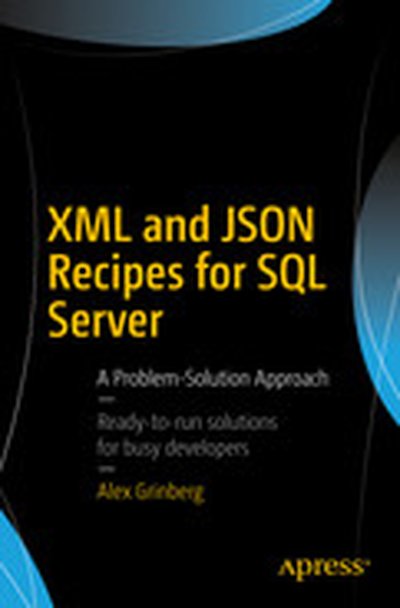
XML and JSON Recipes for SQL Server: A Problem-Solution Approach

Quickly find solutions to dozens of common problems encountered while using XML and JSON features that are built into SQL Server. Content is presented in the popular problem-solution format. Look up the problem that you want to solve. Read the solution. Apply the solution directly in your own code. Problem solved! This book shows how to take advantage of XML and JSON to share data and automate tasks. JSON is commonly used to move data back and forth between the database and front-end applications, often running in a browser. This book shows all you need to know about transforming query results into JSON format, and back again. Also covered are the processes and techniques for moving data into and out of XML format for business intelligence and other purposes, such as when transferring data from a reporting system into a data warehouse, or between different database brands such as between SQL Server and Oracle. Microsoft intensively implements XML in SQL Server, and in many related products. Execution plans are generated in XML format, and this book shows you how to parse those plans and automate the detection of performance problems. The relatively new Extended Events feature writes tracing data into XML files, and the recipes in this book help in parsing those files. XML is also used in SQL Server's BI tool set, including in SSIS, SSR, and SSAS. XML is used in many configuration files, and is even behind the construction of DDL triggers. In reading this book you’ll dive deeply into the features that allow you to build and parse XML, and also JSON, which is a specific format of XML used to transmit objects in a web-friendly format between a database and its front-end applications. What You Will Learn Build XML and JSON objects in support of automation and data transfer Import and parse XML and JSON from operating system files Build appropriate indexes on XML objects to improve query performance Move data from query result sets into JSON format, and back again Automate the detection of database performance problems by querying and parsing the database’s own execution plans Replace external and manual JSON processes with SQL Server's internal, JSON functionality Who This Book Is For Database administrators, .NET developers, business intelligence developers, and other professionals who want a deep and detailed skill set around working with XML and JSON in a SQL Server database environment. Web developers will particularly find the book useful for its coverage of transforming database result sets into JSON text that can be transmitted to front-end web applications.

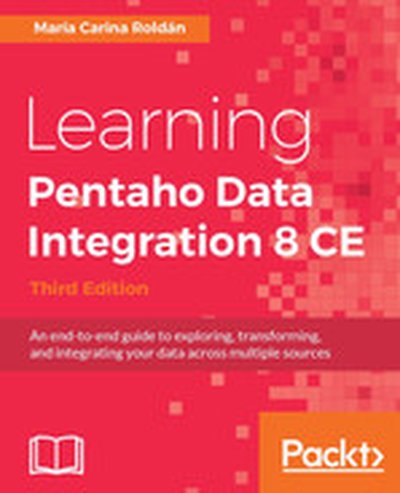
Learning Pentaho Data Integration 8 CE - Third Edition

"Learning Pentaho Data Integration 8 CE" is your comprehensive guide to mastering data manipulation and integration using Pentaho Data Integration (PDI) 8 Community Edition. Through step-by-step instructions and practical examples, you'll learn to explore, transform, validate, and integrate data from multiple sources, equipping you to handle real-world data challenges efficiently. What this Book will help me do Effectively install and understand the foundational concepts of Pentaho Data Integration 8 Community Edition. Efficiently organize, clean, and transform raw data from various sources into useful formats. Perform advanced data operations like metadata injection, managing relational databases, and implementing ETL solutions. Design, create, and deploy comprehensive data warehouse solutions using modern best practices. Streamline daily data processing tasks with flexibility and accuracy while handling errors gracefully. Author(s) The author, Carina Roldán, is an experienced professional in the field of data science and ETL (Extract, Transform, Load) development. Her expertise in leveraging tools like Pentaho Data Integration has allowed her to contribute significantly to BI and data management projects. Her approach in writing this book reflects her commitment to simplifying complex topics for aspiring professionals. Who is it for? This book is ideal for software developers, data analysts, business intelligence professionals, and IT students aiming to enhance their skills in ETL processes using Pentaho Data Integration. Beginners who wish to learn PDI comprehensively and professionals looking to deepen their expertise will both find value in this resource. It's also suitable for individuals involved in data warehouse design and implementation. This book will equip you with the skills to handle diverse data transformation tasks effectively.

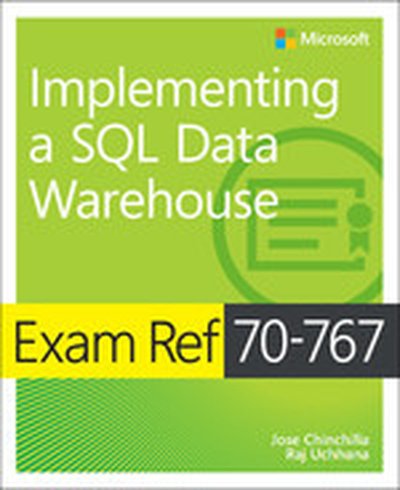
Exam Ref 70-767 Implementing a SQL Data Warehouse

Prepare for Microsoft Exam 70-767–and help demonstrate your real-world mastery of skills for managing data warehouses. This exam is intended for Extract, Transform, Load (ETL) data warehouse developers who create business intelligence (BI) solutions. Their responsibilities include data cleansing as well as ETL and data warehouse implementation. The reader should have experience installing and implementing a Master Data Services (MDS) model, using MDS tools, and creating a Master Data Manager database and web application. The reader should understand how to design and implement ETL control flow elements and work with a SQL Service Integration Services package. Focus on the expertise measured by these objectives: • Design, and implement, and maintain a data warehouse • Extract, transform, and load data • Build data quality solutionsThis Microsoft Exam Ref: • Organizes its coverage by exam objectives • Features strategic, what-if scenarios to challenge you • Assumes you have working knowledge of relational database technology and incremental database extraction, as well as experience with designing ETL control flows, using and debugging SSIS packages, accessing and importing or exporting data from multiple sources, and managing a SQL data warehouse. Implementing a SQL Data Warehouse About the Exam Exam 70-767 focuses on skills and knowledge required for working with relational database technology. About Microsoft Certification Passing this exam earns you credit toward a Microsoft Certified Professional (MCP) or Microsoft Certified Solutions Associate (MCSA) certification that demonstrates your mastery of data warehouse management Passing this exam as well as Exam 70-768 (Developing SQL Data Models) earns you credit toward a Microsoft Certified Solutions Associate (MCSA) SQL 2016 Business Intelligence (BI) Development certification. See full details at: microsoft.com/learning

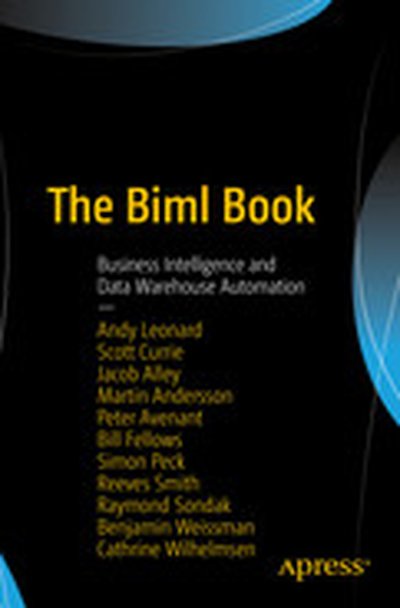
The Biml Book: Business Intelligence and Data Warehouse Automation

Learn Business Intelligence Markup Language (Biml) for automating much of the repetitive, manual labor involved in data integration. We teach you how to build frameworks and use advanced Biml features to get more out of SQL Server Integration Services (SSIS), Transact-SQL (T-SQL), and SQL Server Analysis Services (SSAS) than you ever thought possible. The first part of the book starts with the basics—getting your development environment configured, Biml syntax, and scripting essentials. Whether a beginner or a seasoned Biml expert, the next part of the book guides you through the process of using Biml to build a framework that captures both your design patterns and execution management. Design patterns are reusable code blocks that standardize the approach you use to perform certain types of data integration, logging, and other key data functions. Design patterns solve common problems encountered when developing data integration solutions. Because you do not have to build the code from scratch each time, design patterns improve your efficiency as a Biml developer. In addition to leveraging design patterns in your framework, you will learn how to build a robust metadata store and how to package your framework into Biml bundles for deployment within your enterprise. In the last part of the book, we teach you more advanced Biml features and capabilities, such as SSAS development, T-SQL recipes, documentation autogeneration, and Biml troubleshooting. The Biml Book: Provides practical and applicable examples Teaches you how to use Biml to reduce development time while improving quality Takes you through solutions to common data integration and BI challenges What You'll Learn Master the basics of Business Intelligence Markup Language (Biml) Study patterns for automating SSIS package generation Build a Biml Framework Import and transform database schemas Automate generation of scripts and projects Who This Book Is For BI developers wishing to quickly locate previously tested solutions, Microsoft BI specialists, those seeking more information about solution automation and code generation, and practitioners of Data Integration Lifecycle Management (DILM) in the DevOps enterprise

Data Warehousing in the Age of Artificial Intelligence

Nearly 7,000 new mobile applications appear every day, and a constant stream of data gives them life. Many organizations rely on a predictive analytics model to turn data into useful business information and ensure the predictions remain accurate as data changes. It can be a complex, time-consuming process. This book shows how to automate and accelerate that process using machine learning (ML) on a modern data warehouse that runs on any cloud. Product specialists from MemSQL explain how today’s modern data warehouses provide the foundations to implement ML algorithms that run efficiently. Through several real-time use cases, you’ll learn how to quickly identify the right metrics to make actionable business decisions. This book explores foundational ML and artificial intelligence concepts to help you understand: How data warehouses accelerate deployment and simplify manageability How companies make a choice between cloud and on-premises deployments for building data processing applications Ways to build analytics and visualizations for business intelligence on historical data The technologies and architecture for building and deploying real-time data pipelines This book demonstrates specific models and examples for building supervised and unsupervised real-time ML applications, and gives practical advice on how to make the choice between building an ML pipeline or buying an existing solution. If you need to use data accurately and efficiently, a real-time data warehouse is a critical business tool.

Learning Informatica PowerCenter 10.x - Second Edition

Dive into the world of Informatica PowerCenter 10.x, where enterprise data warehousing meets cutting-edge data management solutions. This comprehensive guide walks you through mastering ETL processes and optimizing performance, helping you become proficient in this powerful data integration tool. With step-by-step instructions, you'll build your knowledge from installation to advanced techniques. What this Book will help me do Understand how to install and configure Informatica PowerCenter 10.x for enterprise-level data integration projects, ensuring readiness to start transforming data effectively. Gain hands-on experience with PowerCenter's various developer tools, including Workflow Manager, Workflow Monitor, Designer, and Repository Manager, mastering their practical utilities. Learn and apply essential data warehousing concepts, such as Slowly Changing Dimensions (SCDs) and Incremental Aggregations, to create robust data-handling workflows. Leverage advanced PowerCenter features like pushdown optimization and partitioning to optimize performance for large-scale data processing jobs. Become proficient in migrating sources, targets, and workflows between environments, enabling seamless integration of data management solutions across enterprise systems. Author(s) Rahul Malewar, a seasoned expert in ETL and data integration, brings his extensive experience with Informatica PowerCenter to the table. With years spent working alongside global enterprises to streamline their data operations, Rahul's insights transfer into a hands-on teaching style that simplifies even the most advanced concepts. Apt at bridging technical depth with accessible explanations, he has dedicated his career to empowering learners to unlock the full potential of their data warehousing tools. Who is it for? Perfect for developers and data professionals aiming to elevate their enterprise data management skills, this book is ideally suited for those new to or experienced with Informatica. Whether you're striving to become proficient in PowerCenter or seeking to implement advanced ETL concepts in your projects, this guide will equip you with the expertise to succeed. A foundational understanding of programming and data warehousing concepts is recommended for best results.

Data Warehousing with Greenplum

Relational databases haven’t gone away, but they are evolving to integrate messy, disjointed unstructured data into a cleansed repository for analytics. With the execution of massively parallel processing (MPP), the latest generation of analytic data warehouses is helping organizations move beyond business intelligence to processing a variety of advanced analytic workloads. These MPP databases expose their power with the familiarity of SQL. This report introduces the Greenplum Database, recently released as an open source project by Pivotal Software. Lead author Marshall Presser of Pivotal Data Engineering takes you through the Greenplum approach to data analytics and data-driven decisions, beginning with Greenplum’s shared-nothing architecture. You’ll explore data organization and storage, data loading, running queries, as well as performing analytics in the database. You’ll learn: How each networked node in Greenplum’s architecture features an independent operating system, memory, and storage Four deployment options to help you balance security, cost, and time to usability Ways to organize data, including distribution, storage, partitioning, and loading How to use Apache MADlib for in-database analytics, and GPText to process and analyze free-form text Tools for monitoring, managing, securing, and optimizing query responses available in the Pivotal Greenplum commercial database

SQL Server 2016 High Availability Unleashed (includes Content Update Program)

Book + Content Update Program SQL Server 2016 High Availability Unleashed provides start-to-finish coverage of SQL Server’s powerful high availability (HA) solutions for your traditional on-premise databases, cloud-based databases (Azure or AWS), hybrid databases (on-premise coupled with the cloud), and your emerging Big Data solutions. This complete guide introduces an easy-to-follow, formal HA methodology that has been refined over the past several years and helps you identity the right HA solution for your needs. There is also additional coverage of both disaster recovery and business continuity architectures and considerations. You are provided with step-by-step guides, examples, and sample code to help you set up, manage, and administer these highly available solutions. All examples are based on existing production deployments at major Fortune 500 companies around the globe. This book is for all intermediate-to-advanced SQL Server and Big Data professionals, but is also organized so that the first few chapters are great foundation reading for CIOs, CTOs, and even some tech-savvy CFOs. Learn a formal, high availability methodology for understanding and selecting the right HA solution for your needs Deep dive into Microsoft Cluster Services Use selective data replication topologies Explore thorough details on AlwaysOn and availability groups Learn about HA options with log shipping and database mirroring/ snapshots Get details on Microsoft Azure for Big Data and Azure SQL Explore business continuity and disaster recovery Learn about on-premise, cloud, and hybrid deployments Provide all types of database needs, including online transaction processing, data warehouse and business intelligence, and Big Data Explore the future of HA and disaster recovery In addition, this book is part of InformIT’s exciting Content Update Program, which provides content updates for major technology improvements! As significant updates are made to SQL Server, sections of this book will be updated or new sections will be added to match the updates to the technologies. As updates become available, they will be delivered to you via a free Web Edition of this book, which can be accessed with any Internet connection. To learn more, visit informit.com/cup. How to access the Web Edition: Follow the instructions inside to learn how to register your book to access the FREE Web Edition. * The companion material is not available with the online edition on O'Reilly Learning

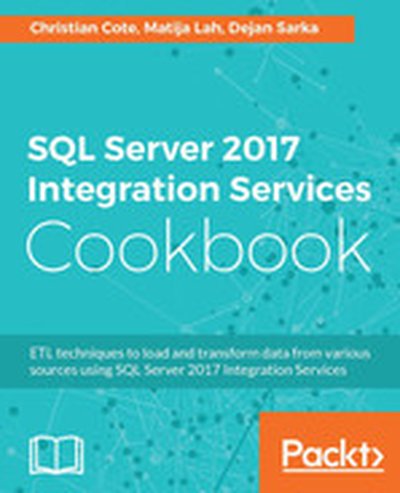
SQL Server 2017 Integration Services Cookbook

SQL Server 2017 Integration Services Cookbook is your key to mastering effective data integration and transformation solutions using SSIS 2017. Through clear, concise recipes, this book teaches the advanced ETL techniques necessary for creating efficient data workflows, leveraging both traditional and modern data platforms. What this Book will help me do Master the integration of diverse data sources into comprehensive data models. Develop optimized ETL workflows that improve operational efficiency. Leverage the new features introduced in SQL Server 2017 for enhanced data processing. Implement scalable data warehouse solutions suitable for modern analytics workloads. Customize and extend integration services to handle specific data transformation needs. Author(s) The authors are seasoned professionals in data integration and ETL technologies. They bring years of real-world experience using SQL Server Integration Services in various enterprise scenarios. Their combined expertise ensures practical insights and guidance, making complex concepts accessible to learners and practitioners alike. Who is it for? This book is ideal for data engineers and ETL developers who already understand the basics of SQL Server and want to master advanced data integration techniques. It is also suitable for database administrators and data analysts aiming to enhance their skill set with efficient ETL processes. Arm yourself with this guide to learn not just the how, but also the why, behind successful data transformations.

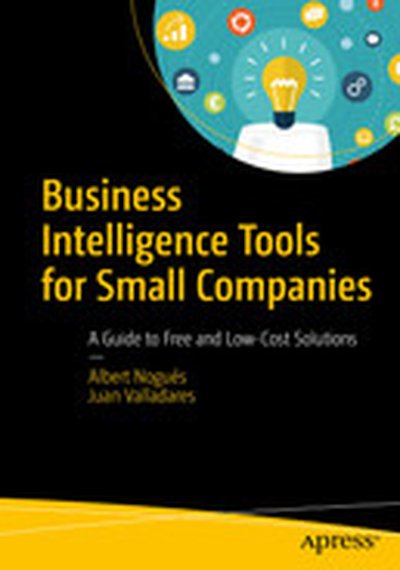
Business Intelligence Tools for Small Companies: A Guide to Free and Low-Cost Solutions

Learn how to transition from Excel-based business intelligence (BI) analysis to enterprise stacks of open-source BI tools. Select and implement the best free and freemium open-source BI tools for your company's needs and design, implement, and integrate BI automation across the full stack using agile methodologies. Business Intelligence Tools for Small Companies provides hands-on demonstrations of open-source tools suitable for the BI requirements of small businesses. The authors draw on their deep experience as BI consultants, developers, and administrators to guide you through the extract-transform-load/data warehousing (ETL/DWH) sequence of extracting data from an enterprise resource planning (ERP) database freely available on the Internet, transforming the data, manipulating them, and loading them into a relational database. The authors demonstrate how to extract, report, and dashboard key performance indicators (KPIs) in a visually appealing format from the relational database management system (RDBMS). They model the selection and implementation of free and freemium tools such as Pentaho Data Integrator and Talend for ELT, Oracle XE and MySQL/MariaDB for RDBMS, and Qliksense, Power BI, and MicroStrategy Desktop for reporting. This richly illustrated guide models the deployment of a small company BI stack on an inexpensive cloud platform such as AWS. What You'll Learn You will learn how to manage, integrate, and automate the processes of BI by selecting and implementing tools to: Implement and manage the business intelligence/data warehousing (BI/DWH) infrastructure Extract data from any enterprise resource planning (ERP) tool Process and integrate BI data using open-source extract-transform-load (ETL) tools Query, report, and analyze BI data using open-source visualization and dashboard tools Use a MOLAP tool to define next year's budget, integrating real data with target scenarios Deploy BI solutions and big data experiments inexpensively on cloud platforms Who This Book Is For Engineers, DBAs, analysts, consultants, and managers at small companies with limited resources but whose BI requirements have outgrown the limitations of Excel spreadsheets; personnel in mid-sized companies with established BI systems who are exploring technological updates and more cost-efficient solutions

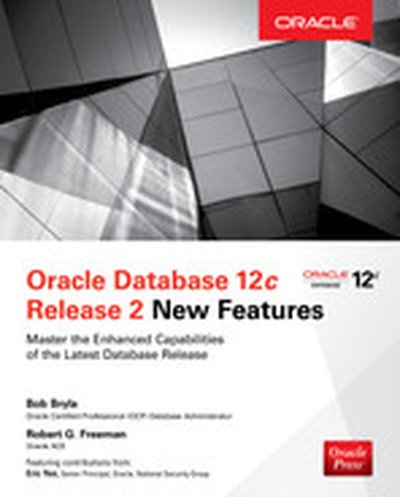
Oracle Database 12c Release 2 New Features

Leverage the New and Improved Features of Oracle Database 12c Written by Oracle experts Bob Bryla and Robert G. Freeman, this Oracle Press guide describes the myriad new and enhanced capabilities available in the latest Oracle Database release. Inside, you’ll find everything you need to know to get up and running quickly on Oracle Database 12c Release 2. Supported by contributions from Oracle expert Eric Yen, Oracle Database 12c Release 2 New Features offers detailed coverage of: • Installing Oracle Database 12c and Grid Infrastructure • Architectural changes, such as Oracle Multitenant • The most current information on upgrading and migrating to Oracle Database 12c • The pre-upgrade information tool and parallel processing for database upgrades • Oracle Real Application Clusters new features, such as Oracle Flex Cluster, Oracle Flex Automatic Storage Management, and Oracle Automatic Storage Management Cluster File System • Enhanced and new online operations: tables, indexes, and PDBs • Oracle RMAN enhancements, including cross-platform backup and recovery • Oracle Data Guard improvements, such as Fast Sync, and Oracle Active Data Guard new features, such as Far Sync • SQL, PL/SQL, DML, and DDL new features • Improvements to partitioning manageability, performance, and availability • Advanced business intelligence and data warehousing capabilities • Security enhancements, including privileges analysis, data redaction, and new administrative-level privileges • Manageability, performance, and optimization improvements

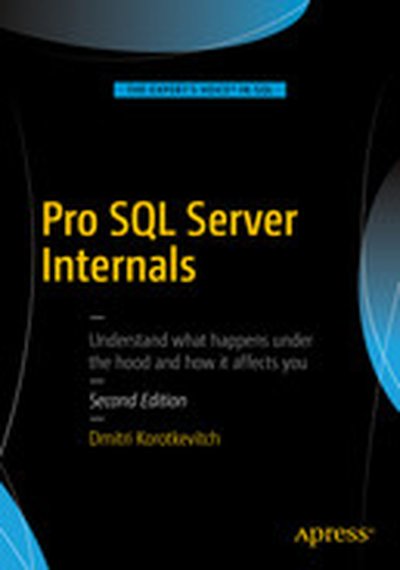
Pro SQL Server Internals, Second Edition

Improve your ability to develop, manage, and troubleshoot SQL Server solutions by learning how different components work "under the hood," and how they communicate with each other. The detailed knowledge helps in implementing and maintaining high-throughput databases critical to your business and its customers. You'll learn how to identify the root cause of each problem and understand how different design and implementation decisions affect performance of your systems. New in this second edition is coverage of SQL Server 2016 Internals, including In-Memory OLTP, columnstore enhancements, Operational Analytics support, Query Store, JSON, temporal tables, stretch databases, security features, and other improvements in the new SQL Server version. The knowledge also can be applied to Microsoft Azure SQL Databases that share the same code with SQL Server 2016. Pro SQL Server Internals is a book for developers and database administrators, and it covers multiple SQL Server versions starting with SQL Server 2005 and going all the way up to the recently released SQL Server 2016. The book provides a solid road map for understanding the depth and power of the SQL Server database server and teaches how to get the most from the platform and keep your databases running at the level needed to support your business. The book: Provides detailed knowledge of new SQL Server 2016 features and enhancements Includes revamped coverage of columnstore indexes and In-Memory OLTP Covers indexing and transaction strategies Shows how various database objects and technologies are implemented internally, and when they should or should not be used Demonstrates how SQL Server executes queries and works with data and transaction log What You Will Learn Design and develop database solutions with SQL Server. Troubleshoot design, concurrency, and performance issues. Choose the right database objects and technologies for the job. Reduce costs and improve availability and manageability. Design disaster recovery and high-availability strategies. Improve performance of OLTP and data warehouse systems through in-memory OLTP and Columnstore indexes. Who This Book Is For Developers and database administrators who want to design, develop, and maintain systems in a way that gets the most from SQL Server. This book is an excellent choice for people who prefer to understand and fix the root cause of a problem rather than applying a 'band aid' to it.

SQL Server 2016 Reporting Services Cookbook

Dive into the world of Microsoft SQL Server 2016 Reporting Services with this cookbook-style guide that covers operational reporting and mobile dashboards. By following clear, task-oriented recipes, you'll quickly learn how to leverage SSRS 2016 for creating advanced, visually appealing, and functional reports to improve your reporting workflows and decision-making processes. What this Book will help me do Understand the architectural components and key features of SQL Server 2016 Reporting Services. Create advanced reporting solutions tailored to your organization's needs using step-by-step recipes. Utilize Power BI and mobile reporting capabilities for more interactive and accessible data insights. Master administration, security, and performance optimization of reporting environments. Integrate reporting solutions into .NET applications for custom business intelligence enhancements. Author(s) None Priyankara is an industry expert with years of experience in data warehousing and reporting solutions, bringing practical insights to the complex world of SQL Server Reporting Services. Co-author Robert Cain is a seasoned technology trainer and consultant specializing in SQL Server and Power BI. Together, they provide a comprehensive, hands-on guide rooted in real-world applications and best practices. Who is it for? This book is designed for software professionals who are involved in reporting and business intelligence, such as software engineers, architects, and DW/BI experts. If you're responsible for designing, implementing, or managing reporting platforms and want to explore SSRS 2016's capabilities, this is the perfect guide for you.

The Big Data Transformation

Business executives today are well aware of the power of data, especially for gaining actionable insight into products and services. But how do you jump into the big data analytics game without spending millions on data warehouse solutions you don’t need? This 40-page report focuses on massively parallel processing (MPP) analytical databases that enable you to run queries and dashboards on a variety of business metrics at extreme speed and Exabyte scale. Because they leverage the full computational power of a cluster, MPP analytical databases can analyze massive volumes of data—both structured and semi-structured—at unprecedented speeds. This report presents five real-world case studies from Etsy, Cerner Corporation, Criteo and other global enterprises to focus on one big data analytics platform in particular, HPE Vertica. You’ll discover: How one prominent data storage company convinced both business and tech stakeholders to adopt an MPP analytical database Why performance marketing technology company Criteo used a Center of Excellence (CoE) model to ensure the success of its big data analytics endeavors How YPSM uses Vertica to speed up its Hadoop-based data processing environment Why Cerner adopted an analytical database to scale its highly successful health information technology platform How Etsy drives success with the company’s big data initiative by avoiding common technical and organizational mistakes

Business Analytics for Managers, 2nd Edition

The intensified used of data based on analytical models to control digitalized operational business processes in an intelligent way is a game changer that continuously disrupts more and more markets. This book exemplifies this development and shows the latest tools and advances in this field Business Analytics for Managers offers real-world guidance for organizations looking to leverage their data into a competitive advantage. This new second edition covers the advances that have revolutionized the field since the first edition's release; big data and real-time digitalized decision making have become major components of any analytics strategy, and new technologies are allowing businesses to gain even more insight from the ever-increasing influx of data. New terms, theories, and technologies are explained and discussed in terms of practical benefit, and the emphasis on forward thinking over historical data describes how analytics can drive better business planning. Coverage includes data warehousing, big data, social media, security, cloud technologies, and future trends, with expert insight on the practical aspects of the current state of the field. Analytics helps businesses move forward. Extensive use of statistical and quantitative analysis alongside explanatory and predictive modeling facilitates fact-based decision making, and evolving technologies continue to streamline every step of the process. This book provides an essential update, and describes how today's tools make business analytics more valuable than ever. Learn how Hadoop can upgrade your data processing and storage Discover the many uses for social media data in analysis and communication Get up to speed on the latest in cloud technologies, data security, and more Prepare for emerging technologies and the future of business analytics Most businesses are caught in a massive, non-stop stream of data. It can become one of your most valuable assets, or a never-ending flood of missed opportunity. Technology moves fast, and keeping up with the cutting edge is crucial for wringing even more value from your data— Business Analytics for Managers brings you up to date, and shows you what analytics can do for you now.