talk-data.com talk-data.com

Topic

Grafana

data_visualization monitoring dashboards

35

tagged

Activity Trend

4 peak/qtr
2020-Q1 2026-Q1

Activities

35 activities · Newest first

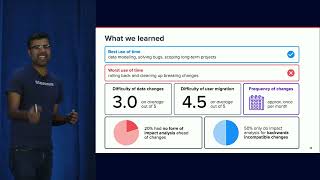
Feed The Alligators With the Lights On: How Data Engineers Can See Who Really Uses Data | Stemma

ABOUT THE TALK: At Lyft, Mark Grover built the Amundsen data catalog so data scientists could navigate hundreds of thousands of tables to distinguish trustworthy data from sandboxed, out-of-date data. When he took Amundsen open source, he helped dozens of data teams support a variety of demands to make data discoverable and self-serve. Mark frequently sees processes that seem “good enough” come back to bite data teams. In this talk, Mark takes us deep into query logs and APIs to see where all of that metadata lives, and he'll demonstrate how to use it so you don’t lose any fingers during your next data change.

ABOUT THE SPEAKER: Mark Grover is the co-founder/CEO of Stemma - a modern data catalog for building self-serve data culture used by Grafana, iRobot, SoFi, Convoy and many others. He is the co-creator of the leading open-source data catalog, Amundsen, used by Lyft, Instacart, Square, ING, Snap and many more! ​Mark was previously a developer on Apache Spark at Cloudera and is a committer and PMC member on a few open-source Apache project. He is a co-author of Hadoop Application Architectures.

ABOUT DATA COUNCIL: Data Council (https://www.datacouncil.ai/) is a community and conference series that provides data professionals with the learning and networking opportunities they need to grow their careers.

Make sure to subscribe to our channel for the most up-to-date talks from technical professionals on data related topics including data infrastructure, data engineering, ML systems, analytics and AI from top startups and tech companies.

FOLLOW DATA COUNCIL: Twitter: https://twitter.com/DataCouncilAI LinkedIn: https://www.linkedin.com/company/datacouncil-ai/

Getting Started with Grafana: Real-Time Dashboards for IT and Business Operations

Begin working with the Grafana data visualization platform. This book is a “how-to manual” for deploying and administering Grafana, creating real-time dashboards and alerts, exploring the data you have, and even synthesizing new data by combining and manipulating data from multiple different sources. You’ll be able to see and manage data on any scale, from your laptop or a Raspberry Pi to a production datacenter or even a multi-region cloud environment! Getting Started with Grafana takes a hands-on approach. You’ll learn by doing with easy-to-follow examples along with pointers to more resources to help you go deeper. The skills you’ll learn will help you provide business value by monitoring your operations in real time and reacting to changing circumstances as they occur. You’ll be able to derive new insights from your existing data through Grafana’s powerful and beautiful graphing capabilities, and you’ll be able to share your dashboards with colleagues soeveryone in your organization can benefit. What You Will Learn Connect to data "where it lives” and work with multiple sources of data Build beautiful and informative dashboards that show real-time status Deploy Grafana at any scale and manage it efficiently Integrate with other enterprise systems such as LDAP or Active Directory Automate creation and deployment of Grafana, dashboards, and alerts Understand what is available in the Enterprise version of Grafana Who This Book Is For Anyone who has data that they want to understand visually, IT professionals who work with multiple sources of data on a regular basis and need to make sense of the confusion that this data sprawl causes, and people who learn best by doing and want to get hands-on experience quickly with a project and then grow their knowledge

Summary Everyone expects data to be transmitted, processed, and updated instantly as more and more products integrate streaming data. The technology to make that possible has been around for a number of years, but the barriers to adoption have still been high due to the level of technical understanding and operational capacity that have been required to run at scale. Datastax has recently introduced a new managed offering for Pulsar workloads in the form of Astra Streaming that lowers those barriers and make stremaing workloads accessible to a wider audience. In this episode Prabhat Jha and Jonathan Ellis share the work that they have been doing to integrate streaming data into their managed Cassandra service. They explain how Pulsar is being used by their customers, the work that they have done to scale the administrative workload for multi-tenant environments, and the challenges of operating such a data intensive service at large scale. This is a fascinating conversation with a lot of useful lessons for anyone who wants to understand the operational aspects of Pulsar and the benefits that it can provide to data workloads.

Announcements

Hello and welcome to the Data Engineering Podcast, the show about modern data management You listen to this show to learn about all of the latest tools, patterns, and practices that power data engineering projects across every domain. Now there’s a book that captures the foundational lessons and principles that underly everything that you hear about here. I’m happy to announce I collected wisdom from the community to help you in your journey as a data engineer and worked with O’Reilly to publish it as 97 Things Every Data Engineer Should Know. Go to dataengineeringpodcast.com/97things today to get your copy! When you’re ready to build your next pipeline, or want to test out the projects you hear about on the show, you’ll need somewhere to deploy it, so check out our friends at Linode. With their managed Kubernetes platform it’s now even easier to deploy and scale your workflows, or try out the latest Helm charts from tools like Pulsar and Pachyderm. With simple pricing, fast networking, object storage, and worldwide data centers, you’ve got everything you need to run a bulletproof data platform. Go to dataengineeringpodcast.com/linode today and get a $100 credit to try out a Kubernetes cluster of your own. And don’t forget to thank them for their continued support of this show! RudderStack’s smart customer data pipeline is warehouse-first. It builds your customer data warehouse and your identity graph on your data warehouse, with support for Snowflake, Google BigQuery, Amazon Redshift, and more. Their SDKs and plugins make event streaming easy, and their integrations with cloud applications like Salesforce and ZenDesk help you go beyond event streaming. With RudderStack you can use all of your customer data to answer more difficult questions and then send those insights to your whole customer data stack. Sign up free at dataengineeringpodcast.com/rudder today. We’ve all been asked to help with an ad-hoc request for data by the sales and marketing team. Then it becomes a critical report that they need updated every week or every day. Then what do you do? Send a CSV via email? Write some Python scripts to automate it? But what about incremental sync, API quotas, error handling, and all of the other details that eat up your time? Today, there is a better way. With Census, just write SQL or plug in your dbt models and start syncing your cloud warehouse to SaaS applications like Salesforce, Marketo, Hubspot, and many more. Go to dataengineeringpodcast.com/census today to get a free 14-day trial. Your host is Tobias Macey and today I’m interviewing Prabhat Jha and Jonathan Ellis about Astra Streaming, a cloud-native streaming platform built on Apache Pulsar

Interview

Introduction

How did you get involved in the area of data management?

Can you describe what the Astra platform is and the story behind it?

How does streaming fit into your overall product vision and the needs of your customers?

What was your selection process/criteria for adopting a streaming engine to complement your existing technology investment?

What are the core use cases that you are aiming to support with Astra Streaming?

Can you describe the architecture and automation of your hosted platform for Pulsar?

What are the integration points that you have built to make it work well with Cassandra?

What are some of the additional tools that you have added to your distribution of Pulsar to simplify operation and use?

What are some of the sharp edges that you have had to sand down as you have scaled up your usage of Pulsar?

What is the process for someone to adopt and integrate with your Astra Streaming service?

How do you handle migrating existing projects, particularly if they are using Kafka currently?

One of the capabilities that you highlight on the product page for Astra Streaming is the ability to execute machine learning workflows on data in flight. What are some of the supporting systems that are necessary to power that workflow?

What are the capabilities that are built into Pulsar that simplify the operational aspects of streaming ML?

What are the ways that you are engaging with and supporting the Pulsar community?

What are the near to medium term elements of the Pulsar roadmap that you are working toward and excited to incorporate into Astra?

What are the most interesting, innovative, or unexpected ways that you have seen Astra used?

What are the most interesting, unexpected, or challenging lessons that you have learned while working on Astra?

When is Astra the wrong choice?

What do you have planned for the future of Astra?

Contact Info

Prabhat

LinkedIn @prabhatja on Twitter prabhatja on GitHub

Jonathan

LinkedIn @spyced on Twitter

Parting Question

From your perspective, what is the biggest gap in the tooling or technology for data management today?

Links

Pulsar

Podcast Episode Streamnative Episode

Datastax Astra Streaming Datastax Astra DB Luna Streaming Distribution Datastax Cassandra Kesque (formerly Kafkaesque) Kafka RabbitMQ Prometheus Grafana Pulsar Heartbeat Pulsar Summit Pulsar Summit Presentation on Kafka Connectors Replicated Chaos Engineering Fallout chaos engineering tools Jepsen

Podcast Episode

Jack VanLightly

BookKeeper TLA+ Model

Change Data Capture

The intro and outro music is from The Hug by The Freak Fandango Orchestra / CC BY-SA

Support Data Engineering Podcast

At Bluevine we use Airflow to drive our ML platform. In this talk, Noam presents the challenges and gains we had at transitioning from a single server running Python scripts with cron to a full blown Airflow setup. This includes: supporting multiple Python versions, event driven DAGs, performance issues and more! Some of the points that I’ll cover are: Supporting multiple Python versions Event driven DAGs Airflow Performance issues and how we circumvented them Building Airflow plugins to enhance observability Monitoring Airflow using Grafana CI for Airflow DAGs (super useful!) Patching Airflow scheduler Slides

Learn Grafana 7.0

"Learn Grafana 7.0" is the ultimate beginner's guide to leveraging Grafana's capabilities for analytics and interactive dashboards. You'll master real-time data monitoring, visualization, and learn how to query and explore metrics with a hands-on approach to Grafana 7.0's new features. What this Book will help me do Learn to install and configure Grafana from scratch, preparing you for real-world data analysis tasks. Navigate and utilize the Graph panel in Grafana effectively, ensuring clear and actionable visual insights. Incorporate advanced dashboard features such as annotations, templates, and links to enhance data monitoring. Integrate Grafana with major cloud providers like AWS and Azure for robust monitoring solutions. Implement secure user authentication and fine-tuned permissions for managing teams and sharing insights safely. Author(s) None Salituro, the author of "Learn Grafana 7.0," is an experienced data visualization expert with years of experience in software development and analytics. Salituro focuses on creating understandable and accessible resources for developers and analysts of all skill levels, bringing a hands-on practical approach to technical learning. Who is it for? This book is perfect for data analysts, business intelligence developers, and administrators looking to build skills in data visualization and monitoring with Grafana 7.0. If you're eager to create interactive dashboards and learn practical applications of Grafana's features, this book is for you. Beginners to Grafana are fully accommodated, though familiarity with data visualization principles is beneficial. For those seeking to monitor cloud services like AWS with Grafana, this book is indispensable.

PostgreSQL 12 High Availability Cookbook - Third Edition

The 'PostgreSQL 12 High Availability Cookbook' is a comprehensive guide to setting up and maintaining highly available PostgreSQL clusters. This book provides practical recipes for designing a resilient database system that can handle outages and recover quickly without downtime. What this Book will help me do Learn how to configure replication tools to protect PostgreSQL data effectively. Understand and implement hardware strategies for ensuring optimal database performance. Master the techniques for reducing contention with connections using pooling strategies. Gain insights into using monitoring tools like Nagios and Grafana for PostgreSQL cluster management. Develop a robust strategy for version upgrades, backups, and failover. Author(s) Shaun Thomas is a seasoned database specialist with extensive experience managing PostgreSQL systems. As a PostgreSQL contributor and advocate, he brings a depth of practical knowledge to database reliability and automation. Shaun's engaging and clear writing style ensures that readers can apply the discussed techniques with confidence. Who is it for? This book is ideal for database administrators, IT professionals, and developers who maintain PostgreSQL systems and want to improve uptime or reliability. Familiarity with basic PostgreSQL concepts is recommended, but no specific knowledge of version 12 features is required. Readers aiming to build advanced high availability solutions will find this book invaluable. It's perfect for those aspiring to ensure their database systems are both resilient and adaptive.

Summary

The past year has been an active one for the timeseries market. New products have been launched, more businesses have moved to streaming analytics, and the team at Timescale has been keeping busy. In this episode the TimescaleDB CEO Ajay Kulkarni and CTO Michael Freedman stop by to talk about their 1.0 release, how the use cases for timeseries data have proliferated, and how they are continuing to simplify the task of processing your time oriented events.

Introduction

Hello and welcome to the Data Engineering Podcast, the show about modern data management When you’re ready to build your next pipeline, or want to test out the projects you hear about on the show, you’ll need somewhere to deploy it, so check out Linode. With 200Gbit private networking, scalable shared block storage, and a 40Gbit public network, you’ve got everything you need to run a fast, reliable, and bullet-proof data platform. If you need global distribution, they’ve got that covered too with world-wide datacenters including new ones in Toronto and Mumbai. Go to dataengineeringpodcast.com/linode today to get a $20 credit and launch a new server in under a minute. Go to dataengineeringpodcast.com to subscribe to the show, sign up for the mailing list, read the show notes, and get in touch. To help other people find the show please leave a review on iTunes, or Google Play Music, tell your friends and co-workers, and share it on social media. Join the community in the new Zulip chat workspace at dataengineeringpodcast.com/chat Your host is Tobias Macey and today I’m welcoming Ajay Kulkarni and Mike Freedman back to talk about how TimescaleDB has grown and changed over the past year

Interview

Introduction How did you get involved in the area of data management? Can you refresh our memory about what TimescaleDB is? How has the market for timeseries databases changed since we last spoke? What has changed in the focus and features of the TimescaleDB project and company? Toward the end of 2018 you launched the 1.0 release of Timescale. What were your criteria for establishing that milestone?

What were the most challenging aspects of reaching that goal?

In terms of timeseries workloads, what are some of the factors that differ across varying use cases?

How do those differences impact the ways in which Timescale is used by the end user, and built by your team?

What are some of the initial assumptions that you made while first launching Timescale that have held true, and which have been disproven? How have the improvements and new features in the recent releases of PostgreSQL impacted the Timescale product?

Have you been able to leverage some of the native improvements to simplify your implementation? Are there any use cases for Timescale that would have been previously impractical in vanilla Postgres that would now be reasonable without the help of Timescale?

What is in store for the future of the Timescale product and organization?

Contact Info

Ajay

@acoustik on Twitter LinkedIn

Mike

LinkedIn Website @michaelfreedman on Twitter

Timescale

Website Documentation Careers timescaledb on GitHub @timescaledb on Twitter

Parting Question

From your perspective, what is the biggest gap in the tooling or technology for data management today?

Links

TimescaleDB Original Appearance on the Data Engineering Podcast 1.0 Release Blog Post PostgreSQL

Podcast Interview

RDS DB-Engines MongoDB IOT (Internet Of Things) AWS Timestream Kafka Pulsar

Podcast Episode

Spark

Podcast Episode

Flink

Podcast Episode

Hadoop DevOps PipelineDB

Podcast Interview

Grafana Tableau Prometheus OLTP (Online Transaction Processing) Oracle DB Data Lake

The intro and outro music is from The Hug by The Freak Fandango Orchestra / CC BY-SA Support Data Engineering Podcast
Summary

As communications between machines become more commonplace the need to store the generated data in a time-oriented manner increases. The market for timeseries data stores has many contenders, but they are not all built to solve the same problems or to scale in the same manner. In this episode the founders of TimescaleDB, Ajay Kulkarni and Mike Freedman, discuss how Timescale was started, the problems that it solves, and how it works under the covers. They also explain how you can start using it in your infrastructure and their plans for the future.

Preamble

Hello and welcome to the Data Engineering Podcast, the show about modern data infrastructure When you’re ready to launch your next project you’ll need somewhere to deploy it. Check out Linode at dataengineeringpodcast.com/linode and get a $20 credit to try out their fast and reliable Linux virtual servers for running your data pipelines or trying out the tools you hear about on the show. Go to dataengineeringpodcast.com to subscribe to the show, sign up for the newsletter, read the show notes, and get in touch. You can help support the show by checking out the Patreon page which is linked from the site. To help other people find the show you can leave a review on iTunes, or Google Play Music, and tell your friends and co-workers Your host is Tobias Macey and today I’m interviewing Ajay Kulkarni and Mike Freedman about Timescale DB, a scalable timeseries database built on top of PostGreSQL

Interview

Introduction How did you get involved in the area of data management? Can you start by explaining what Timescale is and how the project got started? The landscape of time series databases is extensive and oftentimes difficult to navigate. How do you view your position in that market and what makes Timescale stand out from the other options? In your blog post that explains the design decisions for how Timescale is implemented you call out the fact that the inserted data is largely append only which simplifies the index management. How does Timescale handle out of order timestamps, such as from infrequently connected sensors or mobile devices? How is Timescale implemented and how has the internal architecture evolved since you first started working on it?

What impact has the 10.0 release of PostGreSQL had on the design of the project? Is timescale compatible with systems such as Amazon RDS or Google Cloud SQL?

For someone who wants to start using Timescale what is involved in deploying and maintaining it? What are the axes for scaling Timescale and what are the points where that scalability breaks down?

Are you aware of anyone who has deployed it on top of Citus for scaling horizontally across instances?

What has been the most challenging aspect of building and marketing Timescale? When is Timescale the wrong tool to use for time series data? One of the use cases that you call out on your website is for systems metrics and monitoring. How does Timescale fit into that ecosystem and can it be used along with tools such as Graphite or Prometheus? What are some of the most interesting uses of Timescale that you have seen? Which came first, Timescale the business or Timescale the database, and what is your strategy for ensuring that the open source project and the company around it both maintain their health? What features or improvements do you have planned for future releases of Timescale?

Contact Info

Ajay

LinkedIn @acoustik on Twitter Timescale Blog

Mike

Website LinkedIn @michaelfreedman on Twitter Timescale Blog

Timescale

Website @timescaledb on Twitter GitHub

Parting Question

From your perspective, what is the biggest gap in the tooling or technology for data management today?

Links

Timescale PostGreSQL Citus Timescale Design Blog Post MIT NYU Stanford SDN Princeton Machine Data Timeseries Data List of Timeseries Databases NoSQL Online Transaction Processing (OLTP) Object Relational Mapper (ORM) Grafana Tableau Kafka When Boring Is Awesome PostGreSQL RDS Google Cloud SQL Azure DB Docker Continuous Aggregates Streaming Replication PGPool II Kubernetes Docker Swarm Citus Data

Website Data Engineering Podcast Interview

Database Indexing B-Tree Index GIN Index GIST Index STE Energy Redis Graphite Prometheus pg_prometheus OpenMetrics Standard Proposal Timescale Parallel Copy Hadoop PostGIS KDB+ DevOps Internet of Things MongoDB Elastic DataBricks Apache Spark Confluent New Enterprise Associates MapD Benchmark Ventures Hortonworks 2σ Ventures CockroachDB Cloudflare EMC Timescale Blog: Why SQL is beating NoSQL, and what this means for the future of data

The intro and outro music is from a href="http://freemusicarchive.org/music/The_Freak_Fandango_Orchestra/Love_death_and_a_drunken_monkey/04_-_The_Hug?utm_source=rss&utm_medium=rss" target="_blank"…

Summary

Time series databases have long been the cornerstone of a robust metrics system, but the existing options are often difficult to manage in production. In this episode Jeroen van der Heijden explains his motivation for writing a new database, SiriDB, the challenges that he faced in doing so, and how it works under the hood.

Preamble

Hello and welcome to the Data Engineering Podcast, the show about modern data infrastructure When you’re ready to launch your next project you’ll need somewhere to deploy it. Check out Linode at dataengineeringpodcast.com/linode and get a $20 credit to try out their fast and reliable Linux virtual servers for running your data pipelines or trying out the tools you hear about on the show. Continuous delivery lets you get new features in front of your users as fast as possible without introducing bugs or breaking production and GoCD is the open source platform made by the people at Thoughtworks who wrote the book about it. Go to dataengineeringpodcast.com/gocd to download and launch it today. Enterprise add-ons and professional support are available for added peace of mind. Go to dataengineeringpodcast.com to subscribe to the show, sign up for the newsletter, read the show notes, and get in touch. You can help support the show by checking out the Patreon page which is linked from the site. To help other people find the show you can leave a review on iTunes, or Google Play Music, and tell your friends and co-workers Your host is Tobias Macey and today I’m interviewing Jeroen van der Heijden about SiriDB, a next generation time series database

Interview

Introduction How did you get involved in the area of data engineering? What is SiriDB and how did the project get started?

What was the inspiration for the name?

What was the landscape of time series databases at the time that you first began work on Siri? How does Siri compare to other time series databases such as InfluxDB, Timescale, KairosDB, etc.? What do you view as the competition for Siri? How is the server architected and how has the design evolved over the time that you have been working on it? Can you describe how the clustering mechanism functions?

Is it possible to create pools with more than two servers?

What are the failure modes for SiriDB and where does it fall on the spectrum for the CAP theorem? In the documentation it mentions needing to specify the retention period for the shards when creating a database. What is the reasoning for that and what happens to the individual metrics as they age beyond that time horizon? One of the common difficulties when using a time series database in an operations context is the need for high cardinality of the metrics. How are metrics identified in Siri and is there any support for tagging? What have been the most challenging aspects of building Siri? In what situations or environments would you advise against using Siri?

Contact Info

joente on Github LinkedIn

Parting Question

From your perspective, what is the biggest gap in the tooling or technology for data management today?

Links

SiriDB Oversight InfluxDB LevelDB OpenTSDB Timescale DB KairosDB Write Ahead Log Grafana

The intro and outro music is from The Hug by The Freak Fandango Orchestra / CC BY-SA Support Data Engineering Podcast
Summary

Building a data pipeline that is reliable and flexible is a difficult task, especially when you have a small team. Astronomer is a platform that lets you skip straight to processing your valuable business data. Ry Walker, the CEO of Astronomer, explains how the company got started, how the platform works, and their commitment to open source.

Preamble

Hello and welcome to the Data Engineering Podcast, the show about modern data infrastructure When you’re ready to launch your next project you’ll need somewhere to deploy it. Check out Linode at www.dataengineeringpodcast.com/linode?utm_source=rss&utm_medium=rss and get a $20 credit to try out their fast and reliable Linux virtual servers for running your data pipelines or trying out the tools you hear about on the show. Go to dataengineeringpodcast.com to subscribe to the show, sign up for the newsletter, read the show notes, and get in touch. You can help support the show by checking out the Patreon page which is linked from the site. To help other people find the show you can leave a review on iTunes, or Google Play Music, and tell your friends and co-workers This is your host Tobias Macey and today I’m interviewing Ry Walker, CEO of Astronomer, the platform for data engineering.

Interview

Introduction How did you first get involved in the area of data management? What is Astronomer and how did it get started? Regulatory challenges of processing other people’s data What does your data pipelining architecture look like? What are the most challenging aspects of building a general purpose data management environment? What are some of the most significant sources of technical debt in your platform? Can you share some of the failures that you have encountered while architecting or building your platform and company and how you overcame them? There are certain areas of the overall data engineering workflow that are well defined and have numerous tools to choose from. What are some of the unsolved problems in data management? What are some of the most interesting or unexpected uses of your platform that you are aware of?

Contact Information

Email @rywalker on Twitter

Links

Astronomer Kiss Metrics Segment Marketing tools chart Clickstream HIPAA FERPA PCI Mesos Mesos DC/OS Airflow SSIS Marathon Prometheus Grafana Terraform Kafka Spark ELK Stack React GraphQL PostGreSQL MongoDB Ceph Druid Aries Vault Adapter Pattern Docker Kinesis API Gateway Kong AWS Lambda Flink Redshift NOAA Informatica SnapLogic Meteor

The intro and outro music is from The Hug by The Freak Fandango Orchestra / CC BY-SA Support Data Engineering Podcast

There’s a lot of buzz around performance metrics right now, but the ones measured most often are the DORA metrics: deployment frequency, lead time, mean time to recovery and failure rate. The problem is that it can be expensive to collect them and prepare them for presentation automatically. This talk is about a lightweight and open source DORA metrics controller that works with any CI/CD tool and requires only Kubernetes, Prometheus and Grafana to run.

If dashboard sprawl and intricate query languages have you feeling overwhelmed, this talk is for you. Bryan will introduce Grafana Cloud Asserts—a tool designed for SREs and developers. With auto-correlation of data, contextual insights, and ready-to-use alerts based on the SAAFE (Saturation, Amend, Anomaly, Failure, and Error) model, it’s set to revolutionize your observability experience.

A hands-on, beginner-friendly dive into the world of MicroPython and real-time data visualization. This interactive session will introduce you to MicroPython and show you how to gather live data from sensors. We'll explore different methods to make that data available to Grafana or Prometheus, and demonstrate a dashboard that visualizes it all. We’ll then take things further by constructing a physical representation of a Grafana panel using MicroPython-powered hardware. Watch your dashboard data come to life in the real world! No programming or Grafana experience required. If you'd (optionally) like to join in the fun, bring a fully charged laptop with a USB A port: Mac users may need to bring their adapter. Come curious and leave inspired by what's possible when hardware meets observability!

Discover how to build powerful real-time IoT systems using an open-source stack. This presentation will cover how to store, process high volume sensor data using Raspberry Pi, Python InfluxDB 3 and then using Grafana to create a dynamic real time dashboard. You will learn how fun and easy it is to process time series data for your needs including for Edge ML.