Speakers: Ali Ghodsi, Co-founder and CEO, Databricks Ryan Blue, Creator of Apache Iceberg and co-founder of Tabular
 talk-data.com
Topic
Apache Iceberg
206
tagged
Speakers: Ali Ghodsi, Co-founder and CEO, Databricks Ryan Blue, Creator of Apache Iceberg and co-founder of Tabular
Summary
Stripe is a company that relies on data to power their products and business. To support that functionality they have invested in Trino and Iceberg for their analytical workloads. In this episode Kevin Liu shares some of the interesting features that they have built by combining those technologies, as well as the challenges that they face in supporting the myriad workloads that are thrown at this layer of their data platform.
Announcements
Hello and welcome to the Data Engineering Podcast, the show about modern data management Data lakes are notoriously complex. For data engineers who battle to build and scale high quality data workflows on the data lake, Starburst is an end-to-end data lakehouse platform built on Trino, the query engine Apache Iceberg was designed for, with complete support for all table formats including Apache Iceberg, Hive, and Delta Lake. Trusted by teams of all sizes, including Comcast and Doordash. Want to see Starburst in action? Go to dataengineeringpodcast.com/starburst and get $500 in credits to try Starburst Galaxy today, the easiest and fastest way to get started using Trino. Your host is Tobias Macey and today I'm interviewing Kevin Liu about his use of Trino and Iceberg for Stripe's data lakehouse
Interview
Introduction How did you get involved in the area of data management? Can you describe what role Trino and Iceberg play in Stripe's data architecture?
What are the ways in which your job responsibilities intersect with Stripe's lakehouse infrastructure?
What were the requirements and selection criteria that led to the selection of that combination of technologies?
What are the other systems that feed into and rely on the Trino/Iceberg service?
what kinds of questions are you answering with table metadata
what use case/team does that support
comparative utility of iceberg REST catalog What are the shortcomings of Trino and Iceberg? What are the most interesting, innovative, or unexpected ways that you have seen Iceberg/Trino used? What are the most interesting, unexpected, or challenging lessons that you have learned while working on Stripe's data infrastructure? When is a lakehouse on Trino/Iceberg the wrong choice? What do you have planned for the future of Trino and Iceberg at Stripe?
Contact Info
Substack LinkedIn
Parting Question
From your perspective, what is the biggest gap in the tooling or technology for data management today?
Closing Announcements
Thank you for listening! Don't forget to check out our other shows. Podcast.init covers the Python language, its community, and the innovative ways it is being used. The Machine Learning Podcast helps you go from idea to production with machine learning. Visit the site to subscribe to the show, sign up for the mailing list, and read the show notes. If you've learned something or tried out a project from the show then tell us about it! Email [email protected] with your story.
Links
Trino Iceberg Stripe Spark Redshift Hive Metastore Python Iceberg Python Iceberg REST Catalog Trino Metadata Table Flink
Podcast Episode
Tabular
Podcast Episode
Delta Table
Podcast Episode
Databricks Unity Catalog Starburst AWS Athena Kevin Trinofest Presentation Alluxio
Podcast Episode
Parquet Hudi Trino Project Tardigrade Trino On Ice
The intro and outro music is from The Hug by The Freak Fandango Orchestra / CC BY-SA
Sponsored By:
Starburst: 
This episode is brought to you by Starburst - an end-to-end data lakehouse platform for data engineers who are battling to build and scale high quality data pipelines on the data lake. Powered by Trino, the query engine Apache Iceberg was designed for, Starburst is an open platform with support for all table formats including Apache Iceberg, Hive, and Delta Lake.
Trusted by the teams at Comcast and Doordash, Starburst del
Summary
Streaming data processing enables new categories of data products and analytics. Unfortunately, reasoning about stream processing engines is complex and lacks sufficient tooling. To address this shortcoming Datorios created an observability platform for Flink that brings visibility to the internals of this popular stream processing system. In this episode Ronen Korman and Stav Elkayam discuss how the increased understanding provided by purpose built observability improves the usefulness of Flink.
Announcements
Hello and welcome to the Data Engineering Podcast, the show about modern data management This episode is supported by Code Comments, an original podcast from Red Hat. As someone who listens to the Data Engineering Podcast, you know that the road from tool selection to production readiness is anything but smooth or straight. In Code Comments, host Jamie Parker, Red Hatter and experienced engineer, shares the journey of technologists from across the industry and their hard-won lessons in implementing new technologies. I listened to the recent episode "Transforming Your Database" and appreciated the valuable advice on how to approach the selection and integration of new databases in applications and the impact on team dynamics. There are 3 seasons of great episodes and new ones landing everywhere you listen to podcasts. Search for "Code Commentst" in your podcast player or go to dataengineeringpodcast.com/codecomments today to subscribe. My thanks to the team at Code Comments for their support. Data lakes are notoriously complex. For data engineers who battle to build and scale high quality data workflows on the data lake, Starburst is an end-to-end data lakehouse platform built on Trino, the query engine Apache Iceberg was designed for, with complete support for all table formats including Apache Iceberg, Hive, and Delta Lake. Trusted by teams of all sizes, including Comcast and Doordash. Want to see Starburst in action? Go to dataengineeringpodcast.com/starburst and get $500 in credits to try Starburst Galaxy today, the easiest and fastest way to get started using Trino. Your host is Tobias Macey and today I'm interviewing Ronen Korman and Stav Elkayam about pulling back the curtain on your real-time data streams by bringing intuitive observability to Flink streams
Interview
Introduction How did you get involved in the area of data management? Can you describe what Datorios is and the story behind it? Data observability has been gaining adoption for a number of years now, with a large focus on data warehouses. What are some of the unique challenges posed by Flink?
How much of the complexity is due to the nature of streaming data vs. the architectural realities of Flink?
How has the lack of visibility into the flow of data in Flink impacted the ways that teams think about where/when/how to apply it? How have the requirements of generative AI shifted the demand for streaming data systems?
What role does Flink play in the architecture of generative AI systems?
Can you describe how Datorios is implemented?
How has the design and goals of Datorios changed since you first started working on it?
How much of the Datorios architecture and functionality is specific to Flink and how are you thinking about its potential application to other streaming platforms? Can you describe how Datorios is used in a day-to-day workflow for someone building streaming applications on Flink? What are the most interesting, innovative, or unexpected ways that you have seen Datorios used? What are the most interesting, unexpected, or challenging lessons that you have learned while working on Datorios? When is Datorios the wrong choice? What do you have planned for the future of Datorios?
Contact Info
Ronen
Stav
Parting Question
From your perspective, what is the biggest gap in the tooling or technology for data management today?
Closing Announcements
Thank you for listening! Don't forget to
Summary
Modern businesses aspire to be data driven, and technologists enjoy working through the challenge of building data systems to support that goal. Data governance is the binding force between these two parts of the organization. Nicola Askham found her way into data governance by accident, and stayed because of the benefit that she was able to provide by serving as a bridge between the technology and business. In this episode she shares the practical steps to implementing a data governance practice in your organization, and the pitfalls to avoid.
Announcements
Hello and welcome to the Data Engineering Podcast, the show about modern data management Data lakes are notoriously complex. For data engineers who battle to build and scale high quality data workflows on the data lake, Starburst is an end-to-end data lakehouse platform built on Trino, the query engine Apache Iceberg was designed for, with complete support for all table formats including Apache Iceberg, Hive, and Delta Lake. Trusted by teams of all sizes, including Comcast and Doordash. Want to see Starburst in action? Go to dataengineeringpodcast.com/starburst and get $500 in credits to try Starburst Galaxy today, the easiest and fastest way to get started using Trino. This episode is supported by Code Comments, an original podcast from Red Hat. As someone who listens to the Data Engineering Podcast, you know that the road from tool selection to production readiness is anything but smooth or straight. In Code Comments, host Jamie Parker, Red Hatter and experienced engineer, shares the journey of technologists from across the industry and their hard-won lessons in implementing new technologies. I listened to the recent episode "Transforming Your Database" and appreciated the valuable advice on how to approach the selection and integration of new databases in applications and the impact on team dynamics. There are 3 seasons of great episodes and new ones landing everywhere you listen to podcasts. Search for "Code Commentst" in your podcast player or go to dataengineeringpodcast.com/codecomments today to subscribe. My thanks to the team at Code Comments for their support. Your host is Tobias Macey and today I'm interviewing Nicola Askham about the practical steps of building out a data governance practice in your organization
Interview
Introduction How did you get involved in the area of data management? Can you start by giving an overview of the scope and boundaries of data governance in an organization?
At what point does a lack of an explicit governance policy become a liability?
What are some of the misconceptions that you encounter about data governance? What impact has the evolution of data technologies had on the implementation of governance practices? (e.g. number/scale of systems, types of data, AI) Data governance can often become an exercise in boiling the ocean. What are the concrete first steps that will increase the success rate of a governance practice?
Once a data governance project is underway, what are some of the common roadblocks that might derail progress?
What are the net benefits to the data team and the organization when a data governance practice is established, active, and healthy? What are the most interesting, innovative, or unexpected ways that you have seen data governance applied? What are the most interesting, unexpected, or challenging lessons that you have learned while working on data governance/training/coaching? What are some of the pitfalls in data governance? What are some of the future trends in data governance that you are excited by?
Are there any trends that concern you?
Contact Info
Website LinkedIn
Parting Question
From your perspective, what is the biggest gap in the tooling or technology for data management today?
Closing Announcements
Thank you for listening! Don't forget to check out our other shows. Podcast.init covers the Python language, its community, and the innovative ways it is
Summary
Any software system that survives long enough will require some form of migration or evolution. When that system is responsible for the data layer the process becomes more challenging. Sriram Panyam has been involved in several projects that required migration of large volumes of data in high traffic environments. In this episode he shares some of the valuable lessons that he learned about how to make those projects successful.
Announcements
Hello and welcome to the Data Engineering Podcast, the show about modern data management Data lakes are notoriously complex. For data engineers who battle to build and scale high quality data workflows on the data lake, Starburst is an end-to-end data lakehouse platform built on Trino, the query engine Apache Iceberg was designed for, with complete support for all table formats including Apache Iceberg, Hive, and Delta Lake. Trusted by teams of all sizes, including Comcast and Doordash. Want to see Starburst in action? Go to dataengineeringpodcast.com/starburst and get $500 in credits to try Starburst Galaxy today, the easiest and fastest way to get started using Trino. This episode is supported by Code Comments, an original podcast from Red Hat. As someone who listens to the Data Engineering Podcast, you know that the road from tool selection to production readiness is anything but smooth or straight. In Code Comments, host Jamie Parker, Red Hatter and experienced engineer, shares the journey of technologists from across the industry and their hard-won lessons in implementing new technologies. I listened to the recent episode "Transforming Your Database" and appreciated the valuable advice on how to approach the selection and integration of new databases in applications and the impact on team dynamics. There are 3 seasons of great episodes and new ones landing everywhere you listen to podcasts. Search for "Code Commentst" in your podcast player or go to dataengineeringpodcast.com/codecomments today to subscribe. My thanks to the team at Code Comments for their support. Your host is Tobias Macey and today I'm interviewing Sriram Panyam about his experiences conducting large scale data migrations and the useful strategies that he learned in the process
Interview
Introduction How did you get involved in the area of data management? Can you start by sharing some of your experiences with data migration projects?
As you have gone through successive migration projects, how has that influenced the ways that you think about architecting data systems?
How would you categorize the different types and motivations of migrations?
How does the motivation for a migration influence the ways that you plan for and execute that work?
Can you talk us through one or two specific projects that you have taken part in? Part 1: The Triggers
Section 1: Technical Limitations triggering Data Migration
Scaling bottlenecks: Performance issues with databases, storage, or network infrastructure Legacy compatibility: Difficulties integrating with modern tools and cloud platforms System upgrades: The need to migrate data during major software changes (e.g., SQL Server version upgrade)
Section 2: Types of Migrations for Infrastructure Focus
Storage migration: Moving data between systems (HDD to SSD, SAN to NAS, etc.) Data center migration: Physical relocation or consolidation of data centers Virtualization migration: Moving from physical servers to virtual machines (or vice versa)
Section 3: Technical Decisions Driving Data Migrations
End-of-life support: Forced migration when older software or hardware is sunsetted Security and compliance: Adopting new platforms with better security postures Cost Optimization: Potential savings of cloud vs. on-premise data centers
Part 2: Challenges (and Anxieties)
Section 1: Technical Challenges
Data transformation challenges: Schema changes, complex data mappings Network bandwidth and latency: Transferring large datasets efficiently Performance tes
Summary
The purpose of business intelligence systems is to allow anyone in the business to access and decode data to help them make informed decisions. Unfortunately this often turns into an exercise in frustration for everyone involved due to complex workflows and hard-to-understand dashboards. The team at Zenlytic have leaned on the promise of large language models to build an AI agent that lets you converse with your data. In this episode they share their journey through the fast-moving landscape of generative AI and unpack the difference between an AI chatbot and an AI agent.
Announcements
Hello and welcome to the Data Engineering Podcast, the show about modern data management This episode is supported by Code Comments, an original podcast from Red Hat. As someone who listens to the Data Engineering Podcast, you know that the road from tool selection to production readiness is anything but smooth or straight. In Code Comments, host Jamie Parker, Red Hatter and experienced engineer, shares the journey of technologists from across the industry and their hard-won lessons in implementing new technologies. I listened to the recent episode "Transforming Your Database" and appreciated the valuable advice on how to approach the selection and integration of new databases in applications and the impact on team dynamics. There are 3 seasons of great episodes and new ones landing everywhere you listen to podcasts. Search for "Code Commentst" in your podcast player or go to dataengineeringpodcast.com/codecomments today to subscribe. My thanks to the team at Code Comments for their support. Data lakes are notoriously complex. For data engineers who battle to build and scale high quality data workflows on the data lake, Starburst is an end-to-end data lakehouse platform built on Trino, the query engine Apache Iceberg was designed for, with complete support for all table formats including Apache Iceberg, Hive, and Delta Lake. Trusted by teams of all sizes, including Comcast and Doordash. Want to see Starburst in action? Go to dataengineeringpodcast.com/starburst and get $500 in credits to try Starburst Galaxy today, the easiest and fastest way to get started using Trino. Your host is Tobias Macey and today I'm interviewing Ryan Janssen and Paul Blankley about their experiences building AI powered agents for interacting with your data
Interview
Introduction How did you get involved in data? In AI? Can you describe what Zenlytic is and the role that AI is playing in your platform? What have been the key stages in your AI journey?
What are some of the dead ends that you ran into along the path to where you are today? What are some of the persistent challenges that you are facing?
So tell us more about data agents. Firstly, what are data agents and why do you think they're important? How are data agents different from chatbots? Are data agents harder to build? How do you make them work in production? What other technical architectures have you had to develop to support the use of AI in Zenlytic? How have you approached the work of customer education as you introduce this functionality? What are some of the most interesting or erroneous misconceptions that you have heard about what the AI can and can't do? How have you balanced accuracy/trustworthiness with user experience and flexibility in the conversational AI, given the potential for these models to create erroneous responses? What are the most interesting, innovative, or unexpected ways that you have seen your AI agent used? What are the most interesting, unexpected, or challenging lessons that you have learned while working on building an AI agent for business intelligence? When is an AI agent the wrong choice? What do you have planned for the future of AI in the Zenlytic product?
Contact Info
Ryan
Paul
Parting Question
From your perspective, what is the biggest gap in the tooling or technology for data management today?
Closing Announce
Summary
Building a data platform is a substrantial engineering endeavor. Once it is running, the next challenge is figuring out how to address release management for all of the different component parts. The services and systems need to be kept up to date, but so does the code that controls their behavior. In this episode your host Tobias Macey reflects on his current challenges in this area and some of the factors that contribute to the complexity of the problem.
Announcements
Hello and welcome to the Data Engineering Podcast, the show about modern data management This episode is supported by Code Comments, an original podcast from Red Hat. As someone who listens to the Data Engineering Podcast, you know that the road from tool selection to production readiness is anything but smooth or straight. In Code Comments, host Jamie Parker, Red Hatter and experienced engineer, shares the journey of technologists from across the industry and their hard-won lessons in implementing new technologies. I listened to the recent episode "Transforming Your Database" and appreciated the valuable advice on how to approach the selection and integration of new databases in applications and the impact on team dynamics. There are 3 seasons of great episodes and new ones landing everywhere you listen to podcasts. Search for "Code Commentst" in your podcast player or go to dataengineeringpodcast.com/codecomments today to subscribe. My thanks to the team at Code Comments for their support. Data lakes are notoriously complex. For data engineers who battle to build and scale high quality data workflows on the data lake, Starburst is an end-to-end data lakehouse platform built on Trino, the query engine Apache Iceberg was designed for, with complete support for all table formats including Apache Iceberg, Hive, and Delta Lake. Trusted by teams of all sizes, including Comcast and Doordash. Want to see Starburst in action? Go to dataengineeringpodcast.com/starburst and get $500 in credits to try Starburst Galaxy today, the easiest and fastest way to get started using Trino. Your host is Tobias Macey and today I want to talk about my experiences managing the QA and release management process of my data platform
Interview
Introduction As a team, our overall goal is to ensure that the production environment for our data platform is highly stable and reliable. This is the foundational element of establishing and maintaining trust with the consumers of our data. In order to support this effort, we need to ensure that only changes that have been tested and verified are promoted to production. Our current challenge is one that plagues all data teams. We want to have an environment that mirrors our production environment that is available for testing, but it’s not feasible to maintain a complete duplicate of all of the production data. Compounding that challenge is the fact that each of the components of our data platform interact with data in slightly different ways and need different processes for ensuring that changes are being promoted safely.
Contact Info
LinkedIn Website
Closing Announcements
Thank you for listening! Don't forget to check out our other shows. Podcast.init covers the Python language, its community, and the innovative ways it is being used. The Machine Learning Podcast helps you go from idea to production with machine learning. Visit the site to subscribe to the show, sign up for the mailing list, and read the show notes. If you've learned something or tried out a project from the show then tell us about it! Email [email protected] with your story.
Links
Data Platforms and Leaky Abstractions Episode Building A Data Platform From Scratch Airbyte
Podcast Episode
Trino dbt Starburst Galaxy Superset Dagster LakeFS
Podcast Episode
Nessie
Podcast Episode
Iceberg Snowflake LocalStack DSL == Domain Specific Language
The intro and outro music is from The Hug by The Freak Fandango Orchestra / CC BY-S
Summary Artificial intelligence has dominated the headlines for several months due to the successes of large language models. This has prompted numerous debates about the possibility of, and timeline for, artificial general intelligence (AGI). Peter Voss has dedicated decades of his life to the pursuit of truly intelligent software through the approach of cognitive AI. In this episode he explains his approach to building AI in a more human-like fashion and the emphasis on learning rather than statistical prediction. Announcements Hello and welcome to the Data Engineering Podcast, the show about modern data managementDagster offers a new approach to building and running data platforms and data pipelines. It is an open-source, cloud-native orchestrator for the whole development lifecycle, with integrated lineage and observability, a declarative programming model, and best-in-class testability. Your team can get up and running in minutes thanks to Dagster Cloud, an enterprise-class hosted solution that offers serverless and hybrid deployments, enhanced security, and on-demand ephemeral test deployments. Go to dataengineeringpodcast.com/dagster today to get started. Your first 30 days are free!Data lakes are notoriously complex. For data engineers who battle to build and scale high quality data workflows on the data lake, Starburst powers petabyte-scale SQL analytics fast, at a fraction of the cost of traditional methods, so that you can meet all your data needs ranging from AI to data applications to complete analytics. Trusted by teams of all sizes, including Comcast and Doordash, Starburst is a data lake analytics platform that delivers the adaptability and flexibility a lakehouse ecosystem promises. And Starburst does all of this on an open architecture with first-class support for Apache Iceberg, Delta Lake and Hudi, so you always maintain ownership of your data. Want to see Starburst in action? Go to dataengineeringpodcast.com/starburst and get $500 in credits to try Starburst Galaxy today, the easiest and fastest way to get started using Trino.Your host is Tobias Macey and today I'm interviewing Peter Voss about what is involved in making your AI applications more "human"Interview IntroductionHow did you get involved in machine learning?Can you start by unpacking the idea of "human-like" AI? How does that contrast with the conception of "AGI"?The applications and limitations of GPT/LLM models have been dominating the popular conversation around AI. How do you see that impacting the overrall ecosystem of ML/AI applications and investment?The fundamental/foundational challenge of every AI use case is sourcing appropriate data. What are the strategies that you have found useful to acquire, evaluate, and prepare data at an appropriate scale to build high quality models? What are the opportunities and limitations of causal modeling techniques for generalized AI models?As AI systems gain more sophistication there is a challenge with establishing and maintaining trust. What are the risks involved in deploying more human-level AI systems and monitoring their reliability?What are the practical/architectural methods necessary to build more cognitive AI systems? How would you characterize the ecosystem of tools/frameworks available for creating, evolving, and maintaining these applications?What are the most interesting, innovative, or unexpected ways that you have seen cognitive AI applied?What are the most interesting, unexpected, or challenging lessons that you have learned while working on desiging/developing cognitive AI systems?When is cognitive AI the wrong choice?What do you have planned for the future of cognitive AI applications at Aigo?Contact Info LinkedInWebsiteParting Question From your perspective, what is the biggest barrier to adoption of machine learning today?Closing Announcements Thank you for listening! Don't forget to check out our other shows. Podcast.init covers the Python language, its community, and the innovative ways it is being used. The Machine Learning Podcast helps you go from idea to production with machine learning.Visit the site to subscribe to the show, sign up for the mailing list, and read the show notes.If you've learned something or tried out a project from the show then tell us about it! Email [email protected]) with your story.Links Aigo.aiArtificial General IntelligenceCognitive AIKnowledge GraphCausal ModelingBayesian StatisticsThinking Fast & Slow by Daniel Kahneman (affiliate link)Agent-Based ModelingReinforcement LearningDARPA 3 Waves of AI presentationWhy Don't We Have AGI Yet? whitepaperConcepts Is All You Need WhitepaperHellen KellerStephen HawkingThe intro and outro music is from Hitman's Lovesong feat. Paola Graziano by The Freak Fandango Orchestra/CC BY-SA 3.0
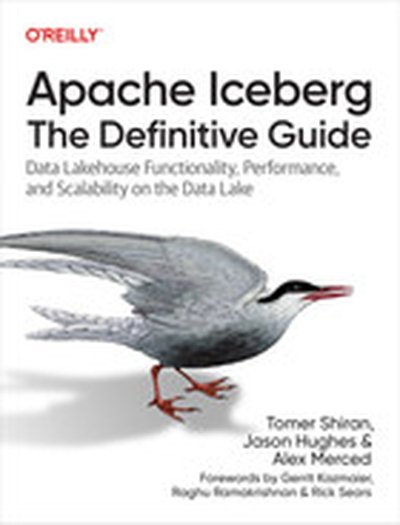
Traditional data architecture patterns are severely limited. To use these patterns, you have to ETL data into each tool—a cost-prohibitive process for making warehouse features available to all of your data. The lack of flexibility with these patterns requires you to lock into a set of priority tools and formats, which creates data silos and data drift. This practical book shows you a better way. Apache Iceberg provides the capabilities, performance, scalability, and savings that fulfill the promise of an open data lakehouse. By following the lessons in this book, you'll be able to achieve interactive, batch, machine learning, and streaming analytics with this high-performance open source format. Authors Tomer Shiran, Jason Hughes, and Alex Merced from Dremio show you how to get started with Iceberg. With this book, you'll learn: The architecture of Apache Iceberg tables What happens under the hood when you perform operations on Iceberg tables How to further optimize Iceberg tables for maximum performance How to use Iceberg with popular data engines such as Apache Spark, Apache Flink, and Dremio Discover why Apache Iceberg is a foundational technology for implementing an open data lakehouse.
Summary Generative AI promises to accelerate the productivity of human collaborators. Currently the primary way of working with these tools is through a conversational prompt, which is often cumbersome and unwieldy. In order to simplify the integration of AI capabilities into developer workflows Tsavo Knott helped create Pieces, a powerful collection of tools that complements the tools that developers already use. In this episode he explains the data collection and preparation process, the collection of model types and sizes that work together to power the experience, and how to incorporate it into your workflow to act as a second brain.
Announcements Hello and welcome to the Data Engineering Podcast, the show about modern data managementDagster offers a new approach to building and running data platforms and data pipelines. It is an open-source, cloud-native orchestrator for the whole development lifecycle, with integrated lineage and observability, a declarative programming model, and best-in-class testability. Your team can get up and running in minutes thanks to Dagster Cloud, an enterprise-class hosted solution that offers serverless and hybrid deployments, enhanced security, and on-demand ephemeral test deployments. Go to dataengineeringpodcast.com/dagster today to get started. Your first 30 days are free!Data lakes are notoriously complex. For data engineers who battle to build and scale high quality data workflows on the data lake, Starburst powers petabyte-scale SQL analytics fast, at a fraction of the cost of traditional methods, so that you can meet all your data needs ranging from AI to data applications to complete analytics. Trusted by teams of all sizes, including Comcast and Doordash, Starburst is a data lake analytics platform that delivers the adaptability and flexibility a lakehouse ecosystem promises. And Starburst does all of this on an open architecture with first-class support for Apache Iceberg, Delta Lake and Hudi, so you always maintain ownership of your data. Want to see Starburst in action? Go to dataengineeringpodcast.com/starburst and get $500 in credits to try Starburst Galaxy today, the easiest and fastest way to get started using Trino.Your host is Tobias Macey and today I'm interviewing Tsavo Knott about Pieces, a personal AI toolkit to improve the efficiency of developersInterview IntroductionHow did you get involved in machine learning?Can you describe what Pieces is and the story behind it?The past few months have seen an endless series of personalized AI tools launched. What are the features and focus of Pieces that might encourage someone to use it over the alternatives?model selectionsarchitecture of Pieces applicationlocal vs. hybrid vs. online modelsmodel update/delivery processdata preparation/serving for models in context of Pieces appapplication of AI to developer workflowstypes of workflows that people are building with piecesWhat are the most interesting, innovative, or unexpected ways that you have seen Pieces used?What are the most interesting, unexpected, or challenging lessons that you have learned while working on Pieces?When is Pieces the wrong choice?What do you have planned for the future of Pieces?Contact Info LinkedInParting Question From your perspective, what is the biggest barrier to adoption of machine learning today?Closing Announcements Thank you for listening! Don't forget to check out our other shows. Podcast.init covers the Python language, its community, and the innovative ways it is being used. The Machine Learning Podcast helps you go from idea to production with machine learning.Visit the site to subscribe to the show, sign up for the mailing list, and read the show notes.If you've learned something or tried out a project from the show then tell us about it! Email [email protected]) with your story.Links PiecesNPU == Neural Processing UnitTensor ChipLoRA == Low Rank AdaptationGenerative Adversarial NetworksMistralEmacsVimNeoVimDartFlutte
Summary
Generative AI has rapidly transformed everything in the technology sector. When Andrew Lee started work on Shortwave he was focused on making email more productive. When AI started gaining adoption he realized that he had even more potential for a transformative experience. In this episode he shares the technical challenges that he and his team have overcome in integrating AI into their product, as well as the benefits and features that it provides to their customers.
Announcements
Hello and welcome to the Data Engineering Podcast, the show about modern data management Dagster offers a new approach to building and running data platforms and data pipelines. It is an open-source, cloud-native orchestrator for the whole development lifecycle, with integrated lineage and observability, a declarative programming model, and best-in-class testability. Your team can get up and running in minutes thanks to Dagster Cloud, an enterprise-class hosted solution that offers serverless and hybrid deployments, enhanced security, and on-demand ephemeral test deployments. Go to dataengineeringpodcast.com/dagster today to get started. Your first 30 days are free! Data lakes are notoriously complex. For data engineers who battle to build and scale high quality data workflows on the data lake, Starburst powers petabyte-scale SQL analytics fast, at a fraction of the cost of traditional methods, so that you can meet all your data needs ranging from AI to data applications to complete analytics. Trusted by teams of all sizes, including Comcast and Doordash, Starburst is a data lake analytics platform that delivers the adaptability and flexibility a lakehouse ecosystem promises. And Starburst does all of this on an open architecture with first-class support for Apache Iceberg, Delta Lake and Hudi, so you always maintain ownership of your data. Want to see Starburst in action? Go to dataengineeringpodcast.com/starburst and get $500 in credits to try Starburst Galaxy today, the easiest and fastest way to get started using Trino. Your host is Tobias Macey and today I'm interviewing Andrew Lee about his work on Shortwave, an AI powered email client
Interview
Introduction How did you get involved in the area of data management? Can you describe what Shortwave is and the story behind it?
What is the core problem that you are addressing with Shortwave?
Email has been a central part of communication and business productivity for decades now. What are the overall themes that continue to be problematic? What are the strengths that email maintains as a protocol and ecosystem? From a product perspective, what are the data challenges that are posed by email? Can you describe how you have architected the Shortwave platform?
How have the design and goals of the product changed since you started it? What are the ways that the advent and evolution of language models have influenced your product roadmap?
How do you manage the personalization of the AI functionality in your system for each user/team? For users and teams who are using Shortwave, how does it change their workflow and communication patterns? Can you describe how I would use Shortwave for managing the workflow of evaluating, planning, and promoting my podcast episodes? What are the most interesting, innovative, or unexpected ways that you have seen Shortwave used? What are the most interesting, unexpected, or challenging lessons that you have learned while working on Shortwave? When is Shortwave the wrong choice? What do you have planned for the future of Shortwave?
Contact Info
LinkedIn Blog
Parting Question
From your perspective, what is the biggest gap in the tooling or technology for data management today?
Closing Announcements
Thank you for listening! Don't forget to check out our other shows. Podcast.init covers the Python language, its community, and the innovative ways it is being used. The Machine Learning Podcast helps you go from idea to production with mach
Summary
Databases come in a variety of formats for different use cases. The default association with the term "database" is relational engines, but non-relational engines are also used quite widely. In this episode Oren Eini, CEO and creator of RavenDB, explores the nuances of relational vs. non-relational engines, and the strategies for designing a non-relational database.
Announcements
Hello and welcome to the Data Engineering Podcast, the show about modern data management This episode is brought to you by Datafold – a testing automation platform for data engineers that prevents data quality issues from entering every part of your data workflow, from migration to dbt deployment. Datafold has recently launched data replication testing, providing ongoing validation for source-to-target replication. Leverage Datafold's fast cross-database data diffing and Monitoring to test your replication pipelines automatically and continuously. Validate consistency between source and target at any scale, and receive alerts about any discrepancies. Learn more about Datafold by visiting dataengineeringpodcast.com/datafold. Dagster offers a new approach to building and running data platforms and data pipelines. It is an open-source, cloud-native orchestrator for the whole development lifecycle, with integrated lineage and observability, a declarative programming model, and best-in-class testability. Your team can get up and running in minutes thanks to Dagster Cloud, an enterprise-class hosted solution that offers serverless and hybrid deployments, enhanced security, and on-demand ephemeral test deployments. Go to dataengineeringpodcast.com/dagster today to get started. Your first 30 days are free! Data lakes are notoriously complex. For data engineers who battle to build and scale high quality data workflows on the data lake, Starburst powers petabyte-scale SQL analytics fast, at a fraction of the cost of traditional methods, so that you can meet all your data needs ranging from AI to data applications to complete analytics. Trusted by teams of all sizes, including Comcast and Doordash, Starburst is a data lake analytics platform that delivers the adaptability and flexibility a lakehouse ecosystem promises. And Starburst does all of this on an open architecture with first-class support for Apache Iceberg, Delta Lake and Hudi, so you always maintain ownership of your data. Want to see Starburst in action? Go to dataengineeringpodcast.com/starburst and get $500 in credits to try Starburst Galaxy today, the easiest and fastest way to get started using Trino. Your host is Tobias Macey and today I'm interviewing Oren Eini about the work of designing and building a NoSQL database engine
Interview
Introduction How did you get involved in the area of data management? Can you describe what constitutes a NoSQL database?
How have the requirements and applications of NoSQL engines changed since they first became popular ~15 years ago?
What are the factors that convince teams to use a NoSQL vs. SQL database?
NoSQL is a generalized term that encompasses a number of different data models. How does the underlying representation (e.g. document, K/V, graph) change that calculus?
How have the evolution in data formats (e.g. N-dimensional vectors, point clouds, etc.) changed the landscape for NoSQL engines? When designing and building a database, what are the initial set of questions that need to be answered?
How many "core capabilities" can you reasonably design around before they conflict with each other?
How have you approached the evolution of RavenDB as you add new capabilities and mature the project?
What are some of the early decisions that had to be unwound to enable new capabilities?
If you were to start from scratch today, what database would you build? What are the most interesting, innovative, or unexpected ways that you have seen RavenDB/NoSQL databases used? What are the most interesting, unexpected, or challenging lessons t
Explore how BigQuery and BigLake power innovative data analytics solutions and walk through implementing data products powered by AI/ML for real-world applications. Learn from Google Cloud about the latest advancements in both technologies, with an emphasis on:
• BigLake's integration with Apache Iceberg for efficient AI/ML • How BigQuery serves as a foundational element in successful data mesh architectures
You will also hear from two leading customers, Trendyol and Snap, on their real-world journeys, demonstrating the transformative impact of these technologies on their analytics and AI initiatives at scale.
Click the blue “Learn more” button above to tap into special offers designed to help you implement what you are learning at Google Cloud Next 25.
We're in the a Cambrian Explosion of data architectures. In the last two years, dozens of vendors have each championed their own version of ‘the modern data architecture solution’, all claiming to be the future of IT in a data-driven enterprise. The sheer volume of architectures is daunting: Streaming data platforms, data lakes, structured/semi-structured/unstructured data, cloud data warehouses supporting external tables and federated query processing, lakehouses, data fabric, and layers of federated query platforms that offer virtual views of data. All claim to support the building of data products.
No surprise that customers are confused as to which option to choose.
However, key changes have emerged including much broader support for open table formats such as Apache Iceberg, Apache Hudi and Delta Lake in many other vendor data platforms. In addition, we have seen significant new milestones in extending the ISO SQL Standard to support new kinds of analytics in general purpose SQL. Also, AI has also advanced to work across any type of data.
What does this all mean for data management? What is the impact of this on analytical data platforms and what does it mean for customers? What opportunities does this evolution open up for tools vendors whose data foundation is reliant on other vendor database management systems and data platforms? This session looks at this evolution, helping vendors and IT professionals alike realise the potential of what’s now possible and how they can exploit it for competitive advantage.
Analytic databases are quietly going through an unprecedented transformation. Open table formats, led by Apache Iceberg, enable multiple query engines to share one central copy of a table. This will fundamentally change the data industry, by freeing data that’s being held hostage by siloed data vendors. In this session to hear from Dan Weeks, co-creator of Apache Iceberg and co-founder & CTO of Tabular, as he will cover the origins and basics of open table formats and show how these new capabilities are shaping the future of both open-source compute projects and commercial data warehouses alike. You will learn key advice for building a data architecture that makes data more accessible to all data practitioners while avoiding vendor lock-in.
Summary
Maintaining a single source of truth for your data is the biggest challenge in data engineering. Different roles and tasks in the business need their own ways to access and analyze the data in the organization. In order to enable this use case, while maintaining a single point of access, the semantic layer has evolved as a technological solution to the problem. In this episode Artyom Keydunov, creator of Cube, discusses the evolution and applications of the semantic layer as a component of your data platform, and how Cube provides speed and cost optimization for your data consumers.
Announcements
Hello and welcome to the Data Engineering Podcast, the show about modern data management This episode is brought to you by Datafold – a testing automation platform for data engineers that prevents data quality issues from entering every part of your data workflow, from migration to dbt deployment. Datafold has recently launched data replication testing, providing ongoing validation for source-to-target replication. Leverage Datafold's fast cross-database data diffing and Monitoring to test your replication pipelines automatically and continuously. Validate consistency between source and target at any scale, and receive alerts about any discrepancies. Learn more about Datafold by visiting dataengineeringpodcast.com/datafold. Dagster offers a new approach to building and running data platforms and data pipelines. It is an open-source, cloud-native orchestrator for the whole development lifecycle, with integrated lineage and observability, a declarative programming model, and best-in-class testability. Your team can get up and running in minutes thanks to Dagster Cloud, an enterprise-class hosted solution that offers serverless and hybrid deployments, enhanced security, and on-demand ephemeral test deployments. Go to dataengineeringpodcast.com/dagster today to get started. Your first 30 days are free! Data lakes are notoriously complex. For data engineers who battle to build and scale high quality data workflows on the data lake, Starburst powers petabyte-scale SQL analytics fast, at a fraction of the cost of traditional methods, so that you can meet all your data needs ranging from AI to data applications to complete analytics. Trusted by teams of all sizes, including Comcast and Doordash, Starburst is a data lake analytics platform that delivers the adaptability and flexibility a lakehouse ecosystem promises. And Starburst does all of this on an open architecture with first-class support for Apache Iceberg, Delta Lake and Hudi, so you always maintain ownership of your data. Want to see Starburst in action? Go to dataengineeringpodcast.com/starburst and get $500 in credits to try Starburst Galaxy today, the easiest and fastest way to get started using Trino. Your host is Tobias Macey and today I'm interviewing Artyom Keydunov about the role of the semantic layer in your data platform
Interview
Introduction How did you get involved in the area of data management? Can you start by outlining the technical elements of what it means to have a "semantic layer"? In the past couple of years there was a rapid hype cycle around the "metrics layer" and "headless BI", which has largely faded. Can you give your assessment of the current state of the industry around the adoption/implementation of these concepts? What are the benefits of having a discrete service that offers the business metrics/semantic mappings as opposed to implementing those concepts as part of a more general system? (e.g. dbt, BI, warehouse marts, etc.)
At what point does it become necessary/beneficial for a team to adopt such a service? What are the challenges involved in retrofitting a semantic layer into a production data system?
evolution of requirements/usage patterns technical complexities/performance and cost optimization What are the most interesting, innovative, or unexpected ways that you have seen Cube used? What are the most interesting, unexpec
Summary
Working with data is a complicated process, with numerous chances for something to go wrong. Identifying and accounting for those errors is a critical piece of building trust in the organization that your data is accurate and up to date. While there are numerous products available to provide that visibility, they all have different technologies and workflows that they focus on. To bring observability to dbt projects the team at Elementary embedded themselves into the workflow. In this episode Maayan Salom explores the approach that she has taken to bring observability, enhanced testing capabilities, and anomaly detection into every step of the dbt developer experience.
Announcements
Hello and welcome to the Data Engineering Podcast, the show about modern data management Data lakes are notoriously complex. For data engineers who battle to build and scale high quality data workflows on the data lake, Starburst powers petabyte-scale SQL analytics fast, at a fraction of the cost of traditional methods, so that you can meet all your data needs ranging from AI to data applications to complete analytics. Trusted by teams of all sizes, including Comcast and Doordash, Starburst is a data lake analytics platform that delivers the adaptability and flexibility a lakehouse ecosystem promises. And Starburst does all of this on an open architecture with first-class support for Apache Iceberg, Delta Lake and Hudi, so you always maintain ownership of your data. Want to see Starburst in action? Go to dataengineeringpodcast.com/starburst and get $500 in credits to try Starburst Galaxy today, the easiest and fastest way to get started using Trino. Dagster offers a new approach to building and running data platforms and data pipelines. It is an open-source, cloud-native orchestrator for the whole development lifecycle, with integrated lineage and observability, a declarative programming model, and best-in-class testability. Your team can get up and running in minutes thanks to Dagster Cloud, an enterprise-class hosted solution that offers serverless and hybrid deployments, enhanced security, and on-demand ephemeral test deployments. Go to dataengineeringpodcast.com/dagster today to get started. Your first 30 days are free! This episode is brought to you by Datafold – a testing automation platform for data engineers that prevents data quality issues from entering every part of your data workflow, from migration to dbt deployment. Datafold has recently launched data replication testing, providing ongoing validation for source-to-target replication. Leverage Datafold's fast cross-database data diffing and Monitoring to test your replication pipelines automatically and continuously. Validate consistency between source and target at any scale, and receive alerts about any discrepancies. Learn more about Datafold by visiting dataengineeringpodcast.com/datafold. Your host is Tobias Macey and today I'm interviewing Maayan Salom about how to incorporate observability into a dbt-oriented workflow and how Elementary can help
Interview
Introduction How did you get involved in the area of data management? Can you start by outlining what elements of observability are most relevant for dbt projects? What are some of the common ad-hoc/DIY methods that teams develop to acquire those insights?
What are the challenges/shortcomings associated with those approaches?
Over the past ~3 years there were numerous data observability systems/products created. What are some of the ways that the specifics of dbt workflows are not covered by those generalized tools?
What are the insights that can be more easily generated by embedding into the dbt toolchain and development cycle?
Can you describe what Elementary is and how it is designed to enhance the development and maintenance work in dbt projects? How is Elementary designed/implemented?
How have the scope and goals of the project changed since you started working on it? What are the engineering ch
Summary
A core differentiator of Dagster in the ecosystem of data orchestration is their focus on software defined assets as a means of building declarative workflows. With their launch of Dagster+ as the redesigned commercial companion to the open source project they are investing in that capability with a suite of new features. In this episode Pete Hunt, CEO of Dagster labs, outlines these new capabilities, how they reduce the burden on data teams, and the increased collaboration that they enable across teams and business units.
Announcements
Hello and welcome to the Data Engineering Podcast, the show about modern data management Dagster offers a new approach to building and running data platforms and data pipelines. It is an open-source, cloud-native orchestrator for the whole development lifecycle, with integrated lineage and observability, a declarative programming model, and best-in-class testability. Your team can get up and running in minutes thanks to Dagster Cloud, an enterprise-class hosted solution that offers serverless and hybrid deployments, enhanced security, and on-demand ephemeral test deployments. Go to dataengineeringpodcast.com/dagster today to get started. Your first 30 days are free! Data lakes are notoriously complex. For data engineers who battle to build and scale high quality data workflows on the data lake, Starburst powers petabyte-scale SQL analytics fast, at a fraction of the cost of traditional methods, so that you can meet all your data needs ranging from AI to data applications to complete analytics. Trusted by teams of all sizes, including Comcast and Doordash, Starburst is a data lake analytics platform that delivers the adaptability and flexibility a lakehouse ecosystem promises. And Starburst does all of this on an open architecture with first-class support for Apache Iceberg, Delta Lake and Hudi, so you always maintain ownership of your data. Want to see Starburst in action? Go to dataengineeringpodcast.com/starburst and get $500 in credits to try Starburst Galaxy today, the easiest and fastest way to get started using Trino. Your host is Tobias Macey and today I'm interviewing Pete Hunt about how the launch of Dagster+ will level up your data platform and orchestrate across language platforms
Interview
Introduction How did you get involved in the area of data management? Can you describe what the focus of Dagster+ is and the story behind it?
What problems are you trying to solve with Dagster+? What are the notable enhancements beyond the Dagster Core project that this updated platform provides? How is it different from the current Dagster Cloud product?
In the launch announcement you tease new capabilities that would be great to explore in turns:
Make data a team sport, enabling data teams across the organization Deliver reliable, high quality data the organization can trust Observe and manage data platform costs Master the heterogeneous collection of technologies—both traditional and Modern Data Stack
What are the business/product goals that you are focused on improving with the launch of Dagster+ What are the most interesting, innovative, or unexpected ways that you have seen Dagster used? What are the most interesting, unexpected, or challenging lessons that you have learned while working on the design and launch of Dagster+? When is Dagster+ the wrong choice? What do you have planned for the future of Dagster/Dagster Cloud/Dagster+?
Contact Info
Twitter LinkedIn
Parting Question
From your perspective, what is the biggest gap in the tooling or technology for data management today?
Closing Announcements
Thank you for listening! Don't forget to check out our other shows. Podcast.init covers the Python language, its community, and the innovative ways it is being used. The Machine Learning Podcast helps you go from idea to production with machine learning. Visit the site to subscribe to the show, sign up for the mailing list, and read the show notes. If y