talk-data.com talk-data.com

Topic

Iceberg

Apache Iceberg

table_format data_lake schema_evolution file_format storage open_table_format

206

tagged

Activity Trend

39 peak/qtr
2020-Q1 2026-Q1

Activities

206 activities · Newest first

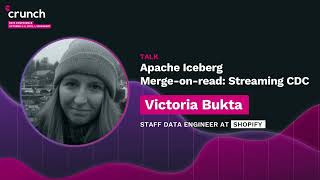
Apache Iceberg Merge-On-Read: Streaming CDC - Victoria Bukta, Shopify | Crunch Conference 2022

This talk was recorded at Crunch Conference 2022. Victoria from Shopify spoke about apache iceberg merge-on-read: Streaming CDC.

The event was organized by Crafthub.

You can watch the rest of the conference talks on our channel.

If you are interested in more speakers, tickets and details of the conference, check out our website: https://crunchconf.com/ If you are interested in more events from our company: https://crafthub.events/

US Army Corp of Engineers Enhanced Commerce & National Sec Through Data-Driven Geospatial Insight

The US Army Corps of Engineers (USACE) is responsible for maintaining and improving nearly 12,000 miles of shallow-draft (9'-14') inland and intracoastal waterways, 13,000 miles of deep-draft (14' and greater) coastal channels, and 400 ports, harbors, and turning basins throughout the United States. Because these components of the national waterway network are considered assets to both US commerce and national security, they must be carefully managed to keep marine traffic operating safely and efficiently.

The National DQM Program is tasked with providing USACE a nationally standardized remote monitoring and documentation system across multiple vessel types with timely data access, reporting, dredge certifications, data quality control, and data management. Government systems have often lagged commercial systems in modernization efforts, and the emergence of the cloud and Data Lakehouse Architectures have empowered USACE to successfully move into the modern data era.

This session incorporates aspects of these topics: Data Lakehouse Architecture: Delta Lake, platform security and privacy, serverless, administration, data warehouse, Data Lake, Apache Iceberg, Data Mesh GIS: H3, MOSAIC, spatial analysis data engineering: data pipelines, orchestration, CDC, medallion architecture, Databricks Workflows, data munging, ETL/ELT, lakehouses, data lakes, Parquet, Data Mesh, Apache Spark™ internals. Data Streaming: Apache Spark Structured Streaming, real-time ingestion, real-time ETL, real-time ML, real-time analytics, and real-time applications, Delta Live Tables. ML: PyTorch, TensorFlow, Keras, scikit-learn, Python and R ecosystems data governance: security, compliance, RMF, NIST data sharing: sharing and collaboration, delta sharing, data cleanliness, APIs.

Talk by: Jeff Mroz

Connect with us: Website: https://databricks.com Twitter: https://twitter.com/databricks LinkedIn: https://www.linkedin.com/company/databricks Instagram: https://www.instagram.com/databricksinc Facebook: https://www.facebook.com/databricksinc

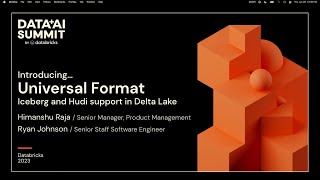
Introducing Universal Format: Iceberg and Hudi Support in Delta Lake

In this session, we will talk about how Delta Lake plans to integrate with Iceberg and Hudi. Customers are being forced to choose storage formats based on the tools that support them rather than choosing the most performant and functional format for their lakehouse architecture. With Universal Format (“UniForm”), Delta removes the need to make this compromise and makes Delta tables compatible with Iceberg and Hudi query engines. We will do a technical deep dive of the technology, demo it, and discuss the roadmap.

Talk by: Himanshu Raja and Ryan Johnson

Connect with us: Website: https://databricks.com Twitter: https://twitter.com/databricks LinkedIn: https://www.linkedin.com/company/databricks Instagram: https://www.instagram.com/databricksinc Facebook: https://www.facebook.com/databricksinc

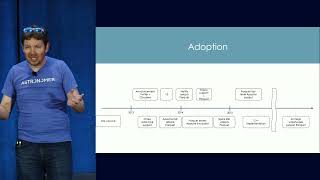
Ten years of building open source standards: From Parquet to Arrow to OpenLineage | Astronomer

ABOUT THE TALK: Over the last decade I have been lucky enough to contribute a few successful open source projects to the data ecosystem. In this talk

Julien Le Dem shares the story of his contribution to successful open source projects to the data ecosystem and what made their success possible. From the ideation process and early growth of the Apache Parquet columnar format and how this led to the creation of its in-memory alter-ego Apache Arrow. Julian will end with showing how this experience enabled the success of OpenLineage, an LFAI & Data project that brings observability to the data ecosystem.

ABOUT THE SPEAKER: Julien Le Dem is the Chief Architect of Astronomer and Co-Founder of Datakin. He co-created Apache Parquet and is involved in several open source projects including OpenLineage, Marquez (LFAI&Data), Apache Arrow, Apache Iceberg and a few others. Previously, he was a senior principal at Wework; principal architect at Dremio; and tech lead for Twitter’s data processing tools and principal engineer working on content platforms at Yahoo, where he received his Hadoop initiation.

ABOUT DATA COUNCIL: Data Council (https://www.datacouncil.ai/) is a community and conference series that provides data professionals with the learning and networking opportunities they need to grow their careers.

Make sure to subscribe to our channel for the most up-to-date talks from technical professionals on data related topics including data infrastructure, data engineering, ML systems, analytics and AI from top startups and tech companies.

FOLLOW DATA COUNCIL: Twitter: https://twitter.com/DataCouncilAI LinkedIn: https://www.linkedin.com/company/datacouncil-ai/

Summary

The data ecosystem has been building momentum for several years now. As a venture capital investor Matt Turck has been trying to keep track of the main trends and has compiled his findings into the MAD (ML, AI, and Data) landscape reports each year. In this episode he shares his experiences building those reports and the perspective he has gained from the exercise.

Announcements

Hello and welcome to the Data Engineering Podcast, the show about modern data management Businesses that adapt well to change grow 3 times faster than the industry average. As your business adapts, so should your data. RudderStack Transformations lets you customize your event data in real-time with your own JavaScript or Python code. Join The RudderStack Transformation Challenge today for a chance to win a $1,000 cash prize just by submitting a Transformation to the open-source RudderStack Transformation library. Visit dataengineeringpodcast.com/rudderstack today to learn more Your host is Tobias Macey and today I'm interviewing Matt Turck about his annual report on the Machine Learning, AI, & Data landscape and the insights around data infrastructure that he has gained in the process

Interview

Introduction How did you get involved in the area of data management? Can you describe what the MAD landscape report is and the story behind it?

At a high level, what is your goal in the compilation and maintenance of your landscape document? What are your guidelines for what to include in the landscape?

As the data landscape matures, how have you seen that influence the types of projects/companies that are founded?

What are the product categories that were only viable when capital was plentiful and easy to obtain? What are the product categories that you think will be swallowed by adjacent concerns, and which are likely to consolidate to remain competitive?

The rapid growth and proliferation of data tools helped establish the "Modern Data Stack" as a de-facto architectural paradigm. As we move into this phase of contraction, what are your predictions for how the "Modern Data Stack" will evolve?

Is there a different architectural paradigm that you see as growing to take its place?

How has your presentation and the types of information that you collate in the MAD landscape evolved since you first started it?~~ What are the most interesting, innovative, or unexpected product and positioning approaches that you have seen while tracking data infrastructure as a VC and maintainer of the MAD landscape? What are the most interesting, unexpected, or challenging lessons that you have learned while working on the MAD landscape over the years? What do you have planned for future iterations of the MAD landscape?

Contact Info

Website @mattturck on Twitter MAD Landscape Comments Email

Parting Question

From your perspective, what is the biggest gap in the tooling or technology for data management today?

Closing Announcements

Thank you for listening! Don't forget to check out our other shows. Podcast.init covers the Python language, its community, and the innovative ways it is being used. The Machine Learning Podcast helps you go from idea to production with machine learning. Visit the site to subscribe to the show, sign up for the mailing list, and read the show notes. If you've learned something or tried out a project from the show then tell us about it! Email [email protected]) with your story. To help other people find the show please leave a review on Apple Podcasts and tell your friends and co-workers

Links

MAD Landscape First Mark Capital Bayesian Learning AI Winter Databricks Cloud Native Landscape LUMA Scape Hadoop Ecosystem Modern Data Stack Reverse ETL Generative AI dbt Transform

Podcast Episode

Snowflake IPO Dataiku Iceberg

Podcast Episode

Hudi

Podcast Episode

DuckDB

Podcast Episode

Trino Y42

Podcast Episode

Mozart Data

Podcast Episode

Keboola MPP Database

The intro and outro music is f

Summary

Cloud data warehouses have unlocked a massive amount of innovation and investment in data applications, but they are still inherently limiting. Because of their complete ownership of your data they constrain the possibilities of what data you can store and how it can be used. Projects like Apache Iceberg provide a viable alternative in the form of data lakehouses that provide the scalability and flexibility of data lakes, combined with the ease of use and performance of data warehouses. Ryan Blue helped create the Iceberg project, and in this episode he rejoins the show to discuss how it has evolved and what he is doing in his new business Tabular to make it even easier to implement and maintain.

Announcements

Hello and welcome to the Data Engineering Podcast, the show about modern data management Hey there podcast listener, are you tired of dealing with the headache that is the 'Modern Data Stack'? We feel your pain. It's supposed to make building smarter, faster, and more flexible data infrastructures a breeze. It ends up being anything but that. Setting it up, integrating it, maintaining it—it’s all kind of a nightmare. And let's not even get started on all the extra tools you have to buy to get it to do its thing. But don't worry, there is a better way. TimeXtender takes a holistic approach to data integration that focuses on agility rather than fragmentation. By bringing all the layers of the data stack together, TimeXtender helps you build data solutions up to 10 times faster and saves you 70-80% on costs. If you're fed up with the 'Modern Data Stack', give TimeXtender a try. Head over to timextender.com/dataengineering where you can do two things: watch us build a data estate in 15 minutes and start for free today. Your host is Tobias Macey and today I'm interviewing Ryan Blue about the evolution and applications of the Iceberg table format and how he is making it more accessible at Tabular

Interview

Introduction How did you get involved in the area of data management? Can you describe what Iceberg is and its position in the data lake/lakehouse ecosystem?

Since it is a fundamentally a specification, how do you manage compatibility and consistency across implementations?

What are the notable changes in the Iceberg project and its role in the ecosystem since our last conversation October of 2018? Around the time that Iceberg was first created at Netflix a number of alternative table formats were also being developed. What are the characteristics of Iceberg that lead teams to adopt it for their lakehouse projects?

Given the constant evolution of the various table formats it can be difficult to determine an up-to-date comparison of their features, particularly earlier in their development. What are the aspects of this problem space that make it so challenging to establish unbiased and comprehensive comparisons?

For someone who wants to manage their data in Iceberg tables, what does the implementation look like?

How does that change based on the type of query/processing engine being used?

Once a table has been created, what are the capabilities of Iceberg that help to support ongoing use and maintenance? What are the most interesting, innovative, or unexpected ways that you have seen Iceberg used? What are the most interesting, unexpected, or challenging lessons that you have learned while working on Iceberg/Tabular? When is Iceberg/Tabular the wrong choice? What do you have planned for the future of Iceberg/Tabular?

Contact Info

LinkedIn rdblue on GitHub

Parting Question

From your perspective, what is the biggest gap in the tooling or technology for data management today?

Closing Announcements

Thank you for listening! Don't forget to check out our other shows. Podcast.init covers the Python language, its community, and the innovative ways it is being used. The Machine Learning Podcast helps you go from idea to production with machine learning. Visit the site to subscribe to the

Summary

Data is a team sport, but it's often difficult for everyone on the team to participate. For a long time the mantra of data tools has been "by developers, for developers", which automatically excludes a large portion of the business members who play a crucial role in the success of any data project. Quilt Data was created as an answer to make it easier for everyone to contribute to the data being used by an organization and collaborate on its application. In this episode Aneesh Karve shares the journey that Quilt has taken to provide an approachable interface for working with versioned data in S3 that empowers everyone to collaborate.

Announcements

Hello and welcome to the Data Engineering Podcast, the show about modern data management Truly leveraging and benefiting from streaming data is hard - the data stack is costly, difficult to use and still has limitations. Materialize breaks down those barriers with a true cloud-native streaming database - not simply a database that connects to streaming systems. With a PostgreSQL-compatible interface, you can now work with real-time data using ANSI SQL including the ability to perform multi-way complex joins, which support stream-to-stream, stream-to-table, table-to-table, and more, all in standard SQL. Go to dataengineeringpodcast.com/materialize today and sign up for early access to get started. If you like what you see and want to help make it better, they're hiring across all functions! Your host is Tobias Macey and today I'm interviewing Aneesh Karve about how Quilt Data helps you bring order to your chaotic data in S3 with transactional versioning and data discovery built in

Interview

Introduction How did you get involved in the area of data management? Can you describe what Quilt is and the story behind it?

How have the goals and features of the Quilt platform changed since I spoke with Kevin in June of 2018?

What are the main problems that users are trying to solve when they find Quilt?

What are some of the alternative approaches/products that they are coming from?

How does Quilt compare with options such as LakeFS, Unstruk, Pachyderm, etc.? Can you describe how Quilt is implemented? What are the types of tools and systems that Quilt gets integrated with?

How do you manage the tension between supporting the lowest common denominator, while providing options for more advanced capabilities?

What is a typical workflow for a team that is using Quilt to manage their data? What are the most interesting, innovative, or unexpected ways that you have seen Quilt used? What are the most interesting, unexpected, or challenging lessons that you have learned while working on Quilt? When is Quilt the wrong choice? What do you have planned for the future of Quilt?

Contact Info

LinkedIn @akarve on Twitter

Parting Question

From your perspective, what is the biggest gap in the tooling or technology for data management today?

Closing Announcements

Thank you for listening! Don't forget to check out our other shows. Podcast.init covers the Python language, its community, and the innovative ways it is being used. The Machine Learning Podcast helps you go from idea to production with machine learning. Visit the site to subscribe to the show, sign up for the mailing list, and read the show notes. If you've learned something or tried out a project from the show then tell us about it! Email [email protected]) with your story. To help other people find the show please leave a review on Apple Podcasts and tell your friends and co-workers

Links

Quilt Data

Podcast Episode

UW Madison Docker Swarm Kaggle open.quiltdata.com FinOS Perspective LakeFS

Podcast Episode

Pachyderm

Podcast Episode

Unstruk

Podcast Episode

Parquet Avro ORC Cloudformation Troposphere CDK == Cloud Development Kit Shadow IT

Podcast Episode

Delta Lake

Podcast Episode

Apache Iceberg

Podcast Episode

Datasette Frictionless DVC

Podcast.init Episode

The in

Summary The data ecosystem has been growing rapidly, with new communities joining and bringing their preferred programming languages to the mix. This has led to inefficiencies in how data is stored, accessed, and shared across process and system boundaries. The Arrow project is designed to eliminate wasted effort in translating between languages, and Voltron Data was created to help grow and support its technology and community. In this episode Wes McKinney shares the ways that Arrow and its related projects are improving the efficiency of data systems and driving their next stage of evolution.

Announcements

Hello and welcome to the Data Engineering Podcast, the show about modern data management When you’re ready to build your next pipeline, or want to test out the projects you hear about on the show, you’ll need somewhere to deploy it, so check out our friends at Linode. With their new managed database service you can launch a production ready MySQL, Postgres, or MongoDB cluster in minutes, with automated backups, 40 Gbps connections from your application hosts, and high throughput SSDs. Go to dataengineeringpodcast.com/linode today and get a $100 credit to launch a database, create a Kubernetes cluster, or take advantage of all of their other services. And don’t forget to thank them for their continued support of this show! Atlan is the metadata hub for your data ecosystem. Instead of locking your metadata into a new silo, unleash its transformative potential with Atlan’s active metadata capabilities. Push information about data freshness and quality to your business intelligence, automatically scale up and down your warehouse based on usage patterns, and let the bots answer those questions in Slack so that the humans can focus on delivering real value. Go to dataengineeringpodcast.com/atlan today to learn more about how Atlan’s active metadata platform is helping pioneering data teams like Postman, Plaid, WeWork & Unilever achieve extraordinary things with metadata and escape the chaos. Struggling with broken pipelines? Stale dashboards? Missing data? If this resonates with you, you’re not alone. Data engineers struggling with unreliable data need look no further than Monte Carlo, the leading end-to-end Data Observability Platform! Trusted by the data teams at Fox, JetBlue, and PagerDuty, Monte Carlo solves the costly problem of broken data pipelines. Monte Carlo monitors and alerts for data issues across your data warehouses, data lakes, dbt models, Airflow jobs, and business intelligence tools, reducing time to detection and resolution from weeks to just minutes. Monte Carlo also gives you a holistic picture of data health with automatic, end-to-end lineage from ingestion to the BI layer directly out of the box. Start trusting your data with Monte Carlo today! Visit dataengineeringpodcast.com/montecarlo to learn more. Data engineers don’t enjoy writing, maintaining, and modifying ETL pipelines all day, every day. Especially once they realize 90% of all major data sources like Google Analytics, Salesforce, Adwords, Facebook, Spreadsheets, etc., are already available as plug-and-play connectors with reliable, intuitive SaaS solutions. Hevo Data is a highly reliable and intuitive data pipeline platform used by data engineers from 40+ countries to set up and run low-latency ELT pipelines with zero maintenance. Boasting more than 150 out-of-the-box connectors that can be set up in minutes, Hevo also allows you to monitor and control your pipelines. You get: real-time data flow visibility, fail-safe mechanisms, and alerts if anything breaks; preload transformations and auto-schema mapping precisely control how data lands in your destination; models and workflows to transform data for analytics; and reverse-ETL capability to move the transformed data back to your business software to inspire timely action. All of this, plus its transparent pricing and 24*7 live support, makes it consistently voted by users as the Leader in the Data Pipeline category on review platforms like G2. Go to dataengineeringpodcast.com/hevodata and sign up for a free 14-day trial that also comes with 24×7 support. Your host is Tobias Macey and today I’m interviewing Wes McKinney about his work at Voltron Data and on the Arrow ecosystem

Interview

Introduction How did you get involved in the area of data management? Can you describe what you are building at Voltron Data and the story behind it? What is the vision for the broader data ecosystem that you are trying to realize through your investment in Arrow and related projects?

How does your work at Voltron Data contribute to the realization of that vision?

What is the impact on engineer productivity and compute efficiency that gets introduced by the impedance mismatches between language and framework representations of data? The scope and capabilities of the Arrow project have grown substantially since it was first introduced. Can you give an overview of the current features and extensions to the project? What are some of the ways that ArrowVe and its related projects can be integrated with or replace the different elements of a data platform? Can you describe how Arrow is implemented?

What are the most complex/challenging aspects of the engineering needed to support interoperable data interchange between language runtimes?

How are you balancing the desire to move quickly and improve the Arrow protocol and implementations, with the need to wait for other players in the ecosystem (e.g. database engines, compute frameworks, etc.) to add support? With the growing application of data formats such as graphs and vectors, what do you see as the role of Arrow and its ideas in those use cases? For workflows that rely on integrating structured and unstructured data, what are the options for interaction with non-tabular data? (e.g. images, documents, etc.) With your support-focused business model, how are you approaching marketing and customer education to make it viable and scalable? What are the most interesting, innovative, or unexpected ways that you have seen Arrow used? What are the most interesting, unexpected, or challenging lessons that you have learned while working on Arrow and its ecosystem? When is Arrow the wrong choice? What do you have planned for the future of Arrow?

Contact Info

Website wesm on GitHub @wesmckinn on Twitter

Parting Question

From your perspective, what is the biggest gap in the tooling or technology for data management today?

Closing Announcements

Thank you for listening! Don’t forget to check out our other shows. Podcast.init covers the Python language, its community, and the innovative ways it is being used. The Machine Learning Podcast helps you go from idea to production with machine learning. Visit the site to subscribe to the show, sign up for the mailing list, and read the show notes. If you’ve learned something or tried out a project from the show then tell us about it! Email [email protected]) with your story. To help other people find the show please leave a review on Apple Podcasts and tell your friends and co-workers

Links

Voltron Data Pandas

Podcast Episode

Apache Arrow Partial Differential Equation FPGA == Field-Programmable Gate Array GPU == Graphics Processing Unit Ursa Labs Voltron (cartoon) Feature Engineering PySpark Substrait Arrow Flight Acero Arrow Datafusion Velox Ibis SIMD == Single Instruction, Multiple Data Lance DuckDB

Podcast Episode

Data Threads Conference Nano-Arrow Arrow ADBC Protocol Apache Iceberg

Podcast Episode

The intro and outro music is from The Hug by The Freak Fandango Orchestra / CC BY-SA

Sponsored By: Atlan: Atlan
Have you ever woken up to a crisis because a number on a dashboard is broken and no one knows why? Or sent out frustrating slack messages trying to find the right data set? Or tried to understand what a column name means?

Our friends at Atlan started out as a data team themselves and faced all this collaboration chaos themselves, and started building Atlan as an internal tool for themselves. Atlan is a collaborative workspace for data-driven teams, like Github for engineering or Figma for design teams. By acting as a virtual hub for data assets ranging from tables and dashboards to SQL snippets & code, Atlan enables teams to create a single source of truth for all their data assets, and collaborate across the modern data stack through deep integrations with tools like Snowflake, Slack, Looker and more.

Go to dataengineeringpodcast.com/atlan and sign up for a free trial. If you’re a data engineering podcast listener, you get credits worth $3000 on an annual subscription.a href="https://dataengineeringpodcast.com/montecarlo"…

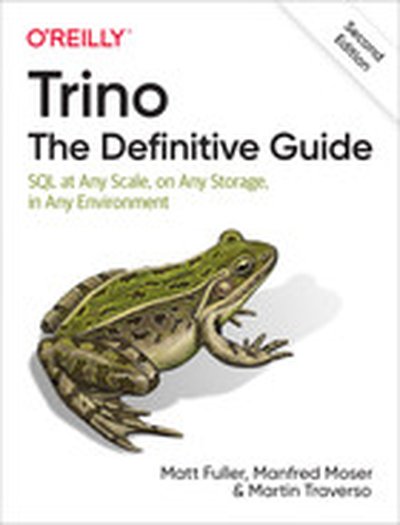
Trino: The Definitive Guide, 2nd Edition

Perform fast interactive analytics against different data sources using the Trino high-performance distributed SQL query engine. In the second edition of this practical guide, you'll learn how to conduct analytics on data where it lives, whether it's a data lake using Hive, a modern lakehouse with Iceberg or Delta Lake, a different system like Cassandra, Kafka, or SingleStore, or a relational database like PostgreSQL or Oracle. Analysts, software engineers, and production engineers learn how to manage, use, and even develop with Trino and make it a critical part of their data platform. Authors Matt Fuller, Manfred Moser, and Martin Traverso show you how a single Trino query can combine data from multiple sources to allow for analytics across your entire organization. Explore Trino's use cases, and learn about tools that help you connect to Trino for querying and processing huge amounts of data Learn Trino's internal workings, including how to connect to and query data sources with support for SQL statements, operators, functions, and more Deploy and secure Trino at scale, monitor workloads, tune queries, and connect more applications Learn how other organizations apply Trino successfully

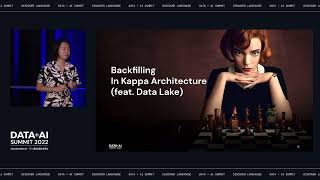
Backfill Streaming Data Pipelines in Kappa Architecture

Streaming data pipelines can fail due to various reasons. Since the source data, such as Kafka topics, often have limited retention, prolonged job failures can lead to data loss. Thus, streaming jobs need to be backfillable at all times to prevent data loss in case of failures. One solution is to increase the source's retention so that backfilling is simply replaying source streams, but extending Kafka retention is very costly for Netflix's data sizes. Another solution is to utilize source data stored in DWH, commonly known as the Lambda architecture. However, this method introduces significant code duplication, as it requires engineers to maintain a separate equivalent batch job. At Netflix, we have created the Iceberg Source Connector to provide backfilling capabilities to Flink streaming applications. It allows Flink to stream data stored in Apache Iceberg while mirroring Kafka's ordering semantics, enabling us to backfill large-scale stateful Flink pipelines at low retention cost.

Connect with us: Website: https://databricks.com Facebook: https://www.facebook.com/databricksinc Twitter: https://twitter.com/databricks LinkedIn: https://www.linkedin.com/company/data... Instagram: https://www.instagram.com/databricksinc/

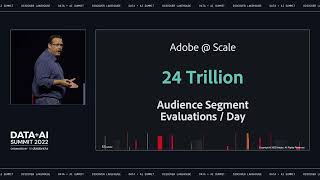
How Adobe migrated to a unified and open data Lakehouse to deliver personalization at scale.

In this keynote talk, David Weinstein, VP of Engineering for Adobe Experience Cloud, will share Adobe’s journey from a simple data lake to a unified, open Lakehouse architecture with Databricks. Adobe can now deliver personalized experiences at scale to diverse customers with greater speed, operational efficiency and faster innovation across the Experience Cloud portfolio. Learn why they chose to migrate from Iceberg to Delta Lake to drive its open standard development and accelerate innovation of their Lakehouse, and they’ll also share how leveraging the Delta Lake table format has allowed for techniques to support change data capture and significantly improve operational efficiency.

Connect with us: Website: https://databricks.com Facebook: https://www.facebook.com/databricksinc Twitter: https://twitter.com/databricks LinkedIn: https://www.linkedin.com/company/data... Instagram: https://www.instagram.com/databricksinc/

Summary Machine learning has become a meaningful target for data applications, bringing with it an increase in the complexity of orchestrating the entire data flow. Flyte is a project that was started at Lyft to address their internal needs for machine learning and integrated closely with Kubernetes as the execution manager. In this episode Ketan Umare and Haytham Abuelfutuh share the story of the Flyte project and how their work at Union is focused on supporting and scaling the code and community that has made Flyte successful.

Announcements

Hello and welcome to the Data Engineering Podcast, the show about modern data management When you’re ready to build your next pipeline, or want to test out the projects you hear about on the show, you’ll need somewhere to deploy it, so check out our friends at Linode. With their managed Kubernetes platform it’s now even easier to deploy and scale your workflows, or try out the latest Helm charts from tools like Pulsar and Pachyderm. With simple pricing, fast networking, object storage, and worldwide data centers, you’ve got everything you need to run a bulletproof data platform. Go to dataengineeringpodcast.com/linode today and get a $100 credit to try out a Kubernetes cluster of your own. And don’t forget to thank them for their continued support of this show! This episode is brought to you by Acryl Data, the company behind DataHub, the leading developer-friendly data catalog for the modern data stack. Open Source DataHub is running in production at several companies like Peloton, Optum, Udemy, Zynga and others. Acryl Data provides DataHub as an easy to consume SaaS product which has been adopted by several companies. Signup for the SaaS product at dataengineeringpodcast.com/acryl RudderStack helps you build a customer data platform on your warehouse or data lake. Instead of trapping data in a black box, they enable you to easily collect customer data from the entire stack and build an identity graph on your warehouse, giving you full visibility and control. Their SDKs make event streaming from any app or website easy, and their state-of-the-art reverse ETL pipelines enable you to send enriched data to any cloud tool. Sign up free… or just get the free t-shirt for being a listener of the Data Engineering Podcast at dataengineeringpodcast.com/rudder. Data lake architectures provide the best combination of massive scalability and cost reduction, but they aren’t always the most performant option. That’s why Kyligence has built on top of the leading open source OLAP engine for data lakes, Apache Kylin. With their AI augmented engine they detect patterns from your critical queries, automatically build data marts with optimized table structures, and provide a unified SQL interface across your lake, cubes, and indexes. Their cost-based query router will give you interactive speeds across petabyte scale data sets for BI dashboards and ad-hoc data exploration. Stop struggling to speed up your data lake. Get started with Kyligence today at dataengineeringpodcast.com/kyligence Your host is Tobias Macey and today I’m interviewing Ketan Umare and Haytham Abuelfutuh about Flyte, the open source and kubernetes-native orchestration engine for your data systems

Interview

Introduction How did you get involved in the area of data management? Can you describe what Flyte is and the story behind it? What was missing in the ecosystem of available tools that made it necessary/worthwhile to create Flyte? Workflow orchestrators have been around for several years and have gone through a number of generational shifts. How would you characterize Flyte’s position in the ecosystem?

What do you see as the closest alternatives? What are the core differentiators that might lead someone to choose Flyte over e.g. Airflow/Prefect/Dagster?

What are the core primitives that Flyte exposes for building up complex workflows?

Machine learning use cases have been a core focus since the project’s inception. What are some of the ways that that manifests in the design and feature set?

Can you describe the architecture of Flyte?

How have the design and goals of the platform changed/evolved since you first started working on it?

What are the changes in the data ecosystem that have had the most substantial impact on the Flyte project? (e.g. roadmap, integrations, pushing people toward adoption, etc.) What is the process for setting up a Flyte deployment? What are the user personas that you prioritize in the design and feature development for Flyte? What is the workflow for someone building a new pipeline in Flyte?

What are the patterns that you and the community have established to encourage discovery and reuse of granular task definitions? Beyond code reuse, how can teams scale usage of Flyte at the company/organization level?

What are the affordances that you have created to facilitate local development and testing of workflows while ensuring a smooth transition to production?

What are the patterns that are available for CI/CD of workflows using Flyte?

How have you approached the design of data contracts/type definitions to provide a consistent/portable API for defining inter-task dependencies across languages? What are the available interfaces for extending Flyte and building integrations with other components across the data ecosystem? Data orchestration engines are a natural point for generating and taking advantage of rich metadata. How do you manage creation and propagation of metadata within and across the framework boundaries? Last year you founded Union to offer a managed version of Flyte. What are the features that you are offering beyond what is available in the open source?

What are the opportunities that you see for the Flyte ecosystem with a corporate entity to invest in expanding adoption?

What are the most interesting, innovative, or unexpected ways that you have seen Flyte used? What are the most interesting, unexpected, or challenging lessons that you have learned while working on Flyte? When is Flyte the wrong choice? What do you have planned for the future of Flyte?

Contact Info

Ketan Umare Haytham Abuelfutuh

Parting Question

From your perspective, what is the biggest gap in the tooling or technology for data management today?

Closing Announcements

Thank you for listening! Don’t forget to check out our other show, Podcast.init to learn about the Python language, its community, and the innovative ways it is being used. Visit the site to subscribe to the show, sign up for the mailing list, and read the show notes. If you’ve learned something or tried out a project from the show then tell us about it! Email [email protected]) with your story. To help other people find the show please leave a review on iTunes and tell your friends and co-workers

Links

Flyte

Slack Channel

Union.ai Kubeflow Airflow AWS Step Functions Protocol Buffers XGBoost MLFlow Dagster

Podcast Episode

Prefect

Podcast Episode

Arrow Parquet Metaflow Pytorch

Podcast.init Episode

dbt FastAPI

Podcast.init Interview

Python Type Annotations Modin

Podcast.init Interview

Monad Datahub

Podcast Episode

OpenMetadata

Podcast Episode

Hudi

Podcast Episode

Iceberg

Podcast Episode

Great Expectations

Podcast Episode

Pandera Union ML Weights and Biases Whylogs

Podcast Episode

The intro and outro music is from The Hug by The Freak Fandango Orchestra / CC BY-SA

Sponsored By: a…

Summary Building a data platform is an iterative and evolutionary process that requires collaboration with internal stakeholders to ensure that their needs are being met. Yotpo has been on a journey to evolve and scale their data platform to continue serving the needs of their organization as it increases the scale and sophistication of data usage. In this episode Doron Porat and Liran Yogev explain how they arrived at their current architecture, the capabilities that they are optimizing for, and the complex process of identifying and evaluating new components to integrate into their systems. This is an excellent exploration of the decisions and tradeoffs that need to be made while building such a complex system.

Announcements

Hello and welcome to the Data Engineering Podcast, the show about modern data management When you’re ready to build your next pipeline, or want to test out the projects you hear about on the show, you’ll need somewhere to deploy it, so check out our friends at Linode. With their managed Kubernetes platform it’s now even easier to deploy and scale your workflows, or try out the latest Helm charts from tools like Pulsar and Pachyderm. With simple pricing, fast networking, object storage, and worldwide data centers, you’ve got everything you need to run a bulletproof data platform. Go to dataengineeringpodcast.com/linode today and get a $100 credit to try out a Kubernetes cluster of your own. And don’t forget to thank them for their continued support of this show! This episode is brought to you by Acryl Data, the company behind DataHub, the leading developer-friendly data catalog for the modern data stack. Open Source DataHub is running in production at several companies like Peloton, Optum, Udemy, Zynga and others. Acryl Data provides DataHub as an easy to consume SaaS product which has been adopted by several companies. Signup for the SaaS product at dataengineeringpodcast.com/acryl RudderStack helps you build a customer data platform on your warehouse or data lake. Instead of trapping data in a black box, they enable you to easily collect customer data from the entire stack and build an identity graph on your warehouse, giving you full visibility and control. Their SDKs make event streaming from any app or website easy, and their state-of-the-art reverse ETL pipelines enable you to send enriched data to any cloud tool. Sign up free… or just get the free t-shirt for being a listener of the Data Engineering Podcast at dataengineeringpodcast.com/rudder. The most important piece of any data project is the data itself, which is why it is critical that your data source is high quality. PostHog is your all-in-one product analytics suite including product analysis, user funnels, feature flags, experimentation, and it’s open source so you can host it yourself or let them do it for you! You have full control over your data and their plugin system lets you integrate with all of your other data tools, including data warehouses and SaaS platforms. Give it a try today with their generous free tier at dataengineeringpodcast.com/posthog Your host is Tobias Macey and today I’m interviewing Doron Porat and Liran Yogev about their experiences designing and implementing a self-serve data platform at Yotpo

Interview

Introduction How did you get involved in the area of data management? Can you describe what Yotpo is and the role that data plays in the organization? What are the core data types and sources that you are working with?

What kinds of data assets are being produced and how do those get consumed and re-integrated into the business?

What are the user personas that you are supporting and what are the interfaces that they are comfortable interacting with?

What is the size of your team and how is it structured?

You recently posted about the current architecture of your data platform. What was the starting point on your platform journey?

What did the early stages of feature and platform evolution look like? What was the catalyst for making a concerted effort to integrate your systems into a cohesive platform?

What was the scope and directive of the project for building a platform?

What are the metrics and capabilities that you are optimizing for in the structure of your data platform? What are the organizational or regulatory constraints that you needed to account for?

What are some of the early decisions that affected your available choices in later stages of the project? What does the current state of your architecture look like?

How long did it take to get to where you are today?

What were the factors that you considered in the various build vs. buy decisions?

How did you manage cost modeling to understand the true savings on either side of that decision?

If you were to start from scratch on a new data platform today what might you do differently? What are the decisions that proved helpful in the later stages of your platform development? What are the most interesting, innovative, or unexpected ways that you have seen your platform used? What are the most interesting, unexpected, or challenging lessons that you have learned while working on designing and implementing your platform? What do you have planned for the future of your platform infrastructure?

Contact Info

Doron

LinkedIn

Liran

LinkedIn

Parting Question

From your perspective, what is the biggest gap in the tooling or technology for data management today?

Closing Announcements

Thank you for listening! Don’t forget to check out our other show, Podcast.init to learn about the Python language, its community, and the innovative ways it is being used. Visit the site to subscribe to the show, sign up for the mailing list, and read the show notes. If you’ve learned something or tried out a project from the show then tell us about it! Email [email protected]) with your story. To help other people find the show please leave a review on iTunes and tell your friends and co-workers

Links

Yotpo

Data Platform Architecture Blog Post

Greenplum Databricks Metorikku Apache Hive CDC == Change Data Capture Debezium

Podcast Episode

Apache Hudi

Podcast Episode

Upsolver

Podcast Episode

Spark PrestoDB Snowflake

Podcast Episode

Druid Rockset

Podcast Episode

dbt

Podcast Episode

Acryl

Podcast Episode

Atlan

Podcast Episode

OpenLineage

Podcast Episode

Okera Shopify Data Warehouse Episode Redshift Delta Lake

Podcast Episode

Iceberg

Podcast Episode

Outbox Pattern Backstage Roadie Nomad Kubernetes Deequ Great Expectations

Podcast Episode

LakeFS

Podcast Episode

2021 Recap Episode Monte Carlo

The intro and outro music is from The Hug by The Freak Fandango Orchestra / CC BY-SA

a…

Julien has a unique history of building open frameworks that make data platforms interoperable. He's contributed in various ways to Apache Arrow, Apache Iceberg, Apache Parquet, and Marquez, and is currently leading OpenLineage, an open framework for data lineage collection and analysis. In this episode, Tristan & Julia dive into how open source projects grow to become standards, and why data lineage in particular is in need of an open standard. They also cover into some of the compelling use cases for this data lineage metadata, and where you might be able to deploy it in your work. For full show notes and to read 6+ years of back issues of the podcast's companion newsletter, head to https://roundup.getdbt.com.  The Analytics Engineering Podcast is sponsored by dbt Labs.

Summary The Presto project has become the de facto option for building scalable open source analytics in SQL for the data lake. In recent months the community has focused their efforts on making it the fastest possible option for running your analytics in the cloud. In this episode Dipti Borkar discusses the work that she and her team are doing at Ahana to simplify the work of running your own PrestoDB environment in the cloud. She explains how they are optimizin the runtime to reduce latency and increase query throughput, the ways that they are contributing back to the open source community, and the exciting improvements that are in the works to make Presto an even more powerful option for all of your analytics.

Announcements

Hello and welcome to the Data Engineering Podcast, the show about modern data management When you’re ready to build your next pipeline, or want to test out the projects you hear about on the show, you’ll need somewhere to deploy it, so check out our friends at Linode. With their managed Kubernetes platform it’s now even easier to deploy and scale your workflows, or try out the latest Helm charts from tools like Pulsar and Pachyderm. With simple pricing, fast networking, object storage, and worldwide data centers, you’ve got everything you need to run a bulletproof data platform. Go to dataengineeringpodcast.com/linode today and get a $100 credit to try out a Kubernetes cluster of your own. And don’t forget to thank them for their continued support of this show! Schema changes, missing data, and volume anomalies caused by your data sources can happen without any advanced notice if you lack visibility into your data-in-motion. That leaves DataOps reactive to data quality issues and can make your consumers lose confidence in your data. By connecting to your pipeline orchestrator like Apache Airflow and centralizing your end-to-end metadata, Databand.ai lets you identify data quality issues and their root causes from a single dashboard. With Databand.ai, you’ll know whether the data moving from your sources to your warehouse will be available, accurate, and usable when it arrives. Go to dataengineeringpodcast.com/databand to sign up for a free 30-day trial of Databand.ai and take control of your data quality today. Atlan is a collaborative workspace for data-driven teams, like Github for engineering or Figma for design teams. By acting as a virtual hub for data assets ranging from tables and dashboards to SQL snippets & code, Atlan enables teams to create a single source of truth for all their data assets, and collaborate across the modern data stack through deep integrations with tools like Snowflake, Slack, Looker and more. Go to dataengineeringpodcast.com/atlan today and sign up for a free trial. If you’re a data engineering podcast listener, you get credits worth $3000 on an annual subscription Your host is Tobias Macey and today I’m interviewing Dipti Borkar, cofounder Ahana about Presto and Ahana, SaaS managed service for Presto

Interview

Introduction How did you get involved in the area of data management? Can you describe what Ahana is and the story behind it? There has been a lot of recent activity in the Presto community. Can you give an overview of the options that are available for someone wanting to use its SQL engine for querying their data?

What is Ahana’s role in the community/ecosystem? (happy to skip this question if it’s too contentious) What are some of the notable differences that have emerged over the past couple of years between the Trino (formerly PrestoSQL) and PrestoDB projects?

Another area that has been seeing a lot of activity is data lakes and projects to make them more manageable and feature complete (e.g. Hudi, Delta Lake, Iceberg, Nessie, LakeFS, etc.). How has that influenced your product focus and capabilities?

How does this activity change the calculus for organizations who are deciding on a lake or warehouse for their data architecture?

Can y

Summary Data lakes have been gaining popularity alongside an increase in their sophistication and usability. Despite improvements in performance and data architecture they still require significant knowledge and experience to deploy and manage. In this episode Vikrant Dubey discusses his work on the Cuelake project which allows data analysts to build a lakehouse with SQL queries. By building on top of Zeppelin, Spark, and Iceberg he and his team at Cuebook have built an autoscaled cloud native system that abstracts the underlying complexity.

Announcements

Hello and welcome to the Data Engineering Podcast, the show about modern data management When you’re ready to build your next pipeline, or want to test out the projects you hear about on the show, you’ll need somewhere to deploy it, so check out our friends at Linode. With their managed Kubernetes platform it’s now even easier to deploy and scale your workflows, or try out the latest Helm charts from tools like Pulsar and Pachyderm. With simple pricing, fast networking, object storage, and worldwide data centers, you’ve got everything you need to run a bulletproof data platform. Go to dataengineeringpodcast.com/linode today and get a $100 credit to try out a Kubernetes cluster of your own. And don’t forget to thank them for their continued support of this show! Are you bored with writing scripts to move data into SaaS tools like Salesforce, Marketo, or Facebook Ads? Hightouch is the easiest way to sync data into the platforms that your business teams rely on. The data you’re looking for is already in your data warehouse and BI tools. Connect your warehouse to Hightouch, paste a SQL query, and use their visual mapper to specify how data should appear in your SaaS systems. No more scripts, just SQL. Supercharge your business teams with customer data using Hightouch for Reverse ETL today. Get started for free at dataengineeringpodcast.com/hightouch. Have you ever had to develop ad-hoc solutions for security, privacy, and compliance requirements? Are you spending too much of your engineering resources on creating database views, configuring database permissions, and manually granting and revoking access to sensitive data? Satori has built the first DataSecOps Platform that streamlines data access and security. Satori’s DataSecOps automates data access controls, permissions, and masking for all major data platforms such as Snowflake, Redshift and SQL Server and even delegates data access management to business users, helping you move your organization from default data access to need-to-know access. Go to dataengineeringpodcast.com/satori today and get a $5K credit for your next Satori subscription. Your host is Tobias Macey and today I’m interviewing Vikrant Dubey about Cuebook and their Cuelake project for building ELT pipelines for your data lakehouse entirely in SQL

Interview

Introduction How did you get involved in the area of data management? Can you describe what Cuelake is and the story behind it? There are a number of platforms and projects for running SQL workloads and transformations on a data lake. What was lacking in those systems that you are addressing with Cuelake? Who are the target users of Cuelake and how has that influenced the features and design of the system? Can you describe how Cuelake is implemented?

What was your selection process for the various components?

What are some of the sharp edges that you have had to work around when integrating these components? What involved in getting Cuelake deployed? How are you using Cuelake in your work at Cuebook? Given your focus on machine learning for anomaly detection of business metrics, what are the challenges that you faced in using a data warehouse for those workloads?

What are the advantages that a data lake/lakehouse architecture maintains over a warehouse? What are the shortcomings of the lake/lakehouse approach that are solved by using a warehouse?

What are the most interesting, in

Summary Data lake architectures have largely been biased toward batch processing workflows due to the volume of data that they are designed for. With more real-time requirements and the increasing use of streaming data there has been a struggle to merge fast, incremental updates with large, historical analysis. Vinoth Chandar helped to create the Hudi project while at Uber to address this challenge. By adding support for small, incremental inserts into large table structures, and building support for arbitrary update and delete operations the Hudi project brings the best of both worlds together. In this episode Vinoth shares the history of the project, how its architecture allows for building more frequently updated analytical queries, and the work being done to add a more polished experience to the data lake paradigm.

Announcements

Hello and welcome to the Data Engineering Podcast, the show about modern data management You listen to this show to learn about all of the latest tools, patterns, and practices that power data engineering projects across every domain. Now there’s a book that captures the foundational lessons and principles that underly everything that you hear about here. I’m happy to announce I collected wisdom from the community to help you in your journey as a data engineer and worked with O’Reilly to publish it as 97 Things Every Data Engineer Should Know. Go to dataengineeringpodcast.com/97things today to get your copy! When you’re ready to build your next pipeline, or want to test out the projects you hear about on the show, you’ll need somewhere to deploy it, so check out our friends at Linode. With their managed Kubernetes platform it’s now even easier to deploy and scale your workflows, or try out the latest Helm charts from tools like Pulsar and Pachyderm. With simple pricing, fast networking, object storage, and worldwide data centers, you’ve got everything you need to run a bulletproof data platform. Go to dataengineeringpodcast.com/linode today and get a $100 credit to try out a Kubernetes cluster of your own. And don’t forget to thank them for their continued support of this show! RudderStack’s smart customer data pipeline is warehouse-first. It builds your customer data warehouse and your identity graph on your data warehouse, with support for Snowflake, Google BigQuery, Amazon Redshift, and more. Their SDKs and plugins make event streaming easy, and their integrations with cloud applications like Salesforce and ZenDesk help you go beyond event streaming. With RudderStack you can use all of your customer data to answer more difficult questions and then send those insights to your whole customer data stack. Sign up free at dataengineeringpodcast.com/rudder today. We’ve all been asked to help with an ad-hoc request for data by the sales and marketing team. Then it becomes a critical report that they need updated every week or every day. Then what do you do? Send a CSV via email? Write some Python scripts to automate it? But what about incremental sync, API quotas, error handling, and all of the other details that eat up your time? Today, there is a better way. With Census, just write SQL or plug in your dbt models and start syncing your cloud warehouse to SaaS applications like Salesforce, Marketo, Hubspot, and many more. Go to dataengineeringpodcast.com/census today to get a free 14-day trial. Your host is Tobias Macey and today I’m interviewing Vinoth Chandar about Apache Hudi, a data lake management layer for supporting fast and incremental updates to your tables.

Interview

Introduction How did you get involved in the area of data management? Can you describe what Hudi is and the story behind it? What are the use cases that it is focused on supporting? There have been a number of alternative table formats introduced for data lakes recently. How does Hudi compare to projects like Iceberg, Delta Lake, Hive, etc.? Can you describe how Hudi is architected?

How have the goals and design of Hudi changed or evolved since you first began working on it? If you were to start the whole project over today, what would you do differently?

Can you talk through the lifecycle of a data record as it is ingested, compacted, and queried in a Hudi deployment? One of the capabilities that is interesting to explore is support for arbitrary record deletion. Can you talk through why this is a challenging operation in data lake architectures?

How does Hudi make that a tractable problem?

What are the data platform components that are needed to support an installation of Hudi? What is involved in migrating an existing data lake to use Hudi?

How would someone approach supporting heterogeneous table formats in their lake?

As someone who has invested a lot of time in technologies for supporting data lakes, what are your thoughts on the tradeoffs of data lake vs data warehouse and the current trajectory of the ecosystem? What are the most interesting, innovative, or unexpected ways that you have seen Hudi used? What are the most interesting, unexpected, or challenging lessons that you have learned while working on Hudi? When is Hudi the wrong choice? What do you have planned for the future of Hudi?

Contact Info

Linkedin Twitter

Parting Question

From your perspective, what is the biggest gap in the tooling or technology for data management today?

Closing Announcements

Thank you for listening! Don’t forget to check out our other show, Podcast.init to learn about the Python language, its community, and the innovative ways it is being used. Visit the site to subscribe to the show, sign up for the mailing list, and read the show notes. If you’ve learned something or tried out a project from the show then tell us about it! Email [email protected]) with your story. To help other people find the show please leave a review on iTunes and tell your friends and co-workers Join the community in the new Zulip chat workspace at dataengineeringpodcast.com/chat

Links

Hudi Docs Hudi Design & Architecture Incremental Processing CDC == Change Data Capture

Podcast Episodes

Oracle GoldenGate Voldemort Kafka Hadoop Spark HBase Parquet Iceberg Table Format

Data Engineering Episode

Hive ACID Apache Kudu

Podcast Episode

Vertica Delta Lake

Podcast Episode

Optimistic Concurrency Control MVCC == Multi-Version Concurrency Control Presto Flink

Podcast Episode

Trino

Podcast Episode

Gobblin LakeFS

Podcast Episode

Nessie

The intro and outro music is from The Hug by The Freak Fandango Orchestra / CC BY-SA

Support Data Engineering Podcast

Summary Building clean datasets with reliable and reproducible ingestion pipelines is completely useless if it’s not possible to find them and understand their provenance. The solution to discoverability and tracking of data lineage is to incorporate a metadata repository into your data platform. The metadata repository serves as a data catalog and a means of reporting on the health and status of your datasets when it is properly integrated into the rest of your tools. At WeWork they needed a system that would provide visibility into their Airflow pipelines and the outputs produced. In this episode Julien Le Dem and Willy Lulciuc explain how they built Marquez to serve that need, how it is architected, and how it compares to other options that you might be considering. Even if you already have a metadata repository this is worth a listen to learn more about the value that visibility of your data can bring to your organization.

Announcements

Hello and welcome to the Data Engineering Podcast, the show about modern data management When you’re ready to build your next pipeline, or want to test out the projects you hear about on the show, you’ll need somewhere to deploy it, so check out our friends at Linode. With 200Gbit private networking, scalable shared block storage, and a 40Gbit public network, you’ve got everything you need to run a fast, reliable, and bullet-proof data platform. If you need global distribution, they’ve got that covered too with world-wide datacenters including new ones in Toronto and Mumbai. And for your machine learning workloads, they just announced dedicated CPU instances. Go to dataengineeringpodcast.com/linode today to get a $20 credit and launch a new server in under a minute. And don’t forget to thank them for their continued support of this show! You work hard to make sure that your data is clean, reliable, and reproducible throughout the ingestion pipeline, but what happens when it gets to the data warehouse? Dataform picks up where your ETL jobs leave off, turning raw data into reliable analytics. Their web based transformation tool with built in collaboration features lets your analysts own the full lifecycle of data in your warehouse. Featuring built in version control integration, real-time error checking for their SQL code, data quality tests, scheduling, and a data catalog with annotation capabilities it’s everything you need to keep your data warehouse in order. Sign up for a free trial today at dataengineeringpodcast.com/dataform and email [email protected] with the subject "Data Engineering Podcast" to get a hands-on demo from one of their data experts. You listen to this show to learn and stay up to date with what’s happening in databases, streaming platforms, big data, and everything else you need to know about modern data management. For even more opportunities to meet, listen, and learn from your peers you don’t want to miss out on this year’s conference season. We have partnered with organizations such as O’Reilly Media, Corinium Global Intelligence, ODSC, and Data Council. Upcoming events include the Software Architecture Conference, the Strata Data conference, and PyCon US. Go to dataengineeringpodcast.com/conferences to learn more about these and other events, and take advantage of our partner discounts to save money when you register today. Your host is Tobias Macey and today I’m interviewing Willy Lulciuc and Julien Le Dem about Marquez, an open source platform to collect, aggregate, and visualize a data ecosystem’s metadata

Interview

Introduction How did you get involved in the area of data management? Can you start by describing what Marquez is?

What was missing in existing metadata management platforms that necessitated the creation of Marquez?

How do the capabilities of Marquez compare with tools and services that bill themselves as data catalogs?

How does it compare to the Amundsen platform that Lyft recently released?

What are some of the tools or platforms that are currently integrated with Marquez and what additional integrations would you like to see? What are some of the capabilities that are unique to Marquez and how are you using them at WeWork? What are the primary resource types that you support in Marquez?

What are some of the lowest common denominator attributes that are necessary and useful to track in a metadata repository?

Can you explain how Marquez is architected and how the design has evolved since you first began working on it?

Many metadata management systems are simply a service layer on top of a separate data storage engine. What are the benefits of using PostgreSQL as the system of record for Marquez?

What are some of the complexities that arise from relying on a relational engine as opposed to a document store or graph database?

How is the metadata itself stored and managed in Marquez?

How much up-front data modeling is necessary and what types of schema representations are supported?

Can you talk through the overall workflow of someone using Marquez in their environment?

What is involved in registering and updating datasets? How do you define and track the health of a given dataset? What are some of the interesting questions that can be answered from the information stored in Marquez?

What were your assumptions going into this project and how have they been challenged or updated as you began using it for production use cases? For someone who is interested in using Marquez what is involved in deploying and maintaining an installation of it? What have you found to be the most challenging or unanticipated aspects of building and maintaining a metadata repository and data discovery platform? When is Marquez the wrong choice for a metadata repository? What do you have planned for the future of Marquez?

Contact Info

Julien Le Dem

@J_ on Twitter Email julienledem on GitHub

Willy

LinkedIn @wslulciuc on Twitter wslulciuc on GitHub

Parting Question

From your perspective, what is the biggest gap in the tooling or technology for data management today?

Closing Announcements

Thank you for listening! Don’t forget to check out our other show, Podcast.init to learn about the Python language, its community, and the innovative ways it is being used. Visit the site to subscribe to the show, sign up for the mailing list, and read the show notes. If you’ve learned something or tried out a project from the show then tell us about it! Email [email protected]) with your story. To help other people find the show please leave a review on iTunes and tell your friends and co-workers Join the community in the new Zulip chat workspace at dataengineeringpodcast.com/chat

Links

Marquez

DataEngConf Presentation

WeWork Canary Yahoo Dremio Hadoop Pig Parquet

Podcast Episode

Airflow Apache Atlas Amundsen

Podcast Episode

Uber DataBook LinkedIn DataHub Iceberg Table Format

Podcast Episode

Delta Lake

Podcast Episode

Great Expectations data pipeline unit testing framework

Podcast.init Episode

Redshift SnowflakeDB

Podcast Episode

Apache Kafka Schema Registry

Podcast Episode

Open Tracing Jaeger Zipkin DropWizard Java framework Marquez UI Cayley Graph Database Kubernetes Marquez Helm Chart Marquez Docker Container Dagster

Podcast Episode

Luigi DBT

Podcast Episode

Thrift Protocol Buffers

The intro and outro music is from a href="http://freemusicarchive.org/music/The_Freak_Fandango_Orchestra/Love_death_and_a_drunken_monkey/04_-_The_Hug?utm_source=rss&utm_medium=rss"…

Summary The scale and complexity of the systems that we build to satisfy business requirements is increasing as the available tools become more sophisticated. In order to bridge the gap between legacy infrastructure and evolving use cases it is necessary to create a unifying set of components. In this episode Dipti Borkar explains how the emerging category of data orchestration tools fills this need, some of the existing projects that fit in this space, and some of the ways that they can work together to simplify projects such as cloud migration and hybrid cloud environments. It is always useful to get a broad view of new trends in the industry and this was a helpful perspective on the need to provide mechanisms to decouple physical storage from computing capacity.

Announcements

Hello and welcome to the Data Engineering Podcast, the show about modern data management When you’re ready to build your next pipeline, or want to test out the projects you hear about on the show, you’ll need somewhere to deploy it, so check out our friends at Linode. With 200Gbit private networking, scalable shared block storage, and a 40Gbit public network, you’ve got everything you need to run a fast, reliable, and bullet-proof data platform. If you need global distribution, they’ve got that covered too with world-wide datacenters including new ones in Toronto and Mumbai. And for your machine learning workloads, they just announced dedicated CPU instances. Go to dataengineeringpodcast.com/linode today to get a $20 credit and launch a new server in under a minute. And don’t forget to thank them for their continued support of this show! This week’s episode is also sponsored by Datacoral, an AWS-native, serverless, data infrastructure that installs in your VPC. Datacoral helps data engineers build and manage the flow of data pipelines without having to manage any infrastructure, meaning you can spend your time invested in data transformations and business needs, rather than pipeline maintenance. Raghu Murthy, founder and CEO of Datacoral built data infrastructures at Yahoo! and Facebook, scaling from terabytes to petabytes of analytic data. He started Datacoral with the goal to make SQL the universal data programming language. Visit dataengineeringpodcast.com/datacoral today to find out more. You listen to this show to learn and stay up to date with what’s happening in databases, streaming platforms, big data, and everything else you need to know about modern data management. For even more opportunities to meet, listen, and learn from your peers you don’t want to miss out on this year’s conference season. We have partnered with organizations such as O’Reilly Media, Dataversity, Corinium Global Intelligence, Alluxio, and Data Council. Upcoming events include the combined events of the Data Architecture Summit and Graphorum, the Data Orchestration Summit, and Data Council in NYC. Go to dataengineeringpodcast.com/conferences to learn more about these and other events, and take advantage of our partner discounts to save money when you register today. Your host is Tobias Macey and today I’m interviewing Dipti Borkark about data orchestration and how it helps in migrating data workloads to the cloud

Interview

Introduction How did you get involved in the area of data management? Can you start by describing what you mean by the term "Data Orchestration"?

How does it compare to the concept of "Data Virtualization"? What are some of the tools and platforms that fit under that umbrella?

What are some of the motivations for organizations to use the cloud for their data oriented workloads?

What are they giving up by using cloud resources in place of on-premises compute?

For businesses that have invested heavily in their own datacenters, what are some ways that they can begin to replicate some of the benefits of cloud environments? What are some of the common patterns for cloud migration projects and what challenges do they present?

Do you have advice on useful metrics to track for determining project completion or success criteria?

How do businesses approach employee education for designing and implementing effective systems for achieving their migration goals? Can you talk through some of the ways that different data orchestration tools can be composed together for a cloud migration effort?

What are some of the common pain points that organizations encounter when working on hybrid implementations?

What are some of the missing pieces in the data orchestration landscape?

Are there any efforts that you are aware of that are aiming to fill those gaps?

Where is the data orchestration market heading, and what are some industry trends that are driving it?

What projects are you most interested in or excited by?

For someone who wants to learn more about data orchestration and the benefits the technologies can provide, what are some resources that you would recommend?

Contact Info

LinkedIn @dborkar on Twitter

Parting Question

From your perspective, what is the biggest gap in the tooling or technology for data management today?

Closing Announcements

Thank you for listening! Don’t forget to check out our other show, Podcast.init to learn about the Python language, its community, and the innovative ways it is being used. Visit the site to subscribe to the show, sign up for the mailing list, and read the show notes. If you’ve learned something or tried out a project from the show then tell us about it! Email [email protected]) with your story. To help other people find the show please leave a review on iTunes and tell your friends and co-workers Join the community in the new Zulip chat workspace at dataengineeringpodcast.com/chat

Links

Alluxio

Podcast Episode

UC San Diego Couchbase Presto

Podcast Episode

Spark SQL Data Orchestration Data Virtualization PyTorch

Podcast.init Episode

Rook storage orchestration PySpark MinIO

Podcast Episode

Kubernetes Openstack Hadoop HDFS Parquet Files

Podcast Episode

ORC Files Hive Metastore Iceberg Table Format

Podcast Episode

Data Orchestration Summit Star Schema Snowflake Schema Data Warehouse Data Lake Teradata

The intro and outro music is from The Hug by The Freak Fandango Orchestra / CC BY-SA

Support Data Engineering Podcast

Summary Managing a data warehouse can be challenging, especially when trying to maintain a common set of patterns. Dataform is a platform that helps you apply engineering principles to your data transformations and table definitions, including unit testing SQL scripts, defining repeatable pipelines, and adding metadata to your warehouse to improve your team’s communication. In this episode CTO and co-founder of Dataform Lewis Hemens joins the show to explain his motivation for creating the platform and company, how it works under the covers, and how you can start using it today to get your data warehouse under control.

Announcements

Hello and welcome to the Data Engineering Podcast, the show about modern data management When you’re ready to build your next pipeline, or want to test out the projects you hear about on the show, you’ll need somewhere to deploy it, so check out our friends at Linode. With 200Gbit private networking, scalable shared block storage, and a 40Gbit public network, you’ve got everything you need to run a fast, reliable, and bullet-proof data platform. If you need global distribution, they’ve got that covered too with world-wide datacenters including new ones in Toronto and Mumbai. And for your machine learning workloads, they just announced dedicated CPU instances. Go to dataengineeringpodcast.com/linode today to get a $20 credit and launch a new server in under a minute. And don’t forget to thank them for their continued support of this show! This week’s episode is also sponsored by Datacoral. They provide an AWS-native, serverless, data infrastructure that installs in your VPC. Datacoral helps data engineers build and manage the flow of data pipelines without having to manage any infrastructure. Datacoral’s customers report that their data engineers are able to spend 80% of their work time invested in data transformations, rather than pipeline maintenance. Raghu Murthy, founder and CEO of Datacoral built data infrastructures at Yahoo! and Facebook, scaling from mere terabytes to petabytes of analytic data. He started Datacoral with the goal to make SQL the universal data programming language. Visit Datacoral.com today to find out more. Are you working on data, analytics, or AI using platforms such as Presto, Spark, or Tensorflow? Check out the Data Orchestration Summit on November 7 at the Computer History Museum in Mountain View. This one day conference is focused on the key data engineering challenges and solutions around building analytics and AI platforms. Attendees will hear from companies including Walmart, Netflix, Google, and DBS Bank on how they leveraged technologies such as Alluxio, Presto, Spark, Tensorflow, and you will also hear from creators of open source projects including Alluxio, Presto, Airflow, Iceberg, and more! Use discount code PODCAST for 25% off of your ticket, and the first five people to register get free tickets! Register now as early bird tickets are ending this week! Attendees will takeaway learnings, swag, a free voucher to visit the museum, and a chance to win the latest ipad Pro! You listen to this show to learn and stay up to date with what’s happening in databases, streaming platforms, big data, and everything else you need to know about modern data management. For even more opportunities to meet, listen, and learn from your peers you don’t want to miss out on this year’s conference season. We have partnered with organizations such as O’Reilly Media, Dataversity, Corinium Global Intelligence, Alluxio, and Data Council. Upcoming events include the combined events of the Data Architecture Summit and Graphorum, the Data Orchestration Summit, and Data Council in NYC. Go to dataengineeringpodcast.com/conferences to learn more about these and other events, and take advantage of our partner discounts to save money when you register today. Your host is Tobias Macey and today I’m interviewing Lewis Hemens about DataForm, a platform that helps analy