talk-data.com talk-data.com

Topic

Marketing

advertising branding customer_acquisition

743

tagged

Activity Trend

49 peak/qtr
2020-Q1 2026-Q1

Activities

743 activities · Newest first

The Databricks Notebook: Front Door of the Lakehouse

One of the greatest data challenges organizations face is the sprawl of disparate toolchains, multiple vendors, and siloed teams. This can result in each team working on their own subset of data, preventing the delivery of cohesive and comprehensive insights and inhibiting the value that data can provide. This problem is not insurmountable, however; it can be fixed by a collaborative platform that enables users of all personas to discover and share data insights with each other. Whether you're a marketing analyst or a data scientist, the Databricks Notebook is that single platform that lets you tap into the awesome power of the Lakehouse. The Databricks Notebook supercharges data teams’ ability to collaborate, explore data, and create data assets like tables, pipelines, reports, dashboards, and ML models—all in the language of users’ choice. Join this session to discover how the Notebook can unleash the power of the Lakehouse. You will also learn about new data visualizations, the introduction of ipywidgets and bamboolib, workflow automation and orchestration, CI/CD, and integrations with MLflow and Databricks SQL.

Connect with us: Website: https://databricks.com Facebook: https://www.facebook.com/databricksinc Twitter: https://twitter.com/databricks LinkedIn: https://www.linkedin.com/company/data... Instagram: https://www.instagram.com/databricksinc/

Opening the Floodgates: Enabling Fast, Unmediated End User Access to Trillion-Row Datasets with SQL

Spreadsheets revolutionized IT by giving end users the ability to create their own analytics. Providing direct end user access to trillion-row datasets generated in financial markets or digital marketing is much harder. New SQL data warehouses like ClickHouse and Druid can provide fixed latency with constant cost on very large datasets, which opens up new possibilities.

Our talk walks through recent experience on analytic apps developed by ClickHouse users that enable end users like market traders to develop their own analytics directly off raw data. We’ll cover the following topics.

  1. Characteristics of new open source column databases and how they enable low-latency analytics at constant cost.

  2. Idiomatic ways to validate new apps by building MVPs that support a wide range of queries on source data including storing source JSON, schema design, applying compression on columns, and building indexes for needle-in-a-haystack queries.

  3. Incrementally identifying hotspots and applying easy optimizations to bring query performance into line with long term latency and cost requirements.

  4. Methods of building accessible interfaces, including traditional dashboards, imitating existing APIs that are already known, and creating app-specific visualizations.

We’ll finish by summarizing a few of the benefits we’ve observed and also touch on ways that analytic infrastructure could be improved to make end user access even more productive. The lessons are as general as possible so that they can be applied across a wide range of analytic systems, not just ClickHouse.

Connect with us: Website: https://databricks.com Facebook: https://www.facebook.com/databricksinc Twitter: https://twitter.com/databricks LinkedIn: https://www.linkedin.com/company/data... Instagram: https://www.instagram.com/databricksinc/

Productionizing Ethical Credit Scoring Systems with Delta Lake, Feature Store and MLFlow

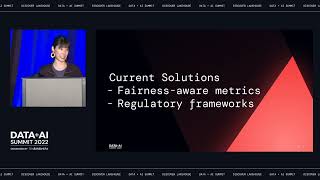
Fairness, Ethics, Accountability and Transparency (FEAT) are must-haves for high-stakes machine learning models. In particular, models within the Financial Services industry such as those that assign credit scores can impact people’s access to housing and utilities and even influence their social standing. Hence, model developers have a moral responsibility to ensure that models do not systematically disadvantage any one group. Nevertheless, implementing such models in industrial settings remains challenging. A lack of concrete guidelines, common standards and technical templates make evaluating models from a FEAT perspective unfeasible. To address these implementation challenges, the Monetary Authority of Singapore (MAS) set up the Veritas Initiative to create a framework for operationalising the FEAT principles, so as to guide the responsible development of AIDA (Artificial Intelligence and Data Analytics) systems.

In January 2021, MAS announced the successful conclusion of Phase 1 of the Veritas Initiative. Deliverables included an assessment methodology for the Fairness principle and open source code for applying Fairness metrics to two use cases - customer marketing and credit scoring. In this talk, we demonstrate how these open-source examples, and their fairness metrics, might be put into production using open source tools such as Delta Lake and MLFlow. Although the Veritas Framework was developed in Singapore, the ethical framework is applicable across geographies.

By doing this, we illustrate how ethical principles can be operationalised, monitored and maintained in production, thus moving beyond only accuracy-based metrics of model performance and towards a more holistic and principled way of developing and productionizing machine learning systems.

Connect with us: Website: https://databricks.com Facebook: https://www.facebook.com/databricksinc Twitter: https://twitter.com/databricks LinkedIn: https://www.linkedin.com/company/data... Instagram: https://www.instagram.com/databricksinc/

Constraints, Democratization, and the Modern Data Stack - Building a Data Platform At Red Ventures

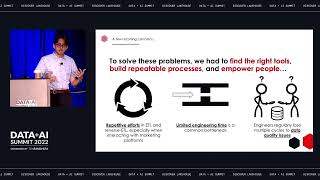
The time and attention of skilled engineers are some of the most constrained, valuable resources at Red Digital, a marketing agency embedded within Red Ventures. Acknowledging that constraint, the team at Red Digital has taken a deliberate, product-first approach to modernize and democratize their data platform. With the help of modern tools like Databricks, Fivetran, dbt, Monte Carlo, and Airflow, Red Digital has increased its development velocity and the size of the available talent pool to continue to grow the business.

This talk will walk through some of the key challenges, decisions, and solutions that the Red Digital team has made to build a suite of parallel data stacks capable of supporting its growing business.

Connect with us: Website: https://databricks.com Facebook: https://www.facebook.com/databricksinc Twitter: https://twitter.com/databricks LinkedIn: https://www.linkedin.com/company/data... Instagram: https://www.instagram.com/databricksinc/

You Have BI. Now What? Activate Your Data!

Analytics has long been the end goal for data teams— standing up dashboards and exporting reports for business teams. But what if data teams could extend their work directly into the tools business teams use?

The next evolution for data teams is Activation. Smart organizations use reverse ETL to extend the value of Databricks by syncing data directly into business platforms, making their lakehouse a Customer Data Platform (CDP). By making Databricks the single source of truth for your data, you can create business models in your lakehouse and serve them directly to your marketing tools, ad networks, CRMs, and more. This saves time and money, unlocks new use cases for your data and turns data team efforts into revenue generating activities.

Connect with us: Website: https://databricks.com Facebook: https://www.facebook.com/databricksinc Twitter: https://twitter.com/databricks LinkedIn: https://www.linkedin.com/company/data... Instagram: https://www.instagram.com/databricksinc/

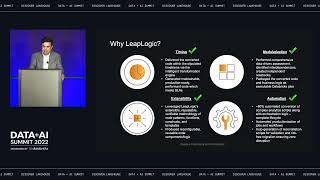
How AARP Services, Inc. automated SAS transformation to Databricks using LeapLogic

While SAS has been a standard in analytics and data science use cases, it is not cloud-native and does not scale well. Join us to learn how AARP automated the conversion of hundreds of complex data processing, model scoring, and campaign workloads to Databricks using LeapLogic, an intelligent code transformation accelerator that can transform any and all legacy ETL, analytics, data warehouse and Hadoop to modern data platforms.

In this session experts from AARP and Impetus will share about collaborating with Databricks and how they were able to: • Automate modernization of SAS marketing analytics based on coding best practices • Establish a rich library of Spark and Python equivalent functions on Databricks with the same capabilities as SAS procedures, DATA step operations, macros, and functions • Leverage Databricks-native services like Delta Live Tables to implement waterfall techniques for campaign execution and simplify pipeline monitoring

Connect with us: Website: https://databricks.com Facebook: https://www.facebook.com/databricksinc Twitter: https://twitter.com/databricks LinkedIn: https://www.linkedin.com/company/data... Instagram: https://www.instagram.com/databricksinc/

Graph-based stream processing

The understanding of complex relationships and interdependencies between different data points is crucial to many decision-making processes.

Graph analytics have found their way into every major industry, from marketing and financial services to transportation. Fraud detection, recommendation engines and process optimization are some of the use cases where real-time decisions are mission-critical, and the underlying domain can be easily modeled as a graph.

Connect with us: Website: https://databricks.com Facebook: https://www.facebook.com/databricksinc Twitter: https://twitter.com/databricks LinkedIn: https://www.linkedin.com/company/data... Instagram: https://www.instagram.com/databricksinc/

Revolutionizing agriculture with AI: Delivering smart industrial solutions built upon a Lakehouse

John Deere is leveraging big data and AI to deliver ‘smart’ industrial solutions that are revolutionizing agriculture and construction, driving sustainability and ultimately helping to feed the world. The John Deere Data Factory that is built upon the Databricks Lakehouse Platform is at the core of this innovation. It ingests petabytes of data and trillions of records to give data teams fast, reliable access to standardized data sets supporting 100s of ML and analytics use cases across the organization. From IoT sensor-enabled equipment driving proactive alerts that prevent failures, to precision agriculture that maximizes field output, to optimizing operations in the supply chain, finance and marketing, John Deere is providing advanced products, technology and services for customers who cultivate, harvest, transform, enrich, and build upon the land.

Connect with us: Website: https://databricks.com Facebook: https://www.facebook.com/databricksinc Twitter: https://twitter.com/databricks LinkedIn: https://www.linkedin.com/company/data... Instagram: https://www.instagram.com/databricksinc/

Fundamentals of Data Engineering

Data engineering has grown rapidly in the past decade, leaving many software engineers, data scientists, and analysts looking for a comprehensive view of this practice. With this practical book, you'll learn how to plan and build systems to serve the needs of your organization and customers by evaluating the best technologies available through the framework of the data engineering lifecycle. Authors Joe Reis and Matt Housley walk you through the data engineering lifecycle and show you how to stitch together a variety of cloud technologies to serve the needs of downstream data consumers. You'll understand how to apply the concepts of data generation, ingestion, orchestration, transformation, storage, and governance that are critical in any data environment regardless of the underlying technology. This book will help you: Get a concise overview of the entire data engineering landscape Assess data engineering problems using an end-to-end framework of best practices Cut through marketing hype when choosing data technologies, architecture, and processes Use the data engineering lifecycle to design and build a robust architecture Incorporate data governance and security across the data engineering lifecycle

In this episode of SaaS Scaled, we’re talking to Joe Keehnast. He’s the VP of Product at RevenueWell, a company that gives group dental practices and DSOs the tools they need to align marketing and operations across multiple locations.   We chat about Joe’s experience and history and dive into how RevenueWell works and some of the main problems it solves. We also cover some of the challenges involved in building a project like RevenueWell and the pros and cons of building, buying, and renting software.   Joe shares his thoughts on the most effective way to keep the people in your business consistently aligned and on the same page. How do you deal with the feedback you get from different areas like sales, market, and existing customers when it comes to product management?   Finally, we talk about the importance of customer conversations when it comes to making product decisions, and how to define a clear and useful product vision.

In today’s episode of SaaS Scaled, we’re talking to Jim Walker, Principal Product Evangelist at Cockroach Labs.   We talk about what Jim’s role involves and why it’s so important. He explains the difference between being a product evangelist and simply selling the product. He also gives us some insight into Cockroach Labs and the problems they solve.   We discuss transactional data and how to strike a balance between centralization and decentralization when it comes to scalability. Jim shares his thoughts on how SaaS companies should approach product marketing and asks, do the time-tested methods of the last couple of decades still work?   Jim dives into serverless technology and how it can help businesses scale in a more optimized and sustainable way. He also looks at how more distributed systems can help build a better world.

We talked about:

Juan’s background Typical problems in marketing that are solved with ML Attribution model Media Mix Model – detecting uplift and channel saturation Changes to privacy regulations and its effect on user tracking User retention and churn prevention A/B testing to detect uplift Statistical approach vs machine learning (setting a benchmark) Does retraining MMM models often improve efficiency? Attribution model baselines Choosing a decay rate for channels (Bayesian linear regression) Learning resource suggestions Bayesian approach vs Frequentist approach Suggestions for creating a marketing department Most challenging problems in marketing The importance of knowing marketing domain knowledge for data scientists Juan’s blog and other learning resources Finding Juan online

Links: 

Juan's PyData talk on uplift modeling: https://youtube.com/watch?v=VWjsi-5yc3w Juan's website: https://juanitorduz.github.io Introduction to Algorithmic Marketing book: https://algorithmic-marketing.online Preventing churn like a bandit: https://www.youtube.com/watch?v=n1uqeBNUlRM

MLOps Zoomcamp: https://github.com/DataTalksClub/mlops-zoomcamp

Join DataTalks.Club: https://datatalks.club/slack.html

Our events: https://datatalks.club/events.html

In this episode of SaaS Scaled, we’re talking to Ian Ranahan. Ian is CEO at Kami Vision, a company focused on vision AI.   We talk about what Kami Vision does, the different technologies it deals with, some specific use cases, and how the company has grown and evolved over time. Ian describes some of the solutions the team is working on—like running AI on the edge on cameras to send alerts when people have an accident.   We discuss the first stages of building a software solution and the steps Ian and his team take to get to know their users and work out how to solve their problems, and how this paves the way for future products and marketing campaigns.   Ian also talks about his “wish list” and what he hopes to see happen in the tech space over the next few years, the growing popularity of buying software versus building it, and the pros and cons of this. Finally, we talk about the importance of widespread data and how it impacts the software industry and Kami Vision.

IBM Z Functional Matrix

This IBM® Redpaper™ publication provides a list of features and functions that are supported on IBM Z, including: IBM z16™ - Machine type 3931; IBM z15™ - Machine types 8561 and 8562; IBM z14™ - Machine types 3906 and 3907. On 30 June 2021, the IBM z14 (M/T 3906) was withdrawn from marketing (WDMF). Field-installed features and all associated conversions that are delivered solely through a modification to the machine's Licensed Internal Code (LIC) are still possible until 29 June 2022. This IBM Redpaper publication can help you quickly understand the features, functions, and connectivity alternatives that are available when planning and designing IBM Z infrastructures.

In this episode of SaaS Scaled, we’re talking to Devin Johnson, CEO and Co-Founder at Kennected—a SaaS company built to simplify things for business owners and entrepreneurs through lead generation, automation, and education.   Devin talks about how he got started as an entrepreneur in the world of sneakers and how he built up his digital marketing skillset. We talk about the major challenges faced by SaaS companies as they try to grow and scale, the transition to the digital economy, and the future of remote work.   We also talk about what motivates the younger generations in the workplace today, how to make things more exciting for your team, and the importance of transparency and openness within organizations.    Finally, Devin talks about the differences between being a CEO and a founder, his experience being both, and what the future holds for him and Kennected.

Dashboards are at the forefront of today’s episode, and so I will be responding to some reader questions who wrote in to one of my weekly mailing list missives about this topic. I’ve not talked much about dashboards despite their frequent appearance in data product UIs, and in this episode, I’ll explain why. Here are some of the key points and the original questions asked in this episode:

My introduction to dashboards (00:00) Some overall thoughts on dashboards (02:50) What the risk is to the user if the insights are wrong or misinterpreted (4:56) Your data outputs create an experience, whether intentional or not (07:13) John asks: How do we figure out exactly what the jobs are that the dashboard user is trying to do? Are they building next year's budget or looking for broken widgets?  What does this user value today? Is a low resource utilization percentage something to be celebrated or avoided for this dashboard user today?  (13:05) Value is not intrinsically in the dashboard (18:47) Mareike asks: How do we provide Information in a way that people are able to act upon the presented Information?  How do we translate the presented Information into action? What can we learn about user expectation management when designing dashboard/analytics solutions? (22:00) The change towards predictive and prescriptive analytics (24:30) The upfront work that needs to get done before the technology is in front of the user (30:20) James asks: How can we get people to focus less on the assumption-laden and often restrictive term "dashboard", and instead worry about designing solutions focused on outcomes for particular personas and workflows that happen to have some or all of the typical ingredients associated with the catch-all term "dashboards?” (33:30) Stop measuring the creation of outputs and focus on the user workflows and the jobs to be done (37:00) The data product manager shouldn’t just be focused on deliverables (42:28)

Quotes from Today’s Episode “The term dashboards is almost meaningless today, it seems to mean almost any home default screen in a data product. It also can just mean a report. For others, it means an entire monitoring tool, for some, it means the summary of a bunch of data that lives in some other reports. The terms are all over the place.”- Brian (@rhythmspice) (01:36)

“The big idea here that I really want leaders to be thinking about here is you need to get your teams focused on workflows—sometimes called jobs to be done—and the downstream decisions that users want to make with machine-learning or analytical insights. ” - Brian (@rhythmspice) (06:12)

“This idea of human-centered design and user experience is really about trying to fit the technology into their world, from their perspective as opposed to building something in isolation where we then try to get them to adopt our thing.  This may be out of phase with the way people like to do their work and may lead to a much higher barrier to adoption.” - Brian (@rhythmspice) (14:30)

“Leaders who want their data science and analytics efforts to show value really need to understand that value is not intrinsically in the dashboard or the model or the engineering or the analysis.” - Brian (@rhythmspice) (18:45)

“There's a whole bunch of plumbing that needs to be done, and it’s really difficult. The tool that we end up generating in those situations tends to be a tool that’s modeled around the data and not modeled around [the customers] mental model of this space, the customer purchase space, the marketing spend space, the sales conversion, or propensity-to-buy space.” - Brian (@rhythmspice) (27:48)

“Data product managers should be these problem owners, if there has to be a single entity for this. When we’re talking about different initiatives in the enterprise or for a commercial software company, it’s really sits at this product management function.”  - Brian (@rhythmspice) (34:42)

“It’s really important that [data product managers] are not just focused on deliverables; they need to really be the ones that summarize the problem space for the entire team, and help define a strategy with the entire team that clarifies the direction the team is going in. They are not a project manager; they are someone responsible for delivering value.” - Brian (@rhythmspice) (42:23)

Links Referenced:

Mailing List: https://designingforanalytics.com/list CED UX Framework for Advanced Analytics:Original Article: https://designingforanalytics.com/ced Podcast/Audio Episode: https://designingforanalytics.com/resources/episodes/086-ced-my-ux-framework-for-designing-analytics-tools-that-drive-decision-making/ 

My LinkedIn Live about Measuring the Usability of Data Products: https://www.linkedin.com/video/event/urn:li:ugcPost:6911800738209800192/ Work With Me / My Services: https://designingforanalytics.com/services

IBM Power Systems S922, S914, and S924 Technical Overview and Introduction Featuring PCIe Gen 4 Technology

This IBM® Redpaper publication is a comprehensive guide that covers the IBM Power System S914 (9009-41G), IBM Power System S922 (9009-22G), and IBM Power System S924 (9009-42G) servers that use the latest IBM POWER9™ processor-based technology and support the IBM AIX®, IBM i, and Linux operating systems (OSs). The goal of this paper is to provide a hardware architecture analysis and highlight the changes, new technologies, and major features that are being introduced in these systems, such as: The latest IBM POWER9 processor, which is available in various configurations for the number of cores per socket More performance by using industry-leading Peripheral Component Interconnect Express (PCIe) Gen 4 slots Enhanced internal disk scalability and performance with up to 11 NVMe adapters Introduction of a competitive Power S922 server with a 1-socket configuration that is targeted at IBM i customers This publication is for professionals who want to acquire a better understanding of IBM Power Systems™ products. The intended audience includes the following roles: Clients Sales and marketing professionals Technical support professionals IBM Business Partners Independent software vendors (ISVs) This paper expands the current set of IBM Power Systems documentation by providing a desktop reference that offers a detailed technical description of the Power S914, Power S922, and Power S924 systems. This paper does not replace the current marketing materials and configuration tools. It is intended as an extra source of information that, together with existing sources, can be used to enhance your knowledge of IBM server solutions.

Send us a text Fred Joyal Notes  This week on Making Data Simple, Fred Joyal. Perhaps you've seen Fred on 1-800-DENTIST commercials. Now, he's turned marketing genius into the art of being BOLD.  Show Notes  02:20 Brand Fred Joyal  19:20 Monetization Strategy  20:58 Boldness is a Super Power  23:18 Just Show Up  26:15 Step Up with Exercises  27:00 Failure's are Steps Up, Take Another Swing 38:50 5 Steps to Lowering Anxiety  41:50 How to Better Network  Find Fred Joyal @ https://fredjoyal.com/ LinkedIn: linkedin.com/in/fredjoyal  Twitter: fredjoyal  Want to be featured as a guest on Making Data Simple? Reach out to us at [[email protected]] and tell us why you should be next. Abstract Making Data Simple Podcast is hosted by Al Martin, WW VP Account Technical Leader IBM Technology Sales, where we explore trending technologies, business innovation, and leadership ... while keeping it simple & fun.  Want to be featured as a guest on Making Data Simple? Reach out to us at [email protected] and tell us why you should be next. The Making Data Simple Podcast is hosted by Al Martin, WW VP Technical Sales, IBM, where we explore trending technologies, business innovation, and leadership ... while keeping it simple & fun.

Our guest today is Fabrice Sergent, Co-Founder and Managing Partner at Bandsintown, where they “believe that live music is one of the last ‘tribal experiences’ which creates happiness and understanding in the world. Their mission is to help artists build a sustainable future through virtual live streams, music releases, merchandise and traditional live events promotion. With a reach of 250 million Monthly Active music fans globally, over 67m registered concert goers and 550k touring artists registered to the platform, Bandsintown offers powerful, scalable and targeted digital marketing solutions to engage with music enthusiasts.” According to his LinkedIn profile, Sergent is “an entrepreneur driven by passion, having led hyper growth digital media enterprises in the U.S. and in Europe with extensive experience in the music industry, digital consumer marketing, brand building, business development, and mergers & acquisitions. He co-founded and led two start-ups to $100m+ revenues, starting his journey by founding Club-Internet, with the support of Lagardere/Hachette in 1995. Club-Internet was one of the very first Internet Service Provider (similar to AOL in the US) launched in France and later became one of the largest [Internet Service Providers] before it was purchased by Deutsche Telecom’s T-Online in 2000 for 1.2 billion Euro.” Today, we’ll look back on his road to music, what Bandsintown is up to nowadays, and what the future holds in store for live music. If you want more free insights, follow our podcast, our blog, and our socials. If you're an artist with a free Chartmetric account, sign up for the artist plan, made exclusively for you, here. If you're new to Chartmetric, follow the URL above after creating a free account here.

In this episode of SaaS Scaled, we’re talking to Brian Dreyer, VP of Product Management at SightCall. Brian is here to talk about his experience in SaaS product management, share what he’s learned over the years, and tell us how things have changed. Brian talks about how he would do product management today if he had to start a company from scratch, and why. We talk about how to successfully pivot and restart products and the challenges involved. Brian also mentions how SaaS has changed over the last couple of decades and the new challenges that have arisen. We also dive into how the relationship between product and marketing has changed over the years, and Brian talks about how cloud computing has evolved and where it’s headed. Finally, he shares some recommendations for further reading for anyone interested in SaaS product management.   This episode is brought to you by Qrvey The tools you need to take action with your data, on a platform built for maximum scalability, security, and cost efficiencies. If you’re ready to reduce complexity and dramatically lower costs, contact us today at qrvey.com. Qrvey, the modern no-code analytics solution for SaaS companies on AWS.