The sheer number of tools and technologies that can infiltrate your work processes can be overwhelming. Choosing the right ones to invest in is critical, but how do you know where to start? What steps should you take to build a solid, scalable data infrastructure that can handle the growth of your business? And with AI becoming a central focus for many organizations, how can you ensure that your data strategy is aligned to support these initiatives? It’s no longer just about managing data; it’s about future-proofing your organization. Taylor Brown is the COO and Co-Founder of Fivetran, the global leader in data movement. With a vision to simplify data connectivity and accessibility, Taylor has been instrumental in transforming the way organizations manage their data infrastructure. Fivetran has grown rapidly, becoming a trusted partner for thousands of companies worldwide. Taylor's expertise in technology and business strategy has positioned Fivetran at the forefront of the data integration industry, driving innovation and empowering businesses to harness the full potential of their data. Prior to Fivetran, Taylor honed his skills in various tech startups, bringing a wealth of experience and a passion for problem-solving to his entrepreneurial ventures. In the episode, Richie and Taylor explore the biggest challenges in data engineering, how to find the right tools for your data stack, defining the modern data stack, federated data, data fabrics, data meshes, data strategy vs organizational structure, self-service data, data democratization, AI’s impact on data and much more. Links Mentioned in the Show: FivetranConnect with TaylorCareer Track: Data Engineer in PythonRelated Episode: Effective Data Engineering with Liya Aizenberg, Director of Data Engineering at AwayRewatch sessions from RADAR: AI Edition New to DataCamp? Learn on the go using the DataCamp mobile appEmpower your business with world-class data and AI skills with DataCamp for business
 talk-data.com
Topic
Modern Data Stack
298
tagged
Activity Trend
Top Events
Summary Airbyte is one of the most prominent platforms for data movement. Over the past 4 years they have invested heavily in solutions for scaling the self-hosted and cloud operations, as well as the quality and stability of their connectors. As a result of that hard work, they have declared their commitment to the future of the platform with a 1.0 release. In this episode Michel Tricot shares the highlights of their journey and the exciting new capabilities that are coming next. Announcements Hello and welcome to the Data Engineering Podcast, the show about modern data managementYour host is Tobias Macey and today I'm interviewing Michel Tricot about the journey to the 1.0 launch of Airbyte and what that means for the projectInterview IntroductionHow did you get involved in the area of data management?Can you describe what Airbyte is and the story behind it?What are some of the notable milestones that you have traversed on your path to the 1.0 release?The ecosystem has gone through some significant shifts since you first launched Airbyte. How have trends such as generative AI, the rise and fall of the "modern data stack", and the shifts in investment impacted your overall product and business strategies?What are some of the hard-won lessons that you have learned about the realities of data movement and integration?What are some of the most interesting/challenging/surprising edge cases or performance bottlenecks that you have had to address?What are the core architectural decisions that have proven to be effective?How has the architecture had to change as you progressed to the 1.0 release?A 1.0 version signals a degree of stability and commitment. Can you describe the decision process that you went through in committing to a 1.0 version?What are the most interesting, innovative, or unexpected ways that you have seen Airbyte used?What are the most interesting, unexpected, or challenging lessons that you have learned while working on Airbyte?When is Airbyte the wrong choice?What do you have planned for the future of Airbyte after the 1.0 launch?Contact Info LinkedInParting Question From your perspective, what is the biggest gap in the tooling or technology for data management today?Closing Announcements Thank you for listening! Don't forget to check out our other shows. Podcast.init covers the Python language, its community, and the innovative ways it is being used. The AI Engineering Podcast is your guide to the fast-moving world of building AI systems.Visit the site to subscribe to the show, sign up for the mailing list, and read the show notes.If you've learned something or tried out a project from the show then tell us about it! Email [email protected] with your story.Links AirbytePodcast EpisodeAirbyte CloudAirbyte Connector BuilderSinger ProtocolAirbyte ProtocolAirbyte CDKModern Data StackELTVector DatabasedbtFivetranPodcast EpisodeMeltanoPodcast EpisodedltReverse ETLGraphRAGAI Engineering Podcast EpisodeThe intro and outro music is from The Hug by The Freak Fandango Orchestra / CC BY-SA
Roche, is one of the world’s largest biotech companies, as well as a leading provider of in-vitro diagnostics and a global supplier of transformative innovative solutions across major disease areas. Over the past few years, they’ve undergone a migration to the cloud, adopted a modern data stack and implemented data mesh in order to double down on improving data reliability.
Join the data team at Roche to learn how they’ve leveraged data observability to support their sociotechnical shift to data mesh. They walk through their multi-year data observability journey, digging into how they implemented Monte Carlo in a global organization. They’ll also share their approach to data mesh at Roche and deep dive into a current use case.
In the past, a central data team handled data management. However, challenges arose with the rise of the modern data stack, leading to the demand for Data Mesh and data product management. Today, more organizations are attempting to enable self-service data management, but there’s no clear solution. This presentation will show how an analytical franchise model can help you manage data yourself with your current stack. It’ll also talk about what’s been done and how AI can make data management better in the future.
This presentation will show how an analytical franchise model can help you manage data yourself with your current stack.
Most organizations are using GenAI in hopes of gaining easy access to information needed by their users to enable greater productivity. At the same time, it's also well-documented that LLMs can deliver inaccurate information. To be of value, users need to be able to trust that the answers presented to them are correct.
This is a key issue at the center of AI adoption and its applications in the real world. For example, many organizations are beginning to develop, test, and implement chatbots for internal and external use to provide answers to questions by using natural language. When those chatbots do not produce the right answers, all the time and effort put into creating them ends up wasted.
Join David Jayatillake, Cube's VP of AI, for an in-depth discussion on the current state of GenAI and the rise of the semantic layer.
In this talk, you will learn about:
The current state of GenAI
The rise of the semantic layer in modern data stack with AI
The significant differences between an AI chatbot with and without a semantic layer
The Data Product Management In Action podcast, brought to you by Soda and executive producer Scott Hirleman, is a platform for data product management practitioners to share insights and experiences. We've released a special edition series of minisodes of our podcast. Recorded live at Data Connect 2024, our host Michael Toland engages in short, sweet, informative, and delightful conversations with five prevelant practitioners who are forging their way forward in data and technology. In this minisode, Michael reconnects with his former colleague Lindsay Murphy as she delves into a crucial yet often overlooked aspect of data management—cost containment. Lindsay's session at Data Connect 2024 emphasizes the importance of considering costs as a critical piece of your data team's ROI. While data teams often focus on value creation and return on investment, they can easily lose sight of the expenses associated with the complex stacks they build. Lindsay offers practical insights on how to strike a balance between innovation and cost-efficiency. Plus, a special shout-out to Lindsay's new podcast, Women Lead Data—hurrah! This podcast is set to inspire and empower women in the data industry, providing a platform for sharing experiences, insights, and strategies for success. About our host Michael Toland: Michael is a Product Management Coach and Consultant with Pathfinder Product, a Test Double Operation. Since 2016, Michael has worked on large-scale system modernizations and migration initiatives at Verizon. Outside his professional career, Michael serves as the Treasurer for the New Leaders Council, mentors with Venture for America, sings with the Columbus Symphony, and writes satire for his blog Dignified Product. He is excited to discuss data product management with the podcast audience. Connect with Michael on LinkedIn About our guest Lindsay Murphy: Lindsay is a data leader with 13 years of experience in building and scaling data teams. She has successfully launched and led data initiatives at startups such as BenchSci, Maple, and Secoda. Her expertise includes developing internal data products, implementing modern data stack infrastructures, building and mentoring data engineering teams, and crafting data strategies that align with organizational goals. An active member of the data community, Lindsay organizes the Toronto Modern Data Stack Meetup group, which boasts over 2,500 members. She has also taught Advanced dbt to more than 100 students through Uplimit and hosts a weekly podcast, Women Lead Data, where she shares insights and amplifies the voices of women in the data industry. Connect with Lindsay on LinkedIn. All views and opinions expressed are those of the individuals and do not necessarily reflect their employers or anyone else. Join the conversation on LinkedIn. Apply to be a guest or nominate a practitioner. Do you love what you're listening to? Please rate and review the podcast, and share it with fellow practitioners you know. Your support helps us reach more listeners and continue providing valuable insights!
dbt became the de facto for data teams building reliable and trustworthy SQL code leveraging a modern data stack architecture. The dbt logic needs to be orchestrated, and jobs scheduled to meet business expectations. That’s where Airflow comes into play. In this quick introduction session, you’ll gonna learn: How to leverage dbt-Core & Airflow to orchestrate pipelines Write DAGs in a Pythonic way Apply best practices on your jobs
In the fast-paced work environments we are used to, the ability to quickly find and understand data is essential. Data professionals can often spend more time searching for data than analyzing it, which can hinder business progress. Innovations like data catalogs and automated lineage systems are transforming data management, making it easier to ensure data quality, trust, and compliance. By creating a strong metadata foundation and integrating these tools into existing workflows, organizations can enhance decision-making and operational efficiency. But how did this all come to be, who is driving better access and collaboration through data? Prukalpa Sankar is the Co-founder of Atlan. Atlan is a modern data collaboration workspace (like GitHub for engineering or Figma for design). By acting as a virtual hub for data assets ranging from tables and dashboards to models & code, Atlan enables teams to create a single source of truth for all their data assets, and collaborate across the modern data stack through deep integrations with tools like Slack, BI tools, data science tools and more. A pioneer in the space, Atlan was recognized by Gartner as a Cool Vendor in DataOps, as one of the top 3 companies globally. Prukalpa previously co-founded SocialCops, world leading data for good company (New York Times Global Visionary, World Economic Forum Tech Pioneer). SocialCops is behind landmark data projects including India’s National Data Platform and SDGs global monitoring in collaboration with the United Nations. She was awarded Economic Times Emerging Entrepreneur for the Year, Forbes 30u30, Fortune 40u40, Top 10 CNBC Young Business Women 2016, and a TED Speaker. In the episode, Richie and Prukalpa explore challenges within data discoverability, the inception of Atlan, the importance of a data catalog, personalization in data catalogs, data lineage, building data lineage, implementing data governance, human collaboration in data governance, skills for effective data governance, product design for diverse audiences, regulatory compliance, the future of data management and much more. Links Mentioned in the Show: AtlanConnect with Prukalpa[Course] Artificial Intelligence (AI) StrategyRelated Episode: Adding AI to the Data Warehouse with Sridhar Ramaswamy, CEO at SnowflakeSign up to RADAR: AI Edition New to DataCamp? Learn on the go using the DataCamp mobile app Empower your business with world-class data and AI skills with DataCamp for business
Safiyy Momen and I chat about the good and bad of the Modern Data Stack, controlling cloud costs, boring engineering, and much more.
LinkedIn: https://www.linkedin.com/in/safiyy-momen/
Matt Turck has been publishing his ecosystem map since 2012. It was first called the Big Data Landscape. Now it's the Machine Learning, AI & Data (MAD) Landscape. The 2024 MAD Landscape includes 2,011(!) logos, which Matt attributes first a data infrastructure cycle and now an ML/AI cycle. As Matt writes, "Those two waves are intimately related. A core idea of the MAD Landscape every year has been to show the symbiotic relationship between data infrastructure, analytics/BI, ML/AI, and applications." Matt and Tristan discuss themes in Matt's post: generative AI's impact on data analytics, the modern AI stack compared to the modern data stack, and Databricks vs. Snowflake (plus Microsoft Fabric). For full show notes and to read 7+ years of back issues of the podcast's companion newsletter, head to https://roundup.getdbt.com. The Analytics Engineering Podcast is sponsored by dbt Labs.
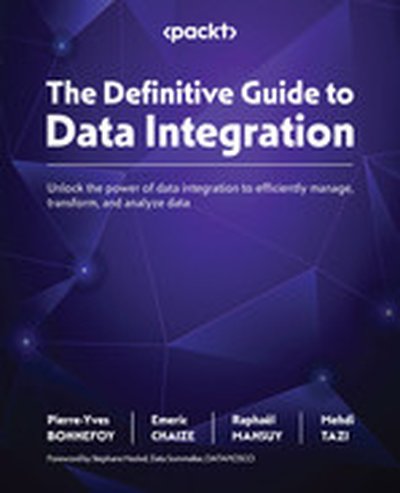
Master the modern data stack with 'The Definitive Guide to Data Integration.' This comprehensive book covers the key aspects of data integration, including data sources, storage, transformation, governance, and more. Equip yourself with the knowledge and hands-on skills to manage complex datasets and unlock your data's full potential. What this Book will help me do Understand how to integrate diverse datasets efficiently using modern tools. Develop expertise in designing and implementing robust data integration workflows. Gain insights into real-time data processing and cloud-based data architectures. Learn best practices for data quality, governance, and compliance in integration. Master the use of APIs, workflows, and transformation patterns in practice. Author(s) The authors, None Bonnefoy, None Chaize, Raphaël Mansuy, and Mehdi Tazi, are seasoned experts in data engineering and integration. They bring years of experience in modern data technologies and consulting. Their approachable writing style ensures that readers at various skill levels can grasp complex concepts effectively. Who is it for? This book is ideal for data engineers, architects, analysts, and IT professionals. Whether you're new to data integration or looking to deepen your expertise, this guide caters to individuals seeking to navigate the challenges of the modern data stack.
Angel Narciso and I hung out at LEAP Riyadh, alongside 215K attendees (wtf?). We chat about all sorts of stuff in the data world, including some blunt convos on the modern data stack and AI, among other things.
Summary
A core differentiator of Dagster in the ecosystem of data orchestration is their focus on software defined assets as a means of building declarative workflows. With their launch of Dagster+ as the redesigned commercial companion to the open source project they are investing in that capability with a suite of new features. In this episode Pete Hunt, CEO of Dagster labs, outlines these new capabilities, how they reduce the burden on data teams, and the increased collaboration that they enable across teams and business units.
Announcements
Hello and welcome to the Data Engineering Podcast, the show about modern data management Dagster offers a new approach to building and running data platforms and data pipelines. It is an open-source, cloud-native orchestrator for the whole development lifecycle, with integrated lineage and observability, a declarative programming model, and best-in-class testability. Your team can get up and running in minutes thanks to Dagster Cloud, an enterprise-class hosted solution that offers serverless and hybrid deployments, enhanced security, and on-demand ephemeral test deployments. Go to dataengineeringpodcast.com/dagster today to get started. Your first 30 days are free! Data lakes are notoriously complex. For data engineers who battle to build and scale high quality data workflows on the data lake, Starburst powers petabyte-scale SQL analytics fast, at a fraction of the cost of traditional methods, so that you can meet all your data needs ranging from AI to data applications to complete analytics. Trusted by teams of all sizes, including Comcast and Doordash, Starburst is a data lake analytics platform that delivers the adaptability and flexibility a lakehouse ecosystem promises. And Starburst does all of this on an open architecture with first-class support for Apache Iceberg, Delta Lake and Hudi, so you always maintain ownership of your data. Want to see Starburst in action? Go to dataengineeringpodcast.com/starburst and get $500 in credits to try Starburst Galaxy today, the easiest and fastest way to get started using Trino. Your host is Tobias Macey and today I'm interviewing Pete Hunt about how the launch of Dagster+ will level up your data platform and orchestrate across language platforms
Interview
Introduction How did you get involved in the area of data management? Can you describe what the focus of Dagster+ is and the story behind it?
What problems are you trying to solve with Dagster+? What are the notable enhancements beyond the Dagster Core project that this updated platform provides? How is it different from the current Dagster Cloud product?
In the launch announcement you tease new capabilities that would be great to explore in turns:
Make data a team sport, enabling data teams across the organization Deliver reliable, high quality data the organization can trust Observe and manage data platform costs Master the heterogeneous collection of technologies—both traditional and Modern Data Stack
What are the business/product goals that you are focused on improving with the launch of Dagster+ What are the most interesting, innovative, or unexpected ways that you have seen Dagster used? What are the most interesting, unexpected, or challenging lessons that you have learned while working on the design and launch of Dagster+? When is Dagster+ the wrong choice? What do you have planned for the future of Dagster/Dagster Cloud/Dagster+?
Contact Info
Twitter LinkedIn
Parting Question
From your perspective, what is the biggest gap in the tooling or technology for data management today?
Closing Announcements
Thank you for listening! Don't forget to check out our other shows. Podcast.init covers the Python language, its community, and the innovative ways it is being used. The Machine Learning Podcast helps you go from idea to production with machine learning. Visit the site to subscribe to the show, sign up for the mailing list, and read the show notes. If y
Benn Stancil, cofounder and CTO at Mode, returns to The Analytics Engineering Podcast to discuss the evolution of the term "modern data stack" and its value today. Tristan wrote on this idea for The Analytics Engineering Roundup in Is the Modern Data Stack Still a Useful Idea? For full show notes and to read 6+ years of back issues of the podcast's companion newsletter, head to https://roundup.getdbt.com. The Analytics Engineering Podcast is sponsored by dbt Labs.
We’ve heard so much about the value and capabilities of generative AI over the past year, and we’ve all become accustomed to the chat interfaces of our preferred models. One of the main concerns many of us have had has been privacy. Is OpenAI keeping the data and information I give to ChatGPT secure? One of the touted solutions to this problem is running LLMs locally on your own machine, but with the hardware cost that comes with it, running LLMs locally has not been possible for many of us. That might now be starting to change. Nuri Canyaka is VP of AI Marketing at Intel. Prior to Intel, Nuri spent 16 years at Microsoft, starting out as a Technical Evangelist, and leaving the organization as the Senior Director of Product Marketing. He ran the GTM team that helped generate adoption of GPT in Microsoft Azure products. La Tiffaney Santucci is Intel’s AI Marketing Director, specializing in their Edge and Client products. La Tiffaney has spent over a decade at Intel, focussing on partnerships with Dell, Google Amazon and Microsoft. In the episode, Richie, Nuri and La Tiffaney explore AI’s impact on marketing analytics, the adoptions of AI in the enterprise, how AI is being integrated into existing products, the workflow for implementing AI into business processes and the challenges that come with it, the importance of edge AI for instant decision-making in uses-cases like self-driving cars, the emergence of AI engineering as a distinct field of work, the democratization of AI, what the state of AGI might look like in the near future and much more. About the AI and the Modern Data Stack DataFramed Series This week we’re releasing 4 episodes focused on how AI is changing the modern data stack and the analytics profession at large. The modern data stack is often an ambiguous and all-encompassing term, so we intentionally wanted to cover the impact of AI on the modern data stack from different angles. Here’s what you can expect: Why the Future of AI in Data will be Weird with Benn Stancil, CTO at Mode & Field CTO at ThoughtSpot — Covering how AI will change analytics workflows and tools How Databricks is Transforming Data Warehousing and AI with Ari Kaplan, Head Evangelist & Robin Sutara, Field CTO at Databricks — Covering Databricks, data intelligence and how AI tools are changing data democratizationAdding AI to the Data Warehouse with Sridhar Ramaswamy, CEO at Snowflake — Covering Snowflake and its uses, how generative AI is changing the attitudes of leaders towards data, and how to improve your data managementAccelerating AI Workflows with Nuri Cankaya, VP of AI Marketing & La Tiffaney Santucci, AI Marketing Director at Intel — Covering AI’s impact on marketing analytics, how AI is being integrated into existing products, and the democratization of AI Links Mentioned in the Show: Intel OpenVINO™ toolkitIntel Developer Clouds for Accelerated ComputingAWS Re:Invent[Course] Implementing AI Solutions in BusinessRelated Episode: Intel CTO Steve Orrin on How Governments Can Navigate the Data & AI RevolutionSign up to a href="https://www.datacamp.com/radar-analytics-edition"...
Snowflake has been foundational in the data space for years. In the mid-2010s, the platform was a major driver of moving data to the cloud. More recently, it's become apparent that combining data and AI in the cloud is key to accelerating innovation. Snowflake has been rapidly adding AI features to provide value to the modern data stack, but what’s really been going on under the hood? At the time of recording, Sridhar Ramaswamy was the SVP of AI at Snowflake, being appointed CEO at Snowflake in February 2024. Sridhar was formerly Co-Founder of Neeva, acquired in 2023 by Snowflake. Before founding Neeva, Ramaswamy oversaw Google's advertising products, including search, display, video advertising, analytics, shopping, payments, and travel. He joined Google in 2003 and was part of the growth of AdWords and Google's overall advertising business. He spent more than 15 years at Google, where he started as a software engineer and rose to SVP of Ads & Commerce. In the episode, Richie and Sridhar explore Snowflake and its uses, how generative AI is changing the attitudes of leaders towards data, how NLP and AI have impacted enterprise business operations as well as new applications of AI in an enterprise environment, the challenges of enterprise search, the importance of data quality, management and the role of semantic layers in the effective use of AI, a look into Snowflakes products including Snowpilot and Cortex, the collaboration required for successful data and AI projects, advice for organizations looking to improve their data management and much more. About the AI and the Modern Data Stack DataFramed Series This week we’re releasing 4 episodes focused on how AI is changing the modern data stack and the analytics profession at large. The modern data stack is often an ambiguous and all-encompassing term, so we intentionally wanted to cover the impact of AI on the modern data stack from different angles. Here’s what you can expect: Why the Future of AI in Data will be Weird with Benn Stancil, CTO at Mode & Field CTO at ThoughtSpot — Covering how AI will change analytics workflows and tools How Databricks is Transforming Data Warehousing and AI with Ari Kaplan, Head Evangelist & Robin Sutara, Field CTO at Databricks — Covering Databricks, data intelligence and how AI tools are changing data democratizationAdding AI to the Data Warehouse with Sridhar Ramaswamy, CEO at Snowflake — Covering Snowflake and its uses, how generative AI is changing the attitudes of leaders towards data, and how to improve your data managementAccelerating AI Workflows with Nuri Cankaya, VP of AI Marketing & La Tiffaney Santucci, AI Marketing Director at Intel — Covering AI’s impact on marketing analytics, how AI is being integrated into existing products, and the democratization of AI Links Mentioned in the Show: SnowflakeSnowflake acquires Neeva to accelerate search in the Data Cloud through generative AIUse AI in Seconds with Snowflake Cortex[Course] Introduction to SnowflakeRelated Episode: Why AI will Change Everything—with Former Snowflake CEO, Bob MugliaSign up to a...
Databricks started out as a platform for using Spark, a big data analytics engine, but it's grown a lot since then. Databricks now allows users to leverage their data and AI projects in the same place, ensuring ease of use and consistency across operations. The Databricks platform is converging on the idea of data intelligence, but what does this mean, how will it help data teams and organizations, and where does AI fit in the picture? Ari is Databricks’ Head of Evangelism and "The Real Moneyball Guy" - the popular movie was partly based on his analytical innovations in Major League Baseball. He is a leading influencer in analytics, artificial intelligence, data science, and high-growth business innovation. Ari was previously the Global AI Evangelist at DataRobot, Nielsen’s regional VP of Analytics, Caltech Alumni of the Decade, President Emeritus of the worldwide Independent Oracle Users Group, on Intel’s AI Board of Advisors, Sports Illustrated Top Ten GM Candidate, an IBM Watson Celebrity Data Scientist, and on the Crain’s Chicago 40 Under 40. He's also written 5 books on analytics, databases, and baseball. Robin is the Field CTO at Databricks. She has consulted with hundreds of organizations on data strategy, data culture, and building diverse data teams. Robin has had an eclectic career path in technical and business functions with more than two decades in tech companies, including Microsoft and Databricks. She also has achieved multiple academic accomplishments from her juris doctorate to a masters in law to engineering leadership. From her first technical role as an entry-level consumer support engineer to her current role in the C-Suite, Robin supports creating an inclusive workplace and is the current co-chair of Women in Data Safety Committee. She was also recognized in 2023 as a Top 20 Women in Data and Tech, as well as DataIQ 100 Most Influential People in Data. In the episode, Richie, Ari, and Robin explore Databricks, the application of generative AI in improving services operations and providing data insights, data intelligence, and lakehouse technology, the wide-ranging applications of generative AI, how AI tools are changing data democratization, the challenges of data governance and management and how tools like Databricks can help, how jobs in data and AI are changing and much more. About the AI and the Modern Data Stack DataFramed Series This week we’re releasing 4 episodes focused on how AI is changing the modern data stack and the analytics profession at large. The modern data stack is often an ambiguous and all-encompassing term, so we intentionally wanted to cover the impact of AI on the modern data stack from different angles. Here’s what you can expect: Why the Future of AI in Data will be Weird with Benn Stancil, CTO at Mode & Field CTO at ThoughtSpot — Covering how AI will change analytics workflows and tools How Databricks is Transforming Data Warehousing and AI with Ari Kaplan, Head Evangelist & Robin Sutara, Field CTO at Databricks — Covering Databricks, data intelligence and how AI tools are changing data democratizationAdding AI to the Data Warehouse with Sridhar Ramaswamy, CEO at Snowflake — Covering Snowflake and its uses, how generative AI is changing the attitudes of leaders towards data, and how to improve your data managementAccelerating AI Workflows with Nuri Cankaya, VP of AI Marketing & La Tiffaney Santucci, AI Marketing Director at Intel — Covering AI’s impact on marketing analytics, how AI is being integrated into existing products, and the democratization of AI Links Mentioned in the Show: DatabricksDelta Lakea href="https://mlflow.org/" rel="noopener...
One of the biggest surprises of the generative AI revolution over the past 2 years lies in the counter-intuitiveness of its most successful use cases. Counter to most predictions made about AI years ago, AI-assisted coding, specifically AI-assisted data work, has been surprisingly one of the biggest killer apps of generative AI tools and copilots. However, what happens when we take this notion even further? How will analytics workflows look like when generative AI tools can also assist us in problem-solving? What type of analytics use cases can we expect to operationalize, and what tools can we expect to work with when AI systems can provide scalable qualitative data instead of relying on imperfect quantitative proxies? Today’s guest calls this future “weird”. Benn Stancil is the Field CTO at ThoughtSpot. He joined ThoughtSpot in 2023 as part of its acquisition of Mode, where he was a Co-Founder and CTO. While at Mode, Benn held roles leading Mode’s data, product, marketing, and executive teams. He regularly writes about data and technology at benn.substack.com. Prior to founding Mode, Benn worked on analytics teams at Microsoft and Yammer. Throughout the episode, Benn and Adel talk about the nature of AI-assisted analytics workflows, the potential for generative AI in assisting problem-solving, how he imagines analytics workflows to look in the future, and a lot more. About the AI and the Modern Data Stack DataFramed Series This week we’re releasing 4 episodes focused on how AI is changing the modern data stack and the analytics profession at large. The modern data stack is often an ambiguous and all-encompassing term, so we intentionally wanted to cover the impact of AI on the modern data stack from different angles. Here’s what you can expect: Why the Future of AI in Data will be Weird with Benn Stancil, CTO at Mode & Field CTO at ThoughtSpot — Covering how AI will change analytics workflows and tools How Databricks is Transforming Data Warehousing and AI with Ari Kaplan, Head Evangelist & Robin Sutara, Field CTO at Databricks — Covering Databricks, data intelligence and how AI tools are changing data democratizationAdding AI to the Data Warehouse with Sridhar Ramaswamy, CEO at Snowflake — Covering Snowflake and its uses, how generative AI is changing the attitudes of leaders towards data, and how to improve your data managementAccelerating AI Workflows with Nuri Cankaya, VP of AI Marketing & La Tiffaney Santucci, AI Marketing Director at Intel — Covering AI’s impact on marketing analytics, how AI is being integrated into existing products, and the democratization of AI Links Mentioned in the Show: Mode AnalyticsThoughtSpot acquires Mode: Empowering data teams to bring Generative AI to BIEverybody Lies: Big Data, New Data, and What the Internet Can Tell Us About Who We Really Are[Course] Generative AI for Business[Skill Track] SQL FundamentalsRelated Episode: The Future of Marketing Analytics with Cory Munchbach, CEO at...
My voice is sort of working, and I chat about Tristan Handy's article that raised quite a ruckus this week, "Is the "Modern Data Stack" Still a Useful Idea?"
In the end, the Modern Data Stack won - people use the cloud for analytics. And everything ends, so I'm excited for what's next.
Article: https://roundup.getdbt.com/p/is-the-modern-data-stack-still-a?r=oc02