talk-data.com talk-data.com

Topic

Monte Carlo

data_observability data_reliability data_quality

31

tagged

Activity Trend

12 peak/qtr
2020-Q1 2026-Q1

Activities

31 activities · Newest first

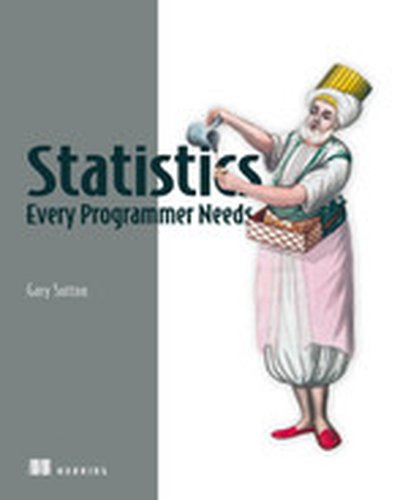
Statistics Every Programmer Needs

Put statistics into practice with Python! Data-driven decisions rely on statistics. Statistics Every Programmer Needs introduces the statistical and quantitative methods that will help you go beyond “gut feeling” for tasks like predicting stock prices or assessing quality control, with examples using the rich tools of the Python ecosystem. Statistics Every Programmer Needs will teach you how to: Apply foundational and advanced statistical techniques Build predictive models and simulations Optimize decisions under constraints Interpret and validate results with statistical rigor Implement quantitative methods using Python In this hands-on guide, stats expert Gary Sutton blends the theory behind these statistical techniques with practical Python-based applications, offering structured, reproducible, and defensible methods for tackling complex decisions. Well-annotated and reusable Python code listings illustrate each method, with examples you can follow to practice your new skills. About the Technology Whether you’re analyzing application performance metrics, creating relevant dashboards and reports, or immersing yourself in a numbers-heavy coding project, every programmer needs to know how to turn raw data into actionable insight. Statistics and quantitative analysis are the essential tools every programmer needs to clarify uncertainty, optimize outcomes, and make informed choices. About the Book Statistics Every Programmer Needs teaches you how to apply statistics to the everyday problems you’ll face as a software developer. Each chapter is a new tutorial. You’ll predict ultramarathon times using linear regression, forecast stock prices with time series models, analyze system reliability using Markov chains, and much more. The book emphasizes a balance between theory and hands-on Python implementation, with annotated code and real-world examples to ensure practical understanding and adaptability across industries. What's Inside Probability basics and distributions Random variables Regression Decision trees and random forests Time series analysis Linear programming Monte Carlo and Markov methods and much more About the Reader Examples are in Python. About the Author Gary Sutton is a business intelligence and analytics leader and the author of Statistics Slam Dunk: Statistical analysis with R on real NBA data. Quotes A well-organized tour of the statistical, machine learning and optimization tools every data science programmer needs. - Peter Bruce, Author of Statistics for Data Science and Analytics Turns statistics from a stumbling block into a superpower. Clear, relevant, and written with a coder’s mindset! - Mahima Bansod, LogicMonitor Essential! Stats and modeling with an emphasis on real-world system design. - Anupam Samanta, Google A great blend of theory and practice. - Ariel Andres, Scotia Global Asset Management
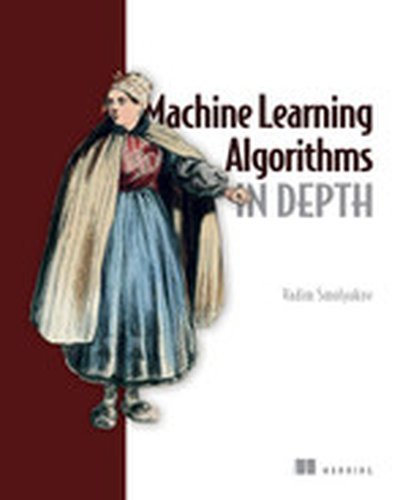
Machine Learning Algorithms in Depth

Learn how machine learning algorithms work from the ground up so you can effectively troubleshoot your models and improve their performance. Fully understanding how machine learning algorithms function is essential for any serious ML engineer. In Machine Learning Algorithms in Depth you’ll explore practical implementations of dozens of ML algorithms including: Monte Carlo Stock Price Simulation Image Denoising using Mean-Field Variational Inference EM algorithm for Hidden Markov Models Imbalanced Learning, Active Learning and Ensemble Learning Bayesian Optimization for Hyperparameter Tuning Dirichlet Process K-Means for Clustering Applications Stock Clusters based on Inverse Covariance Estimation Energy Minimization using Simulated Annealing Image Search based on ResNet Convolutional Neural Network Anomaly Detection in Time-Series using Variational Autoencoders Machine Learning Algorithms in Depth dives into the design and underlying principles of some of the most exciting machine learning (ML) algorithms in the world today. With a particular emphasis on probabilistic algorithms, you’ll learn the fundamentals of Bayesian inference and deep learning. You’ll also explore the core data structures and algorithmic paradigms for machine learning. Each algorithm is fully explored with both math and practical implementations so you can see how they work and how they’re put into action. About the Technology Learn how machine learning algorithms work from the ground up so you can effectively troubleshoot your models and improve their performance. This book guides you from the core mathematical foundations of the most important ML algorithms to their Python implementations, with a particular focus on probability-based methods. About the Book Machine Learning Algorithms in Depth dissects and explains dozens of algorithms across a variety of applications, including finance, computer vision, and NLP. Each algorithm is mathematically derived, followed by its hands-on Python implementation along with insightful code annotations and informative graphics. You’ll especially appreciate author Vadim Smolyakov’s clear interpretations of Bayesian algorithms for Monte Carlo and Markov models. What's Inside Monte Carlo stock price simulation EM algorithm for hidden Markov models Imbalanced learning, active learning, and ensemble learning Bayesian optimization for hyperparameter tuning Anomaly detection in time-series About the Reader For machine learning practitioners familiar with linear algebra, probability, and basic calculus. About the Author Vadim Smolyakov is a data scientist in the Enterprise & Security DI R&D team at Microsoft. Quotes I love this book! It shows you how to implement common ML algorithms in plain Python with only the essential libraries, so you can see how the computation and math works in practice. - Junpeng Lao, Senior Data Scientist at Google I highly recommend this book. In the era of ChatGPT real knowledge of algorithms is invaluable. - Vatsal Desai, InfoDesk Explains algorithms so well that even a novice can digest it. - Harsh Raval, Zymr

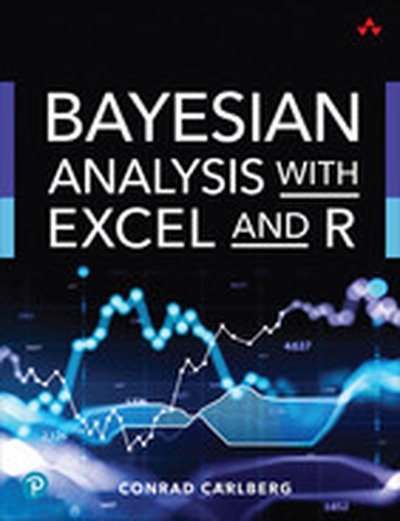
Bayesian Analysis with Excel and R

Leverage the full power of Bayesian analysis for competitive advantage Bayesian methods can solve problems you can't reliably handle any other way. Building on your existing Excel analytics skills and experience, Microsoft Excel MVP Conrad Carlberg helps you make the most of Excel's Bayesian capabilities and move toward R to do even more. Step by step, with real-world examples, Carlberg shows you how to use Bayesian analytics to solve a wide array of real problems. Carlberg clarifies terminology that often bewilders analysts, provides downloadable Excel workbooks you can easily adapt to your own needs, and offers sample R code to take advantage of the rethinking package in R and its gateway to Stan. As you incorporate these Bayesian approaches into your analytical toolbox, you'll build a powerful competitive advantage for your organization---and yourself. Explore key ideas and strategies that underlie Bayesian analysis Distinguish prior, likelihood, and posterior distributions, and compare algorithms for driving sampling inputs Use grid approximation to solve simple univariate problems, and understand its limits as parameters increase Perform complex simulations and regressions with quadratic approximation and Richard McElreath's quap function Manage text values as if they were numeric Learn today's gold-standard Bayesian sampling technique: Markov Chain Monte Carlo (MCMC) Use MCMC to optimize execution speed in high-complexity problems Discover when frequentist methods fail and Bayesian methods are essential---and when to use both in tandem ...

Econometrics and Data Science: Apply Data Science Techniques to Model Complex Problems and Implement Solutions for Economic Problems

Get up to speed on the application of machine learning approaches in macroeconomic research. This book brings together economics and data science. Author Tshepo Chris Nokeri begins by introducing you to covariance analysis, correlation analysis, cross-validation, hyperparameter optimization, regression analysis, and residual analysis. In addition, he presents an approach to contend with multi-collinearity. He then debunks a time series model recognized as the additive model. He reveals a technique for binarizing an economic feature to perform classification analysis using logistic regression. He brings in the Hidden Markov Model, used to discover hidden patterns and growth in the world economy. The author demonstrates unsupervised machine learning techniques such as principal component analysis and cluster analysis. Key deep learning concepts and ways of structuring artificial neural networks are explored along with training them and assessing their performance. The Monte Carlo simulation technique is applied to stimulate the purchasing power of money in an economy. Lastly, the Structural Equation Model (SEM) is considered to integrate correlation analysis, factor analysis, multivariate analysis, causal analysis, and path analysis. After reading this book, you should be able to recognize the connection between econometrics and data science. You will know how to apply a machine learning approach to modeling complex economic problems and others beyond this book. You will know how to circumvent and enhance model performance, together with the practical implications of a machine learning approach in econometrics, and you will be able to deal with pressing economic problems. What You Will Learn Examine complex, multivariate, linear-causal structures through the path and structural analysis technique, including non-linearity and hidden states Be familiar with practical applications of machine learning and deep learning in econometrics Understand theoretical framework and hypothesis development, and techniques for selecting appropriate models Develop, test, validate, and improve key supervised (i.e., regression and classification) and unsupervised (i.e., dimension reduction and cluster analysis) machine learning models, alongside neural networks, Markov, and SEM models Represent and interpret data and models Who This Book Is For Beginning and intermediate data scientists, economists, machine learning engineers, statisticians, and business executives

Big Data Science in Finance

Explains the mathematics, theory, and methods of Big Data as applied to finance and investing Data science has fundamentally changed Wall Street—applied mathematics and software code are increasingly driving finance and investment-decision tools. Big Data Science in Finance examines the mathematics, theory, and practical use of the revolutionary techniques that are transforming the industry. Designed for mathematically-advanced students and discerning financial practitioners alike, this energizing book presents new, cutting-edge content based on world-class research taught in the leading Financial Mathematics and Engineering programs in the world. Marco Avellaneda, a leader in quantitative finance, and quantitative methodology author Irene Aldridge help readers harness the power of Big Data. Comprehensive in scope, this book offers in-depth instruction on how to separate signal from noise, how to deal with missing data values, and how to utilize Big Data techniques in decision-making. Key topics include data clustering, data storage optimization, Big Data dynamics, Monte Carlo methods and their applications in Big Data analysis, and more. This valuable book: Provides a complete account of Big Data that includes proofs, step-by-step applications, and code samples Explains the difference between Principal Component Analysis (PCA) and Singular Value Decomposition (SVD) Covers vital topics in the field in a clear, straightforward manner Compares, contrasts, and discusses Big Data and Small Data Includes Cornell University-tested educational materials such as lesson plans, end-of-chapter questions, and downloadable lecture slides Big Data Science in Finance: Mathematics and Applications is an important, up-to-date resource for students in economics, econometrics, finance, applied mathematics, industrial engineering, and business courses, and for investment managers, quantitative traders, risk and portfolio managers, and other financial practitioners.

Structural Equation Modeling, 2nd Edition

Presents a useful guide for applications of SEM whilst systematically demonstrating various SEM models using Mplus Focusing on the conceptual and practical aspects of Structural Equation Modeling (SEM), this book demonstrates basic concepts and examples of various SEM models, along with updates on many advanced methods, including confirmatory factor analysis (CFA) with categorical items, bifactor model, Bayesian CFA model, item response theory (IRT) model, graded response model (GRM), multiple imputation (MI) of missing values, plausible values of latent variables, moderated mediation model, Bayesian SEM, latent growth modeling (LGM) with individually varying times of observations, dynamic structural equation modeling (DSEM), residual dynamic structural equation modeling (RDSEM), testing measurement invariance of instrument with categorical variables, longitudinal latent class analysis (LLCA), latent transition analysis (LTA), growth mixture modeling (GMM) with covariates and distal outcome, manual implementation of the BCH method and the three-step method for mixture modeling, Monte Carlo simulation power analysis for various SEM models, and estimate sample size for latent class analysis (LCA) model. The statistical modeling program Mplus Version 8.2 is featured with all models updated. It provides researchers with a flexible tool that allows them to analyze data with an easy-to-use interface and graphical displays of data and analysis results. Intended as both a teaching resource and a reference guide, and written in non-mathematical terms, Structural Equation Modeling: Applications Using Mplus, 2nd edition provides step-by-step instructions of model specification, estimation, evaluation, and modification. Chapters cover: Confirmatory Factor Analysis (CFA); Structural Equation Models (SEM); SEM for Longitudinal Data; Multi-Group Models; Mixture Models; and Power Analysis and Sample Size Estimate for SEM. Presents a useful reference guide for applications of SEM while systematically demonstrating various advanced SEM models Discusses and demonstrates various SEM models using both cross-sectional and longitudinal data with both continuous and categorical outcomes Provides step-by-step instructions of model specification and estimation, as well as detailed interpretation of Mplus results using real data sets Introduces different methods for sample size estimate and statistical power analysis for SEM Structural Equation Modeling is an excellent book for researchers and graduate students of SEM who want to understand the theory and learn how to build their own SEM models using M plus.

Using R for Numerical Analysis in Science and Engineering

This practical guide shows how to use R and its add-on packages to obtain numerical solutions to complex mathematical problems commonly faced by scientists and engineers. Providing worked examples and code, the text not only addresses necessary aspects of the R programming language but also demonstrates how to produce useful graphs and statistically analyze and fit data to linear and nonlinear models. It covers Monte Carlo, stochastic, and deterministic methods and explores topics such as numerical differentiation and integration, interpolation and curve fitting, and optimization.

Data Science Fundamentals for Python and MongoDB

Build the foundational data science skills necessary to work with and better understand complex data science algorithms. This example-driven book provides complete Python coding examples to complement and clarify data science concepts, and enrich the learning experience. Coding examples include visualizations whenever appropriate. The book is a necessary precursor to applying and implementing machine learning algorithms. The book is self-contained. All of the math, statistics, stochastic, and programming skills required to master the content are covered. In-depth knowledge of object-oriented programming isn’t required because complete examples are provided and explained. Data Science Fundamentals with Python and MongoDB is an excellent starting point for those interested in pursuing a career in data science. Like any science, the fundamentals of data science are a prerequisite to competency. Without proficiency in mathematics, statistics, data manipulation, and coding, the path to success is “rocky” at best. The coding examples in this book are concise, accurate, and complete, and perfectly complement the data science concepts introduced. What You'll Learn Prepare for a career in data science Work with complex data structures in Python Simulate with Monte Carlo and Stochastic algorithms Apply linear algebra using vectors and matrices Utilize complex algorithms such as gradient descent and principal component analysis Wrangle, cleanse, visualize, and problem solve with data Use MongoDB and JSON to work with data Who This Book Is For The novice yearning to break into the data science world, and the enthusiast looking to enrich, deepen, and develop data science skills through mastering the underlying fundamentalsthat are sometimes skipped over in the rush to be productive. Some knowledge of object-oriented programming will make learning easier.

Business Case Analysis with R: Simulation Tutorials to Support Complex Business Decisions

This tutorial teaches you how to use the statistical programming language R to develop a business case simulation and analysis. It presents a methodology for conducting business case analysis that minimizes decision delay by focusing stakeholders on what matters most and suggests pathways for minimizing the risk in strategic and capital allocation decisions. Business case analysis, often conducted in spreadsheets, exposes decision makers to additional risks that arise just from the use of the spreadsheet environment. R has become one of the most widely used tools for reproducible quantitative analysis, and analysts fluent in this language are in high demand. The R language, traditionally used for statistical analysis, provides a more explicit, flexible, and extensible environment than spreadsheets for conducting business case analysis. The main tutorial follows the case in which a chemical manufacturing company considers constructing a chemical reactor and production facility to bring a new compound to market. There are numerous uncertainties and risks involved, including the possibility that a competitor brings a similar product online. The company must determine the value of making the decision to move forward and where they might prioritize their attention to make a more informed and robust decision. While the example used is a chemical company, the analysis structure it presents can be applied to just about any business decision, from IT projects to new product development to commercial real estate. The supporting tutorials include the perspective of the founder of a professional service firm who wants to grow his business and a member of a strategic planning group in a biomedical device company who wants to know how much to budget in order to refine the quality of information about critical uncertainties that might affect the value of a chosen product development pathway. What You’ll Learn Set upa business case abstraction in an influence diagram to communicate the essence of the problem to other stakeholders Model the inherent uncertainties in the problem with Monte Carlo simulation using the R language Communicate the results graphically Draw appropriate insights from the results Develop creative decision strategies for thorough opportunity cost analysis Calculate the value of information on critical uncertainties between competing decision strategies to set the budget for deeper data analysis Construct appropriate information to satisfy the parameters for the Monte Carlo simulation when little or no empirical data are available Who This Book Is For Financial analysts, data practitioners, and risk/business professionals; also appropriate for graduate level finance, business, or data science students

Introduction to Bayesian Estimation and Copula Models of Dependence

Presents an introduction to Bayesian statistics, presents an emphasis on Bayesian methods (prior and posterior), Bayes estimation, prediction, MCMC,Bayesian regression, and Bayesian analysis of statistical modelsof dependence, and features a focus on copulas for risk management Introduction to Bayesian Estimation and Copula Models of Dependence emphasizes the applications of Bayesian analysis to copula modeling and equips readers with the tools needed to implement the procedures of Bayesian estimation in copula models of dependence. This book is structured in two parts: the first four chapters serve as a general introduction to Bayesian statistics with a clear emphasis on parametric estimation and the following four chapters stress statistical models of dependence with a focus of copulas. A review of the main concepts is discussed along with the basics of Bayesian statistics including prior information and experimental data, prior and posterior distributions, with an emphasis on Bayesian parametric estimation. The basic mathematical background of both Markov chains and Monte Carlo integration and simulation is also provided. The authors discuss statistical models of dependence with a focus on copulas and present a brief survey of pre-copula dependence models. The main definitions and notations of copula models are summarized followed by discussions of real-world cases that address particular risk management problems. In addition, this book includes: • Practical examples of copulas in use including within the Basel Accord II documents that regulate the world banking system as well as examples of Bayesian methods within current FDA recommendations • Step-by-step procedures of multivariate data analysis and copula modeling, allowing readers to gain insight for their own applied research and studies • Separate reference lists within each chapter and end-of-the-chapter exercises within Chapters 2 through 8 • A companion website containing appendices: data files and demo files in Microsoft® Office Excel®, basic code in R, and selected exercise solutions Introduction to Bayesian Estimation and Copula Models of Dependence is a reference and resource for statisticians who need to learn formal Bayesian analysis as well as professionals within analytical and risk management departments of banks and insurance companies who are involved in quantitative analysis and forecasting. This book can also be used as a textbook for upper-undergraduate and graduate-level courses in Bayesian statistics and analysis. ARKADY SHEMYAKIN, PhD, is Professor in the Department of Mathematics and Director of the Statistics Program at the University of St. Thomas. A member of the American Statistical Association and the International Society for Bayesian Analysis, Dr. Shemyakin's research interests include informationtheory, Bayesian methods of parametric estimation, and copula models in actuarial mathematics, finance, and engineering. ALEXANDER KNIAZEV, PhD, is Associate Professor and Head of the Department of Mathematics at Astrakhan State University in Russia. Dr. Kniazev's research interests include representation theory of Lie algebras and finite groups, mathematical statistics, econometrics, and financial mathematics.

Illuminating Statistical Analysis Using Scenarios and Simulations

Features an integrated approach of statistical scenarios and simulations to aid readers in developing key intuitions needed to understand the wide ranging concepts and methods of statistics and inference Illuminating Statistical Analysis Using Scenarios and Simulations presents the basic concepts of statistics and statistical inference using the dual mechanisms of scenarios and simulations. This approach helps readers develop key intuitions and deep understandings of statistical analysis. Scenario-specific sampling simulations depict the results that would be obtained by a very large number of individuals investigating the same scenario, each with their own evidence, while graphical depictions of the simulation results present clear and direct pathways to intuitive methods for statistical inference. These intuitive methods can then be easily linked to traditional formulaic methods, and the author does not simply explain the linkages, but rather provides demonstrations throughout for a broad range of statistical phenomena. In addition, induction and deduction are repeatedly interwoven, which fosters a natural "need to know basis" for ordering the topic coverage. Examining computer simulation results is central to the discussion and provides an illustrative way to (re)discover the properties of sample statistics, the role of chance, and to (re)invent corresponding principles of statistical inference. In addition, the simulation results foreshadow the various mathematical formulas that underlie statistical analysis. In addition, this book: • Features both an intuitive and analytical perspective and includes a broad introduction to the use of Monte Carlo simulation and formulaic methods for statistical analysis • Presents straight-forward coverage of the essentials of basic statistics and ensures proper understanding of key concepts such as sampling distributions, the effects of sample size and variance on uncertainty, analysis of proportion, mean and rank differences, covariance, correlation, and regression • Introduces advanced topics such as Bayesian statistics, data mining, model cross-validation, robust regression, and resampling • Contains numerous example problems in each chapter with detailed solutions as well as an appendix that serves as a manual for constructing simulations quickly and easily using Microsoft® Office Excel® Illuminating Statistical Analysis Using Scenarios and Simulations is an ideal textbook for courses, seminars, and workshops in statistics and statistical inference and is appropriate for self-study as well. The book also serves as a thought-provoking treatise for researchers, scientists, managers, technicians, and others with a keen interest in statistical analysis. Jeffrey E. Kottemann, Ph.D., is Professor in the Perdue School at Salisbury University. Dr. Kottemann has published articles in a wide variety of academic research journals in the fields of business administration, computer science, decision sciences, economics, engineering, information systems, psychology, and public administration. He received his Ph.D. in Systems and Quantitative Methods from the University of Arizona.

Simulation for Data Science with R

"Simulation for Data Science with R" introduces data professionals to fundamental and advanced simulation techniques using R. You'll understand essential statistical modeling concepts and learn to apply simulation methods to tackle data challenges and enhance your decision-making skills. What this Book will help me do Master five popular simulation methodologies including Monte Carlo and Agent-Based Modeling. Learn to simulate real-world data to uncover patterns and enhance predictions. Enhance your R programming expertise by exploring its advanced statistical features. Gain hands-on experience solving statistical problems through practical examples. Develop comprehensive statistical models aimed at real-world decision support. Author(s) Matthias Templ is a seasoned data science expert with extensive experience in statistical modeling and simulations using R. His work is rooted in real-world problem solving, outlining frameworks that are practical and research-driven. With a dedication to education, Matthias conveys his knowledge in an accessible and supportive manner. Who is it for? If you're experienced in computational methods and wish to refine your understanding of R for advanced statistical simulations, this book is for you. It's ideal for analysts or scientists aiming to enhance their decision-making with simulated data models. Prior experience with R is recommended to fully engage with the rigorous concepts presented.

Cyber-Risk Informatics

This book provides a scientific modeling approach for conducting metrics-based quantitative risk assessments of cybersecurity vulnerabilities and threats. This book provides a scientific modeling approach for conducting metrics-based quantitative risk assessments of cybersecurity threats. The author builds from a common understanding based on previous class-tested works to introduce the reader to the current and newly innovative approaches to address the maliciously-by-human-created (rather than by-chance-occurring) vulnerability and threat, and related cost-effective management to mitigate such risk. This book is purely statistical data-oriented (not deterministic) and employs computationally intensive techniques, such as Monte Carlo and Discrete Event Simulation. The enriched JAVA ready-to-go applications and solutions to exercises provided by the author at the book’s specifically preserved website will enable readers to utilize the course related problems. • Enables the reader to use the book's website's applications to implement and see results, and use them making ‘budgetary’ sense • Utilizes a data analytical approach and provides clear entry points for readers of varying skill sets and backgrounds • Developed out of necessity from real in-class experience while teaching advanced undergraduate and graduate courses by the author Cyber-Risk Informatics is a resource for undergraduate students, graduate students, and practitioners in the field of Risk Assessment and Management regarding Security and Reliability Modeling. Mehmet Sahinoglu, a Professor (1990) Emeritus (2000), is the founder of the Informatics Institute (2009) and its SACS-accredited (2010) and NSA-certified (2013) flagship Cybersystems and Information Security (CSIS) graduate program (the first such full degree in-class program in Southeastern USA) at AUM, Auburn University’s metropolitan campus in Montgomery, Alabama. He is a fellow member of the SDPS Society, a senior member of the IEEE, and an elected member of ISI. Sahinoglu is the recipient of Microsoft's Trustworthy Computing Curriculum (TCC) award and the author of Trustworthy Computing (Wiley, 2007).

Probability Methods for Cost Uncertainty Analysis, 2nd Edition

This book presents analytical methods for modeling and measuring uncertainty in the cost of engineering systems. This includes the treatment of correlation between the cost of system elements, how to present the analysis to decision-makers, and the use of bivariate probability distributions to capture joint interactions between a system's cost and schedule. Analytical techniques from probability theory are stressed, along with the Monte Carlo simulation method. Numerous examples and case discussions illustrate the practical application of theoretical concepts.

Introduction to Probability

Developed from celebrated Harvard statistics lectures, Introduction to Probability provides essential language and tools for understanding statistics, randomness, and uncertainty. The book explores a wide variety of applications and examples, ranging from coincidences and paradoxes to Google PageRank and Markov chain Monte Carlo (MCMC). Additional application areas explored include genetics, medicine, computer science, and information theory. The print book version includes a code that provides free access to an eBook version. The authors present the material in an accessible style and motivate concepts using real-world examples. Throughout, they use stories to uncover connections between the fundamental distributions in statistics and conditioning to reduce complicated problems to manageable pieces. The book includes many intuitive explanations, diagrams, and practice problems. Each chapter ends with a section showing how to perform relevant simulations and calculations in R, a free statistical software environment.

Financial Forecasting, Analysis and Modelling: A Framework for Long-Term Forecasting

Risk analysis has become critical to modern financial planning Financial Forecasting, Analysis and Modelling provides a complete framework of long-term financial forecasts in a practical and accessible way, helping finance professionals include uncertainty in their planning and budgeting process. With thorough coverage of financial statement simulation models and clear, concise implementation instruction, this book guides readers step-by-step through the entire projection plan development process. Readers learn the tools, techniques, and special considerations that increase accuracy and smooth the workflow, and develop a more robust analysis process that improves financial strategy. The companion website provides a complete operational model that can be customised to develop financial projections or a range of other key financial measures, giving readers an immediately-applicable tool to facilitate effective decision-making. In the aftermath of the recent financial crisis, the need for experienced financial modelling professionals has steadily increased as organisations rush to adjust to economic volatility and uncertainty. This book provides the deeper level of understanding needed to develop stronger financial planning, with techniques tailored to real-life situations. Develop long-term projection plans using Excel Use appropriate models to develop a more proactive strategy Apply risk and uncertainty projections more accurately Master the Excel Scenario Manager, Sensitivity Analysis, Monte Carlo Simulation, and more Risk plays a larger role in financial planning than ever before, and possible outcomes must be measured before decisions are made. Uncertainty has become a critical component in financial planning, and accuracy demands it be used appropriately. With special focus on uncertainty in modelling and planning, Financial Forecasting, Analysis and Modelling is a comprehensive guide to the mechanics of modern finance.

American-Type Options

The book gives a systematical presentation of stochastic approximation methods for discrete time Markov price processes. Advanced methods combining backward recurrence algorithms for computing of option rewards and general results on convergence of stochastic space skeleton and tree approximations for option rewards are applied to a variety of models of multivariate modulated Markov price processes. The principal novelty of presented results is based on consideration of multivariate modulated Markov price processes and general pay-off functions, which can depend not only on price but also an additional stochastic modulating index component, and use of minimal conditions of smoothness for transition probabilities and pay-off functions, compactness conditions for log-price processes and rate of growth conditions for pay-off functions. The volume presents results on structural studies of optimal stopping domains, Monte Carlo based approximation reward algorithms, and convergence of American-type options for autoregressive and continuous time models, as well as results of the corresponding experimental studies.

Statistical Computing in Nuclear Imaging

Statistical Computing in Nuclear Imaging introduces aspects of Bayesian computing in nuclear imaging. The book provides an introduction to Bayesian statistics and concepts and is highly focused on the computational aspects of Bayesian data analysis of photon-limited data acquired in tomographic measurements. Basic statistical concepts, elements of decision theory, and counting statistics, including models of photon-limited data and Poisson approximations, are discussed in the first chapters. Monte Carlo methods and Markov chains in posterior analysis are discussed next along with an introduction to nuclear imaging and applications such as PET and SPECT. The final chapter includes illustrative examples of statistical computing, based on Poisson-multinomial statistics. Examples include calculation of Bayes factors and risks as well as Bayesian decision making and hypothesis testing. Appendices cover probability distributions, elements of set theory, multinomial distribution of single-voxel imaging, and derivations of sampling distribution ratios. C++ code used in the final chapter is also provided. The text can be used as a textbook that provides an introduction to Bayesian statistics and advanced computing in medical imaging for physicists, mathematicians, engineers, and computer scientists. It is also a valuable resource for a wide spectrum of practitioners of nuclear imaging data analysis, including seasoned scientists and researchers who have not been exposed to Bayesian paradigms.

Simulation Technologies in Networking and Communications

Simulation is a widely used mechanism for validating the theoretical models of networking and communication systems. Although the claims made based on simulations are considered to be reliable, how reliable they really are is best determined with real-world implementation trials. Simulation Technologies in Networking and Communications: Selecting the Best Tool for the Test Considers superefficient Monte Carlo simulations Describes how to simulate and evaluate multicast routing algorithms Covers simulation tools for cloud computing and broadband passive optical networks Reports on recent developments in simulation tools for WSNs Examines modeling and simulation of vehicular networks The book compiles expert perspectives about the simulation of various networking and communications technologies. These experts review and evaluate popular simulation modeling tools and recommend the best tools for your specific tests. They also explain how to determine when theoretical modeling would be preferred over simulation.

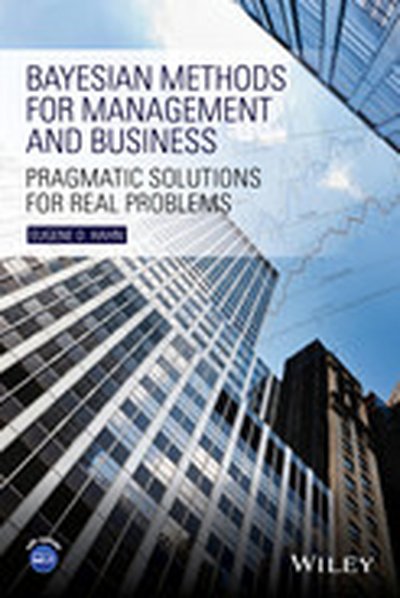
Bayesian Methods for Management and Business: Pragmatic Solutions for Real Problems

HIGHLIGHTS THE USE OF BAYESIAN STATISTICS TO GAIN INSIGHTS FROM EMPIRICAL DATA Featuring an accessible approach, Bayesian Methods for Management and Business: Pragmatic Solutions for Real Problems demonstrates how Bayesian statistics can help to provide insights into important issues facing business and management. The book draws on multidisciplinary applications and examples and utilizes the freely available software WinBUGS and R to illustrate the integration of Bayesian statistics within data-rich environments. Computational issues are discussed and integrated with coverage of linear models, sensitivity analysis, Markov Chain Monte Carlo (MCMC), and model comparison. In addition, more advanced models including hierarchal models, generalized linear models, and latent variable models are presented to further bridge the theory and application in real-world usage. Bayesian Methods for Management and Business: Pragmatic Solutions for Real Problems also features: Numerous real-world examples drawn from multiple management disciplines such as strategy, international business, accounting, and information systems An incremental skill-building presentation based on analyzing data sets with widely applicable models of increasing complexity An accessible treatment of Bayesian statistics that is integrated with a broad range of business and management issues and problems A practical problem-solving approach to illustrate how Bayesian statistics can help to provide insight into important issues facing business and management Bayesian Methods for Management and Business: Pragmatic Solutions for Real Problems is an important textbook for Bayesian statistics courses at the advanced MBA-level and also for business and management PhD candidates as a first course in methodology. In addition, the book is a useful resource for management scholars and practitioners as well as business academics and practitioners who seek to broaden their methodological skill sets.