talk-data.com talk-data.com

Topic

Oracle

database enterprise_software cloud

541

tagged

Activity Trend

33 peak/qtr
2020-Q1 2026-Q1

Activities

541 activities · Newest first

This session brings together leading product experts from Google Cloud, Anthropic, Oracle, Databricks, and SAP to explore the five essential strategies for enterprises to successfully leverage AI and data. Attendees will gain valuable insights from real-world AI implementations, learn from the successes and challenges faced by global customers, and receive practical guidance on how to translate these strategies into actionable plans for their own AI journeys.

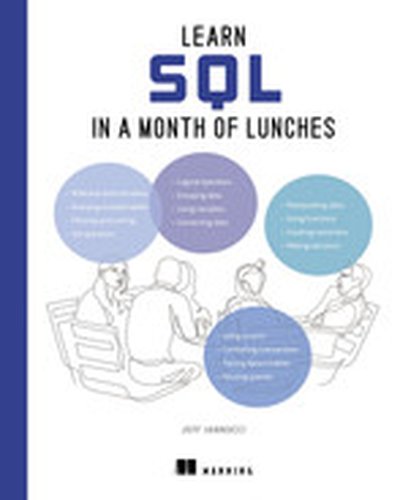
Learn SQL in a Month of Lunches

Use SQL to get the data you need in no time at all! Learn to read and write basic queries, troubleshoot common problems, and control your own business data in just 24 short lessons–no programming experience required! SQL has been designed to be as close to English as possible—anyone can learn it! Learn SQL in a Month of Lunches helps you add this lucrative and highly sought-after skill to your resume in just 24 fun and friendly lessons. The book emphasizes practical uses for the language in the real-world, so you’ll just learn the most useful skills for business data analysis. Inside Learn SQL in a Month of Lunches you’ll discover how to: Set up your first database with MySQL Write your own SQL queries See only the data you need from large datasets Connect different sets of data Analyze data with functions and aggregations Master basic data manipulation techniques Save queries in stored procedures and views Create tables to store data efficiently Read and improve SQL written by others If you use Excel, Tableau, or PowerBI to crunch business data, you’ve probably seen a lot of SQL already. And guess what? It’s easy to master the most useful parts of SQL! In just a few quick lessons, Learn SQL in a Month of Lunches will get you writing your own queries, modifying existing SQL statements, and working with data like a pro. 25-year SQL veteran Jeff Iannucci makes SQL a snap through hands-on lab exercises, relevant code examples, and easy-to-understand language. About the Technology SQL, Structured Query Language, is the standard way to query, create, and manage relational databases like SQL Server, PostgreSQL, and Oracle. It’s also a superpower for data analysts who need to go beyond spreadsheets and BI dashboarding tools. SQL is easy to read and understand, and with this book (and a little practice) you’ll be pulling data, tweaking tables, and cranking out amazing reports and presentations in no time at all! About the Book Learn SQL in a Month of Lunches introduces SQL to data analysts and other aspiring data pros with no prior experience using relational databases. In it, you’ll complete 24 short lessons, each of which teaches an essential SQL skill for retrieving, filtering, and analyzing data. You’ll practice each new technique with a friendly hands-on lab designed to take about 15 minutes, as you learn to write queries that deliver the exact data you need. Along the way, you’ll build a valuable intuition for how databases operate in real business scenarios. What's Inside Get the data you need from any relational database Filter, sort, and group data Combine data from multiple tables Create, update, and delete data About the Reader For students, aspiring data analysts, software developers, and anyone else who wants to work with relational databases. About the Author Jeff Iannucci is a Senior Consultant with Straight Path Solutions. For over 20 years, he has worked extensively with SQL in sectors such as healthcare, finance, retail sales, and government. Quotes An essential guide. Jeff has carefully developed each chapter to ensure clarity and comprehensiveness, making complex concepts accessible and practical. - Buck Woody, Microsoft The fastest and the most effective way to learn SQL, regardless of your background or technical knowledge level. - Kevin Kline, author of SQL in a Nutshell Explains concepts straightforwardly to help the reader grow their skills over a month of sessions. - Steve Jones, SQL Server Central Great selection of bite-sized, digestible courses to complement your lunch arrangement. It leaves you smarter every day. - Simon Tschöke, Databricks

AWS re:Invent 2024-Transform your data with Oracle Database@AWS, featuring State Street (DAT246-NEW)

Join this session to learn about Oracle Database@AWS, an offering that helps you easily and quickly migrate Oracle Exadata workloads to AWS with minimal changes, paving the path to modernize applications using the latest innovations in generative AI, machine learning, and analytics. Hear from State Street, one of the world’s leading providers of financial services, on how it plans to use Oracle Database@AWS to supercharge its migration to AWS, unify its data estates across Oracle and AWS, and modernize its applications. Discover other key benefits of Oracle Database@AWS, and learn how to get started.

Learn more: AWS re:Invent: https://go.aws/reinvent. More AWS events: https://go.aws/3kss9CP

Subscribe: More AWS videos: http://bit.ly/2O3zS75 More AWS events videos: http://bit.ly/316g9t4

About AWS: Amazon Web Services (AWS) hosts events, both online and in-person, bringing the cloud computing community together to connect, collaborate, and learn from AWS experts. AWS is the world's most comprehensive and broadly adopted cloud platform, offering over 200 fully featured services from data centers globally. Millions of customers—including the fastest-growing startups, largest enterprises, and leading government agencies—are using AWS to lower costs, become more agile, and innovate faster.

AWSreInvent #AWSreInvent2024

In healthcare, data is becoming one of the most valuable tools for improving patient care and reducing costs. But with massive amounts of information and complex systems, how do organizations turn that data into actionable insights? How can AI and machine learning be used to create more transparency and help patients make better decisions? And more importantly, how can we ensure that these technologies make healthcare more efficient and affordable for everyone involved?  Travis Dalton is the President and CEO at Multiplan overseeing the execution of the company's mission and growth strategy. He has 20 years of leadership experience, with a focus on reducing the cost of healthcare, and enabling better outcomes for patients and healthcare providers. Previously, he was a General Manager and Executive VP at Oracle Health. Jocelyn Jiang is the Vice President of Data & Decision Science at MultiPlan, a role she has held since 2023. In her position, she is responsible for leading the data and analytics initiatives that drive the company’s strategic growth and enhance its service offerings in the healthcare sector. Jocelyn brings extensive experience from her previous roles in healthcare and data science, including her time at EPIC Insurance Brokers & Consultants and Aon, where she worked in various capacities focusing on health and welfare consulting and actuarial analysis. In the episode, Richie, Travis and Jocelyn explore the US healthcare system and the industry-specific challenges professionals face, the role of data in healthcare, ML and data science in healthcare, the future potential of healthcare tech, the global application of healthcare data solutions and much more.  Links Mentioned in the Show: MultiplanPlanOptix: Providing Innovative Healthcare Price Transparency   Using a Data Mining Service on Claims Data Can Reveal Significant OverpaymentsConnect with Travis and JocelynCourse: Intro to Data PrivacyRelated Episode: Data & AI for Improving Patient Outcomes with Terry Myerson, CEO at TruvetaRewatch sessions from RADAR: AI Edition New to DataCamp? Learn on the go using the DataCamp mobile appEmpower your business with world-class data and AI skills with DataCamp for business

Cost management is a continuous challenge for our data teams at Astronomer. Understanding the expenses associated with running our workflows is not always straightforward, and identifying which process ran a query causing unexpected usage on a given day can be time-consuming. In this talk, we will showcase an Airflow Plugin and specific DAGs developed and used internally at Astronomer to track and optimize the costs of running DAGs. Our internal tool monitors Snowflake query costs, provides insights, and sends alerts for abnormal usage. With it, Astronomer identified and refactored its most costly DAGs, resulting in an almost 25% reduction in Snowflake spending. We will demonstrate how to track Snowflake-related DAG costs and discuss how the tool can be adapted to any database supporting query tagging like BigQuery, Oracle, and more. This talk will cover the implementation details and show how Airflow users can effectively adopt this tool to monitor and manage their DAG costs.

Concept Of Database Management System by Pearson

Concepts of Database Management System is designed to meet the syllabi requirements of undergraduate students of computer applications and computer science. It describes the concepts in an easy-to-understand language with sufficient number of examples. The overview of emerging trends in databases is thoroughly explained. A brief introduction to PL/SQL, MS-Access and Oracle is discussed to help students get a flavor of different types of database management systems.

Ready to unlock the power of your Oracle databases in the cloud? Discover how Google Cloud's flexible Oracle Bare Metal Solution and migration capabilities can help you unlock the full potential of your Oracle databases in the cloud. Join this session to learn how Admiral Insurance modernized their Guidewire-based insurance policy administration system and migrated their mission-critical Oracle databases to Google Cloud - boosting performance, scalability, cost-efficiency, and driving new innovation. Learn how Google Cloud's advanced database services can transform your operations.

Click the blue “Learn more” button above to tap into special offers designed to help you implement what you are learning at Google Cloud Next 25.

Reduce IT overhead and drive innovation with Database Service for Google Distributed Cloud Hosted. Focus on strategic application development by automating time-consuming tasks. Leverage PostgreSQL, Oracle, and the cutting-edge performance and AI capabilities of AlloyDB Omni for a competitive edge.

Click the blue “Learn more” button above to tap into special offers designed to help you implement what you are learning at Google Cloud Next 25.

Learn how to manage complex, large-scale Oracle or SQL database migrations and embrace a smooth, efficient journey with our database migration framework. Built on best practices and powered by cutting-edge automation tools, our team of experts takes the stress out of migrating your critical data. It all starts with our free Database Migration Assessment (DMA) , our brand-new first-party tool. Our framework empowers you with a repeatable process for future migrations, giving you the confidence to tackle any database move with ease.

Click the blue “Learn more” button above to tap into special offers designed to help you implement what you are learning at Google Cloud Next 25.

Join us for a firsthand account of TELUS's epic journey to the cloud, migrating their vast Oracle database landscape to Google Cloud Platform (GCP). Discover how this strategic move unlocks unparalleled performance, elasticity, and innovation, propelling TELUS towards a future of limitless potential. In this session you will witness firsthand the tangible benefits TELUS has achieved in terms of performance, scalability, and security and learn from the experts and gain invaluable insights into planning and executing a complex cloud migration. Please note: seating is limited and on a first-come, first served basis; standing areas are available

Click the blue “Learn more” button above to tap into special offers designed to help you implement what you are learning at Google Cloud Next 25.

Learn the strategies and tools for a successful migration from Oracle databases to CloudSQL/AlloyDB. This session covers everything from schema conversion to data replication, offering insights into leveraging Google Cloud technology for a smooth transition to open source database engines. Join us for this Mini Talk at 'Meet the Experts, hosted by Google Cloud Consulting' at Expo. Seating is limited and on a first-come, first served basis; standing areas are available.

Click the blue “Learn more” button above to tap into special offers designed to help you implement what you are learning at Google Cloud Next 25.

As more organizations adopt open database standards, they need easy-to-use, high-performance migration tools, especially for heterogeneous migrations. In this session, we will focus on how Database Migration Service (DMS) is revolutionizing migrations from Oracle to AlloyDB for PostgreSQL. With a unique set of capabilities, DMS is harnessing the power of AI to accelerate these migrations and to improve developer productivity with last-mile code conversion and code explainability.

Click the blue “Learn more” button above to tap into special offers designed to help you implement what you are learning at Google Cloud Next 25.

Databricks started out as a platform for using Spark, a big data analytics engine, but it's grown a lot since then. Databricks now allows users to leverage their data and AI projects in the same place, ensuring ease of use and consistency across operations. The Databricks platform is converging on the idea of data intelligence, but what does this mean, how will it help data teams and organizations, and where does AI fit in the picture? Ari is Databricks’ Head of Evangelism and "The Real Moneyball Guy" - the popular movie was partly based on his analytical innovations in Major League Baseball. He is a leading influencer in analytics, artificial intelligence, data science, and high-growth business innovation. Ari was previously the Global AI Evangelist at DataRobot, Nielsen’s regional VP of Analytics, Caltech Alumni of the Decade, President Emeritus of the worldwide Independent Oracle Users Group, on Intel’s AI Board of Advisors, Sports Illustrated Top Ten GM Candidate, an IBM Watson Celebrity Data Scientist, and on the Crain’s Chicago 40 Under 40. He's also written 5 books on analytics, databases, and baseball. Robin is the Field CTO at Databricks. She has consulted with hundreds of organizations on data strategy, data culture, and building diverse data teams. Robin has had an eclectic career path in technical and business functions with more than two decades in tech companies, including Microsoft and Databricks. She also has achieved multiple academic accomplishments from her juris doctorate to a masters in law to engineering leadership. From her first technical role as an entry-level consumer support engineer to her current role in the C-Suite, Robin supports creating an inclusive workplace and is the current co-chair of Women in Data Safety Committee. She was also recognized in 2023 as a Top 20 Women in Data and Tech, as well as DataIQ 100 Most Influential People in Data. In the episode, Richie, Ari, and Robin explore Databricks, the application of generative AI in improving services operations and providing data insights, data intelligence, and lakehouse technology, the wide-ranging applications of generative AI, how AI tools are changing data democratization, the challenges of data governance and management and how tools like Databricks can help, how jobs in data and AI are changing and much more.  About the AI and the Modern Data Stack DataFramed Series This week we’re releasing 4 episodes focused on how AI is changing the modern data stack and the analytics profession at large. The modern data stack is often an ambiguous and all-encompassing term, so we intentionally wanted to cover the impact of AI on the modern data stack from different angles. Here’s what you can expect: Why the Future of AI in Data will be Weird with Benn Stancil, CTO at Mode & Field CTO at ThoughtSpot — Covering how AI will change analytics workflows and tools How Databricks is Transforming Data Warehousing and AI with Ari Kaplan, Head Evangelist & Robin Sutara, Field CTO at Databricks — Covering Databricks, data intelligence and how AI tools are changing data democratizationAdding AI to the Data Warehouse with Sridhar Ramaswamy, CEO at Snowflake — Covering Snowflake and its uses, how generative AI is changing the attitudes of leaders towards data, and how to improve your data managementAccelerating AI Workflows with Nuri Cankaya, VP of AI Marketing & La Tiffaney Santucci, AI Marketing Director at Intel — Covering AI’s impact on marketing analytics, how AI is being integrated into existing products, and the democratization of AI Links Mentioned in the Show: DatabricksDelta Lakea href="https://mlflow.org/" rel="noopener...

Summary

Databases are the core of most applications, whether transactional or analytical. In recent years the selection of database products has exploded, making the critical decision of which engine(s) to use even more difficult. In this episode Tanya Bragin shares her experiences as a product manager for two major vendors and the lessons that she has learned about how teams should approach the process of tool selection.

Announcements

Hello and welcome to the Data Engineering Podcast, the show about modern data management Introducing RudderStack Profiles. RudderStack Profiles takes the SaaS guesswork and SQL grunt work out of building complete customer profiles so you can quickly ship actionable, enriched data to every downstream team. You specify the customer traits, then Profiles runs the joins and computations for you to create complete customer profiles. Get all of the details and try the new product today at dataengineeringpodcast.com/rudderstack You shouldn't have to throw away the database to build with fast-changing data. You should be able to keep the familiarity of SQL and the proven architecture of cloud warehouses, but swap the decades-old batch computation model for an efficient incremental engine to get complex queries that are always up-to-date. With Materialize, you can! It’s the only true SQL streaming database built from the ground up to meet the needs of modern data products. Whether it’s real-time dashboarding and analytics, personalization and segmentation or automation and alerting, Materialize gives you the ability to work with fresh, correct, and scalable results — all in a familiar SQL interface. Go to dataengineeringpodcast.com/materialize today to get 2 weeks free! This episode is brought to you by Datafold – a testing automation platform for data engineers that finds data quality issues before the code and data are deployed to production. Datafold leverages data-diffing to compare production and development environments and column-level lineage to show you the exact impact of every code change on data, metrics, and BI tools, keeping your team productive and stakeholders happy. Datafold integrates with dbt, the modern data stack, and seamlessly plugs in your data CI for team-wide and automated testing. If you are migrating to a modern data stack, Datafold can also help you automate data and code validation to speed up the migration. Learn more about Datafold by visiting dataengineeringpodcast.com/datafold Data projects are notoriously complex. With multiple stakeholders to manage across varying backgrounds and toolchains even simple reports can become unwieldy to maintain. Miro is your single pane of glass where everyone can discover, track, and collaborate on your organization's data. I especially like the ability to combine your technical diagrams with data documentation and dependency mapping, allowing your data engineers and data consumers to communicate seamlessly about your projects. Find simplicity in your most complex projects with Miro. Your first three Miro boards are free when you sign up today at dataengineeringpodcast.com/miro. That’s three free boards at dataengineeringpodcast.com/miro. Your host is Tobias Macey and today I'm interviewing Tanya Bragin about her views on the database products market

Interview

Introduction How did you get involved in the area of data management? What are the aspects of the database market that keep you interested as a VP of product?

How have your experiences at Elastic informed your current work at Clickhouse?

What are the main product categories for databases today?

What are the industry trends that have the most impact on the development and growth of different product categories? Which categories do you see growing the fastest?

When a team is selecting a database technology for a given task, what are the types of questions that they should be asking? Transactional engines like Postgres, SQL Server, Oracle, etc. were long used

Cyber Resiliency with IBM Storage Sentinel and IBM Storage Safeguarded Copy

IBM Storage Sentinel is a cyber resiliency solution for SAP HANA, Oracle, and Epic healthcare systems, designed to help organizations enhance ransomware detection and incident recovery. IBM Storage Sentinel automates the creation of immutable backup copies of your data, then uses machine learning to detect signs of possible corruption and generate forensic reports that help you quickly diagnose and identify the source of the attack. Because IBM Storage Sentinel can intelligently isolate infected backups, your organization can identify the most recent verified and validated backup copies, greatly accelerating your time to recovery. This IBM Redbooks publication explains how to implement a cyber resiliency solution for SAP HANA, Oracle, and Epic healthcare systems using IBM Storage Sentinel and IBM Storage Safeguarded Copy. Target audience of this document is cyber security and storage specialists.

Learning Snowflake SQL and Scripting

To help you on the path to becoming a Snowflake pro, this concise yet comprehensive guide reviews fundamentals and best practices for Snowflake's SQL and Scripting languages. Developers and data professionals will learn how to generate, modify, and query data in the Snowflake relational database management system as well as how to apply analytic functions for reporting. Author Alan Beaulieu also shows you how to create scripts, stored functions, and stored procedures to return data sets using Snowflake Scripting. This book is ideal whether you're new to databases and need to run queries or reports against a Snowflake database, or transitioning from databases such as Oracle, SQL Server, or MySQL to cloud-based platforms. With this book, you will: Generate and modify Snowflake data using INSERT, UPDATE, DELETE Query data in Snowflake using SELECT, including joining multiple tables, using subqueries, and grouping Apply analytic functions for performing subtotals, grand totals, row comparisons, and other reporting functionality Build scripts combining SQL statements with looping, if-then-else, and exception handling Learn how to build stored procedures and functions Use stored procedures to return data sets

It's been almost a year since ChatGPT was released, mainstreaming AI into the collective consciousness in the process. Since that moment, we've seen a really spirited debate emerge within the data & AI communities, and really public discourse at large. The focal point of this debate is whether AI is or will lead to existential risk for the human species at large. We've seen thinkers such as Elizier Yudkowski, Yuval Noah Harari, and others sound the alarm bell on how AI is as dangerous, if not more dangerous than nuclear weapons. We've also seen AI researchers and business leaders sign petitions and lobby government for strict regulation on AI.  On the flip side, we've also seen luminaries within the field such as Andrew Ng and Yan Lecun, calling for, and not against, the proliferation of open-source AI. So how do we maneuver this debate, and where does the risk spectrum actually lie with AI? More importantly, how can we contextualize the risk of AI with other systemic risks humankind faces? Such as climate change, risk of nuclear war, and so on and so forth? How can we regulate AI without falling into the trap of regulatory capture—where a select and mighty few benefit from regulation, drowning out the competition in the meantime? Trond Arne Undheim is a Research scholar in Global Systemic Risk, Innovation, and Policy at Stanford University, Venture Partner at Antler, and CEO and co-founder of Yegii, an insight network with experts and knowledge assets on disruption. He is a nonresident Fellow at the Atlantic Council with a portfolio in artificial intelligence, future of work, data ethics, emerging technologies, and entrepreneurship. He is a former director of MIT Startup Exchange and has helped launch over 50 startups. In a previous life, he was an MIT Sloan School of Management Senior Lecturer, WPP Oracle Executive, and EU National Expert. In this episode, Trond and Adel explore the multifaceted risks associated with AI, the cascading risks lens and the debate over the likelihood of runaway AI. Trond shares the role of governments and organizations in shaping AI's future, the need for both global and regional regulatory frameworks, as well as the importance of educating decision-makers on AI's complexities. Trond also shares his opinion on the contrasting philosophies behind open and closed-source AI technologies, the risk of regulatory capture, and more.  Links mentioned in the show: Augmented Lean: A Human-Centric Framework for Managing Frontline Operations by Trond Arne Undheim & Natan LinderFuture Tech: How to Capture Value from Disruptive Industry Trends Trond Arne UndheimFuturized PodcastStanford Cascading Risk StudyCourse: AI Ethics

Oracle Global Data Services for Mission-critical Systems: Maximizing Performance and Reliability in Complex Enterprise Environments

New to Oracle Global Data Services? You’ve come to the right place. This book will show you how to leverage the power of Oracle GDS to ensure runtime load balancing, region affinity, replication lag tolerance-based workload routing, and inter-database service failover. In particular, you will see how to maximize the utilization of replication investments with Oracle GDS. The book starts by guiding you through the installation and configuration of GDS and provides details for each component in the GDS framework. Next, you’ll learn how to configure various components of Oracle GDS in standalone environments. Hands-on exercises that explore the advantages of GDS with different test cases utilizing Active Data Guard (ADG), Oracle GoldenGate (OGG), and Oracle Real Application Clusters (RAC) will help you put your learning in context. The book concludes with a demonstration of how to add Oracle GDS to OEM for monitoring and troubleshooting. You’ll also see how to monitor Oracle GDS in a centralized location using Oracle Enterprise Manager Cloud Control. After completing this book, you will understand the architecture, components, and implementation strategies of GDS using ADG and OGG in mission-critical environments. What You Will Learn Understand Oracle Global Data Services architecture and its various components Install and configure Oracle Global Data Services Use Global Data Services with Active Data Guard and Oracle Golden Gate. Monitor Global Data Services using Oracle Enterprise Manager Cloud Control. Troubleshoot issues in Global Data Services Who This Book Is For Oracle database administrators, Oracle database architects, Oracle technical managers, Oracle application business analysts, and Oracle data engineers.

Using Lakehouse to Fight Cancer:Ontada’s Journey to Establish a RWD Platform on Databricks Lakehouse

Ontada, a McKesson business, is an oncology real-world data and evidence, clinical education and provider of technology business dedicated to transforming the fight against cancer. Core to Ontada’s mission is using real-world data (RWD) and evidence generation to improve patient health outcomes and to accelerate life science research.

To support its mission, Ontada embarked on a journey to migrate its enterprise data warehouse (EDW) from an on-premise Oracle database to Databricks Lakehouse. This move allows Ontada to now consume data from any source, including structured and unstructured data from its own EHR and genomics lab results, and realize faster time to insight. In addition, using the Lakehouse has helped Ontada eliminate data silos, enabling the organization to realize the full potential of RWD – from running traditional descriptive analytics to extracting biomarkers from unstructured data. The session will cover the following topics:

  • Oracle to Databricks: migration best practices and lessons learned
  • People, process, and tools: expediting innovation while protecting patient information using Unity Catalog
  • Getting the most out of the Databricks Lakehouse: from BI to genomics, running all analytics under one platform
  • Hyperscale biomarker abstraction: reducing the manual effort needed to extract biomarkers from large unstructured data (medical notes, scanned/faxed documents) using spaCY and John Snow Lab NLP libraries

Join this session to hear how Ontada is transforming RWD to deliver safe and effective cancer treatment.

Talk by: Donghwa Kim

Connect with us: Website: https://databricks.com Twitter: https://twitter.com/databricks LinkedIn: https://www.linkedin.com/company/databricks Instagram: https://www.instagram.com/databricksinc Facebook: https://www.facebook.com/databricksinc

Learnings From the Field: Migration From Oracle DW and IBM DataStage to Databricks on AWS

Legacy data warehouses are costly to maintain, unscalable and cannot deliver on data science, ML and real-time analytics use cases. Migrating from your enterprise data warehouse to Databricks lets you scale as your business needs grow and accelerate innovation by running all your data, analytics and AI workloads on a single unified data platform.

In the first part of this session we will guide you through the well-designed process and tools that will help you from the assessment phase to the actual implementation of an EDW migration project. Also, we will address ways to convert PL/SQL proprietary code to an open standard python code and take advantage of PySpark for ETL workloads and Databricks SQL’s data analytics workload power.

The second part of this session will be based on an EDW migration project of SNCF (French national railways); one of the major enterprise customers of Databricks in France. Databricks partnered with SNCF to migrate its real estate entity from Oracle DW and IBM DataStage to Databricks on AWS. We will walk you through the customer context, urgency to migration, challenges, target architecture, nitty-gritty details of implementation, best practices, recommendations, and learnings in order to execute a successful migration project in a very accelerated time frame.

Talk by: Himanshu Arora and Amine Benhamza

Connect with us: Website: https://databricks.com Twitter: https://twitter.com/databricks LinkedIn: https://www.linkedin.com/company/databricks Instagram: https://www.instagram.com/databricksinc Facebook: https://www.facebook.com/databricksinc