talk-data.com talk-data.com

Topic

Oracle

database enterprise_software cloud

541

tagged

Activity Trend

33 peak/qtr
2020-Q1 2026-Q1

Activities

541 activities · Newest first

Sponsored: Matillion - OurFamilyWizard Moves and Transforms Data for Databricks Delta Lake Easy

OurFamilyWizard helps families living separately thrive, empowering parents with needed tools after divorce or separation. Migrating to a modern data stack built on a Databricks Delta Lake seemed like the obvious choice for OurFamilyWizard to start integrating 20 years of on-prem Oracle data with event tracking and SaaS cloud data, but they needed tools to do it. OurFamilyWizard turned to Matillion, a powerful and intuitive solution, to quickly load, combine, and transform source data into reporting tables and data marts, and empower them to turn raw data into information the organization can use to make decisions.

In this session, Beth Mattson, OurFamilyWizard Senior Data Engineer, will detail how Matillion helped OurFamilyWizard migrate their data to Databricks fast and provided end-to-end ETL capabilities. In addition, Jamie Baker, Matillion Director of Product Management, will give a brief demo and discuss the Matillion and Databricks partnership and what is on the horizon.

Talk by: Jamie Baker and Beth Mattson

Connect with us: Website: https://databricks.com Twitter: https://twitter.com/databricks LinkedIn: https://www.linkedin.com/company/databricks Instagram: https://www.instagram.com/databricksinc Facebook: https://www.facebook.com/databricksinc

Oracle PL/SQL by Example, 6th Edition

Using PL/SQL for Oracle Database 21c, you can build solutions that deliver unprecedented performance and efficiency in any environment, including the cloud. Oracle PL/SQL by Example, Sixth Edition, teaches all the PL/SQL skills you'll need, through real-world labs and extensive examples. Now fully updated for the newest version of PL/SQL 21c, it covers everything from basic syntax and program control through the latest optimization and tuning enhancements. Step by step, you'll walk through every key task, mastering today's most valuable Oracle 21c PL/SQL programming techniques on your own. Start by downloading the supporting schema and exercises from informit.com/title/9780138062835. Once you've done an exercise, the author doesn't just present the answer: She offers an in-depth discussion introducing deeper insights and modern best practices. This book's approach fully reflects the author's award-winning experience teaching PL/SQL to professionals at Columbia University in New York City. New database developers and DBAs can use it to get productive fast; experienced PL/SQL programmers will find it to be a superb Oracle Database 21c solutions reference. New in This Edition Updated code examples throughout New iteration controls for the FOR LOOP statement, such as stepped range, multiple iterations, collection, and cursor iterations Enhancements for PL/SQL qualified expressions Performance enhancements for PL/SQL functions, such as SQL macro, and better control of the result cache Other Topics Covered Mastering basic PL/SQL concepts and language fundamentals, and understanding SQL's role in PL/SQL Using conditional and iterative program controls Efficiently handling errors and exceptions Working with cursors and triggers, including compound triggers Using stored procedures, functions, and packages to write modular code that other programs can run Working with collections, object-relational features, native dynamic SQL, bulk SQL, and other advanced features ...

Getting Started with SQL and Databases: Managing and Manipulating Data with SQL

Learn the basics of writing SQL scripts. Using Standard SQL as the starting point, this book teaches writing SQL in various popular dialects, including PostgreSQL, MySQL/MariaDB, Microsoft SQL Server, Oracle, and SQLite. The book starts with a general introduction to writing SQL and covers the basic concepts. Author Mark Simon then covers database principles, and how database tables are designed. He teaches you how to filter data using the WHERE clause, and you will work with NULL, numbers, dates, and strings. You will also understand sorting results using the ORDER BY clause, sorting by calculated columns, and limiting the number of results. By the end of the book, you will know how to insert and update data, and summarize data with aggregate functions and groups. Three appendices cover differences between SQL dialects, working with tables, and a crash course in PDO. What You Will Learn Filter, sort, andcalculate data Summarize data with aggregate functions Modify data with insert, update, and delete statements Study design principles in developing a database Who This Book Is For Developers and analysts working with SQL, as well as web developers who want a stronger understanding of working with databases

Although many have been cognizant of AI’s value in recent months, the further back we look, the more exclusive this group of people becomes. In our latest AI-series episodes of DataFramed, we gain insight from an expert who has been part of the industry for 40 years. Joaquin Marques, Founder and Principal Data Scientist at Kanayma LLC has been working in AI since 1983. With experience at major tech companies like IBM, Verizon, and Oracle, Joaquin's knowledge of AI is vast. Today, he leads an AI consultancy, Kanayma, where he creates innovative AI products. Throughout the episode, Joaquin shares his insights on AI's development over the years, its current state, and future possibilities. Joaquin also shares the exciting projects they've worked on at Kanayma as well as what to consider when building AI products, and how ChatGPT is making chatbots better. Joaquin goes beyond providing insight into the space, encouraging listeners to think about the practical consequences of implementing AI, with Joaquin sharing the finer technical details of many of the solutions he’s helped build. Joaquin also shares many of the thought processes that have helped him move forward when building AI products, providing context on many practical applications of AI, both from his past and the bleeding edge of today.   The discussion examines the complexities of artificial intelligence, from the perspective of someone that has been focused on this technology for more than most. Tune in for guidance on how to build AI into your own company's products.

Resilient Oracle PL/SQL

As legacy and other critical systems continue to migrate online, the need for continuous operation is imperative. Code has to handle data issues as well as hard external problems today, including outages of networks, storage systems, power, and ancillary systems. This practical guide provides system administrators, DevSecOps engineers, and cloud architects with a concise yet comprehensive overview on how to use PL/SQL to develop resilient database solutions. Integration specialist Stephen B Morris helps you understand the language, build a PL/SQL toolkit, and collect a suite of reusable components and patterns. You'll dive into the benefits of synthesizing the toolkit with a requirements-driven, feature-oriented approach and learn how to produce resilient solutions by synthesizing the PL/SQL toolkit in conjunction with a scale of resilience. Build solid PL/SQL solutions while avoiding common PL/SQL antipatterns Learn why embedding complex business logic in SQL is often a brittle proposition Learn how to recognize and improve weak PL/SQL code Verify PL/SQL code by running data-driven, in-database tests Understand the safe operation, maintenance, and modification of complex PL/SQL systems Learn the benefits of thinking about features rather than just use cases Define good requirements for PL/SQL and hybrid solutions involving PL/SQL and high level languages

Proactive Early Threat Detection and Securing Oracle Database with IBM QRadar, IBM Security Guardium Database Protection, and IBM Copy Services Manager by using IBM FlashSystem Safeguarded Copy

This IBM® blueprint publication focuses on early threat detection within a database environment by using IBM Security® Guardium® Data Protection and IBM QRadar® . It also highlights how to proactively start a cyber resilience workflow in response to a cyberattack or potential malicious user actions. The workflow that is presented here uses IBM Copy Services Manager as orchestration software to start IBM FlashSystem® Safeguarded Copy functions. The Safeguarded Copy creates an immutable copy of the data in an air-gapped form on the same IBM FlashSystem for isolation and eventual quick recovery. This document describes how to enable and forward Oracle database user activities (by using IBM Security Guardium Data Protection) and IBM FlashSystem audit logs by using IBM FlashSystem to IBM QRadar. This document also describes how to create various rules to determine a threat, and configure and launch a suitable response to the detected threat in IBM QRadar. The document also outlines the steps that are involved to create a Scheduled Task by using IBM Copy Services Manager with various actions.

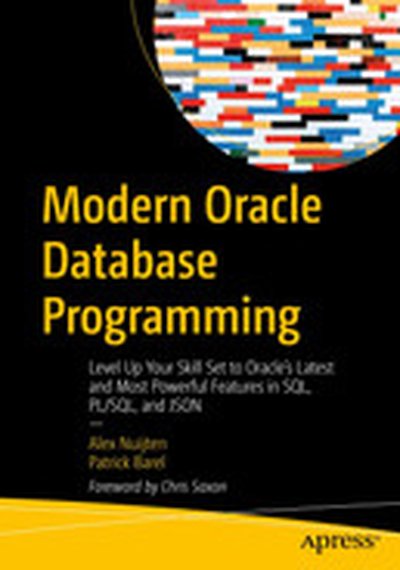
Modern Oracle Database Programming: Level Up Your Skill Set to Oracle's Latest and Most Powerful Features in SQL, PL/SQL, and JSON

Level up your skill set to the latest that Oracle Database can offer. This book introduces features that are not well known that can transform your development efforts. You’ll discover built-in functionality that can save you massive amounts of time that otherwise would be spent reinventing the wheel. You’ll find that what used to take a lot of programming some years ago can be done with less code in a more reliable way today. Anyone using Oracle Database without the knowledge in this book is leaving valuable functionality–that their company has paid for–on the table, and this book opens the door to that functionality so that you can deliver reliable and performant solutions faster and more easily than ever. Part I looks at features in SQL and PL/SQL that are underused and not well known. You’ll learn about new join types, pattern matching across rows, Top N pagination (useful in reporting!), qualified expressions, and enhancements to iterators that reduce code complexity and make your logic easier to understand. Part II covers how and when to invoke PL/SQL from SQL while maintaining performance. You'll learn about SQL macro functions for creating reusable SQL fragments, polymorphic table functions with return types determined by incoming argument types, and constructing and parsing JSON documents for data interchange with other systems. Part III introduces a vast array of built-in functionality that Oracle provides that is just waiting to be used. Edition-based redefinition enables zero-downtime application and schema upgrades. Data redaction enables easier compliance with privacy laws and similar regulations by protecting sensitive data from those who have no need to see it. Virtual private databases provide the appearance of giving each user their own database, again helping to secure sensitive data. These features are just a taste of what the book provides. Soon you’ll be improving your skillsand wondering why you ever worked so hard to solve problems that Oracle Database already solves for you. What You Will Learn Write more powerful code by incorporating underused features in SQL and PL/SQL Optimize your integration between SQL and PL/SQL for best performance Take advantage of enhanced set operators, lateral joins, row-based pattern matching, and other advanced features in SQL Make your code easier to understand through your use of newer PL/SQL features, such as qualified expressions and iterator enhancements Integrate with web services and external data sources directly from the database Create and parse JSON documents for easy data exchange and flexible schema design Who This Book Is For Any developer who is writing SQL or PL/SQL, PL/SQL experts who want to level up their knowledgeand skills to the latest features that Oracle Database provides, and developers who don’t want to write their own solutions only to find out later that they’ve wasted their time by building something that Oracle Database provides out of the box

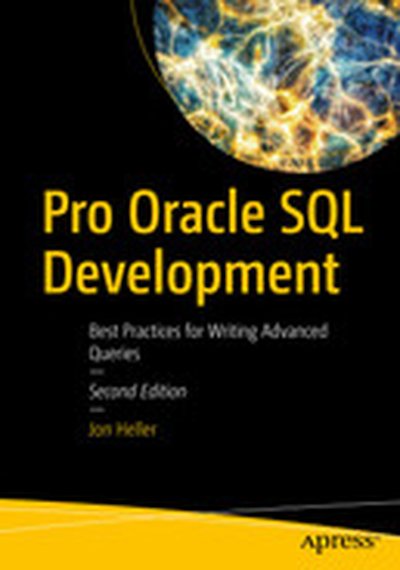
Pro Oracle SQL Development: Best Practices for Writing Advanced Queries

Write SQL statements that are more powerful, simpler, and faster using the advanced features of Oracle SQL. This updated second edition includes the newest advanced features: improved data structures (such as more JSON support and more table options), improved automated processes (such as automatic indexing), and improved SQL language extensions (such as polymorphic table functions, SQL macros, and the multilingual engine). Pro Oracle SQL Development is for anyone who already knows Oracle SQL and is ready to take their skills to the next level. This book provides a clearer way of thinking about SQL by building sets, and it provides practical advice for using complex features while avoiding anti-patterns that lead to poor performance and wrong results. Relevant theories, real-world best practices, and style guidelines help you get the most out of Oracle SQL. Many developers, testers, analysts, and administrators use Oracle databases frequently, but their queries are limited because they do not take advantage of Oracle’s advanced features. This book inspires you to achieve more with your Oracle SQL statements by creating your own style for writing simple, yet powerful, SQL. It teaches you how to think about and solve performance problems in Oracle SQL, and it covers enough advanced topics to put you on the path to becoming an Oracle expert. What You'll Learn Solve challenging problems with declarative SQL instead of procedural languages Write SQL statements that are large and powerful, but also elegant and fast Create development environments that are simple, scalable, and conducive to learning Visualize and understand SQL more intuitively Apply advanced syntax, objects, and architecture Avoid SQL anti-patterns that accumulate technical debt Tune SQL statements with multiple strategies that can significantly improve performance Who This Book Is For Developers, testers, analysts, and administrators who want to harness the full power of Oracle SQL to solve their problems as simply and as quickly as possible; traditional database professionals looking for new ways of thinking about the language they have used for so long; and modern full stack developers who need an explanation of how a database can be much more than simply a place to store data

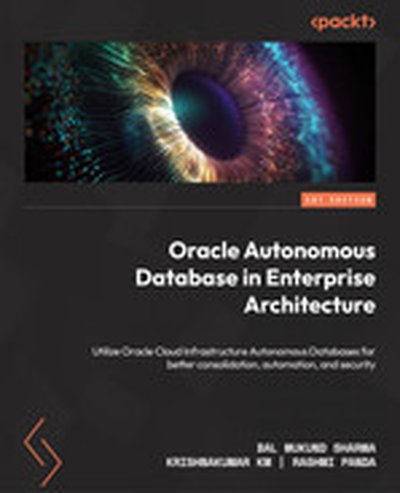
Oracle Autonomous Database in Enterprise Architecture

Explore the capabilities of Oracle Autonomous Database (ADB) to improve enterprise-level data management. Through this book, you will dive deep into deploying, managing, and securing ADBs using Oracle Cloud Infrastructure (OCI). Gain hands-on experience with high-availability setups, data migration methods, and advanced security measures to elevate your enterprise architecture. What this Book will help me do Understand the key considerations for planning, migrating, and maintaining Oracle Autonomous Databases. Learn to implement high availability solutions using Autonomous Data Guard in ADB environments. Master the configuration of backup, restore, and disaster recovery strategies within OCI. Implement advanced security practices including encryption and IAM policy management. Gain proficiency in leveraging ADB features like APEX, SQL Developer Web, and REST APIs for rapid application development. Author(s) The authors None Sharma, Krishnakumar KM, and None Panda are experts in database systems, particularly in Oracle technologies. With years of hands-on experience implementing enterprise solutions and training professionals, they have pooled their knowledge to craft a resource-rich guide filled with practical advice. Who is it for? This book is ideal for cloud architects, database administrators, and implementation consultants seeking to leverage Oracle's Autonomous Database for enhanced automation, security, and scalability. It is well-suited for professionals with foundational knowledge of Linux, OCI, and databases. Aspiring cloud engineers and students aiming to understand modern database management will also benefit greatly.

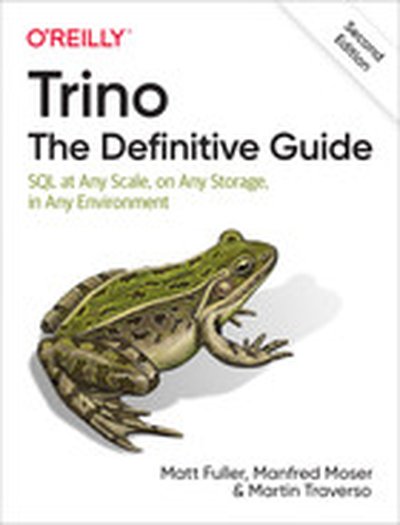
Trino: The Definitive Guide, 2nd Edition

Perform fast interactive analytics against different data sources using the Trino high-performance distributed SQL query engine. In the second edition of this practical guide, you'll learn how to conduct analytics on data where it lives, whether it's a data lake using Hive, a modern lakehouse with Iceberg or Delta Lake, a different system like Cassandra, Kafka, or SingleStore, or a relational database like PostgreSQL or Oracle. Analysts, software engineers, and production engineers learn how to manage, use, and even develop with Trino and make it a critical part of their data platform. Authors Matt Fuller, Manfred Moser, and Martin Traverso show you how a single Trino query can combine data from multiple sources to allow for analytics across your entire organization. Explore Trino's use cases, and learn about tools that help you connect to Trino for querying and processing huge amounts of data Learn Trino's internal workings, including how to connect to and query data sources with support for SQL statements, operators, functions, and more Deploy and secure Trino at scale, monitor workloads, tune queries, and connect more applications Learn how other organizations apply Trino successfully

Proactive EarlyThreat Detection and Securing Oracle Database with IBM QRadar, IBM Security Guardium Data Protection, and IBM Copy Services Manager by using IBM FlashSystem Safeguarded Copy

This IBM® blueprint publication focuses on early threat detection within a database environment by using IBM Security Guardium® Data Protection and IBM QRadar®. It also highlights how to proactively start a cyber resilience workflow in response to a cyberattack or potential malicious user actions. The workflow that is presented here uses IBM Copy Services Manager as orchestration software to start IBM FlashSystem® Safeguarded Copy functions. The Safeguarded Copy creates an immutable copy of the data in an air-gapped form on the same IBM FlashSystem for isolation and eventual quick recovery. This document describes how to enable and forward Oracle database user activities (by using IBM Security Guardium Data Protection) and IBM FlashSystem audit logs by using IBM FlashSystem to IBM QRadar. This document also describes how to create various rules to determine a threat, and configure and launch a suitable response to the detected threat in IBM QRadar. The document also outlines the steps that are involved to create a Scheduled Task by using IBM Copy Services Manager with various actions.

Pro Database Migration to Azure: Data Modernization for the Enterprise

Migrate your existing, on-premises applications into the Microsoft Azure cloud platform. This book covers the best practices to plan, implement, and operationalize the migration of a database application from your organization’s data center to Microsoft’s Azure cloud platform. Data modernization and migration is a technologically complex endeavor that can also be taxing from a leadership and operational standpoint. This book covers not only the technology, but also the most important aspects of organization culture, communication, and politics that so frequently derail such projects. You will learn the most important steps to ensuring a successful migration and see battle-tested wisdom from industry veterans. From executive sponsorship, to executing the migration, to the important steps following migration, you will learn how to effectively conduct future migrations and ensure that your team and your database application delivers on the expected business value of the project. This book is unlike any other currently in the market. It takes you through the most critical business and technical considerations and workflows for moving your data and databases into the cloud, with special attention paid to those who are deploying to the Microsoft Data Platform in Azure, especially SQL Server. Although this book focuses on migrating on-premises SQL Server enterprises to hybrid or fully cloud-based Azure SQL Database and Azure SQL Managed Instances, it also cover topics involving migrating non-SQL Server database platforms such as Oracle, MySQL, and PostgreSQL applications to Microsoft Azure. What You Will Learn Plan a database migration that ensures smooth project progress, optimal performance, low operating cost, and minimal downtime Properly analyze and manage non-technical considerations, such as legal compliance, privacy, and team execution Perform athorough architectural analysis to select the best Azure services, performance tiers, and cost-containment features Avoid pitfalls and common reasons for failure relating to corporate culture, intra-office politics, and poor communications Secure the proper executive champions who can execute the business planning needed for success Apply proven criteria to determine your future-state architecture and your migration method Execute your migration using a process proven by the authors over years of successful projects Who This Book Is For IT leadership, strategic IT decision makers, project owners and managers, and enterprise and application architects. For anyone looking toward cloud migration projects as the next stage of growth in their careers. Also useful for enterprise DBAs and consultants who might be involved in such projects. Readers should have experience and be competent in designing, coding, implementing, and supporting database applications in an on-premises environment.

Migrate and Modernize your Data Platform with Confluent and Databricks

Moving and building in the cloud to accelerate analytics development requires enterprises to rethink their data infrastructure. Whether you are moving from an on-prem legacy system or you were born in the cloud, businesses are turning to Confluent and Databricks to help them unlock new real-time customer experiences and intelligence for their backend operations.

Join us to see how Confluent and Databricks enable companies to set data in motion across any system, at any scale, in near real-time. Connecting Confluent with Databricks allows companies to migrate and connect data from on-prem databases and data warehouses like Netezza, Oracle, and Cloudera to Databricks in the cloud to power real-time analytics.

Connect with us: Website: https://databricks.com Facebook: https://www.facebook.com/databricksinc Twitter: https://twitter.com/databricks LinkedIn: https://www.linkedin.com/company/data... Instagram: https://www.instagram.com/databricksinc/

Optimizing Speed and Scale of User-Facing Analytics Using Apache Kafka and Pinot

Apache Kafka is the de facto standard for real-time event streaming, but what do you do if you want to perform user-facing, ad-hoc, real-time analytics too? That's where Apache Pinot comes in.

Apache Pinot is a realtime distributed OLAP datastore, which is used to deliver scalable real time analytics with low latency. It can ingest data from batch data sources (S3, HDFS, Azure Data Lake, Google Cloud Storage) as well as streaming sources such as Kafka. Pinot is used extensively at LinkedIn and Uber to power many analytical applications such as Who Viewed My Profile, Ad Analytics, Talent Analytics, Uber Eats and many more serving 100k+ queries per second while ingesting 1Million+ events per second.

Apache Kafka's highly performant, distributed, fault-tolerant, real-time publish-subscribe messaging platform powers big data solutions at Airbnb, LinkedIn, MailChimp, Netflix, the New York Times, Oracle, PayPal, Pinterest, Spotify, Twitter, Uber, Wikimedia Foundation, and countless other businesses.

Come hear from Neha Power, Founding Engineer at a StarTree and PMC and committer of Apache Pinot, and Karin Wolok, Head of Developer Community at StarTree, on an introduction to both systems and a view of how they work together.

Connect with us: Website: https://databricks.com Facebook: https://www.facebook.com/databricksinc Twitter: https://twitter.com/databricks LinkedIn: https://www.linkedin.com/company/data... Instagram: https://www.instagram.com/databricksinc/

Data Lake for State Health Exchange Analytics using Databricks

One of the largest State based health exchanges in the country was looking to modernize their data warehouse (DWH) environment to support the vision that every decision to design, implement and evaluate their state-based health exchange portal is informed by timely and rigorous evidence about its consumers’ experiences. The scope of the project was to replace existing Oracle-based DWH with an analytics platform that could support a much broader range of requirements with an ability to provide unified analytics capabilities including machine learning. The modernized analytics platform comprises a cloud native data lake and DWH solution using Databricks. The solution provides significantly higher performance and elastic scalability to better handle larger and varying data volumes with a much lower cost of ownership compared to the existing solution. In this session, we will walk through the rationale behind tool selection, solution architecture, project timeline and benefits expected.

Connect with us: Website: https://databricks.com Facebook: https://www.facebook.com/databricksinc Twitter: https://twitter.com/databricks LinkedIn: https://www.linkedin.com/company/data... Instagram: https://www.instagram.com/databricksinc/

In this episode, Bryce and Conor interview special guest Tony Van Eerd! Twitter ADSP: The PodcastConor HoekstraBryce Adelstein LelbachAbout the Guest: Tony Van Eerd has been coding for well over 25 years, and hopefully coding well for most of that. Previously at Inscriber, Adobe, and BlackBerry, he now enables painting with light at Christie Digital. He is on the C++ Committee. He is a Ninja and a Jedi. Show Notes Date Recorded: 2022-06-24 Date Released: 2022-07-01 CppNorth ConferenceInscriberBlackBerryAdobeCHRISTIEChristie Eclipse 4K RGB Pure Laser ProjectorGary KlassenBlackBerry QNXGeneral MagicCP24Inscriber offers Adobe After Effects plug-in to streamline productionBlackBerry Liquid GraphicsGoogle LLC v. Oracle America, Inc.Intro Song Info Miss You by Sarah Jansen https://soundcloud.com/sarahjansenmusic Creative Commons — Attribution 3.0 Unported — CC BY 3.0 Free Download / Stream: http://bit.ly/l-miss-you Music promoted by Audio Library https://youtu.be/iYYxnasvfx8

SQL in a Nutshell, 4th Edition

For programmers, analysts, and database administrators, this Nutshell guide is the essential reference for the SQL language used in today's most popular database products. This new fourth edition clearly documents SQL commands according to the latest ANSI/ISO standard and details how those commands are implemented in Microsoft SQL Server 2019 and Oracle 19c, as well as in the MySQL 8, MariaDB 10.5, and PostgreSQL 14 open source database products. You'll also get a concise overview of the relational database management system (RDBMS) model and a clear-cut explanation of foundational RDBMS concepts--all packed into a succinct, comprehensive, and easy-to-use format. Sections include: Background on the relational database model, including current and previous SQL standards Fundamental concepts necessary for understanding relational databases and SQL commands An alphabetical command reference to SQL statements, according to the SQL:2016 ANSI standard The implementation of each command by MySQL, Oracle, PostgreSQL, and SQL Server An alphabetical reference of the ANSI SQL:2016 functions and constructs as well as the vendor implementations Platform-specific functions unique to each implementation

Summary Data governance is a practice that requires a high degree of flexibility and collaboration at the organizational and technical levels. The growing prominence of cloud and hybrid environments in data management adds additional stress to an already complex endeavor. Privacera is an enterprise grade solution for cloud and hybrid data governance built on top of the robust and battle tested Apache Ranger project. In this episode Balaji Ganesan shares how his experiences building and maintaining Ranger in previous roles helped him understand the needs of organizations and engineers as they define and evolve their data governance policies and practices.

Announcements

Hello and welcome to the Data Engineering Podcast, the show about modern data management When you’re ready to build your next pipeline, or want to test out the projects you hear about on the show, you’ll need somewhere to deploy it, so check out our friends at Linode. With their managed Kubernetes platform it’s now even easier to deploy and scale your workflows, or try out the latest Helm charts from tools like Pulsar and Pachyderm. With simple pricing, fast networking, object storage, and worldwide data centers, you’ve got everything you need to run a bulletproof data platform. Go to dataengineeringpodcast.com/linode today and get a $100 credit to try out a Kubernetes cluster of your own. And don’t forget to thank them for their continued support of this show! This episode is brought to you by Acryl Data, the company behind DataHub, the leading developer-friendly data catalog for the modern data stack. Open Source DataHub is running in production at several companies like Peloton, Optum, Udemy, Zynga and others. Acryl Data provides DataHub as an easy to consume SaaS product which has been adopted by several companies. Signup for the SaaS product at dataengineeringpodcast.com/acryl RudderStack helps you build a customer data platform on your warehouse or data lake. Instead of trapping data in a black box, they enable you to easily collect customer data from the entire stack and build an identity graph on your warehouse, giving you full visibility and control. Their SDKs make event streaming from any app or website easy, and their state-of-the-art reverse ETL pipelines enable you to send enriched data to any cloud tool. Sign up free… or just get the free t-shirt for being a listener of the Data Engineering Podcast at dataengineeringpodcast.com/rudder. The most important piece of any data project is the data itself, which is why it is critical that your data source is high quality. PostHog is your all-in-one product analytics suite including product analysis, user funnels, feature flags, experimentation, and it’s open source so you can host it yourself or let them do it for you! You have full control over your data and their plugin system lets you integrate with all of your other data tools, including data warehouses and SaaS platforms. Give it a try today with their generous free tier at dataengineeringpodcast.com/posthog Your host is Tobias Macey and today I’m interviewing Balaji Ganesan about his work at Privacera and his view on the state of data governance, access control, and security in the cloud

Interview

Introduction How did you get involved in the area of data management? Can you describe what Privacera is and the story behind it? What is your working definition of "data governance" and how does that influence your product focus and priorities? What are some of the lessons that you learned from your work on Apache Ranger that helped with your efforts at Privacera? How would you characterize your position in the market for data governance/data security tools? What are the unique constraints and challenges that come into play when managing data in cloud platforms? Can you explain how the Privacera platform is architected?

How have the design and goals of the system changed or evolved since you started working on it?

What is the workflow for an operator integrating Privacera into a data platform?

How do you provide feedback to users about the level of coverage for discovered data assets?

How does Privacera fit into the workflow of the different personas working with data?

What are some of the security and privacy controls that Privacera introduces?

How do you mitigate the potential for anyone to bypass Privacera’s controls by interacting directly with the underlying systems? What are the most interesting, innovative, or unexpected ways that you have seen Privacera used? What are the most interesting, unexpected, or challenging lessons that you have learned while working on Privacera? When is Privacera the wrong choice? What do you have planned for the future of Privacera?

Contact Info

LinkedIn @Balaji_Blog on Twitter

Parting Question

From your perspective, what is the biggest gap in the tooling or technology for data management today?

Closing Announcements

Thank you for listening! Don’t forget to check out our other show, Podcast.init to learn about the Python language, its community, and the innovative ways it is being used. Visit the site to subscribe to the show, sign up for the mailing list, and read the show notes. If you’ve learned something or tried out a project from the show then tell us about it! Email [email protected]) with your story. To help other people find the show please leave a review on iTunes and tell your friends and co-workers

Links

Privacera Hadoop Hortonworks Apache Ranger Oracle Teradata Presto/Trino Starburst

Podcast Episode

Ahana

Podcast Episode

The intro and outro music is from The Hug by The Freak Fandango Orchestra / CC BY-SA

Sponsored By: Acryl: Acryl

The modern data stack needs a reimagined metadata management platform. Acryl Data’s vision is to bring clarity to your data through its next generation multi-cloud metadata management platform. Founded by the leaders that created projects like LinkedIn DataHub and Airbnb Dataportal, Acryl Data enables delightful search and discovery, data observability, and federated governance across data ecosystems. Signup for the SaaS product today at dataengineeringpodcast.com/acrylSupport Data Engineering Podcast

Practical SQL, 2nd Edition

Practical SQL is an approachable and fast-paced guide to SQL (Structured Query Language), the standard programming language for defining, organizing, and exploring data in relational databases. Anthony DeBarros, a journalist and data analyst, focuses on using SQL to find the story within your data. The examples and code use the open-source database PostgreSQL and its companion pgAdmin interface, and the concepts you learn will apply to most database management systems, including MySQL, Oracle, SQLite, and others.* You’ll first cover the fundamentals of databases and the SQL language, then build skills by analyzing data from real-world datasets such as US Census demographics, New York City taxi rides, and earthquakes from US Geological Survey. Each chapter includes exercises and examples that teach even those who have never programmed before all the tools necessary to build powerful databases and access information quickly and efficiently. You’ll learn how to: •Create databases and related tables using your own data •Aggregate, sort, and filter data to find patterns •Use functions for basic math and advanced statistical operations •Identify errors in data and clean them up •Analyze spatial data with a geographic information system (PostGIS) •Create advanced queries and automate tasks This updated second edition has been thoroughly revised to reflect the latest in SQL features, including additional advanced query techniques for wrangling data. This edition also has two new chapters: an expanded set of instructions on for setting up your system plus a chapter on using PostgreSQL with the popular JSON data interchange format. Learning SQL doesn’t have to be dry and complicated. Practical SQL delivers clear examples with an easy-to-follow approach to teach you the tools you need to build and manage your own databases. * Microsoft SQL Server employs a variant of the language called T-SQL, which is not covered by Practical SQL.

Before starting Chartmetric, Sung worked on Sales Cloud as the Principal Product Manager at Oracle Corporation. Prior to that, he was the first employee/engineer at the publicly-traded gaming company Gamevil (which has a Market Cap of $400MM), where he initiated mobile game development and eventually positioned the company as a leading mobile game developer. 

Sung graduated with a bachelor’s degree of electrical engineering and computer science from Seoul National University, and an MBA from UCLA Anderson School of Management.

He enjoys posting ideas on his blog (http://sungmooncho.com), which has attracted more than 5 million views and is considered as one of the leading tech blogs in Korea. Sung has invested in 10 startups in New York, Silicon Valley, and Seoul (http://angel.co/sung-cho). If you want more free insights, follow our podcast, our blog, and our socials. If you're an artist with a free Chartmetric account, sign up for the artist plan, made exclusively for you, here. If you're new to Chartmetric, follow the URL above after creating a free account here.