talk-data.com talk-data.com

Topic

Oracle

database enterprise_software cloud

541

tagged

Activity Trend

33 peak/qtr
2020-Q1 2026-Q2

Activities

541 activities · Newest first

The Language of SQL, 3rd Edition

Get Started Fast with SQL! The only book you need to gain a quick working knowledge of SQL and relational databases. Many SQL texts attempt to serve as an encyclopedic reference on SQL syntaxan approach that is often counterproductive because that information is readily available in online references published by the major database vendors. For SQL beginners, its more important for a book to focus on general concepts and to offer clear explanations and examples of what various SQL statements can accomplish. This is that book. Several features make The Language of SQL unique among introductory SQL books. First, you will not be required to download software or sit with a computer as you read the text. The intent of this book is to provide examples of SQL usage that can be understood simply by reading. Second, topics are organized in an intuitive and logical sequence. SQL keywords are introduced one at a time, allowing you to grow your understanding as you encounter new terms and concepts. Finally, this book covers the syntax of the latest releases of three widely used databases: Microsoft SQL Server 2019, MySQL 8.0, and Oracle 18c. Special Database Differences sidebars clearly show you any differences in syntax among these three databases, and instructions are included on how to obtain and install free versions of the databases. Use SQL to retrieve data from relational databases Apply functions and calculations to data Group and summarize data in a variety of useful ways Use complex logic to retrieve only the data you need Design relational databases so that data retrieval is easy and intuitive Update data and create new tables Use spreadsheets to transform your data into meaningful displays Retrieve data from multiple tables via joins, subqueries, views, and set logic Create, modify, and execute stored procedures Install Microsoft SQL Server, MySQL, or Oracle

Expert Oracle Database Architecture: Techniques and Solutions for High Performance and Productivity

Now in its fourth edition and covering Oracle Database 21c, this best-selling book continues to bring you some of the best thinking on how to apply Oracle Database to produce scalable applications that perform well and deliver correct results. Tom Kyte and Darl Kuhn share a simple philosophy: "you can treat Oracle as a black box and just stick data into it, or you can understand how it works and exploit it as a powerful computing environment." If you choose the latter, then you’ll find that there are few information management problems that you cannot solve quickly and elegantly. This fully revised fourth edition covers the developments and new features up to Oracle Database 21c. Up-to-date features are covered for tables, indexes, data types, sequences, partitioning, data loading, temporary tables, and more. All the examples are demonstrated using modern techniques and are executed in container and pluggable databases. The book’s proof-by-example approach encourages you to let evidence be your guide. Try something. See the result. Understand why the result is what it is. Apply your newfound knowledge with confidence. The book covers features by explaining how each one works, how to implement software using it, and the common pitfalls associated with it. Don’t treat Oracle Database as a black box. Get this book. Dive deeply into Oracle Database’s most powerful features that many do not invest the time to learn about. Set yourself apart from your competition and turbo-charge your career. What You Will Learn Identify and effectively resolve application performance issues and bottlenecks Architect systems to leverage the full power and feature set of Oracle’s database engine Configure a database to maximize the use of memory structures and background processes Understand internal locking and latching technology and how it impacts your system Proactively recommend best practices around performance for table and index structures Take advantage of advanced features such as table partitioning and parallel execution Who This Book Is For Oracle developers and Oracle DBAs. If you’re a developer and want a stronger understanding of Oracle features and architecture that will enable your applications to scale regardless of the workload, this book is for you. If you’re a DBA and want to intelligently work with developers to design applications that effectively leverage Oracle technology, then look no further.

IBM Spectrum Protect Plus Protecting Database Applications

IBM® Spectrum Protect Plus is a data protection solution that provides near-instant recovery, replication, retention management, and reuse for virtual machines, databases, and application backups in hybrid multicloud environments. This IBM Redpaper publication focuses on protecting database applications. IBM Spectrum® Protect Plus supports backup, restore, and data reuse for multiple databases, such as Oracle, IBM Db2®, MongoDB, Microsoft Exchange, and Microsoft SQL Server. Although other IBM Spectrum Protect Plus features focus on virtual environments, the database and application support of IBM Spectrum Protect Plus includes databases on virtual physical servers.

Storage Systems

Storage Systems: Organization, Performance, Coding, Reliability and Their Data Processing was motivated by the 1988 Redundant Array of Inexpensive/Independent Disks proposal to replace large form factor mainframe disks with an array of commodity disks. Disk loads are balanced by striping data into strips—with one strip per disk— and storage reliability is enhanced via replication or erasure coding, which at best dedicates k strips per stripe to tolerate k disk failures. Flash memories have resulted in a paradigm shift with Solid State Drives (SSDs) replacing Hard Disk Drives (HDDs) for high performance applications. RAID and Flash have resulted in the emergence of new storage companies, namely EMC, NetApp, SanDisk, and Purestorage, and a multibillion-dollar storage market. Key new conferences and publications are reviewed in this book.The goal of the book is to expose students, researchers, and IT professionals to the more important developments in storage systems, while covering the evolution of storage technologies, traditional and novel databases, and novel sources of data. We describe several prototypes: FAWN at CMU, RAMCloud at Stanford, and Lightstore at MIT; Oracle's Exadata, AWS' Aurora, Alibaba's PolarDB, Fungible Data Center; and author's paper designs for cloud storage, namely heterogeneous disk arrays and hierarchical RAID. Surveys storage technologies and lists sources of data: measurements, text, audio, images, and video Familiarizes with paradigms to improve performance: caching, prefetching, log-structured file systems, and merge-trees (LSMs) Describes RAID organizations and analyzes their performance and reliability Conserves storage via data compression, deduplication, compaction, and secures data via encryption Specifies implications of storage technologies on performance and power consumption Exemplifies database parallelism for big data, analytics, deep learning via multicore CPUs, GPUs, FPGAs, and ASICs, e.g., Google's Tensor Processing Units

SQL in 24 Hours, Sams Teach Yourself, 7th Edition

In just 24 lessons of one hour or less, Sams Teach Yourself SQL in 24 Hours helps you use SQL to build effective databases, efficiently retrieve data, and manage everything from performance to security. This Seventh Edition is thoroughly revised and reorganized for faster learning and a deeper understanding of modern SQL development. Based on standardized SQL throughout, it teaches using new sample code based on the free, easy-to-use Oracle Database Express (XE). You’ll find more hands-on examples than ever, culminating in an all-new Bonus Exercises Workshop with even more real-world practice. This guide’s straightforward, step-by-step approach shows you how to work with database structures, objects, queries, tables, and more. In just hours, you will be applying advanced techniques, from transactions and joins to complex data retrieval using views and subqueries. Step-by-step instructions carefully walk you through the most common SQL tasks. Practical, hands-on examples show you how to apply what you learn. Quizzes and exercises help you test your knowledge and stretch your skills. Notes and tips point out shortcuts and solutions. Learn how to... * Master core relational database concepts, SQL concepts, and language components * Clearly understand your data * Set up databases and plan efficient database designs * Define entities and relationships, establish data structures, and create database objects * “Normalize” raw databases into logically organized tables * Edit relational data and tables and manage transactions * Write effective, well-performing queries * Categorize, summarize, sort, group, and restructure data * Work with dates and times * Join tables in queries, use subqueries, and combine multiple queries * Optimize performance with indexes and other techniques * Administer databases and manage users * Secure databases and data

SQL Pocket Guide, 4th Edition

If you use SQL in your day-to-day work as a data analyst, data scientist, or data engineer, this popular pocket guide is your ideal on-the-job reference. You'll find many examples that address the language's complexities, along with key aspects of SQL used in Microsoft SQL Server, MySQL, Oracle Database, PostgreSQL, and SQLite. In this updated edition, author Alice Zhao describes how these database management systems implement SQL syntax for both querying and making changes to a database. You'll find details on data types and conversions, regular expression syntax, window functions, pivoting and unpivoting, and more. Quickly look up how to perform specific tasks using SQL Apply the book's syntax examples to your own queries Update SQL queries to work in five different database management systems NEW: Connect Python and R to a relational database NEW: Look up frequently asked SQL questions in the "How Do I?" chapter

Summary Data lake architectures have largely been biased toward batch processing workflows due to the volume of data that they are designed for. With more real-time requirements and the increasing use of streaming data there has been a struggle to merge fast, incremental updates with large, historical analysis. Vinoth Chandar helped to create the Hudi project while at Uber to address this challenge. By adding support for small, incremental inserts into large table structures, and building support for arbitrary update and delete operations the Hudi project brings the best of both worlds together. In this episode Vinoth shares the history of the project, how its architecture allows for building more frequently updated analytical queries, and the work being done to add a more polished experience to the data lake paradigm.

Announcements

Hello and welcome to the Data Engineering Podcast, the show about modern data management You listen to this show to learn about all of the latest tools, patterns, and practices that power data engineering projects across every domain. Now there’s a book that captures the foundational lessons and principles that underly everything that you hear about here. I’m happy to announce I collected wisdom from the community to help you in your journey as a data engineer and worked with O’Reilly to publish it as 97 Things Every Data Engineer Should Know. Go to dataengineeringpodcast.com/97things today to get your copy! When you’re ready to build your next pipeline, or want to test out the projects you hear about on the show, you’ll need somewhere to deploy it, so check out our friends at Linode. With their managed Kubernetes platform it’s now even easier to deploy and scale your workflows, or try out the latest Helm charts from tools like Pulsar and Pachyderm. With simple pricing, fast networking, object storage, and worldwide data centers, you’ve got everything you need to run a bulletproof data platform. Go to dataengineeringpodcast.com/linode today and get a $100 credit to try out a Kubernetes cluster of your own. And don’t forget to thank them for their continued support of this show! RudderStack’s smart customer data pipeline is warehouse-first. It builds your customer data warehouse and your identity graph on your data warehouse, with support for Snowflake, Google BigQuery, Amazon Redshift, and more. Their SDKs and plugins make event streaming easy, and their integrations with cloud applications like Salesforce and ZenDesk help you go beyond event streaming. With RudderStack you can use all of your customer data to answer more difficult questions and then send those insights to your whole customer data stack. Sign up free at dataengineeringpodcast.com/rudder today. We’ve all been asked to help with an ad-hoc request for data by the sales and marketing team. Then it becomes a critical report that they need updated every week or every day. Then what do you do? Send a CSV via email? Write some Python scripts to automate it? But what about incremental sync, API quotas, error handling, and all of the other details that eat up your time? Today, there is a better way. With Census, just write SQL or plug in your dbt models and start syncing your cloud warehouse to SaaS applications like Salesforce, Marketo, Hubspot, and many more. Go to dataengineeringpodcast.com/census today to get a free 14-day trial. Your host is Tobias Macey and today I’m interviewing Vinoth Chandar about Apache Hudi, a data lake management layer for supporting fast and incremental updates to your tables.

Interview

Introduction How did you get involved in the area of data management? Can you describe what Hudi is and the story behind it? What are the use cases that it is focused on supporting? There have been a number of alternative table formats introduced for data lakes recently. How does Hudi compare to projects like Iceberg, Delta Lake, Hive, etc.? Can you describe how Hudi is architected?

How have the goals and design of Hudi changed or evolved since you first began working on it? If you were to start the whole project over today, what would you do differently?

Can you talk through the lifecycle of a data record as it is ingested, compacted, and queried in a Hudi deployment? One of the capabilities that is interesting to explore is support for arbitrary record deletion. Can you talk through why this is a challenging operation in data lake architectures?

How does Hudi make that a tractable problem?

What are the data platform components that are needed to support an installation of Hudi? What is involved in migrating an existing data lake to use Hudi?

How would someone approach supporting heterogeneous table formats in their lake?

As someone who has invested a lot of time in technologies for supporting data lakes, what are your thoughts on the tradeoffs of data lake vs data warehouse and the current trajectory of the ecosystem? What are the most interesting, innovative, or unexpected ways that you have seen Hudi used? What are the most interesting, unexpected, or challenging lessons that you have learned while working on Hudi? When is Hudi the wrong choice? What do you have planned for the future of Hudi?

Contact Info

Linkedin Twitter

Parting Question

From your perspective, what is the biggest gap in the tooling or technology for data management today?

Closing Announcements

Thank you for listening! Don’t forget to check out our other show, Podcast.init to learn about the Python language, its community, and the innovative ways it is being used. Visit the site to subscribe to the show, sign up for the mailing list, and read the show notes. If you’ve learned something or tried out a project from the show then tell us about it! Email [email protected]) with your story. To help other people find the show please leave a review on iTunes and tell your friends and co-workers Join the community in the new Zulip chat workspace at dataengineeringpodcast.com/chat

Links

Hudi Docs Hudi Design & Architecture Incremental Processing CDC == Change Data Capture

Podcast Episodes

Oracle GoldenGate Voldemort Kafka Hadoop Spark HBase Parquet Iceberg Table Format

Data Engineering Episode

Hive ACID Apache Kudu

Podcast Episode

Vertica Delta Lake

Podcast Episode

Optimistic Concurrency Control MVCC == Multi-Version Concurrency Control Presto Flink

Podcast Episode

Trino

Podcast Episode

Gobblin LakeFS

Podcast Episode

Nessie

The intro and outro music is from The Hug by The Freak Fandango Orchestra / CC BY-SA

Support Data Engineering Podcast

Machine Learning for Oracle Database Professionals: Deploying Model-Driven Applications and Automation Pipelines

Database developers and administrators will use this book to learn how to deploy machine learning models in Oracle Database and in Oracle’s Autonomous Database cloud offering. The book covers the technologies that make up the Oracle Machine Learning (OML) platform, including OML4SQL, OML Notebooks, OML4R, and OML4Py. The book focuses on Oracle Machine Learning as part of the Oracle Autonomous Database collaborative environment. Also covered are advanced topics such as delivery and automation pipelines. Throughout the book you will find practical details and hand-on examples showing you how to implement machine learning and automate deployment of machine learning. Discussion around the examples helps you gain a conceptual understanding of machine learning. Important concepts discussed include the methods involved, the algorithms to choose from, and mechanisms for process and deployment. Seasoned database professionals looking to make the leap into machine learning as a growth path will find much to like in this book as it helps you step up and use your current knowledge of Oracle Database to transition into providing machine learning solutions. What You Will Learn Use the Oracle Machine Learning (OML) Notebooks for data visualization and machine learning model building and evaluation Understand Oracle offerings for machine learning Develop machine learning with Oracle database using the built-in machine learning packages Develop and deploy machine learning models using OML4SQL and OML4R Leverage the Oracle Autonomous Database and its collaborative environment for Oracle Machine Learning Develop and deploy machine learning projects in Oracle Autonomous Database Build an automated pipeline that can detect and handle changes in data/model performance Who This Book Is For Database developers and administrators who want to learn about machine learning, developers who want to build models and applications using Oracle Database’s built-in machine learning feature set, and administrators tasked with supporting applications on Oracle Database that make use of the Oracle Machine Learning feature set

R2DBC Revealed: Reactive Relational Database Connectivity for Java and JVM Programmers

Understand the newest trend in database programming for developers working in Java, Kotlin, Clojure, and other JVM-based languages. This book introduces Reactive Relational Database Connectivity (R2DBC), a modern way of connecting to and querying relational databases from Java and other JVM languages. The book begins by helping you understand not only what reactive programming is, but why it is necessary. Then building on those fundamentals, the book takes you into the world of databases and the newly released Reactive Relational Database Connectivity (R2DBC) specification. Examples in the book are worked using the freely available MariaDB database along with MariaDB’s vendor-implementation of the R2DBC service-provider interface (SPI). Following along with the examples and the provided example code helps prepare you to work with any of the growing number of R2DBC implementations for popular enterprise databases such as Oracle Database and SQL Server. You’ll be well prepared for what is becoming the future of database access from Java and other languages built on the JVM. What You Will Learn Understand why R2DBC was created and how it utilizes the Reactive Streams API Understand the components of the R2DBC service-provider interface Create and manage reactive database connections and connection pools using an R2DBC client Programmatically execute queries on a relational database using an R2DBC client Effectively utilize transactions using an R2DBC client Build relational database-driven applications that are event-driven and non-blocking Who This Book Is For Software developers building solutions using JVM languages and the JVM ecosystem, and developers who need an introduction to the R2DBC specification and reactive programming with relational databases and want to understand what Reactive Relational Database Connectivity is and why it came about. This book includes practical examples of using the R2DBC specification with Java and MariaDB that will provide developers with the knowledge they need to create their own solutions.

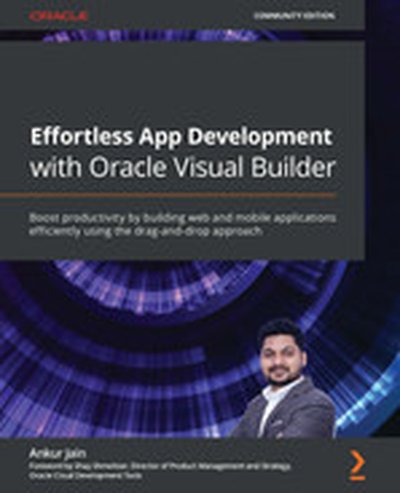
Effortless App Development with Oracle Visual Builder

In "Effortless App Development with Oracle Visual Builder," you will explore how to quickly design, develop, and deploy robust web and mobile applications using Oracle Visual Builder's intuitive drag-and-drop features. This book equips you with the know-how to simplify application development tasks, making it perfect for professionals looking to boost productivity. What this Book will help me do Master the core architecture and features of Oracle Visual Builder to develop real-world applications effectively. Learn to create, manage, and leverage business objects and connect to various SaaS APIs within your applications. Build scalable and secure web and mobile applications using practical examples and clear implementation guidelines. Discover best practices for application lifecycle management, debugging, and troubleshooting VB applications. Extend Oracle and non-Oracle SaaS applications through hands-on knowledge tailored to real-world scenarios. Author(s) None Jain is an experienced developer and technical writer specializing in Oracle Visual Builder and cloud-based application development. With years of hands-on experience building and deploying cloud applications, they bring expertise and a practical approach to education. Their engaging writing style focuses on enabling readers to learn and apply new skills confidently. Who is it for? This book is perfectly suited for developers, UI designers, and IT professionals who want to master Oracle Visual Builder for developing web and mobile applications. If you already have experience with technologies like JavaScript, UI frameworks, and REST APIs, and seek to create intuitive applications using a simplified interface, this book is for you. Whether you're in the early stages of learning VB or looking to refine your skills, this book serves as a valuable guide.

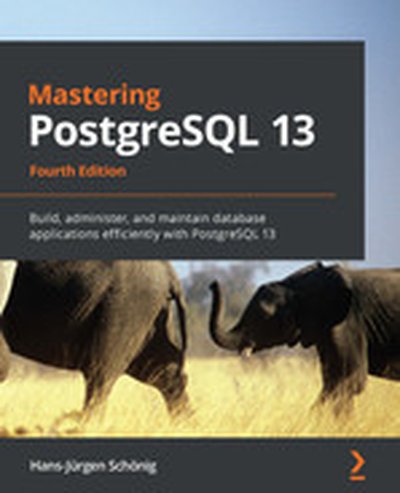
Mastering PostgreSQL 13 - Fourth Edition

Dive into PostgreSQL 13 with this comprehensive guide that equips you to build, manage, and optimize database applications using state-of-the-art features. With a strong focus on hands-on insights, this book covers everything from SQL functions to advanced replication, helping you to enhance your database management expertise. What this Book will help me do Understand and utilize advanced SQL features to increase database efficiency. Optimize your PostgreSQL queries for improved performance in applications. Implement robust backup, recovery, and replication strategies for data integrity. Migrate seamlessly from Oracle to PostgreSQL using proven strategies. Strengthen server security to safeguard sensitive data in your PostgreSQL system. Author(s) Hans-Jürgen Schönig is a renowned PostgreSQL expert with decades of experience in database administration and consulting. He has guided companies across the globe to leverage the power of PostgreSQL, achieving high performance and reliability in their applications. His clear, methodical, and practical approach makes complex topics accessible to database professionals. Who is it for? This book is crafted for PostgreSQL database administrators and developers with some prior experience. If you are looking to refine your skills and adopt advanced features in PostgreSQL 13 to enhance performance and manageability, this book is ideal for you. It is best suited for individuals who aim to make their database applications more secure and robust.

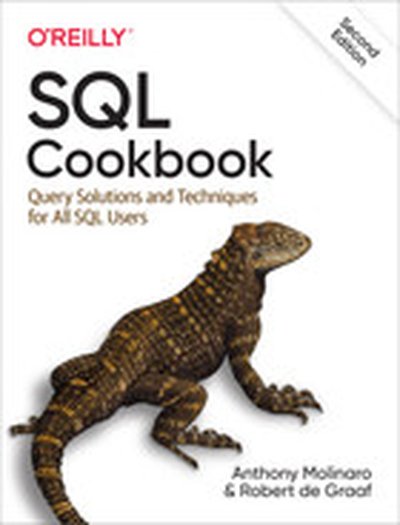
SQL Cookbook, 2nd Edition

You may know SQL basics, but are you taking advantage of its expressive power? This second edition applies a highly practical approach to Structured Query Language (SQL) so you can create and manipulate large stores of data. Based on real-world examples, this updated cookbook provides a framework to help you construct solutions and executable examples in several flavors of SQL, including Oracle, DB2, SQL Server, MySQL, and PostgreSQL. SQL programmers, analysts, data scientists, database administrators, and even relatively casual SQL users will find SQL Cookbook to be a valuable problem-solving guide for everyday issues. No other resource offers recipes in this unique format to help you tackle nagging day-to-day conundrums with SQL. The second edition includes: Fully revised recipes that recognize the greater adoption of window functions in SQL implementations Additional recipes that reflect the widespread adoption of common table expressions (CTEs) for more readable, easier-to-implement solutions New recipes to make SQL more useful for people who aren't database experts, including data scientists Expanded solutions for working with numbers and strings Up-to-date SQL recipes throughout the book to guide you through the basics

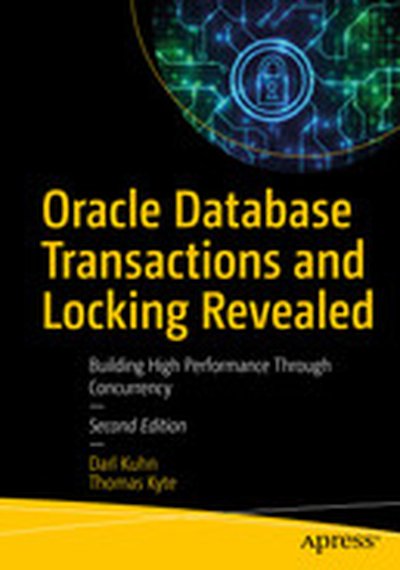
Oracle Database Transactions and Locking Revealed: Building High Performance Through Concurrency

Access much-needed information for building scalable, high-concurrency applications and deploying them against the Oracle Database. This new edition is updated to be current with Oracle Database 19. It includes a new chapter with troubleshooting recipes to help you quickly diagnose and resolve locking problems that are urgent and block production. Good transaction design is an important facet of highly-concurrent applications that are run by hundreds, even thousands, of users who are executing transactions at the same time. Transaction design, in turn, relies on a good understanding of how the database engine manages the locking of resources to prevent access conflicts and data loss that might otherwise result from concurrent access to data in the database. This book provides a solid and accurate explanation of how locking and concurrency are dealt with by Oracle Database. You will learn how the Oracle Database architecture accommodates user transactions, and how you can write code to mesh with the way in which Oracle Database is designed to operate. Oracle Database Transactions and Locking Revealed covers in detail the various lock types, and also different locking schemes such as pessimistic and optimistic locking. Then you will learn about transaction isolation and multi-version concurrency, and how the various lock types support Oracle Database’s transactional features. You will learn tips for transaction design, as well as some bad practices and habits to avoid. Coverage is also given to redo and undo, and their role in concurrency. The book is loaded with insightful code examples that drive home each concept. This is an important book that anyone developing highly-concurrent applications will want to have handy on their shelf. What You Will Learn Avoid application lockups due to conflicts over accessing the same resource Understand how Oracle prevents one application from overwriting another’s modifications Create transaction designs that mesh with how Oracle Database is designed Build high-throughput applications supporting thousands of concurrent users Design applications to take full advantage of Oracle’s powerful database engine Gain a fundamental knowledge of Oracle’s transaction and locking architecture Develop techniques to quickly diagnose and resolve common locking issues Who This Book Is For Oracle developers and database administrators faced with troubleshooting and solving deadlocks, locking contention, and similar problems that are encountered in high-concurrency environments; and application developers wanting to design their applications to excel at multi-user concurrency by taking full advantage of Oracle Database’s multi-versioning and concurrency support

Understanding Oracle APEX 20 Application Development: Think Like an Application Express Developer

This book shows developers and Oracle professionals how to build practical, non-trivial web applications using Oracle’s rapid application development environment – Application Express (APEX). This third edition Is revised to cover the new features and user interface experience found in APEX 20. Interactive grids and form regions are two of the newer aspects of APEX covered in this edition. The book is targeted at those who are new to APEX and just beginning to develop real projects for deployment, as well as those who are familiar with APEX and want a deeper understanding. The book takes you through the development of a demo web application that illustrates the concepts all APEX programmers should know. This book introduces the world of APEX properties, explaining the functionality supported by each page component as well as the techniques developers use to achieve that functionality. Topics include conditional formatting, user-customized reports, data entry forms, concurrency and lost updates, and security control. Specific attention is given in the book to the thought process involved in choosing and assembling APEX components and features to deliver a specific result. Understanding Oracle APEX 20 Application Development, 3rd Edition is the ideal book to take you from an understanding of the individual pieces of APEX to an understanding of how those pieces are assembled into polished applications. What You Will Learn Build attractive, highly functional web apps from the ground up Enhance and customize pages created by the APEX wizards Understand the security implications of page design Write PL/SQL code for process activity and verification Build complex components such as forms and interactive grids Who This Book Is For Developers new to APEXwho desire a strong fundamental understanding of how APEX applications work. For existing developers and database administrators desiring to mine the most value from APEX by improving their development techniques.

Send us a text Want to be featured as a guest on Making Data Simple? Reach out to us at [[email protected]] and tell us why you should be next.

Abstract Hosted by Al Martin, VP, Data and AI Expert Services and Learning at IBM, Making Data Simple provides the latest thinking on big data, A.I., and the implications for the enterprise from a range of experts. This week on Making Data Simple, we have Ayal Steinberg, Global Sales VP, Data and AI at IBM. Ayal Steinberg is the Vice President of Global Sales for IBM's Data and AI business unit.  In his capacity Ayal oversees IBM's largest and one of the most strategic business units with over 1,500 people and several billion dollars of annual revenue.  Ayal has proven success in managing complex and global sales organizations. Throughout his career, Ayal has created and led high-performing sales teams focused on selling complex software solutions to some of the world’s most well-known brands in more then 50 countries. Prior to IBM, Ayal successfully led sales teams through transformation and hyper growth at IBM Netezza, Oracle, Datastax (the open source provider of Apache Cassandra), and other enterprise software companies.  Earlier in his career, Ayal was a pioneer in selling software for several start-ups in price optimization and advanced analytics. Ayal majored in Economics from Binghamton University, State University of New York.

Show Notes 4:00 – Ayal’s back ground 15:33 – IBM strategy  18:45 – Moving to cloud 21:23 – Why IBM 23:24 - Value Selling 27:58 – Value vs. price 29:57 - Skills set 31:20 – How do you bring someone back around Solution Selling Challenger Sale Strengths Finder 2.0 Connect with the Team Producer Kate Brown - LinkedIn. Producer Steve Templeton - LinkedIn. Host Al Martin - LinkedIn and Twitter.    Want to be featured as a guest on Making Data Simple? Reach out to us at [email protected] and tell us why you should be next. The Making Data Simple Podcast is hosted by Al Martin, WW VP Technical Sales, IBM, where we explore trending technologies, business innovation, and leadership ... while keeping it simple & fun.

Best practices and Getting Started Guide for Oracle on IBM LinuxONE

IBM® is a Platinum level Partner in the Oracle Partner Network, which delivers the proven combination of industry insight, extensive real-world Oracle applications experience, deep technical skills, and high-performance servers and storage to create a complete business solution with a defined return on investment. From application selection, purchase, and implementation to upgrade and maintenance, we help organizations reduce the total cost of ownership and the complexity of managing their current and future applications environment while building a solid base for business growth. Oracle Database running on Linux is available for deployment on IBM LinuxONE by using Redhat Enterprise Linux (RHEL) or SUSE Linux Enterprise Server (SLES). This enterprise-grade solution is designed to add value to Oracle Database solutions. This IBM Redpaper® publication focuses on accepted good practices for installing and getting started by using Oracle Database, which provides you with an environment that is optimized for performance, scalability, flexibility, and ease-of-management.

Optimize the Value of Your Data with Oracle and IBM Flash Storage Solutions

In this multicloud and cognitive era, information continues to grow rapidly. By 2025, IDC says worldwide data will grow by 61% to 175 zettabytes, with as much of the data in data centers as in the cloud. IT environments with Oracle deployments will need to accommodate that data growth, including storing, copying, mirroring, and protecting the data. When IT budgets are constrained but data keeps growing, storage costs can consume more than their fair share of the IT budget. The leading-edge portfolio of storage solutions and essential technologies of IBM® can help organizations stay ahead of the information explosion. Designed with built-in efficiency, these solutions represent preferred practices that address the following main storage objectives for hybrid multicloud environments: Stop storing so much Store more with what you have. Move Oracle and related data to balance performance and efficiency IBM offers true enterprise class storage support for Oracle deployments at a low total cost of ownership (TCO). With flash disk, tape, storage network hardware, consolidated management console, software-defined storage solutions, and security software, IBM can provide Oracle customers the full spectrum of products to meet their availability, retention, security, and compliance requirements.

Practical Oracle SQL: Mastering the Full Power of Oracle Database

Write powerful queries using as much of the feature-rich Oracle SQL language as possible, progressing beyond the simple queries of basic SQL as standardized in SQL-92. Both standard SQL and Oracle’s own extensions to the language have progressed far over the decades in terms of how much you can work with your data in a single, albeit sometimes complex, SQL statement. If you already know the basics of SQL, this book provides many examples of how to write even more advanced SQL to huge benefit in your applications, such as: Pivoting rows to columns and columns to rows Recursion in SQL with MODEL and WITH clauses Answering Top-N questions Forecasting with linear regressions Row pattern matching to group or distribute rows Using MATCH_RECOGNIZE as a row processing engineThe process of starting from simpler statements in SQL, and gradually working those statements stepwise into more complexstatements that deliver powerful results, is covered in each example. By trying out the recipes and examples for yourself, you will put together the building blocks into powerful SQL statements that will make your application run circles around your competitors. What You Will Learn Take full advantage of advanced and modern features in Oracle SQL Recognize when modern SQL constructs can help create better applications Improve SQL query building skills through stepwise refinement Apply set-based thinking to process more data in fewer queries Make cross-row calculations with analytic functions Search for patterns across multiple rows using row pattern matching Break complex calculations into smaller steps with subquery factoring Who This Book Is For Oracle Database developers who already knowsome SQL, but rarely use features of the language beyond the SQL-92 standard. And it is for developers who would like to apply the more modern features of Oracle SQL, but don’t know where to start. The book also is for those who want to write increasingly complex queries in a stepwise and understandable manner. Experienced developers will use the book to develop more efficient queries using the advanced features of the Oracle SQL language.

Sams Teach Yourself SQL in 10 Minutes a Day, 5th Edition

Sams Teach Yourself SQL in 10 Minutes offers straightforward, practical answers when you need fast results. By working through the book’s 22 lessons of 10 minutes or less, you’ll learn what you need to know to take advantage of the SQL language. Lessons cover IBM DB2, Microsoft SQL Server and SQL Server Express, MariaDB, MySQL, Oracle and Oracle express, PostgreSQL, and SQLite. Full-color code examples help you understand how SQL statements are structured Tips point out shortcuts and solutions Cautions help you avoid common pitfalls Notes explain additional concepts, and provide additional information 10 minutes is all you need to learn how to… Use the major SQL statements Construct complex SQL statements using multiple clauses and operators Retrieve, sort, and format database contents Pinpoint the data you need using a variety of filtering techniques Use aggregate functions to summarize data Join two or more related tables Insert, update, and delete data Create and alter database tables Work with views, stored procedures, and more

PolyBase Revealed: Data Virtualization with SQL Server, Hadoop, Apache Spark, and Beyond

Harness the power of PolyBase data virtualization software to make data from a variety of sources easily accessible through SQL queries while using the T-SQL skills you already know and have mastered. PolyBase Revealed shows you how to use the PolyBase feature of SQL Server 2019 to integrate SQL Server with Azure Blob Storage, Apache Hadoop, other SQL Server instances, Oracle, Cosmos DB, Apache Spark, and more. You will learn how PolyBase can help you reduce storage and other costs by avoiding the need for ETL processes that duplicate data in order to make it accessible from one source. PolyBase makes SQL Server into that one source, and T-SQL is your golden ticket. The book also covers PolyBase scale-out clusters, allowing you to distribute PolyBase queries among several SQL Server instances, thus improving performance. With great flexibility comes great complexity, and this book shows you where to look when queries fail, complete with coverageof internals, troubleshooting techniques, and where to find more information on obscure cross-platform errors. Data virtualization is a key target for Microsoft with SQL Server 2019. This book will help you keep your skills current, remain relevant, and build new business and career opportunities around Microsoft’s product direction. What You Will Learn Install and configure PolyBase as a stand-alone service, or unlock its capabilities with a scale-out cluster Understand how PolyBase interacts with outside data sources while presenting their data as regular SQL Server tables Write queries combining data from SQL Server, Apache Hadoop, Oracle, Cosmos DB, Apache Spark, and more Troubleshoot PolyBase queries using SQL Server Dynamic Management Views Tune PolyBase queries using statistics and execution plans Solve common business problems, including "cold storage" of infrequentlyaccessed data and simplifying ETL jobs Who This Book Is For SQL Server developers working in multi-platform environments who want one easy way of communicating with, and collecting data from, all of these sources