talk-data.com talk-data.com

Topic

Python

programming_language data_science web_development

220

tagged

Activity Trend

185 peak/qtr
2020-Q1 2026-Q1

Activities

Showing filtered results

Filtering by: O'Reilly Data Science Books ×
Python for Data Science For Dummies, 2nd Edition

The fast and easy way to learn Python programming and statistics Python is a general-purpose programming language created in the late 1980s—and named after Monty Python—that's used by thousands of people to do things from testing microchips at Intel, to powering Instagram, to building video games with the PyGame library. Python For Data Science For Dummies is written for people who are new to data analysis, and discusses the basics of Python data analysis programming and statistics. The book also discusses Google Colab, which makes it possible to write Python code in the cloud. Get started with data science and Python Visualize information Wrangle data Learn from data The book provides the statistical background needed to get started in data science programming, including probability, random distributions, hypothesis testing, confidence intervals, and building regression models for prediction.
Principles of Data Science - Second Edition

Dive into the intricacies of data science with 'Principles of Data Science'. This book takes you on a journey to explore, analyze, and transform data into actionable insights using mathematical models, Python programming, and machine learning concepts. With a clear and engaging style, you will progress from understanding theoretical foundations to implementing advanced techniques in real-world scenarios. What this Book will help me do Master the five critical steps in a practical data science workflow. Clean and prepare raw datasets for accurate machine learning models. Understand and apply statistical models and mathematical principles for data analysis. Build and evaluate predictive models using Python and effective metrics. Create impactful visualizations that clearly convey data insights. Author(s) Sinan Ozdemir is an expert in data science, with a background in developing and teaching advanced courses in machine learning and predictive analytics. With co-authors None Kakade and None Tibaldeschi, they bring years of hands-on experience in data science to this comprehensive guide. Their approach simplifies complex concepts, making them accessible without sacrificing depth, to empower readers to make data-driven decisions confidently. Who is it for? This book is ideal for aspiring data scientists seeking a practical introduction to the field. It's perfect for those with basic math skills looking to apply them to data science or experienced programmers who want to explore the mathematical foundation of data science. A basic understanding of Python programming will be invaluable, but the book builds up core concepts step-by-step, making it accessible to both beginners and experienced professionals.

Numerical Python: Scientific Computing and Data Science Applications with Numpy, SciPy and Matplotlib

Leverage the numerical and mathematical modules in Python and its standard library as well as popular open source numerical Python packages like NumPy, SciPy, FiPy, matplotlib and more. This fully revised edition, updated with the latest details of each package and changes to Jupyter projects, demonstrates how to numerically compute solutions and mathematically model applications in big data, cloud computing, financial engineering, business management and more. Numerical Python, Second Edition, presents many brand-new case study examples of applications in data science and statistics using Python, along with extensions to many previous examples. Each of these demonstrates the power of Python for rapid development and exploratory computing due to its simple and high-level syntax and multiple options for data analysis. After reading this book, readers will be familiar with many computing techniques including array-based and symbolic computing, visualization and numerical file I/O, equation solving, optimization, interpolation and integration, and domain-specific computational problems, such as differential equation solving, data analysis, statistical modeling and machine learning. What You'll Learn Work with vectors and matrices using NumPy Plot and visualize data with Matplotlib Perform data analysis tasks with Pandas and SciPy Review statistical modeling and machine learning with statsmodels and scikit-learn Optimize Python code using Numba and Cython Who This Book Is For Developers who want to understand how to use Python and its related ecosystem for numerical computing.

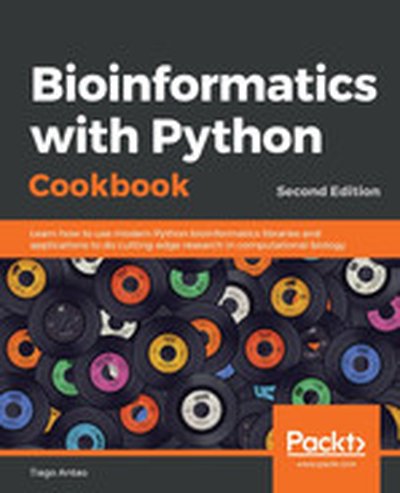
Bioinformatics with Python Cookbook - Second Edition

"Bioinformatics with Python Cookbook" offers a detailed exploration into the modern approaches to computational biology using the Python programming language. Through hands-on recipes, you will master the practical applications of bioinformatics, enabling you to analyze vast biological data effectively using Python libraries and tools. What this Book will help me do Master processing and analyzing genomic datasets in Python to enable accurate bioinformatics discoveries. Understand and apply next-generation sequencing techniques for advanced biological research. Learn to utilize machine learning approaches such as PCA and decision trees for insightful data analysis in biology. Gain proficiency in using high-performance computing frameworks like Dask and Spark for scalable bioinformatics workflows. Develop capabilities to visually represent biological data interactions and insights for presentation and analysis. Author(s) Tiago Antao is a computational scientist specializing in bioinformatics with extensive experience in Python programming applied to biological sciences. He has worked on numerous bioinformatics projects and has a special interest in using Python to bridge biology and data science. Tiago's approachable writing style ensures that both newcomers and experts benefit from his insights. Who is it for? This book is designed for bioinformatics professionals, researchers, and data scientists who are eager to harness the power of Python programming for their biological data analysis needs. If you are familiar with Python and are looking to tackle intermediate to advanced bioinformatics challenges using practical recipes, this book is ideal for you. It is suitable for those seeking to expand their knowledge in computational biology and data visualization techniques. Whether you are working on next-generation sequencing or population genetics, this resource will guide you effectively.

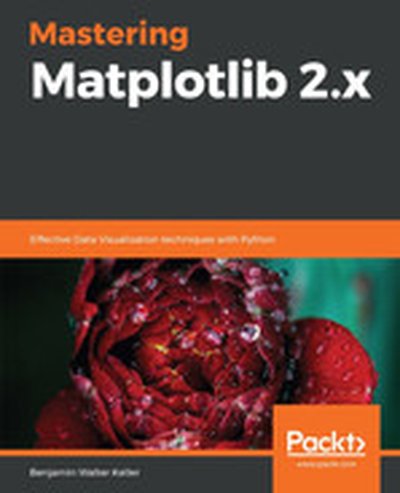
Mastering Matplotlib 2.x

Mastering Matplotlib 2.x guides you through the art and science of creating sophisticated data visualizations with Python's powerful Matplotlib library. You will start by learning the basics of plotting and customizing your charts, progressing to more advanced topics such as 3D visualization, geospatial data display, and creating interactive plots using Jupyter Notebook. What this Book will help me do Create complex and highly customizable data plots using Matplotlib. Effectively visualize data in three dimensions, including geospatial data. Use advanced matplotlib features to represent non-Cartesian and vector data. Build interactive visualizations using Jupyter Notebook and Python. Develop special-purpose and movie-style plots to enhance data representation. Author(s) None Keller is a seasoned software engineer and data visualization enthusiast with years of experience using Python for data analysis. Their practical and hands-on approach ensures that readers can directly apply the concepts taught in their projects. None aims to make advanced visualization techniques accessible to all. Who is it for? This book is perfect for developers, scientists, and analysts who need sophisticated visualization tools for their projects. Prior experience with Python and basic familiarity with Matplotlib will help you get the most out of the book. If you're looking to deepen your understanding of data visualization or to create interactive and advanced visualizations, this book is for you.

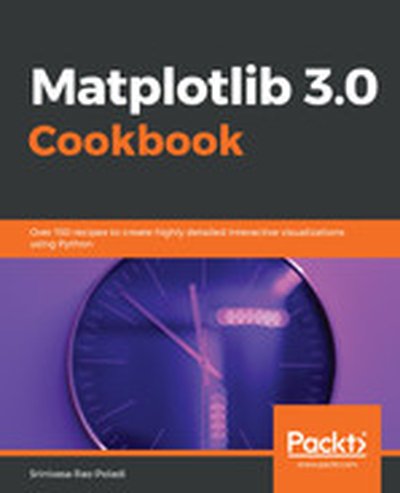
Matplotlib 3.0 Cookbook

Matplotlib 3.0 Cookbook is your go-to guide for mastering the Matplotlib library in Python for creating a wide range of data visualizations. Through 150+ practical recipes, you will learn how to design intuitive and detailed charts, graphs, and dashboards, navigating from simple plots to advanced interactive and 3D visualizations. What this Book will help me do Develop professional-quality data visualizations using Matplotlib. Leverage Matplotlib's API for both quick plotting and advanced customization. Create interactive and animative plots for engaging data representation. Extend Matplotlib functionalities with toolkits like cartopy and axisartist. Integrate Matplotlib figures into GUI applications for broader usage. Author(s) None Poladi and None Borkar are experienced Python developers and enthusiasts who have collaborated in creating a resourceful guide to Matplotlib. They bring extensive experience in data science visualization and Python programming. Their collaborative effort ensures clarity and an approachable learning curve for anyone delving into graphical data representation using Matplotlib. Who is it for? This book is ideal for data scientists, Python developers, and visualization enthusiasts eager to enhance their technical plotting skills. The content covers both fundamentals and advanced topics, suitable for users ranging from beginners curious about Python visualization to experts seeking streamlined workflows and advanced techniques.

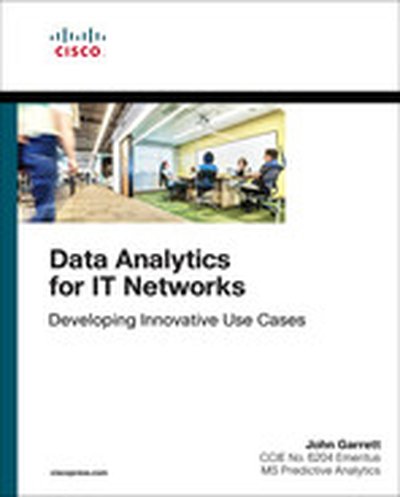
Data Analytics for IT Networks: Developing Innovative Use Cases, First Edition

Use data analytics to drive innovation and value throughout your network infrastructure Network and IT professionals capture immense amounts of data from their networks. Buried in this data are multiple opportunities to solve and avoid problems, strengthen security, and improve network performance. To achieve these goals, IT networking experts need a solid understanding of data science, and data scientists need a firm grasp of modern networking concepts. Data Analytics for IT Networks fills these knowledge gaps, allowing both groups to drive unprecedented value from telemetry, event analytics, network infrastructure metadata, and other network data sources. Drawing on his pioneering experience applying data science to large-scale Cisco networks, John Garrett introduces the specific data science methodologies and algorithms network and IT professionals need, and helps data scientists understand contemporary network technologies, applications, and data sources. After establishing this shared understanding, Garrett shows how to uncover innovative use cases that integrate data science algorithms with network data. He concludes with several hands-on, Python-based case studies reflecting Cisco Customer Experience (CX) engineers’ supporting its largest customers. These are designed to serve as templates for developing custom solutions ranging from advanced troubleshooting to service assurance. Understand the data analytics landscape and its opportunities in Networking See how elements of an analytics solution come together in the practical use cases Explore and access network data sources, and choose the right data for your problem Innovate more successfully by understanding mental models and cognitive biases Walk through common analytics use cases from many industries, and adapt them to your environment Uncover new data science use cases for optimizing large networks Master proven algorithms, models, and methodologies for solving network problems Adapt use cases built with traditional statistical methods Use data science to improve network infrastructure analysisAnalyze control and data planes with greater sophistication Fully leverage your existing Cisco tools to collect, analyze, and visualize data

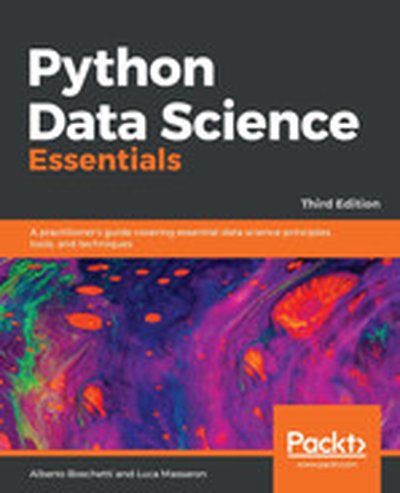
Python Data Science Essentials - Third Edition

Learn the essentials of data science with Python through this comprehensive guide. By the end of this book, you'll have an in-depth understanding of core data science workflows, tools, and techniques. What this Book will help me do Understand and apply data manipulation techniques with pandas and NumPy. Build and optimize machine learning models with scikit-learn. Analyze and visualize complex datasets for derived insights. Implement exploratory data analysis to uncover trends in data. Leverage advanced techniques like graph analysis and deep learning for sophisticated projects. Author(s) Alberto Boschetti and Luca Massaron combine their extensive expertise in data science and Python programming to guide readers effectively. With hands-on knowledge and a passion for teaching, they provide practical insights across the data science lifecycle. Who is it for? This book is ideal for aspiring data scientists, data analysts, and software developers aiming to enhance their data analysis skills. Suited for beginners familiar with Python and basic statistics, this guide bridges the gap to real-world applications. Advance your career by unlocking crucial data science expertise.

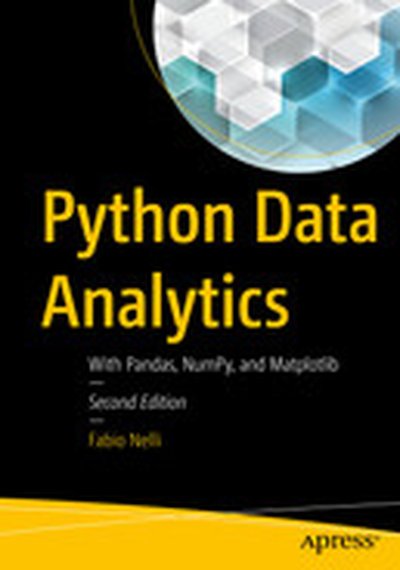
Python Data Analytics: With Pandas, NumPy, and Matplotlib

Explore the latest Python tools and techniques to help you tackle the world of data acquisition and analysis. You'll review scientific computing with NumPy, visualization with matplotlib, and machine learning with scikit-learn. This revision is fully updated with new content on social media data analysis, image analysis with OpenCV, and deep learning libraries. Each chapter includes multiple examples demonstrating how to work with each library. At its heart lies the coverage of pandas, for high-performance, easy-to-use data structures and tools for data manipulation Author Fabio Nelli expertly demonstrates using Python for data processing, management, and information retrieval. Later chapters apply what you've learned to handwriting recognition and extending graphical capabilities with the JavaScript D3 library. Whether you are dealing with sales data, investment data, medical data, web page usage, or other data sets, Python Data Analytics, Second Edition is an invaluable reference with its examples of storing, accessing, and analyzing data. What You'll Learn Understand the core concepts of data analysis and the Python ecosystem Go in depth with pandas for reading, writing, and processing data Use tools and techniques for data visualization and image analysis Examine popular deep learning libraries Keras, Theano,TensorFlow, and PyTorch Who This Book Is For Experienced Python developers who need to learn about Pythonic tools for data analysis

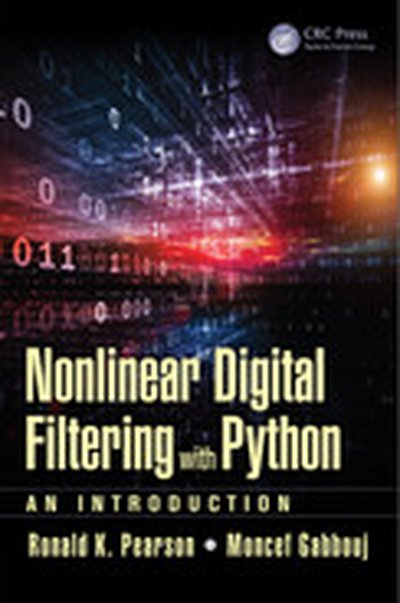
Nonlinear Digital Filtering with Python

This book discusses important structural filter classes including the median filter and a number of its extensions (e.g., weighted and recursive median filters), and Volterra filters based on polynomial nonlinearities. Using results from algebra and the theory of functional equations to construct and characterize behaviorally defined nonlinear filter classes, the text first introduces Python programming, and then proposes practical, bottom-up strategies for designing more complex and capable filters from simpler components in a way that preserves the key properties of these components.

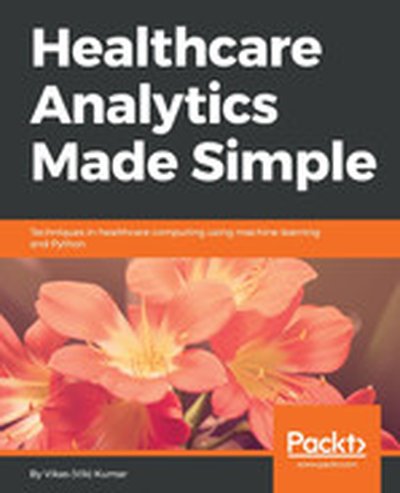
Healthcare Analytics Made Simple

Navigate the fascinating intersection of healthcare and data science with the book "Healthcare Analytics Made Simple." This comprehensive guide empowers you to use Python and machine learning techniques to analyze and improve real healthcare systems. Demystify intricate concepts with Python code and SQL to gain actionable insights and build predictive models for healthcare. What this Book will help me do Understand healthcare incentives, policies, and datasets to ground your analysis in practical knowledge. Master the use of Python libraries and SQL for healthcare data analysis and visualization. Develop skills to apply machine learning for predictive and descriptive analytics in healthcare. Learn to assess quality metrics and evaluate provider performance using robust tools. Get acquainted with upcoming trends and future applications in healthcare analytics. Author(s) The authors, None Kumar and None Khader, are experts in data science and healthcare informatics. They bring years of experience teaching, researching, and applying data analytics in healthcare. Their approach is hands-on and clear, aiming to make complex topics accessible and engaging for their audience. Who is it for? This book is perfect for data science professionals eager to specialize in healthcare analytics. Additionally, clinicians aiming to leverage computing and data analytics in improving healthcare processes will find valuable insights. Programming enthusiasts and students keen to enter healthcare analytics will also greatly benefit. Tailored for beginners in this field, it is an educational yet robust resource.

Principles and Practice of Big Data, 2nd Edition

Principles and Practice of Big Data: Preparing, Sharing, and Analyzing Complex Information, Second Edition updates and expands on the first edition, bringing a set of techniques and algorithms that are tailored to Big Data projects. The book stresses the point that most data analyses conducted on large, complex data sets can be achieved without the use of specialized suites of software (e.g., Hadoop), and without expensive hardware (e.g., supercomputers). The core of every algorithm described in the book can be implemented in a few lines of code using just about any popular programming language (Python snippets are provided). Through the use of new multiple examples, this edition demonstrates that if we understand our data, and if we know how to ask the right questions, we can learn a great deal from large and complex data collections. The book will assist students and professionals from all scientific backgrounds who are interested in stepping outside the traditional boundaries of their chosen academic disciplines. Presents new methodologies that are widely applicable to just about any project involving large and complex datasets Offers readers informative new case studies across a range scientific and engineering disciplines Provides insights into semantics, identification, de-identification, vulnerabilities and regulatory/legal issues Utilizes a combination of pseudocode and very short snippets of Python code to show readers how they may develop their own projects without downloading or learning new software

Hands-On Data Analysis with NumPy and pandas

Dive into 'Hands-On Data Analysis with NumPy and pandas' to explore the world of Python for data analysis. This book guides you through using these powerful Python libraries to handle and manipulate data efficiently. You will learn hands-on techniques to read, sort, group, and visualize data for impactful analysis. What this Book will help me do Learn to set up a Python environment for data analysis with tools like Jupyter notebooks. Master data handling using NumPy, focusing on array creation, slicing, and operations. Understand the functionalities of pandas for managing datasets, including DataFrame operations. Discover techniques for data preparation, such as handling missing data and hierarchical indexing. Explore data visualization using pandas and create impactful plots for data insights. Author(s) The book is authored by None Miller, a seasoned Python developer and data analyst. With a strong background in leveraging Python for data processing, None focuses on creating content that is practical and accessible. The author's teaching approach emphasizes hands-on practice and understanding, making technical topics approachable and engaging. Who is it for? This book is ideal for Python developers at a beginner to intermediate level looking to venture into data analysis. If you are transitioning from general programming to data-focused work or need to enhance your skills in data manipulation and processing, this book will be a strong foundation. It requires no prior experience with data analysis, so it is accessible to many learners.

Mastering Numerical Computing with NumPy

"Mastering Numerical Computing with NumPy" is a comprehensive guide to becoming proficient in numerical computing using Python's NumPy library. This book will teach you how to perform advanced numerical operations, explore data statistically, and build predictive models effectively. By mastering the provided concepts and exercises, you'll be empowered in your scientific computing projects. What this Book will help me do Perform and optimize vector and matrix operations effectively using NumPy. Analyze data using exploratory data analysis techniques and predictive modeling. Implement unsupervised learning algorithms such as clustering with relevant datasets. Understand advanced benchmarks and select optimal configurations for performance. Write efficient and scalable programs utilizing advanced NumPy features. Author(s) The authors of "Mastering Numerical Computing with NumPy" include domain experts and educators with years of experience in Python programming, numerical computing, and data science. They bring a practical and detailed approach to teaching advanced topics and guide you through every step of mastering NumPy. Who is it for? This book is ideal for Python programmers, data analysts, and data science enthusiasts who aim to deepen their understanding of numerical computing. If you have basic mathematics skills and want to utilize NumPy to solve complex data problems, this book is an excellent resource. Whether you're a beginner or an intermediate user, you will find this content approachable and enriching. Advanced users will benefit from the highly specialized content and real-world examples.

Python Graphics: A Reference for Creating 2D and 3D Images

This book will show you how to use Python to create graphic objects for technical illustrations and data visualization. Often, the function you need to produce the image you want cannot be found in a standard Python library. Knowing how to create your own graphics will free you from the chore of looking for a function that may not exist or be difficult to use. This book will give you the tools to eliminate that process and create and customize your own graphics to satisfy your own unique requirements. Using basic geometry and trigonometry, you will learn how to create math models of 2D and 3D shapes. Using Python, you will then learn how to project these objects onto the screen of your monitor, translate and rotate them in 2D and 3D, remove hidden lines, add shading, view in perspective, view intersections between surfaces, and display shadows cast from one object onto another. You will also learn how to visualize and analyze 2D and 3D data sets, fit lines, splines and functions. The final chapter includes demonstrations from quantum mechanics, astronomy and climate science. Includes Python programs written in a clear and open style with detailed explanation of the code. What You Will Learn How to create math and Python models of 2D and 3D shapes. How to rotate, view in perspective, shade, remove hidden lines, display projected shadows, and more. How to analyze and display data sets as curves and surfaces, fit lines and functions. Who This Book Is For Python developers, scientists, engineers, and students using Python to produce technical illustrations, display and analyze data sets. Assumes familiarity with vectors, matrices, geometry and trigonometry.

Python vs. R for Data Science

Python and R are two of the mainstream languages in data science. Fundamentally, Python is a language for programmers, whereas R is a language for statisticians. In a data science context, there is a significant degree of overlap when it comes to the capabilities of each language in the fields of regression analysis and machine learning. Your choice of language will depend highly on the environment in which you are operating. In a production environment, Python integrates with other languages much more seamlessly and is therefore the modus operandi in this context. However, R is much more common in research environments due to its more extensive selection of libraries for statistical analysis.

Hands-On Data Science with Anaconda

Hands-On Data Science with Anaconda is your guide to harnessing the full potential of Anaconda, a powerful platform for data science and machine learning. With this book, you will learn how to set up Anaconda, manage packages, explore advanced data processing techniques, and create robust machine learning models using Python, R, and Julia. What this Book will help me do Master data preprocessing techniques including cleaning, sorting, and classification using Anaconda. Understand and utilize the conda package manager for efficient package management. Learn to explore and visualize data using packages and frameworks supported by Anaconda. Perform advanced operations like clustering, regression, and building predictive models. Implement distributed computing and manage environments effectively with Anaconda Cloud. Author(s) Yuxing Yan and co-author None Yan are seasoned data science professionals with extensive experience in utilizing cutting-edge tools like Anaconda to simplify and enhance data science workflows. With a focus on making complex concepts accessible, they offer a practical and systematic approach to mastering tools that power real-world data science projects. Who is it for? This book is for data science practitioners, analysts, or developers with a basic understanding of Python, R, and linear algebra who want to scale their skills and learn to utilize the Anaconda platform for their projects. If you're seeking to work more effectively within the Anaconda ecosystem or equip yourself with efficient tools for data analysis and machine learning, this book is for you.

Matplotlib for Python Developers - Second Edition

"Matplotlib for Python Developers" is your comprehensive guide to creating interactive and informative data visualizations using the Matplotlib library in Python. This book covers all the essentials-from building static plots to integrating dynamic graphics with web applications. What this Book will help me do Design and customize stunning data visualizations including heatmaps and scatter plots. Integrate Matplotlib visualization seamlessly into GUI applications using GTK3 or Qt. Utilize advanced plotting libraries like Seaborn and GeoPandas for enhanced visual representation. Develop web-based dashboards and plots that dynamically update using Django. Master techniques to prepare your Matplotlib projects for deployment in a cloud-based environment. Author(s) Authors Aldrin Yim, Claire Chung, and Allen Yu are seasoned developers and data scientists with extensive experience in Python and data visualization. They bring a practical touch to technical concepts, aiming to bridge theory with hands-on applications. With such a skilled team behind this book, you'll gain both foundational knowledge and advanced insights into Matplotlib. Who is it for? This book is the ideal resource for Python developers and data analysts looking to enhance their data visualization skills. If you're familiar with Python and want to create engaging, clear, and dynamic visualizations, this book will give you the tools to achieve that. Designed for a range of expertise, from beginners understanding the basics to experienced users diving into complex integrations, this book has something for everyone. You'll be guided through every step, ensuring you build the confidence and skills needed to thrive in this area.

Practical Web Scraping for Data Science: Best Practices and Examples with Python

This book provides a complete and modern guide to web scraping, using Python as the programming language, without glossing over important details or best practices. Written with a data science audience in mind, the book explores both scraping and the larger context of web technologies in which it operates, to ensure full understanding. The authors recommend web scraping as a powerful tool for any data scientist’s arsenal, as many data science projects start by obtaining an appropriate data set. Starting with a brief overview on scraping and real-life use cases, the authors explore the core concepts of HTTP, HTML, and CSS to provide a solid foundation. Along with a quick Python primer, they cover Selenium for JavaScript-heavy sites, and web crawling in detail. The book finishes with a recap of best practices and a collection of examples that bring together everything you've learned and illustrate various data science use cases. What You'll Learn Leverage well-established best practices and commonly-used Python packages Handle today's web, including JavaScript, cookies, and common web scraping mitigation techniques Understand the managerial and legal concerns regarding web scraping Who This Book is For A data science oriented audience that is probably already familiar with Python or another programming language or analytical toolkit (R, SAS, SPSS, etc). Students or instructors in university courses may also benefit. Readers unfamiliar with Python will appreciate a quick Python primer in chapter 1 to catch up with the basics and provide pointers to other guides as well.

Web Scraping with Python, 2nd Edition

If programming is magic then web scraping is surely a form of wizardry. By writing a simple automated program, you can query web servers, request data, and parse it to extract the information you need. The expanded edition of this practical book not only introduces you web scraping, but also serves as a comprehensive guide to scraping almost every type of data from the modern web. Part I focuses on web scraping mechanics: using Python to request information from a web server, performing basic handling of the server's response, and interacting with sites in an automated fashion. Part II explores a variety of more specific tools and applications to fit any web scraping scenario you're likely to encounter. Parse complicated HTML pages Develop crawlers with the Scrapy framework Learn methods to store data you scrape Read and extract data from documents Clean and normalize badly formatted data Read and write natural languages Crawl through forms and logins Scrape JavaScript and crawl through APIs Use and write image-to-text software Avoid scraping traps and bot blockers Use scrapers to test your website