talk-data.com talk-data.com

Topic

Cyber Security

cybersecurity information_security data_security privacy

615

tagged

Activity Trend

297 peak/qtr
2020-Q1 2026-Q1

Activities

Showing filtered results

Filtering by: O'Reilly Data Engineering Books ×
Dynamic SQL: Applications, Performance, and Security in Microsoft SQL Server

Take a deep dive into the many uses of dynamic SQL in Microsoft SQL Server. This edition has been updated to use the newest features in SQL Server 2016 and SQL Server 2017 as well as incorporating the changing landscape of analytics and database administration. Code examples have been updated with new system objects and functions to improve efficiency and maintainability. Executing dynamic SQL is key to large-scale searching based on user-entered criteria. Dynamic SQL can generate lists of values and even code with minimal impact on performance. Dynamic SQL enables dynamic pivoting of data for business intelligence solutions as well as customizing of database objects. Yet dynamic SQL is feared by many due to concerns over SQL injection or code maintainability. Dynamic SQL: Applications, Performance, and Security in Microsoft SQL Server helps you bring the productivity and user-satisfaction of flexible and responsive applications to your organization safely and securely. Your organization’s increased ability to respond to rapidly changing business scenarios will build competitive advantage in an increasingly crowded and competitive global marketplace. With a focus on new applications and modern database architecture, this edition illustrates that dynamic SQL continues to evolve and be a valuable tool for administration, performance optimization, and analytics. What You'ill Learn Build flexible applications that respond to changing business needs Take advantage of creative, innovative, and productive uses of dynamic SQL Know about SQL injection and be confident in your defenses against it Address performance concerns in stored procedures and dynamic SQL Troubleshoot and debug dynamic SQL to ensure correct results Automate your administration of features within SQL Server Who This Book is For Developers and database administrators looking to hone and build their T-SQL coding skills. The book is ideal for developers wanting to plumb the depths of application flexibility and troubleshoot performance issues involving dynamic SQL. The book is also ideal for programmers wanting to learn what dynamic SQL is about and how it can help them deliver competitive advantage to their organizations.

Apache Superset Quick Start Guide

Apache Superset Quick Start Guide teaches you how to leverage Apache Superset to create interactive and insightful data visualizations. With this book, you'll understand how to integrate Superset with popular databases and build user-friendly dashboards tailored for business intelligence needs. What this Book will help me do Set up and configure Apache Superset for data visualization tasks. Integrate data from SQL databases into Superset for dashboards. Design dashboards tailored to represent business metrics and insights. Use Superset's visualization techniques to explore and present various datasets. Understand and apply user role management and security features in Superset. Author(s) None Shekhar is an experienced data visualization and business intelligence specialist with years of experience in working with Apache Superset. They have written several guides on utilizing open-source tools for enterprise needs. Their technical expertise and approachable writing style make this guide practical and engaging. Who is it for? This book is geared towards data analysts, business intelligence professionals, and developers. Beginners to Superset can quickly grasp the fundamentals, while those with prior experience in data visualization will appreciate the advanced techniques. It's perfect for anyone looking to enhance their data storytelling and dashboard design skills.

IBM TS4500 R5 Tape Library Guide

Abstract The IBM® TS4500 (TS4500) tape library is a next-generation tape solution that offers higher storage density and integrated management than previous solutions. This IBM Redbooks® publication gives you a close-up view of the new IBM TS4500 tape library. In the TS4500, IBM delivers the density that today’s and tomorrow’s data growth requires. It has the cost-effectiveness and the manageability to grow with business data needs, while you preserve existing investments in IBM tape library products. Now, you can achieve both a low cost per terabyte (TB) and a high TB density per square foot because the TS4500 can store up to 11 petabytes (PB) of uncompressed data in a single frame library or scale up to 2 PB per square foot to over 350 PB. The TS4500 offers the following benefits: High availability: Dual active accessors with integrated service bays reduce inactive service space by 40%. The Elastic Capacity option can be used to completely eliminate inactive service space. Flexibility to grow: The TS4500 library can grow from the right side and the left side of the first L frame because models can be placed in any active position. Increased capacity: The TS4500 can grow from a single L frame up to another 17 expansion frames with a capacity of over 23,000 cartridges. High-density (HD) generation 1 frames from the TS3500 library can be redeployed in a TS4500. Capacity on demand (CoD): CoD is supported through entry-level, intermediate, and base-capacity configurations. Advanced Library Management System (ALMS): ALMS supports dynamic storage management, which enables users to create and change logical libraries and configure any drive for any logical library. Support for IBM TS1160 while also supporting TS1155, TS1150, and TS1140 tape drive: The TS1160 gives organizations an easy way to deliver fast access to data, improve security, and provide long-term retention, all at a lower cost than disk solutions. The TS1160 offers high-performance, flexible data storage with support for data encryption. Also, this enhanced fifth-generation drive can help protect investments in tape automation by offering compatibility with existing automation. The new TS1160 Tape Drive Model 60E delivers a dual 10 Gb or 25 Gb Ethernet host attachment interface that is optimized for cloud-based and hyperscale environments. The TS1160 Tape Drive Model 60F delivers a native data rate of 400 MBps, the same load/ready, locate speeds, and access times as the TS1155, and includes dual-port 16 Gb Fibre Channel support. Support of the IBM Linear Tape-Open (LTO) Ultrium 8 tape drive: The LTO Ultrium 8 offering represents significant improvements in capacity, performance, and reliability over the previous generation, LTO Ultrium 7, while still protecting your investment in the previous technology. Support of LTO 8 Type M cartridge (M8): The LTO Program is introducing a new capability with LTO-8 drives. The ability of the LTO-8 drive to write 9 TB on a brand new LTO-7 cartridge instead of 6 TB as specified by the LTO-7 format. Such a cartridge is called an LTO-7 initialized LTO-8 Type M cartridge. Integrated TS7700 back-end Fibre Channel (FC) switches are available. Up to four library-managed encryption (LME) key paths per logical library are available. This book describes the TS4500 components, feature codes, specifications, supported tape drives, encryption, new integrated management console (IMC), and command-line interface (CLI). You learn how to accomplish the following specific tasks: Improve storage density with increased expansion frame capacity up to 2.4 times and support 33% more tape drives per frame. Manage storage by using the ALMS feature. Improve business continuity and disaster recovery with dual active accessor, automatic control path failover, and data path failover. Help ensure security and regulatory compliance with tape-drive encryption and Write Once Read Many (WORM) media. Support IBM LTO Ultrium 8, 7, 6, and 5, IBM TS1160, TS1155, TS1150, and TS1140 tape drives. Provide a flexible upgrade path for users who want to expand their tape storage as their needs grow. Reduce the storage footprint and simplify cabling with 10 U of rack space on top of the library. This guide is for anyone who wants to understand more about the IBM TS4500 tape library. It is particularly suitable for IBM clients, IBM Business Partners, IBM specialist sales representatives, and technical specialists.

Migrating to MariaDB: Toward an Open Source Database Solution

Mitigate the risks involved in migrating away from a proprietary database platform toward MariaDB’s open source database engine. This book will help you assess the risks and the work involved, and ensure a successful migration. Migrating to MariaDB describes the process and lessons learned during a migration from a proprietary database management engine to the MariaDB open source solution. The book discusses the drivers for making the decision and change, walking you through all aspects of the process from evaluating the licensing, navigating the pitfalls and hurdles of a migration, through to final implementation on the new platform. The book highlights the cost-effectiveness of MariaDB and how the licensing worries are simplified in comparison to running on a proprietary platform. You’ll learn to do your own risk assessment, to identify database and application code that may need to be modified or re-implemented, and to identify MariaDB features to provide the security and failover protection needed by corporate customers. Let the author’s experience in migrating a financial firm to MariaDB inform your own efforts, helping you to develop a road map for both technical and political success within your own organization as you migrate away from proprietary lock-in toward MariaDB’s open source solution. What You'll Learn Evaluate and compare licensing costs between proprietary databases and MariaDB Perform a proper risk assessment to inform your planning and execution of the migration Build a migration road map from the book’s example that is specific to your situation Make needed application changes and migrate data to the MariaDB open source database engine Who This Book Is For Technical professionals (including database administrators, programmers, and technical management) who are interested in migrating away from a proprietary database platform toward MariaDB’s open source database engine and need to assess the risks and the work involved

IBM Storage Networking SAN768C-6 Product Guide

This IBM® Redbooks® Product Guide describes the IBM Storage Networking SAN768C-6. IBM Storage Networking SAN768C-6 has the industry's highest port density for a storage area network (SAN) director and features 768 line-rate 32 gigabits per second (Gbps) or 16 Gbps Fibre Channel ports. Designed to support multiprotocol workloads, IBM Storage Networking SAN768C-6 enables SAN consolidation and collapsed-core solutions for large enterprises, which reduces the number of managed switches and leads to easy-to-manage deployments. IBM Storage Networking SAN768C-6 supports the 48-Port 32 Gbps Fibre Channel Switching Module, the 48-Port 16 Gbps Fibre Channel Switching Module, the 48-port 10 Gbps FCoE Switching Module, the 24-port 40 Gbps FCoE switching module, and the 24/10-port SAN Extension Module. By reducing the number of front-panel ports that are used on inter-switch links (ISLs), it also offers room for future growth. IBM Storage Networking SAN768C-6 addresses the mounting storage requirements of today's large virtualized data centers. As a director-class SAN switch, IBM Storage Networking SAN768C-6 uses the same operating system and management interface as other IBM data center switches. It brings intelligent capabilities to a high-performance, protocol-independent switch fabric, and delivers uncompromising availability, security, scalability, simplified management, and the flexibility to integrate new technologies. You can use IBM Storage Networking SAN768C-6 to transparently deploy unified fabrics with Fibre Channel and Fibre Channel over Ethernet (FCoE) connectivity to achieve low total cost of ownership (TCO). For mission-critical enterprise storage networks that require secure, robust, cost-effective business-continuance services, the FCIP extension module is designed to deliver outstanding SAN extension performance, reducing latency for disk and tape operations with FCIP acceleration features, including FCIP write acceleration and FCIP tape write and read acceleration.

IBM Power Systems E870C and E880C Technical Overview and Introduction

This IBM® Redpaper™ publication is a comprehensive guide that covers the IBM Power® System E870C (9080-MME) and IBM Power System E880C (9080-MHE) servers that support IBM AIX®, IBM i, and Linux operating systems. The objective of this paper is to introduce the major innovative Power E870C and Power E880C offerings and their relevant functions. The new Power E870C and Power E880C servers with OpenStack-based cloud management and open source automation enables clients to accelerate the transformation of their IT infrastructure for cloud while providing tremendous flexibility during the transition. In addition, the Power E870C and Power E880C models provide clients increased security, high availability, rapid scalability, simplified maintenance, and management, all while enabling business growth and dramatically reducing costs. The systems management capability of the Power E870C and Power E880C servers speeds up and simplifies cloud deployment by providing fast and automated VM deployments, prebuilt image templates, and self-service capabilities, all with an intuitive interface. Enterprise servers provide the highest levels of reliability, availability, flexibility, and performance to bring you a world-class enterprise private and hybrid cloud infrastructure. Through enterprise-class security, efficient built-in virtualization that drives industry-leading workload density, and dynamic resource allocation and management, the server consistently delivers the highest levels of service across hundreds of virtual workloads on a single system. The Power E870C and Power E880C server includes the cloud management software and services to assist with clients' move to the cloud, both private and hybrid. The following capabilities are included: Private cloud management with IBM Cloud PowerVC Manager, Cloud-based HMC Apps as a service, and open source cloud automation and configuration tooling for AIX Hybrid cloud support Hybrid infrastructure management tools Securely connect system of record workloads and data to cloud native applications IBM Cloud Starter Pack Flexible capacity on demand Power to Cloud Services This paper expands the current set of IBM Power Systems™ documentation by providing a desktop reference that offers a detailed technical description of the Power E870C and Power E880C systems. This paper does not replace the latest marketing materials and configuration tools. It is intended as another source of information that, together with existing sources, can be used to enhance your knowledge of IBM server solutions.

Securing SQL Server: DBAs Defending the Database

Protect your data from attack by using SQL Server technologies to implement a defense-in-depth strategy for your database enterprise. This new edition covers threat analysis, common attacks and countermeasures, and provides an introduction to compliance that is useful for meeting regulatory requirements such as the GDPR. The multi-layered approach in this book helps ensure that a single breach does not lead to loss or compromise of confidential, or business sensitive data. Database professionals in today’s world deal increasingly with repeated data attacks against high-profile organizations and sensitive data. It is more important than ever to keep your company’s data secure. Securing SQL Server demonstrates how developers, administrators and architects can all play their part in the protection of their company’s SQL Server enterprise. This book not only provides a comprehensive guide to implementing the security model in SQLServer, including coverage of technologies such as Always Encrypted, Dynamic Data Masking, and Row Level Security, but also looks at common forms of attack against databases, such as SQL Injection and backup theft, with clear, concise examples of how to implement countermeasures against these specific scenarios. Most importantly, this book gives practical advice and engaging examples of how to defend your data, and ultimately your job, against attack and compromise. What You'll Learn Perform threat analysis Implement access level control and data encryption Avoid non-reputability by implementing comprehensive auditing Use security metadata to ensure your security policies are enforced Mitigate the risk of credentials being stolen Put countermeasures in place against common forms of attack Who This Book Is For Database administrators who need to understand and counteract the threat of attacks against their company’s data, and useful for SQL developers and architects

Pro SQL Server on Linux: Including Container-Based Deployment with Docker and Kubernetes

Get SQL Server up and running on the Linux operating system and containers. No database professional managing or developing SQL Server on Linux will want to be without this deep and authoritative guide by one of the most respected experts on SQL Server in the industry. Get an inside look at how SQL Server for Linux works through the eyes of an engineer on the team that made it possible. Microsoft SQL Server is one of the leading database platforms in the industry, and SQL Server 2017 offers developers and administrators the ability to run a database management system on Linux, offering proven support for enterprise-level features and without onerous licensing terms. Organizations invested in Microsoft and open source technologies are now able to run a unified database platform across all their operating system investments. Organizations are further able to take full advantage of containerization through popular platforms such as Docker and Kubernetes. Pro SQL Server on Linux walks you through installing and configuring SQL Server on the Linux platform. The author is one of the principal architects of SQL Server for Linux, and brings a corresponding depth of knowledge that no database professional or developer on Linux will want to be without. Throughout this book are internals of how SQL Server on Linux works including an in depth look at the innovative architecture. The book covers day-to-day management and troubleshooting, including diagnostics and monitoring, the use of containers to manage deployments, and the use of self-tuning and the in-memory capabilities. Also covered are performance capabilities, high availability, and disaster recovery along with security and encryption. The book covers the product-specific knowledge to bring SQL Server and its powerful features to life on the Linux platform, including coverage of containerization through Docker and Kubernetes. What You'll Learn Learn about the history and internal of the unique SQL Server on Linux architecture. Install and configure Microsoft’s flagship database product on the Linux platform Manage your deployments using container technology through Docker and Kubernetes Know the basics of building databases, the T-SQL language, and developing applications against SQL Server on Linux Use tools and features to diagnose, manage, and monitor SQL Server on Linux Scale your application by learning the performance capabilities of SQL Server Deliver high availability and disaster recovery to ensure business continuity Secure your database from attack, and protect sensitive data through encryption Take advantage of powerful features such as Failover Clusters, Availability Groups, In-Memory Support, and SQL Server’sSelf-Tuning Engine Learn how to migrate your database from older releases of SQL Server and other database platforms such as Oracle and PostgreSQL Build and maintain schemas, and perform management tasks from both GUI and command line Who This Book Is For Developers and IT professionals who are new to SQL Server and wish to configure it on the Linux operating system. This book is also useful to those familiar with SQL Server on Windows who want to learn the unique aspects of managing SQL Server on the Linux platform and Docker containers. Readers should have a grasp of relational database concepts and be comfortable with the SQL language.

IBM Spectrum Scale Security

Storage systems must provide reliable and convenient data access to all authorized users while simultaneously preventing threats coming from outside or even inside the enterprise. Security threats come in many forms, from unauthorized access to data, data tampering, denial of service, and obtaining privileged access to systems. According to the Storage Network Industry Association (SNIA), data security in the context of storage systems is responsible for safeguarding the data against theft, prevention of unauthorized disclosure of data, prevention of data tampering, and accidental corruption. This process ensures accountability, authenticity, business continuity, and regulatory compliance. Security for storage systems can be classified as follows: Data storage (data at rest, which includes data durability and immutability) Access to data Movement of data (data in flight) Management of data IBM® Spectrum Scale is a software-defined storage system for high performance, large-scale workloads on-premises or in the cloud. IBM Spectrum™ Scale addresses all four aspects of security by securing data at rest (protecting data at rest with snapshots, and backups and immutability features) and securing data in flight (providing secure management of data, and secure access to data by using authentication and authorization across multiple supported access protocols). These protocols include POSIX, NFS, SMB, Hadoop, and Object (REST). For automated data management, it is equipped with powerful information lifecycle management (ILM) tools that can help administer unstructured data by providing the correct security for the correct data. This IBM Redpaper™ publication details the various aspects of security in IBM Spectrum Scale™, including the following items: Security of data in transit Security of data at rest Authentication Authorization Hadoop security Immutability Secure administration Audit logging Security for transparent cloud tiering (TCT) Security for OpenStack drivers Unless stated otherwise, the functions that are mentioned in this paper are available in IBM Spectrum Scale V4.2.1 or later releases.

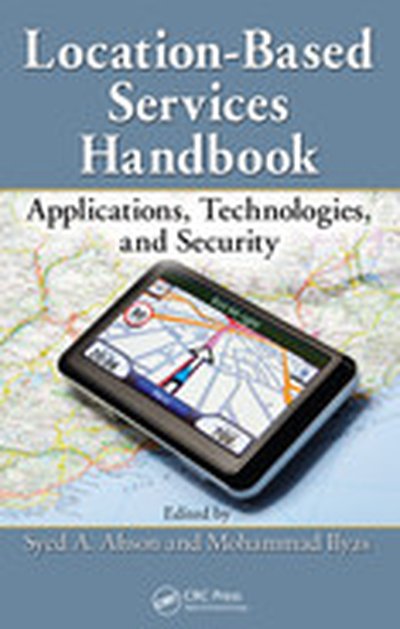
Location-Based Services Handbook

Meeting the demands of the rapid growth of wireless Internet subscribers and the development of the world location-based services (LBS) market, this volume introduces and comprehensively discusses various location based applications such as buddy finder and proximity and security services. The material is organized in three major sections: applications, technologies, and security. Written by experts from across the globe, the articles in each of the sections range from basic concepts to research grade material and include discussions of future directions. An extensive bibliography is included with each chapter.

Expert GeoServer

"Expert GeoServer" guides readers through the process of building, optimizing, and securing GeoServer-powered web mapping applications. By exploring concepts like spatial analysis platforms, tile caching, and secure authentication, this book equips you to create highly performant and secure geospatial applications. What this Book will help me do Learn to develop spatial analysis platforms using web processing services. Master tile caching to significantly enhance the speed of your mapping applications. Implement secure authentication to protect sensitive geospatial data. Optimize GeoServer for improved performance and resource utilization. Deploy your GeoServer-backed applications on modern cloud-hosting infrastructures. Author(s) None Mearns is an experienced software developer and geospatial technology expert. With a strong background in GeoServer implementation, None has helped organizations optimize and secure their geospatial platforms. Their writing aims to provide clear and actionable instructions for professionals and learners alike. Who is it for? This book is perfect for geospatial developers and professionals aiming to take their GeoServer skills to the next level. A basic understanding of GeoServer is assumed, as this guide tackles advanced topics like performance optimization and security. If you are looking to enhance the speed, usability, and security of your mapping applications, this is for you. Those aiming to confidently deploy production-ready applications will find it invaluable.

Professional Azure SQL Database Administration

Learn everything you need to manage Azure SQL Database with 'Professional Azure SQL Database Administration'. This book covers critical tasks such as migration, performance optimization, security, and disaster recovery. Perfect for those transitioning to the cloud, it equips you with skills to ensure your database runs smoothly and efficiently. What this Book will help me do Effectively migrate on-premise SQL Server databases to Azure. Master backup, restore, and security operations with Azure SQL Database. Optimize performance and scalability using monitoring and tuning techniques. Implement high availability and disaster recovery strategies. Simplify database management through automation and advanced techniques. Author(s) Ahmad Osama is a seasoned database admin and Azure expert with extensive experience in SQL Server and cloud database management. As a consultant and trainer, he has guided numerous organizations through cloud transitions. Ahmad's teaching philosophy blends practical insights with clear instruction. Who is it for? This book is intended for database administrators and developers looking to transition their skills to Azure SQL Database. If you have some experience with on-premise SQL Server and are familiar with PowerShell, you'll find this guide invaluable. Ideal for those wanting to develop, migrate, or manage Azure SQL solutions.

Getting Started with Kudu

Fast data ingestion, serving, and analytics in the Hadoop ecosystem have forced developers and architects to choose solutions using the least common denominator—either fast analytics at the cost of slow data ingestion or fast data ingestion at the cost of slow analytics. There is an answer to this problem. With the Apache Kudu column-oriented data store, you can easily perform fast analytics on fast data. This practical guide shows you how. Begun as an internal project at Cloudera, Kudu is an open source solution compatible with many data processing frameworks in the Hadoop environment. In this book, current and former solutions professionals from Cloudera provide use cases, examples, best practices, and sample code to help you get up to speed with Kudu. Explore Kudu’s high-level design, including how it spreads data across servers Fully administer a Kudu cluster, enable security, and add or remove nodes Learn Kudu’s client-side APIs, including how to integrate Apache Impala, Spark, and other frameworks for data manipulation Examine Kudu’s schema design, including basic concepts and primitives necessary to make your project successful Explore case studies for using Kudu for real-time IoT analytics, predictive modeling, and in combination with another storage engine

Apache Hive Essentials - Second Edition

"Apache Hive Essentials" provides a focused guide to mastering the essential techniques of processing and analyzing big data with Apache Hive. What this Book will help me do Set up and configure a Hive environment for big data analysis. Compose effective queries using Hive's SQL-like language to extract insights. Optimize Hive performance to handle complex datasets efficiently. Implement data security and user-defined functions to extend capabilities. Integrate Hive with Hadoop tools for comprehensive data solutions. Author(s) Dayong Du, the author of "Apache Hive Essentials," has years of experience working with big data technologies and tools. With hands-on expertise in Hadoop and the entire ecosystem, he brings a practical and informed perspective to this complex field. His approach is to make these technologies accessible to developers and analysts of all levels. Who is it for? This book is perfect for data analysts, developers, or professionals familiar with SQL who are looking to start with Apache Hive for big data processing. It is suitable for those acquainted with Hadoop and its environment and want to expand their skills into efficient data querying and management. Readers should have an interest in how to leverage big data tools for real-world solutions.

IBM Db2 11.1 Certification Guide

Delve into the IBM Db2 11.1 Certification Guide to comprehensively prepare for the IBM C2090-600 exam and master database programming and administration tasks in Db2 environments. Across its insightful chapters, this guide provides practical steps, expert guidance, and over 150 practice questions aimed at ensuring your success. What this Book will help me do Master Db2 server management, including configuration and maintenance tasks, to ensure optimized performance. Implement advanced features such as BLU Acceleration and Db2 pureScale to enhance database functionality. Gain expertise in security protocols, including data encryption and integrity enforcement, for secure database environments. Troubleshoot common Db2 issues using advanced diagnostic tools like db2pd and dsmtop, improving efficiency and uptime. Develop skills in creating and altering database objects, enabling robust database design and management. Author(s) The authors, None Collins and None Saraswatipura, are seasoned database professionals with vast experience in administering and optimizing Db2 environments. Their expertise in guiding students and professionals shines through in the accessible language and practical approach of the book. They bring a blend of theoretical and hands-on insights to ensure learners not only understand but also apply the knowledge effectively. Who is it for? This book is ideal for database administrators, architects, and application developers who are pursuing certification in Db2. It caters to readers with basic Db2 understanding seeking to advance their skills. Whether you're aiming for professional growth or practical expertise, this guide serves your goals by covering certification essentials while enriching your practical knowledge.

Practical Enterprise Data Lake Insights: Handle Data-Driven Challenges in an Enterprise Big Data Lake

Use this practical guide to successfully handle the challenges encountered when designing an enterprise data lake and learn industry best practices to resolve issues. When designing an enterprise data lake you often hit a roadblock when you must leave the comfort of the relational world and learn the nuances of handling non-relational data. Starting from sourcing data into the Hadoop ecosystem, you will go through stages that can bring up tough questions such as data processing, data querying, and security. Concepts such as change data capture and data streaming are covered. The book takes an end-to-end solution approach in a data lake environment that includes data security, high availability, data processing, data streaming, and more. Each chapter includes application of a concept, code snippets, and use case demonstrations to provide you with a practical approach. You will learn the concept, scope, application, and starting point. What You'll Learn Get to know data lake architecture and design principles Implement data capture and streaming strategies Implement data processing strategies in Hadoop Understand the data lake security framework and availability model Who This Book Is For Big data architects and solution architects

Security on IBM z/VSE

Abstract One of a firm’s most valuable resources is its data: client lists, accounting data, employee information, and so on. This critical data must be securely managed and controlled, and simultaneously made available to those users authorized to see it. The IBM® z/VSE® system features extensive capabilities to simultaneously share the firm’s data among multiple users and protect them. Threats to this data come from various sources. Insider threats and malicious hackers are not only difficult to detect and prevent, they might be using resources with the business being unaware. This IBM Redbooks® publication was written to assist z/VSE support and security personnel in providing the enterprise with a safe, secure and manageable environment. This book provides an overview of the security that is provided by z/VSE and the processes for the implementation and configuration of z/VSE security components, Basic Security Manager (BSM), IBM CICS® security, TCP/IP security, single sign-on using LDAP, and connector security.

Microsoft SQL Server 2017 on Linux

Essential Microsoft® SQL Server® 2017 installation, configuration, and management techniques for Linux Foreword by Kalen Delaney, Microsoft SQL Server MVP This comprehensive guide shows, step-by-step, how to set up, configure, and administer SQL Server 2017 on Linux for high performance and high availability. Written by a SQL Server expert and respected author, Microsoft SQL Server 2017 on Linux teaches valuable Linux skills to Windows-based SQL Server professionals. You will get clear coverage of both Linux and SQL Server and complete explanations of the latest features, tools, and techniques. The book offers clear instruction on adaptive query processing, automatic tuning, disaster recovery, security, and much more. •Understand how SQL Server 2017 on Linux works •Install and configure SQL Server on Linux •Run SQL Server on Docker containers •Learn Linux Administration •Troubleshoot and tune query performance in SQL Server •Learn what is new in SQL Server 2017 •Work with adaptive query processing and automatic tuning techniques •Implement high availability and disaster recovery for SQL Server on Linux •Learn the security features available in SQL Server

IBM z14 Model ZR1 Technical Guide

Abstract This IBM® Redbooks® publication describes the new member of the IBM Z® family, IBM z14™ Model ZR1 (Machine Type 3907). It includes information about the Z environment and how it helps integrate data and transactions more securely, and can infuse insight for faster and more accurate business decisions. The z14 ZR1 is a state-of-the-art data and transaction system that delivers advanced capabilities, which are vital to any digital transformation. The z14 ZR1 is designed for enhanced modularity, in an industry standard footprint. A data-centric infrastructure must always be available with a 99.999% or better availability, have flawless data integrity, and be secured from misuse. It also must be an integrated infrastructure that can support new applications. Finally, it must have integrated capabilities that can provide new mobile capabilities with real-time analytics that are delivered by a secure cloud infrastructure. IBM z14 ZR1 servers are designed with improved scalability, performance, security, resiliency, availability, and virtualization. The superscalar design allows z14 ZR1 servers to deliver a record level of capacity over the previous IBM Z platforms. In its maximum configuration, z14 ZR1 is powered by up to 30 client characterizable microprocessors (cores) running at 4.5 GHz. This configuration can run more than 29,000 million instructions per second and up to 8 TB of client memory. The IBM z14 Model ZR1 is estimated to provide up to 54% more total system capacity than the IBM z13s® Model N20. This Redbooks publication provides information about IBM z14 ZR1 and its functions, features, and associated software support. More information is offered in areas that are relevant to technical planning. It is intended for systems engineers, consultants, planners, and anyone who wants to understand the IBM Z servers functions and plan for their usage. It is intended as an introduction to mainframes. Readers are expected to be generally familiar with IBM Z technology and terminology.

Learning PHP, MySQL & JavaScript, 5th Edition

Build interactive, data-driven websites with the potent combination of open source technologies and web standards, even if you have only basic HTML knowledge. In this update to this popular hands-on guide, you’ll tackle dynamic web programming with the latest versions of today’s core technologies: PHP, MySQL, JavaScript, CSS, HTML5, and key jQuery libraries. Web designers will learn how to use these technologies together and pick up valuable web programming practices along the way—including how to optimize websites for mobile devices. At the end of the book, you’ll put everything together to build a fully functional social networking site suitable for both desktop and mobile browsers. Explore MySQL, from database structure to complex queries Use the MySQLi extension, PHP’s improved MySQL interface Create dynamic PHP web pages that tailor themselves to the user Manage cookies and sessions and maintain a high level of security Enhance the JavaScript language with jQuery and jQuery mobile libraries Use Ajax calls for background browser-server communication Style your web pages by acquiring CSS2 and CSS3 skills Implement HTML5 features, including geolocation, audio, video, and the canvas element Reformat your websites into mobile web apps