 talk-data.com
Topic
Cyber Security
2078
tagged
Activity Trend
Top Events
Proactive Vulnerability Management in OT requires a deep dive into the complexities of Operational Technology. Effective management hinges on precise asset identification and a thorough understanding of unique enterprise risks. This approach leads to targeted vulnerability monitoring and patch management, essential in navigating the dynamic landscape of OT security. Emphasize on proactive strategies for vulnerability classification and implementation of robust remediation plans, ensuring a resilient cybersecurity posture in the midst of ever-evolving threats.
IBM® Storage Virtualize based storage systems are secure storage platforms that implement various security-related features, in terms of system-level access controls and data-level security features. This document outlines the available security features and options of IBM Storage Virtualize based storage systems. It is not intended as a "how to" or best practice document. Instead, it is a checklist of features that can be reviewed by a user security team to aid in the definition of a policy to be followed when implementing IBM FlashSystem®, IBM SAN Volume Controller, and IBM Storage Virtualize for Public Cloud. IBM Storage Virtualize features the following levels of security to protect against threats and to keep the attack surface as small as possible: The first line of defense is to offer strict verification features that stop unauthorized users from using login interfaces and gaining access to the system and its configuration. The second line of defense is to offer least privilege features that restrict the environment and limit any effect if a malicious actor does access the system configuration. The third line of defense is to run in a minimal, locked down, mode to prevent damage spreading to the kernel and rest of the operating system. The fourth line of defense is to protect the data at rest that is stored on the system from theft, loss, or corruption (malicious or accidental). The topics that are discussed in this paper can be broadly split into two categories: System security: This type of security encompasses the first three lines of defense that prevent unauthorized access to the system, protect the logical configuration of the storage system, and restrict what actions users can perform. It also ensures visibility and reporting of system level events that can be used by a Security Information and Event Management (SIEM) solution, such as IBM QRadar®. Data security: This type of security encompasses the fourth line of defense. It protects the data that is stored on the system against theft, loss, or attack. These data security features include Encryption of Data At Rest (EDAR) or IBM Safeguarded Copy (SGC). This document is correct as of IBM Storage Virtualize 8.6.
Summary
Stream processing systems have long been built with a code-first design, adding SQL as a layer on top of the existing framework. RisingWave is a database engine that was created specifically for stream processing, with S3 as the storage layer. In this episode Yingjun Wu explains how it is architected to power analytical workflows on continuous data flows, and the challenges of making it responsive and scalable.
Announcements
Hello and welcome to the Data Engineering Podcast, the show about modern data management Data lakes are notoriously complex. For data engineers who battle to build and scale high quality data workflows on the data lake, Starburst powers petabyte-scale SQL analytics fast, at a fraction of the cost of traditional methods, so that you can meet all your data needs ranging from AI to data applications to complete analytics. Trusted by teams of all sizes, including Comcast and Doordash, Starburst is a data lake analytics platform that delivers the adaptability and flexibility a lakehouse ecosystem promises. And Starburst does all of this on an open architecture with first-class support for Apache Iceberg, Delta Lake and Hudi, so you always maintain ownership of your data. Want to see Starburst in action? Go to dataengineeringpodcast.com/starburst and get $500 in credits to try Starburst Galaxy today, the easiest and fastest way to get started using Trino. Dagster offers a new approach to building and running data platforms and data pipelines. It is an open-source, cloud-native orchestrator for the whole development lifecycle, with integrated lineage and observability, a declarative programming model, and best-in-class testability. Your team can get up and running in minutes thanks to Dagster Cloud, an enterprise-class hosted solution that offers serverless and hybrid deployments, enhanced security, and on-demand ephemeral test deployments. Go to dataengineeringpodcast.com/dagster today to get started. Your first 30 days are free! Your host is Tobias Macey and today I'm interviewing Yingjun Wu about the RisingWave database and the intricacies of building a stream processing engine on S3
Interview
Introduction How did you get involved in the area of data management? Can you describe what RisingWave is and the story behind it? There are numerous stream processing engines, near-real-time database engines, streaming SQL systems, etc. What is the specific niche that RisingWave addresses?
What are some of the platforms/architectures that teams are replacing with RisingWave?
What are some of the unique capabilities/use cases that RisingWave provides over other offerings in the current ecosystem? Can you describe how RisingWave is architected and implemented?
How have the design and goals/scope changed since you first started working on it? What are the core design philosophies that you rely on to prioritize the ongoing development of the project?
What are the most complex engineering challenges that you have had to address in the creation of RisingWave? Can you describe a typical workflow for teams that are building on top of RisingWave?
What are the user/developer experience elements that you have prioritized most highly?
What are the situations where RisingWave can/should be a system of record vs. a point-in-time view of data in transit, with a data warehouse/lakehouse as the longitudinal storage and query engine? What are the most interesting, innovative, or unexpected ways that you have seen RisingWave used? What are the most interesting, unexpected, or challenging lessons that you have learned while working on RisingWave? When is RisingWave the wrong choice? What do you have planned for the future of RisingWave?
Contact Info
yingjunwu on GitHub Personal Website LinkedIn
Parting Question
From your perspective, what is the biggest gap in the tooling or technology for data management today?
Closing Announcements
Thank you for listening! Don't forget to check out our other shows.
Discover the many capabilities of MongoDB 7.0 with this comprehensive guide designed to take your database skills to new heights. By exploring advanced features like aggregation pipelines, role-based security, and MongoDB Atlas, you will gain in-depth expertise in modern data management. This book empowers you to create secure, high-performance database applications. What this Book will help me do Understand and implement advanced MongoDB queries for detailed data analysis. Apply optimized indexing techniques to maximize query performance. Leverage MongoDB Atlas for robust monitoring, efficient backups, and advanced integrations. Develop secure applications with role-based access control, auditing, and encryption. Create scalable and innovative solutions using the latest features in MongoDB 7.0. Author(s) Marko Aleksendrić, Arek Borucki, and their co-authors are accomplished experts in database engineering and MongoDB development. They bring collective experience in teaching and practical application of MongoDB solutions across various industries. Their goal is to simplify complex topics, making them approachable and actionable for developers worldwide. Who is it for? This book is written for developers, software engineers, and database administrators with experience in MongoDB who want to deepen their expertise. An understanding of basic database operations and queries is recommended. If you are looking to master advanced concepts and create secure, optimized, and scalable applications, this is the book for you.
Summary
Monitoring and auditing IT systems for security events requires the ability to quickly analyze massive volumes of unstructured log data. The majority of products that are available either require too much effort to structure the logs, or aren't fast enough for interactive use cases. Cliff Crosland co-founded Scanner to provide fast querying of high scale log data for security auditing. In this episode he shares the story of how it got started, how it works, and how you can get started with it.
Announcements
Hello and welcome to the Data Engineering Podcast, the show about modern data management Data lakes are notoriously complex. For data engineers who battle to build and scale high quality data workflows on the data lake, Starburst powers petabyte-scale SQL analytics fast, at a fraction of the cost of traditional methods, so that you can meet all your data needs ranging from AI to data applications to complete analytics. Trusted by teams of all sizes, including Comcast and Doordash, Starburst is a data lake analytics platform that delivers the adaptability and flexibility a lakehouse ecosystem promises. And Starburst does all of this on an open architecture with first-class support for Apache Iceberg, Delta Lake and Hudi, so you always maintain ownership of your data. Want to see Starburst in action? Go to dataengineeringpodcast.com/starburst and get $500 in credits to try Starburst Galaxy today, the easiest and fastest way to get started using Trino. Your host is Tobias Macey and today I'm interviewing Cliff Crosland about Scanner, a security data lake platform for analyzing security logs and identifying issues quickly and cost-effectively
Interview
Introduction How did you get involved in the area of data management? Can you describe what Scanner is and the story behind it?
What were the shortcomings of other tools that are available in the ecosystem?
What is Scanner explicitly not trying to solve for in the security space? (e.g. SIEM) A query engine is useless without data to analyze. What are the data acquisition paths/sources that you are designed to work with?- e.g. cloudtrail logs, app logs, etc.
What are some of the other sources of signal for security monitoring that would be valuable to incorporate or integrate with through Scanner?
Log data is notoriously messy, with no strictly defined format. How do you handle introspection and querying across loosely structured records that might span multiple sources and inconsistent labelling strategies? Can you describe the architecture of the Scanner platform?
What were the motivating constraints that led you to your current implementation? How have the design and goals of the product changed since you first started working on it?
Given the security oriented customer base that you are targeting, how do you address trust/network boundaries for compliance with regulatory/organizational policies? What are the personas of the end-users for Scanner?
How has that influenced the way that you think about the query formats, APIs, user experience etc. for the prroduct?
For teams who are working with Scanner can you describe how it fits into their workflow? What are the most interesting, innovative, or unexpected ways that you have seen Scanner used? What are the most interesting, unexpected, or challenging lessons that you have learned while working on Scanner? When is Scanner the wrong choice? What do you have planned for the future of Scanner?
Contact Info
Parting Question
From your perspective, what is the biggest gap in the tooling or technology for data management today?
Closing Announcements
Thank you for listening! Don't forget to check out our other shows. Podcast.init covers the Python language, its community, and the innovative ways it is being used. The Machine Learning Podcast helps you go from idea to production with machine learning. Visit the site to subscribe to the show, sign up for the mailing list, and read the s

Master networking, privacy, and security for iOS and iPadOS! Version 4.2, updated January 29, 2024 Ensuring that your iPhone or iPad’s data remains secure and in your control and that your private data remains private isn’t a battle—if you know what boxes to check and how to configure iOS and iPadOS to your advantage. Take Control of iOS & iPadOS Privacy and Security takes you into the intricacies of Apple’s choices when it comes to networking, data sharing, and encryption—and protecting your personal safety. Substantially updated to cover dozens of changes and new features in iOS 17 and iPadOS 17! Your iPhone and iPad have become the center of your digital identity, and it’s easy to lose track of all the ways in which Apple and other parties access your data legitimately—or without your full knowledge and consent. While Apple nearly always errs on the side of disclosure and permission, many other firms don’t. This book comprehensively explains how to configure iOS 17, iPadOS 17, and iCloud-based services to best protect your privacy with messaging, email, browsing, and much more. The book also shows you how to ensure your devices and data are secure from intrusion from attackers of all types. You’ll get practical strategies and configuration advice to protect yourself against psychological and physical threats, including restrictions on your freedom and safety. For instance, you can now screen images that may contain nude images, while Apple has further enhanced Lockdown Mode to block potential attacks by governments, including your own. Take Control of iOS & iPadOS Privacy and Security covers how to configure the hundreds of privacy and data sharing settings Apple offers in iOS and iPadOS, and which it mediates for third-party apps. Safari now has umpteen different strategies built in by Apple to protect your web surfing habits, personal data, and identity, and new features in Safari, Mail, and Messages that block tracking of your movement across sites, actions on ads, and even when you open and view an email message. In addition to privacy and security, this book also teaches you everything you need to know about networking, whether you’re using 3G, 4G LTE, or 5G cellular, Wi-Fi or Bluetooth, or combinations of all of them; as well as about AirDrop, AirPlay, Airplane Mode, Personal Hotspot, and tethering. You’ll learn how to:
Twiddle 5G settings to ensure the best network speeds on your iPhone or iPad. Master the options for a Personal Hotspot for yourself and in a Family Sharing group. Set up a device securely from the moment you power up a new or newly restored iPhone or iPad. Manage Apple’s built-in second factor verification code generator for extra-secure website and app logins. Create groups of passwords and passkeys you can share securely with other iPhone, iPad, and Mac users. Decide whether Advanced Data Protection in iCloud, an enhanced encryption option that makes nearly all your iCloud data impossible for even Apple to view, makes sense for you. Use passkeys, a high-security but easy-to-use website login system with industry-wide support. Block unknown (and unwanted) callers, iMessage senders, and phone calls, now including FaceTime. Protect your email by using Hide My Email, a iCloud+ tool to generate an address Apple manages and relays messages through for you—now including email used with Apple Pay transactions. Use Safari’s blocking techniques and how to review websites’ attempts to track you, including the latest improvements in iOS 17 and iPadOS 17. Use Communication Safety, a way to alert your children about sensitive images—but now also a tool to keep unsolicited and unwanted images of private parts from appearing on your devices. Understand why Apple might ask for your iPhone, iPad, or Mac password when you log in on a new device using two-factor authentication. Keep yourself safe when en route to a destination by creating a Check In partner who will be alerted if you don’t reach your intended end point or don’t respond within a period of time. Dig into Private Browsing’s several new features in iOS 17/iPadOS 17, designed to let you leave no trace of your identity or actions behind, while protecting your iPhone or iPad from prying eyes, too. Manage data usage across two phone SIMs (or eSIMS) at home and while traveling. Use a hardware encryption key to strongly protect your Apple ID account. Share a Wi-Fi password with nearby contacts and via a QR Code. Differentiate between encrypted data sessions and end-to-end encryption. Stream music and video to other devices with AirPlay 2. Use iCloud+’s Private Relay, a privacy-protecting browsing service that keeps your habits and locations from prying marketing eyes. Deter brute-force cracking by relying on an Accessories timeout for devices physically being plugged in that use USB and other standards. Configure Bluetooth devices. Enjoy enhanced AirDrop options that let you tap two iPhones to transfer files and continue file transfers over the internet when you move out of range. Protect Apple ID account and iCloud data from unwanted access at a regular level and via the new Safety Check, designed to let you review or sever digital connections with people you know who may wish you harm.
Send us a text GenAI in Marketing. Making Data Simple welcomes Michael Cohen, Chief Data Analytics Officer and ML and AI product and marketing expert in consumer data technologies. Marketing Operations, Automated Decision Activation, Measurement and Analytics, Info Security and Privacy. 01:15 Meeting Michael Cohen03:33 The Plus Company08:06 Traditional Approaches to Marketing12:03 The Future of Marketing17:31 Data Augmentin's Role24:46 Data Inputs26:18 The AIOS Product31:39 Algorithms34:03 2 Min Plus Pitch41:13 Aggressive Innovation Roadmaps44:44 Next Marketing Disruption46:33 For FunLinkedIn: www.linkedin.com/in/macohen1/ Website: www.macohen.net, https://pluscompany.com Want to be featured as a guest on Making Data Simple? Reach out to us at [email protected] and tell us why you should be next. The Making Data Simple Podcast is hosted by Al Martin, WW VP Technical Sales, IBM, where we explore trending technologies, business innovation, and leadership ... while keeping it simple & fun. Want to be featured as a guest on Making Data Simple? Reach out to us at [email protected] and tell us why you should be next. The Making Data Simple Podcast is hosted by Al Martin, WW VP Technical Sales, IBM, where we explore trending technologies, business innovation, and leadership ... while keeping it simple & fun.
Data used to be the exhaust of our work activities, until we started seeing the value it can provide. Today, data is a strategic asset, used to gain a competitive advantage and well guarded from those that might use it to harm others. With this change in attitude, how we access and safeguard our data has improved massively. However, data breaches are not a thing of the past, and with the advent of AI, many new techniques for maliciously accessing data are being created. With the extra importance of data security, it is always pertinent to iterate on how we keep our data safe, and how we manage who has access to it. Bart Vandekerckhove is the co-founder and CEO at Raito. Raito is on a mission to bring back balance in data democratization and data security. Bart helps data teams save time on data access management, so they can focus on innovation. As the former PM Privacy at Collibra, Bart has seen first hand how slow data access management processes can harm progress. In the full episode, Richie and Bart explore the importance of data access management, the roles involved in data access including senior management’s role in data access, data security and privacy tools, the impact of AI on data security, how culture feeds into data security, the challenges of a creating a good data access management culture, common mistakes organizations make, advice for improving data security and much more. Links Mentioned in the Show: RaitoCapital One Data BreachOptus Data BreachIAMCourse: Introduction to Data Privacy
Mastering MongoDB 7.0 is your in-depth resource for learning MongoDB 7.0, the powerful NoSQL database designed for developers. Gain expertise in database architecture, data management, and modern features like MongoDB Atlas. By reading this book, you'll acquire the essential skills needed for building efficient, scalable, and secure applications. What this Book will help me do Develop expert-level skills in crafting advanced queries and managing complex data tasks in MongoDB. Learn to design efficient schemas and optimize indexing to maximize database performance. Integrate applications seamlessly with MongoDB Atlas, mastering its monitoring and backup tools. Implement robust security with RBAC, auditing strategies, and comprehensive encryption. Explore the latest MongoDB 7.0 features, including Atlas Vector Search, for modern applications. Author(s) Marko Aleksendrić, Arek Borucki, and co-authors are recognized MongoDB experts with years of hands-on experience. They bring together their expertise to deliver a practical guide filled with real-world insights that help developers advance their MongoDB skills. Their collaborative writing ensures comprehensive coverage of MongoDB 7.0 tools and techniques. Who is it for? This book is written for software developers, database administrators, and engineers who have intermediate knowledge of MongoDB and want to extend their expertise. Whether you are developing scalable applications, managing data systems, or ensuring database security, this book offers advanced guidance for achieving your professional goals with MongoDB.
Summary
Working with financial data requires a high degree of rigor due to the numerous regulations and the risks involved in security breaches. In this episode Andrey Korchack, CTO of fintech startup Monite, discusses the complexities of designing and implementing a data platform in that sector.
Announcements
Hello and welcome to the Data Engineering Podcast, the show about modern data management Data lakes are notoriously complex. For data engineers who battle to build and scale high quality data workflows on the data lake, Starburst powers petabyte-scale SQL analytics fast, at a fraction of the cost of traditional methods, so that you can meet all your data needs ranging from AI to data applications to complete analytics. Trusted by teams of all sizes, including Comcast and Doordash, Starburst is a data lake analytics platform that delivers the adaptability and flexibility a lakehouse ecosystem promises. And Starburst does all of this on an open architecture with first-class support for Apache Iceberg, Delta Lake and Hudi, so you always maintain ownership of your data. Want to see Starburst in action? Go to dataengineeringpodcast.com/starburst and get $500 in credits to try Starburst Galaxy today, the easiest and fastest way to get started using Trino. Introducing RudderStack Profiles. RudderStack Profiles takes the SaaS guesswork and SQL grunt work out of building complete customer profiles so you can quickly ship actionable, enriched data to every downstream team. You specify the customer traits, then Profiles runs the joins and computations for you to create complete customer profiles. Get all of the details and try the new product today at dataengineeringpodcast.com/rudderstack You shouldn't have to throw away the database to build with fast-changing data. You should be able to keep the familiarity of SQL and the proven architecture of cloud warehouses, but swap the decades-old batch computation model for an efficient incremental engine to get complex queries that are always up-to-date. With Materialize, you can! It’s the only true SQL streaming database built from the ground up to meet the needs of modern data products. Whether it’s real-time dashboarding and analytics, personalization and segmentation or automation and alerting, Materialize gives you the ability to work with fresh, correct, and scalable results — all in a familiar SQL interface. Go to dataengineeringpodcast.com/materialize today to get 2 weeks free! Your host is Tobias Macey and today I'm interviewing Andrey Korchak about how to manage data in a fintech environment
Interview
Introduction How did you get involved in the area of data management? Can you start by summarizing the data challenges that are particular to the fintech ecosystem? What are the primary sources and types of data that fintech organizations are working with?
What are the business-level capabilities that are dependent on this data?
How do the regulatory and business requirements influence the technology landscape in fintech organizations?
What does a typical build vs. buy decision process look like?
Fraud prediction in e.g. banks is one of the most well-established applications of machine learning in industry. What are some of the other ways that ML plays a part in fintech?
How does that influence the architectural design/capabilities for data platforms in those organizations?
Data governance is a notoriously challenging problem. What are some of the strategies that fintech companies are able to apply to this problem given their regulatory burdens? What are the most interesting, innovative, or unexpected approaches to data management that you have seen in the fintech sector? What are the most interesting, unexpected, or challenging lessons that you have learned while working on data in fintech? What do you have planned for the future of your data capabilities at Monite?
Contact Info
Parting Question
From your perspective, what is the biggest gap in the tooling or technology for data management today?
Closing Announcements
Thank you for listening! Don't forget to check out our other shows. Podcast.init covers the Python language, its community, and the innovative ways it is being used. The Machine Learning Podcast helps you go from idea to production with machine learning. Visit the site to subscribe to the show, sign up for the mailing list, and read the show notes. If you've learned something or tried out a project from the show then tell us about it! Email [email protected]) with your story. To help other people find the show please leave a review on Apple Podcasts and tell your friends and co-workers
Links
Monite ISO 270001 Tesseract GitOps SWIFT Protocol
The intro and outro music is from The Hug by The Freak Fandango Orchestra / CC BY-SA
Sponsored By:
Starburst: 
This episode is brought to you by Starburst - a data lake analytics platform for data engineers who are battling to build and scale high quality data pipelines on the data lake. Powered by Trino, Starburst runs petabyte-scale SQL analytics fast at a fraction of the cost of traditional methods, helping you meet all your data needs ranging from AI/ML workloads to data applications to complete analytics.
Trusted by the teams at Comcast and Doordash, Starburst delivers the adaptability and flexibility a lakehouse ecosystem promises, while providing a single point of access for your data and all your data governance allowing you to discover, transform, govern, and secure all in one place. Starburst does all of this on an open architecture with first-class support for Apache Iceberg, Delta Lake and Hudi, so you always maintain ownership of your data. Want to see Starburst in action? Try Starburst Galaxy today, the easiest and fastest way to get started using Trino, and get $500 of credits free. dataengineeringpodcast.com/starburstRudderstack: 
Introducing RudderStack Profiles. RudderStack Profiles takes the SaaS guesswork and SQL grunt work out of building complete customer profiles so you can quickly ship actionable, enriched data to every downstream team. You specify the customer traits, then Profiles runs the joins and computations for you to create complete customer profiles. Get all of the details and try the new product today at dataengineeringpodcast.com/rudderstackMaterialize: 
You shouldn't have to throw away the database to build with fast-changing data. Keep the familiar SQL, keep the proven architecture of cloud warehouses, but swap the decades-old batch computation model for an efficient incremental engine to get complex queries that are always up-to-date.
That is Materialize, the only true SQL streaming database built from the ground up to meet the needs of modern data products: Fresh, Correct, Scalable — all in a familiar SQL UI. Built on Timely Dataflow and Differential Dataflow, open source frameworks created by cofounder Frank McSherry at Microsoft Research, Materialize is trusted by data and engineering teams at Ramp, Pluralsight, Onward and more to build real-time data products without the cost, complexity, and development time of stream processing.
Go to materialize.com today and get 2 weeks free!Support Data Engineering Podcast
Welcome back to another podcast episode of Data Unchained! This time, I am pleased to welcome Tim Tutt, #CEO and #CoFounder Night Shift Development, Inc. Tim and his company work with clients on analyzing and generating data at exponential rates. In this episode, I talk with Tim about the security and technology that goes into the analytics for humans while maintaining federal governance policies.
data #datascience #datagovernance #podcast #analysts #dataanalytics
Cyberpunk by jiglr | https://soundcloud.com/jiglrmusic Music promoted by https://www.free-stock-music.com Creative Commons Attribution 3.0 Unported License https://creativecommons.org/licenses/by/3.0/deed.en_US Hosted on Acast. See acast.com/privacy for more information.
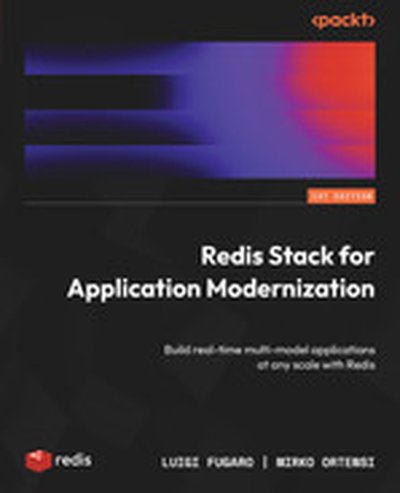
In "Redis Stack for Application Modernization," you will explore how the Redis Stack extends traditional Redis capabilities, allowing you to innovate in building real-time, scalable, multi-model applications. Through practical examples and hands-on sessions, this book equips you with skills to manage, implement, and optimize data flows and database features. What this Book will help me do Learn how to use Redis Stack for handling real-time data with JSON, hash, and other document types. Discover modern techniques for performing vector similarity searches and hybrid workflows. Become proficient in integrating Redis Stack with programming languages like Java, Python, and Node.js. Gain skills to configure Redis Stack server for scalability, security, and high availability. Master RedisInsight for data visualization, analysis, and efficient database management. Author(s) Luigi Fugaro and None Ortensi are experienced software professionals with deep expertise in database systems and application architecture. They bring years of experience working with Redis and developing real-world applications. Their hands-on approach to teaching and real-world examples make this book a valuable resource for professionals in the field. Who is it for? This book is ideal for database administrators, developers, and architects looking to leverage Redis Stack for real-time multi-model applications. It requires a basic understanding of Redis and any programming language such as Python or Java. If you wish to modernize your applications and efficiently manage databases, this book is for you.
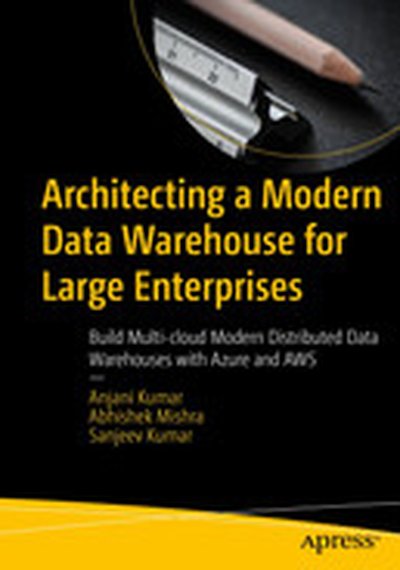
Design and architect new generation cloud-based data warehouses using Azure and AWS. This book provides an in-depth understanding of how to build modern cloud-native data warehouses, as well as their history and evolution. The book starts by covering foundational data warehouse concepts, and introduces modern features such as distributed processing, big data storage, data streaming, and processing data on the cloud. You will gain an understanding of the synergy, relevance, and usage data warehousing standard practices in the modern world of distributed data processing. The authors walk you through the essential concepts of Data Mesh, Data Lake, Lakehouse, and Delta Lake. And they demonstrate the services and offerings available on Azure and AWS that deal with data orchestration, data democratization, data governance, data security, and business intelligence. After completing this book, you will be ready to design and architect enterprise-grade, cloud-based modern data warehouses using industry best practices and guidelines. What You Will Learn Understand the core concepts underlying modern data warehouses Design and build cloud-native data warehousesGain a practical approach to architecting and building data warehouses on Azure and AWS Implement modern data warehousing components such as Data Mesh, Data Lake, Delta Lake, and Lakehouse Process data through pandas and evaluate your model’s performance using metrics such as F1-score, precision, and recall Apply deep learning to supervised, semi-supervised, and unsupervised anomaly detection tasks for tabular datasets and time series applications Who This Book Is For Experienced developers, cloud architects, and technology enthusiasts looking to build cloud-based modern data warehouses using Azure and AWS
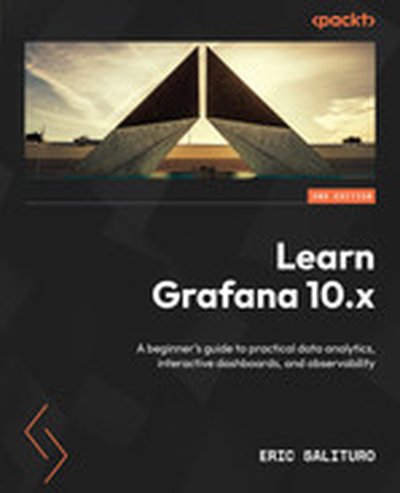
Learn Grafana 10.x is your essential guide to mastering the art of data visualization and monitoring through interactive dashboards. Whether you're starting from scratch or updating your knowledge to Grafana 10.x, this book walks you through installation, implementation, data transformation, and effective visualization techniques. What this Book will help me do Install and configure Grafana 10.x for real-time data visualization and analytics. Create and manage insightful dashboards with Grafana's enhanced features. Integrate Grafana with diverse data sources such as Prometheus, InfluxDB, and Elasticsearch. Set up dynamic templated dashboards and alerting systems for proactive monitoring. Implement Grafana's user authentication mechanisms for enhanced security. Author(s) None Salituro is a seasoned expert in data analytics and observability platforms with extensive experience working with time-series data using Grafana. Their practical teaching approach and passion for sharing insights make this book an invaluable resource for both newcomers and experienced users. Who is it for? This book is perfect for business analysts, data visualization enthusiasts, and developers interested in analyzing and monitoring time-series data. Whether you're a newcomer or have some background knowledge, this book offers accessible guidance and advanced tips suitable for all levels. If you're aiming to efficiently build and utilize Grafana dashboards, this is the book for you.
In this episode, Conor and Bryce chat with Sean Parent about the latest on the Hylo programming language, potential limitations to the C++ Senders and Receivers model and the status of Rust and safety at Adobe. Link to Episode 160 on WebsiteDiscuss this episode, leave a comment, or ask a question (on GitHub)Twitter ADSP: The PodcastConor HoekstraBryce Adelstein LelbachAbout the Guest: Sean Parent is a senior principal scientist and software architect managing Adobe’s Software Technology Lab. Sean first joined Adobe in 1993 working on Photoshop and is one of the creators of Photoshop Mobile, Lightroom Mobile, and Lightroom Web. In 2009 Sean spent a year at Google working on Chrome OS before returning to Adobe. From 1988 through 1993 Sean worked at Apple, where he was part of the system software team that developed the technologies allowing Apple’s successful transition to PowerPC.
Show Notes
Date Recorded: 2023-12-12 Date Released: 2023-12-15 Hylo LanguageHylo on Compiler ExplorerHylo ArraysC++ Sender & ReceiversLightroom MobileLightroom WebSTLab Concurrency LibrariesSTLab Concurrency Libraries on GitHubAdobe Content Authenticator (written in Rust)EU Legislation (Cyber Resilience Act)US Legislation (Bill 2670)The Case for Memory Safe Roadmaps (CIA, NSA, FBI, et al)NSA on Memory Safe LanguagesWhite House Executive Order on CybersecurityMac Folklore PodcastMac Folklore Episode 98: Basal Gangster - A/UX: The Long View (2010)Keynote: Safety and Security: The Future of C++ - JF Bastien - CppNow 2023MISRA C++ 2023Jonathon Blow on the Quality of Software (Software is in Decline)Intel’s Optane MemoryIntro Song Info Miss You by Sarah Jansen https://soundcloud.com/sarahjansenmusic CC — Attribution 3.0 Unported CC BY 3.0
Over the past year, we’ve seen a full hype cycle of hysteria and discourse surrounding generative AI. It almost seems difficult to think back to a time when no one had used ChatGPT. We are in the midst of the fourth industrial revolution, and technology is moving rapidly. Better performing and more capable models are being released at a stunning rate, and with the growing presence of multimodal AI, can we expect another whirlwind year that vastly changes the state of play within AI again? Who might be able to provide insight into what is to come in 2024? Craig S. Smith is an American journalist, former executive of The New York Times, and host of the podcast Eye on AI. Until January 2000, he wrote for The Wall Street Journal, most notably covering the rise of the religious movement Falun Gong in China. He has reported for the Times from more than 40 countries and has covered several conflicts, including the 2001 invasion of Afghanistan, the 2003 war in Iraq, and the 2006 Israeli-Lebanese war. He retired from the Times in 2018 and now writes about artificial intelligence for the Times and other publications. He was a special Government employee for the National Security Commission on Artificial Intelligence until the commission's end in October 2021. In the episode, Richie and Craig explore the 2023 advancements in generative AI, such as GPT-4, and the evolving roles of companies like Anthropic and Meta, practical AI applications for research and image generation, challenges in large language models, the promising future of world models and AI agents, the societal impacts of AI, the issue of misinformation, computational constraints, and the importance of AI literacy in the job market, the transformative potential of AI in various sectors and much more. Links Mentioned in the Show: Eye on AIWayveAnthropicCohereMidjourneyYann Lecun
Explore Apache Kafka's security landscape with Francesco Tisiot in 'Attacking (and Defending) Apache Kafka' 🛡️. Learn about potential threats, attack vectors, and essential defenses. Whether you manage Kafka or its data infrastructure, this session prepares you for security challenges. 💼🔒 #ApacheKafka #Cybersecurity
✨ H I G H L I G H T S ✨
🙌 A huge shoutout to all the incredible participants who made Big Data Conference Europe 2023 in Vilnius, Lithuania, from November 21-24, an absolute triumph! 🎉 Your attendance and active participation were instrumental in making this event so special. 🌍
Don't forget to check out the session recordings from the conference to relive the valuable insights and knowledge shared! 📽️
Once again, THANK YOU for playing a pivotal role in the success of Big Data Conference Europe 2023. 🚀 See you next year for another unforgettable conference! 📅 #BigDataConference #SeeYouNextYear