talk-data.com talk-data.com

Topic

Spark

Apache Spark

big_data distributed_computing analytics

143

tagged

Activity Trend

71 peak/qtr
2020-Q1 2026-Q1

Activities

Showing filtered results

Filtering by: O'Reilly Data Engineering Books ×
Building Data Streaming Applications with Apache Kafka

Learn how to design and build efficient real-time streaming applications using Apache Kafka, a leading distributed streaming platform. This book provides comprehensive guidance on setting up Kafka clusters, developing producers and consumers, and integrating with frameworks like Spark, Storm, and Heron. By the end, you'll master the skills needed to create enterprise-grade data streaming solutions. What this Book will help me do Grasp the core concepts and components of Apache Kafka and its ecosystem. Develop robust Kafka producers and consumers to process real-time data streams. Design and implement streaming applications using Spark, Storm, and Heron. Plan Kafka deployments with a focus on scalability, capacity, and fault tolerance. Ensure secure data streaming with best practices for securing Apache Kafka. Author(s) The authors, None Singh and None Kumar, bring years of expertise in data engineering and distributed systems. Having worked extensively with streaming technologies like Apache Kafka, they aim to share their in-depth knowledge through practical examples and real-world scenarios. Their approach to teaching focuses on making complex concepts easily understandable. Who is it for? This book is ideal for software developers and data engineers who are eager to learn Apache Kafka for building streaming applications. Some experience with programming, particularly Java, will help readers get the most out of the material. If you are working on data-processing systems or looking to enhance your skills in real-time data handling, this book caters to your needs.
Apache Spark 2.x for Java Developers

Delve into mastering big data processing with 'Apache Spark 2.x for Java Developers.' This book provides a practical guide to implementing Apache Spark using the Java APIs, offering a unique opportunity for Java developers to leverage Spark's powerful framework without transitioning to Scala. What this Book will help me do Learn how to process data from formats like XML, JSON, CSV using Spark Core. Implement real-time analytics using Spark Streaming and third-party tools like Kafka. Understand data querying with Spark SQL and master SQL schema processing. Apply machine learning techniques with Spark MLlib to real-world scenarios. Explore graph processing and analytics using Spark GraphX. Author(s) None Kumar and None Gulati, experienced professionals in Java development and big data, bring their wealth of practical experience and passion for teaching to this book. With a clear and concise writing style, they aim to simplify Spark for Java developers, making big data approachable. Who is it for? This book is perfect for Java developers who are eager to expand their skillset into big data processing with Apache Spark. Whether you are a seasoned Spark user or first diving into big data concepts, this book meets you at your level. With practical examples and straightforward explanations, you can unlock the potential of Spark in real-world scenarios.

Mastering Apache Spark 2.x - Second Edition

Mastering Apache Spark 2.x is the essential guide to harnessing the power of big data processing. Dive into real-time data analytics, machine learning, and cluster computing using Apache Spark's advanced features and modules like Spark SQL and MLlib. What this Book will help me do Gain proficiency in Spark's batch and real-time data processing with SparkSQL. Master techniques for machine learning and deep learning using SparkML and SystemML. Understand the principles of Spark's graph processing with GraphX and GraphFrames. Learn to deploy Apache Spark efficiently on platforms like Kubernetes and IBM Cloud. Optimize Spark cluster performance by configuring parameters effectively. Author(s) Romeo Kienzler is a seasoned professional in big data and machine learning technologies. With years of experience in cloud-based distributed systems, Romeo brings practical insights into leveraging Apache Spark. He combines his deep technical expertise with a clear and engaging writing style. Who is it for? This book is tailored for intermediate Apache Spark users eager to deepen their knowledge in Spark 2.x's advanced features. Ideal for data engineers and big data professionals seeking to enhance their analytics pipelines with Spark. A basic understanding of Spark and Scala is necessary. If you're aiming to optimize Spark for real-world applications, this book is crafted for you.

Moving Hadoop to the Cloud

Until recently, Hadoop deployments existed on hardware owned and run by organizations. Now, of course, you can acquire the computing resources and network connectivity to run Hadoop clusters in the cloud. But there’s a lot more to deploying Hadoop to the public cloud than simply renting machines. This hands-on guide shows developers and systems administrators familiar with Hadoop how to install, use, and manage cloud-born clusters efficiently. You’ll learn how to architect clusters that work with cloud-provider features—not just to avoid pitfalls, but also to take full advantage of these services. You’ll also compare the Amazon, Google, and Microsoft clouds, and learn how to set up clusters in each of them. Learn how Hadoop clusters run in the cloud, the problems they can help you solve, and their potential drawbacks Examine the common concepts of cloud providers, including compute capabilities, networking and security, and storage Build a functional Hadoop cluster on cloud infrastructure, and learn what the major providers require Explore use cases for high availability, relational data with Hive, and complex analytics with Spark Get patterns and practices for running cloud clusters, from designing for price and security to dealing with maintenance

Streaming Data

Streaming Data introduces the concepts and requirements of streaming and real-time data systems. The book is an idea-rich tutorial that teaches you to think about how to efficiently interact with fast-flowing data. About the Technology As humans, we're constantly filtering and deciphering the information streaming toward us. In the same way, streaming data applications can accomplish amazing tasks like reading live location data to recommend nearby services, tracking faults with machinery in real time, and sending digital receipts before your customers leave the shop. Recent advances in streaming data technology and techniques make it possible for any developer to build these applications if they have the right mindset. This book will let you join them. About the Book Streaming Data is an idea-rich tutorial that teaches you to think about efficiently interacting with fast-flowing data. Through relevant examples and illustrated use cases, you'll explore designs for applications that read, analyze, share, and store streaming data. Along the way, you'll discover the roles of key technologies like Spark, Storm, Kafka, Flink, RabbitMQ, and more. This book offers the perfect balance between big-picture thinking and implementation details. What's Inside The right way to collect real-time data Architecting a streaming pipeline Analyzing the data Which technologies to use and when About the Reader Written for developers familiar with relational database concepts. No experience with streaming or real-time applications required. About the Author Andrew Psaltis is a software engineer focused on massively scalable real-time analytics. Quotes The definitive book if you want to master the architecture of an enterprise-grade streaming application. - Sergio Fernandez Gonzalez, Accenture A thorough explanation and examination of the different systems, strategies, and tools for streaming data implementations. - Kosmas Chatzimichalis, Mach 7x A well-structured way to learn about streaming data and how to put it into practice in modern real-time systems. - Giuliano Araujo Bertoti, FATEC This book is all you need to understand what streaming is all about! - Carlos Curotto, Globant

Frank Kane's Taming Big Data with Apache Spark and Python

This book introduces you to the world of Big Data processing using Apache Spark and Python. You will learn to set up and run Spark on different systems, process massive datasets, and create solutions to real-world Big Data challenges with over 15 hands-on examples included. What this Book will help me do Understand the basics of Apache Spark and its ecosystem. Learn how to process large datasets with Spark RDDs using Python. Implement machine learning models with Spark's MLlib library. Master real-time data processing with Spark Streaming modules. Deploy and run Spark jobs on cloud clusters using AWS EMR. Author(s) Frank Kane spent 9 years working at Amazon and IMDb, handling and solving real-world machine learning and Big Data problems. Today, as an instructional designer and educator, he brings his wealth of experience to learners around the globe by creating accessible, practical learning resources. His teaching is clear, engaging, and designed to prepare students for real-world applications. Who is it for? This book is ideal for data scientists or data analysts seeking to delve into Big Data processing with Apache Spark. Readers who have foundational knowledge of Python, as well as some understanding of data processing principles, will find this book useful to sharpen their skills further. It is designed for those eager to learn the practical applications of Big Data tools in today's industry environments. By the end of this book, you should feel confident tackling Big Data challenges using Spark and Python.

Advanced Analytics with Spark, 2nd Edition

In the second edition of this practical book, four Cloudera data scientists present a set of self-contained patterns for performing large-scale data analysis with Spark. The authors bring Spark, statistical methods, and real-world data sets together to teach you how to approach analytics problems by example. Updated for Spark 2.1, this edition acts as an introduction to these techniques and other best practices in Spark programming. You’ll start with an introduction to Spark and its ecosystem, and then dive into patterns that apply common techniques—including classification, clustering, collaborative filtering, and anomaly detection—to fields such as genomics, security, and finance. If you have an entry-level understanding of machine learning and statistics, and you program in Java, Python, or Scala, you’ll find the book’s patterns useful for working on your own data applications. With this book, you will: Familiarize yourself with the Spark programming model Become comfortable within the Spark ecosystem Learn general approaches in data science Examine complete implementations that analyze large public data sets Discover which machine learning tools make sense for particular problems Acquire code that can be adapted to many uses

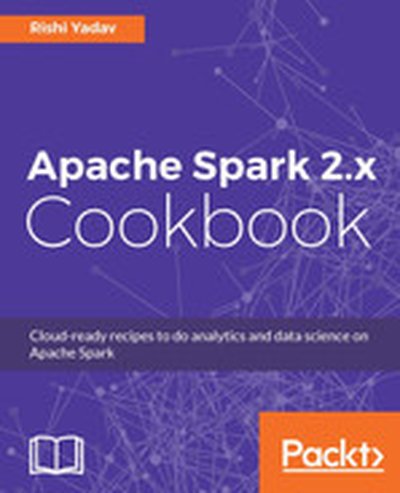
Apache Spark 2.x Cookbook

Discover how to harness the power of Apache Spark 2.x for your Big Data processing projects. In this book, you will explore over 70 cloud-ready recipes that will guide you to perform distributed data analytics, structured streaming, machine learning, and much more. What this Book will help me do Effectively install and configure Apache Spark with various cluster managers and platforms. Set up and utilize development environments tailored for Spark applications. Operate on schema-aware data using RDDs, DataFrames, and Datasets. Perform real-time streaming analytics with sources such as Apache Kafka. Leverage MLlib for supervised learning, unsupervised learning, and recommendation systems. Author(s) None Yadav is a seasoned data engineer with a deep understanding of Big Data tools and technologies, particularly Apache Spark. With years of experience in the field of distributed computing and data analysis, Yadav brings practical insights and techniques to enrich the learning experience of readers. Who is it for? This book is ideal for data engineers, data scientists, and Big Data professionals who are keen to enhance their Apache Spark 2.x skills. If you're working with distributed processing and want to solve complex data challenges, this book addresses practical problems. Note that a basic understanding of Scala is recommended to get the most out of this resource.

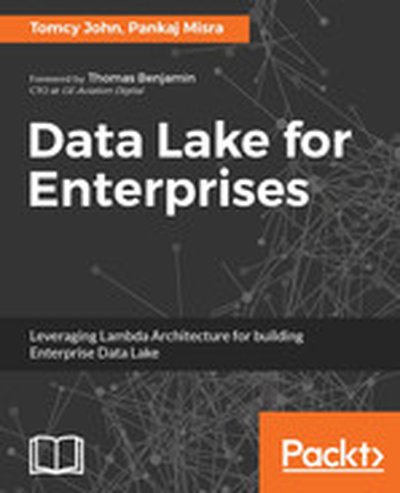
Data Lake for Enterprises

"Data Lake for Enterprises" is a comprehensive guide to building data lakes using the Lambda Architecture. It introduces big data technologies like Hadoop, Spark, and Flume, showing how to use them effectively to manage and leverage enterprise-scale data. You'll gain the skills to design and implement data systems that handle complex data challenges. What this Book will help me do Master the use of Lambda Architecture to create scalable and effective data management systems. Understand and implement technologies like Hadoop, Spark, Kafka, and Flume in an enterprise data lake. Integrate batch and stream processing techniques using big data tools for comprehensive data analysis. Optimize data lakes for performance and reliability with practical insights and techniques. Implement real-world use cases of data lakes and machine learning for predictive data insights. Author(s) None Mishra, None John, and Pankaj Misra are recognized experts in big data systems with a strong background in designing and deploying data solutions. With a clear and methodical teaching style, they bring years of experience to this book, providing readers with the tools and knowledge required to excel in enterprise big data initiatives. Who is it for? This book is ideal for software developers, data architects, and IT professionals looking to integrate a data lake strategy into their enterprises. It caters to readers with a foundational understanding of Java and big data concepts, aiming to advance their practical knowledge of building scalable data systems. If you're eager to delve into cutting-edge technologies and transform enterprise data management, this book is for you.

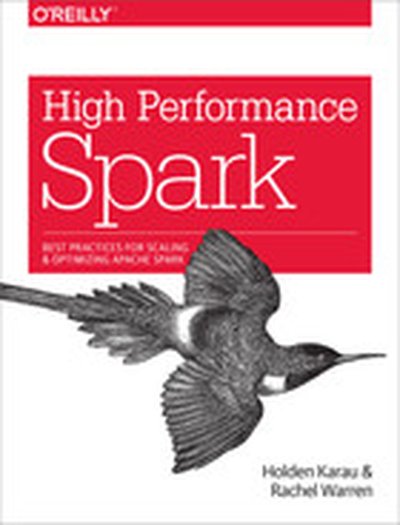
High Performance Spark

Apache Spark is amazing when everything clicks. But if you haven’t seen the performance improvements you expected, or still don’t feel confident enough to use Spark in production, this practical book is for you. Authors Holden Karau and Rachel Warren demonstrate performance optimizations to help your Spark queries run faster and handle larger data sizes, while using fewer resources. Ideal for software engineers, data engineers, developers, and system administrators working with large-scale data applications, this book describes techniques that can reduce data infrastructure costs and developer hours. Not only will you gain a more comprehensive understanding of Spark, you’ll also learn how to make it sing. With this book, you’ll explore: How Spark SQL’s new interfaces improve performance over SQL’s RDD data structure The choice between data joins in Core Spark and Spark SQL Techniques for getting the most out of standard RDD transformations How to work around performance issues in Spark’s key/value pair paradigm Writing high-performance Spark code without Scala or the JVM How to test for functionality and performance when applying suggested improvements Using Spark MLlib and Spark ML machine learning libraries Spark’s Streaming components and external community packages

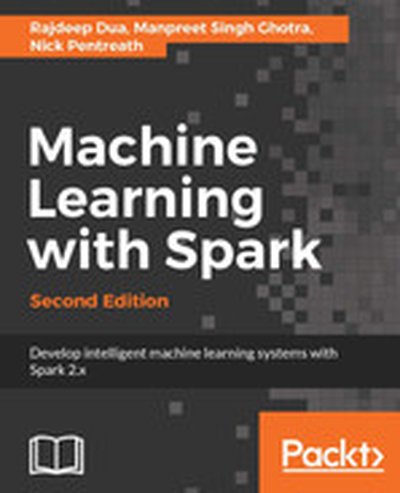
Machine Learning with Spark - Second Edition

Dive into the world of distributed machine learning with Apache Spark, a powerful framework for handling, processing, and analyzing big data. This book will take you through implementing popular machine learning algorithms using Spark ML, covering end-to-end workflows such as data preparation, model building, predictive analysis, and text processing. What this Book will help me do Learn to implement scalable machine learning solutions using Spark ML. Develop the skills to set up and configure Apache Spark environments. Master the application of machine learning techniques like clustering, classification, and regression with Spark. Efficiently handle and process large-scale datasets using Spark tools. Put Spark's capabilities to work in building real-world distributed data processing solutions. Author(s) None Dua and None Ghotra bring a wealth of experience in big data and machine learning to this book. They have been involved in building scalable data systems and implementing machine learning solutions in various industry scenarios. Their approach is hands-on and focused on teaching practical, actionable knowledge. Who is it for? This book is perfect for data enthusiasts, data engineers, and machine learning practitioners who are familiar with Python and Scala, eager to apply machine learning concepts in distributed environments. It's aimed at professionals looking to develop their skills in building scalable data systems and implementing advanced machine learning workflows in Spark.

Sams Teach Yourself Hadoop in 24 Hours

Apache Hadoop is the technology at the heart of the Big Data revolution, and Hadoop skills are in enormous demand. Now, in just 24 lessons of one hour or less, you can learn all the skills and techniques you'll need to deploy each key component of a Hadoop platform in your local environment or in the cloud, building a fully functional Hadoop cluster and using it with real programs and datasets. Each short, easy lesson builds on all that's come before, helping you master all of Hadoop's essentials, and extend it to meet your unique challenges. Apache Hadoop in 24 Hours, Sams Teach Yourself covers all this, and much more: Understanding Hadoop and the Hadoop Distributed File System (HDFS) Importing data into Hadoop, and process it there Mastering basic MapReduce Java programming, and using advanced MapReduce API concepts Making the most of Apache Pig and Apache Hive Implementing and administering YARN Taking advantage of the full Hadoop ecosystem Managing Hadoop clusters with Apache Ambari Working with the Hadoop User Environment (HUE) Scaling, securing, and troubleshooting Hadoop environments Integrating Hadoop into the enterprise Deploying Hadoop in the cloud Getting started with Apache Spark Step-by-step instructions walk you through common questions, issues, and tasks; Q-and-As, Quizzes, and Exercises build and test your knowledge; "Did You Know?" tips offer insider advice and shortcuts; and "Watch Out!" alerts help you avoid pitfalls. By the time you're finished, you'll be comfortable using Apache Hadoop to solve a wide spectrum of Big Data problems.

Mastering Spark for Data Science

Master the techniques and sophisticated analytics used to construct Spark-based solutions that scale to deliver production-grade data science products About This Book Develop and apply advanced analytical techniques with Spark Learn how to tell a compelling story with data science using Spark’s ecosystem Explore data at scale and work with cutting edge data science methods Who This Book Is For This book is for those who have beginner-level familiarity with the Spark architecture and data science applications, especially those who are looking for a challenge and want to learn cutting edge techniques. This book assumes working knowledge of data science, common machine learning methods, and popular data science tools, and assumes you have previously run proof of concept studies and built prototypes. What You Will Learn Learn the design patterns that integrate Spark into industrialized data science pipelines See how commercial data scientists design scalable code and reusable code for data science services Explore cutting edge data science methods so that you can study trends and causality Discover advanced programming techniques using RDD and the DataFrame and Dataset APIs Find out how Spark can be used as a universal ingestion engine tool and as a web scraper Practice the implementation of advanced topics in graph processing, such as community detection and contact chaining Get to know the best practices when performing Extended Exploratory Data Analysis, commonly used in commercial data science teams Study advanced Spark concepts, solution design patterns, and integration architectures Demonstrate powerful data science pipelines In Detail Data science seeks to transform the world using data, and this is typically achieved through disrupting and changing real processes in real industries. In order to operate at this level you need to build data science solutions of substance –solutions that solve real problems. Spark has emerged as the big data platform of choice for data scientists due to its speed, scalability, and easy-to-use APIs. This book deep dives into using Spark to deliver production-grade data science solutions. This process is demonstrated by exploring the construction of a sophisticated global news analysis service that uses Spark to generate continuous geopolitical and current affairs insights.You will learn all about the core Spark APIs and take a comprehensive tour of advanced libraries, including Spark SQL, Spark Streaming, MLlib, and more. You will be introduced to advanced techniques and methods that will help you to construct commercial-grade data products. Focusing on a sequence of tutorials that deliver a working news intelligence service, you will learn about advanced Spark architectures, how to work with geographic data in Spark, and how to tune Spark algorithms so they scale linearly. Style and approach This is an advanced guide for those with beginner-level familiarity with the Spark architecture and working with Data Science applications. Mastering Spark for Data Science is a practical tutorial that uses core Spark APIs and takes a deep dive into advanced libraries including: Spark SQL, visual streaming, and MLlib. This book expands on titles like: Machine Learning with Spark and Learning Spark. It is the next learning curve for those comfortable with Spark and looking to improve their skills.

Learning Apache Spark 2

Dive into the world of Big Data with "Learning Apache Spark 2". This book introduces you to the powerful Apache Spark framework, tailored for real-time data analytics and machine learning. Through practical examples and real-world use-cases, you'll gain hands-on experience in leveraging Spark's capabilities for your data processing needs. What this Book will help me do Master the fundamentals of Apache Spark 2 and its new features. Effectively use Spark SQL, MLlib, RDDs, GraphX, and Spark Streaming to tackle real-world challenges. Gain skills in data processing, transformation, and analysis with Spark. Deploy and operate your Spark applications in clustered environments. Develop your own recommendation engines and predictive analytics models with Spark. Author(s) None Abbasi brings a wealth of expertise in Big Data technologies with a keen focus on simplifying complex concepts for learners. With substantial experience working in data processing frameworks, their approach to teaching creates an engaging and practical learning experience. With "Learning Apache Spark 2", None empowers readers to confidently tackle challenges in Big Data processing and analytics. Who is it for? This book is ideal for aspiring Big Data professionals seeking an accessible introduction to Apache Spark. Beginners in Spark will find step-by-step guidance, while those familiar with earlier versions will appreciate the insights into Spark 2's new features. Familiarity with Big Data concepts and Scala programming is recommended for optimal understanding.

Learning PySpark

"Learning PySpark" guides you through mastering the integration of Python with Apache Spark to build scalable and efficient data applications. You'll delve into Spark 2.0's architecture, efficiently process data, and explore PySpark's capabilities ranging from machine learning to structured streaming. By the end, you'll be equipped to craft and deploy robust data pipelines and applications. What this Book will help me do Master the Spark 2.0 architecture and its Python integration with PySpark. Leverage PySpark DataFrames and RDDs for effective data manipulation and analysis. Develop scalable machine learning models using PySpark's ML and MLlib libraries. Understand advanced PySpark features such as GraphFrames for graph processing and TensorFrames for deep learning models. Gain expertise in deploying PySpark applications locally and on the cloud for production-ready solutions. Author(s) Authors None Drabas and None Lee bring extensive experience in data engineering and Python programming. They combine a practical, example-driven approach with deep insights into Apache Spark's ecosystem. Their expertise and clarity in writing make this book accessible for individuals aiming to excel in big data technologies with Python. Who is it for? This book is best suited for Python developers who want to integrate Apache Spark 2.0 into their workflow to process large-scale data. Ideal readers will have foundational knowledge of Python and seek to build scalable data-intensive applications using Spark, regardless of prior experience with Spark itself.

Pro Apache Phoenix: An SQL Driver for HBase, First Edition

Leverage Phoenix as an ANSI SQL engine built on top of the highly distributed and scalable NoSQL framework HBase. Learn the basics and best practices that are being adopted in Phoenix to enable a high write and read throughput in a big data space. This book includes real-world cases such as Internet of Things devices that send continuous streams to Phoenix, and the book explains how key features such as joins, indexes, transactions, and functions help you understand the simple, flexible, and powerful API that Phoenix provides. Examples are provided using real-time data and data-driven businesses that show you how to collect, analyze, and act in seconds. Pro Apache Phoenix covers the nuances of setting up a distributed HBase cluster with Phoenix libraries, running performance benchmarks, configuring parameters for production scenarios, and viewing the results. The book also shows how Phoenix plays well with other key frameworks in the Hadoop ecosystem such as Apache Spark, Pig, Flume, and Sqoop. You will learn how to: Handle a petabyte data store by applying familiar SQL techniques Store, analyze, and manipulate data in a NoSQL Hadoop echo system with HBase Apply best practices while working with a scalable data store on Hadoop and HBase Integrate popular frameworks (Apache Spark, Pig, Flume) to simplify big data analysis Demonstrate real-time use cases and big data modeling techniques Who This Book Is For Data engineers, Big Data administrators, and architects

Apache Spark for Data Science Cookbook

In "Apache Spark for Data Science Cookbook," you'll delve into solving real-world analytical challenges using the robust Apache Spark framework. This book features hands-on recipes that cover data analysis, distributed machine learning, and real-time data processing. You'll gain practical skills to process, visualize, and extract insights from large datasets efficiently. What this Book will help me do Master using Apache Spark for processing and analyzing large-scale datasets effectively. Harness Spark's MLLib for implementing machine learning algorithms like classification and clustering. Utilize libraries such as NumPy, SciPy, and Pandas in conjunction with Spark for numerical computations. Apply techniques like Natural Language Processing and text mining using Spark-integrated tools. Perform end-to-end data science workflows, including data exploration, modeling, and visualization. Author(s) Nagamallikarjuna Inelu and None Chitturi bring their extensive experience working with data science and distributed computing frameworks like Apache Spark. Nagamallikarjuna specializes in applying machine learning algorithms to big data problems, while None has contributed to various big data system implementations. Together, they focus on providing practitioners with practical and efficient solutions. Who is it for? This book is primarily intended for novice and intermediate data scientists and analysts who are curious about using Apache Spark to tackle data science problems. Readers are expected to have some familiarity with basic data science tasks. If you want to learn practical applications of Spark in data analysis and enhance your big data analytics skills, this resource is for you.

Fast Data Processing Systems with SMACK Stack

Fast Data Processing Systems with SMACK Stack introduces you to the SMACK stack-a combination of Spark, Mesos, Akka, Cassandra, and Kafka. You will learn to integrate these technologies to build scalable, efficient, and real-time data processing platforms tailored for solving critical business challenges. What this Book will help me do Understand the concepts of fast data pipelines and design scalable architectures using the SMACK stack Gain expertise in functional programming with Scala and leverage its power in data processing tasks Build and optimize distributed databases using Apache Cassandra for scaling extensively Deploy and manage real-time data streams using Apache Kafka to handle massive messaging workloads Implement cost-effective cluster infrastructures with Apache Mesos for efficient resource utilization Author(s) None Estrada is an expert in distributed systems and big data technologies. With years of experience implementing SMACK-based solutions across industries, Estrada offers a practical viewpoint to designing scalable systems. Their blend of theoretical knowledge and applied practices ensures readers receive actionable guidance. Who is it for? This book is perfect for software developers, data engineers, or data scientists looking to deepen their understanding of real-time data processing systems. If you have a foundational knowledge of the technologies in the SMACK stack or wish to learn how to combine these cutting-edge tools to solve complex problems, this is for you. Readers with an interest in building efficient big data solutions will find tremendous value here.

Practical Data Science with Hadoop® and Spark: Designing and Building Effective Analytics at Scale

The Complete Guide to Data Science with Hadoop—For Technical Professionals, Businesspeople, and Students Demand is soaring for professionals who can solve real data science problems with Hadoop and Spark. is your complete guide to doing just that. Drawing on immense experience with Hadoop and big data, three leading experts bring together everything you need: high-level concepts, deep-dive techniques, real-world use cases, practical applications, and hands-on tutorials. Practical Data Science with Hadoop® and Spark The authors introduce the essentials of data science and the modern Hadoop ecosystem, explaining how Hadoop and Spark have evolved into an effective platform for solving data science problems at scale. In addition to comprehensive application coverage, the authors also provide useful guidance on the important steps of data ingestion, data munging, and visualization. Once the groundwork is in place, the authors focus on specific applications, including machine learning, predictive modeling for sentiment analysis, clustering for document analysis, anomaly detection, and natural language processing (NLP). This guide provides a strong technical foundation for those who want to do practical data science, and also presents business-driven guidance on how to apply Hadoop and Spark to optimize ROI of data science initiatives. Learn What data science is, how it has evolved, and how to plan a data science career How data volume, variety, and velocity shape data science use cases Hadoop and its ecosystem, including HDFS, MapReduce, YARN, and Spark Data importation with Hive and Spark Data quality, preprocessing, preparation, and modeling Visualization: surfacing insights from huge data sets Machine learning: classification, regression, clustering, and anomaly detection Algorithms and Hadoop tools for predictive modeling Cluster analysis and similarity functions Large-scale anomaly detection NLP: applying data science to human language

Expert Hadoop® Administration

The Comprehensive, Up-to-Date Apache Hadoop Administration Handbook and Reference “Sam Alapati has worked with production Hadoop clusters for six years. His unique depth of experience has enabled him to write the go-to resource for all administrators looking to spec, size, expand, and secure production Hadoop clusters of any size.” –Paul Dix, Series Editor In leading Hadoop administrator Sam R. Alapati brings together authoritative knowledge for creating, configuring, securing, managing, and optimizing production Hadoop clusters in any environment. Drawing on his experience with large-scale Hadoop administration, Alapati integrates action-oriented advice with carefully researched explanations of both problems and solutions. He covers an unmatched range of topics and offers an unparalleled collection of realistic examples. Expert Hadoop® Administration, Alapati demystifies complex Hadoop environments, helping you understand exactly what happens behind the scenes when you administer your cluster. You’ll gain unprecedented insight as you walk through building clusters from scratch and configuring high availability, performance, security, encryption, and other key attributes. The high-value administration skills you learn here will be indispensable no matter what Hadoop distribution you use or what Hadoop applications you run. Understand Hadoop’s architecture from an administrator’s standpoint Create simple and fully distributed clusters Run MapReduce and Spark applications in a Hadoop cluster Manage and protect Hadoop data and high availability Work with HDFS commands, file permissions, and storage management Move data, and use YARN to allocate resources and schedule jobs Manage job workflows with Oozie and Hue Secure, monitor, log, and optimize Hadoop Benchmark and troubleshoot Hadoop