talk-data.com talk-data.com

Topic

SQL

Structured Query Language (SQL)

database_language data_manipulation data_definition programming_language

780

tagged

Activity Trend

107 peak/qtr
2020-Q1 2026-Q1

Activities

Showing filtered results

Filtering by: O'Reilly Data Engineering Books ×
SQL Server 2016 High Availability Unleashed (includes Content Update Program)

Book + Content Update Program SQL Server 2016 High Availability Unleashed provides start-to-finish coverage of SQL Server’s powerful high availability (HA) solutions for your traditional on-premise databases, cloud-based databases (Azure or AWS), hybrid databases (on-premise coupled with the cloud), and your emerging Big Data solutions. This complete guide introduces an easy-to-follow, formal HA methodology that has been refined over the past several years and helps you identity the right HA solution for your needs. There is also additional coverage of both disaster recovery and business continuity architectures and considerations. You are provided with step-by-step guides, examples, and sample code to help you set up, manage, and administer these highly available solutions. All examples are based on existing production deployments at major Fortune 500 companies around the globe. This book is for all intermediate-to-advanced SQL Server and Big Data professionals, but is also organized so that the first few chapters are great foundation reading for CIOs, CTOs, and even some tech-savvy CFOs. Learn a formal, high availability methodology for understanding and selecting the right HA solution for your needs Deep dive into Microsoft Cluster Services Use selective data replication topologies Explore thorough details on AlwaysOn and availability groups Learn about HA options with log shipping and database mirroring/ snapshots Get details on Microsoft Azure for Big Data and Azure SQL Explore business continuity and disaster recovery Learn about on-premise, cloud, and hybrid deployments Provide all types of database needs, including online transaction processing, data warehouse and business intelligence, and Big Data Explore the future of HA and disaster recovery In addition, this book is part of InformIT’s exciting Content Update Program, which provides content updates for major technology improvements! As significant updates are made to SQL Server, sections of this book will be updated or new sections will be added to match the updates to the technologies. As updates become available, they will be delivered to you via a free Web Edition of this book, which can be accessed with any Internet connection. To learn more, visit informit.com/cup. How to access the Web Edition: Follow the instructions inside to learn how to register your book to access the FREE Web Edition. * The companion material is not available with the online edition on O'Reilly Learning
Building Custom Tasks for SQL Server Integration Services

Learn to build custom SSIS tasks using Visual Studio Community Edition and Visual Basic. Bring all the power of Microsoft .NET to bear on your data integration and ETL processes, and for no added cost over what you’ve already spent on licensing SQL Server. If you already have a license for SQL Server, then you do not need to spend more money to extend SSIS with custom tasks and components. Why are custom components necessary? Because even though the SSIS catalog of built-in tasks and components is a marvel of engineering, there do remain gaps in the functionality that is provided. These gaps are especially relevant to enterprises practicing Data Integration Lifecycle Management (DILMS) and/or DevOps. One of the gaps is a limitation of the SSIS Execute Package task. Developers using the stock version of that task are unable to select SSIS packages from other projects. Yet it’s useful to be able to select and execute tasks across projects, and the example used throughout this book will help you to create an Execute Catalog Package task that does in fact allow you to execute a task from another project. Building on the example’s pattern, you can create any task that you like, custom tailored to your specific, data integration and ETL needs. What You Will Learn Configure and execute Visual Studio in the way that best supports SSIS task development Create a class library as the basis for an SSIS task, and reference the needed SSIS assemblies Properly sign assemblies that you create in order to invoke them from your task Implement source code control via Visual Studio Team Services, or your own favorite tool set Code not only your tasks themselves, but also the associated task editors Troubleshoot and then execute your custom tasks as part of your own project Who This Book Is For Database administrators and developers who are involved in ETL projects built around SQL Server Integration Services (SSIS). Readers should have a background in programming along with a desire to optimize their ETL efforts by creating custom-tailored tasks for execution from SSIS packages.

SQL Server 2017 Integration Services Cookbook

SQL Server 2017 Integration Services Cookbook is your key to mastering effective data integration and transformation solutions using SSIS 2017. Through clear, concise recipes, this book teaches the advanced ETL techniques necessary for creating efficient data workflows, leveraging both traditional and modern data platforms. What this Book will help me do Master the integration of diverse data sources into comprehensive data models. Develop optimized ETL workflows that improve operational efficiency. Leverage the new features introduced in SQL Server 2017 for enhanced data processing. Implement scalable data warehouse solutions suitable for modern analytics workloads. Customize and extend integration services to handle specific data transformation needs. Author(s) The authors are seasoned professionals in data integration and ETL technologies. They bring years of real-world experience using SQL Server Integration Services in various enterprise scenarios. Their combined expertise ensures practical insights and guidance, making complex concepts accessible to learners and practitioners alike. Who is it for? This book is ideal for data engineers and ETL developers who already understand the basics of SQL Server and want to master advanced data integration techniques. It is also suitable for database administrators and data analysts aiming to enhance their skill set with efficient ETL processes. Arm yourself with this guide to learn not just the how, but also the why, behind successful data transformations.

Mastering PostGIS

"Mastering PostGIS" is your guide to unlocking the powerful capabilities of the PostGIS spatial database system. Across 328 pages, this book takes you through the essentials of spatial data handling, from importing, analyzing, and exporting datasets to building fully-functional GIS applications. You'll explore concepts such as spatial querying, data types, and integrating PostGIS with powerful tools like GeoServer and OpenLayers. What this Book will help me do Understand the fundamentals of PostGIS and its role in GIS workflows. Gain hands-on experience in SQL-based spatial queries and data manipulation. Develop the ability to integrate PostGIS with web platforms like Node.js, GeoServer, and OpenLayers. Discover strategies for spatial data ETL (Extract, Transform, Load) processes and live updates. Build scalable, efficient GIS applications leveraging PostGIS's capabilities. Author(s) George Silva, None Mikiewicz, and Michal Mackiewicz None are experts in GIS systems and database technologies with years of experience working with spatial databases such as PostGIS. Passionate about imparting practical knowledge, they provide clear, hands-on examples in every chapter to help you master spatial database solutions. Who is it for? This book is perfect for GIS developers and analysts looking to deepen their knowledge of PostGIS. If you aim to enhance your skills in designing GIS applications or performing spatial data analysis, this is your ideal resource. Prior experience with PostgreSQL and a basic installation of PostGIS are recommended for readers.

Mastering PostgreSQL 9.6

This comprehensive guide, 'Mastering PostgreSQL 9.6,' delves into the advanced features of PostgreSQL, equipping you with the skills to optimize queries, manage replication, and ensure high availability. Whether you are implementing advanced administrative tasks or enhancing database performance, this book will provide the tools and knowledge you need. What this Book will help me do Master advanced database functionalities in PostgreSQL 9.6. Enhance your proficiency in optimizing queries and using indexes effectively. Gain expertise in managing replication and ensuring high availability. Develop skills in server maintenance, monitoring, and resilience. Learn effective troubleshooting strategies for PostgreSQL database challenges. Author(s) Hans-Jürgen Schönig is an experienced database professional specializing in PostgreSQL consulting and training. With decades of experience in developing robust solutions, he brings a pragmatic and insightful approach to database management. His emphasis on practical application and clear explanations makes his writing accessible to learners at all levels. Who is it for? This book is ideal for PostgreSQL data architects and administrators looking to deepen their understanding of PostgreSQL's advanced functionalities. It's tailored for readers with prior experience in PostgreSQL administration and a working knowledge of SQL. If you're keen to master complex database tasks and optimize your PostgreSQL usage, you'll find this book invaluable.

High Performance Spark

Apache Spark is amazing when everything clicks. But if you haven’t seen the performance improvements you expected, or still don’t feel confident enough to use Spark in production, this practical book is for you. Authors Holden Karau and Rachel Warren demonstrate performance optimizations to help your Spark queries run faster and handle larger data sizes, while using fewer resources. Ideal for software engineers, data engineers, developers, and system administrators working with large-scale data applications, this book describes techniques that can reduce data infrastructure costs and developer hours. Not only will you gain a more comprehensive understanding of Spark, you’ll also learn how to make it sing. With this book, you’ll explore: How Spark SQL’s new interfaces improve performance over SQL’s RDD data structure The choice between data joins in Core Spark and Spark SQL Techniques for getting the most out of standard RDD transformations How to work around performance issues in Spark’s key/value pair paradigm Writing high-performance Spark code without Scala or the JVM How to test for functionality and performance when applying suggested improvements Using Spark MLlib and Spark ML machine learning libraries Spark’s Streaming components and external community packages

IBM DB2 Web Query for i: The Nuts and Bolts

Abstract Business Intelligence (BI) is a broad term that relates to applications that analyze data to understand and act on the key metrics that drive profitability in an enterprise. Key to analyzing that data is providing fast, easy access to it while delivering it in formats or tools that best fit the needs of the user. At the core of any BI solution are user query and reporting tools that provide intuitive access to data supporting a spectrum of users from executives to “power users,” from spreadsheet aficionados to the external Internet consumer. IBM® DB2® Web Query for i offers a set of modernized tools for a more robust, extensible, and productive reporting solution than the popular IBM Query for System i® tool (also known as IBM Query/400). IBM DB2 Web Query for i preserves investments in the reports that are developed with Query/400 by offering a choice of importing definitions into the new technology or continuing to run existing Query/400 reports as is. But, it also offers significant productivity and performance enhancements by leveraging the latest in DB2 for i query optimization technology. The DB2 Web Query for i product is a web-based query and report writing product that offers enhanced capabilities over the IBM Query for iSeries product (also commonly known as Query/400). IBM DB2 Web Query for i includes Query for iSeries technology to assist customers in their transition to DB2 Web Query. It offers a more modernized, Java based solution for a more robust, extensible, and productive reporting solution. DB2 Web Query provides the ability to query or build reports against data that is stored in DB2 for i (or Microsoft SQL Server) databases through browser-based user interface technologies: Build reports with ease through the web-based, ribbon-like InfoAssist tool that leverages a common look and feel that can extend the number of personnel that can generate their own reports. Simplify the management of reports by significantly reducing the number of report definitions that are required through the use of parameter driven reports. Deliver data to users in many different formats, including directly into spreadsheets, or in boardroom-quality PDF format, or viewed from the browser in HTML. Leverage advanced reporting functions, such as matrix reporting, ranking, color coding, drill-down, and font customization to enhance the visualization of DB2 data. DB2 Web Query offers features to import Query/400 definitions and enhance their look and functions. By using it, you can add OLAP-like slicing and dicing to the reports or view reports in disconnected mode for users on the go. This IBM Redbooks® publication provides a broad understanding of what can be done with the DB2 Web Query product. This publication is a companion of DB2 Web Query Tutorials, SG24-8378, which has a group of self-explanatory tutorials to help you get up to speed quickly.

Exam Ref 70-768 Developing SQL Data Models, First Edition

Prepare for Microsoft Exam 70-768–and help demonstrate your real-world mastery of Business Intelligence (BI) solutions development with SQL Server 2016 Analysis Services (SSAS), including modeling and queries. Designed for experienced IT professionals ready to advance their status, Exam Ref focuses on the critical thinking and decision-making acumen needed for success at the MCSA level. Focus on the expertise measured by these objectives: • Design a multidimensional BI semantic model • Design a tabular BI semantic model • Develop queries using Multidimensional Expressions (MDX) and Data Analysis Expressions (DAX) • Configure and maintain SSAS This Microsoft Exam Ref: • Organizes its coverage by exam objectives • Features strategic, what-if scenarios to challenge you • Assumes you are a database or BI professional with experience creating models, writing MDX or DAX queries, and using SSAS

Oracle Application Express: Build Powerful Data-Centric Web Apps with APEX

This Oracle Press guide shows how to build and deploy powerful Web applications with Oracle Application Express and features full coverage of the latest version, APEX 5.0 This comprehensive volume from Oracle Press offers up-to-date coverage of Oracle Application Express (APEX), Oracle’s rapid development tool for the Web developer. APEX is an entirely Web-based framework that comes built into every edition of Oracle Database—its backbone is Oracle’s powerful PL/SQL language, alongside the most advanced Web development technologies like HTML5, mobile development, and full support of CSS and JavaScript. APEX enables anyone—from novice user to seasoned developer—to easily create Web applications that are powerful, reliable, and highly scalable. Oracle Application Express: Build Powerful Data‐Centric Web Apps lays out basic information about APEX concepts before delving into the unparalleled power of the platform and describing the new features in version 5.0. You will discover how to install and configure APEX, work with the Application Builder and Page Designer, use built-in wizards, and design custom Web apps. Teaches the cleanest and fastest builds for high-performance, secure web applications Shows how to effectively migrate legacy applications into a modern Web-based environment Authored by early adopters of APEX 5.0 who have been active in the APEX community for years

Oracle Database 12c Release 2 New Features

Leverage the New and Improved Features of Oracle Database 12c Written by Oracle experts Bob Bryla and Robert G. Freeman, this Oracle Press guide describes the myriad new and enhanced capabilities available in the latest Oracle Database release. Inside, you’ll find everything you need to know to get up and running quickly on Oracle Database 12c Release 2. Supported by contributions from Oracle expert Eric Yen, Oracle Database 12c Release 2 New Features offers detailed coverage of: • Installing Oracle Database 12c and Grid Infrastructure • Architectural changes, such as Oracle Multitenant • The most current information on upgrading and migrating to Oracle Database 12c • The pre-upgrade information tool and parallel processing for database upgrades • Oracle Real Application Clusters new features, such as Oracle Flex Cluster, Oracle Flex Automatic Storage Management, and Oracle Automatic Storage Management Cluster File System • Enhanced and new online operations: tables, indexes, and PDBs • Oracle RMAN enhancements, including cross-platform backup and recovery • Oracle Data Guard improvements, such as Fast Sync, and Oracle Active Data Guard new features, such as Far Sync • SQL, PL/SQL, DML, and DDL new features • Improvements to partitioning manageability, performance, and availability • Advanced business intelligence and data warehousing capabilities • Security enhancements, including privileges analysis, data redaction, and new administrative-level privileges • Manageability, performance, and optimization improvements

Tabular Modeling in Microsoft SQL Server Analysis Services, Second Edition

Build agile and responsive business intelligence solutions Create a semantic model and analyze data using the tabular model in SQL Server 2016 Analysis Services to create corporate-level business intelligence (BI) solutions. Led by two BI experts, you will learn how to build, deploy, and query a tabular model by following detailed examples and best practices. This hands-on book shows you how to use the tabular model’s in-memory database to perform rapid analytics—whether you are new to Analysis Services or already familiar with its multidimensional model. Discover how to: • Determine when a tabular or multidimensional model is right for your project • Build a tabular model using SQL Server Data Tools in Microsoft Visual Studio 2015 • Integrate data from multiple sources into a single, coherent view of company information • Choose a data-modeling technique that meets your organization’s performance and usability requirements • Implement security by establishing administrative and data user roles • Define and implement partitioning strategies to reduce processing time • Use Tabular Model Scripting Language (TMSL) to execute and automate administrative tasks • Optimize your data model to reduce the memory footprint for VertiPaq • Choose between in-memory (VertiPaq) and pass-through (DirectQuery) engines for tabular models • Select the proper hardware and virtualization configurations • Deploy and manipulate tabular models from C# and PowerShell using AMO and TOM libraries Get code samples, including complete apps, at: https://aka.ms/tabular/downloads About This Book • For BI professionals who are new to SQL Server 2016 Analysis Services or already familiar with previous versions of the product, and who want the best reference for creating and maintaining tabular models. • Assumes basic familiarity with database design and business analytics concepts.

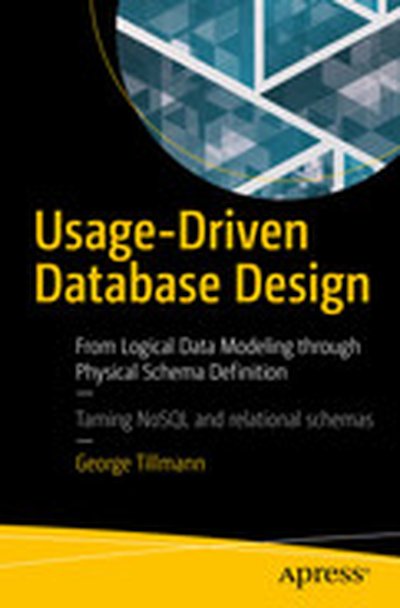
Usage-Driven Database Design: From Logical Data Modeling through Physical Schema Definition

Design great databases—from logical data modeling through physical schema definition. You will learn a framework that finally cracks the problem of merging data and process models into a meaningful and unified design that accounts for how data is actually used in production systems. Key to the framework is a method for taking the logical data model that is a static look at the definition of the data, and merging that static look with the process models describing how the data will be used in actual practice once a given system is implemented. The approach solves the disconnect between the static definition of data in the logical data model and the dynamic flow of the data in the logical process models. The design framework in this book can be used to create operational databases for transaction processing systems, or for data warehouses in support of decision support systems. The information manager can be a flat file, Oracle Database, IMS, NoSQL, Cassandra, Hadoop, or any other DBMS. Usage-Driven Database Design emphasizes practical aspects of design, and speaks to what works, what doesn't work, and what to avoid at all costs. Included in the book are lessons learned by the author over his 30+ years in the corporate trenches. Everything in the book is grounded on good theory, yet demonstrates a professional and pragmatic approach to design that can come only from decades of experience. Presents an end-to-end framework from logical data modeling through physical schema definition. Includes lessons learned, techniques, and tricks that can turn a database disaster into a success. Applies to all types of database management systems, including NoSQL such as Cassandra and Hadoop, and mainstream SQL databases such as Oracle and SQL Server What You'll Learn Create logical data models that accurately reflect the real world of the user Create usage scenarios reflecting how applications will use a new database Merge static data models with dynamic process models to create resilient yet flexible database designs Support application requirements by creating responsive database schemas in any database architecture Cope with big data and unstructured data for transaction processing and decision support systems Recognize when relational approaches won't work, and when to turn toward NoSQL solutions such as Cassandra or Hadoop Who This Book Is For System developers, including business analysts, database designers, database administrators, and application designers and developers who must design or interact with database systems

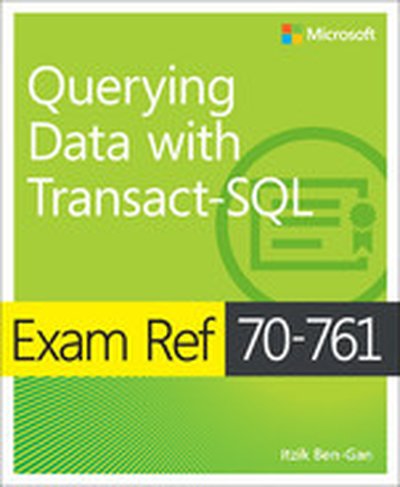
Exam Ref 70-761 Querying Data with Transact-SQL, 1st Edition

Prepare for Microsoft Exam 70-761–and help demonstrate your real-world mastery of SQL Server 2016 Transact-SQL data management, queries, and database programming. Designed for experienced IT professionals ready to advance their status, Exam Ref focuses on the critical-thinking and decision-making acumen needed for success at the MCSA level. Focus on the expertise measured by these objectives: Filter, sort, join, aggregate, and modify data Use subqueries, table expressions, grouping sets, and pivoting Query temporal and non-relational data, and output XML or JSON Create views, user-defined functions, and stored procedures Implement error handling, transactions, data types, and nulls This Microsoft Exam Ref: Organizes its coverage by exam objectives Features strategic, what-if scenarios to challenge you Assumes you have experience working with SQL Server as a database administrator, system engineer, or developer Includes downloadable sample database and code for SQL Server 2016 SP1 (or later) and Azure SQL Database Querying Data with Transact-SQL About the Exam Exam 70-761 focuses on the skills and knowledge necessary to manage and query data and to program databases with Transact-SQL in SQL Server 2016. About Microsoft Certification Passing this exam earns you credit toward a Microsoft Certified Solutions Associate (MCSA) certification that demonstrates your mastery of essential skills for building and implementing on-premises and cloud-based databases across organizations. Exam 70-762 (Developing SQL Databases) is also required for MCSA: SQL 2016 Database Development certification. See full details at: microsoft.com/learning

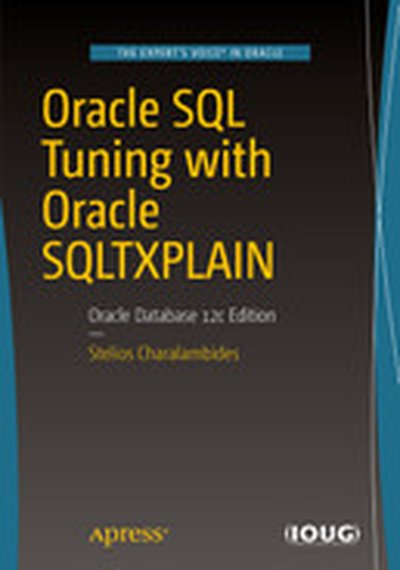
Oracle SQL Tuning with Oracle SQLTXPLAIN: Oracle Database 12c Edition, Second Edition

Learn through this practical guide to SQL tuning how Oracle's own experts do it, using a freely downloadable tool called SQLTXPLAIN. This new edition has been expanded to include AWR, Oracle 12c Statistics, interpretation of SQL Monitor reports, Parallel execution, and Exadata-related features. Reading this book and using SQL helps you learn to tune even the most complex SQL, and you'll learn to do it quickly, without the huge learning curve usually associated with tuning as a whole. Firmly based in real-world problems, this book helps you reclaim system resources and avoid the most common bottleneck in overall performance, badly tuned SQL. You'll learn how the optimizer works, how to take advantage of its latest features, and when it's better to turn them off. Best of all, the book is updated to cover the very latest feature set in Oracle Database 12c. Covers AWR report integration Helps with SQL Monitor Report Interpretation Provides a reliable method that is repeatable Shows the very latest tuning features in Oracle Database 12c Enables the building of test cases without affecting production What You Will Learn Identify how and why complex SQL has gone wrong Correctly interpret AWR reports generated via SQLTXPLAIN Collect the best statistics for your environment Know when to invoke built-in tuning facilities Recognize when tuning is not the solution Spot the steps in a SQL statement's execution plan that are critical to performance of that statement Modify your SQL to solve performance problems and increase the speed and throughput of production database systems Who This Book Is For Anyone who deals with SQL and SQL tuning. Both developers and DBAs will benefit from learning how to use the SQLTXPLAIN tool, and from the problem solving methodology in this book.

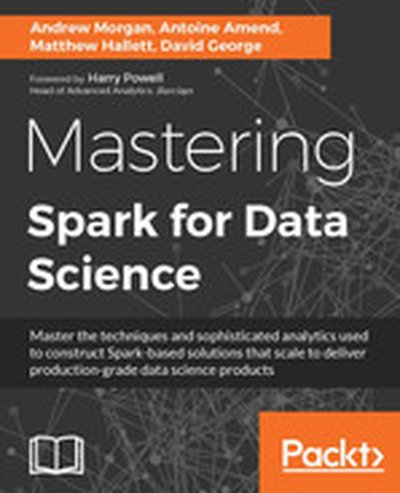
Mastering Spark for Data Science

Master the techniques and sophisticated analytics used to construct Spark-based solutions that scale to deliver production-grade data science products About This Book Develop and apply advanced analytical techniques with Spark Learn how to tell a compelling story with data science using Spark’s ecosystem Explore data at scale and work with cutting edge data science methods Who This Book Is For This book is for those who have beginner-level familiarity with the Spark architecture and data science applications, especially those who are looking for a challenge and want to learn cutting edge techniques. This book assumes working knowledge of data science, common machine learning methods, and popular data science tools, and assumes you have previously run proof of concept studies and built prototypes. What You Will Learn Learn the design patterns that integrate Spark into industrialized data science pipelines See how commercial data scientists design scalable code and reusable code for data science services Explore cutting edge data science methods so that you can study trends and causality Discover advanced programming techniques using RDD and the DataFrame and Dataset APIs Find out how Spark can be used as a universal ingestion engine tool and as a web scraper Practice the implementation of advanced topics in graph processing, such as community detection and contact chaining Get to know the best practices when performing Extended Exploratory Data Analysis, commonly used in commercial data science teams Study advanced Spark concepts, solution design patterns, and integration architectures Demonstrate powerful data science pipelines In Detail Data science seeks to transform the world using data, and this is typically achieved through disrupting and changing real processes in real industries. In order to operate at this level you need to build data science solutions of substance –solutions that solve real problems. Spark has emerged as the big data platform of choice for data scientists due to its speed, scalability, and easy-to-use APIs. This book deep dives into using Spark to deliver production-grade data science solutions. This process is demonstrated by exploring the construction of a sophisticated global news analysis service that uses Spark to generate continuous geopolitical and current affairs insights.You will learn all about the core Spark APIs and take a comprehensive tour of advanced libraries, including Spark SQL, Spark Streaming, MLlib, and more. You will be introduced to advanced techniques and methods that will help you to construct commercial-grade data products. Focusing on a sequence of tutorials that deliver a working news intelligence service, you will learn about advanced Spark architectures, how to work with geographic data in Spark, and how to tune Spark algorithms so they scale linearly. Style and approach This is an advanced guide for those with beginner-level familiarity with the Spark architecture and working with Data Science applications. Mastering Spark for Data Science is a practical tutorial that uses core Spark APIs and takes a deep dive into advanced libraries including: Spark SQL, visual streaming, and MLlib. This book expands on titles like: Machine Learning with Spark and Learning Spark. It is the next learning curve for those comfortable with Spark and looking to improve their skills.

Learning Apache Spark 2

Dive into the world of Big Data with "Learning Apache Spark 2". This book introduces you to the powerful Apache Spark framework, tailored for real-time data analytics and machine learning. Through practical examples and real-world use-cases, you'll gain hands-on experience in leveraging Spark's capabilities for your data processing needs. What this Book will help me do Master the fundamentals of Apache Spark 2 and its new features. Effectively use Spark SQL, MLlib, RDDs, GraphX, and Spark Streaming to tackle real-world challenges. Gain skills in data processing, transformation, and analysis with Spark. Deploy and operate your Spark applications in clustered environments. Develop your own recommendation engines and predictive analytics models with Spark. Author(s) None Abbasi brings a wealth of expertise in Big Data technologies with a keen focus on simplifying complex concepts for learners. With substantial experience working in data processing frameworks, their approach to teaching creates an engaging and practical learning experience. With "Learning Apache Spark 2", None empowers readers to confidently tackle challenges in Big Data processing and analytics. Who is it for? This book is ideal for aspiring Big Data professionals seeking an accessible introduction to Apache Spark. Beginners in Spark will find step-by-step guidance, while those familiar with earlier versions will appreciate the insights into Spark 2's new features. Familiarity with Big Data concepts and Scala programming is recommended for optimal understanding.

Oracle Database 12c Release 2 Performance Tuning Tips & Techniques

Proven Database Optimization Solutions―Fully Updated for Oracle Database 12c Release 2 Systematically identify and eliminate database performance problems with help from Oracle Certified Master Richard Niemiec. Filled with real-world case studies and best practices, Oracle Database 12c Release 2 Performance Tuning Tips and Techniques details the latest monitoring, troubleshooting, and optimization methods. Find out how to identify and fix bottlenecks on premises and in the cloud, configure storage devices, execute effective queries, and develop bug-free SQL and PL/SQL code. Testing, reporting, and security enhancements are also covered in this Oracle Press guide. • Properly index and partition Oracle Database 12c Release 2 • Work effectively with Oracle Cloud, Oracle Exadata, and Oracle Enterprise Manager • Efficiently manage disk drives, ASM, RAID arrays, and memory • Tune queries with Oracle SQL hints and the Trace utility • Troubleshoot databases using V$ views and X$ tables • Create your first cloud database service and prepare for hybrid cloud • Generate reports using Oracle’s Statspack and Automatic Workload Repository tools • Use sar, vmstat, and iostat to monitor operating system statistics

SQL Server 2016 Developer's Guide

SQL Server 2016 Developer's Guide provides an in-depth overview of the new features and enhancements introduced in SQL Server 2016 that can significantly improve your development process. This book covers robust techniques for building high-performance, secure database applications while leveraging cutting-edge functionalities such as Stretch Database, temporal tables, and enhanced In-Memory OLTP capabilities. What this Book will help me do Master the new development features introduced in SQL Server 2016 and understand their applications. Use In-Memory OLTP enhancements to significantly boost application performance. Efficiently manage and analyze data using temporal tables and JSON integration. Explore SQL Server security enhancements to ensure data safety and access control. Gain insights into integrating R with SQL Server 2016 for advanced analytics. Author(s) None Radivojević, Dejan Sarka, and William Durkin are experienced database developers and architects with a strong focus on SQL Server technologies. They bring years of practical experience and a clear, insightful approach to teaching complex concepts. Their expertise shines in this comprehensive guide, providing readers with both foundational knowledge and advanced techniques. Who is it for? This guide is perfect for database developers and solution architects looking to harness the full potential of SQL Server 2016's new features. It's intended for professionals with prior experience in SQL Server or similar platforms who aim to develop efficient, high-performance applications. You'll benefit from this book if you are keen to master SQL Server 2016 and elevate your development skills.

Professional Microsoft SQL Server 2016 Reporting Services and Mobile Reports

Optimize reporting and BI with Microsoft SQL Server 2016 Professional Microsoft SQL Server 2016 Reporting Services and Mobile Reports provides a comprehensive lesson in business intelligence (BI), operational reporting and Reporting Services architecture using a clear, concise tutorial approach. You'll learn effective report solution design based upon many years of experience with successful report solutions. Improve your own reports with advanced, best-practice design, usability, query design, and filtering techniques. Expert guidance provides insight into common report types and explains where each could be made more efficient, while providing step-by step instruction on Microsoft SQL Server 2016. All changes to the 2016 release are covered in detail, including improvements to the Visual Studio Report Designer (SQL Server Data Tools) and Report Builder, Mobile Dashboard Designer, the new Report Portal Interface, HTML-5 Rendering, Power BI integration, Custom Parameters Pane, and more. The Microsoft SQL Server 2016 release will include significant changes. New functionality, new capabilities, re-tooled processes, and changing support require a considerable update to existing knowledge. Whether you're starting from scratch or simply upgrading, this book is an essential guide to report design and business intelligence solutions. Understand BI fundamentals and Reporting Services architecture Learn the ingredients to a successful report design Get up to speed on Microsoft SQL Server 2016 Grasp the purpose behind common designs to optimize your reporting Microsoft SQL Server Reporting Services makes reporting faster, easier, and more powerful than ever in web, desktop and portal solutions. Compatibility with an extensive variety of data sources makes it a go-to solution for organizations across the globe. The 2016 release brings some of the biggest changes in years, and the full depth and breadth of these changes can create a serious snag in your workflow. For a clear tutorial geared toward the working professional, Professional Microsoft SQL Server 2016 Reporting Services and Mobile Reports is the ideal guide for getting up to speed and producing successful reports.

Tabular Modeling with SQL Server 2016 Analysis Services Cookbook

With "Tabular Modeling with SQL Server 2016 Analysis Services Cookbook," you'll discover how to harness the full potential of the latest Tabular models in SQL Server Analysis Services (SSAS). This practical guide equips data professionals with the tools, techniques, and knowledge to optimize data analytics and deliver fast, reliable, and impactful business insights. What this Book will help me do Understand the fundamentals of Tabular modeling and its advantages over traditional methods. Use SQL Server 2016 SSAS features to build and deploy Tabular models tailored to business needs. Master DAX for creating powerful calculated fields and optimized measures. Administer and secure your models effectively, ensuring robust BI solutions. Optimize performance and explore advanced features in Tabular solutions for maximum efficiency. Author(s) None Wilson is an experienced SQL BI professional with a strong background in database modeling and analytics. With years of hands-on experience in developing BI solutions, Wilson takes a practical and straightforward teaching approach. Their guidance in this book makes the complex topics of Tabular modeling and SSAS accessible to both seasoned professionals and newcomers to the field. Who is it for? This book is tailored for SQL BI professionals, database architects, and data analysts aiming to leverage Tabular models in SQL Server Analysis Services. It caters to those familiar with database management and basic BI concepts who are eager to improve their analysis solutions. It's a valuable resource if you aim to gain expertise in using tabular modeling for business intelligence.