talk-data.com talk-data.com

Topic

Azure

Microsoft Azure

cloud cloud_provider microsoft infrastructure

723

tagged

Activity Trend

278 peak/qtr
2020-Q1 2026-Q1

Activities

723 activities · Newest first

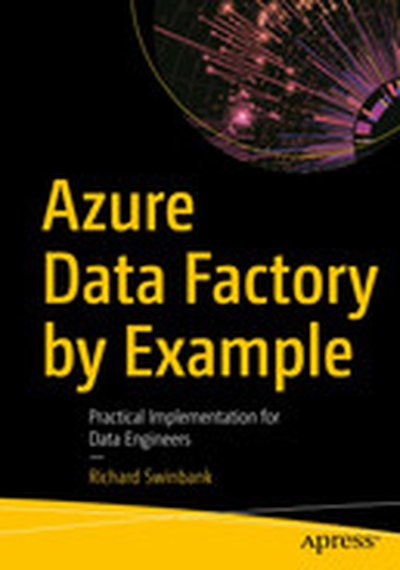
Azure Data Factory by Example: Practical Implementation for Data Engineers

Data engineers who need to hit the ground running will use this book to build skills in Azure Data Factory v2 (ADF). The tutorial-first approach to ADF taken in this book gets you working from the first chapter, explaining key ideas naturally as you encounter them. From creating your first data factory to building complex, metadata-driven nested pipelines, the book guides you through essential concepts in Microsoft’s cloud-based ETL/ELT platform. It introduces components indispensable for the movement and transformation of data in the cloud. Then it demonstrates the tools necessary to orchestrate, monitor, and manage those components. The hands-on introduction to ADF found in this book is equally well-suited to data engineers embracing their first ETL/ELT toolset as it is to seasoned veterans of Microsoft’s SQL Server Integration Services (SSIS). The example-driven approach leads you through ADF pipeline construction from the ground up, introducing important ideas and making learning natural and engaging. SSIS users will find concepts with familiar parallels, while ADF-first readers will quickly master those concepts through the book’s steady building up of knowledge in successive chapters. Summaries of key concepts at the end of each chapter provide a ready reference that you can return to again and again. What You Will Learn Create pipelines, activities, datasets, and linked services Build reusable components using variables, parameters, and expressions Move data into and around Azure services automatically Transform data natively using ADF data flows and Power Query data wrangling Master flow-of-control and triggers for tightly orchestrated pipeline execution Publish and monitor pipelines easily and with confidence Who This Book Is For Data engineers and ETL developers taking their first steps in Azure Data Factory, SQL Server Integration Services users making the transition toward doing ETL in Microsoft’s Azure cloud, and SQL Server database administrators involved in data warehousing and ETL operations
Distributed Data Systems with Azure Databricks

In 'Distributed Data Systems with Azure Databricks', you will explore the capabilities of Microsoft Azure Databricks as a platform for building and managing big data pipelines. Learn how to process, transform, and analyze data at scale while developing expertise in training distributed machine learning models and integrating them into enterprise workflows. What this Book will help me do Design and implement Extract, Transform, Load (ETL) pipelines using Azure Databricks. Conduct distributed training of machine learning models using TensorFlow and Horovod. Integrate Azure Databricks with Azure Data Factory for optimized data pipeline orchestration. Utilize Delta Engine for efficient querying and analysis of data within Delta Lake. Employ Databricks Structured Streaming to manage real-time production-grade data flows. Author(s) None Palacio is an experienced data engineer and cloud computing specialist, with extensive knowledge of the Microsoft Azure platform. With years of practical application of Databricks in enterprise settings, Palacio provides clear, actionable insights through relatable examples. They bring a passion for innovative solutions to the field of big data automation. Who is it for? This book is ideal for data engineers, machine learning engineers, and software developers looking to master Azure Databricks for large-scale data processing and analysis. Readers should have basic familiarity with cloud platforms, understanding of data pipelines, and a foundational grasp of Python and machine learning concepts. It is perfect for those wanting to create scalable and manageable data workflows.

Azure Synapse Analytics Overview by James Serra

Big Data Europe Onsite and online on 22-25 November in 2022 Learn more about the conference: https://bit.ly/3BlUk9q

Join our next Big Data Europe conference on 22-25 November in 2022 where you will be able to learn from global experts giving technical talks and hand-on workshops in the fields of Big Data, High Load, Data Science, Machine Learning and AI. This time, the conference will be held in a hybrid setting allowing you to attend workshops and listen to expert talks on-site or online.

Azure Data Engineering Cookbook

Dive into the world of data engineering with 'Azure Data Engineering Cookbook' to master building efficient ETL workflows using Microsoft Azure Data services. Whether you're working on batch processing solutions or real-time analytics, this book is your guide to implementing effective, scalable data operations. What this Book will help me do Design and implement efficient ETL pipelines for batch and real-time processing on MS Azure. Understand the use of Azure Blob storage for managing large data sets. Ingest, process, and analyze data using tools like Azure Synapse and Databricks. Develop and secure automation pipelines using Azure Data Factory. Leverage Azure Stream Analytics for real-time data processing workflows. Author(s) Ahmad Osama and Nagaraj Venkatesan bring years of expertise in cloud solutions and data engineering. Renowned for their practical teaching approach, they have helped countless professionals master the intricacies of Azure. Their focus is on equipping readers with actionable skills for real-world data challenges. Who is it for? This book is ideal for data engineers and database professionals aiming to hone their expertise in advanced Azure data engineering tasks. Readers should have a working knowledge of Azure fundamentals and basic data engineering concepts. If you're a technical architect or ETL developer seeking to transition or enhance your skills in Azure's ecosystem, you'll find immense value here.

Professional Azure SQL Managed Database Administration - Third Edition

Professional Azure SQL Managed Database Administration is a comprehensive guide to mastering data management with Azure's managed database services. Packed with real-world exercises and updated to cover the latest Azure features, this book provides actionable insights into migration, performance tuning, scaling, and securing Azure SQL databases. What this Book will help me do Master the configuration and pricing options for Azure SQL databases to make cost-effective choices. Learn the processes to provision new SQL databases or migrate existing on-premises SQL databases to Azure. Acquire skills in implementing high availability and disaster recovery for ensuring data resilience. Understand the strategies for monitoring, tuning, and optimizing the performance of Azure SQL databases. Discover techniques for scaling uses through elastic pools and securing databases comprehensively. Author(s) Ahmad Osama and Shashikant Shakya are experienced professionals in SQL Server and Azure SQL technologies. With decades of combined experience in database administration and cloud computing, they bring a depth of understanding to the content of this book. Their hands-on teaching approach is evident in the practical exercises and real-world scenarios included. Who is it for? This book is specifically tailored for database administrators, developers, and application developers looking to leverage Azure SQL databases. If you are tasked with migrating applications to the cloud or ensuring top performance and resilience for cloud databases, you will find this book highly valuable. Prior experience with on-premises SQL services will help contextualize the content, making it suitable for professionals with intermediate SQL experience. Readers aiming to deepen their Azure SQL expertise will also greatly benefit.

Building Custom Tasks for SQL Server Integration Services: The Power of .NET for ETL for SQL Server 2019 and Beyond

Build custom SQL Server Integration Services (SSIS) tasks using Visual Studio Community Edition and C#. Bring all the power of Microsoft .NET to bear on your data integration and ETL processes, and for no added cost over what you’ve already spent on licensing SQL Server. New in this edition is a demonstration deploying a custom SSIS task to the Azure Data Factory (ADF) Azure-SSIS Integration Runtime (IR). All examples in this new edition are implemented in C#. Custom task developers are shown how to implement custom tasks using the widely accepted and default language for .NET development. Why are custom components necessary? Because even though the SSIS catalog of built-in tasks and components is a marvel of engineering, gaps remain in the available functionality. One such gap is a constraint of the built-in SSIS Execute Package Task, which does not allow SSIS developers to select SSIS packages from other projects in the SSIS Catalog. Examples in this bookshow how to create a custom Execute Catalog Package task that allows SSIS developers to execute tasks from other projects in the SSIS Catalog. Building on the examples and patterns in this book, SSIS developers may create any task to which they aspire, custom tailored to their specific data integration and ETL needs. What You Will Learn Configure and execute Visual Studio in the way that best supports SSIS task development Create a class library as the basis for an SSIS task, and reference the needed SSIS assemblies Properly sign assemblies that you create in order to invoke them from your task Implement source code control via Azure DevOps, or your own favorite tool set Troubleshoot and execute custom tasks as part of your own projects Create deployment projects (MSIs) for distributing code-complete tasks Deploy custom tasks to Azure Data Factory Azure-SSIS IRs in the cloud Create advanced editors for custom task parameters Who This Book Is For For database administrators and developers who are involved in ETL projects built around SQL Server Integration Services (SSIS). Readers do not need a background in software development with C#. Most important is a desire to optimize ETL efforts by creating custom-tailored tasks for execution in SSIS packages, on-premises or in ADF Azure-SSIS IRs.

We covered:

What is MLOps The difference between MLOps and ML Engineering Getting into MLOps Kubeflow and its components, ML Platforms Learning Kubeflow DataOps 

And other things

Links:

Microsoft MLOps maturity model: https://docs.microsoft.com/en-us/azure/architecture/example-scenario/mlops/mlops-maturity-model Google MLOps maturity levels: https://cloud.google.com/solutions/machine-learning/mlops-continuous-delivery-and-automation-pipelines-in-machine-learning MLOps roadmap 2020-2025: https://github.com/cdfoundation/sig-mlops/blob/master/roadmap/2020/MLOpsRoadmap2020.md Kubeflow website: https://www.kubeflow.org/ TFX Paper: https://research.google/pubs/pub46484/

Join DataTalks.Club: https://datatalks.club​​

Beginning T-SQL: A Step-by-Step Approach

Get a performance-oriented introduction to the T-SQL language underlying the Microsoft SQL Server and Azure SQL database engines. This fourth edition is updated to include SQL Notebooks as well as up-to-date syntax and features for T-SQL on-premises and in the Azure cloud. Exercises and examples now include the WideWorldImporters database, the newest sample database from Microsoft for SQL Server. Also new in this edition is coverage of JSON from T-SQL, news about performance enhancements called Intelligent Query Processing, and an appendix on running SQL Server in a container on macOS or Linux. Beginning T-SQL starts you on the path to mastering T-SQL with an emphasis on best practices. Using the sound coding techniques taught in this book will lead to excellent performance in the queries that you write in your daily work. Important techniques such as windowing functions are covered to help you write fast-executing queries that solve real business problems.The book begins with an introduction to databases, normalization, and to setting up your learning environment. You will learn about the tools you need to use such as SQL Server Management Studio, Azure Data Studio, and SQL Notebooks. Each subsequent chapter teaches an aspect of T-SQL, building on the skills learned in previous chapters. Exercises in most chapters provide an opportunity for the hands-on practice that leads to true learning and distinguishes the competent professional. A stand-out feature in this book is that most chapters end with a Thinking About Performance section. These sections cover aspects of query performance relative to the content just presented, including the new Intelligent Query Processing features that make queries faster without changing code. They will help you avoid beginner mistakes by knowing about and thinking about performance from day 1. What You Will Learn Install a sandboxed SQL Server instance for learning Understand how relational databases are designed Create objects such as tables and stored procedures Query a SQL Server table Filter and order the results of a query Query and work with specialized data types such as XML and JSON Apply modern features such as window functions Choose correct techniques so that your queries perform well Who This Book Is For Anyone who wants to learn T-SQL from the beginning or improve their T-SQL skills; those who need T-SQL as an additional skill; and those who write queries such as application developers, database administrators, business intelligence developers, and data scientists. The book is also helpful for anyone who must retrieve data from a SQL Server database.

What Is a Data Lake?

A revolution is occurring in data management regarding how data is collected, stored, processed, governed, managed, and provided to decision makers. The data lake is a popular approach that harnesses the power of big data and marries it with the agility of self-service. With this report, IT executives and data architects will focus on the technical aspects of building a data lake for your organization. Alex Gorelik from Facebook explains the requirements for building a successful data lake that business users can easily access whenever they have a need. You'll learn the phases of data lake maturity, common mistakes that lead to data swamps, and the importance of aligning data with your company's business strategy and gaining executive sponsorship. You'll explore: The ingredients of modern data lakes, such as the use of different ingestion methods for different data formats, and the importance of the three Vs: volume, variety, and velocity Building blocks of successful data lakes, including data ingestion, integration, persistence, data governance, and business intelligence and self-service analytics State-of-the-art data lake architectures offered by Amazon Web Services, Microsoft Azure, and Google Cloud

SQL Server 2019 AlwaysOn: Supporting 24x7 Applications with Continuous Uptime

Get a fast start to using AlwaysOn, the SQL Server solution to high-availability and disaster recovery. This third edition is newly-updated to cover the 2019 editions of both SQL Server and Windows Server and includes strong coverage of implementing AlwaysOn Availability Groups on both Windows and Linux operating systems. The book provides a solid and accurate understanding of how to implement systems requiring consistent and continuous uptime, as well as how to troubleshoot those systems in order to keep them running and reliable. This edition is updated to account for all new major functionality and also includes coverage of implementing atypical configurations, such as clusterless and domain-independent Availability Groups, distributed Availability Groups, and implementing Availability Groups on Azure. The book begins with an introduction to high-availability and disaster recovery concepts such as Recovery Point Objectives (RPOs), Recovery Time Objectives (RTOs), availability levels, and the cost of downtime. You’ll then move into detailed coverage of implementing and configuring the AlwaysOn feature set in order to meet the business objectives set by your organization. Content includes coverage on implementing clusters, building AlwaysOn failover clustered instances, and configuring AlwaysOn Availability Groups. SQL Server 2019 AlwaysOn is chock full of real-world advice on how to build and configure the most appropriate topology to meet the high-availability and disaster recovery requirements you are faced with, as well as how to use AlwaysOn Availability Groups to scale-out read-only workloads. This is a practical and hands-on book to get you started quickly in using one of the most talked-about SQL Server feature sets. What You Will Learn Understand high availability and disaster recovery in SQL Server 2019 Build and configure a Windows Cluster in Windows Server 2019 Create and configure an AlwaysOn failover clustered instance Implement AlwaysOn Availability Groups and appropriately configure them Implement AlwaysOn Availability Groups on Linux servers Configure Availability Groups on Azure IaaS Administer AlwaysOn technologies post implementation Understand typical configurations, such as clusterless and distributed Availability Groups Who This Book Is For For Microsoft SQL Server database administrators who interested in growing their knowledge and skills in SQL Server’s high-availability and disaster recovery feature set.

Practical Azure SQL Database for Modern Developers: Building Applications in the Microsoft Cloud

Here is the expert-level, insider guidance you need on using Azure SQL Database as your back-end data store. This book highlights best practices in everything ranging from full-stack projects to mobile applications to critical, back-end APIs. The book provides instruction on accessing your data from any language and platform. And you learn how to push processing-intensive work into the database engine to be near the data and avoid undue networking traffic. Azure SQL is explained from a developer's point of view, helping you master its feature set and create applications that perform well and delight users. Core to the book is showing you how Azure SQL Database provides relational and post-relational support so that any workload can be managed with easy accessibility from any platform and any language. You will learn about features ranging from lock-free tables to columnstore indexes, and about support for data formats ranging from JSON and key-values to the nodes and edges in the graph database paradigm. Reading this book prepares you to deal with almost all data management challenges, allowing you to create lean and specialized solutions having the elasticity and scalability that are needed in the modern world. What You Will Learn Master Azure SQL Database in your development projects from design to the CI/CD pipeline Access your data from any programming language and platform Combine key-value, JSON, and relational data in the same database Push data-intensive compute work into the database for improved efficiency Delight your customers by detecting and improving poorly performing queries Enhance performance through features such as columnstore indexes and lock-free tables Build confidence in your mastery of Azure SQL Database's feature set Who This Book Is For Developers of applications and APIs that benefit from cloud database support, developers who wish to master their tools (including Azure SQL Database, and those who want their applications to be known for speedy performance and the elegance of their code

Azure SQL Revealed: A Guide to the Cloud for SQL Server Professionals

Access detailed content and examples on Azure SQL, a set of cloud services that allows for SQL Server to be deployed in the cloud. This book teaches the fundamentals of deployment, configuration, security, performance, and availability of Azure SQL from the perspective of these same tasks and capabilities in SQL Server. This distinct approach makes this book an ideal learning platform for readers familiar with SQL Server on-premises who want to migrate their skills toward providing cloud solutions to an enterprise market that is increasingly cloud-focused. If you know SQL Server, you will love this book. You will be able to take your existing knowledge of SQL Server and translate that knowledge into the world of cloud services from the Microsoft Azure platform, and in particular into Azure SQL. This book provides information never seen before about the history and architecture of Azure SQL. Author Bob Ward is a leading expert with access to and support fromthe Microsoft engineering team that built Azure SQL and related database cloud services. He presents powerful, behind-the-scenes insights into the workings of one of the most popular database cloud services in the industry. What You Will Learn Know the history of Azure SQL Deploy, configure, and connect to Azure SQL Choose the correct way to deploy SQL Server in Azure Migrate existing SQL Server instances to Azure SQL Monitor and tune Azure SQL’s performance to meet your needs Ensure your data and application are highly available Secure your data from attack and theft Who This Book Is For This book is designed to teach SQL Server in the Azure cloud to the SQL Server professional. Anyone who operates, manages, or develops applications for SQL Server will benefit from this book. Readers will be able to translate their current knowledge of SQL Server—especially of SQL Server 2019—directly to Azure. This book is ideal for database professionals looking to remain relevant as their customer base moves into the cloud.

SQL Server Data Automation Through Frameworks: Building Metadata-Driven Frameworks with T-SQL, SSIS, and Azure Data Factory

Learn to automate SQL Server operations using frameworks built from metadata-driven stored procedures and SQL Server Integration Services (SSIS). Bring all the power of Transact-SQL (T-SQL) and Microsoft .NET to bear on your repetitive data, data integration, and ETL processes. Do this for no added cost over what you’ve already spent on licensing SQL Server. The tools and methods from this book may be applied to on-premises and Azure SQL Server instances. The SSIS framework from this book works in Azure Data Factory (ADF) and provides DevOps personnel the ability to execute child packages outside a project—functionality not natively available in SSIS. Frameworks not only reduce the time required to deliver enterprise functionality, but can also accelerate troubleshooting and problem resolution. You'll learn in this book how frameworks also improve code quality by using metadata to drive processes. Much of the work performed by data professionals can be classified as “drudge work”—tasks that are repetitive and template-based. The frameworks-based approach shown in this book helps you to avoid that drudgery by turning repetitive tasks into "one and done" operations. Frameworks as described in this book also support enterprise DevOps with built-in logging functionality. What You Will Learn Create a stored procedure framework to automate SQL process execution Base your framework on a working system of stored procedures and execution logging Create an SSIS framework to reduce the complexity of executing multiple SSIS packages Deploy stored procedure and SSIS frameworks to Azure Data Factory environments in the cloud Who This Book Is For Database administrators and developers who are involved in enterprise data projects built around stored procedures and SQL Server Integration Services (SSIS). Readersshould have a background in programming along with a desire to optimize their data efforts by implementing repeatable processes that support enterprise DevOps.

Data Lake Analytics on Microsoft Azure: A Practitioner's Guide to Big Data Engineering

Get a 360-degree view of how the journey of data analytics solutions has evolved from monolithic data stores and enterprise data warehouses to data lakes and modern data warehouses. You will This book includes comprehensive coverage of how: To architect data lake analytics solutions by choosing suitable technologies available on Microsoft Azure The advent of microservices applications covering ecommerce or modern solutions built on IoT and how real-time streaming data has completely disrupted this ecosystem These data analytics solutions have been transformed from solely understanding the trends from historical data to building predictions by infusing machine learning technologies into the solutions Data platform professionals who have been working on relational data stores, non-relational data stores, and big data technologies will find the content in this book useful. The book also can help you start your journey into the data engineer world as it provides an overview of advanced data analytics and touches on data science concepts and various artificial intelligence and machine learning technologies available on Microsoft Azure. What Will You Learn You will understand the: Concepts of data lake analytics, the modern data warehouse, and advanced data analytics Architecture patterns of the modern data warehouse and advanced data analytics solutions Phases—such as Data Ingestion, Store, Prep and Train, and Model and Serve—of data analytics solutions and technology choices available on Azure under each phase In-depth coverage of real-time and batch mode data analytics solutions architecture Various managed services available on Azure such as Synapse analytics, event hubs, Stream analytics, CosmosDB, and managed Hadoop services such as Databricks and HDInsight Who This Book Is For Data platform professionals, database architects, engineers, and solution architects

ETL with Azure Cookbook

ETL with Azure Cookbook is a comprehensive guide to building effective and scalable ETL solutions using the Azure cloud platform. Through hands-on recipes, this book explores the features and capabilities of Azure services for data integration and transformation, guiding you in creating efficient processes for moving and handling data. What this Book will help me do Master the basics and advanced techniques for building ETL processes on Azure. Learn practical skills in designing solutions that integrate multiple Azure services. Understand how to migrate existing on-premises ETL solutions to Azure successfully. Acquire knowledge of SQL Server and Azure Big Data Clusters for data integration. Gain experience in automating and optimizing data processes with BIML and Azure Databricks. Author(s) The authors of ETL with Azure Cookbook are experienced data engineers and Azure specialists with years of expertise in designing and implementing robust data solutions. Their professional journey includes hands-on work with SQL Server, Azure services, and scalable ETL frameworks. They aim to provide practical insights and actionable guidance to help readers achieve success in data engineering projects. Who is it for? This book is ideal for data architects, ETL developers, and IT professionals seeking to enhance their skills in data integration and transformation, particularly within the Azure ecosystem. It's suitable for individuals with some knowledge of data engineering principles, SQL, and familiarity with ETL processes who aim to adopt modern cloud-based approaches.

Microsoft Power Platform Enterprise Architecture

This comprehensive guide dives into the intricacies of designing enterprise-grade solutions using Microsoft Power Platform. You'll learn how to leverage the tools in the suite, such as Power Apps, Power Automate, and Power BI, alongside Microsoft 365 and Azure services. By exploring practical examples and methodologies, you will be equipped to handle complex requirements and business challenges. What this Book will help me do Master the integration of Microsoft 365 and Azure components to enhance Power Platform applications. Learn advanced security implementations to safeguard enterprise architecture solutions. Gain proficiency in data migration strategies for robust and seamless data handling across platforms. Understand application lifecycle management and best practices for enterprise-grade Power Platform solutions. Extend and customize Power Platform tools for tailored business applications. Author(s) Robert Rybaric is an experienced enterprise architect specializing in Microsoft technologies. With years of experience crafting complex architecture solutions for dynamic business environments, Robert brings insights that simplify and clarify the challenges of enterprise architecture. His hands-on experience and practical approach make him a trusted voice in the IT solutions space. Who is it for? This book is ideal for enterprise architects and IT decision-makers seeking to use Microsoft Power Platform to address complex business needs. It caters to professionals with a foundational understanding of the platform, aiming to enhance their ability to implement scalable, efficient solutions in competitive business environments.

Self-Service AI with Power BI Desktop: Machine Learning Insights for Business

This book explains how you can enrich the data you have loaded into Power BI Desktop by accessing a suite of Artificial Intelligence (AI) features. These AI features are built into Power BI Desktop and help you to gain new insights from existing data. Some of the features are automated and are available to you at the click of a button or through writing Data Analysis Expressions (DAX). Other features are available through writing code in either the R, Python, or M languages. This book opens up the entire suite of AI features to you with clear examples showing when they are best applied and how to invoke them on your own datasets. No matter if you are a business user, analyst, or data scientist – Power BI has AI capabilities tailored to you. This book helps you learn what types of insights Power BI is capable of delivering automatically. You will learn how to integrate and leverage the use of the R and Python languages for statistics, how to integrate with Cognitive Services andAzure Machine Learning Services when loading data, how to explore your data by asking questions in plain English ... and more! There are AI features for discovering your data, characterizing unexplored datasets, and building what-if scenarios. There’s much to like and learn from this book whether you are a newcomer to Power BI or a seasoned user. Power BI Desktop is a freely available tool for visualization and analysis. This book helps you to get the most from that tool by exploiting some of its latest and most advanced features. What You Will Learn Ask questions in natural language and get answers from your data Let Power BI explain why a certain data point differs from the rest Have Power BI show key influencers over categories of data Access artificial intelligence features available in the Azure cloud Walk the same drill down path in different parts of your hierarchy Load visualizations to add smartness to your reports Simulate changes in data and immediately see the consequences Know your data, even before you build your first report Create new columns by giving examples of the data that you need Transform and visualize your data with the help of R and Python scripts Who This Book Is For For the enthusiastic Power BI user who wants to apply state-of-the-art artificial intelligence (AI) features to gain new insights from existing data. For end-users and IT professionals who are not shy of jumping into a new world of machine learning and are ready to make that step and take a deeper look into their data. For those wanting to step up their game from doing simple reporting and visualizations by making the move into diagnostic and predictive analysis.

SQL Server 2019 Administrator's Guide - Second Edition

SQL Server 2019 Administrator's Guide provides a complete walkthrough of administering, managing, and optimizing SQL Server 2019. You'll gain the expertise needed to implement secure and efficient database solutions suitable for enterprise-scale environments. This book systematically explores the tools, techniques, and best practices essential to mastering SQL Server 2019. What this Book will help me do Optimize database queries and design using indexing techniques to resolve performance issues effectively. Implement robust backup and recovery mechanisms following advanced security policies. Utilize SQL Server 2019 tools for automation in monitoring, maintaining, and managing health checks. Integrate SQL Server with Azure for Big Data processing and scalability. Set up highly available and stable Always-On environments for enterprise databases. Author(s) Marek Chmel and Vladimír Mužný are seasoned database administrators with years of hands-on experience in SQL Server and database infrastructure. Their collaborative writing approach emphasizes real-world scenarios and examples that make technical concepts accessible. With accolades in professional database education and a passion for teaching, they provide a guiding hand through complex database subjects. Who is it for? This book is ideal for database administrators, developers, and IT professionals who seek to enhance their expertise with SQL Server 2019. Readers should have a basic understanding of database principles and familiarity with prior versions of SQL Server. Whether you're stepping into advanced administration or seeking to fine-tune your enterprise database infrastructure, this book is tailored for you.

Learn Grafana 7.0

"Learn Grafana 7.0" is the ultimate beginner's guide to leveraging Grafana's capabilities for analytics and interactive dashboards. You'll master real-time data monitoring, visualization, and learn how to query and explore metrics with a hands-on approach to Grafana 7.0's new features. What this Book will help me do Learn to install and configure Grafana from scratch, preparing you for real-world data analysis tasks. Navigate and utilize the Graph panel in Grafana effectively, ensuring clear and actionable visual insights. Incorporate advanced dashboard features such as annotations, templates, and links to enhance data monitoring. Integrate Grafana with major cloud providers like AWS and Azure for robust monitoring solutions. Implement secure user authentication and fine-tuned permissions for managing teams and sharing insights safely. Author(s) None Salituro, the author of "Learn Grafana 7.0," is an experienced data visualization expert with years of experience in software development and analytics. Salituro focuses on creating understandable and accessible resources for developers and analysts of all skill levels, bringing a hands-on practical approach to technical learning. Who is it for? This book is perfect for data analysts, business intelligence developers, and administrators looking to build skills in data visualization and monitoring with Grafana 7.0. If you're eager to create interactive dashboards and learn practical applications of Grafana's features, this book is for you. Beginners to Grafana are fully accommodated, though familiarity with data visualization principles is beneficial. For those seeking to monitor cloud services like AWS with Grafana, this book is indispensable.

Beginning Apache Spark Using Azure Databricks: Unleashing Large Cluster Analytics in the Cloud

Analyze vast amounts of data in record time using Apache Spark with Databricks in the Cloud. Learn the fundamentals, and more, of running analytics on large clusters in Azure and AWS, using Apache Spark with Databricks on top. Discover how to squeeze the most value out of your data at a mere fraction of what classical analytics solutions cost, while at the same time getting the results you need, incrementally faster. This book explains how the confluence of these pivotal technologies gives you enormous power, and cheaply, when it comes to huge datasets. You will begin by learning how cloud infrastructure makes it possible to scale your code to large amounts of processing units, without having to pay for the machinery in advance. From there you will learn how Apache Spark, an open source framework, can enable all those CPUs for data analytics use. Finally, you will see how services such as Databricks provide the power of Apache Spark, without you having to know anything aboutconfiguring hardware or software. By removing the need for expensive experts and hardware, your resources can instead be allocated to actually finding business value in the data. This book guides you through some advanced topics such as analytics in the cloud, data lakes, data ingestion, architecture, machine learning, and tools, including Apache Spark, Apache Hadoop, Apache Hive, Python, and SQL. Valuable exercises help reinforce what you have learned. What You Will Learn Discover the value of big data analytics that leverage the power of the cloud Get started with Databricks using SQL and Python in either Microsoft Azure or AWS Understand the underlying technology, and how the cloud and Apache Spark fit into the bigger picture See how these tools are used in the real world Run basic analytics, including machine learning, on billions of rows at a fraction of a cost or free Who This Book Is For Data engineers, data scientists, and cloud architects who want or need to run advanced analytics in the cloud. It is assumed that the reader has data experience, but perhaps minimal exposure to Apache Spark and Azure Databricks. The book is also recommended for people who want to get started in the analytics field, as it provides a strong foundation.