talk-data.com talk-data.com

Topic

Azure

Microsoft Azure

cloud cloud_provider microsoft infrastructure

723

tagged

Activity Trend

278 peak/qtr
2020-Q1 2026-Q1

Activities

723 activities · Newest first

Professional Azure SQL Database Administration

Learn everything you need to manage Azure SQL Database with 'Professional Azure SQL Database Administration'. This book covers critical tasks such as migration, performance optimization, security, and disaster recovery. Perfect for those transitioning to the cloud, it equips you with skills to ensure your database runs smoothly and efficiently. What this Book will help me do Effectively migrate on-premise SQL Server databases to Azure. Master backup, restore, and security operations with Azure SQL Database. Optimize performance and scalability using monitoring and tuning techniques. Implement high availability and disaster recovery strategies. Simplify database management through automation and advanced techniques. Author(s) Ahmad Osama is a seasoned database admin and Azure expert with extensive experience in SQL Server and cloud database management. As a consultant and trainer, he has guided numerous organizations through cloud transitions. Ahmad's teaching philosophy blends practical insights with clear instruction. Who is it for? This book is intended for database administrators and developers looking to transition their skills to Azure SQL Database. If you have some experience with on-premise SQL Server and are familiar with PowerShell, you'll find this guide invaluable. Ideal for those wanting to develop, migrate, or manage Azure SQL solutions.

BizTalk

Why do businesses continue to use Microsoft’s BizTalk Server as the backbone to integrate line-of-business applications with their trading partners and how do recent changes make it even more effective? With the advent of Azure, we have a unique opportunity to enhance BizTalk functionality including reducing the cost of operations and maintenance. This book offers three solutions for the reader on ways to leverage BizTalk to get more from existing deployments or find ways to modernize the deployment via Azure. Microsoft partners are playing a significant role in enhancing the capabilities of BizTalk and this book includes sections that provide an in-depth review of BizTalk 360 © and the WPC HIPAA DB Toolkit ©. Over the recent past, Web 3.0 has also introduced many new concepts and open source technologies and this book covers ways to leverage these to enhance your BizTalk deployment. The authors start with a survey of the existing BizTalk Server – its history, patterns, and state of affairs –and go on to provide an in-depth elaboration of three messaging patterns that customers use for BizTalk; the advantages of updating to SQL Server 2016; a review of partner solutions that enhance BizTalk; and BizTalk with Web 3.0 for custom solutions. The book concludes with a comparison of the three viable BizTalk Azure application solutions that will enable you to make the best choice for your business.

Hands-On Data Warehousing with Azure Data Factory

Dive into the world of ETL (Extract, Transform, Load) with 'Hands-On Data Warehousing with Azure Data Factory'. This book guides readers through the essential techniques for working with Azure Data Factory and SQL Server Integration Services to design, implement, and optimize ETL solutions for both on-premises and cloud data environments. What this Book will help me do Understand and utilize Azure Data Factory and SQL Server Integration Services to build ETL solutions. Design scalable and high-performance ETL architectures tailored to modern data problems. Integrate various Azure services, such as Azure Data Lake Analytics, Machine Learning, and Databricks Spark, into your workflows. Troubleshoot and optimize ETL pipelines and address common challenges in data processing. Create insightful Power BI dashboards to visualize and interact with data from your ETL workflows. Author(s) Authors None Cote, Michelle Gutzait, and Giuseppe Ciaburro bring a wealth of experience in data engineering and cloud technologies to this practical guide. Combining expertise in Azure ecosystem and hands-on Data Warehousing, they deliver actionable insights for working professionals. Who is it for? This book is crafted for software professionals working in data engineering, especially those specializing in ETL processes. Readers with a foundational knowledge of SQL Server and cloud infrastructures will benefit most. If you aspire to implement state-of-the-art ETL pipelines or enhance existing workflows with ADF and SSIS, this book is an ideal resource.

Summary

Building an ETL pipeline is a common need across businesses and industries. It’s easy to get one started but difficult to manage as new requirements are added and greater scalability becomes necessary. Rather than duplicating the efforts of other engineers it might be best to use a hosted service to handle the plumbing so that you can focus on the parts that actually matter for your business. In this episode CTO and co-founder of Alooma, Yair Weinberger, explains how the platform addresses the common needs of data collection, manipulation, and storage while allowing for flexible processing. He describes the motivation for starting the company, how their infrastructure is architected, and the challenges of supporting multi-tenancy and a wide variety of integrations.

Preamble

Hello and welcome to the Data Engineering Podcast, the show about modern data management When you’re ready to build your next pipeline you’ll need somewhere to deploy it, so check out Linode. With private networking, shared block storage, node balancers, and a 40Gbit network, all controlled by a brand new API you’ve got everything you need to run a bullet-proof data platform. Go to dataengineeringpodcast.com/linode to get a $20 credit and launch a new server in under a minute. For complete visibility into the health of your pipeline, including deployment tracking, and powerful alerting driven by machine-learning, DataDog has got you covered. With their monitoring, metrics, and log collection agent, including extensive integrations and distributed tracing, you’ll have everything you need to find and fix performance bottlenecks in no time. Go to dataengineeringpodcast.com/datadog today to start your free 14 day trial and get a sweet new T-Shirt. Go to dataengineeringpodcast.com to subscribe to the show, sign up for the newsletter, read the show notes, and get in touch. Your host is Tobias Macey and today I’m interviewing Yair Weinberger about Alooma, a company providing data pipelines as a service

Interview

Introduction How did you get involved in the area of data management? What is Alooma and what is the origin story? How is the Alooma platform architected?

I want to go into stream VS batch here What are the most challenging components to scale?

How do you manage the underlying infrastructure to support your SLA of 5 nines? What are some of the complexities introduced by processing data from multiple customers with various compliance requirements?

How do you sandbox user’s processing code to avoid security exploits?

What are some of the potential pitfalls for automatic schema management in the target database? Given the large number of integrations, how do you maintain the

What are some challenges when creating integrations, isn’t it simply conforming with an external API?

For someone getting started with Alooma what does the workflow look like? What are some of the most challenging aspects of building and maintaining Alooma? What are your plans for the future of Alooma?

Contact Info

LinkedIn @yairwein on Twitter

Parting Question

From your perspective, what is the biggest gap in the tooling or technology for data management today?

Links

Alooma Convert Media Data Integration ESB (Enterprise Service Bus) Tibco Mulesoft ETL (Extract, Transform, Load) Informatica Microsoft SSIS OLAP Cube S3 Azure Cloud Storage Snowflake DB Redshift BigQuery Salesforce Hubspot Zendesk Spark The Log: What every software engineer should know about real-time data’s unifying abstraction by Jay Kreps RDBMS (Relational Database Management System) SaaS (Software as a Service) Change Data Capture Kafka Storm Google Cloud PubSub Amazon Kinesis Alooma Code Engine Zookeeper Idempotence Kafka Streams Kubernetes SOC2 Jython Docker Python Javascript Ruby Scala PII (Personally Identifiable Information) GDPR (General Data Protection Regulation) Amazon EMR (Elastic Map Reduce) Sequoia Capital Lightspeed Investors Redis Aerospike Cassandra MongoDB

The intro and outro music is from The Hug by The Freak Fandango Orchestra / CC BY-SA Support Data Engineering Podcast

Beginning PostgreSQL on the Cloud: Simplifying Database as a Service on Cloud Platforms

Get started with PostgreSQL on the cloud and discover the advantages, disadvantages, and limitations of the cloud services from Amazon, Rackspace, Google, and Azure. Once you have chosen your cloud service, you will focus on securing it and developing a back-up strategy for your PostgreSQL instance as part of your long-term plan. Beginning PostgreSQL on the Cloud covers other essential topics such as setting up replication and high availability; encrypting your saved cloud data; creating a connection pooler for your database; and monitoring PostgreSQL on the cloud. The book concludes by showing you how to install and configure some of the tools that will help you get started with PostgreSQL on the cloud. This book shows you how database as a service enables you to spread your data across multiple data centers, ensuring that it is always accessible. You’ll discover that this model does not expect you to install and maintain databases yourself because the database service provider does it for you. You no longer have to worry about the scalability and high availability of your database. What You Will Learn Migrate PostgreSQL to the cloud Choose the best configuration and specifications of cloud instances Set up a backup strategy that enables point-in-time recovery Use connection pooling and load balancing on cloud environments Monitor database environments on the cloud Who This Book Is For Those who are looking to migrate to PostgreSQL on the Cloud. It will also help database administrators in setting up a cloud environment in an optimized way and help them with their day-to-day tasks.

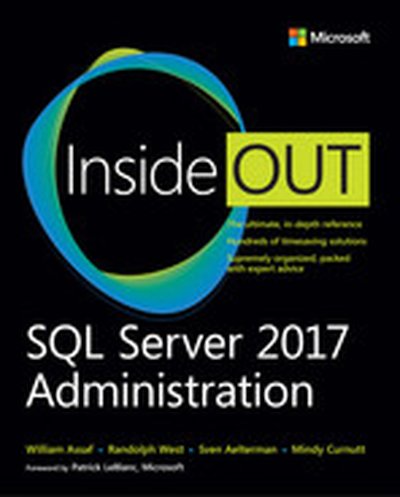
SQL Server 2017 Administration Inside Out, First Edition

Conquer SQL Server 2017 administration—from the inside out Dive into SQL Server 2017 administration—and really put your SQL Server DBA expertise to work. This supremely organized reference packs hundreds of timesaving solutions, tips, and workarounds—all you need to plan, implement, manage, and secure SQL Server 2017 in any production environment: on-premises, cloud, or hybrid. Four SQL Server experts offer a complete tour of DBA capabilities available in SQL Server 2017 Database Engine, SQL Server Data Tools, SQL Server Management Studio, and via PowerShell. Discover how experts tackle today’s essential tasks—and challenge yourself to new levels of mastery. • Install, customize, and use SQL Server 2017’s key administration and development tools • Manage memory, storage, clustering, virtualization, and other components • Architect and implement database infrastructure, including IaaS, Azure SQL, and hybrid cloud configurations • Provision SQL Server and Azure SQL databases • Secure SQL Server via encryption, row-level security, and data masking • Safeguard Azure SQL databases using platform threat protection, firewalling, and auditing • Establish SQL Server IaaS network security groups and user-defined routes • Administer SQL Server user security and permissions • Efficiently design tables using keys, data types, columns, partitioning, and views • Utilize BLOBs and external, temporal, and memory-optimized tables • Master powerful optimization techniques involving concurrency, indexing, parallelism, and execution plans • Plan, deploy, and perform disaster recovery in traditional, cloud, and hybrid environments For Experienced SQL Server Administrators and Other Database Professionals • Your role: Intermediate-to-advanced level SQL Server database administrator, architect, developer, or performance tuning expert • Prerequisites: Basic understanding of database administration procedures

Summary

As communications between machines become more commonplace the need to store the generated data in a time-oriented manner increases. The market for timeseries data stores has many contenders, but they are not all built to solve the same problems or to scale in the same manner. In this episode the founders of TimescaleDB, Ajay Kulkarni and Mike Freedman, discuss how Timescale was started, the problems that it solves, and how it works under the covers. They also explain how you can start using it in your infrastructure and their plans for the future.

Preamble

Hello and welcome to the Data Engineering Podcast, the show about modern data infrastructure When you’re ready to launch your next project you’ll need somewhere to deploy it. Check out Linode at dataengineeringpodcast.com/linode and get a $20 credit to try out their fast and reliable Linux virtual servers for running your data pipelines or trying out the tools you hear about on the show. Go to dataengineeringpodcast.com to subscribe to the show, sign up for the newsletter, read the show notes, and get in touch. You can help support the show by checking out the Patreon page which is linked from the site. To help other people find the show you can leave a review on iTunes, or Google Play Music, and tell your friends and co-workers Your host is Tobias Macey and today I’m interviewing Ajay Kulkarni and Mike Freedman about Timescale DB, a scalable timeseries database built on top of PostGreSQL

Interview

Introduction How did you get involved in the area of data management? Can you start by explaining what Timescale is and how the project got started? The landscape of time series databases is extensive and oftentimes difficult to navigate. How do you view your position in that market and what makes Timescale stand out from the other options? In your blog post that explains the design decisions for how Timescale is implemented you call out the fact that the inserted data is largely append only which simplifies the index management. How does Timescale handle out of order timestamps, such as from infrequently connected sensors or mobile devices? How is Timescale implemented and how has the internal architecture evolved since you first started working on it?

What impact has the 10.0 release of PostGreSQL had on the design of the project? Is timescale compatible with systems such as Amazon RDS or Google Cloud SQL?

For someone who wants to start using Timescale what is involved in deploying and maintaining it? What are the axes for scaling Timescale and what are the points where that scalability breaks down?

Are you aware of anyone who has deployed it on top of Citus for scaling horizontally across instances?

What has been the most challenging aspect of building and marketing Timescale? When is Timescale the wrong tool to use for time series data? One of the use cases that you call out on your website is for systems metrics and monitoring. How does Timescale fit into that ecosystem and can it be used along with tools such as Graphite or Prometheus? What are some of the most interesting uses of Timescale that you have seen? Which came first, Timescale the business or Timescale the database, and what is your strategy for ensuring that the open source project and the company around it both maintain their health? What features or improvements do you have planned for future releases of Timescale?

Contact Info

Ajay

LinkedIn @acoustik on Twitter Timescale Blog

Mike

Website LinkedIn @michaelfreedman on Twitter Timescale Blog

Timescale

Website @timescaledb on Twitter GitHub

Parting Question

From your perspective, what is the biggest gap in the tooling or technology for data management today?

Links

Timescale PostGreSQL Citus Timescale Design Blog Post MIT NYU Stanford SDN Princeton Machine Data Timeseries Data List of Timeseries Databases NoSQL Online Transaction Processing (OLTP) Object Relational Mapper (ORM) Grafana Tableau Kafka When Boring Is Awesome PostGreSQL RDS Google Cloud SQL Azure DB Docker Continuous Aggregates Streaming Replication PGPool II Kubernetes Docker Swarm Citus Data

Website Data Engineering Podcast Interview
Database Indexing B-Tree Index GIN Index GIST Index STE Energy Redis Graphite Prometheus pg_prometheus OpenMetrics Standard Proposal Timescale Parallel Copy Hadoop PostGIS KDB+ DevOps Internet of Things MongoDB Elastic DataBricks Apache Spark Confluent New Enterprise Associates MapD Benchmark Ventures Hortonworks 2σ Ventures CockroachDB Cloudflare EMC Timescale Blog: Why SQL is beating NoSQL, and what this means for the future of data

The intro and outro music is from a href="http://freemusicarchive.org/music/The_Freak_Fandango_Orchestra/Love_death_and_a_drunken_monkey/04_-_The_Hug?utm_source=rss&utm_medium=rss" target="_blank"…

If you work with a media agency (or are one) the first question to ask them is how many data scientists do you have? Do you prefer Amazon Web Services, Microsoft Azure, or the Google Cloud Platform? Come see examples from one of Canada's largest retailers of advertising spending that is wasted from poor targeting, access issues, and lack of big data understanding. We will also dive into examples of broken implementations of Analytics that cause even more issues. If you are not in-sourcing the core components of your Media and Analytics you are almost certainly at risk or already suffering from many of these problems. In this session, Martin and Charles Farina will show you what you need to find the right partner, but more importantly what you also have to provide.

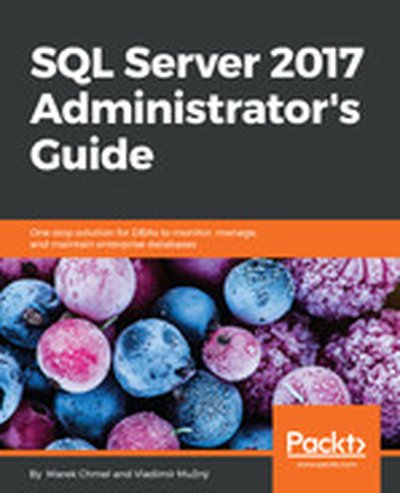
SQL Server 2017 Administrator's Guide

Dive into 'SQL Server 2017 Administrator's Guide' to master the administrative and maintenance aspects of SQL Server 2017. This comprehensive guide provides expert strategies and best practices to design, secure, and manage robust SQL Server systems effectively. What this Book will help me do Understand the new features and capabilities of SQL Server 2017 to enhance your database systems. Learn step-by-step how to configure, optimize, and troubleshoot SQL Server environments for maximum performance. Gain expertise in creating reliable backup and recovery solutions that minimize downtime and protect data. Develop skills in securing SQL Server instances against threats and maintaining system health. Explore integrating SQL Server 2017 with Azure and leveraging cloud capabilities for enhanced functionality. Author(s) The authors of 'SQL Server 2017 Administrator's Guide' are seasoned database administrators and experts in SQL Server technology. With years of practical experience, they have tackled challenges across various industries and bring a wealth of know-how to this book. They aim to provide clear, actionable guidance to help readers succeed. Who is it for? This book is ideal for database administrators who want to deepen their knowledge of SQL Server 2017 administration. It is especially suitable for professionals with some experience in earlier versions of SQL Server who wish to apply their skills to the latest edition. Whether you're an aspiring DBA or an experienced professional seeking to refine your strategies, this guide offers substantial value.

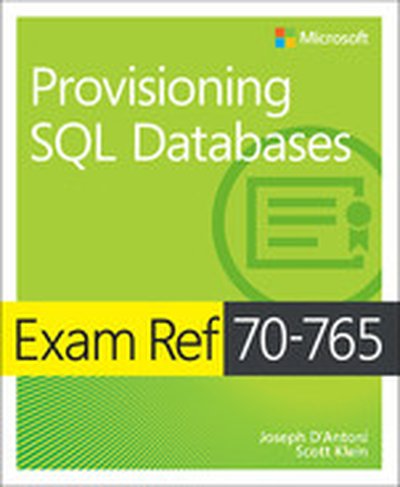
Exam Ref 70-765 Provisioning SQL Databases, First Edition

Prepare for Microsoft Exam 70-765–and help demonstrate your real-world mastery of provisioning SQL Server databases both on premise and in SQL Azure. Designed for experienced IT professionals ready to advance their status, Exam Ref focuses on the critical thinking and decision-making acumen needed for success at the MCSA level. Focus on the expertise measured by these objectives: • Implement SQL in Azure • Manage databases and instances • Manage storage This Microsoft Exam Ref: • Organizes its coverage by exam objectives • Features strategic, what-if scenarios to challenge you • Assumes you have working knowledge of SQL Server administration and maintenance, as well as Azure skills Provisioning SQL Databases About the Exam Exam 70-765 focuses on skills and knowledge for provisioning, upgrading, and configuring SQL Server; managing databases and files; and provisioning, migrating, and managing databases in the Microsoft Azure cloud. About Microsoft Certification Passing this exam as well as Exam 70-764: Administering a SQL Database Infrastructure earns you MCSA: SQL 2016 Database Administration certification, qualifying you for a position as a database administrator or infrastructure specialist. See full details at: microsoft.com/learning

I sat down with Ali Ghodsi, CEO and found of Databricks, and John Chirapurath, GM for Data Platform Marketing at Microsoft related to the recent announcement of Azure Databricks. When I heard about the announcement, my first thoughts were two-fold.  First, the possibility of optimized integrations with existing Azure services.  This would be a big benefit to heavy Azure users who also want to use Spark.  Second, the benefits of active directory to control Databricks access for large enterprise. Hear Ali and JG's thoughts and comments on what makes Azure Databricks a novel offering.  

In this episode, Microsoft's Corporate Vice President for Cloud Artificial Intelligence, Joseph Sirosh, joins host Kyle Polich to share some of the Microsoft's latest and most exciting innovations in AI development platforms. Last month, Microsoft launched a set of three powerful new capabilities in Azure Machine Learning for advanced developers to exploit big data, GPUs, data wrangling and container-based model deployment. Extended show notes found here. Thanks to our sponsor Springboard.  Check out Springboard's Data Science Career Track Bootcamp.

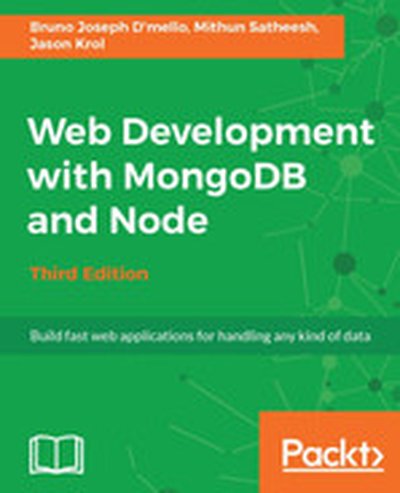
Web Development with MongoDB and Node - Third Edition

Explore the power of combining Node.js and MongoDB to build modern, scalable web applications in 'Web Development with MongoDB and Node.' You'll not only learn how to integrate these two technologies effectively, but you'll also gain practical insights into using modern frameworks like Express and Angular to build feature-rich web apps. What this Book will help me do Master core concepts of Node.js and MongoDB for efficient web development. Learn to build and configure a web server using the Express.js framework. Implement data persistence with MongoDB using the Mongoose ODM library. Automate testing using tools like Mocha and streamline workflows with Gulp. Deploy applications to cloud platforms like Heroku, AWS, and Microsoft Azure. Author(s) Jason Krol and None Joseph D'mello, along with None Satheesh, bring extensive experience in web development and technical writing to this book. The authors have collectively worked on cutting-edge web technologies for years and are passionate about sharing their expertise to help developers create efficient web applications. Who is it for? This book is perfect for JavaScript developers at any proficiency level who are looking to expand their skills into full-stack development with Node.js and MongoDB. Even if you have a basic understanding of JavaScript and HTML, this book will guide you through building complete web applications from scratch. If you're eager to learn and create performant, scalable web apps, this book is for you.

SQL Server 2016 High Availability Unleashed (includes Content Update Program)

Book + Content Update Program SQL Server 2016 High Availability Unleashed provides start-to-finish coverage of SQL Server’s powerful high availability (HA) solutions for your traditional on-premise databases, cloud-based databases (Azure or AWS), hybrid databases (on-premise coupled with the cloud), and your emerging Big Data solutions. This complete guide introduces an easy-to-follow, formal HA methodology that has been refined over the past several years and helps you identity the right HA solution for your needs. There is also additional coverage of both disaster recovery and business continuity architectures and considerations. You are provided with step-by-step guides, examples, and sample code to help you set up, manage, and administer these highly available solutions. All examples are based on existing production deployments at major Fortune 500 companies around the globe. This book is for all intermediate-to-advanced SQL Server and Big Data professionals, but is also organized so that the first few chapters are great foundation reading for CIOs, CTOs, and even some tech-savvy CFOs. Learn a formal, high availability methodology for understanding and selecting the right HA solution for your needs Deep dive into Microsoft Cluster Services Use selective data replication topologies Explore thorough details on AlwaysOn and availability groups Learn about HA options with log shipping and database mirroring/ snapshots Get details on Microsoft Azure for Big Data and Azure SQL Explore business continuity and disaster recovery Learn about on-premise, cloud, and hybrid deployments Provide all types of database needs, including online transaction processing, data warehouse and business intelligence, and Big Data Explore the future of HA and disaster recovery In addition, this book is part of InformIT’s exciting Content Update Program, which provides content updates for major technology improvements! As significant updates are made to SQL Server, sections of this book will be updated or new sections will be added to match the updates to the technologies. As updates become available, they will be delivered to you via a free Web Edition of this book, which can be accessed with any Internet connection. To learn more, visit informit.com/cup. How to access the Web Edition: Follow the instructions inside to learn how to register your book to access the FREE Web Edition. * The companion material is not available with the online edition on O'Reilly Learning

Business in Real-Time Using Azure IoT and Cortana Intelligence Suite: Driving Your Digital Transformation

Learn how today’s businesses can transform themselves by leveraging real-time data and advanced machine learning analytics. This book provides prescriptive guidance for architects and developers on the design and development of modern Internet of Things (IoT) and Advanced Analytics solutions. In addition, Business in Real-Time Using Azure IoT and Cortana Intelligence Suite offers patterns and practices for those looking to engage their customers and partners through Software-as-a-Service solutions that work on any device. Whether you're working in Health & Life Sciences, Manufacturing, Retail, Smart Cities and Buildings or Process Control, there exists a common platform from which you can create your targeted vertical solutions. Business in Real-Time Using Azure IoT and Cortana Intelligence Suite uses a reference architecture as a road map. Building on Azure’s PaaS services, you'll see how a solution architecture unfolds that demonstrates a complete end-to-end IoT and Advanced Analytics scenario. What You'll Learn: Automate your software product life cycle using PowerShell, Azure Resource Manager Templates, and Visual Studio Team Services Implement smart devices using Node.JS and C# Use Azure Streaming Analytics to ingest millions of events Provide both "Hot" and "Cold" path outputs for real-time alerts, data transformations, and aggregation analytics Implement batch processing using Azure Data Factory Create a new form of Actionable Intelligence (AI) to drive mission critical business processes Provide rich Data Visualizations across a wide variety of mobile and web devices Who This Book is For: Solution Architects, Software Developers, Data Architects, Data Scientists, and CIO/CTA Technical Leadership Professionals

Exam Ref 70-761 Querying Data with Transact-SQL, 1st Edition

Prepare for Microsoft Exam 70-761–and help demonstrate your real-world mastery of SQL Server 2016 Transact-SQL data management, queries, and database programming. Designed for experienced IT professionals ready to advance their status, Exam Ref focuses on the critical-thinking and decision-making acumen needed for success at the MCSA level. Focus on the expertise measured by these objectives: Filter, sort, join, aggregate, and modify data Use subqueries, table expressions, grouping sets, and pivoting Query temporal and non-relational data, and output XML or JSON Create views, user-defined functions, and stored procedures Implement error handling, transactions, data types, and nulls This Microsoft Exam Ref: Organizes its coverage by exam objectives Features strategic, what-if scenarios to challenge you Assumes you have experience working with SQL Server as a database administrator, system engineer, or developer Includes downloadable sample database and code for SQL Server 2016 SP1 (or later) and Azure SQL Database Querying Data with Transact-SQL About the Exam Exam 70-761 focuses on the skills and knowledge necessary to manage and query data and to program databases with Transact-SQL in SQL Server 2016. About Microsoft Certification Passing this exam earns you credit toward a Microsoft Certified Solutions Associate (MCSA) certification that demonstrates your mastery of essential skills for building and implementing on-premises and cloud-based databases across organizations. Exam 70-762 (Developing SQL Databases) is also required for MCSA: SQL 2016 Database Development certification. See full details at: microsoft.com/learning

Pro SQL Server Internals, Second Edition

Improve your ability to develop, manage, and troubleshoot SQL Server solutions by learning how different components work "under the hood," and how they communicate with each other. The detailed knowledge helps in implementing and maintaining high-throughput databases critical to your business and its customers. You'll learn how to identify the root cause of each problem and understand how different design and implementation decisions affect performance of your systems. New in this second edition is coverage of SQL Server 2016 Internals, including In-Memory OLTP, columnstore enhancements, Operational Analytics support, Query Store, JSON, temporal tables, stretch databases, security features, and other improvements in the new SQL Server version. The knowledge also can be applied to Microsoft Azure SQL Databases that share the same code with SQL Server 2016. Pro SQL Server Internals is a book for developers and database administrators, and it covers multiple SQL Server versions starting with SQL Server 2005 and going all the way up to the recently released SQL Server 2016. The book provides a solid road map for understanding the depth and power of the SQL Server database server and teaches how to get the most from the platform and keep your databases running at the level needed to support your business. The book: Provides detailed knowledge of new SQL Server 2016 features and enhancements Includes revamped coverage of columnstore indexes and In-Memory OLTP Covers indexing and transaction strategies Shows how various database objects and technologies are implemented internally, and when they should or should not be used Demonstrates how SQL Server executes queries and works with data and transaction log What You Will Learn Design and develop database solutions with SQL Server. Troubleshoot design, concurrency, and performance issues. Choose the right database objects and technologies for the job. Reduce costs and improve availability and manageability. Design disaster recovery and high-availability strategies. Improve performance of OLTP and data warehouse systems through in-memory OLTP and Columnstore indexes. Who This Book Is For Developers and database administrators who want to design, develop, and maintain systems in a way that gets the most from SQL Server. This book is an excellent choice for people who prefer to understand and fix the root cause of a problem rather than applying a 'band aid' to it.

T-SQL Fundamentals, Third Edition

Effectively query and modify data using Transact-SQL Master T-SQL fundamentals and write robust code for Microsoft SQL Server and Azure SQL Database. Itzik Ben-Gan explains key T-SQL concepts and helps you apply your knowledge with hands-on exercises. The book first introduces T-SQL’s roots and underlying logic. Next, it walks you through core topics such as single-table queries, joins, subqueries, table expressions, and set operators. Then the book covers more-advanced data-query topics such as window functions, pivoting, and grouping sets. The book also explains how to modify data, work with temporal tables, and handle transactions, and provides an overview of programmable objects. Related Content Book: T-SQL Fundamentals, 4th Edition Microsoft Data Platform MVP Itzik Ben-Gan shows you how to: Review core SQL concepts and its mathematical roots Create tables and enforce data integrity Perform effective single-table queries by using the SELECT statement Query multiple tables by using joins, subqueries, table expressions, and set operators Use advanced query techniques such as window functions, pivoting, and grouping sets Insert, update, delete, and merge data Use transactions in a concurrent environment Get started with programmable objects–from variables and batches to user-defined functions, stored procedures, triggers, and dynamic SQL

Web Development with MongoDB and NodeJS - Second Edition

Discover how to build a full-featured, interactive web application from scratch using Node.js and MongoDB in this comprehensive guide. You will learn to set up your development environment, create a web server with Express.js, and integrate MongoDB for data persistence. By the end of this book, you will have the knowledge and skills to develop and deploy robust web applications ready for the cloud. What this Book will help me do Set up a Node.js development environment and connect it to MongoDB. Develop a web server using Express.js and write integrated APIs. Implement dynamic HTML pages leveraging the Handlebars template engine. Build efficient and scalable data-driven features using Mongoose ODM. Deploy web applications seamlessly to cloud platforms like Heroku, AWS, or Azure. Author(s) This book was co-authored by experts None Satheesh, None Joseph D'mello, and Jason Krol, who bring years of experience in software development and expertise in modern web technologies. With a focus on practical application and best practices, the authors aim to empower readers to succeed in real-world development projects using the innovative Node.js and MongoDB stack. Who is it for? This book is tailored for developers who have a basic understanding of JavaScript and HTML and wish to advance their web development skills. If you are motivated to learn how to leverage Node.js and MongoDB for full-stack development or are curious about building and deploying complete web applications, this book is ideal for you. It addresses learners from early career to experienced developers looking to strengthen their skills in modern development stacks.

Pro SQL Server Administration

This book brings SQL Server administration into the modern era with strong coverage of hybrid cloud environments, In-Memory OLTP, and installation on Server Core. This comprehensive guide to SQL Server Administration for today’s DBA helps you to administer the new and key areas of SQL Server, including Columnstore indexes and the In-Memory OLTP feature set introduced in 2014. You will also be guided through the administration of traditional areas of SQL Server, including how to secure your instance, monitor and maintain your instance, and to use features such as AlwaysOn to make your instance highly available. Also covered is the use of SQL Server features to scale out read-only workloads. Pro SQL Server Administration is an all-new book taking up-to-date and modern approach that you'll want and need to further your career as a SQL Server database administrator. In this book, you'll find: • Extensive coverage of hybrid cloud environments involving Azure SQL Database • Detailed discussions on all new, key features, including AlwaysOn and in-memory support • Comprehensive coverage of key skills, such as monitoring, maintenance and indexing