talk-data.com talk-data.com

Topic

data

5765

tagged

Activity Trend

3 peak/qtr
2020-Q1 2026-Q1

Activities

5765 activities · Newest first

Introducing and Implementing IBM FlashSystem V9000

The success or failure of businesses often depends on how well organizations use their data assets for competitive advantage. Deeper insights from data require better information technology. As organizations modernize their IT infrastructure to boost innovation rather than limit it, they need a data storage system that can keep pace with highly virtualized environments, cloud computing, mobile and social systems of engagement, and in-depth, real-time analytics. Making the correct decision on storage investment is critical. Organizations must have enough storage performance and agility to innovate as they need to implement cloud-based IT services, deploy virtual desktop infrastructure, enhance fraud detection, and use new analytics capabilities. At the same time, future storage investments must lower IT infrastructure costs while helping organizations to derive the greatest possible value from their data assets. The IBM® FlashSystem V9000 is the premier, fully integrated, Tier 1, all-flash offering from IBM. It has changed the economics of today’s data center by eliminating storage bottlenecks. Its software-defined storage features simplify data management, improve data security, and preserve your investments in storage. The IBM FlashSystem® V9000 SAS expansion enclosures provide new tiering options with read-intensive SSDs or nearline SAS HDDs. IBM FlashSystem V9000 includes IBM FlashCore® technology and advanced software-defined storage available in one solution in a compact 6U form factor. IBM FlashSystem V9000 improves business application availability. It delivers greater resource utilization so you can get the most from your storage resources, and achieve a simpler, more scalable, and cost-efficient IT Infrastructure. This IBM Redbooks® publication provides information about IBM FlashSystem V9000 Software V7.7 and introduces the recently announced V7.8. It describes the product architecture, software, hardware, and implementation, and provides hints and tips. It illustrates use cases and independent software vendor (ISV) scenarios that demonstrate real-world solutions, and also provides examples of the benefits gained by integrating the IBM FlashSystem storage into business environments. This book offers IBM FlashSystem V9000 scalability concepts and guidelines for planning, installing, and configuring, which can help environments scale up and out to add more flash capacity and expand virtualized systems. Port utilization methodologies are provided to help you maximize the full potential of IBM FlashSystem V9000 performance and low latency in your scalable environment. This book is intended for pre-sales and post-sales technical support professionals, storage administrators, and anyone who wants to understand how to implement this exciting technology.
Mastering Text Mining with R

Mastering Text Mining with R is your go-to guide for learning how to process and analyze textual data using R. Throughout the book, you'll gain the skills necessary to perform data extraction and natural language processing, equipping you with practical applications tailored to real-world scenarios. What this Book will help me do Learn to access and manipulate textual data from various sources using R. Understand text processing techniques and employ them with tools like OpenNLP. Explore methods for text categorization, reduction, and summarization with hands-on exercises. Perform text classification tasks such as sentiment analysis and entity recognition. Build custom applications using text mining techniques and frameworks. Author(s) Ashish Kumar is a seasoned data scientist and software developer with years of experience in text analytics and the R programming language. He has a knack for explaining complex topics in an accessible and practical manner, ideal for learners embracing their text mining journey. Who is it for? This book is for anyone keen on mastering text mining with R. If you're an R programmer, data analyst, or data scientist looking to delve into text analytics, you'll find it ideal. Some familiarity with basic programming and statistics will enhance your experience, but all concepts are introduced clearly and effectively.

MATLAB Machine Learning

This book is a comprehensive guide to machine learning with worked examples in MATLAB. It starts with an overview of the history of Artificial Intelligence and automatic control and how the field of machine learning grew from these. It provides descriptions of all major areas in machine learning. The book reviews commercially available packages for machine learning and shows how they fit into the field. The book then shows how MATLAB can be used to solve machine learning problems and how MATLAB graphics can enhance the programmer’s understanding of the results and help users of their software grasp the results. Machine Learning can be very mathematical. The mathematics for each area is introduced in a clear and concise form so that even casual readers can understand the math. Readers from all areas of engineering will see connections to what they know and will learn new technology. The book then provides complete solutions in MATLAB for several important problems in machine learning including face identification, autonomous driving, and data classification. Full source code is provided for all of the examples and applications in the book. What you'll learn: An overview of the field of machine learning Commercial and open source packages in MATLAB How to use MATLAB for programming and building machine learning applications MATLAB graphics for machine learning Practical real world examples in MATLAB for major applications of machine learning in big data Who is this book for: The primary audiences are engineers and engineering students wanting a comprehensive and practical introduction to machine learning.

Advanced Graph Theory and Combinatorics

Advanced Graph Theory focuses on some of the main notions arising in graph theory with an emphasis from the very start of the book on the possible applications of the theory and the fruitful links existing with linear algebra. The second part of the book covers basic material related to linear recurrence relations with application to counting and the asymptotic estimate of the rate of growth of a sequence satisfying a recurrence relation.

Business Analytics Using R - A Practical Approach

Learn the fundamental aspects of the business statistics, data mining, and machine learning techniques required to understand the huge amount of data generated by your organization. This book explains practical business analytics through examples, covers the steps involved in using it correctly, and shows you the context in which a particular technique does not make sense. Further, Practical Business Analytics using R helps you understand specific issues faced by organizations and how the solutions to these issues can be facilitated by business analytics. This book will discuss and explore the following through examples and case studies: An introduction to R: data management and R functions The architecture, framework, and life cycle of a business analytics project Descriptive analytics using R: descriptive statistics and data cleaning Data mining: classification, association rules, and clustering Predictive analytics: simple regression, multiple regression, and logistic regression This book includes case studies on important business analytic techniques, such as classification, association, clustering, and regression. The R language is the statistical tool used to demonstrate the concepts throughout the book. What You Will Learn • Write R programs to handle data • Build analytical models and draw useful inferences from them • Discover the basic concepts of data mining and machine learning • Carry out predictive modeling • Define a business issue as an analytical problem Who This Book Is For Beginners who want to understand and learn the fundamentals of analytics using R. Students, managers, executives, strategy and planning professionals, software professionals, and BI/DW professionals.

Tableau Cookbook - Recipes for Data Visualization

"Tableau Cookbook - Recipes for Data Visualization" walks you through the features and tools of Tableau, one of the industry-leading platforms for building data visualizations. Using over 50 hands-on recipes, you'll learn to create professional dashboards and storyboards to effectively present data trends and patterns. What this Book will help me do Understand the Tableau interface and connect it to various data sources. Build basic and advanced charts, from bar graphs to histograms and maps. Design interactive dashboards that link multiple visual components. Utilize parameters and calculations for advanced data visualizations. Integrate multiple data sources and leverage Tableau's data blending features. Author(s) Shweta Savale brings years of experience in data visualization and analytics to her writing of this cookbook. As a Tableau expert, Shweta has taught and consulted with professionals across industries, empowering them to gain insights from data. Her step-by-step instructional style makes learning both engaging and approachable. Who is it for? This book caters to both beginners looking to learn Tableau from scratch and advanced users needing a quick reference guide. It's perfect for data professionals, analysts, and anyone seeking to visualize and interpret data effectively. If you're looking to simplify Tableau's functions or sharpen your visualization skills, this book is for you.

Weathering the Storm

Weathering the Storm explores the factors leading up to the recent global financial and economic crisis, how the crisis unfolded, and the response of European and national authorities. The book describes the rationale behind the measures undertaken to mitigate the consequences of the recession and to ensure that a similar situation does not happen again in the future. In the wake of the crisis, various major changes continue to significantly affect the life and social organization of Europeans. For instance, a new ESM with a size financially comparable to that of the IMF was created; similarly, the reforms in economic governance imply much more intrusive participation of European countries in each other's macroeconomic policies. Moreover, the organization, regulation, and supervision of the financial sector have been drastically revamped. The decisions taken by European and national authorities affect the daily lives of hundreds of millions of European citizens and countless more around the globe. An insightful read for anyone interested in understanding the topic and its effect on their lives, the book primarily addresses undergraduate students in their final year and graduate students in fields such as economics, finance, and political science. The main messages are explained through examples and charts.

Pro Tableau: A Step-by-Step Guide

Leverage the power of visualization in business intelligence and data science to make quicker and better decisions. Use statistics and data mining to make compelling and interactive dashboards. This book will help those familiar with Tableau software chart their journey to being a visualization expert. Pro Tableau demonstrates the power of visual analytics and teaches you how to: Connect to various data sources such as spreadsheets, text files, relational databases (Microsoft SQL Server, MySQL, etc.), non-relational databases (NoSQL such as MongoDB, Cassandra), R data files, etc. Write your own custom SQL, etc. Perform statistical analysis in Tableau using R Use a multitude of charts (pie, bar, stacked bar, line, scatter plots, dual axis, histograms, heat maps, tree maps, highlight tables, box and whisker, etc.) What you'll learn Connect to various data sources such as relational databases (Microsoft SQL Server, MySQL), non-relational databases (NoSQL such as MongoDB, Cassandra), write your own custom SQL, join and blend data sources, etc. Leverage table calculations (moving average, year over year growth, LOD (Level of Detail), etc. Integrate Tableau with R Tell a compelling story with data by creating highly interactive dashboards Who this book is for All levels of IT professionals, from executives responsible for determining IT strategies to systems administrators, to data analysts, to decision makers responsible for driving strategic initiatives, etc. The book will help those familiar with Tableau software chart their journey to a visualization expert.

Apache Spark for Data Science Cookbook

In "Apache Spark for Data Science Cookbook," you'll delve into solving real-world analytical challenges using the robust Apache Spark framework. This book features hands-on recipes that cover data analysis, distributed machine learning, and real-time data processing. You'll gain practical skills to process, visualize, and extract insights from large datasets efficiently. What this Book will help me do Master using Apache Spark for processing and analyzing large-scale datasets effectively. Harness Spark's MLLib for implementing machine learning algorithms like classification and clustering. Utilize libraries such as NumPy, SciPy, and Pandas in conjunction with Spark for numerical computations. Apply techniques like Natural Language Processing and text mining using Spark-integrated tools. Perform end-to-end data science workflows, including data exploration, modeling, and visualization. Author(s) Nagamallikarjuna Inelu and None Chitturi bring their extensive experience working with data science and distributed computing frameworks like Apache Spark. Nagamallikarjuna specializes in applying machine learning algorithms to big data problems, while None has contributed to various big data system implementations. Together, they focus on providing practitioners with practical and efficient solutions. Who is it for? This book is primarily intended for novice and intermediate data scientists and analysts who are curious about using Apache Spark to tackle data science problems. Readers are expected to have some familiarity with basic data science tasks. If you want to learn practical applications of Spark in data analysis and enhance your big data analytics skills, this resource is for you.

Fast Data Processing Systems with SMACK Stack

Fast Data Processing Systems with SMACK Stack introduces you to the SMACK stack-a combination of Spark, Mesos, Akka, Cassandra, and Kafka. You will learn to integrate these technologies to build scalable, efficient, and real-time data processing platforms tailored for solving critical business challenges. What this Book will help me do Understand the concepts of fast data pipelines and design scalable architectures using the SMACK stack Gain expertise in functional programming with Scala and leverage its power in data processing tasks Build and optimize distributed databases using Apache Cassandra for scaling extensively Deploy and manage real-time data streams using Apache Kafka to handle massive messaging workloads Implement cost-effective cluster infrastructures with Apache Mesos for efficient resource utilization Author(s) None Estrada is an expert in distributed systems and big data technologies. With years of experience implementing SMACK-based solutions across industries, Estrada offers a practical viewpoint to designing scalable systems. Their blend of theoretical knowledge and applied practices ensures readers receive actionable guidance. Who is it for? This book is perfect for software developers, data engineers, or data scientists looking to deepen their understanding of real-time data processing systems. If you have a foundational knowledge of the technologies in the SMACK stack or wish to learn how to combine these cutting-edge tools to solve complex problems, this is for you. Readers with an interest in building efficient big data solutions will find tremendous value here.

MOS 2016 Study Guide for Microsoft Access

Advance your everyday proficiency with Access 2016. And earn the credential that proves it! Demonstrate your expertise with Microsoft Access! Designed to help you practice and prepare for Microsoft Office Specialist (MOS): Access 2016 certification, this official Study Guide delivers: • In-depth preparation for each MOS objective • Detailed procedures to help build the skills measured by the exam • Hands-on tasks to practice what you’ve learned • Practice files and sample solutions Sharpen the skills measured by these objectives: • Create and manage databases • Build tables • Create queries • Create forms • Create reports

Practical Business Intelligence

Master the art of business intelligence in just a few steps with this hands-on guide. By following the detailed examples and techniques in this book, you'll learn to create effective BI solutions that analyze data for strategic decision-making. You'll explore tools like D3.js, R, Tableau, QlikView, and Python to visualize data and gain actionable insights. What this Book will help me do Develop the ability to create self-service reporting environments for business analytics. Understand and apply SQL techniques to aggregate and manipulate data effectively. Design and implement data models suitable for analytical and reporting purposes. Connect data warehouses with advanced BI tools to streamline reporting processes. Analyze and visualize data using industry-leading tools like D3.js, R, Tableau, and Python. Author(s) Written by seasoned experts in data analytics and business intelligence, the authors bring years of industry experience and practical insights to this well-rounded guide. They specialize in turning complex data into manageable, insightful BI solutions. Their writing style is approachable yet detailed, ensuring you gain both foundational and advanced knowledge in a structured way. Who is it for? This book caters to data enthusiasts and professionals in roles such as data analysis, BI development, or data management. It's perfect for beginners seeking practical BI skills, as well as experienced developers looking to integrate and implement sophisticated BI tools. The focus is on actionable insights, making it ideal for anyone aiming to leverage data for business growth.

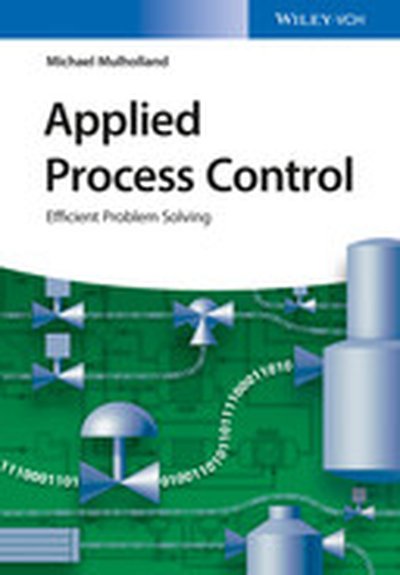
Applied Process Control

Bridging theory and practice, this book contains over 200 practical exercises and their solutions, to develop the problem-solving abilities of process engineers. The problems were developed by the author during his many years of teaching at university and are kept brief, taken from the fields of instrumentation, modelling, plant control, control strategy design and stability of control. The algorithm flows and codes, which are mostly based on MATLAB®, are given in many cases and allow for easy translation into applications. Since the text is structured according to "Applied Process Control: Essential Methods", all of the necessary background information on the underlying methods can be easily and quickly found in this accompanying book.

IBM Business Process Manager Operations Guide

This IBM® Redbooks® publication provides operations teams with architectural design patterns and guidelines for the day-to-day challenges that they face when managing their IBM IBM Business Process Manager (BPM) infrastructure. Today, IBM BPM L2 and L3 Support and SWAT teams are constantly advising customers how to deal with the following common challenges: Deployment options (on-premises, patterns, cloud, and so on) Administration DevOps Automation Performance monitoring and tuning Infrastructure management Scalability High Availability and Data Recovery Federation This publication enables customers to become self-sufficient, promote consistency and accelerate IBM BPM Support engagements. This IBM Redbooks publication is targeted toward technical professionals (technical support staff, IT Architects, and IT Specialists) who are responsible for meeting day-to-day challenges that they face when they are managing an IBM BPM infrastructure.

Mastering RethinkDB

Mastering RethinkDB offers a comprehensive guide to using the open-source, scalable database RethinkDB for real-time application development. Throughout this book, you'll gain practical knowledge on query management with ReQL, build dynamic web apps, and perform advanced database administration tasks. What this Book will help me do Gain expertise in managing and configuring RethinkDB clusters for optimal performance in real-time applications. Develop robust web applications using RethinkDB and integrate them seamlessly with Node.js. Leverage advanced querying features of ReQL, including geospatial and time-series queries. Enhance RethinkDB's capabilities with integration techniques for third-party libraries like ElasticSearch. Master deployment practices using platforms such as Docker and PaaS for production-grade applications. Author(s) None Shaikh, an expert in database technologies and real-time system design, brings years of hands-on experience working with open-source databases like RethinkDB. Known for writing practical technical books, None emphasizes real-world applications and clarity to help both novice and seasoned developers excel. Who is it for? This book is ideal for developers who are building real-time applications and want to adopt RethinkDB for their solutions. Readers should have a basic understanding of RethinkDB and Node.js to get the most benefit. It's particularly suited for programmers looking to deepen their database administration skills and enhance their real-time data handling expertise.

Principles of Data Science

If you've ever wondered how to bridge the gap between mathematics, programming, and actionable data insights, 'Principles of Data Science' is the guide for you. This book explores the full data science pipeline, providing you with tools and knowledge to transform raw data into impactful decisions. With practical lessons and hands-on tutorials, you'll master the essential skills of a data scientist. What this Book will help me do Understand and apply the five core steps of the data science process. Gain insight into data cleaning, visualization, and effective communication of results. Learn and implement foundational machine learning models using Python or R. Bridge gaps between mathematics, statistics, and programming to solve data-driven problems. Evaluate machine learning models using key metrics for better predictive capabilities. Author(s) The author, a seasoned data scientist with years of professional experience in analytics and software development, brings a rich perspective to the topic. Combining a strong foundation in mathematics with expertise in Python and R, they have worked on diverse real-world data projects. Their teaching philosophy emphasizes clarity and practical application, ensuring you not only gain knowledge but also know how to apply it effectively. Who is it for? This book is intended for individuals with a basic understanding of algebra and some programming experience in Python or R. It is perfect for programmers who wish to dive into the world of data science or for those with math skills looking to apply them practically. If you seek to turn raw data into valuable insights and predictions, this book is tailored for you.

Building Web Apps that Respect a User's Privacy and Security

A recent survey from the Pew Research Center found that few Americans are confident about the security or privacy of their data—particularly when it comes to the use of online tools. As a web developer, you represent the first line of defense in protecting your user’s data and privacy. This report explores several techniques, tools, and best practices for developing and maintaining web apps that provide the privacy and security that every user needs—and deserves. Each individual now produces more data every day than people in earlier generations did throughout their lifetimes. Every time we click, tweet, or visit a site, we leave a digital trace. As web developers, we’re responsible for shaping the experiences of users’ online lives. By making ethical, user-centered choices, we can create a better Web for everyone. Learn how web tracking works, and how you can provide users with greater privacy controls Explore HTTPS and learn how to use this protocol to encrypt user connections Use web development frameworks that provide baked-in security support for protecting user data Learn methods for securing user authentication, and for sanitizing and validating user input Provide exports that allow users to reclaim their data if and when you close your service This is the third report in the Ethical Web Development series from author Adam Scott. Previous reports in this series include Building Web Apps for Everyone and Building Web Apps That Work Everywhere.

Data modeling with Cassandra

In this lesson, you’ll learn how to design data models for Cassandra, including a data modeling process and notation. To apply this knowledge, we’ll design the data model for a sample application. This will help show how all the parts fit together. Along the way, we’ll use a tool to help us manage our CQL (Cassandra Query Language) scripts. What you’ll learn—and how you can apply it You will learn common patterns and antipatterns for data modeling in Cassandra. This lesson will cover the concepts around data modeling and will compare a Cassandra data model with an equivalent relational database model. You’ll learn about defining queries and about logical and physical database modeling. You’ll learn how to optimize your model for performance, and finally you’ll learn how to implement your model schema using CQL. This lesson is for you because… You are an application developer or architect who wants to learn how data is stored and processed in Cassandra. You are a database administrator who wants to learn about Cassandra. Prerequisites Helpful but not essential to have a basic understanding of relational vs. distributed databases. Helpful but not essential to understand Cassandra Query Language, CQL. Materials or downloads needed in advance None

Determining the right model for your experience

Inherent in creating a social layer into your experience is some form of relationships between people. There are different models, each of which create different kinds of social interactions and outcomes within an experience. What you'll learn—and how you can apply it This lesson reviews the different types of relationship models and shows you how to assess your specific goals to determine which model might be the right fit for your product or needs and what supporting tools are appropriate to create a rich relationship framework. Prerequisites You want to create or enhance a product with a social layer. This Lesson is taken from , 2nd Edition, by Erin Malone and Christian Crumlish. Designing Social Interfaces

Efficient data processing with R

What you’ll learn—and how you can apply it You’ll learn to perform efficient data carpentry—the process of taking rough, raw, and to some extent randomly arranged input data and creating neatly organized and tidy data. Working with clean data will be beneficial for every subsequent stage of your R project. In this Lesson, readers will learn how to create user-friendly data frames with tibble, reshape data with tidyr operations such as gather and separate, process data efficiently with dplyr’s functions, and connect R to a range of database types. This lesson is for you because You are working on a project in R and have reached the data processing stage. You want to clean, manipulate, and tidy your dataset to get it ready for the next stage (typically modeling and visualization). Prerequisites Some knowledge of R Materials or downloads needed in advance Installed RStudio This Lesson relies on a number of packages for data cleaning and processing. Check that they are installed on your computer and load them with: library("tibble") library("tidyr") library("stringr") library("readr") library("dplyr") library("data.table") RSQLite and ggmap are also used in a couple of examples, though they are not central to the Lesson’s content.