Serhii Sokolenko, founder at Tower Dev and former product manager at tech giants like Google Cloud, Snowflake, and Databricks, joined Yuliia to discuss his journey building a next-generation compute platform. Tower Dev aims to simplify data processing for data engineers who work with Python. Serhii explains how Tower addresses three key market trends: the integration of data engineering with AI through Python, the movement away from complex distributed processing frameworks, and users' desire for flexibility across different data platforms. He explains how Tower makes Python data applications more accessible by eliminating the need to learn complex frameworks while automatically scaling infrastructure. Sergei also shares his perspective on the future of data engineering, noting in which ways AI will transform the profession.Tower Dev - https://tower.dev/Serhii's Linkedin - https://www.linkedin.com/in/ssokolenko/
 talk-data.com
Topic
Data Engineering
1127
tagged
Activity Trend
Top Events
Summary In this episode of the Data Engineering Podcast Pete DeJoy, co-founder and product lead at Astronomer, talks about building and managing Airflow pipelines on Astronomer and the upcoming improvements in Airflow 3. Pete shares his journey into data engineering, discusses Astronomer's contributions to the Airflow project, and highlights the critical role of Airflow in powering operational data products. He covers the evolution of Airflow, its position in the data ecosystem, and the challenges faced by data engineers, including infrastructure management and observability. The conversation also touches on the upcoming Airflow 3 release, which introduces data awareness, architectural improvements, and multi-language support, and Astronomer's observability suite, Astro Observe, which provides insights and proactive recommendations for Airflow users.
Announcements Hello and welcome to the Data Engineering Podcast, the show about modern data managementData migrations are brutal. They drag on for months—sometimes years—burning through resources and crushing team morale. Datafold's AI-powered Migration Agent changes all that. Their unique combination of AI code translation and automated data validation has helped companies complete migrations up to 10 times faster than manual approaches. And they're so confident in their solution, they'll actually guarantee your timeline in writing. Ready to turn your year-long migration into weeks? Visit dataengineeringpodcast.com/datafold today for the details.Your host is Tobias Macey and today I'm interviewing Pete DeJoy about building and managing Airflow pipelines on Astronomer and the upcoming improvements in Airflow 3Interview IntroductionCan you describe what Astronomer is and the story behind it?How would you characterize the relationship between Airflow and Astronomer?Astronomer just released your State of Airflow 2025 Report yesterday and it is the largest data engineering survey ever with over 5,000 respondents. Can you talk a bit about top level findings in the report?What about the overall growth of the Airflow project over time?How have the focus and features of Astronomer changed since it was last featured on the show in 2017?Astro Observe GA’d in early February, what does the addition of pipeline observability mean for your customers? What are other capabilities similar in scope to observability that Astronomer is looking at adding to the platform?Why is Airflow so critical in providing an elevated Observability–or cataloging, or something simlar - experience in a DataOps platform? What are the notable evolutions in the Airflow project and ecosystem in that time?What are the core improvements that are planned for Airflow 3.0?What are the most interesting, innovative, or unexpected ways that you have seen Astro used?What are the most interesting, unexpected, or challenging lessons that you have learned while working on Airflow and Astro?What do you have planned for the future of Astro/Astronomer/Airflow?Contact Info LinkedInParting Question From your perspective, what is the biggest gap in the tooling or technology for data management today?Closing Announcements Thank you for listening! Don't forget to check out our other shows. Podcast.init covers the Python language, its community, and the innovative ways it is being used. The AI Engineering Podcast is your guide to the fast-moving world of building AI systems.Visit the site to subscribe to the show, sign up for the mailing list, and read the show notes.If you've learned something or tried out a project from the show then tell us about it! Email [email protected] with your story.Links AstronomerAirflowMaxime BeaucheminMongoDBDatabricksConfluentSparkKafkaDagsterPodcast EpisodePrefectAirflow 3The Rise of the Data Engineer blog postdbtJupyter NotebookZapiercosmos library for dbt in AirflowRuffAirflow Custom OperatorSnowflakeThe intro and outro music is from The Hug by The Freak Fandango Orchestra / CC BY-SA
In this podcast episode, we talked with Nemanja Radojkovic about MLOps in Corporations and Startups.
About the Speaker: Nemanja Radojkovic is Senior Machine Learning Engineer at Euroclear.
In this event,we’re diving into the world of MLOps, comparing life in startups versus big corporations. Joining us again is Nemanja, a seasoned machine learning engineer with experience spanning Fortune 500 companies and agile startups. We explore the challenges of scaling MLOps on a shoestring budget, the trade-offs between corporate stability and startup agility, and practical advice for engineers deciding between these two career paths. Whether you’re navigating legacy frameworks or experimenting with cutting-edge tools.
1:00 MLOps in corporations versus startups 6:03 The agility and pace of startups 7:54 MLOps on a shoestring budget 12:54 Cloud solutions for startups 15:06 Challenges of cloud complexity versus on-premise 19:19 Selecting tools and avoiding vendor lock-in 22:22 Choosing between a startup and a corporation 27:30 Flexibility and risks in startups 29:37 Bureaucracy and processes in corporations 33:17 The role of frameworks in corporations 34:32 Advantages of large teams in corporations 40:01 Challenges of technical debt in startups 43:12 Career advice for junior data scientists 44:10 Tools and frameworks for MLOps projects 49:00 Balancing new and old technologies in skill development 55:43 Data engineering challenges and reliability in LLMs 57:09 On-premise vs. cloud solutions in data-sensitive industries 59:29 Alternatives like Dask for distributed systems
🔗 CONNECT WITH NEMANJA LinkedIn - / radojkovic Github - https://github.com/baskervilski
🔗 CONNECT WITH DataTalksClub Join the community - https://datatalks.club/slack.html Subscribe to our Google calendar to have all our events in your calendar - https://calendar.google.com/calendar/... Check other upcoming events - https://lu.ma/dtc-events LinkedIn - / datatalks-club Twitter - / datatalksclub Website - https://datatalks.club/
Simon Späti and I discuss various aspects of writing, data engineering, and the impact of AI on the writing process. Simon shares his journey from business intelligence to data engineering and his current focus on writing. We also discuss the future of writing in the age of AI. Enjoy!
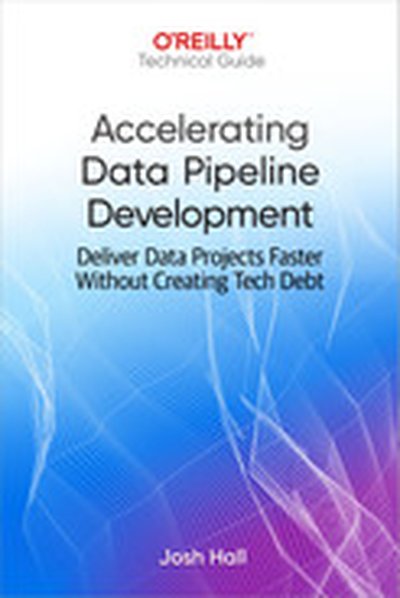
Today's data engineering teams are overwhelmed—juggling fire drills and endless requests while relying on manual, repetitive processes for building data pipelines. This much-needed tech guide from author Josh Hall introduces a practical approach to streamlining pipeline development, empowering teams to work smarter, not harder. Using Coalesce, a modern development platform, you'll learn to standardize workflows, apply reusable design patterns, and build faster, more efficient pipelines—all without piling on tech debt. Ideal for data engineers, architects, and analysts of all experience levels, the book offers clear explanations of Coalesce's core functionality including configuring environments, defining nodes, and connecting to data warehouses. Packed with workflows and useful takeaways, it's your guide to delivering high-quality, actionable data while reducing pipeline development time. Set up Coalesce and integrate with a data warehouse Use reusable nodes and design patterns for faster development Accelerate pipeline delivery with reduced manual effort Leverage Coalesce Marketplace for advanced functionality
Summary In this episode of the Data Engineering Podcast Rajan Goyal, CEO and co-founder of Datapelago, talks about improving efficiencies in data processing by reimagining system architecture. Rajan explains the shift from hyperconverged to disaggregated and composable infrastructure, highlighting the importance of accelerated computing in modern data centers. He discusses the evolution from proprietary to open, composable stacks, emphasizing the role of open table formats and the need for a universal data processing engine, and outlines Datapelago's strategy to leverage existing frameworks like Spark and Trino while providing accelerated computing benefits.
Announcements Hello and welcome to the Data Engineering Podcast, the show about modern data managementData migrations are brutal. They drag on for months—sometimes years—burning through resources and crushing team morale. Datafold's AI-powered Migration Agent changes all that. Their unique combination of AI code translation and automated data validation has helped companies complete migrations up to 10 times faster than manual approaches. And they're so confident in their solution, they'll actually guarantee your timeline in writing. Ready to turn your year-long migration into weeks? Visit dataengineeringpodcast.com/datafold today for the details.Your host is Tobias Macey and today I'm interviewing Rajan Goyal about how to drastically improve efficiencies in data processing by re-imagining the system architectureInterview IntroductionHow did you get involved in the area of data management?Can you start by outlining the main factors that contribute to performance challenges in data lake environments?The different components of open data processing systems have evolved from different starting points with different objectives. In your experience, how has that un-planned and un-synchronized evolution of the ecosystem hindered the capabilities and adoption of open technologies?The introduction of a new cross-cutting capability (e.g. Iceberg) has typically taken a substantial amount of time to gain support across different engines and ecosystems. What do you see as the point of highest leverage to improve the capabilities of the entire stack with the least amount of co-ordination?What was the motivating insight that led you to invest in the technology that powers Datapelago?Can you describe the system design of Datapelago and how it integrates with existing data engines?The growth in the generation and application of unstructured data is a notable shift in the work being done by data teams. What are the areas of overlap in the fundamental nature of data (whether structured, semi-structured, or unstructured) that you are able to exploit to bridge the processing gap?What are the most interesting, innovative, or unexpected ways that you have seen Datapelago used?What are the most interesting, unexpected, or challenging lessons that you have learned while working on Datapelago?When is Datapelago the wrong choice?What do you have planned for the future of Datapelago?Contact Info LinkedInParting Question From your perspective, what is the biggest gap in the tooling or technology for data management today?Links DatapelagoMIPS ArchitectureARM ArchitectureAWS NitroMellanoxNvidiaVon Neumann ArchitectureTPU == Tensor Processing UnitFPGA == Field-Programmable Gate ArraySparkTrinoIcebergPodcast EpisodeDelta LakePodcast EpisodeHudiPodcast EpisodeApache GlutenIntermediate RepresentationTuring CompletenessLLVMAmdahl's LawLSTM == Long Short-Term MemoryThe intro and outro music is from The Hug by The Freak Fandango Orchestra / CC BY-SA
In this podcast episode, we talked with Adrian Brudaru about the past, present and future of data engineering.
About the speaker: Adrian Brudaru studied economics in Romania but soon got bored with how creative the industry was, and chose to go instead for the more factual side. He ended up in Berlin at the age of 25 and started a role as a business analyst. At the age of 30, he had enough of startups and decided to join a corporation, but quickly found out that it did not provide the challenge he wanted. As going back to startups was not a desirable option either, he decided to postpone his decision by taking freelance work and has never looked back since. Five years later, he co-founded a company in the data space to try new things. This company is also looking to release open source tools to help democratize data engineering.
0:00 Introduction to DataTalks.Club 1:05 Discussing trends in data engineering with Adrian 2:03 Adrian's background and journey into data engineering 5:04 Growth and updates on Adrian's company, DLT Hub 9:05 Challenges and specialization in data engineering today 13:00 Opportunities for data engineers entering the field 15:00 The "Modern Data Stack" and its evolution 17:25 Emerging trends: AI integration and Iceberg technology 27:40 DuckDB and the emergence of portable, cost-effective data stacks 32:14 The rise and impact of dbt in data engineering 34:08 Alternatives to dbt: SQLMesh and others 35:25 Workflow orchestration tools: Airflow, Dagster, Prefect, and GitHub Actions 37:20 Audience questions: Career focus in data roles and AI engineering overlaps 39:00 The role of semantics in data and AI workflows 41:11 Focusing on learning concepts over tools when entering the field 45:15 Transitioning from backend to data engineering: challenges and opportunities 47:48 Current state of the data engineering job market in Europe and beyond 49:05 Introduction to Apache Iceberg, Delta, and Hudi file formats 50:40 Suitability of these formats for batch and streaming workloads 52:29 Tools for streaming: Kafka, SQS, and related trends 58:07 Building AI agents and enabling intelligent data applications 59:09Closing discussion on the place of tools like DBT in the ecosystem
🔗 CONNECT WITH ADRIAN BRUDARU Linkedin - / data-team Website - https://adrian.brudaru.com/ 🔗 CONNECT WITH DataTalksClub Join the community - https://datatalks.club/slack.html Subscribe to our Google calendar to have all our events in your calendar - https://calendar.google.com/calendar/... Check other upcoming events - https://lu.ma/dtc-events LinkedIn - /datatalks-club Twitter - /datatalksclub Website - https://datatalks.club/
At IBM, responsible AI implies transparency in training data: Introducing GneissWeb (pronounced “niceWeb”), a state-of-the-art LLM pre-training dataset with ~10 Trillion tokens derived from FineWeb, with open recipes, results, and tools for reproduction! In this session we will go over how we created GneissWeb and discuss tools and techniques used. We will provide code examples that you can try at your leisure.
Summary In this episode of the Data Engineering Podcast Gleb Mezhanskiy, CEO and co-founder of DataFold, talks about the intersection of AI and data engineering. He discusses the challenges and opportunities of integrating AI into data engineering, particularly using large language models (LLMs) to enhance productivity and reduce manual toil. The conversation covers the potential of AI to transform data engineering tasks, such as text-to-SQL interfaces and creating semantic graphs to improve data accessibility, and explores practical applications of LLMs in automating code reviews, testing, and understanding data lineage.
Announcements Hello and welcome to the Data Engineering Podcast, the show about modern data managementData migrations are brutal. They drag on for months—sometimes years—burning through resources and crushing team morale. Datafold's AI-powered Migration Agent changes all that. Their unique combination of AI code translation and automated data validation has helped companies complete migrations up to 10 times faster than manual approaches. And they're so confident in their solution, they'll actually guarantee your timeline in writing. Ready to turn your year-long migration into weeks? Visit dataengineeringpodcast.com/datafold today for the details. Your host is Tobias Macey and today I'm interviewing Gleb Mezhanskiy about Interview IntroductionHow did you get involved in the area of data management?modern data stack is deadwhere is AI in the data stack?"buy our tool to ship AI"opportunities for LLM in DE workflowContact Info LinkedInParting Question From your perspective, what is the biggest gap in the tooling or technology for data management today?Closing Announcements Thank you for listening! Don't forget to check out our other shows. Podcast.init covers the Python language, its community, and the innovative ways it is being used. The AI Engineering Podcast is your guide to the fast-moving world of building AI systems.Visit the site to subscribe to the show, sign up for the mailing list, and read the show notes.If you've learned something or tried out a project from the show then tell us about it! Email [email protected] with your story.Links DatafoldCopilotCursor IDEAI AgentsDataChatAI Engineering Podcast EpisodeMetrics LayerEmacsLangChainLangGraphCrewAIThe intro and outro music is from The Hug by The Freak Fandango Orchestra / CC BY-SA
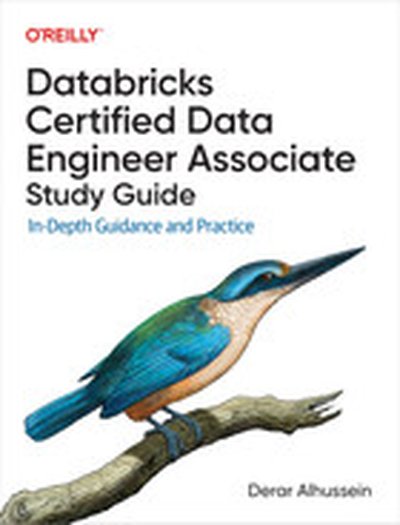
Data engineers proficient in Databricks are currently in high demand. As organizations gather more data than ever before, skilled data engineers on platforms like Databricks become critical to business success. The Databricks Data Engineer Associate certification is proof that you have a complete understanding of the Databricks platform and its capabilities, as well as the essential skills to effectively execute various data engineering tasks on the platform. In this comprehensive study guide, you will build a strong foundation in all topics covered on the certification exam, including the Databricks Lakehouse and its tools and benefits. You'll also learn to develop ETL pipelines in both batch and streaming modes. Moreover, you'll discover how to orchestrate data workflows and design dashboards while maintaining data governance. Finally, you'll dive into the finer points of exactly what's on the exam and learn to prepare for it with mock tests. Author Derar Alhussein teaches you not only the fundamental concepts but also provides hands-on exercises to reinforce your understanding. From setting up your Databricks workspace to deploying production pipelines, each chapter is carefully crafted to equip you with the skills needed to master the Databricks Platform. By the end of this book, you'll know everything you need to ace the Databricks Data Engineer Associate certification exam with flying colors, and start your career as a certified data engineer from Databricks! You'll learn how to: Use the Databricks Platform and Delta Lake effectively Perform advanced ETL tasks using Apache Spark SQL Design multi-hop architecture to process data incrementally Build production pipelines using Delta Live Tables and Databricks Jobs Implement data governance using Databricks SQL and Unity Catalog Derar Alhussein is a senior data engineer with a master's degree in data mining. He has over a decade of hands-on experience in software and data projects, including large-scale projects on Databricks. He currently holds eight certifications from Databricks, showcasing his proficiency in the field. Derar is also an experienced instructor, with a proven track record of success in training thousands of data engineers, helping them to develop their skills and obtain professional certifications.
Jess Kyle, a Data Engineering Leader with 13 years of experience across startups and enterprises, joined Yuliia to share her mission of making data work more enjoyable for everyone involved. As a leader of a data engineering team at a sports betting company, Jess shared how transparent communication can transform team dynamics and stakeholder relationships. In her work she challenges the common notion of "soft skills" in data, emphasizing that communication is a hard skill that should be screened for in interviews. Jess provides practical insights on managing overwhelm, delivering difficult feedback, and emphasizes why empathy and humility are the two most crucial qualities for data leaders - even though they're often undervalued in the tech industry.Jess's linkedin page - linkedin.com/in/jesskyle
Summary In this episode of the Data Engineering Podcast Bartosz Mikulski talks about preparing data for AI applications. Bartosz shares his journey from data engineering to MLOps and emphasizes the importance of data testing over software development in AI contexts. He discusses the types of data assets required for AI applications, including extensive test datasets, especially in generative AI, and explains the differences in data requirements for various AI application styles. The conversation also explores the skills data engineers need to transition into AI, such as familiarity with vector databases and new data modeling strategies, and highlights the challenges of evolving AI applications, including frequent reprocessing of data when changing chunking strategies or embedding models.
Announcements Hello and welcome to the Data Engineering Podcast, the show about modern data managementData migrations are brutal. They drag on for months—sometimes years—burning through resources and crushing team morale. Datafold's AI-powered Migration Agent changes all that. Their unique combination of AI code translation and automated data validation has helped companies complete migrations up to 10 times faster than manual approaches. And they're so confident in their solution, they'll actually guarantee your timeline in writing. Ready to turn your year-long migration into weeks? Visit dataengineeringpodcast.com/datafold today for the details. Your host is Tobias Macey and today I'm interviewing Bartosz Mikulski about how to prepare data for use in AI applicationsInterview IntroductionHow did you get involved in the area of data management?Can you start by outlining some of the main categories of data assets that are needed for AI applications?How does the nature of the application change those requirements? (e.g. RAG app vs. agent, etc.)How do the different assets map to the stages of the application lifecycle?What are some of the common roles and divisions of responsibility that you see in the construction and operation of a "typical" AI application?For data engineers who are used to data warehousing/BI, what are the skills that map to AI apps?What are some of the data modeling patterns that are needed to support AI apps?chunking strategies metadata managementWhat are the new categories of data that data engineers need to manage in the context of AI applications?agent memory generation/evolution conversation history managementdata collection for fine tuningWhat are some of the notable evolutions in the space of AI applications and their patterns that have happened in the past ~1-2 years that relate to the responsibilities of data engineers?What are some of the skills gaps that teams should be aware of and identify training opportunities for?What are the most interesting, innovative, or unexpected ways that you have seen data teams address the needs of AI applications?What are the most interesting, unexpected, or challenging lessons that you have learned while working on AI applications and their reliance on data?What are some of the emerging trends that you are paying particular attention to?Contact Info WebsiteLinkedInParting Question From your perspective, what is the biggest gap in the tooling or technology for data management today?Closing Announcements Thank you for listening! Don't forget to check out our other shows. Podcast.init covers the Python language, its community, and the innovative ways it is being used. The AI Engineering Podcast is your guide to the fast-moving world of building AI systems.Visit the site to subscribe to the show, sign up for the mailing list, and read the show notes.If you've learned something or tried out a project from the show then tell us about it! Email [email protected] with your story.Links SparkRayChunking StrategiesHypothetical document embeddingsModel Fine TuningPrompt CompressionThe intro and outro music is from The Hug by The Freak Fandango Orchestra / CC BY-SA
It’s time for another episode of the Data Engineering Central Podcast. In this episode, we cover … * AWS Lambda + DuckDB and Delta Lake (Polars, Daft, etc). * IAC - Long Live Terraform. * Databricks Data Quality with DQX. * Unity Catalog releases for DuckDB and Polars * Bespoke vs Managed Data Platforms * Delta Lake vs. Iceberg and UinFORM for a single table. Thanks for b…
This is a public episode. If you'd like to discuss this with other subscribers or get access to bonus episodes, visit dataengineeringcentral.substack.com/subscribe
Bogdan Banu, Data Engineering Manager at Veed.io, joined Yuliia to share his journey of building a data platform from scratch at a fast-growing startup. As Veed's first data hire, Bogdan discusses how he established a modern data stack while maintaining strong governance principles and cost consciousness. Bogdan covered insights on implementing consent-based video data processing for AI initiatives, approaches to data democratization, and how his data team balancs velocity with security. Bogdan shared his perspectives on making strategic vendor choices, measuring business value, and fostering a culture of intelligent experimentation in startup environments.Bogdan's Linkedin - https://www.linkedin.com/in/bogdan-banu-a68a237/
This session explores the rise of Lakehouse architecture and its industry-wide adoption, highlighting its ability to simplify Data Management. We’ll also examine how Large Language Models (LLMs) are transforming Data Engineering, enabling analysts to solve complex problems that once required advanced technical skills.
Jason Touleyrou, Data Engineering Manager at Corewell Health joined Yuliia to discuss why most organizations struggle with data governance. He argues that data teams should focus on building trust through flexible systems rather than rigid controls. Challenging traditional data quality approaches, Jason suggests starting with basic freshness checks and evolving governance gradually. Drawing from his experience across healthcare and marketing analytics, he shares practical strategies for implementing governance during migrations and measuring data team value beyond conventional metrics. Jason's linkedin page - https://www.linkedin.com/in/jasontouleyrou/
Summary In this episode of the Data Engineering Podcast Andrew Luo, CEO of OneSchema, talks about handling CSV data in business operations. Andrew shares his background in data engineering and CRM migration, which led to the creation of OneSchema, a platform designed to automate CSV imports and improve data validation processes. He discusses the challenges of working with CSVs, including inconsistent type representation, lack of schema information, and technical complexities, and explains how OneSchema addresses these issues using multiple CSV parsers and AI for data type inference and validation. Andrew highlights the business case for OneSchema, emphasizing efficiency gains for companies dealing with large volumes of CSV data, and shares plans to expand support for other data formats and integrate AI-driven transformation packs for specific industries.
Announcements Hello and welcome to the Data Engineering Podcast, the show about modern data managementData migrations are brutal. They drag on for months—sometimes years—burning through resources and crushing team morale. Datafold's AI-powered Migration Agent changes all that. Their unique combination of AI code translation and automated data validation has helped companies complete migrations up to 10 times faster than manual approaches. And they're so confident in their solution, they'll actually guarantee your timeline in writing. Ready to turn your year-long migration into weeks? Visit dataengineeringpodcast.com/datafold today for the details. Your host is Tobias Macey and today I'm interviewing Andrew Luo about how OneSchema addresses the headaches of dealing with CSV data for your businessInterview IntroductionHow did you get involved in the area of data management?Despite the years of evolution and improvement in data storage and interchange formats, CSVs are just as prevalent as ever. What are your opinions/theories on why they are so ubiquitous?What are some of the major sources of CSV data for teams that rely on them for business and analytical processes?The most obvious challenge with CSVs is their lack of type information, but they are notorious for having numerous other problems. What are some of the other major challenges involved with using CSVs for data interchange/ingestion?Can you describe what you are building at OneSchema and the story behind it?What are the core problems that you are solving, and for whom?Can you describe how you have architected your platform to be able to manage the variety, volume, and multi-tenancy of data that you process?How have the design and goals of the product changed since you first started working on it?What are some of the major performance issues that you have encountered while dealing with CSV data at scale?What are some of the most surprising things that you have learned about CSVs in the process of building OneSchema?What are the most interesting, innovative, or unexpected ways that you have seen OneSchema used?What are the most interesting, unexpected, or challenging lessons that you have learned while working on OneSchema?When is OneSchema the wrong choice?What do you have planned for the future of OneSchema?Contact Info LinkedInParting Question From your perspective, what is the biggest gap in the tooling or technology for data management today?Closing Announcements Thank you for listening! Don't forget to check out our other shows. Podcast.init covers the Python language, its community, and the innovative ways it is being used. The AI Engineering Podcast is your guide to the fast-moving world of building AI systems.Visit the site to subscribe to the show, sign up for the mailing list, and read the show notes.If you've learned something or tried out a project from the show then tell us about it! Email [email protected] with your story.Links OneSchemaEDI == Electronic Data InterchangeUTF-8 BOM (Byte Order Mark) CharactersSOAPCSV RFCIcebergSSIS == SQL Server Integration ServicesMS AccessDatafusionJSON SchemaSFTP == Secure File Transfer ProtocolThe intro and outro music is from The Hug by The Freak Fandango Orchestra / CC BY-SA
A look inside at the data work happening at a company making some of the most advanced technologies in the industry. Rahul Jain, data engineering manager at Snowflake, joins Tristan to discuss Iceberg, streaming, and all things Snowflake. For full show notes and to read 6+ years of back issues of the podcast's companion newsletter, head to https://roundup.getdbt.com. The Analytics Engineering Podcast is sponsored by dbt Labs.
In this podcast episode, we talked with Agita Jaunzeme about Career choices, transitions and promotions in and out of tech.
About the Speaker:
Agita has designed a career spanning DevOps/DataOps engineering, management, community building, education, and facilitation. She has worked on projects across corporate, startup, open source, and non-governmental sectors. Following her passion, she founded an NGO focusing on the inclusion of expats and locals in Porto. Embodying the values of innovation, automation, and continuous learning, Agita provides practical insights on promotions, career pivots, and aligning work with passion and purpose.
During this event, discussed their career journey, starting with their transition from art school to programming and later into DevOps, eventually taking on leadership roles. They explored the challenges of burnout and the importance of volunteering, founding an NGO to support inclusion, gender equality, and sustainability. The conversation also covered key topics like mentorship, the differences between data engineering and data science, and the dynamics of managing volunteers versus employees. Additionally, the guest shared insights on community management, developer relations, and the importance of product vision and team collaboration.
0:00 Introduction and Welcome 1:28 Guest Introduction: Agita’s Background and Career Highlights 3:05 Transition to Tech: From Art School to Programming 5:40 Exploring DevOps and Growing into Leadership Roles 7:24 Burnout, Volunteering, and Founding an NGO 11:00 Volunteering and Mentorship Initiatives 14:00 Discovering Programming Skills and Early Career Challenges 15:50 Automating Work Processes and Earning a Promotion 19:00 Transitioning from DevOps to Volunteering and Project Management 24:00 Managing Volunteers vs. Employees and Building Organizational Skills 31:07 Personality traits in engineering vs. data roles 33:14 Differences in focus between data engineers and data scientists 36:24 Transitioning from volunteering to corporate work 37:38 The role and responsibilities of a community manager 39:06 Community management vs. developer relations activities 41:01 Product vision and team collaboration 43:35 Starting an NGO and legal processes 46:13 NGO goals: inclusion, gender equality, and sustainability 49:02 Community meetups and activities 51:57 Living off-grid in a forest and sustainability 55:02 Unemployment party and brainstorming session 59:03 Unemployment party: the process and structure
🔗 CONNECT WITH AGITA JAUNZEME Linkedin - /agita
🔗 CONNECT WITH DataTalksClub Join DataTalks.Club: https://datatalks.club/slack.html Our events: https://datatalks.club/events.html Datalike Substack - https://datalike.substack.com/ LinkedIn: / datatalks-club
It's 2025! We made it! ;)
In this podcast, I rant about why data modeling matters more than ever, AI, and why humans will seek out "human" things in 2025 and beyond.
❤️ Your support means a lot. Please like and rate this podcast on your favorite podcast platform.
🤓 My works:
📕Fundamentals of Data Engineering: https://www.oreilly.com/library/view/fundamentals-of-data/9781098108298/
🎥 Deeplearning.ai Data Engineering Certificate: https://www.coursera.org/professional-certificates/data-engineering
🔥Practical Data Modeling: https://practicaldatamodeling.substack.com/
🤓 My SubStack: https://joereis.substack.com/