talk-data.com talk-data.com

Topic

Data Engineering

etl data_pipelines big_data

1127

tagged

Activity Trend

127 peak/qtr
2020-Q1 2026-Q1

Activities

1127 activities · Newest first

Summary In this episode of the Data Engineering Podcast Dan Bruckner, co-founder and CTO of Tamr, talks about the application of machine learning (ML) and artificial intelligence (AI) in master data management (MDM). Dan shares his journey from working at CERN to becoming a data expert and discusses the challenges of reconciling large-scale organizational data. He explains how data silos arise from independent teams and highlights the importance of combining traditional techniques with modern AI to address the nuances of data reconciliation. Dan emphasizes the transformative potential of large language models (LLMs) in creating more natural user experiences, improving trust in AI-driven data solutions, and simplifying complex data management processes. He also discusses the balance between using AI for complex data problems and the necessity of human oversight to ensure accuracy and trust.

Announcements Hello and welcome to the Data Engineering Podcast, the show about modern data managementData migrations are brutal. They drag on for months—sometimes years—burning through resources and crushing team morale. Datafold's AI-powered Migration Agent changes all that. Their unique combination of AI code translation and automated data validation has helped companies complete migrations up to 10 times faster than manual approaches. And they're so confident in their solution, they'll actually guarantee your timeline in writing. Ready to turn your year-long migration into weeks? Visit dataengineeringpodcast.com/datafold today for the details. As a listener of the Data Engineering Podcast you clearly care about data and how it affects your organization and the world. For even more perspective on the ways that data impacts everything around us don't miss Data Citizens® Dialogues, the forward-thinking podcast brought to you by Collibra. You'll get further insights from industry leaders, innovators, and executives in the world's largest companies on the topics that are top of mind for everyone. In every episode of Data Citizens® Dialogues, industry leaders unpack data’s impact on the world; like in their episode “The Secret Sauce Behind McDonald’s Data Strategy”, which digs into how AI-driven tools can be used to support crew efficiency and customer interactions. In particular I appreciate the ability to hear about the challenges that enterprise scale businesses are tackling in this fast-moving field. The Data Citizens Dialogues podcast is bringing the data conversation to you, so start listening now! Follow Data Citizens Dialogues on Apple, Spotify, YouTube, or wherever you get your podcasts.Your host is Tobias Macey and today I'm interviewing Dan Bruckner about the application of ML and AI techniques to the challenge of reconciling data at the scale of businessInterview IntroductionHow did you get involved in the area of data management?Can you start by giving an overview of the different ways that organizational data becomes unwieldy and needs to be consolidated and reconciled?How does that reconciliation relate to the practice of "master data management"What are the scaling challenges with the current set of practices for reconciling data?ML has been applied to data cleaning for a long time in the form of entity resolution, etc. How has the landscape evolved or matured in recent years?What (if any) transformative capabilities do LLMs introduce?What are the missing pieces/improvements that are necessary to make current AI systems usable out-of-the-box for data cleaning?What are the strategic decisions that need to be addressed when implementing ML/AI techniques in the data cleaning/reconciliation process?What are the risks involved in bringing ML to bear on data cleaning for inexperienced teams?What are the most interesting, innovative, or unexpected ways that you have seen ML techniques used in data resolution?What are the most interesting, unexpected, or challenging lessons that you have learned while working on using ML/AI in master data management?When is ML/AI the wrong choice for data cleaning/reconciliation?What are your hopes/predictions for the future of ML/AI applications in MDM and data cleaning?Contact Info LinkedInParting Question From your perspective, what is the biggest gap in the tooling or technology for data management today?Closing Announcements Thank you for listening! Don't forget to check out our other shows. Podcast.init covers the Python language, its community, and the innovative ways it is being used. The AI Engineering Podcast is your guide to the fast-moving world of building AI systems.Visit the site to subscribe to the show, sign up for the mailing list, and read the show notes.If you've learned something or tried out a project from the show then tell us about it! Email [email protected] with your story.Links TamrMaster Data ManagementCERNLHCMichael StonebrakerConway's LawExpert SystemsInformation RetrievalActive LearningThe intro and outro music is from The Hug by The Freak Fandango Orchestra / CC BY-SA
It's December 31, 2024. Gordon Wong and I wrap up 2024 and chat about what we're excited about in 2025 in data and otherwise.

❤️ If you like my podcasts, please like and rate it on your favorite podcast platform.

🤓 My works:

📕Fundamentals of Data Engineering: https://www.oreilly.com/library/view/fundamentals-of-data/9781098108298/

🎥 Deeplearning.ai Data Engineering Certificate: https://www.coursera.org/professional-certificates/data-engineering

🔥Practical Data Modeling: https://practicaldatamodeling.substack.com/

🤓 My SubStack: https://joereis.substack.com/

Matt Housley and I have a LONG chat about working in consulting, leaving your job, AI, the job market, our thoughts on what's coming in 2025, and much more.

❤️ If you like my podcasts, please like and rate it on your favorite podcast platform.

🤓 My works:

📕Fundamentals of Data Engineering: https://www.oreilly.com/library/view/fundamentals-of-data/9781098108298/

🎥 Deeplearning.ai Data Engineering Certificate: https://www.coursera.org/professional-certificates/data-engineering

🔥Practical Data Modeling: https://practicaldatamodeling.substack.com/

🤓 My SubStack: https://joereis.substack.com/

Summary In this episode of the Data Engineering Podcast Lior Barak shares his insights on developing a three-year strategic vision for data management. He discusses the importance of having a strategic plan for data, highlighting the need for data teams to focus on impact rather than just enablement. He introduces the concept of a "data vision board" and explains how it can help organizations outline their strategic vision by considering three key forces: regulation, stakeholders, and organizational goals. Lior emphasizes the importance of balancing short-term pressures with long-term strategic goals, quantifying the cost of data issues to prioritize effectively, and maintaining the strategic vision as a living document through regular reviews. He encourages data teams to shift from being enablers to impact creators and provides practical advice on implementing a data vision board, setting clear KPIs, and embracing a product mindset to create tangible business impacts through strategic data management.

Announcements Hello and welcome to the Data Engineering Podcast, the show about modern data managementIt’s 2024, why are we still doing data migrations by hand? Teams spend months—sometimes years—manually converting queries and validating data, burning resources and crushing morale. Datafold's AI-powered Migration Agent brings migrations into the modern era. Their unique combination of AI code translation and automated data validation has helped companies complete migrations up to 10 times faster than manual approaches. And they're so confident in their solution, they'll actually guarantee your timeline in writing. Ready to turn your year-long migration into weeks? Visit dataengineeringpodcast.com/datafold today to learn how Datafold can automate your migration and ensure source to target parity. Your host is Tobias Macey and today I'm interviewing Lior Barak about how to develop your three year strategic vision for dataInterview IntroductionHow did you get involved in the area of data management?Can you start by giving an outline of the types of problems that occur as a result of not developing a strategic plan for an organization's data systems?What is the format that you recommend for capturing that strategic vision?What are the types of decisions and details that you believe should be included in a vision statement?Why is a 3 year horizon beneficial? What does that scale of time encourage/discourage in the debate and decision-making process?Who are the personas that should be included in the process of developing this strategy document?Can you walk us through the steps and processes involved in developing the data vision board for an organization?What are the time-frames or milestones that should lead to revisiting and revising the strategic objectives?What are the most interesting, innovative, or unexpected ways that you have seen a data vision strategy used?What are the most interesting, unexpected, or challenging lessons that you have learned while working on data strategy development?When is a data vision board the wrong choice?What are some additional resources or practices that you recommend teams invest in as a supplement to this strategic vision exercise?Contact Info LinkedInSubstackParting Question From your perspective, what is the biggest gap in the tooling or technology for data management today?Closing Announcements Thank you for listening! Don't forget to check out our other shows. Podcast.init covers the Python language, its community, and the innovative ways it is being used. The AI Engineering Podcast is your guide to the fast-moving world of building AI systems.Visit the site to subscribe to the show, sign up for the mailing list, and read the show notes.If you've learned something or tried out a project from the show then tell us about it! Email [email protected] with your story.Links Vision Board OverviewEpisode 397: Defining A Strategy For Your Data ProductsMinto Pyramid PrincipleKPI == Key Performance IndicatorOKR == Objectives and Key ResultsPhil Jackson: Eleven Rings (affiliate link)The intro and outro music is from The Hug by The Freak Fandango Orchestra / CC BY-SA
In todays episode of Data Engineering Central Podcast we talk about a few hot topics, AWS S3 Tables, Databricks raising money, are Data Contracts Dead, and the Lake House Storage Format battle! It's a good one, buckle up!

This is a public episode. If you'd like to discuss this with other subscribers or get access to bonus episodes, visit dataengineeringcentral.substack.com/subscribe

This morning, a great article came across my feed that gave me PTSD, asking if Iceberg is the Hadoop of the Modern Data Stack?

In this rant, I bring the discussion back to a central question you should ask with any hot technology - do you need it at all? Do you need a tool built for the top 1% of companies at a sufficient data scale? Or is a spreadsheet good enough?

Link: https://blog.det.life/apache-iceberg-the-hadoop-of-the-modern-data-stack-c83f63a4ebb9

❤️ If you like my podcasts, please like and rate it on your favorite podcast platform.

🤓 My works:

📕Fundamentals of Data Engineering: https://www.oreilly.com/library/view/fundamentals-of-data/9781098108298/

🎥 Deeplearning.ai Data Engineering Certificate: https://www.coursera.org/professional-certificates/data-engineering

🔥Practical Data Modeling: https://practicaldatamodeling.substack.com/

🤓 My SubStack: https://joereis.substack.com/

Summary The core task of data engineering is managing the flows of data through an organization. In order to ensure those flows are executing on schedule and without error is the role of the data orchestrator. Which orchestration engine you choose impacts the ways that you architect the rest of your data platform. In this episode Hugo Lu shares his thoughts as the founder of an orchestration company on how to think about data orchestration and data platform design as we navigate the current era of data engineering.

Announcements Hello and welcome to the Data Engineering Podcast, the show about modern data managementIt’s 2024, why are we still doing data migrations by hand? Teams spend months—sometimes years—manually converting queries and validating data, burning resources and crushing morale. Datafold's AI-powered Migration Agent brings migrations into the modern era. Their unique combination of AI code translation and automated data validation has helped companies complete migrations up to 10 times faster than manual approaches. And they're so confident in their solution, they'll actually guarantee your timeline in writing. Ready to turn your year-long migration into weeks? Visit dataengineeringpodcast.com/datafold today to learn how Datafold can automate your migration and ensure source to target parity. As a listener of the Data Engineering Podcast you clearly care about data and how it affects your organization and the world. For even more perspective on the ways that data impacts everything around us don't miss Data Citizens® Dialogues, the forward-thinking podcast brought to you by Collibra. You'll get further insights from industry leaders, innovators, and executives in the world's largest companies on the topics that are top of mind for everyone. In every episode of Data Citizens® Dialogues, industry leaders unpack data’s impact on the world, from big picture questions like AI governance and data sharing to more nuanced questions like, how do we balance offense and defense in data management? In particular I appreciate the ability to hear about the challenges that enterprise scale businesses are tackling in this fast-moving field. The Data Citizens Dialogues podcast is bringing the data conversation to you, so start listening now! Follow Data Citizens Dialogues on Apple, Spotify, YouTube, or wherever you get your podcasts.Your host is Tobias Macey and today I'm interviewing Hugo Lu about the data platform and orchestration ecosystem and how to navigate the available optionsInterview IntroductionHow did you get involved in building data platforms?Can you describe what an orchestrator is in the context of data platforms?There are many other contexts in which orchestration is necessary. What are some examples of how orchestrators have adapted (or failed to adapt) to the times?What are the core features that are necessary for an orchestrator to have when dealing with data-oriented workflows?Beyond the bare necessities, what are some of the other features and design considerations that go into building a first-class dat platform or orchestration system?There have been several generations of orchestration engines over the past several years. How would you characterize the different coarse groupings of orchestration engines across those generational boundaries?How do the characteristics of a data orchestrator influence the overarching architecture of an organization's data platform/data operations?What about the reverse?How have the cycles of ML and AI workflow requirements impacted the design requirements for data orchestrators?What are the most interesting, innovative, or unexpected ways that you have seen data orchestrators used?What are the most interesting, unexpected, or challenging lessons that you have learned while working on data orchestration?When is an orchestrator the wrong choice?What are your predictions and/or hopes for the future of data orchestration?Contact Info MediumLinkedInParting Question From your perspective, what is the biggest thing data teams are missing in the technology today?Closing Announcements Thank you for listening! Don't forget to check out our other shows. Podcast.init covers the Python language, its community, and the innovative ways it is being used. The AI Engineering Podcast is your guide to the fast-moving world of building AI systems.Visit the site to subscribe to the show, sign up for the mailing list, and read the show notes.If you've learned something or tried out a project from the show then tell us about it! Email [email protected] with your story.Links OrchestraPrevious Episode: Overview Of The State Of Data OrchestrationCronArgoCDDAGKubernetesData MeshAirflowSSIS == SQL Server Integration ServicesPentahoKettleDataVoloNiFiPodcast EpisodeDagstergRPCCoalescePodcast EpisodedbtDataHubPalantirThe intro and outro music is from The Hug by The Freak Fandango Orchestra / CC BY-SA
Building a strong personal brand is your ticket to standing out from your competition in today's difficult job market. During this episode, you'll learn why and how you should build a personal brand to elevate your career. You'll hear from some of the biggest names in data: Kate Strachnyi, Founder of DATAcated, and Andreas Kretz, Founder of Learn Data Engineering. Kate and Andreas will share their best strategies, tips, and actionable advice to put you on a path to building a successful brand that will accelerate your career.   What You'll Learn: Why a personal brand is critical for success in 2025 and beyond What a strong personal brand should look like How you can start making progress on your personal brand today   This session was part of our OPEN CAMPUS week in October, which included 6 days of live expert sessions.   Register for free to be part of the next live session: https://bit.ly/3XB3A8b    

Follow us on Socials: LinkedIn YouTube Instagram (Mavens of Data) Instagram (Maven Analytics) TikTok Facebook Medium X/Twitter

Summary In this episode of the Data Engineering Podcast the inimitable Max Beauchemin talks about reusability in data pipelines. The conversation explores the "write everything twice" problem, where similar pipelines are built without code reuse, and discusses the challenges of managing different SQL dialects and relational databases. Max also touches on the evolving role of data engineers, drawing parallels with front-end engineering, and suggests that generative AI could facilitate knowledge capture and distribution in data engineering. He encourages the community to share reference implementations and templates to foster collaboration and innovation, and expresses hopes for a future where code reuse becomes more prevalent.

Announcements Hello and welcome to the Data Engineering Podcast, the show about modern data managementData migrations are brutal. They drag on for months—sometimes years—burning through resources and crushing team morale. Datafold's AI-powered Migration Agent changes all that. Their unique combination of AI code translation and automated data validation has helped companies complete migrations up to 10 times faster than manual approaches. And they're so confident in their solution, they'll actually guarantee your timeline in writing. Ready to turn your year-long migration into weeks? Visit dataengineeringpodcast.com/datafold today for the details.Your host is Tobias Macey and today I'm joined again by Max Beauchemin to talk about the challenges of reusability in data pipelinesInterview IntroductionHow did you get involved in the area of data management?Can you start by sharing your current thesis on the opportunities and shortcomings of code and component reusability in the data context?What are some ways that you think about what constitutes a "component" in this context?The data ecosystem has arguably grown more varied and nuanced in recent years. At the same time, the number and maturity of tools has grown. What is your view on the current trend in productivity for data teams and practitioners?What do you see as the core impediments to building more reusable and general-purpose solutions in data engineering?How can we balance the actual needs of data consumers against their requests (whether well- or un-informed) to help increase our ability to better design our workflows for reuse?In data engineering there are two broad approaches; code-focused or SQL-focused pipelines. In principle one would think that code-focused environments would have better composability. What are you seeing as the realities in your personal experience and what you hear from other teams?When it comes to SQL dialects, dbt offers the option of Jinja macros, whereas SDF and SQLMesh offer automatic translation. There are also tools like PRQL and Malloy that aim to abstract away the underlying SQL. What are the tradeoffs across those options that help or hinder the portability of transformation logic?Which layers of the data stack/steps in the data journey do you see the greatest opportunity for improving the creation of more broadly usable abstractions/reusable elements?low/no code systems for code reuseimpact of LLMs on reusability/compositionimpact of background on industry practices (e.g. DBAs, sysadmins, analysts vs. SWE, etc.)polymorphic data models (e.g. activity schema)What are the most interesting, innovative, or unexpected ways that you have seen teams address composability and reusability of data components?What are the most interesting, unexpected, or challenging lessons that you have learned while working on data-oriented tools and utilities?What are your hopes and predictions for sharing of code and logic in the future of data engineering?Contact Info LinkedInParting Question From your perspective, what is the biggest gap in the tooling or technology for data management today?Closing Announcements Thank you for listening! Don't forget to check out our other shows. Podcast.init covers the Python language, its community, and the innovative ways it is being used. The AI Engineering Podcast is your guide to the fast-moving world of building AI systems.Visit the site to subscribe to the show, sign up for the mailing list, and read the show notes.If you've learned something or tried out a project from the show then tell us about it! Email [email protected] with your story.Links Max's Blog PostAirflowSupersetTableauLookerPowerBICohort AnalysisNextJSAirbytePodcast EpisodeFivetranPodcast EpisodeSegmentdbtSQLMeshPodcast EpisodeSparkLAMP StackPHPRelational AlgebraKnowledge GraphPython MarshmallowData Warehouse Lifecycle Toolkit (affiliate link)Entity Centric Data Modeling Blog PostAmplitudeOSACon presentationol-data-platform Tobias' team's data platform codeThe intro and outro music is from The Hug by The Freak Fandango Orchestra / CC BY-SA
AWS re:Invent 2024 - Data engineering for ML and AI with AWS analytics (ANT405)

The performance and accuracy of AI and ML systems directly depend on the quality, relevance, and integrity of the data, which are used to either train the model or accessed as part of Retrieval Augmented Generation (RAG) systems for generative AI assistants. Data engineering plays a crucial role in ensuring high-quality data is available, accessible, and usable for successful AI and ML implementations, allowing models to learn, reason, and act effectively. This session explores how AWS analytics provides complete engineering solutions for ingesting, storing, processing, and integrating data and making the data accessible for generative AI chat assistants and other AI and ML applications.

Learn more: AWS re:Invent: https://go.aws/reinvent. More AWS events: https://go.aws/3kss9CP

Subscribe: More AWS videos: http://bit.ly/2O3zS75 More AWS events videos: http://bit.ly/316g9t4

About AWS: Amazon Web Services (AWS) hosts events, both online and in-person, bringing the cloud computing community together to connect, collaborate, and learn from AWS experts. AWS is the world's most comprehensive and broadly adopted cloud platform, offering over 200 fully featured services from data centers globally. Millions of customers—including the fastest-growing startups, largest enterprises, and leading government agencies—are using AWS to lower costs, become more agile, and innovate faster.

AWSreInvent #AWSreInvent2024

Gunnar Morling: Data Contracts In Practice With Debezium and Apache Flink

🌟 Session Overview 🌟

Session Name: Data Contracts In Practice With Debezium and Apache Flink Speaker: Gunnar Morling Session Description: Log-based change data capture (CDC) is an invaluable part of the data engineering toolbox: it enables a variety of use cases such as real-time analytics, full-text search, or cache invalidation by publishing data change events from your database. But when publishing change event streams across context or team boundaries, aren’t you tying external consumers to your application’s data model, thus limiting yourself in evolving the same?

Enter data contracts—consciously designed abstractions between your internal data model and the outside world. Come and join us for this session to learn about:

Challenges you may encounter when exposing table-level change event streams and how data contracts can mitigate them Implementation strategies for data contracts, such as the outbox pattern and stream processing Evolving your data model and the corresponding data contracts without breaking any existing consumers We’ll also touch on some advanced topics at the intersection of CDC and stream processing, such as hydrating partial change events, using the popular change stream processing duo of Debezium and Apache Flink.

🚀 About Big Data and RPA 2024 🚀

Unlock the future of innovation and automation at Big Data & RPA Conference Europe 2024! 🌟 This unique event brings together the brightest minds in big data, machine learning, AI, and robotic process automation to explore cutting-edge solutions and trends shaping the tech landscape. Perfect for data engineers, analysts, RPA developers, and business leaders, the conference offers dual insights into the power of data-driven strategies and intelligent automation. 🚀 Gain practical knowledge on topics like hyperautomation, AI integration, advanced analytics, and workflow optimization while networking with global experts. Don’t miss this exclusive opportunity to expand your expertise and revolutionize your processes—all from the comfort of your home! 📊🤖✨

📅 Yearly Conferences: Curious about the evolution of QA? Check out our archive of past Big Data & RPA sessions. Watch the strategies and technologies evolve in our videos! 🚀 🔗 Find Other Years' Videos: 2023 Big Data Conference Europe https://www.youtube.com/playlist?list=PLqYhGsQ9iSEpb_oyAsg67PhpbrkCC59_g 2022 Big Data Conference Europe Online https://www.youtube.com/playlist?list=PLqYhGsQ9iSEryAOjmvdiaXTfjCg5j3HhT 2021 Big Data Conference Europe Online https://www.youtube.com/playlist?list=PLqYhGsQ9iSEqHwbQoWEXEJALFLKVDRXiP

💡 Stay Connected & Updated 💡

Don’t miss out on any updates or upcoming event information from Big Data & RPA Conference Europe. Follow us on our social media channels and visit our website to stay in the loop!

🌐 Website: https://bigdataconference.eu/, https://rpaconference.eu/ 👤 Facebook: https://www.facebook.com/bigdataconf, https://www.facebook.com/rpaeurope/ 🐦 Twitter: @BigDataConfEU, @europe_rpa 🔗 LinkedIn: https://www.linkedin.com/company/73234449/admin/dashboard/, https://www.linkedin.com/company/75464753/admin/dashboard/ 🎥 YouTube: http://www.youtube.com/@DATAMINERLT

Jesse Anderson: The State of Data Engineering

🌟 Session Overview 🌟

Session Name: The State of Data Engineering Speaker: Jesse Anderson Session Description: The data landscape is fickle, and once-coveted roles like 'DBA' and 'Data Scientist' have faced challenges. Now, the spotlight shines on Data Engineers, but will they suffer the same fate? This talk dives into historical trends.

In the early 2010s, DBA/Data Warehouse was the sexiest job. Data Warehouse became the 'No Team.'

In the mid-2010s, Data Scientist was the sexiest job. Data Science became the 'mistaken for' team.

Now, Data Engineering is the sexiest job. Data Engineering has become the 'confused team.' The confusion runs rampant with questions about the industry: What is a data engineer? What do they do? Should we have all kinds of nuanced titles for variations? Just how technical should they be?

Together, let's go back in history and look for ways that data engineering can avoid the same fate as data warehousing and data science. This talk provides a thought-provoking discussion on navigating the exciting yet challenging world of data engineering. Let's avoid the pitfalls of the past and shape a future where data engineers thrive as essential drivers of innovation and success.

🚀 About Big Data and RPA 2024 🚀

Unlock the future of innovation and automation at Big Data & RPA Conference Europe 2024! 🌟 This unique event brings together the brightest minds in big data, machine learning, AI, and robotic process automation to explore cutting-edge solutions and trends shaping the tech landscape. Perfect for data engineers, analysts, RPA developers, and business leaders, the conference offers dual insights into the power of data-driven strategies and intelligent automation. 🚀 Gain practical knowledge on topics like hyperautomation, AI integration, advanced analytics, and workflow optimization while networking with global experts. Don’t miss this exclusive opportunity to expand your expertise and revolutionize your processes—all from the comfort of your home! 📊🤖✨

📅 Yearly Conferences: Curious about the evolution of QA? Check out our archive of past Big Data & RPA sessions. Watch the strategies and technologies evolve in our videos! 🚀 🔗 Find Other Years' Videos: 2023 Big Data Conference Europe https://www.youtube.com/playlist?list=PLqYhGsQ9iSEpb_oyAsg67PhpbrkCC59_g 2022 Big Data Conference Europe Online https://www.youtube.com/playlist?list=PLqYhGsQ9iSEryAOjmvdiaXTfjCg5j3HhT 2021 Big Data Conference Europe Online https://www.youtube.com/playlist?list=PLqYhGsQ9iSEqHwbQoWEXEJALFLKVDRXiP

💡 Stay Connected & Updated 💡

Don’t miss out on any updates or upcoming event information from Big Data & RPA Conference Europe. Follow us on our social media channels and visit our website to stay in the loop!

🌐 Website: https://bigdataconference.eu/, https://rpaconference.eu/ 👤 Facebook: https://www.facebook.com/bigdataconf, https://www.facebook.com/rpaeurope/ 🐦 Twitter: @BigDataConfEU, @europe_rpa 🔗 LinkedIn: https://www.linkedin.com/company/73234449/admin/dashboard/, https://www.linkedin.com/company/75464753/admin/dashboard/ 🎥 YouTube: http://www.youtube.com/@DATAMINERLT

Frank Munz: A Journey in Space with Apache Kafka data streams from NASA

🌟 Session Overview 🌟

Session Name: Supernovas, Black Holes, and Streaming Data: A Journey in Space with Apache Kafka data streams from NASA Speaker: Frank Munz Session Description: In this fun, hands-on, and in-depth How-To, we explore NASA's GCN project, which publishes various events in space as Kafka topics.

The focus of my talk is on end-to-end data engineering, from consuming the data and ELT-ing the stream, to using generative AI tools for analytics.

We will analyze GCN data in real time, specifically targeting the data stream from exploding supernovas. This data triggers dozens of terrestrial telescopes to potentially reposition and point toward the event.

The speaker will kick off the session by contrasting various ways of ingesting and transforming the data, discussing their trade-offs: Should you use a declarative data pipeline, or can a data analyst manage with SQL only? Alternatively, when would it be better to follow the classic approach of orchestrating Spark notebooks to get the data ingested?

He will answer the question: Does a data engineer working with streaming data benefit from generative AI-based tools and assistants today? Is it worth it, or is it just hype?

The demo is easy to replicate at home, and Frank will share the notebooks in a GitHub repository so you can analyze real NASA data yourself!

This session is ideal for data engineers, data architects who enjoy some coding, generative AI enthusiasts, or anyone fascinated by technology and the sparkling stars in the night sky.

While the focus is clearly on tech, the demo will run on the open-source and open-standards-based Databricks Intelligence Platform (so inevitably, you'll get a high-level overview here too).

🚀 About Big Data and RPA 2024 🚀

Unlock the future of innovation and automation at Big Data & RPA Conference Europe 2024! 🌟 This unique event brings together the brightest minds in big data, machine learning, AI, and robotic process automation to explore cutting-edge solutions and trends shaping the tech landscape. Perfect for data engineers, analysts, RPA developers, and business leaders, the conference offers dual insights into the power of data-driven strategies and intelligent automation. 🚀 Gain practical knowledge on topics like hyperautomation, AI integration, advanced analytics, and workflow optimization while networking with global experts. Don’t miss this exclusive opportunity to expand your expertise and revolutionize your processes—all from the comfort of your home! 📊🤖✨

📅 Yearly Conferences: Curious about the evolution of QA? Check out our archive of past Big Data & RPA sessions. Watch the strategies and technologies evolve in our videos! 🚀 🔗 Find Other Years' Videos: 2023 Big Data Conference Europe https://www.youtube.com/playlist?list=PLqYhGsQ9iSEpb_oyAsg67PhpbrkCC59_g 2022 Big Data Conference Europe Online https://www.youtube.com/playlist?list=PLqYhGsQ9iSEryAOjmvdiaXTfjCg5j3HhT 2021 Big Data Conference Europe Online https://www.youtube.com/playlist?list=PLqYhGsQ9iSEqHwbQoWEXEJALFLKVDRXiP

💡 Stay Connected & Updated 💡

Don’t miss out on any updates or upcoming event information from Big Data & RPA Conference Europe. Follow us on our social media channels and visit our website to stay in the loop!

🌐 Website: https://bigdataconference.eu/, https://rpaconference.eu/ 👤 Facebook: https://www.facebook.com/bigdataconf, https://www.facebook.com/rpaeurope/ 🐦 Twitter: @BigDataConfEU, @europe_rpa 🔗 LinkedIn: https://www.linkedin.com/company/73234449/admin/dashboard/, https://www.linkedin.com/company/75464753/admin/dashboard/ 🎥 YouTube: http://www.youtube.com/@DATAMINERLT

Rui Machado: Data Engineers: Respect the Resiliency of SQL

🌟 Session Overview 🌟

Session Name: Data Engineers: Respect the Resiliency of SQL Speaker: Rui Machado Session Description: In the ever-evolving data landscape, SQL's resilience shines, powering critical systems across all industries. Despite new technologies, SQL's core definition and manipulation language remains indispensable, evolving to meet modern demands. This talk explores why SQL endures, spotlighting its integration in innovative tools like dbt and DuckDB, which leverage SQL interfaces for advanced data processing. It will reveal some of the secrets behind SQL's lasting popularity and its pivotal role in the future of data engineering.

🚀 About Big Data and RPA 2024 🚀

Unlock the future of innovation and automation at Big Data & RPA Conference Europe 2024! 🌟 This unique event brings together the brightest minds in big data, machine learning, AI, and robotic process automation to explore cutting-edge solutions and trends shaping the tech landscape. Perfect for data engineers, analysts, RPA developers, and business leaders, the conference offers dual insights into the power of data-driven strategies and intelligent automation. 🚀 Gain practical knowledge on topics like hyperautomation, AI integration, advanced analytics, and workflow optimization while networking with global experts. Don’t miss this exclusive opportunity to expand your expertise and revolutionize your processes—all from the comfort of your home! 📊🤖✨

📅 Yearly Conferences: Curious about the evolution of QA? Check out our archive of past Big Data & RPA sessions. Watch the strategies and technologies evolve in our videos! 🚀 🔗 Find Other Years' Videos: 2023 Big Data Conference Europe https://www.youtube.com/playlist?list=PLqYhGsQ9iSEpb_oyAsg67PhpbrkCC59_g 2022 Big Data Conference Europe Online https://www.youtube.com/playlist?list=PLqYhGsQ9iSEryAOjmvdiaXTfjCg5j3HhT 2021 Big Data Conference Europe Online https://www.youtube.com/playlist?list=PLqYhGsQ9iSEqHwbQoWEXEJALFLKVDRXiP

💡 Stay Connected & Updated 💡

Don’t miss out on any updates or upcoming event information from Big Data & RPA Conference Europe. Follow us on our social media channels and visit our website to stay in the loop!

🌐 Website: https://bigdataconference.eu/, https://rpaconference.eu/ 👤 Facebook: https://www.facebook.com/bigdataconf, https://www.facebook.com/rpaeurope/ 🐦 Twitter: @BigDataConfEU, @europe_rpa 🔗 LinkedIn: https://www.linkedin.com/company/73234449/admin/dashboard/, https://www.linkedin.com/company/75464753/admin/dashboard/ 🎥 YouTube: http://www.youtube.com/@DATAMINERLT

Josef Goldstein: When the CFO Comes Knocking: Our Journey to a Cost Efficient Data Platform

🌟 Session Overview 🌟

Session Name: When the CFO Comes Knocking: Our Journey to a Cost Efficient Data Platform Speaker: Josef Goldstein Session Description: When was the last time you took a hard look at your AWS bill and felt good about what you saw?

According to Gartner forecasts, worldwide end-user spending on public cloud services is expected to grow by 20% in 2024, reaching an estimated total of nearly $680 billion.

We all know big data is expensive. As companies grow, so do their data expenses. But how much is too much? How do we know if we are growing efficiently or just burning through cash? And, most importantly, what can we do about it?

In this talk, we will share the story of our journey toward cost efficiency at Wix's big data platform group and how we reduced our cloud costs by over 50% in less than two years. We will discuss how to better understand the costs of self-service data platforms, the cultural shift and tools needed to build a cost-effective mindset in data engineering teams, and practical ways to start cost-optimizing your data operations tomorrow. 🚀 About Big Data and RPA 2024 🚀

Unlock the future of innovation and automation at Big Data & RPA Conference Europe 2024! 🌟 This unique event brings together the brightest minds in big data, machine learning, AI, and robotic process automation to explore cutting-edge solutions and trends shaping the tech landscape. Perfect for data engineers, analysts, RPA developers, and business leaders, the conference offers dual insights into the power of data-driven strategies and intelligent automation. 🚀 Gain practical knowledge on topics like hyperautomation, AI integration, advanced analytics, and workflow optimization while networking with global experts. Don’t miss this exclusive opportunity to expand your expertise and revolutionize your processes—all from the comfort of your home! 📊🤖✨

📅 Yearly Conferences: Curious about the evolution of QA? Check out our archive of past Big Data & RPA sessions. Watch the strategies and technologies evolve in our videos! 🚀 🔗 Find Other Years' Videos: 2023 Big Data Conference Europe https://www.youtube.com/playlist?list=PLqYhGsQ9iSEpb_oyAsg67PhpbrkCC59_g 2022 Big Data Conference Europe Online https://www.youtube.com/playlist?list=PLqYhGsQ9iSEryAOjmvdiaXTfjCg5j3HhT 2021 Big Data Conference Europe Online https://www.youtube.com/playlist?list=PLqYhGsQ9iSEqHwbQoWEXEJALFLKVDRXiP

💡 Stay Connected & Updated 💡

Don’t miss out on any updates or upcoming event information from Big Data & RPA Conference Europe. Follow us on our social media channels and visit our website to stay in the loop!

🌐 Website: https://bigdataconference.eu/, https://rpaconference.eu/ 👤 Facebook: https://www.facebook.com/bigdataconf, https://www.facebook.com/rpaeurope/ 🐦 Twitter: @BigDataConfEU, @europe_rpa 🔗 LinkedIn: https://www.linkedin.com/company/73234449/admin/dashboard/, https://www.linkedin.com/company/75464753/admin/dashboard/ 🎥 YouTube: http://www.youtube.com/@DATAMINERLT

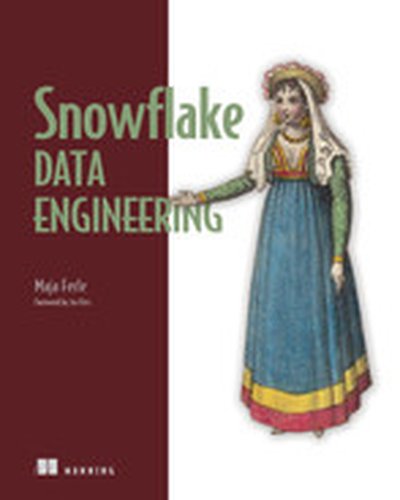
Snowflake Data Engineering

A practical introduction to data engineering on the powerful Snowflake cloud data platform. Data engineers create the pipelines that ingest raw data, transform it, and funnel it to the analysts and professionals who need it. The Snowflake cloud data platform provides a suite of productivity-focused tools and features that simplify building and maintaining data pipelines. In Snowflake Data Engineering, Snowflake Data Superhero Maja Ferle shows you how to get started. In Snowflake Data Engineering you will learn how to: Ingest data into Snowflake from both cloud and local file systems Transform data using functions, stored procedures, and SQL Orchestrate data pipelines with streams and tasks, and monitor their execution Use Snowpark to run Python code in your pipelines Deploy Snowflake objects and code using continuous integration principles Optimize performance and costs when ingesting data into Snowflake Snowflake Data Engineering reveals how Snowflake makes it easy to work with unstructured data, set up continuous ingestion with Snowpipe, and keep your data safe and secure with best-in-class data governance features. Along the way, you’ll practice the most important data engineering tasks as you work through relevant hands-on examples. Throughout, author Maja Ferle shares design tips drawn from her years of experience to ensure your pipeline follows the best practices of software engineering, security, and data governance. About the Technology Pipelines that ingest and transform raw data are the lifeblood of business analytics, and data engineers rely on Snowflake to help them deliver those pipelines efficiently. Snowflake is a full-service cloud-based platform that handles everything from near-infinite storage, fast elastic compute services, inbuilt AI/ML capabilities like vector search, text-to-SQL, code generation, and more. This book gives you what you need to create effective data pipelines on the Snowflake platform. About the Book Snowflake Data Engineering guides you skill-by-skill through accomplishing on-the-job data engineering tasks using Snowflake. You’ll start by building your first simple pipeline and then expand it by adding increasingly powerful features, including data governance and security, adding CI/CD into your pipelines, and even augmenting data with generative AI. You’ll be amazed how far you can go in just a few short chapters! What's Inside Ingest data from the cloud, APIs, or Snowflake Marketplace Orchestrate data pipelines with streams and tasks Optimize performance and cost About the Reader For software developers and data analysts. Readers should know the basics of SQL and the Cloud. About the Author Maja Ferle is a Snowflake Subject Matter Expert and a Snowflake Data Superhero who holds the SnowPro Advanced Data Engineer and the SnowPro Advanced Data Analyst certifications. Quotes An incredible guide for going from zero to production with Snowflake. - Doyle Turner, Microsoft A must-have if you’re looking to excel in the field of data engineering. - Isabella Renzetti, Data Analytics Consultant & Trainer Masterful! Unlocks the true potential of Snowflake for modern data engineers. - Shankar Narayanan, Microsoft Valuable insights will enhance your data engineering skills and lead to cost-effective solutions. A must read! - Frédéric L’Anglais, Maxa Comprehensive, up-to-date and packed with real-life code examples. - Albert Nogués, Danone

Summary In this episode of the Data Engineering Podcast Sam Kleinman talks about the pivotal role of databases in software engineering. Sam shares his journey into the world of data and discusses the complexities of database selection, highlighting the trade-offs between different database architectures and how these choices affect system design, query performance, and the need for ETL processes. He emphasizes the importance of understanding specific requirements to choose the right database engine and warns against over-engineering solutions that can lead to increased complexity. Sam also touches on the tendency of engineers to move logic to the application layer due to skepticism about database longevity and advises teams to leverage database capabilities instead. Finally, he identifies a significant gap in data management tooling: the lack of easy-to-use testing tools for database interactions, highlighting the need for better testing paradigms to ensure reliability and reduce bugs in data-driven applications.

Announcements Hello and welcome to the Data Engineering Podcast, the show about modern data managementIt’s 2024, why are we still doing data migrations by hand? Teams spend months—sometimes years—manually converting queries and validating data, burning resources and crushing morale. Datafold's AI-powered Migration Agent brings migrations into the modern era. Their unique combination of AI code translation and automated data validation has helped companies complete migrations up to 10 times faster than manual approaches. And they're so confident in their solution, they'll actually guarantee your timeline in writing. Ready to turn your year-long migration into weeks? Visit dataengineeringpodcast.com/datafold today to learn how Datafold can automate your migration and ensure source to target parity. Your host is Tobias Macey and today I'm interviewing Sam Kleinman about database tradeoffs across operating environments and axes of scaleInterview IntroductionHow did you get involved in the area of data management?The database engine you use has a substantial impact on how you architect your overall system. When starting a greenfield project, what do you see as the most important factor to consider when selecting a database?points of friction introduced by database capabilitiesembedded databases (e.g. SQLite, DuckDB, LanceDB), when to use and when do they become a bottlenecksingle-node database engines (e.g. Postgres, MySQL), when are they legitimately a problemdistributed databases (e.g. CockroachDB, PlanetScale, MongoDB)polyglot storage vs. general-purpose/multimodal databasesfederated queries, benefits and limitations ease of integration vs. variability of performance and access control Contact Info LinkedInGitHubParting Question From your perspective, what is the biggest gap in the tooling or technology for data management today?Closing Announcements Thank you for listening! Don't forget to check out our other shows. Podcast.init covers the Python language, its community, and the innovative ways it is being used. The AI Engineering Podcast is your guide to the fast-moving world of building AI systems.Visit the site to subscribe to the show, sign up for the mailing list, and read the show notes.If you've learned something or tried out a project from the show then tell us about it! Email [email protected] with your story.Links MongoDBNeonPodcast EpisodeGlareDBNoSQLS3 Conditional WriteEvent driven architectureCockroachDBCouchbaseCassandraThe intro and outro music is from The Hug by The Freak Fandango Orchestra / CC BY-SA
Data Engineering with AWS Cookbook

Data Engineering with AWS Cookbook serves as a comprehensive practical guide for building scalable and efficient data engineering solutions using AWS. With this book, you will master implementing data lakes, orchestrating data pipelines, and creating serving layers using AWS's robust services, such as Glue, EMR, Redshift, and Athena. With hands-on exercises and practical recipes, you will enhance your AWS-based data engineering projects. What this Book will help me do Gain the skills to design centralized data lake solutions and manage them securely at scale. Develop expertise in crafting data pipelines with AWS's ETL technologies like Glue and EMR. Learn to implement and automate governance, orchestration, and monitoring for data platforms. Build high-performance data serving layers using AWS analytics tools like Redshift and QuickSight. Effectively plan and execute data migrations to AWS from on-premises infrastructure. Author(s) Trâm Ngọc Phạm, Gonzalo Herreros González, Viquar Khan, and Huda Nofal bring together years of collective experience in data engineering and AWS cloud solutions. Each author's deep knowledge and passion for cloud technology have shaped this book into a valuable resource, geared towards practical learning and real-world application. Their approach ensures readers are not just learning but building tangible, impactful solutions. Who is it for? This book is geared towards data engineers and big data professionals engaged in or transitioning to cloud-based environments, specifically on AWS. Ideal readers are those looking to optimize workflows and master AWS tools to create scalable, efficient solutions. The content assumes a basic familiarity with AWS concepts like IAM roles and a command-line interface, ensuring all examples are accessible yet meaningful for those seeking advancement in AWS data engineering.

Managing Data as a Product

Discover how to transform your data architecture with the insights and techniques presented in Managing Data as a Product by Andrea Gioia. In this comprehensive guide, you'll explore how to design, implement, and maintain data-product-centered systems to meet modern demands, achieving scalable and sustainable data management tailored to your organization's needs. What this Book will help me do Understand the principles of data-product-centered architectures and their advantages. Learn to design, develop, and operate data products in production settings. Explore strategies to manage the lifecycle of data products efficiently. Gain insights into team topologies and data ownership for distributed systems. Discover data modeling techniques for AI-ready architectures. Author(s) Andrea Gioia is a renowned data architect and the creator of the Open Data Mesh Initiative. With over 20 years of experience, Andrea has successfully led complex data projects and is passionate about sharing his expertise. His writing is practical and driven by real-world challenges, aiming to equip engineers with actionable knowledge. Who is it for? This book is ideal for data engineers, software architects, and engineering leaders involved in shaping innovative data architectures. If you have foundational knowledge of data engineering and are eager to advance your expertise by adopting data-product principles, this book will suit your needs. It is for professionals aiming to modernize and optimize their approach to organizational data management.

Summary In this episode of the Data Engineering Podcast, Anna Geller talks about the integration of code and UI-driven interfaces for data orchestration. Anna defines data orchestration as automating the coordination of workflow nodes that interact with data across various business functions, discussing how it goes beyond ETL and analytics to enable real-time data processing across different internal systems. She explores the challenges of using existing scheduling tools for data-specific workflows, highlighting limitations and anti-patterns, and discusses Kestra's solution, a low-code orchestration platform that combines code-driven flexibility with UI-driven simplicity. Anna delves into Kestra's architectural design, API-first approach, and pluggable infrastructure, and shares insights on balancing UI and code-driven workflows, the challenges of open-core business models, and innovative user applications of Kestra's platform.

Announcements Hello and welcome to the Data Engineering Podcast, the show about modern data managementData migrations are brutal. They drag on for months—sometimes years—burning through resources and crushing team morale. Datafold's AI-powered Migration Agent changes all that. Their unique combination of AI code translation and automated data validation has helped companies complete migrations up to 10 times faster than manual approaches. And they're so confident in their solution, they'll actually guarantee your timeline in writing. Ready to turn your year-long migration into weeks? Visit dataengineeringpodcast.com/datafold today for the details.As a listener of the Data Engineering Podcast you clearly care about data and how it affects your organization and the world. For even more perspective on the ways that data impacts everything around us you should listen to Data Citizens® Dialogues, the forward-thinking podcast from the folks at Collibra. You'll get further insights from industry leaders, innovators, and executives in the world's largest companies on the topics that are top of mind for everyone. They address questions around AI governance, data sharing, and working at global scale. In particular I appreciate the ability to hear about the challenges that enterprise scale businesses are tackling in this fast-moving field. While data is shaping our world, Data Citizens Dialogues is shaping the conversation. Subscribe to Data Citizens Dialogues on Apple, Spotify, Youtube, or wherever you get your podcasts.Your host is Tobias Macey and today I'm interviewing Anna Geller about incorporating both code and UI driven interfaces for data orchestrationInterview IntroductionHow did you get involved in the area of data management?Can you start by sharing a definition of what constitutes "data orchestration"?There are many orchestration and scheduling systems that exist in other contexts (e.g. CI/CD systems, Kubernetes, etc.). Those are often adapted to data workflows because they already exist in the organizational context. What are the anti-patterns and limitations that approach introduces in data workflows?What are the problems that exist in the opposite direction of using data orchestrators for CI/CD, etc.?Data orchestrators have been around for decades, with many different generations and opinions about how and by whom they are used. What do you see as the main motivation for UI vs. code-driven workflows?What are the benefits of combining code-driven and UI-driven capabilities in a single orchestrator?What constraints does it necessitate to allow for interoperability between those modalities?Data Orchestrators need to integrate with many external systems. How does Kestra approach building integrations and ensure governance for all their underlying configurations?Managing workflows at scale across teams can be challenging in terms of providing structure and visibility of dependencies across workflows and teams. What features does Kestra offer so that all pipelines and teams stay organised?What are