I'm sitting in the Amsterdam Airport (Schipol) and wrote some of my book on the flight over to Europe. In this episode, I'll talk briefly about my book writing process, and how it differs today from when I wrote Fundamentals of Data Engineering.
 talk-data.com
Topic
Data Engineering
etl
data_pipelines
big_data
1127
tagged
Activity Trend
127
peak/qtr
2020-Q1
2026-Q2
Top Events
Send us a text Welcome to the cozy corner of the tech world where ones and zeros mingle with casual chit-chat. Datatopics Unplugged is your go-to spot for relaxed discussions around tech, news, data, and society. Dive into conversations that should flow as smoothly as your morning coffee (but don't), where industry insights meet laid-back banter. Whether you're a data aficionado or just someone curious about the digital age, pull up a chair, relax, and let's get into the heart of data, unplugged style!
In this episode, we're thrilled to have special guest Mehdi Ouazza diving into a plethora of hot tech topics: Mehdi Ouazza's Insights into his career, online community and working with DuckDB and MotherDuck.Demystifying DevRel: Definitions and distinctions in the realm of tech influence (dive deeper here).Terraform's Licensing Shift: Reactions to HashiCorp's recent changes and its new IBM collaboration, more details here.Github Copilot Workspace: Exploring the latest in AI-powered coding assistance, comparing with devin.ai and CodySnowflake's Arctic LLM: Discussing the latest enterprise AI capabilities and their real-world applications. Read more about Arctic - what it excels at, and how its performance was measuredMore legal kerfuffle in the GenAI realm: The ongoing legal debates around AI's use in creative industries, highlighted by a dispute over Drake’s use of late rapper Tupac’s AI-generated voice in diss track & the licensing deal between Financial Times and OpenAIFuture of Data Engineering: Examining the integration of LLMs into data engineering tools. Insights on prompt-based feature engineering and Databricks' English SDKAI in Music Creation: A little bonus with an AI generated song about Murilo, created with Suno
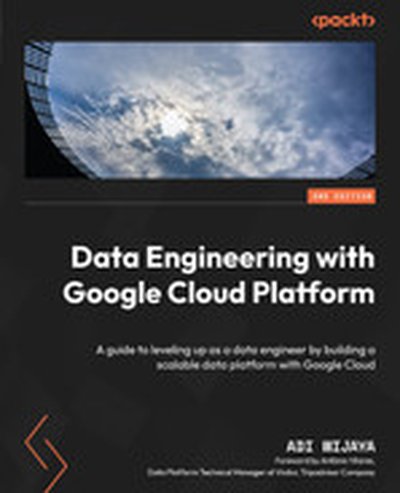
Data Engineering with Google Cloud Platform is your ultimate guide to building scalable data platforms using Google Cloud technologies. In this book, you will learn how to leverage products such as BigQuery, Cloud Composer, and Dataplex for efficient data engineering. Expand your expertise and gain practical knowledge to excel in managing data pipelines within the Google Cloud ecosystem. What this Book will help me do Understand foundational data engineering concepts using Google Cloud Platform. Learn to build and manage scalable data pipelines with tools such as Dataform and Dataflow. Explore advanced topics like data governance and secure data handling in Google Cloud. Boost readiness for Google Cloud data engineering certification with real-world exam guidance. Master cost-effective strategies and CI/CD practices for data engineering on Google Cloud. Author(s) Adi Wijaya, the author of this book, is a Data Strategic Cloud Engineer at Google with extensive experience in data engineering and the Google Cloud ecosystem. With his hands-on expertise, he emphasizes practical solutions and in-depth knowledge sharing, guiding readers through the intricacies of Google Cloud for data engineering success. Who is it for? This book is ideal for data analysts, IT practitioners, software engineers, and data enthusiasts aiming to excel in data engineering. Whether you're a beginner tackling fundamental concepts or an experienced professional exploring Google Cloud's advanced capabilities, this book is designed for you. It bridges your current skills with modern data engineering practices on Google Cloud, making it a valuable resource at any stage of your career.
Summary Generative AI promises to accelerate the productivity of human collaborators. Currently the primary way of working with these tools is through a conversational prompt, which is often cumbersome and unwieldy. In order to simplify the integration of AI capabilities into developer workflows Tsavo Knott helped create Pieces, a powerful collection of tools that complements the tools that developers already use. In this episode he explains the data collection and preparation process, the collection of model types and sizes that work together to power the experience, and how to incorporate it into your workflow to act as a second brain.
Announcements Hello and welcome to the Data Engineering Podcast, the show about modern data managementDagster offers a new approach to building and running data platforms and data pipelines. It is an open-source, cloud-native orchestrator for the whole development lifecycle, with integrated lineage and observability, a declarative programming model, and best-in-class testability. Your team can get up and running in minutes thanks to Dagster Cloud, an enterprise-class hosted solution that offers serverless and hybrid deployments, enhanced security, and on-demand ephemeral test deployments. Go to dataengineeringpodcast.com/dagster today to get started. Your first 30 days are free!Data lakes are notoriously complex. For data engineers who battle to build and scale high quality data workflows on the data lake, Starburst powers petabyte-scale SQL analytics fast, at a fraction of the cost of traditional methods, so that you can meet all your data needs ranging from AI to data applications to complete analytics. Trusted by teams of all sizes, including Comcast and Doordash, Starburst is a data lake analytics platform that delivers the adaptability and flexibility a lakehouse ecosystem promises. And Starburst does all of this on an open architecture with first-class support for Apache Iceberg, Delta Lake and Hudi, so you always maintain ownership of your data. Want to see Starburst in action? Go to dataengineeringpodcast.com/starburst and get $500 in credits to try Starburst Galaxy today, the easiest and fastest way to get started using Trino.Your host is Tobias Macey and today I'm interviewing Tsavo Knott about Pieces, a personal AI toolkit to improve the efficiency of developersInterview IntroductionHow did you get involved in machine learning?Can you describe what Pieces is and the story behind it?The past few months have seen an endless series of personalized AI tools launched. What are the features and focus of Pieces that might encourage someone to use it over the alternatives?model selectionsarchitecture of Pieces applicationlocal vs. hybrid vs. online modelsmodel update/delivery processdata preparation/serving for models in context of Pieces appapplication of AI to developer workflowstypes of workflows that people are building with piecesWhat are the most interesting, innovative, or unexpected ways that you have seen Pieces used?What are the most interesting, unexpected, or challenging lessons that you have learned while working on Pieces?When is Pieces the wrong choice?What do you have planned for the future of Pieces?Contact Info LinkedInParting Question From your perspective, what is the biggest barrier to adoption of machine learning today?Closing Announcements Thank you for listening! Don't forget to check out our other shows. Podcast.init covers the Python language, its community, and the innovative ways it is being used. The Machine Learning Podcast helps you go from idea to production with machine learning.Visit the site to subscribe to the show, sign up for the mailing list, and read the show notes.If you've learned something or tried out a project from the show then tell us about it! Email [email protected]) with your story.Links PiecesNPU == Neural Processing UnitTensor ChipLoRA == Low Rank AdaptationGenerative Adversarial NetworksMistralEmacsVimNeoVimDartFlutte
Links:
Biodiversity and Artificial Intelligence pdf: https://www.gpai.ai/projects/responsible-ai/environment/biodiversity-and-AI-opportunities-recommendations-for-action.pdf
Free Data Engineering course: https://github.com/DataTalksClub/data-engineering-zoomcamp
Join DataTalks.Club: https://datatalks.club/slack.html Our events: https://datatalks.club/events.html
Summary
Generative AI has rapidly transformed everything in the technology sector. When Andrew Lee started work on Shortwave he was focused on making email more productive. When AI started gaining adoption he realized that he had even more potential for a transformative experience. In this episode he shares the technical challenges that he and his team have overcome in integrating AI into their product, as well as the benefits and features that it provides to their customers.
Announcements
Hello and welcome to the Data Engineering Podcast, the show about modern data management Dagster offers a new approach to building and running data platforms and data pipelines. It is an open-source, cloud-native orchestrator for the whole development lifecycle, with integrated lineage and observability, a declarative programming model, and best-in-class testability. Your team can get up and running in minutes thanks to Dagster Cloud, an enterprise-class hosted solution that offers serverless and hybrid deployments, enhanced security, and on-demand ephemeral test deployments. Go to dataengineeringpodcast.com/dagster today to get started. Your first 30 days are free! Data lakes are notoriously complex. For data engineers who battle to build and scale high quality data workflows on the data lake, Starburst powers petabyte-scale SQL analytics fast, at a fraction of the cost of traditional methods, so that you can meet all your data needs ranging from AI to data applications to complete analytics. Trusted by teams of all sizes, including Comcast and Doordash, Starburst is a data lake analytics platform that delivers the adaptability and flexibility a lakehouse ecosystem promises. And Starburst does all of this on an open architecture with first-class support for Apache Iceberg, Delta Lake and Hudi, so you always maintain ownership of your data. Want to see Starburst in action? Go to dataengineeringpodcast.com/starburst and get $500 in credits to try Starburst Galaxy today, the easiest and fastest way to get started using Trino. Your host is Tobias Macey and today I'm interviewing Andrew Lee about his work on Shortwave, an AI powered email client
Interview
Introduction How did you get involved in the area of data management? Can you describe what Shortwave is and the story behind it?
What is the core problem that you are addressing with Shortwave?
Email has been a central part of communication and business productivity for decades now. What are the overall themes that continue to be problematic? What are the strengths that email maintains as a protocol and ecosystem? From a product perspective, what are the data challenges that are posed by email? Can you describe how you have architected the Shortwave platform?
How have the design and goals of the product changed since you started it? What are the ways that the advent and evolution of language models have influenced your product roadmap?
How do you manage the personalization of the AI functionality in your system for each user/team? For users and teams who are using Shortwave, how does it change their workflow and communication patterns? Can you describe how I would use Shortwave for managing the workflow of evaluating, planning, and promoting my podcast episodes? What are the most interesting, innovative, or unexpected ways that you have seen Shortwave used? What are the most interesting, unexpected, or challenging lessons that you have learned while working on Shortwave? When is Shortwave the wrong choice? What do you have planned for the future of Shortwave?
Contact Info
LinkedIn Blog
Parting Question
From your perspective, what is the biggest gap in the tooling or technology for data management today?
Closing Announcements
Thank you for listening! Don't forget to check out our other shows. Podcast.init covers the Python language, its community, and the innovative ways it is being used. The Machine Learning Podcast helps you go from idea to production with mach
GenAI can help data engineers become more productive, and data engineering can help GenAI drive new levels of innovation. Published at: https://www.eckerson.com/articles/achieving-fusion-how-genai-and-data-engineering-help-one-another
Summary
Databases come in a variety of formats for different use cases. The default association with the term "database" is relational engines, but non-relational engines are also used quite widely. In this episode Oren Eini, CEO and creator of RavenDB, explores the nuances of relational vs. non-relational engines, and the strategies for designing a non-relational database.
Announcements
Hello and welcome to the Data Engineering Podcast, the show about modern data management This episode is brought to you by Datafold – a testing automation platform for data engineers that prevents data quality issues from entering every part of your data workflow, from migration to dbt deployment. Datafold has recently launched data replication testing, providing ongoing validation for source-to-target replication. Leverage Datafold's fast cross-database data diffing and Monitoring to test your replication pipelines automatically and continuously. Validate consistency between source and target at any scale, and receive alerts about any discrepancies. Learn more about Datafold by visiting dataengineeringpodcast.com/datafold. Dagster offers a new approach to building and running data platforms and data pipelines. It is an open-source, cloud-native orchestrator for the whole development lifecycle, with integrated lineage and observability, a declarative programming model, and best-in-class testability. Your team can get up and running in minutes thanks to Dagster Cloud, an enterprise-class hosted solution that offers serverless and hybrid deployments, enhanced security, and on-demand ephemeral test deployments. Go to dataengineeringpodcast.com/dagster today to get started. Your first 30 days are free! Data lakes are notoriously complex. For data engineers who battle to build and scale high quality data workflows on the data lake, Starburst powers petabyte-scale SQL analytics fast, at a fraction of the cost of traditional methods, so that you can meet all your data needs ranging from AI to data applications to complete analytics. Trusted by teams of all sizes, including Comcast and Doordash, Starburst is a data lake analytics platform that delivers the adaptability and flexibility a lakehouse ecosystem promises. And Starburst does all of this on an open architecture with first-class support for Apache Iceberg, Delta Lake and Hudi, so you always maintain ownership of your data. Want to see Starburst in action? Go to dataengineeringpodcast.com/starburst and get $500 in credits to try Starburst Galaxy today, the easiest and fastest way to get started using Trino. Your host is Tobias Macey and today I'm interviewing Oren Eini about the work of designing and building a NoSQL database engine
Interview
Introduction How did you get involved in the area of data management? Can you describe what constitutes a NoSQL database?
How have the requirements and applications of NoSQL engines changed since they first became popular ~15 years ago?
What are the factors that convince teams to use a NoSQL vs. SQL database?
NoSQL is a generalized term that encompasses a number of different data models. How does the underlying representation (e.g. document, K/V, graph) change that calculus?
How have the evolution in data formats (e.g. N-dimensional vectors, point clouds, etc.) changed the landscape for NoSQL engines? When designing and building a database, what are the initial set of questions that need to be answered?
How many "core capabilities" can you reasonably design around before they conflict with each other?
How have you approached the evolution of RavenDB as you add new capabilities and mature the project?
What are some of the early decisions that had to be unwound to enable new capabilities?
If you were to start from scratch today, what database would you build? What are the most interesting, innovative, or unexpected ways that you have seen RavenDB/NoSQL databases used? What are the most interesting, unexpected, or challenging lessons t
Learn about real-time AI-powered insights with BigQuery continuous queries, and how this new feature is poised to revolutionize data engineering by empowering event-driven and AI-driven data pipelines with Vertex AI, Pub/Sub, and Bigtable – all through the familiar language of Cloud SQL. Learn about how UPS was able to use big data on millions of shipped packages to reduce package theft, their work on more efficient claims processing, and why they are looking to BigQuery to accelerate time to insights and smarter business outcomes.
Click the blue “Learn more” button above to tap into special offers designed to help you implement what you are learning at Google Cloud Next 25.
Take the next step in your AI/ML journey with streaming data. Learn to deploy and manage complete ML pipelines to run inference and predictions, classify images, run remote inference calls, build a custom model handler, and much more with the latest innovations in Dataflow ML. Learn how Spotify leveraged Dataflow for large-scale generation of ML podcast previews and how they plan to keep pushing the boundaries of what’s possible with data engineering and data science to build better experiences for their customers and creators.
Click the blue “Learn more” button above to tap into special offers designed to help you implement what you are learning at Google Cloud Next 25.
by
Isaac Obezo
Have you ever wondered how a data company does data? In this session, Isaac Obezo, Staff Data Engineer at Starburst, will take you for a peek behind the curtain into Starburst’s own data architecture built to support batch processing of telemetry data within Galaxy data pipelines. Isaac will walk you through our architecture utilizing tools like git, dbt, and Starburst Galaxy to create a CI/CD process allowing our data engineering team to iterate quickly to deploy new models, develop and land data, and create and improve existing models in the data lake. Isaac will also discuss Starburst’s mentality toward data quality, the use of data products, and the process toward delivering quality analytics.
Discover the hidden power of feature engineering in revolutionizing machine learning performance. This talk explores how crafting informative features transforms model outcomes, offering practical techniques and real-world examples. From understanding data intricacies to optimizing model efficacy, learn why feature engineering is the ultimate key to enhancing machine learning success.
In this session, Slalom and Bayer AG will discuss how Bayer AG leverages GKE Enterprise, to build an internal developer platform, integrating Anthos features like Config Sync and Service Mesh. You’ll hear how the implementation, automated through Cloud Build and Terraform, empowered Bayer AG to establish robust security and DevOps practices to support its data engineering teams. By attending this session, your contact information may be shared with the sponsor for relevant follow up for this event only.
Click the blue “Learn more” button above to tap into special offers designed to help you implement what you are learning at Google Cloud Next 25.
Most IT organizations face a constant balance between delivering approved projects (the top-of-mind, important tasks that management wants to launch) and fixing urgent problems (the ones that break systems in unexpected ways.) But there's a third bucket of issues—the long-languishing, forgotten, often boring tasks that turn into technical debt.
Take a step back from the Top Ten lists and join Saks' Veronika Durgin as she digs through the Bottom Ten: Neglected data engineering tasks that will come back to haunt you. This ""forgotten bucket"" can always be deferred, but the more you wait, the more time you'll spend on unplanned activities. And there are a variety of lenses with which you can look at it to better understand its impact on the organization, including the hidden costs of built-versus-buy, the need for a single definition of ""done"", identifying unexpected business dependencies; finding real data to conduct meaningful tests; and the environmental impact of your data.
The data mesh framework, first introduced in 2021, provides a more dexterous and valuable approach to data management by increasing accessibility for teams, partners, and other stakeholders. In this session, Annalect’s Chief Technology Officer, Anna Nicanorova, and Director of Data Engineering, Santhosh Swaminathan, will share how their organization — the data and analytics division of Omnicom Group — was able to simplify the implementation of data mesh and unlock numerous benefits — namely, the ability to facilitate seamless collaboration and drive greater operational efficiency.
GenAI can look deceptively easy when it comes to showing a cool demo, but can prove incredibly hard to productionalize. This session will cover the challenges behind industrializing GenAI applications in the enterprise, and the approaches engineers are taking to meet these challenges. Attendees will get to take a look under the hood to see how Data Engineering and Integration techniques can help us go from simple demos to production grade applications with consistently high quality results.
We will explore how Retrieval Augmented Generation (RAG) workflows go from naive to advanced. Techniques discussed will cover a typical GenAI application flow with topics including multiple and hybrid models, refined data processing, data security, getting transparency in results, combining structured and unstructured data, and putting it all together to get high performance and cost effective outcomes. Attendees will leave the session with a framework to understand proposed solutions from their teams and ask the right questions to test if a solution can become industrial-grade.
Summary
Maintaining a single source of truth for your data is the biggest challenge in data engineering. Different roles and tasks in the business need their own ways to access and analyze the data in the organization. In order to enable this use case, while maintaining a single point of access, the semantic layer has evolved as a technological solution to the problem. In this episode Artyom Keydunov, creator of Cube, discusses the evolution and applications of the semantic layer as a component of your data platform, and how Cube provides speed and cost optimization for your data consumers.
Announcements
Hello and welcome to the Data Engineering Podcast, the show about modern data management This episode is brought to you by Datafold – a testing automation platform for data engineers that prevents data quality issues from entering every part of your data workflow, from migration to dbt deployment. Datafold has recently launched data replication testing, providing ongoing validation for source-to-target replication. Leverage Datafold's fast cross-database data diffing and Monitoring to test your replication pipelines automatically and continuously. Validate consistency between source and target at any scale, and receive alerts about any discrepancies. Learn more about Datafold by visiting dataengineeringpodcast.com/datafold. Dagster offers a new approach to building and running data platforms and data pipelines. It is an open-source, cloud-native orchestrator for the whole development lifecycle, with integrated lineage and observability, a declarative programming model, and best-in-class testability. Your team can get up and running in minutes thanks to Dagster Cloud, an enterprise-class hosted solution that offers serverless and hybrid deployments, enhanced security, and on-demand ephemeral test deployments. Go to dataengineeringpodcast.com/dagster today to get started. Your first 30 days are free! Data lakes are notoriously complex. For data engineers who battle to build and scale high quality data workflows on the data lake, Starburst powers petabyte-scale SQL analytics fast, at a fraction of the cost of traditional methods, so that you can meet all your data needs ranging from AI to data applications to complete analytics. Trusted by teams of all sizes, including Comcast and Doordash, Starburst is a data lake analytics platform that delivers the adaptability and flexibility a lakehouse ecosystem promises. And Starburst does all of this on an open architecture with first-class support for Apache Iceberg, Delta Lake and Hudi, so you always maintain ownership of your data. Want to see Starburst in action? Go to dataengineeringpodcast.com/starburst and get $500 in credits to try Starburst Galaxy today, the easiest and fastest way to get started using Trino. Your host is Tobias Macey and today I'm interviewing Artyom Keydunov about the role of the semantic layer in your data platform
Interview
Introduction How did you get involved in the area of data management? Can you start by outlining the technical elements of what it means to have a "semantic layer"? In the past couple of years there was a rapid hype cycle around the "metrics layer" and "headless BI", which has largely faded. Can you give your assessment of the current state of the industry around the adoption/implementation of these concepts? What are the benefits of having a discrete service that offers the business metrics/semantic mappings as opposed to implementing those concepts as part of a more general system? (e.g. dbt, BI, warehouse marts, etc.)
At what point does it become necessary/beneficial for a team to adopt such a service? What are the challenges involved in retrofitting a semantic layer into a production data system?
evolution of requirements/usage patterns technical complexities/performance and cost optimization What are the most interesting, innovative, or unexpected ways that you have seen Cube used? What are the most interesting, unexpec
We talked about:
Anahita's Background Mechanical Engineering and Applied Mechanics Finite Element Analysis vs. Machine Learning Optimization and Semantic Reporting Application of Knowledge Graphs in Research Graphs vs Tabular Data Computational graphs Graph Data Science and Graph Machine Learning Combining Knowledge Graphs and Large Language Models (LLMs) Practical Applications and Projects Challenges and Learnings Anahita’s Recommendations
Links:
GitHub repo: https://github.com/antahiap/ADPT-LRN-PHYS/tree/main
Free Data Engineering course: https://github.com/DataTalksClub/data-engineering-zoomcamp
Join DataTalks.Club: https://datatalks.club/slack.html Our events: https://datatalks.club/events.html
Summary
Working with data is a complicated process, with numerous chances for something to go wrong. Identifying and accounting for those errors is a critical piece of building trust in the organization that your data is accurate and up to date. While there are numerous products available to provide that visibility, they all have different technologies and workflows that they focus on. To bring observability to dbt projects the team at Elementary embedded themselves into the workflow. In this episode Maayan Salom explores the approach that she has taken to bring observability, enhanced testing capabilities, and anomaly detection into every step of the dbt developer experience.
Announcements
Hello and welcome to the Data Engineering Podcast, the show about modern data management Data lakes are notoriously complex. For data engineers who battle to build and scale high quality data workflows on the data lake, Starburst powers petabyte-scale SQL analytics fast, at a fraction of the cost of traditional methods, so that you can meet all your data needs ranging from AI to data applications to complete analytics. Trusted by teams of all sizes, including Comcast and Doordash, Starburst is a data lake analytics platform that delivers the adaptability and flexibility a lakehouse ecosystem promises. And Starburst does all of this on an open architecture with first-class support for Apache Iceberg, Delta Lake and Hudi, so you always maintain ownership of your data. Want to see Starburst in action? Go to dataengineeringpodcast.com/starburst and get $500 in credits to try Starburst Galaxy today, the easiest and fastest way to get started using Trino. Dagster offers a new approach to building and running data platforms and data pipelines. It is an open-source, cloud-native orchestrator for the whole development lifecycle, with integrated lineage and observability, a declarative programming model, and best-in-class testability. Your team can get up and running in minutes thanks to Dagster Cloud, an enterprise-class hosted solution that offers serverless and hybrid deployments, enhanced security, and on-demand ephemeral test deployments. Go to dataengineeringpodcast.com/dagster today to get started. Your first 30 days are free! This episode is brought to you by Datafold – a testing automation platform for data engineers that prevents data quality issues from entering every part of your data workflow, from migration to dbt deployment. Datafold has recently launched data replication testing, providing ongoing validation for source-to-target replication. Leverage Datafold's fast cross-database data diffing and Monitoring to test your replication pipelines automatically and continuously. Validate consistency between source and target at any scale, and receive alerts about any discrepancies. Learn more about Datafold by visiting dataengineeringpodcast.com/datafold. Your host is Tobias Macey and today I'm interviewing Maayan Salom about how to incorporate observability into a dbt-oriented workflow and how Elementary can help
Interview
Introduction How did you get involved in the area of data management? Can you start by outlining what elements of observability are most relevant for dbt projects? What are some of the common ad-hoc/DIY methods that teams develop to acquire those insights?
What are the challenges/shortcomings associated with those approaches?
Over the past ~3 years there were numerous data observability systems/products created. What are some of the ways that the specifics of dbt workflows are not covered by those generalized tools?
What are the insights that can be more easily generated by embedding into the dbt toolchain and development cycle?
Can you describe what Elementary is and how it is designed to enhance the development and maintenance work in dbt projects? How is Elementary designed/implemented?
How have the scope and goals of the project changed since you started working on it? What are the engineering ch
We talked about:
Tereza’s background Switching from an Individual Contributor to Lead Python Pizza and the pizza management metaphor Learning to figure things out on your own and how to receive feedback Tereza as a leadership coach Podcasts Tereza’s coaching framework (selling yourself vs bragging) The importance of retrospectives The importance of communication and active listening Convincing people you don’t have power over Building relationships and empathy Inclusive leadership
Links:
LinkedIn: https://www.linkedin.com/in/tereza-iofciu/ Twitter: https://twitter.com/terezaif Github: https://github.com/terezaif Website: https:// terezaiofciu.com
Free Data Engineering course: https://github.com/DataTalksClub/data-engineering-zoomcamp
Join DataTalks.Club: https://datatalks.club/slack.html Our events: https://datatalks.club/events.html