talk-data.com talk-data.com

Topic

Data Engineering

etl data_pipelines big_data

1127

tagged

Activity Trend

127 peak/qtr
2020-Q1 2026-Q1

Activities

1127 activities · Newest first

Databricks LakeFlow: A Unified, Intelligent Solution for Data Engineering. Presented by Bilal Aslam

Speaker: Bilal Aslam, Sr. Director of Product Management, Databricks

Bilal explains that everything starts with good data and outlines the three steps to good data including, ingesting, transforming and orchestrating your data. Then Bilal announces Databricks LakeFlow - a unified solution for data engineering. With LakeFlow you can ingest data from databases, enterprise apps and cloud sources, transform it in batch and real-time streaming, and confidently deploy and operate in production. Includes a live demo of Databricks LakeFlow.

To learn more about Databricks LakeFlow, see the announcement blog post: https://www.databricks.com/blog/introducing-databricks-lakeflow

Summary

Stripe is a company that relies on data to power their products and business. To support that functionality they have invested in Trino and Iceberg for their analytical workloads. In this episode Kevin Liu shares some of the interesting features that they have built by combining those technologies, as well as the challenges that they face in supporting the myriad workloads that are thrown at this layer of their data platform.

Announcements

Hello and welcome to the Data Engineering Podcast, the show about modern data management Data lakes are notoriously complex. For data engineers who battle to build and scale high quality data workflows on the data lake, Starburst is an end-to-end data lakehouse platform built on Trino, the query engine Apache Iceberg was designed for, with complete support for all table formats including Apache Iceberg, Hive, and Delta Lake. Trusted by teams of all sizes, including Comcast and Doordash. Want to see Starburst in action? Go to dataengineeringpodcast.com/starburst and get $500 in credits to try Starburst Galaxy today, the easiest and fastest way to get started using Trino. Your host is Tobias Macey and today I'm interviewing Kevin Liu about his use of Trino and Iceberg for Stripe's data lakehouse

Interview

Introduction How did you get involved in the area of data management? Can you describe what role Trino and Iceberg play in Stripe's data architecture?

What are the ways in which your job responsibilities intersect with Stripe's lakehouse infrastructure?

What were the requirements and selection criteria that led to the selection of that combination of technologies?

What are the other systems that feed into and rely on the Trino/Iceberg service?

what kinds of questions are you answering with table metadata

what use case/team does that support

comparative utility of iceberg REST catalog What are the shortcomings of Trino and Iceberg? What are the most interesting, innovative, or unexpected ways that you have seen Iceberg/Trino used? What are the most interesting, unexpected, or challenging lessons that you have learned while working on Stripe's data infrastructure? When is a lakehouse on Trino/Iceberg the wrong choice? What do you have planned for the future of Trino and Iceberg at Stripe?

Contact Info

Substack LinkedIn

Parting Question

From your perspective, what is the biggest gap in the tooling or technology for data management today?

Closing Announcements

Thank you for listening! Don't forget to check out our other shows. Podcast.init covers the Python language, its community, and the innovative ways it is being used. The Machine Learning Podcast helps you go from idea to production with machine learning. Visit the site to subscribe to the show, sign up for the mailing list, and read the show notes. If you've learned something or tried out a project from the show then tell us about it! Email [email protected] with your story.

Links

Trino Iceberg Stripe Spark Redshift Hive Metastore Python Iceberg Python Iceberg REST Catalog Trino Metadata Table Flink

Podcast Episode

Tabular

Podcast Episode

Delta Table

Podcast Episode

Databricks Unity Catalog Starburst AWS Athena Kevin Trinofest Presentation Alluxio

Podcast Episode

Parquet Hudi Trino Project Tardigrade Trino On Ice

The intro and outro music is from The Hug by The Freak Fandango Orchestra / CC BY-SA Sponsored By: Starburst: Starburst Logo

This episode is brought to you by Starburst - an end-to-end data lakehouse platform for data engineers who are battling to build and scale high quality data pipelines on the data lake. Powered by Trino, the query engine Apache Iceberg was designed for, Starburst is an open platform with support for all table formats including Apache Iceberg, Hive, and Delta Lake.

Trusted by the teams at Comcast and Doordash, Starburst del

Databricks Certified Associate Developer for Apache Spark Using Python

This book serves as the ultimate preparation for aspiring Databricks Certified Associate Developers specializing in Apache Spark. Deep dive into Spark's components, its applications, and exam techniques to achieve certification and expand your practical skills in big data processing and real-time analytics using Python. What this Book will help me do Deeply understand Apache Spark's core architecture for building big data applications. Write optimized SQL queries and leverage Spark DataFrame API for efficient data manipulation. Apply advanced Spark functions, including UDFs, to solve complex data engineering tasks. Use Spark Streaming capabilities to implement real-time and near-real-time processing solutions. Get hands-on preparation for the certification exam with mock tests and practice questions. Author(s) Saba Shah is a seasoned data engineer with extensive experience working at Databricks and leading data science teams. With her in-depth knowledge of big data applications and Spark, she delivers clear, actionable insights in this book. Her approach emphasizes practical learning and real-world applications. Who is it for? This book is ideal for data professionals such as engineers and analysts aiming to achieve Databricks certification. It is particularly helpful for individuals with moderate Python proficiency who are keen to understand Spark from scratch. If you're transitioning into big data roles, this guide prepares you comprehensively.

Data Quality Score: How We Evolved the Data Quality Strategy at Airbnb

Speaker: Clark Wright (Staff Analytics Engineer at Airbnb)

This tech talk is a part of the Data Engineering Open Forum at Netflix 2024. Recently, Airbnb published a post to their Tech Blog called Data Quality Score: The next chapter of data quality at Airbnb. In this talk, Clark Wright shares the narrative of how data practitioners at Airbnb recognized the need for higher-quality data and then proposed, conceptualized, and launched Airbnb’s first Data Quality Score.

If you are interested in attending a future Data Engineering Open Forum, we highly recommend you join our Google Group (https://groups.google.com/g/data-engineering-open-forum) to stay tuned to event announcements.

Summary

Streaming data processing enables new categories of data products and analytics. Unfortunately, reasoning about stream processing engines is complex and lacks sufficient tooling. To address this shortcoming Datorios created an observability platform for Flink that brings visibility to the internals of this popular stream processing system. In this episode Ronen Korman and Stav Elkayam discuss how the increased understanding provided by purpose built observability improves the usefulness of Flink.

Announcements

Hello and welcome to the Data Engineering Podcast, the show about modern data management This episode is supported by Code Comments, an original podcast from Red Hat. As someone who listens to the Data Engineering Podcast, you know that the road from tool selection to production readiness is anything but smooth or straight. In Code Comments, host Jamie Parker, Red Hatter and experienced engineer, shares the journey of technologists from across the industry and their hard-won lessons in implementing new technologies. I listened to the recent episode "Transforming Your Database" and appreciated the valuable advice on how to approach the selection and integration of new databases in applications and the impact on team dynamics. There are 3 seasons of great episodes and new ones landing everywhere you listen to podcasts. Search for "Code Commentst" in your podcast player or go to dataengineeringpodcast.com/codecomments today to subscribe. My thanks to the team at Code Comments for their support. Data lakes are notoriously complex. For data engineers who battle to build and scale high quality data workflows on the data lake, Starburst is an end-to-end data lakehouse platform built on Trino, the query engine Apache Iceberg was designed for, with complete support for all table formats including Apache Iceberg, Hive, and Delta Lake. Trusted by teams of all sizes, including Comcast and Doordash. Want to see Starburst in action? Go to dataengineeringpodcast.com/starburst and get $500 in credits to try Starburst Galaxy today, the easiest and fastest way to get started using Trino. Your host is Tobias Macey and today I'm interviewing Ronen Korman and Stav Elkayam about pulling back the curtain on your real-time data streams by bringing intuitive observability to Flink streams

Interview

Introduction How did you get involved in the area of data management? Can you describe what Datorios is and the story behind it? Data observability has been gaining adoption for a number of years now, with a large focus on data warehouses. What are some of the unique challenges posed by Flink?

How much of the complexity is due to the nature of streaming data vs. the architectural realities of Flink?

How has the lack of visibility into the flow of data in Flink impacted the ways that teams think about where/when/how to apply it? How have the requirements of generative AI shifted the demand for streaming data systems?

What role does Flink play in the architecture of generative AI systems?

Can you describe how Datorios is implemented?

How has the design and goals of Datorios changed since you first started working on it?

How much of the Datorios architecture and functionality is specific to Flink and how are you thinking about its potential application to other streaming platforms? Can you describe how Datorios is used in a day-to-day workflow for someone building streaming applications on Flink? What are the most interesting, innovative, or unexpected ways that you have seen Datorios used? What are the most interesting, unexpected, or challenging lessons that you have learned while working on Datorios? When is Datorios the wrong choice? What do you have planned for the future of Datorios?

Contact Info

Ronen

LinkedIn

Stav

LinkedIn

Parting Question

From your perspective, what is the biggest gap in the tooling or technology for data management today?

Closing Announcements

Thank you for listening! Don't forget to

Summary

Modern businesses aspire to be data driven, and technologists enjoy working through the challenge of building data systems to support that goal. Data governance is the binding force between these two parts of the organization. Nicola Askham found her way into data governance by accident, and stayed because of the benefit that she was able to provide by serving as a bridge between the technology and business. In this episode she shares the practical steps to implementing a data governance practice in your organization, and the pitfalls to avoid.

Announcements

Hello and welcome to the Data Engineering Podcast, the show about modern data management Data lakes are notoriously complex. For data engineers who battle to build and scale high quality data workflows on the data lake, Starburst is an end-to-end data lakehouse platform built on Trino, the query engine Apache Iceberg was designed for, with complete support for all table formats including Apache Iceberg, Hive, and Delta Lake. Trusted by teams of all sizes, including Comcast and Doordash. Want to see Starburst in action? Go to dataengineeringpodcast.com/starburst and get $500 in credits to try Starburst Galaxy today, the easiest and fastest way to get started using Trino. This episode is supported by Code Comments, an original podcast from Red Hat. As someone who listens to the Data Engineering Podcast, you know that the road from tool selection to production readiness is anything but smooth or straight. In Code Comments, host Jamie Parker, Red Hatter and experienced engineer, shares the journey of technologists from across the industry and their hard-won lessons in implementing new technologies. I listened to the recent episode "Transforming Your Database" and appreciated the valuable advice on how to approach the selection and integration of new databases in applications and the impact on team dynamics. There are 3 seasons of great episodes and new ones landing everywhere you listen to podcasts. Search for "Code Commentst" in your podcast player or go to dataengineeringpodcast.com/codecomments today to subscribe. My thanks to the team at Code Comments for their support. Your host is Tobias Macey and today I'm interviewing Nicola Askham about the practical steps of building out a data governance practice in your organization

Interview

Introduction How did you get involved in the area of data management? Can you start by giving an overview of the scope and boundaries of data governance in an organization?

At what point does a lack of an explicit governance policy become a liability?

What are some of the misconceptions that you encounter about data governance? What impact has the evolution of data technologies had on the implementation of governance practices? (e.g. number/scale of systems, types of data, AI) Data governance can often become an exercise in boiling the ocean. What are the concrete first steps that will increase the success rate of a governance practice?

Once a data governance project is underway, what are some of the common roadblocks that might derail progress?

What are the net benefits to the data team and the organization when a data governance practice is established, active, and healthy? What are the most interesting, innovative, or unexpected ways that you have seen data governance applied? What are the most interesting, unexpected, or challenging lessons that you have learned while working on data governance/training/coaching? What are some of the pitfalls in data governance? What are some of the future trends in data governance that you are excited by?

Are there any trends that concern you?

Contact Info

Website LinkedIn

Parting Question

From your perspective, what is the biggest gap in the tooling or technology for data management today?

Closing Announcements

Thank you for listening! Don't forget to check out our other shows. Podcast.init covers the Python language, its community, and the innovative ways it is

Data Engineering with Databricks Cookbook

In "Data Engineering with Databricks Cookbook," you'll learn how to efficiently build and manage data pipelines using Apache Spark, Delta Lake, and Databricks. This recipe-based guide offers techniques to transform, optimize, and orchestrate your data workflows. What this Book will help me do Master Apache Spark for data ingestion, transformation, and analysis. Learn to optimize data processing and improve query performance with Delta Lake. Manage streaming data processing with Spark Structured Streaming capabilities. Implement DataOps and DevOps workflows tailored for Databricks. Enforce data governance policies using Unity Catalog for scalable solutions. Author(s) Pulkit Chadha, the author of this book, is a Senior Solutions Architect at Databricks. With extensive experience in data engineering and big data applications, he brings practical insights into implementing modern data solutions. His educational writings focus on empowering data professionals with actionable knowledge. Who is it for? This book is ideal for data engineers, data scientists, and analysts who want to deepen their knowledge in managing and transforming large datasets. Readers should have an intermediate understanding of SQL, Python programming, and basic data architecture concepts. It is especially well-suited for professionals working with Databricks or similar cloud-based data platforms.

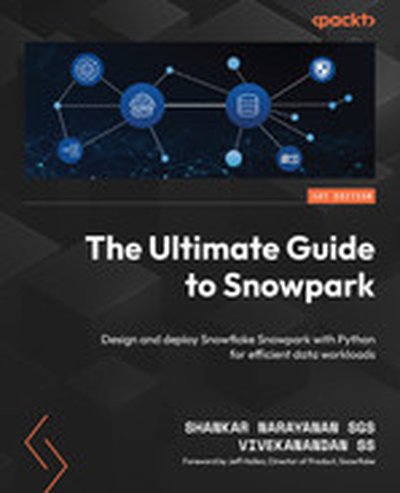
The Ultimate Guide to Snowpark

The Ultimate Guide to Snowpark serves as a comprehensive resource to help you master the Snowflake Snowpark framework using Python. You'll learn how to manage data engineering, data science, and data applications in Snowpark, coupled with practical implementations and examples. By following this guide, you'll gain the skills needed to efficiently process and analyze data in the Snowflake Data Cloud. What this Book will help me do Master Snowpark with Python for data engineering, data science, and data application workloads. Develop and deploy robust data pipelines using Snowpark in Python. Design, implement, and produce machine learning models using Snowpark. Learn to monetize and operationalize Snowflake-native applications. Effectively adopt Snowpark in production for scalable, efficient data solutions. Author(s) Shankar Narayanan SGS and Vivekanandan SS are experienced professionals in data engineering and Snowflake technologies. Shankar has extensive experience in utilizing Snowflake Snowpark to manage and enhance data solutions. Vivekanandan brings expertise in the intersection of Python programming and cloud-based data processing. Together, their combined knowledge and approachable writing style make this book an invaluable resource to readers. Who is it for? This book is designed for data engineers, data scientists, developers, and seasoned data practitioners. Ideal candidates are those looking to expand their skills in implementing Snowpark solutions using Python. A prior understanding of SQL, Python programming, and familiarity with Snowflake is beneficial for readers to fully leverage the techniques presented.

Summary

Any software system that survives long enough will require some form of migration or evolution. When that system is responsible for the data layer the process becomes more challenging. Sriram Panyam has been involved in several projects that required migration of large volumes of data in high traffic environments. In this episode he shares some of the valuable lessons that he learned about how to make those projects successful.

Announcements

Hello and welcome to the Data Engineering Podcast, the show about modern data management Data lakes are notoriously complex. For data engineers who battle to build and scale high quality data workflows on the data lake, Starburst is an end-to-end data lakehouse platform built on Trino, the query engine Apache Iceberg was designed for, with complete support for all table formats including Apache Iceberg, Hive, and Delta Lake. Trusted by teams of all sizes, including Comcast and Doordash. Want to see Starburst in action? Go to dataengineeringpodcast.com/starburst and get $500 in credits to try Starburst Galaxy today, the easiest and fastest way to get started using Trino. This episode is supported by Code Comments, an original podcast from Red Hat. As someone who listens to the Data Engineering Podcast, you know that the road from tool selection to production readiness is anything but smooth or straight. In Code Comments, host Jamie Parker, Red Hatter and experienced engineer, shares the journey of technologists from across the industry and their hard-won lessons in implementing new technologies. I listened to the recent episode "Transforming Your Database" and appreciated the valuable advice on how to approach the selection and integration of new databases in applications and the impact on team dynamics. There are 3 seasons of great episodes and new ones landing everywhere you listen to podcasts. Search for "Code Commentst" in your podcast player or go to dataengineeringpodcast.com/codecomments today to subscribe. My thanks to the team at Code Comments for their support. Your host is Tobias Macey and today I'm interviewing Sriram Panyam about his experiences conducting large scale data migrations and the useful strategies that he learned in the process

Interview

Introduction How did you get involved in the area of data management? Can you start by sharing some of your experiences with data migration projects?

As you have gone through successive migration projects, how has that influenced the ways that you think about architecting data systems?

How would you categorize the different types and motivations of migrations?

How does the motivation for a migration influence the ways that you plan for and execute that work?

Can you talk us through one or two specific projects that you have taken part in? Part 1: The Triggers

Section 1: Technical Limitations triggering Data Migration

Scaling bottlenecks: Performance issues with databases, storage, or network infrastructure Legacy compatibility: Difficulties integrating with modern tools and cloud platforms System upgrades: The need to migrate data during major software changes (e.g., SQL Server version upgrade)

Section 2: Types of Migrations for Infrastructure Focus

Storage migration: Moving data between systems (HDD to SSD, SAN to NAS, etc.) Data center migration: Physical relocation or consolidation of data centers Virtualization migration: Moving from physical servers to virtual machines (or vice versa)

Section 3: Technical Decisions Driving Data Migrations

End-of-life support: Forced migration when older software or hardware is sunsetted Security and compliance: Adopting new platforms with better security postures Cost Optimization: Potential savings of cloud vs. on-premise data centers

Part 2: Challenges (and Anxieties)

Section 1: Technical Challenges

Data transformation challenges: Schema changes, complex data mappings Network bandwidth and latency: Transferring large datasets efficiently Performance tes

Building a successful data engineering team involves more than just hiring skilled individuals—it requires fostering a culture of trust, collaboration, and continuous learning. But how do you start from scratch and create a team that not only meets technical demands but also drives business value? What key traits should you look for in your early hires, and how do you ensure your team’s projects align with the company’s goals? Liya Aizenberg is Director of Data Engineering at Away and a seasoned data leader with over 22 years of experience spearheading innovation in scalable data engineering pipelines and distribution solutions. She has built successful data teams that integrate seamlessly with various business functions, serving as invaluable organizational partners. She focuses on promoting data-driven approaches to empower organizations to make proactive decisions based on timely and organized data, shifting from reactive to proactive business strategies. Additionally, as a passionate advocate for Women in Tech, she actively contributes to fostering diversity and inclusion in the technology industry. In the episode, Adel and Liya explore the key attributes that forge an effective data engineering team, traits to look for in new hires, what technical skill sets set people up for success in a data engineering team, leveraging knowledge transfer between external experts and internal stakeholders, upskilling and career growth, aligning data engineering initiatives with business goals, measuring the ROI of data projects, working agile in data engineering, balancing innovation and practicality, future trends and much more.  Links Mentioned in the Show: Away TravelConnect with Liya on Linkedin[Career Track] Data Engineer with PythonRelated Episode: Scaling Data Engineering in Retail with Mo Sabah, SVP of Engineering & Data at Thrive MarketSign up to RADAR: AI Edition New to DataCamp? Learn on the go using the DataCamp mobile app Empower your business with world-class data and AI skills with DataCamp for business

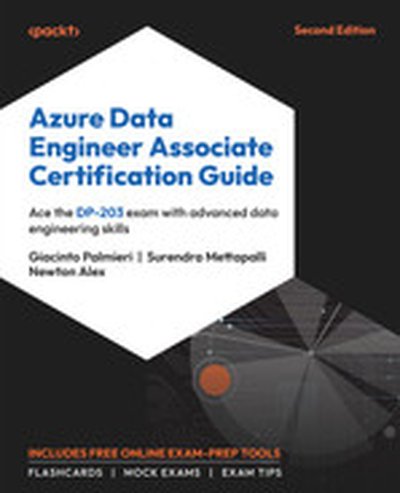
Azure Data Engineer Associate Certification Guide - Second Edition

This book is your gateway to mastering the skills required for achieving the Azure Data Engineer Associate certification (DP-203). Whether you're new to the field or a seasoned professional, it comprehensively prepares you for the challenges of the exam. Learn to design and implement advanced data solutions, secure sensitive information, and optimize data processes effectively. What this Book will help me do Understand and utilize Azure's data services such as Azure Synapse and Azure Databricks for data processing. Master advanced data storage and management solutions, including designing partitions and lake architectures. Learn to secure data with state-of-the-art tools like RBAC, encryption, and Azure Purview. Develop and manage data pipelines and workflows using tools like Azure Data Factory (ADF) and Spark. Prepare for and confidently pass the DP-203 certification exam with the included practical resources and guidance. Author(s) The authors, None Palmieri, Surendra Mettapalli, and None Alex, bring a wealth of expertise in cloud and data engineering. With extensive industry experience, they've designed this guide to be both educational and practical, enabling learners to not only understand but also apply concepts in real-world scenarios. Their goal is to make complex topics approachable, supporting your journey to certification success. Who is it for? This guide is perfect for aspiring and current data engineers aiming to achieve the Azure Data Engineer Associate certification (DP-203). It's particularly useful for professionals familiar with cloud services and basic data engineering concepts who want to delve deeper into Azure's offerings. Additionally, managers and learners preparing for roles involving Azure cloud data solutions will find the content invaluable for career advancement.

Send us a text Welcome to the cozy corner of the tech world where ones and zeros mingle with casual chit-chat. Datatopics Unplugged is your go-to spot for relaxed discussions around tech, news, data, and society.

Dive into conversations that should flow as smoothly as your morning coffee (but don't), where industry insights meet laid-back banter. Whether you're a data aficionado or just someone curious about the digital age, pull up a chair, relax, and let's get into the heart of data, unplugged style!

In this episode: Slack's Data Practices: Discussing Slack's use of customer data to build models, the risks of global data leakage, and the impact of GDPR and AI regulations.ChatGPT's Data Analysis Improvements:  Discussing new features in ChatGPT that let you interrogate your data like a pro. The Loneliness of Data Scientists: Why being a lone data wolf is tough, and how collaboration is the key to success. Rustworkx for Graph Computation:  Evaluating Rustworkx as a robust tool for graphs compared to Networkx.Dolt - Git for Data: Comparing Dolt and DVC as tools for data version control. Check it out.Veo by Google DeepMind: An overview of Google's Veo technology and its potential applications.Ilya Sutskever’s Departure from OpenAI: What does Ilya Sutskever’s exit mean for OpenAI with Jakub Pachocki stepping in?Hot Takes - No Data Engineering Roadmap? Debating the necessity of a data engineering roadmap and the prominence of SQL skills.

Summary

The purpose of business intelligence systems is to allow anyone in the business to access and decode data to help them make informed decisions. Unfortunately this often turns into an exercise in frustration for everyone involved due to complex workflows and hard-to-understand dashboards. The team at Zenlytic have leaned on the promise of large language models to build an AI agent that lets you converse with your data. In this episode they share their journey through the fast-moving landscape of generative AI and unpack the difference between an AI chatbot and an AI agent.

Announcements

Hello and welcome to the Data Engineering Podcast, the show about modern data management This episode is supported by Code Comments, an original podcast from Red Hat. As someone who listens to the Data Engineering Podcast, you know that the road from tool selection to production readiness is anything but smooth or straight. In Code Comments, host Jamie Parker, Red Hatter and experienced engineer, shares the journey of technologists from across the industry and their hard-won lessons in implementing new technologies. I listened to the recent episode "Transforming Your Database" and appreciated the valuable advice on how to approach the selection and integration of new databases in applications and the impact on team dynamics. There are 3 seasons of great episodes and new ones landing everywhere you listen to podcasts. Search for "Code Commentst" in your podcast player or go to dataengineeringpodcast.com/codecomments today to subscribe. My thanks to the team at Code Comments for their support. Data lakes are notoriously complex. For data engineers who battle to build and scale high quality data workflows on the data lake, Starburst is an end-to-end data lakehouse platform built on Trino, the query engine Apache Iceberg was designed for, with complete support for all table formats including Apache Iceberg, Hive, and Delta Lake. Trusted by teams of all sizes, including Comcast and Doordash. Want to see Starburst in action? Go to dataengineeringpodcast.com/starburst and get $500 in credits to try Starburst Galaxy today, the easiest and fastest way to get started using Trino. Your host is Tobias Macey and today I'm interviewing Ryan Janssen and Paul Blankley about their experiences building AI powered agents for interacting with your data

Interview

Introduction How did you get involved in data? In AI? Can you describe what Zenlytic is and the role that AI is playing in your platform? What have been the key stages in your AI journey?

What are some of the dead ends that you ran into along the path to where you are today? What are some of the persistent challenges that you are facing?

So tell us more about data agents. Firstly, what are data agents and why do you think they're important? How are data agents different from chatbots? Are data agents harder to build? How do you make them work in production? What other technical architectures have you had to develop to support the use of AI in Zenlytic? How have you approached the work of customer education as you introduce this functionality? What are some of the most interesting or erroneous misconceptions that you have heard about what the AI can and can't do? How have you balanced accuracy/trustworthiness with user experience and flexibility in the conversational AI, given the potential for these models to create erroneous responses? What are the most interesting, innovative, or unexpected ways that you have seen your AI agent used? What are the most interesting, unexpected, or challenging lessons that you have learned while working on building an AI agent for business intelligence? When is an AI agent the wrong choice? What do you have planned for the future of AI in the Zenlytic product?

Contact Info

Ryan

LinkedIn

Paul

LinkedIn

Parting Question

From your perspective, what is the biggest gap in the tooling or technology for data management today?

Closing Announce

Summary

Building a data platform is a substrantial engineering endeavor. Once it is running, the next challenge is figuring out how to address release management for all of the different component parts. The services and systems need to be kept up to date, but so does the code that controls their behavior. In this episode your host Tobias Macey reflects on his current challenges in this area and some of the factors that contribute to the complexity of the problem.

Announcements

Hello and welcome to the Data Engineering Podcast, the show about modern data management This episode is supported by Code Comments, an original podcast from Red Hat. As someone who listens to the Data Engineering Podcast, you know that the road from tool selection to production readiness is anything but smooth or straight. In Code Comments, host Jamie Parker, Red Hatter and experienced engineer, shares the journey of technologists from across the industry and their hard-won lessons in implementing new technologies. I listened to the recent episode "Transforming Your Database" and appreciated the valuable advice on how to approach the selection and integration of new databases in applications and the impact on team dynamics. There are 3 seasons of great episodes and new ones landing everywhere you listen to podcasts. Search for "Code Commentst" in your podcast player or go to dataengineeringpodcast.com/codecomments today to subscribe. My thanks to the team at Code Comments for their support. Data lakes are notoriously complex. For data engineers who battle to build and scale high quality data workflows on the data lake, Starburst is an end-to-end data lakehouse platform built on Trino, the query engine Apache Iceberg was designed for, with complete support for all table formats including Apache Iceberg, Hive, and Delta Lake. Trusted by teams of all sizes, including Comcast and Doordash. Want to see Starburst in action? Go to dataengineeringpodcast.com/starburst and get $500 in credits to try Starburst Galaxy today, the easiest and fastest way to get started using Trino. Your host is Tobias Macey and today I want to talk about my experiences managing the QA and release management process of my data platform

Interview

Introduction As a team, our overall goal is to ensure that the production environment for our data platform is highly stable and reliable. This is the foundational element of establishing and maintaining trust with the consumers of our data. In order to support this effort, we need to ensure that only changes that have been tested and verified are promoted to production. Our current challenge is one that plagues all data teams. We want to have an environment that mirrors our production environment that is available for testing, but it’s not feasible to maintain a complete duplicate of all of the production data. Compounding that challenge is the fact that each of the components of our data platform interact with data in slightly different ways and need different processes for ensuring that changes are being promoted safely.

Contact Info

LinkedIn Website

Closing Announcements

Thank you for listening! Don't forget to check out our other shows. Podcast.init covers the Python language, its community, and the innovative ways it is being used. The Machine Learning Podcast helps you go from idea to production with machine learning. Visit the site to subscribe to the show, sign up for the mailing list, and read the show notes. If you've learned something or tried out a project from the show then tell us about it! Email [email protected] with your story.

Links

Data Platforms and Leaky Abstractions Episode Building A Data Platform From Scratch Airbyte

Podcast Episode

Trino dbt Starburst Galaxy Superset Dagster LakeFS

Podcast Episode

Nessie

Podcast Episode

Iceberg Snowflake LocalStack DSL == Domain Specific Language

The intro and outro music is from The Hug by The Freak Fandango Orchestra / CC BY-S

We talked about:

Erum's Background Omdena Academy and Erum’s Role There Omdena’s Community and Projects Course Development and Structure at Omdena Academy Student and Instructor Engagement Engagement and Motivation The Role of Teaching in Community Building The Importance of Communities for Career Building Advice for Aspiring Instructors and Freelancers DS and ML Talent Market Saturation Resources for Learning AI and Community Building Erum’s Resource Recommendations

Links:

LinkedIn: https://www.linkedin.com/in/erum-afzal-64827b24/

Twitter:  https://twitter.com/Erum55449739

Free Data Engineering course: https://github.com/DataTalksClub/data-engineering-zoomcamp

Join DataTalks.Club: https://datatalks.club/slack.html Our events: https://datatalks.club/events.html

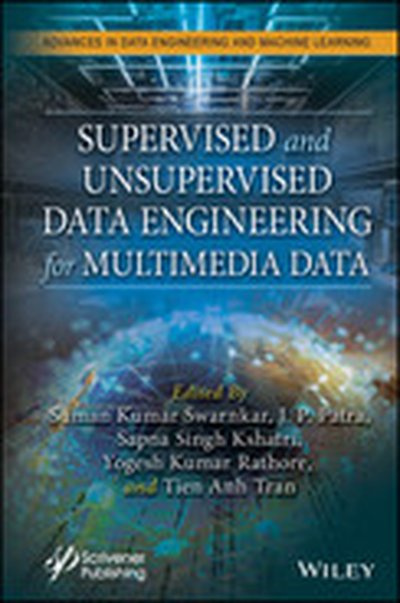
Supervised and Unsupervised Data Engineering for Multimedia Data

SUPERVISED and UNSUPERVISED DATA ENGINEERING for MULTIMEDIA DATA Explore the cutting-edge realms of data engineering in multimedia with Supervised and Unsupervised Data Engineering for Multimedia Data, where expert contributors delve into innovative methodologies, offering invaluable insights to empower both novices and seasoned professionals in mastering the art of manipulating multimedia data with precision and efficiency. Supervised and Unsupervised Data Engineering for Multimedia Data presents a groundbreaking exploration into the intricacies of handling multimedia data through the lenses of both supervised and unsupervised data engineering. Authored by a team of accomplished experts in the field, this comprehensive volume serves as a go-to resource for data scientists, computer scientists, and researchers seeking a profound understanding of cutting-edge methodologies. The book seamlessly integrates theoretical foundations with practical applications, offering a cohesive framework for navigating the complexities of multimedia data. Readers will delve into a spectrum of topics, including artificial intelligence, machine learning, and data analysis, all tailored to the challenges and opportunities presented by multimedia datasets. From foundational principles to advanced techniques, each chapter provides valuable insights, making this book an essential guide for academia and industry professionals alike. Whether you’re a seasoned practitioner or a newcomer to the field, Supervised and Unsupervised Data Engineering for Multimedia Data illuminates the path toward mastery in manipulating and extracting meaningful insights from multimedia data in the modern age.

Summary Artificial intelligence has dominated the headlines for several months due to the successes of large language models. This has prompted numerous debates about the possibility of, and timeline for, artificial general intelligence (AGI). Peter Voss has dedicated decades of his life to the pursuit of truly intelligent software through the approach of cognitive AI. In this episode he explains his approach to building AI in a more human-like fashion and the emphasis on learning rather than statistical prediction. Announcements Hello and welcome to the Data Engineering Podcast, the show about modern data managementDagster offers a new approach to building and running data platforms and data pipelines. It is an open-source, cloud-native orchestrator for the whole development lifecycle, with integrated lineage and observability, a declarative programming model, and best-in-class testability. Your team can get up and running in minutes thanks to Dagster Cloud, an enterprise-class hosted solution that offers serverless and hybrid deployments, enhanced security, and on-demand ephemeral test deployments. Go to dataengineeringpodcast.com/dagster today to get started. Your first 30 days are free!Data lakes are notoriously complex. For data engineers who battle to build and scale high quality data workflows on the data lake, Starburst powers petabyte-scale SQL analytics fast, at a fraction of the cost of traditional methods, so that you can meet all your data needs ranging from AI to data applications to complete analytics. Trusted by teams of all sizes, including Comcast and Doordash, Starburst is a data lake analytics platform that delivers the adaptability and flexibility a lakehouse ecosystem promises. And Starburst does all of this on an open architecture with first-class support for Apache Iceberg, Delta Lake and Hudi, so you always maintain ownership of your data. Want to see Starburst in action? Go to dataengineeringpodcast.com/starburst and get $500 in credits to try Starburst Galaxy today, the easiest and fastest way to get started using Trino.Your host is Tobias Macey and today I'm interviewing Peter Voss about what is involved in making your AI applications more "human"Interview IntroductionHow did you get involved in machine learning?Can you start by unpacking the idea of "human-like" AI? How does that contrast with the conception of "AGI"?The applications and limitations of GPT/LLM models have been dominating the popular conversation around AI. How do you see that impacting the overrall ecosystem of ML/AI applications and investment?The fundamental/foundational challenge of every AI use case is sourcing appropriate data. What are the strategies that you have found useful to acquire, evaluate, and prepare data at an appropriate scale to build high quality models? What are the opportunities and limitations of causal modeling techniques for generalized AI models?As AI systems gain more sophistication there is a challenge with establishing and maintaining trust. What are the risks involved in deploying more human-level AI systems and monitoring their reliability?What are the practical/architectural methods necessary to build more cognitive AI systems? How would you characterize the ecosystem of tools/frameworks available for creating, evolving, and maintaining these applications?What are the most interesting, innovative, or unexpected ways that you have seen cognitive AI applied?What are the most interesting, unexpected, or challenging lessons that you have learned while working on desiging/developing cognitive AI systems?When is cognitive AI the wrong choice?What do you have planned for the future of cognitive AI applications at Aigo?Contact Info LinkedInWebsiteParting Question From your perspective, what is the biggest barrier to adoption of machine learning today?Closing Announcements Thank you for listening! Don't forget to check out our other shows. Podcast.init covers the Python language, its community, and the innovative ways it is being used. The Machine Learning Podcast helps you go from idea to production with machine learning.Visit the site to subscribe to the show, sign up for the mailing list, and read the show notes.If you've learned something or tried out a project from the show then tell us about it! Email [email protected]) with your story.Links Aigo.aiArtificial General IntelligenceCognitive AIKnowledge GraphCausal ModelingBayesian StatisticsThinking Fast & Slow by Daniel Kahneman (affiliate link)Agent-Based ModelingReinforcement LearningDARPA 3 Waves of AI presentationWhy Don't We Have AGI Yet? whitepaperConcepts Is All You Need WhitepaperHellen KellerStephen HawkingThe intro and outro music is from Hitman's Lovesong feat. Paola Graziano by The Freak Fandango Orchestra/CC BY-SA 3.0

We talked about:

Vincent’s Background SciKit Learn’s History and Company Formation Maintaining and Transitioning Open Source Projects Teaching and Learning Through Open Source Role of Developer Relations and Content Creation Teaching Through Calm Code and The Importance of Content Creation Current Projects and Future Plans for Calm Code Data Processing Tricks and The Importance of Innovation Learning the Fundamentals and Changing the Way You See a Problem Dev Rel and Core Dev in One Why :probabl. Needs a Dev Rel Exploration of Skrub and Advanced Data Processing Personal Insights on SciKit Learn and Industry Trends Vincent’s Upcoming Projects

Links:

probabl. YouTube channel: https://www.youtube.com/@UCIat2Cdg661wF5DQDWTQAmg Calmcode website: https://calmcode.io/ probabl. website: https://probabl.ai/

Free Data Engineering course: https://github.com/DataTalksClub/data-engineering-zoomcamp

Join DataTalks.Club: https://datatalks.club/slack.html Our events: https://datatalks.club/events.html