talk-data.com talk-data.com

Topic

Data Management

data_governance data_quality metadata_management

1097

tagged

Activity Trend

88 peak/qtr
2020-Q1 2026-Q1

Activities

1097 activities · Newest first

Summary

For business analytics the way that you model the data in your warehouse has a lasting impact on what types of questions can be answered quickly and easily. The major strategies in use today were created decades ago when the software and hardware for warehouse databases were far more constrained. In this episode Maxime Beauchemin of Airflow and Superset fame shares his vision for the entity-centric data model and how you can incorporate it into your own warehouse design.

Announcements

Hello and welcome to the Data Engineering Podcast, the show about modern data management Introducing RudderStack Profiles. RudderStack Profiles takes the SaaS guesswork and SQL grunt work out of building complete customer profiles so you can quickly ship actionable, enriched data to every downstream team. You specify the customer traits, then Profiles runs the joins and computations for you to create complete customer profiles. Get all of the details and try the new product today at dataengineeringpodcast.com/rudderstack Your host is Tobias Macey and today I'm interviewing Max Beauchemin about the concept of entity-centric data modeling for analytical use cases

Interview

Introduction How did you get involved in the area of data management? Can you describe what entity-centric modeling (ECM) is and the story behind it?

How does it compare to dimensional modeling strategies? What are some of the other competing methods Comparison to activity schema

What impact does this have on ML teams? (e.g. feature engineering)

What role does the tooling of a team have in the ways that they end up thinking about modeling? (e.g. dbt vs. informatica vs. ETL scripts, etc.)

What is the impact on the underlying compute engine on the modeling strategies used?

What are some examples of data sources or problem domains for which this approach is well suited?

What are some cases where entity centric modeling techniques might be counterproductive?

What are the ways that the benefits of ECM manifest in use cases that are down-stream from the warehouse?

What are some concrete tactical steps that teams should be thinking about to implement a workable domain model using entity-centric principles?

How does this work across business domains within a given organization (especially at "enterprise" scale)?

What are the most interesting, innovative, or unexpected ways that you have seen ECM used?

What are the most interesting, unexpected, or challenging lessons that you have learned while working on ECM?

When is ECM the wrong choice?

What are your predictions for the future direction/adoption of ECM or other modeling techniques?

Contact Info

mistercrunch on GitHub LinkedIn

Parting Question

From your perspective, what is the biggest gap in the tooling or technology for data management today?

Closing Announcements

Thank you for listening! Don't forget to check out our other shows. Podcast.init covers the Python language, its community, and the innovative ways it is being used. The Machine Learning Podcast helps you go from idea to production with machine learning. Visit the site to subscribe to the show, sign up for the mailing list, and read the show notes. If you've learned something or tried out a project from the show then tell us about it! Email [email protected]) with your story. To help other people find the show please leave a review on Apple Podcasts and tell your friends and co-workers

Links

Entity Centric Modeling Blog Post Max's Previous Apperances

Defining Data Engineering with Maxime Beauchemin Self Service Data Exploration And Dashboarding With Superset Exploring The Evolving Role Of Data Engineers Alumni Of AirBnB's Early Years Reflect On What They Learned About Building Data Driven Organizations

Apache Airflow Apache Superset Preset Ubisoft Ralph Kimball The Rise Of The Data Engineer The Downfall Of The Data Engineer The Rise Of The Data Scientist Dimensional Data Modeling Star Schema Databas

SPSS Statistics Workbook For Dummies

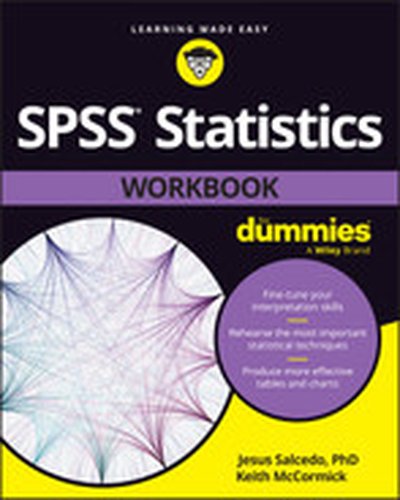
Practice making sense of data with IBM’s SPSS Statistics software SPSS Statistics Workbook For Dummies gives you the practice you need to navigate the leading statistical software suite. Data management and analysis, advanced analytics, business intelligence—SPSS is a powerhouse of a research platform, and this book helps you master the fundamentals and analyze data more effectively. You’ll work through practice problems that help you understand the calculations you need to perform, complete predictive analyses, and produce informative graphs. This workbook gives you hands-on exercises to hone your statistical analysis skills with SPSS Statistics 28. Plus, explanations and insider tips help you navigate the software with ease. Practical and easy-to-understand, in classic Dummies style. Practice organizing, analyzing, and graphing data Learn to write, edit, and format SPSS syntax Explore the upgrades and features new to SPSS 28 Try your hand at advanced data analysis procedures For academics using SPSS for research, business analysts and market researchers looking to extract valuable insights from data, and anyone with a hankering for more stats practice.

Summary

Feature engineering is a crucial aspect of the machine learning workflow. To make that possible, there are a number of technical and procedural capabilities that must be in place first. In this episode Razi Raziuddin shares how data engineering teams can support the machine learning workflow through the development and support of systems that empower data scientists and ML engineers to build and maintain their own features.

Announcements

Hello and welcome to the Data Engineering Podcast, the show about modern data management Introducing RudderStack Profiles. RudderStack Profiles takes the SaaS guesswork and SQL grunt work out of building complete customer profiles so you can quickly ship actionable, enriched data to every downstream team. You specify the customer traits, then Profiles runs the joins and computations for you to create complete customer profiles. Get all of the details and try the new product today at dataengineeringpodcast.com/rudderstack Your host is Tobias Macey and today I'm interviewing Razi Raziuddin about how data engineers can empower data scientists to develop and deploy better ML models through feature engineering

Interview

Introduction How did you get involved in the area of data management? What is feature engineering is and why/to whom it matters?

A topic that commonly comes up in relation to feature engineering is the importance of a feature store. What are the tradeoffs for that to be a separate infrastructure/architecture component?

What is the overall lifecycle of a feature, from definition to deployment and maintenance?

How is this distinct from other forms of data pipeline development and delivery? Who are the participants in that workflow?

What are the sharp edges/roadblocks that typically manifest in that lifecycle? What are the interfaces that are needed for data scientists/ML engineers to be able to self-serve their feature management?

What is the role of the data engineer in supporting those interfaces? What are the communication/collaboration channels that are necessary to make the overall process a success?

From an implementation/architecture perspective, what are the patterns that you have seen teams build around for feature development/serving? What are the most interesting, innovative, or unexpected ways that you have seen feature platforms used? What are the most interesting, unexpected, or challenging lessons that you have learned while working on feature engineering? What are the resources that you find most helpful in understanding and designing feature platforms?

Contact Info

LinkedIn

Parting Question

From your perspective, what is the biggest gap in the tooling or technology for data management today?

Closing Announcements

Thank you for listening! Don't forget to check out our other shows. Podcast.init covers the Python language, its community, and the innovative ways it is being used. The Machine Learning Podcast helps you go from idea to production with machine learning. Visit the site to subscribe to the show, sign up for the mailing list, and read the show notes. If you've learned something or tried out a project from the show then tell us about it! Email [email protected]) with your story. To help other people find the show please leave a review on Apple Podcasts and tell your friends and co-workers

Links

FeatureByte DataRobot Feature Store Feast Feature Store Feathr Kaggle Yann LeCun

The intro and outro music is from The Hug by The Freak Fandango Orchestra / CC BY-SA Sponsored By: Rudderstack: Rudderstack

Introducing RudderStack Profiles. RudderStack Profiles takes the SaaS guesswork and SQL grunt work out of building complete customer profiles so you can quickly ship actionable, enriched data to every downstream team. You specify the customer traits, then Profiles runs the joins and computations fo

Geospatial Data Analytics on AWS

In "Geospatial Data Analytics on AWS," you will learn how to store, manage, and analyze geospatial data effectively using various AWS services. This book provides insight into building geospatial data lakes, leveraging AWS databases, and applying best practices to derive insights from spatial data in the cloud. What this Book will help me do Design and manage geospatial data lakes on AWS leveraging S3 and other storage solutions. Analyze geospatial data using AWS services such as Athena and Redshift. Utilize machine learning models for geospatial data processing and analytics using SageMaker. Visualize geospatial data through services like Amazon QuickSight and OpenStreetMap integration. Avoid common pitfalls when managing geospatial data in the cloud. Author(s) Scott Bateman, Janahan Gnanachandran, and Jeff DeMuth bring their extensive experience in cloud computing and geospatial analytics to this book. With backgrounds in cloud architecture, data science, and geospatial applications, they aim to make complex topics accessible. Their collaborative approach ensures readers can practically apply concepts to real-world challenges. Who is it for? This book is ideal for GIS and data professionals, including developers, analysts, and scientists. It suits readers with a basic understanding of geographical concepts but no prior AWS experience. If you're aiming to enhance your cloud-based geospatial data management and analytics skills, this is the guide for you.

Summary

Data transformation is a key activity for all of the organizational roles that interact with data. Because of its importance and outsized impact on what is possible for downstream data consumers it is critical that everyone is able to collaborate seamlessly. SQLMesh was designed as a unifying tool that is simple to work with but powerful enough for large-scale transformations and complex projects. In this episode Toby Mao explains how it works, the importance of automatic column-level lineage tracking, and how you can start using it today.

Announcements

Hello and welcome to the Data Engineering Podcast, the show about modern data management RudderStack helps you build a customer data platform on your warehouse or data lake. Instead of trapping data in a black box, they enable you to easily collect customer data from the entire stack and build an identity graph on your warehouse, giving you full visibility and control. Their SDKs make event streaming from any app or website easy, and their extensive library of integrations enable you to automatically send data to hundreds of downstream tools. Sign up free at dataengineeringpodcast.com/rudderstack- Your host is Tobias Macey and today I'm interviewing Toby Mao about SQLMesh, an open source DataOps framework designed to scale data transformations with ease of collaboration and validation built in

Interview

Introduction How did you get involved in the area of data management? Can you describe what SQLMesh is and the story behind it?

DataOps is a term that has been co-opted and overloaded. What are the concepts that you are trying to convey with that term in the context of SQLMesh?

What are the rough edges in existing toolchains/workflows that you are trying to address with SQLMesh?

How do those rough edges impact the productivity and effectiveness of teams using those

Can you describe how SQLMesh is implemented?

How have the design and goals evolved since you first started working on it?

What are the lessons that you have learned from dbt which have informed the design and functionality of SQLMesh? For teams who have already invested in dbt, what is the migration path from or integration with dbt? You have some built-in integration with/awareness of orchestrators (currently Airflow). What are the benefits of making the transformation tool aware of the orchestrator? What do you see as the potential benefits of integration with e.g. data-diff? What are the second-order benefits of using a tool such as SQLMesh that addresses the more mechanical aspects of managing transformation workfows and the associated dependency chains? What are the most interesting, innovative, or unexpected ways that you have seen SQLMesh used? What are the most interesting, unexpected, or challenging lessons that you have learned while working on SQLMesh? When is SQLMesh the wrong choice? What do you have planned for the future of SQLMesh?

Contact Info

tobymao on GitHub @captaintobs on Twitter Website

Parting Question

From your perspective, what is the biggest gap in the tooling or technology for data management today?

Closing Announcements

Thank you for listening! Don't forget to check out our other shows. Podcast.init covers the Python language, its community, and the innovative ways it is being used. The Machine Learning Podcast helps you go from idea to production with machine learning. Visit the site to subscribe to the show, sign up for the mailing list, and read the show notes. If you've learned something or tried out a project from the show then tell us about it! Email [email protected]) with your story. To help other people find the show please leave a review on Apple Podcasts and tell your friends and co-workers

Links

SQLMesh Tobiko Data SAS AirBnB Minerva SQLGlot Cron AST == Abstract Syntax Tree Pandas Terraform dbt

Podcast Episode

SQLFluff

Podcast.init Episode

The intro and outro music is from The Hug by The Freak Fandango Orc

Summary

Architectural decisions are all based on certain constraints and a desire to optimize for different outcomes. In data systems one of the core architectural exercises is data modeling, which can have significant impacts on what is and is not possible for downstream use cases. By incorporating column-level lineage in the data modeling process it encourages a more robust and well-informed design. In this episode Satish Jayanthi explores the benefits of incorporating column-aware tooling in the data modeling process.

Announcements

Hello and welcome to the Data Engineering Podcast, the show about modern data management RudderStack helps you build a customer data platform on your warehouse or data lake. Instead of trapping data in a black box, they enable you to easily collect customer data from the entire stack and build an identity graph on your warehouse, giving you full visibility and control. Their SDKs make event streaming from any app or website easy, and their extensive library of integrations enable you to automatically send data to hundreds of downstream tools. Sign up free at dataengineeringpodcast.com/rudderstack- Your host is Tobias Macey and today I'm interviewing Satish Jayanthi about the practice and promise of building a column-aware data architecture through intentional modeling

Interview

Introduction How did you get involved in the area of data management? How has the move to the cloud for data warehousing/data platforms influenced the practice of data modeling?

There are ongoing conversations about the continued merits of dimensional modeling techniques in modern warehouses. What are the modeling practices that you have found to be most useful in large and complex data environments?

Can you describe what you mean by the term column-aware in the context of data modeling/data architecture?

What are the capabilities that need to be built into a tool for it to be effectively column-aware?

What are some of the ways that tools like dbt miss the mark in managing large/complex transformation workloads? Column-awareness is obviously critical in the context of the warehouse. What are some of the ways that that information can be fed into other contexts? (e.g. ML, reverse ETL, etc.) What is the importance of embedding column-level lineage awareness into transformation tool vs. layering on top w/ dedicated lineage/metadata tooling? What are the most interesting, innovative, or unexpected ways that you have seen column-aware data modeling used? What are the most interesting, unexpected, or challenging lessons that you have learned while working on building column-aware tooling? When is column-aware modeling the wrong choice? What are some additional resources that you recommend for individuals/teams who want to learn more about data modeling/column aware principles?

Contact Info

LinkedIn

Parting Question

From your perspective, what is the biggest gap in the tooling or technology for data management today?

Closing Announcements

Thank you for listening! Don't forget to check out our other shows. Podcast.init covers the Python language, its community, and the innovative ways it is being used. The Machine Learning Podcast helps you go from idea to production with machine learning. Visit the site to subscribe to the show, sign up for the mailing list, and read the show notes. If you've learned something or tried out a project from the show then tell us about it! Email [email protected]) with your story. To help other people find the show please leave a review on Apple Podcasts and tell your friends and co-workers

Links

Coalesce

Podcast Episode

Star Schema Conformed Dimensions Data Vault

The intro and outro music is from The Hug by The Freak Fandango Orchestra / CC BY-SA Sponsored By: Rudderstack: Rudderstack

RudderStack provides all your customer data pipeli

Summary

Data engineering is all about building workflows, pipelines, systems, and interfaces to provide stable and reliable data. Your data can be stable and wrong, but then it isn't reliable. Confidence in your data is achieved through constant validation and testing. Datafold has invested a lot of time into integrating with the workflow of dbt projects to add early verification that the changes you are making are correct. In this episode Gleb Mezhanskiy shares some valuable advice and insights into how you can build reliable and well-tested data assets with dbt and data-diff.

Announcements

Hello and welcome to the Data Engineering Podcast, the show about modern data management RudderStack helps you build a customer data platform on your warehouse or data lake. Instead of trapping data in a black box, they enable you to easily collect customer data from the entire stack and build an identity graph on your warehouse, giving you full visibility and control. Their SDKs make event streaming from any app or website easy, and their extensive library of integrations enable you to automatically send data to hundreds of downstream tools. Sign up free at dataengineeringpodcast.com/rudderstack Your host is Tobias Macey and today I'm interviewing Gleb Mezhanskiy about how to test your dbt projects with Datafold

Interview

Introduction How did you get involved in the area of data management? Can you describe what Datafold is and what's new since we last spoke? (July 2021 and July 2022 about data-diff) What are the roadblocks to data testing/validation that you see teams run into most often?

How does the tooling used contribute to/help address those roadblocks?

What are some of the error conditions/failure modes that data-diff can help identify in a dbt project?

What are some examples of tests that need to be implemented by the engineer?

In your experience working with data teams, what typically constitutes the "staging area" for a dbt project? (e.g. separate warehouse, namespaced tables, snowflake data copies, lakefs, etc.) Given a dbt project that is well tested and has data-diff as part of the validation suite, what are the challenges that teams face in managing the feedback cycle of running those tests? In application development there is the idea of the "testing pyramid", consisting of unit tests, integration tests, system tests, etc. What are the parallels to that in data projects?

What are the limitations of the data ecosystem that make testing a bigger challenge than it might otherwise be?

Beyond test execution, what are the other aspects of data health that need to be included in the development and deployment workflow of dbt projects? (e.g. freshness, time to delivery, etc.) What are the most interesting, innovative, or unexpected ways that you have seen Datafold and/or data-diff used for testing dbt projects? What are the most interesting, unexpected, or challenging lessons that you have learned while working on dbt testing internally or with your customers? When is Datafold/data-diff the wrong choice for dbt projects? What do you have planned for the future of Datafold?

Contact Info

LinkedIn

Closing Announcements

Thank you for listening! Don't forget to check out our other shows. Podcast.init covers the Python language, its community, and the innovative ways it is being used. The Machine Learning Podcast helps you go from idea to production with machine learning. Visit the site to subscribe to the show, sign up for the mailing list, and read the show notes. If you've learned something or tried out a project from the show then tell us about it! Email [email protected]) with your story. To help other people find the show please leave a review on Apple Podcasts and tell your friends and co-workers

Parting Question

From your perspective, what is the biggest gap in the tooling or technology for data management today?

Links

Datafold

Podcast Episode

data-diff

Podcast Episode

db

Summary

A significant portion of the time spent by data engineering teams is on managing the workflows and operations of their pipelines. DataOps has arisen as a parallel set of practices to that of DevOps teams as a means of reducing wasted effort. Agile Data Engine is a platform designed to handle the infrastructure side of the DataOps equation, as well as providing the insights that you need to manage the human side of the workflow. In this episode Tevje Olin explains how the platform is implemented, the features that it provides to reduce the amount of effort required to keep your pipelines running, and how you can start using it in your own team.

Announcements

Hello and welcome to the Data Engineering Podcast, the show about modern data management RudderStack helps you build a customer data platform on your warehouse or data lake. Instead of trapping data in a black box, they enable you to easily collect customer data from the entire stack and build an identity graph on your warehouse, giving you full visibility and control. Their SDKs make event streaming from any app or website easy, and their extensive library of integrations enable you to automatically send data to hundreds of downstream tools. Sign up free at dataengineeringpodcast.com/rudderstack Your host is Tobias Macey and today I'm interviewing Tevje Olin about Agile Data Engine, a platform that combines data modeling, transformations, continuous delivery and workload orchestration to help you manage your data products and the whole lifecycle of your warehouse

Interview

Introduction How did you get involved in the area of data management? Can you describe what Agile Data Engine is and the story behind it? What are some of the tools and architectures that an organization might be able to replace with Agile Data Engine?

How does the unified experience of Agile Data Engine change the way that teams think about the lifecycle of their data? What are some of the types of experiments that are enabled by reduced operational overhead?

What does CI/CD look like for a data warehouse?

How is it different from CI/CD for software applications?

Can you describe how Agile Data Engine is architected?

How have the design and goals of the system changed since you first started working on it? What are the components that you needed to develop in-house to enable your platform goals?

What are the changes in the broader data ecosystem that have had the most influence on your product goals and customer adoption? Can you describe the workflow for a team that is using Agile Data Engine to power their business analytics?

What are some of the insights that you generate to help your customers understand how to improve their processes or identify new opportunities?

In your "about" page it mentions the unique approaches that you take for warehouse automation. How do your practices differ from the rest of the industry? How have changes in the adoption/implementation of ML and AI impacted the ways that your customers exercise your platform? What are the most interesting, innovative, or unexpected ways that you have seen the Agile Data Engine platform used? What are the most interesting, unexpected, or challenging lessons that you have learned while working on Agile Data Engine? When is Agile Data Engine the wrong choice? What do you have planned for the future of Agile Data Engine?

Guest Contact Info

LinkedIn

Parting Question

From your perspective, what is the biggest gap in the tooling or technology for data management today?

About Agile Data Engine

Agile Data Engine unlocks the potential of your data to drive business value - in a rapidly changing world. Agile Data Engine is a DataOps Management platform for designing, deploying, operating and managing data products, and managing the whole lifecycle of a data warehouse. It combines data modeling, transformations, continuous delivery and workload orchestration into the same platform.

Links

Agile Data Engine Bill Inmon Ralph Kimball Snowflake Redshift BigQuery Azure Synapse Airflow

The intro and outro music is from The Hug by The Freak Fandango Orchestra / CC BY-SA Sponsored By: Rudderstack: Rudderstack

RudderStack provides all your customer data pipelines in one platform. You can collect, transform, and route data across your entire stack with its event streaming, ETL, and reverse ETL pipelines.

RudderStack’s warehouse-first approach means it does not store sensitive information, and it allows you to leverage your existing data warehouse/data lake infrastructure to build a single source of truth for every team.

RudderStack also supports real-time use cases. You can Implement RudderStack SDKs once, then automatically send events to your warehouse and 150+ business tools, and you’ll never have to worry about API changes again.

Visit dataengineeringpodcast.com/rudderstack to sign up for free today, and snag a free T-Shirt just for being a Data Engineering Podcast listener.Support Data Engineering Podcast

We talked about:

Bart's background What is data governance? Data dictionaries and data lineage Data access management How to learn about data governance What skills are needed to do data governance effectively When an organization needs to start thinking about data governance Good data access management processes Data masking and the importance of automating data access DPO and CISO roles How data access management works with a data mesh approach Avoiding the role explosion problem The importance of data governance integration in DataOps Terraform as a stepping stone to data governance How Raito can help an organization with data governance Open-source data governance tools

Links:

LinkedIn: https://www.linkedin.com/in/bartvandekerckhove/ Twitter: https://twitter.com/Bart_H_VDK Github: https://github.com/raito-io Website: https://www.raito.io/ Data Mesh Learning Slack: https://data-mesh-learning.slack.com/join/shared_invite/zt-1qs976pm9-ci7lU8CTmc4QD5y4uKYtAA#/shared-invite/email DataQG Website: https://dataqg.com/ DataQG Slack: https://dataqgcommunitygroup.slack.com/join/shared_invite/zt-12n0333gg-iTZAjbOBeUyAwWr8I~2qfg#/shared-invite/email DMBOK (Data Management Book of Knowledge): https://www.dama.org/cpages/body-of-knowledge DMBOK Wheel describing the data governance activities: https://www.dama.org/cpages/dmbok-2-wheel-images

Free MLOps course: https://github.com/DataTalksClub/mlops-zoomcamp

Join DataTalks.Club: https://datatalks.club/slack.html

Our events: https://datatalks.club/events.html

Data Modeling with Snowflake

This comprehensive guide, "Data Modeling with Snowflake", is your go-to resource for mastering the art of efficient data modeling tailored to the capabilities of the Snowflake Data Cloud. In this book, you will learn how to design agile and scalable data solutions by effectively leveraging Snowflake's unique architecture and advanced features. What this Book will help me do Understand the core principles of data modeling and how they apply to Snowflake's cloud-native environment. Learn to use Snowflake's features, such as time travel and zero-copy cloning, to create efficient data solutions. Gain hands-on experience with SQL recipes that outline practical approaches to transforming and managing Snowflake data. Discover techniques for modeling structured and semi-structured data for real-world business needs. Learn to integrate universal modeling frameworks like Star Schema and Data Vault into Snowflake implementations for scalability and maintainability. Author(s) The author, Serge Gershkovich, is a seasoned expert in database design and Snowflake architecture. With years of experience in the data management field, Serge has dedicated himself to making complex technical subjects approachable to professionals at all levels. His insights in this book are informed by practical applications and real-world experience. Who is it for? This book is targeted at data professionals, ranging from newcomers to database design to seasoned SQL developers seeking to specialize in Snowflake. If you are looking to understand and apply data modeling practices effectively within Snowflake's architecture, this book is for you. Whether you're refining your modeling skills or getting started with Snowflake, it provides the practical knowledge you need to succeed.

Summary

Building a data team is hard in any circumstance, but at a startup it can be even more challenging. The requirements are fluid, you probably don't have a lot of existing data talent to manage the hiring and onboarding, and there is a need to move fast. Ghalib Suleiman has been on both sides of this equation and joins the show to share his hard-won wisdom about how to start and grow a data team in the early days of company growth.

Announcements

Hello and welcome to the Data Engineering Podcast, the show about modern data management RudderStack helps you build a customer data platform on your warehouse or data lake. Instead of trapping data in a black box, they enable you to easily collect customer data from the entire stack and build an identity graph on your warehouse, giving you full visibility and control. Their SDKs make event streaming from any app or website easy, and their extensive library of integrations enable you to automatically send data to hundreds of downstream tools. Sign up free at dataengineeringpodcast.com/rudderstack Your host is Tobias Macey and today I'm interviewing Ghalib Suleiman about challenges and strategies for building data teams in a startup

Interview

Introduction How did you get involved in the area of data management? Can you start by sharing your conception of the responsibilities of a data team? What are some of the common fallacies that organizations fall prey to in their first efforts at building data capabilities?

Have you found it more practical to hire outside talent to build out the first data systems, or grow that talent internally? What are some of the resources you have found most helpful in training/educating the early creators and consumers of data assets?

When there is no internal data talent to assist with hiring, what are some of the problems that manifest in the hiring process?

What are the concepts that the new hire needs to know? How much does the hiring manager/interviewer need to know about those concepts to evaluate skill?

What are the most critical skills for a first hire to have to start generating valuable output? As a solo data person, what are the uphill battles that they need to be prepared for in the organization?

What are the rabbit holes that they should beware of?

What are some of the tactical What are the most interesting, innovative, or unexpected ways that you have seen initial data hires tackle startup challenges? What are the most interesting, unexpected, or challenging lessons that you have learned while working on starting and growing data teams? When is it more practical to outsource the data work?

Contact Info

LinkedIn @ghalib on Twitter

Parting Question

From your perspective, what is the biggest gap in the tooling or technology for data management today?

Closing Announcements

Thank you for listening! Don't forget to check out our other shows. Podcast.init covers the Python language, its community, and the innovative ways it is being used. The Machine Learning Podcast helps you go from idea to production with machine learning. Visit the site to subscribe to the show, sign up for the mailing list, and read the show notes. If you've learned something or tried out a project from the show then tell us about it! Email [email protected]) with your story. To help other people find the show please leave a review on Apple Podcasts and tell your friends and co-workers

Links

Polytomic

The intro and outro music is from The Hug by The Freak Fandango Orchestra / CC BY-SA Sponsored By: Rudderstack: Rudderstack

RudderStack provides all your customer data pipelines in one platform. You can collect, transform, and route data across your entire stack with its event streaming, ETL, and reverse ETL pipelines.

RudderStack’s warehouse-first approach means it does not store sensitive information, and i

There’s so much hype surrounding data products that you have to wonder if it’s just another buzzword. But there’s more to data products than buzz. In this article, you’ll learn how the concept is a meaningful step forward in the art and science of data management. Published at: https://www.eckerson.com/articles/best-practices-for-developing-and-scaling-data-products

Summary

Batch vs. streaming is a long running debate in the world of data integration and transformation. Proponents of the streaming paradigm argue that stream processing engines can easily handle batched workloads, but the reverse isn't true. The batch world has been the default for years because of the complexities of running a reliable streaming system at scale. In order to remove that barrier, the team at Estuary have built the Gazette and Flow systems from the ground up to resolve the pain points of other streaming engines, while providing an intuitive interface for data and application engineers to build their streaming workflows. In this episode David Yaffe and Johnny Graettinger share the story behind the business and technology and how you can start using it today to build a real-time data lake without all of the headache.

Announcements

Hello and welcome to the Data Engineering Podcast, the show about modern data management RudderStack helps you build a customer data platform on your warehouse or data lake. Instead of trapping data in a black box, they enable you to easily collect customer data from the entire stack and build an identity graph on your warehouse, giving you full visibility and control. Their SDKs make event streaming from any app or website easy, and their extensive library of integrations enable you to automatically send data to hundreds of downstream tools. Sign up free at dataengineeringpodcast.com/rudderstack Your host is Tobias Macey and today I'm interviewing David Yaffe and Johnny Graettinger about using streaming data to build a real-time data lake and how Estuary gives you a single path to integrating and transforming your various sources

Interview

Introduction How did you get involved in the area of data management? Can you describe what Estuary is and the story behind it? Stream processing technologies have been around for around a decade. How would you characterize the current state of the ecosystem?

What was missing in the ecosystem of streaming engines that motivated you to create a new one from scratch?

With the growth in tools that are focused on batch-oriented data integration and transformation, what are the reasons that an organization should still invest in streaming?

What is the comparative level of difficulty and support for these disparate paradigms?

What is the impact of continuous data flows on dags/orchestration of transforms? What role do modern table formats have on the viability of real-time data lakes? Can you describe the architecture of your Flow platform?

What are the core capabilities that you are optimizing for in its design?

What is involved in getting Flow/Estuary deployed and integrated with an organization's data systems? What does the workflow look like for a team using Estuary?

How does it impact the overall system architecture for a data platform as compared to other prevalent paradigms?

How do you manage the translation of poll vs. push availability and best practices for API and other non-CDC sources? What are the most interesting, innovative, or unexpected ways that you have seen Estuary used? What are the most interesting, unexpected, or challenging lessons that you have learned while working on Estuary? When is Estuary the wrong choice? What do you have planned for the future of Estuary?

Contact Info

Dave Y Johnny G

Parting Question

From your perspective, what is the biggest gap in the tooling or technology for data management today?

Closing Announcements

Thank you for listening! Don't forget to check out our other shows. Podcast.init covers the Python language, its community, and the innovative ways it is being used. The Machine Learning Podcast helps you go from idea to production with machine learning. Visit the site to subscribe to the show, sign up for the mailing list, and read the show notes. If you've learned something or tried out a project from the show then tell us about it! Email hosts@dataengineeringpodcas

Summary

All of the advancements in our technology is based around the principles of abstraction. These are valuable until they break down, which is an inevitable occurrence. In this episode the host Tobias Macey shares his reflections on recent experiences where the abstractions leaked and some observances on how to deal with that situation in a data platform architecture.

Announcements

Hello and welcome to the Data Engineering Podcast, the show about modern data management RudderStack helps you build a customer data platform on your warehouse or data lake. Instead of trapping data in a black box, they enable you to easily collect customer data from the entire stack and build an identity graph on your warehouse, giving you full visibility and control. Their SDKs make event streaming from any app or website easy, and their extensive library of integrations enable you to automatically send data to hundreds of downstream tools. Sign up free at dataengineeringpodcast.com/rudderstack Your host is Tobias Macey and today I'm sharing some thoughts and observances about abstractions and impedance mismatches from my experience building a data lakehouse with an ELT workflow

Interview

Introduction impact of community tech debt

hive metastore new work being done but not widely adopted

tensions between automation and correctness data type mapping

integer types complex types naming things (keys/column names from APIs to databases)

disaggregated databases - pros and cons

flexibility and cost control not as much tooling invested vs. Snowflake/BigQuery/Redshift

data modeling

dimensional modeling vs. answering today's questions

What are the most interesting, unexpected, or challenging lessons that you have learned while working on your data platform? When is ELT the wrong choice? What do you have planned for the future of your data platform?

Contact Info

LinkedIn

Parting Question

From your perspective, what is the biggest gap in the tooling or technology for data management today?

Closing Announcements

Thank you for listening! Don't forget to check out our other shows. Podcast.init covers the Python language, its community, and the innovative ways it is being used. The Machine Learning Podcast helps you go from idea to production with machine learning. Visit the site to subscribe to the show, sign up for the mailing list, and read the show notes. If you've learned something or tried out a project from the show then tell us about it! Email [email protected]) with your story. To help other people find the show please leave a review on Apple Podcasts and tell your friends and co-workers

Links

dbt Airbyte

Podcast Episode

Dagster

Podcast Episode

Trino

Podcast Episode

ELT Data Lakehouse Snowflake BigQuery Redshift Technical Debt Hive Metastore AWS Glue

The intro and outro music is from The Hug by The Freak Fandango Orchestra / CC BY-SA Sponsored By: Rudderstack: Rudderstack

RudderStack provides all your customer data pipelines in one platform. You can collect, transform, and route data across your entire stack with its event streaming, ETL, and reverse ETL pipelines.

RudderStack’s warehouse-first approach means it does not store sensitive information, and it allows you to leverage your existing data warehouse/data lake infrastructure to build a single source of truth for every team.

RudderStack also supports real-time use cases. You can Implement RudderStack SDKs once, then automatically send events to your warehouse and 150+ business tools, and you’ll never have to worry about API changes again.

Visit dataengineeringpodcast.com/rudderstack to sign up for free today, and snag a free T-Shirt just for being a Data Engineering Podcast listener.Support Data Engineering Podcast

Cubing and Metrics in SQL, Oh My!

ABOUT THE TALK Apache Calcite has extended SQL to support metrics (which we call ‘measures’), filter context, and analytic expressions. With these concepts you can define data models (which we call Analytic Views) that contain metrics, use them in queries, and define new metrics in queries.

This talk, hosted by the original developer of Apache Calcite describes the SQL syntax extensions for metrics, and how to use them for cross-dimensional calculations such as period-over-period, percent-of-total, non-additive and semi-additive measures. It details how we got around fundamental limitations in SQL semantics, and approaches for optimizing queries that use metrics.

ABOUT THE SPEAKER Julian Hyde is the original developer of Apache Calcite, an open source framework for building data management systems, and Morel, a functional query language. Previously he created Mondrian, an analytics engine, and SQLstream, an engine for continuous queries. He is a staff engineer at Google, where he works on Looker and BigQuery.

ABOUT DATA COUNCIL: Data Council (https://www.datacouncil.ai/) is a community and conference series that provides data professionals with the learning and networking opportunities they need to grow their careers.

Make sure to subscribe to our channel for the most up-to-date talks from technical professionals on data related topics including data infrastructure, data engineering, ML systems, analytics and AI from top startups and tech companies.

FOLLOW DATA COUNCIL: Twitter: https://twitter.com/DataCouncilAI LinkedIn: https://www.linkedin.com/company/datacouncil-ai/

Building an ML Experimentation Platform for Easy Reproducibility | Treeverse

ABOUT THE TALK: Quality ML at scale is only possible when we can reproduce a specific iteration of the ML experiment–and this is where data is key.

In this talk, you will learn how to use a data versioning engine to intuitively and easily version your ML experiments and reproduce any specific iteration of the experiment.

This talk will demo through a live code example: -Creating a basic ML experimentation framework with lakeFS (on Jupyter notebook) -Reproducing ML components from a specific iteration of an experiment Building intuitive, zero-maintenance experiments infrastructure -All with common data engineering stacks & open source tooling.

ABOUT THE SPEAKER: Vino Duraisamy is a developer advocate at lakeFS, an open-source platform that delivers git-like experience to object store based data lakes. She has previously worked at NetApp (on data management applications for NetApp data centers), on data teams of Nike and Apple, where she worked mainly on batch processing workloads as a data engineer, built custom NLP models as an ML engineer and even touched upon MLOps a bit for model deployments.

ABOUT DATA COUNCIL: Data Council (https://www.datacouncil.ai/) is a community and conference series that provides data professionals with the learning and networking opportunities they need to grow their careers.

Make sure to subscribe to our channel for the most up-to-date talks from technical professionals on data related topics including data infrastructure, data engineering, ML systems, analytics and AI from top startups and tech companies.

FOLLOW DATA COUNCIL: Twitter: https://twitter.com/DataCouncilAI LinkedIn: https://www.linkedin.com/company/datacouncil-ai/

Building a Control Plane for Data | Acryl

ABOUT THE TALK: This talk explains what the control plane of data looks like and how it fits into the reference architecture for the deconstructed data stack: a data stack that includes operational data stores, streaming systems, transformation engines, BI tools, warehouses, ML tools and orchestrators.

It dives into the fundamental characteristics for a control plane:

Breadth (completeness) Latency (freshness) Scale Source of Truth Auditability

ABOUT THE SPEAKER: Shirshanka Das is the Co-founder and CEO of Acryl Data, the company which is commercializing the open source DataHub project, a real-time metadata platform used by LinkedIn, Stripe, Pinterest, Optum, Expedia and many others. Prior to founding Acryl, he was the overall architect for Big Data at LinkedIn from 2010 to 2020, and responsible for creating the metadata and data management strategy at the company.

ABOUT DATA COUNCIL: Data Council (https://www.datacouncil.ai/) is a community and conference series that provides data professionals with the learning and networking opportunities they need to grow their careers.

Make sure to subscribe to our channel for the most up-to-date talks from technical professionals on data related topics including data infrastructure, data engineering, ML systems, analytics and AI from top startups and tech companies.

FOLLOW DATA COUNCIL: Twitter: https://twitter.com/DataCouncilAI LinkedIn: https://www.linkedin.com/company/datacouncil-ai

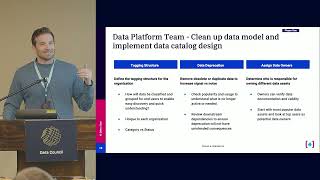
Modern Data Management   How to Set Your Data Team Up for Success | Select Star

ABOUT THE TALK: Got your Modern Data Stack setup, now what? A mature data practice goes beyond setting up the data pipeline, and ensures there are both systems and processes in place to make it easy for everyone to find and understand data.

Learn how Select Star enables data discovery, making knowledge searchable and understandable for all. Uncover best practices for setting up a data discovery portal as your single source of truth.

ABOUT THE SPEAKER: Alec Bialosky is currently the Director of Business Operations at Select Star where he spends the majority of his time working with prospects and customers to help them achieve their data discovery goals with Select Star.

ABOUT DATA COUNCIL: Data Council (https://www.datacouncil.ai/) is a community and conference series that provides data professionals with the learning and networking opportunities they need to grow their careers.

Make sure to subscribe to our channel for the most up-to-date talks from technical professionals on data related topics including data infrastructure, data engineering, ML systems, analytics and AI from top startups and tech companies.

FOLLOW DATA COUNCIL: Twitter: https://twitter.com/DataCouncilAI LinkedIn: https://www.linkedin.com/company/data...

Summary

Every business has customers, and a critical element of success is understanding who they are and how they are using the companies products or services. The challenge is that most companies have a multitude of systems that contain fragments of the customer's interactions and stitching that together is complex and time consuming. Segment created the Unify product to reduce the burden of building a comprehensive view of customers and synchronizing it to all of the systems that need it. In this episode Kevin Niparko and Hanhan Wang share the details of how it is implemented and how you can use it to build and maintain rich customer profiles.

Announcements

Hello and welcome to the Data Engineering Podcast, the show about modern data management RudderStack helps you build a customer data platform on your warehouse or data lake. Instead of trapping data in a black box, they enable you to easily collect customer data from the entire stack and build an identity graph on your warehouse, giving you full visibility and control. Their SDKs make event streaming from any app or website easy, and their extensive library of integrations enable you to automatically send data to hundreds of downstream tools. Sign up free at dataengineeringpodcast.com/rudderstack Your host is Tobias Macey and today I'm interviewing Kevin Niparko and Hanhan Wang about Segment's new Unify product for building and syncing comprehensive customer profiles across your data systems

Interview

Introduction How did you get involved in the area of data management? Can you describe what Segment Unify is and the story behind it? What are the net-new capabilities that it brings to the Segment product suite? What are some of the categories of attributes that need to be managed in a prototypical customer profile? What are the different use cases that are enabled/simplified by the availability of a comprehensive customer profile?

What is the potential impact of more detailed customer profiles on LTV?

How do you manage permissions/auditability of updating or amending profile data? Can you describe how the Unify product is implemented?

What are the technical challenges that you had to address while developing/launching this product?

What is the workflow for a team who is adopting the Unify product?

What are the other Segment products that need to be in use to take advantage of Unify?

What are some of the most complex edge cases to address in identity resolution? How does reverse ETL factor into the enrichment process for profile data? What are some of the issues that you have to account for in synchronizing profiles across platforms/products?

How do you mititgate the impact of "regression to the mean" for systems that don't support all of the attributes that you want to maintain in a profile record?

What are some of the data modeling considerations that you have had to account for to support e.g. historical changes (e.g. slowly changing dimensions)? What are the most interesting, innovative, or unexpected ways that you have seen Segment Unify used? What are the most interesting, unexpected, or challenging lessons that you have learned while working on Segment Unify? When is Segment Unify the wrong choice? What do you have planned for the future of Segment Unify?

Contact Info

Kevin

LinkedIn Blog

Hanhan

LinkedIn

Parting Question

From your perspective, what is the biggest gap in the tooling or technology for data management today?

Closing Announcements

Thank you for listening! Don't forget to check out our other shows. Podcast.init covers the Python language, its community, and the innovative ways it is being used. The Machine Learning Podcast helps you go from idea to production with machine learning. Visit the site to subscribe to the show, sign up for the mailing list, and read the show notes. If you've learned something or tried out a project from the show then tell us about it! Email [email protected]) with your