Welcome to DataFramed Industry Roundups! In this series of episodes, Adel & Richie sit down to discuss the latest and greatest in data & AI. In this episode, we touch upon AI agents for data work, will the full-stack data scientist make a return, old languages making a comeback, Python's increase in performance, what they're both thankful for, and much more. Links Mentioned in the Show Fractal’s Data Science Agent: AryaArticle: What Makes a True AI Agent? Rethinking the Pursuit of AutonomyCassie Kozyrkov on DataFramedTIOBE Index for November 2024Community discussion on FortranTutorial: High Performance Data Manipulation in Python: pandas 2.0 vs. polars New to DataCamp? Learn on the go using the DataCamp mobile appEmpower your business with world-class data and AI skills with DataCamp for business
 talk-data.com
Topic
Data Science
1516
tagged
Activity Trend
Top Events
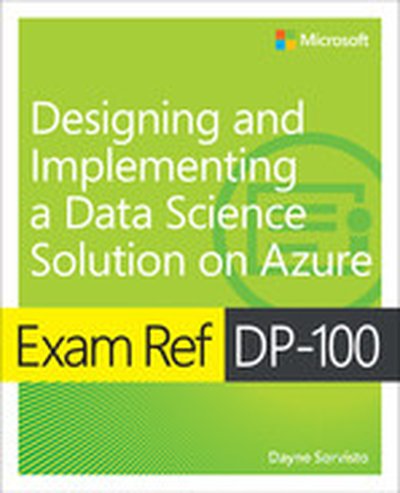
Prepare for Microsoft Exam DP-100 and demonstrate your real-world knowledge of managing data ingestion and preparation, model training and deployment, and machine learning solution monitoring with Python, Azure Machine Learning, and MLflow. Designed for professionals with data science experience, this Exam Ref focuses on the critical thinking and decision-making acumen needed for success at the Microsoft Certified: Azure Data Scientist Associate level. Focus on the expertise measured by these objectives: Design and prepare a machine learning solution Explore data and train models Prepare a model for deployment Deploy and retrain a model This Microsoft Exam Ref: Organizes its coverage by exam objectives Features strategic, what-if scenarios to challenge you Assumes you have experience in designing and creating a suitable working environment for data science workloads, training machine learning models, and managing, deploying, and monitoring scalable machine learning solutions About the Exam Exam DP-100 focuses on knowledge needed to design and prepare a machine learning solution, manage an Azure Machine Learning workspace, explore data and train models, create models by using the Azure Machine Learning designer, prepare a model for deployment, manage models in Azure Machine Learning, deploy and retrain a model, and apply machine learning operations (MLOps) practices. About Microsoft Certification Passing this exam fulfills your requirements for the Microsoft Certified: Azure Data Scientist Associate credential, demonstrating your expertise in applying data science and machine learning to implement and run machine learning workloads on Azure, including knowledge and experience using Azure Machine Learning and MLflow.
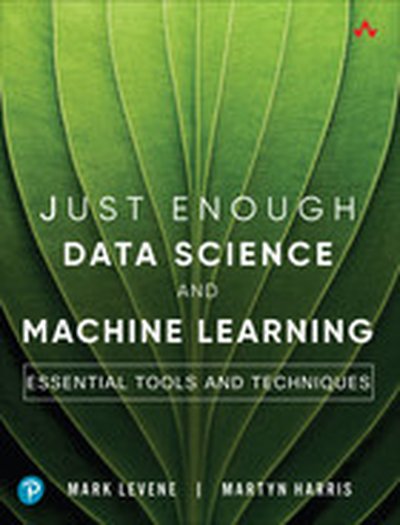
An accessible introduction to applied data science and machine learning, with minimal math and code required to master the foundational and technical aspects of data science. In Just Enough Data Science and Machine Learning, authors Mark Levene and Martyn Harris present a comprehensive and accessible introduction to data science. It allows the readers to develop an intuition behind the methods adopted in both data science and machine learning, which is the algorithmic component of data science involving the discovery of patterns from input data. This book looks at data science from an applied perspective, where emphasis is placed on the algorithmic aspects of data science and on the fundamental statistical concepts necessary to understand the subject. The book begins by exploring the nature of data science and its origins in basic statistics. The authors then guide readers through the essential steps of data science, starting with exploratory data analysis using visualisation tools. They explain the process of forming hypotheses, building statistical models, and utilising algorithmic methods to discover patterns in the data. Finally, the authors discuss general issues and preliminary concepts that are needed to understand machine learning, which is central to the discipline of data science. The book is packed with practical examples and real-world data sets throughout to reinforce the concepts. All examples are supported by Python code external to the reading material to keep the book timeless. Notable features of this book: Clear explanations of fundamental statistical notions and concepts Coverage of various types of data and techniques for analysis In-depth exploration of popular machine learning tools and methods Insight into specific data science topics, such as social networks and sentiment analysis Practical examples and case studies for real-world application Recommended further reading for deeper exploration of specific topics. ....
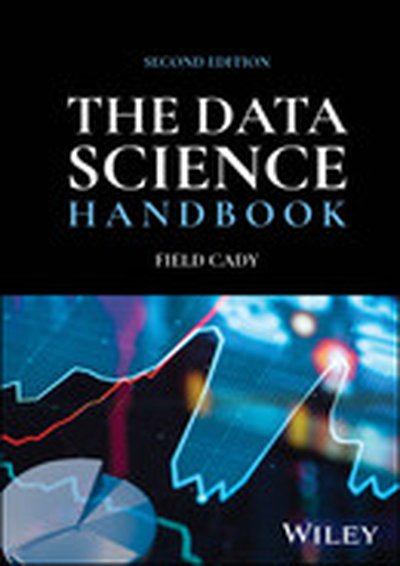
Practical, accessible guide to becoming a data scientist, updated to include the latest advances in data science and related fields. Becoming a data scientist is hard. The job focuses on mathematical tools, but also demands fluency with software engineering, understanding of a business situation, and deep understanding of the data itself. This book provides a crash course in data science, combining all the necessary skills into a unified discipline. The focus of The Data Science Handbook is on practical applications and the ability to solve real problems, rather than theoretical formalisms that are rarely needed in practice. Among its key points are: An emphasis on software engineering and coding skills, which play a significant role in most real data science problems. Extensive sample code, detailed discussions of important libraries, and a solid grounding in core concepts from computer science (computer architecture, runtime complexity, and programming paradigms). A broad overview of important mathematical tools, including classical techniques in statistics, stochastic modeling, regression, numerical optimization, and more. Extensive tips about the practical realities of working as a data scientist, including understanding related jobs functions, project life cycles, and the varying roles of data science in an organization. Exactly the right amount of theory. A solid conceptual foundation is required for fitting the right model to a business problem, understanding a tool’s limitations, and reasoning about discoveries. Data science is a quickly evolving field, and this 2nd edition has been updated to reflect the latest developments, including the revolution in AI that has come from Large Language Models and the growth of ML Engineering as its own discipline. Much of data science has become a skillset that anybody can have, making this book not only for aspiring data scientists, but also for professionals in other fields who want to use analytics as a force multiplier in their organization.
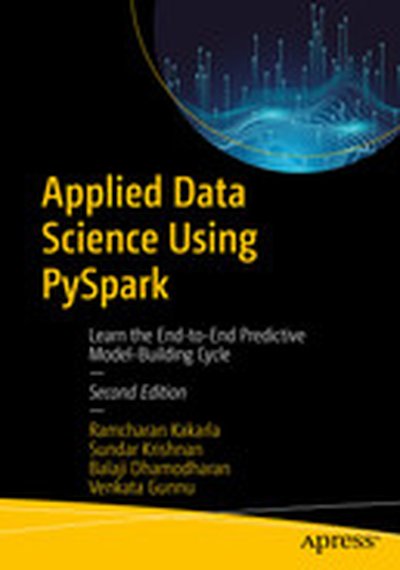
This comprehensive guide, featuring hand-picked examples of daily use cases, will walk you through the end-to-end predictive model-building cycle using the latest techniques and industry tricks. In Chapters 1, 2, and 3, we will begin by setting up the environment and covering the basics of PySpark, focusing on data manipulation. Chapter 4 delves into the art of variable selection, demonstrating various techniques available in PySpark. In Chapters 5, 6, and 7, we explore machine learning algorithms, their implementations, and fine-tuning techniques. Chapters 8 and 9 will guide you through machine learning pipelines and various methods to operationalize and serve models using Docker/API. Chapter 10 will demonstrate how to unlock the power of predictive models to create a meaningful impact on your business. Chapter 11 introduces some of the most widely used and powerful modeling frameworks to unlock real value from data. In this new edition, you will learn predictive modeling frameworks that can quantify customer lifetime values and estimate the return on your predictive modeling investments. This edition also includes methods to measure engagement and identify actionable populations for effective churn treatments. Additionally, a dedicated chapter on experimentation design has been added, covering steps to efficiently design, conduct, test, and measure the results of your models. All code examples have been updated to reflect the latest stable version of Spark. You will: Gain an overview of end-to-end predictive model building Understand multiple variable selection techniques and their implementations Learn how to operationalize models Perform data science experiments and learn useful tips
Conversamos com o pessoal da Ambev Tech e exploramos como a Ambev, uma das gigantes do setor de bebidas, está revolucionando seus negócios por meio do uso estratégico de dados e inteligência artificial, destacando o impacto transformador dessas tecnologias em suas operações.
Neste episódio do Data Hackers — a maior comunidade de AI e Data Science do Brasil-, conheçam quatro profissionais que estão na linha de frente dessa transformação: Felipe Contratres (Contra), Diretor de Dados & IA at Ambev Tech; Maria Clara Castro , Cientista de Dados Senior at Ambev Tech; Mario Vieira, Diretor de Dados & IA at Ambev Tech; e Leonardo Rigueto, Diretor de Dados & IA B2B at Ambev Tech; em uma conversa rica em insights, com exemplos práticos de como a inteligência artificial está remodelando operações comerciais e fortalecendo a estratégia de negócios da Ambev.
Falamos no episódio
Lembrando que você pode encontrar todos os podcasts da comunidade Data Hackers no Spotify, iTunes, Google Podcast, Castbox e muitas outras plataformas.
Felipe Contratres (Contra) — Diretor de Dados & IA at Ambev Tech
Maria Clara Castro — Cientista de Dados Senior at Ambev Tech
Mario Vieira — Diretor de Dados & IA at Ambev Tech
Leonardo Rigueto — Diretor de Dados & IA B2B at Ambev Tech
Nossa Bancada Data Hackers:
Paulo Vasconcellos — Co-founder da Data Hackers e Principal Data Scientist na Hotmart.
Monique Femme — Head of Community Management na Data Hackers
Gabriel Lages — Co-founder da Data Hackers e Data & Analytics Sr. Director na Hotmart.
Referências:
Preencha a pesquisa State of Data Brazil: https://www.stateofdata.com.br/podcast
A do Campo ao Copo: Como os Dados Estão Transformando a Produção de Cerveja na Ambev: https://www.youtube.com/watch?v=mvCBMR6huWs
Vagas na Ambev:
Engenharia de Dados: https://ambevtech.gupy.io/jobs/6522861?jobBoardSource=gupy_public_page
Ciência de Dados: https://ambevtech.gupy.io/jobs/4578067?jobBoardSource=gupy_public_page
Azure Databricks enhances the lakehouse experience in Azure by seamlessly integrating data and AI solutions for faster value. Catalog data, schema, and tables in Unity Catalog are readily available, supporting data engineering, data science, real-time intelligence, and optimized performance, delivering blazing fast insights with Power BI.
𝗦𝗽𝗲𝗮𝗸𝗲𝗿𝘀: * Lindsey Allen * Robert Saxby
𝗦𝗲𝘀𝘀𝗶𝗼𝗻 𝗜𝗻𝗳𝗼𝗿𝗺𝗮𝘁𝗶𝗼𝗻: This is one of many sessions from the Microsoft Ignite 2024 event. View even more sessions on-demand and learn about Microsoft Ignite at https://ignite.microsoft.com
BRK203 | English (US) | Data
MSIgnite
R&D for materials-based products can be expensive, because improving a product’s materials takes a lot of experimentation that historically has been slow to execute. In traditional labs, you might change one variable, re-run your experiment, and see if the data shows improvements in your desired attributes (e.g. strength, shininess, texture/feel, power retention, temperature, stability, etc.). However, today, there is a way to leverage machine learning and AI to reduce the number of experiments a material scientist needs to run to gain the improvements they seek. Materials scientists spend a lot of time in the lab—away from a computer screen—so how do you design a desirable informatics SAAS that actually works, and fits into the workflow of these end users?
As the Chief Product Officer at MaterialsZone, Ori Yudilevich came on Experiencing Data with me to talk about this challenge and how his PM, UX, and data science teams work together to produce a SAAS product that makes the benefits of materials informatics so valuable that materials scientists depend on their solution to be time and cost-efficient with their R&D efforts.
We covered:
(0:45) Explaining what Ori does at MaterialZone and who their product serves (2:28) How Ori and his team help make material science testing more efficient through their SAAS product (9:37) How they design a UX that can work across various scientific domains (14:08) How “doing product” at MaterialsZone matured over the past five years (17:01) Explaining the "Wizard of Oz" product development technique (21:09) The importance of integrating UX designers into the "Wizard of Oz" (23:52) The challenges MaterialZone faces when trying to get users to adopt to their product (32:42) Advice Ori would've given himself five years ago (33:53) Where you can find more from MaterialsZone and Ori
Quotes from Today’s Episode
“The fascinating thing about materials science is that you have this variety of domains, but all of these things follow the same process. One of the problems [consumer goods companies] face is that they have to do lengthy testing of their products. This is something you can use machine learning to shorten. [Product research] is an iterative process that typically takes a long time. Using your data effectively and using machine learning to predict what can happen, what’s better to try out, and what will reduce costs can accelerate time to market.” - Ori Yudilevich (3:47) “The difference [in time spent testing a product] can be up to 70% [i.e. you can run 70% fewer experiments using ML.] That [also] means 70% less resources you’re using. Under the ‘old system’ of trial and error, you were just trying out a lot of things. The human mind cannot process a large number of parameters at once, so [a materials scientist] would just start playing only with [one parameter at a time]. You’ll have many experiments where you just try to optimize [for] one parameter, but then you might have 20, 30, or 100 more [to test]. Using machine learning, you can change a lot of parameters at once. The model can learn what has the most effect, what has a positive effect, and what has a negative effect. The differences can be really huge.” - Ori Yudilevich (5:50) “Once you go deeper into a use case, you see that there are a lot of differences. The types of raw materials, the data structure, the quantity of data, etc. For example, with batteries, you have lots of data because you can test hundreds all at once. Whereas with something like ceramics, you don’t try so many [experiments]. You just can’t. It’s much slower. You can’t do so many [experiments] in parallel. You have much less data. Your models are different, and your data structure is different. But there’s also quite a lot of commonality because you’re storing the data. In the end, you have each domain, some raw materials, formulations, tests that you’re doing, and different statistical plots that are very common.” - Ori Yudilvech (11:24) “We’ll typically do what we call the ‘Wizard of Oz’ technique. You simulate as if you have a feature, but you’re actually working for your client behind the scenes. You tell them [the simulated feature] is what you’re doing, but then measure [the client’s response] to understand if there’s any point in further developing that feature. Once you validate it, have enough data, and know where the feature is going, then you’ll start designing it and releasing it in incremental stages. We’ve made a lot of progress in how we discover opportunities and how we build something iteratively to make sure that we’re always going in the right direction” - Ori Yudilevich (15:56) “The main problem we’re encountering is changing the mindset of users. Our users are not people who sit in front of a computer. These are researchers who work in [a materials science] lab. The challenge [we have] is getting people to use the platform more. To see it’s worth [their time] to look at some insights, and run the machine learning models. We’re always looking for ways to make that transition faster… and I think the key is making [the user experience] just fun, easy, and intuitive.” - Ori Yudilevich (24:17) “Even if you make [the user experience] extremely smooth, if [users] don’t see what they get out of it, they’re still not going to [adopt your product] just for the sake of doing it. What we find is if this [product] can actually make them work faster or develop better products– that gets them interested. If you’re adopting these advanced tools, it makes you a better researcher and worker. People who [adopt those tools] grow faster. They become leaders in their team, and they slowly drag the others in.” - Ori Yudilevich (26:55) “Some of [MaterialsZone’s] most valuable employees are the people who have been users. Our product manager is a materials scientist. I’m not a material scientist, and it’s hard to imagine being that person in the lab. What I think is correct turns out to be completely wrong because I just don’t know what it’s like. Having [material scientists] who’ve made the transition to software and data science? You can’t replace that.” - Ori Yudilevich (31:32)
Links Referenced Website: https://www.materials.zone
LinkedIn: https://www.linkedin.com/in/oriyudilevich/
Email: [email protected]
We talked about:
00:00 DataTalks.Club intro
00:00 Large Hadron Collider and Mentorship
02:35 Career overview and transition from physics to data science
07:02 Working at the Large Hadron Collider
09:19 How particles collide and the role of detectors
11:03 Data analysis challenges in particle physics and data science similarities
13:32 Team structure at the Large Hadron Collider
20:05 Explaining the connection between particle physics and data science
23:21 Software engineering practices in particle physics
26:11 Challenges during interviews for data science roles
29:30 Mentoring and offering advice to job seekers
40:03 The STAR method and its value in interviews
50:32 Paid vs unpaid mentorship and finding the right fit
About the speaker:
Anastasia is a particle physicist turned data scientist, with experience in large-scale experiments like those at the Large Hadron Collider. She also worked at Blue Yonder, scaling AI-driven solutions for global supply chain giants, and at Kaufland e-commerce, focusing on NLP and search. Anastasia is a mentor for Ml/AI, dedicated to helping her mentees achieve their goals. She is passionate about growing the next generation of data science elite in Germany: from Data Analysts up to ML Engineers.
Join our Slack: https://datatalks .club/slack.html
Recebemos dois líderes globais do BEES, a plataforma B2B da AB-InBev que tem transformado completamente a forma com que verejistas de todo o mundo fazem suas compras usando tecnologia.
Juntos, nossos convidados compartilharam histórias marcantes de como construiram suas carreiras em dados, dando orientações para quem busca se destacar na área e oportunidades de como se manter à frente em um mercado de dados em constante evolução
Neste episódio do Data Hackers — a maior comunidade de AI e Data Science do Brasil-, conheçam Bruno Vianna — Diretor Global de BEES Personalization; e Daniel Casares — Diretor Global de Data & Analytics no BEES ; para uma conversa inspiradora sobre tecnologia, dados e inovação no universo do BEES, a plataforma B2B da Ab-InBev que está revolucionando a indústria de bens de consumo.
Lembrando que você pode encontrar todos os podcasts da comunidade Data Hackers no Spotify, iTunes, Google Podcast, Castbox e muitas outras plataformas.
Falamos no episódio
Bruno Vianna — Diretor Global de BEES Personalization; Daniel Casares — Diretor Global de Data & Analytics no BEES.
Nossa Bancada Data Hackers:
Paulo Vasconcellos — Co-founder da Data Hackers e Principal Data Scientist na Hotmart. Monique Femme — Head of Community Management na Data Hackers Gabriel Lages — Co-founder da Data Hackers e Data & Analytics Sr. Director na Hotmart.
Referências:
Preencha a pesquisa State of Data Brazil: https://www.stateofdata.com.br/ Link de Vagas BEES: https://job-boards.greenhouse.io/beespersonalization
Le Wagon alumni from the different data bootcamps (Data Science & AI, Data Analytics and Data Engineering) share their experiences in job hunting and career growth.
We’re improving DataFramed, and we need your help! We want to hear what you have to say about the show, and how we can make it more enjoyable for you—find out more here. We’re often caught chasing the dream of “self-serve” data—a place where data empowers stakeholders to answer their questions without a data expert at every turn. But what does it take to reach that point? How do you shape tools that empower teams to explore and act on data without the usual bottlenecks? And with the growing presence of natural language tools and AI, is true self-service within reach, or is there still more to the journey? Sameer Al-Sakran is the CEO at Metabase, a low-code self-service analytics company. Sameer has a background in both data science and data engineering so he's got a practitioner's perspective as well as executive insight. Previously, he was CTO at Expa and Blackjet, and the founder of SimpleHadoop and Adopilot. In the episode, Richie and Sameer explore self-serve analytics, the evolution of data tools, GenAI vs AI agents, semantic layers, the challenges of implementing self-serve analytics, the problem with data-driven culture, encouraging efficiency in data teams, the parallels between UX and data projects, exciting trends in analytics, and much more. Links Mentioned in the Show: MetabaseConnect with SameerArticles from Metabase on jargon, information budgets, analytics mistakes, and data model mistakesCourse: Introduction to Data CultureRelated Episode: Towards Self-Service Data Engineering with Taylor Brown, Co-Founder and COO at FivetranRewatch Sessions from RADAR: Forward Edition New to DataCamp? Learn on the go using the DataCamp mobile appEmpower your business with world-class data and AI skills with DataCamp for business
Jeremy Forman joins us to open up about the hurdles– and successes that come with building data products for pharmaceutical companies. Although he’s new to Pfizer, Jeremy has years of experience leading data teams at organizations like Seagen and the Bill and Melinda Gates Foundation. He currently serves in a more specialized role in Pfizer’s R&D department, building AI and analytical data products for scientists and researchers. .
Jeremy gave us a good luck at his team makeup, and in particular, how his data product analysts and UX designers work with pharmaceutical scientists and domain experts to build data-driven solutions.. We talked a good deal about how and when UX design plays a role in Pfizer’s data products, including a GenAI-based application they recently launched internally.
Highlights/ Skip to:
(1:26) Jeremy's background in analytics and transition into working for Pfizer (2:42) Building an effective AI analytics and data team for pharma R&D (5:20) How Pfizer finds data products managers (8:03) Jeremy's philosophy behind building data products and how he adapts it to Pfizer (12:32) The moment Jeremy heard a Pfizer end-user use product management research language and why it mattered (13:55) How Jeremy's technical team members work with UX designers (18:00) The challenges that come with producing data products in the medical field (23:02) How to justify spending the budget on UX design for data products (24:59) The results we've seen having UX design work on AI / GenAI products (25:53) What Jeremy learned at the Bill & Melinda Gates Foundation with regards to UX and its impact on him now (28:22) Managing the "rough dance" between data science and UX (33:22) Breaking down Jeremy's GenAI application demo from CDIOQ (36:02) What would Jeremy prioritize right now if his team got additional funding (38:48) Advice Jeremy would have given himself 10 years ago (40:46) Where you can find more from Jeremy
Quotes from Today’s Episode
“We have stream-aligned squads focused on specific areas such as regulatory, safety and quality, or oncology research. That’s so we can create functional career pathing and limit context switching and fragmentation. They can become experts in their particular area and build a culture within that small team. It’s difficult to build good [pharma] data products. You need to understand the domain you’re supporting. You can’t take somebody with a financial background and put them in an Omics situation. It just doesn’t work. And we have a lot of the scars, and the failures to prove that.” - Jeremy Forman (4:12) “You have to have the product mindset to deliver the value and the promise of AI data analytics. I think small, independent, autonomous, empowered squads with a product leader is the only way that you can iterate fast enough with [pharma data products].” - Jeremy Forman (8:46) “The biggest challenge is when we say data products. It means a lot of different things to a lot of different people, and it’s difficult to articulate what a data product is. Is it a view in a database? Is it a table? Is it a query? We’re all talking about it in different terms, and nobody’s actually delivering data products.” - Jeremy Forman (10:53) “I think when we’re talking about [data products] there’s some type of data asset that has value to an end-user, versus a report or an algorithm. I think it’s even hard for UX people to really understand how to think about an actual data product. I think it’s hard for people to conceptualize, how do we do design around that? It’s one of the areas I think I’ve seen the biggest challenges, and I think some of the areas we’ve learned the most. If you build a data product, it’s not accurate, and people are getting results that are incomplete… people will abandon it quickly.” - Jeremy Forman (15:56) “ I think that UX design and AI development or data science work is a magical partnership, but they often don’t know how to work with each other. That’s been a challenge, but I think investing in that has been critical to us. Even though we’ve had struggles… I think we’ve also done a good job of understanding the [user] experience and impact that we want to have. The prototype we shared [at CDIOQ] is driven by user experience and trying to get information in the hands of the research organization to understand some portfolio types of decisions that have been made in the past. And it’s been really successful.” - Jeremy Forman (24:59) “If you’re having technology conversations with your business users, and you’re focused only the technology output, you’re just building reports. [After adopting If we’re having technology conversations with our business users and only focused on the technology output, we’re just building reports. [After we adopted a human-centered design approach], it was talking [with end-users] about outcomes, value, and adoption. Having that resource transformed the conversation, and I felt like our quality went up. I felt like our output went down, but our impact went up. [End-users] loved the tools, and that wasn’t what was happening before… I credit a lot of that to the human-centered design team.” - Jeremy Forman (26:39) “When you’re thinking about automation through machine learning or building algorithms for [clinical trial analysis], it becomes a harder dance between data scientists and human-centered design. I think there’s a lack of appreciation and understanding of what UX can do. Human-centered design is an empathy-driven understanding of users’ experience, their work, their workflow, and the challenges they have. I don’t think there’s an appreciation of that skill set.” - Jeremy Forman (29:20) “Are people excited about it? Is there value? Are we hearing positive things? Do they want us to continue? That’s really how I’ve been judging success. Is it saving people time, and do they want to continue to use it? They want to continue to invest in it. They want to take their time as end-users, to help with testing, helping to refine it. Those are the indicators. We’re not generating revenue, so what does the adoption look like? Are people excited about it? Are they telling friends? Do they want more? When I hear that the ten people [who were initial users] are happy and that they think it should be rolled out to the whole broader audience, I think that’s a good sign.” - Jeremy Forman (35:19)
Links Referenced LinkedIn: https://www.linkedin.com/in/jeremy-forman-6b982710/
Data science is an incredibly diverse and global field of study and practice. In order to tackle some of our most challenging issues ranging from climate change to cognition, we need data and data scientists from all over the world to make advances in research, technology and innovation. To talk about their research interests and the importance of having diverse, global perspectives in the field of data science, this episode of UVA Data Points features a conversation by Javier Rasero, Assistant Professor of Data Science, and two University of Virginia data science students: Marco Gutiérrez Chavezis a first-year Ph.D. student from Peru and Mercedes Mora-Figueroa de Liñán is an M.S. in Data Science student from Spain.
We’re improving DataFramed, and we need your help! We want to hear what you have to say about the show, and how we can make it more enjoyable for you—find out more here. Data is no longer just for coders. With the rise of low-code tools, more people across organizations can access data insights without needing programming skills. But how can companies leverage these tools effectively? And what steps should they take to integrate them into existing workflows while upskilling their teams? Michael Berthold is CEO and co-founder at KNIME, an open source data analytics company. He has more than 25 years of experience in data science, working in academia, most recently as a full professor at Konstanz University (Germany) and previously at University of California (Berkeley) and Carnegie Mellon, and in industry at Intel’s Neural Network Group, Utopy, and Tripos. Michael has published extensively on data analytics, machine learning, and artificial intelligence. In the episode, Adel and Michael explore low-code data science, the adoption of low-code data tools, the evolution of data science workflows, upskilling, low-code and code collaboration, data literacy, integration with AI and GenAI tools, the future of low-code data tools and much more. Links Mentioned in the Show: KNIMEConnect with MichaelCode Along: Low-Code Data Science and Analytics with KNIMECourse: Introduction to KNIMERelated Episode: No-Code LLMs In Practice with Birago Jones & Karthik Dinakar, CEO & CTO at Pienso New to DataCamp? Learn on the go using the DataCamp mobile appEmpower your business with world-class data and AI skills with DataCamp for business
Send us a text Want to be featured as a guest on Making Data Simple? Reach out to us at [[email protected]] and tell us why you should be next.
Synopsis What if hiring wasn’t about flipping through endless CVs but instead focused solely on skills? In this episode of Making Data Simple, we sit down with Tim Freestone, founder of Alooba, the groundbreaking platform revolutionizing how businesses hire for analytics, data science, and engineering roles. Tim shares how Alooba eliminates bias, speeds up hiring, and ensures candidates are evaluated based on what really matters—their capabilities. From his journey as an economics teacher to leading data teams, Tim’s insights are a must-hear for anyone tackling hiring challenges in today’s competitive job market. Learn how Alooba’s data-driven approach is transforming recruitment and why the future of hiring might just leave resumes in the dust. Show Notes 4:46 – How do you go from economics teacher to head of business intelligence?7:53 – Do CV’s matter anymore?13:22 – What business problem is Alooba solving?16:05 – Do you have any data that supports your theory?19:01 – Why analytics, data science, data engineering?20:26 - What do you do that others don’t?23:50 – How does Alooba define success?25:42 – Who’s your target client base?32:40 –Is there a customer you can talk about?36:24 – What does Alooba mean?Alooba Connect with the Team Executive Producer Kate Mayne - LinkedIn. Host Al Martin - LinkedIn and Twitter. Want to be featured as a guest on Making Data Simple? Reach out to us at [email protected] and tell us why you should be next. The Making Data Simple Podcast is hosted by Al Martin, WW VP Technical Sales, IBM, where we explore trending technologies, business innovation, and leadership ... while keeping it simple & fun. Want to be featured as a guest on Making Data Simple? Reach out to us at [email protected] and tell us why you should be next. The Making Data Simple Podcast is hosted by Al Martin, WW VP Technical Sales, IBM, where we explore trending technologies, business innovation, and leadership ... while keeping it simple & fun.
We talked about:
00:00 DataTalks.Club intro
02:34 Career journey and transition into MLOps
08:41 Dutch agriculture and its challenges
10:36 The concept of "technical debt" in MLOps
13:37 Trade-offs in MLOps: moving fast vs. doing things right
14:05 Building teams and the role of coordination in MLOps
16:58 Key roles in an MLOps team: evangelists and tech translators
23:01 Role of the MLOps team in an organization
25:19 How MLOps teams assist product teams
27 :56 Standardizing practices in MLOps
32:46 Getting feedback and creating buy-in from data scientists
36:55 The importance of addressing pain points in MLOps
39:06 Best practices and tools for standardizing MLOps processes
42:31 Value of data versioning and reproducibility
44:22 When to start thinking about data versioning
45:10 Importance of data science experience for MLOps
46:06 Skill mix needed in MLOps teams
47:33 Building a diverse MLOps team
48:18 Best practices for implementing MLOps in new teams
49:52 Starting with CI/CD in MLOps
51:21 Key components for a complete MLOps setup
53:08 Role of package registries in MLOps
54:12 Using Docker vs. packages in MLOps
57:56 Examples of MLOps success and failure stories
1:00:54 What MLOps is in simple terms
1:01:58 The complexity of achieving easy deployment, monitoring, and maintenance
Join our Slack: https://datatalks .club/slack.html
Vamos explorar como o Grupo Boticário está desbravando o universo do self-service em BI e AI, democratizando o acesso aos dados e impulsionando a autonomia nas áreas de negócio.
Neste episódio do Data Hackers — a maior comunidade de AI e Data Science do Brasil-, conheçam Jéssika Ribeiro, Gerente Sênior de Produto de Dados no Grupo Boticário; Matheus Garibalde, Diretor de Produtos de Dados e IA; e Wagner Acorsi Aleixo, Gerente Sênior de Governança e Cultura de Dados no Grupo Boticário; juntos discutem as evoluções mais recentes, os desafios de implementar um sistema de self-service de dados com a evolução do uso de IA na empresa.
Lembrando que você pode encontrar todos os podcasts da comunidade Data Hackers no Spotify, iTunes, Google Podcast, Castbox e muitas outras plataformas. Caso queira, você também pode ouvir o episódio aqui no post mesmo
Falamos no episódio !
Matheus Garibalde, Diretor de Produtos de Dados e IA; Jéssika Ribeiro, Gerente Sênior de Produto de Dados no Grupo Boticário; Wagner Acorsi Aleixo, Gerente Sênior de Governança e Cultura de Dados no Grupo Boticário;
Nossa Bancada Data Hackers:
Paulo Vasconcellos — Co-founder da Data Hackers e Principal Data Scientist na Hotmart. Monique Femme — Head of Community Management na Data Hackers Gabriel Lages — Co-founder da Data Hackers e Data & Analytics Sr. Director na Hotmart.
For years, Data Analysts and Data Scientists have been two of the most in-demand roles. In this show, Chris Bruehl and Alice Zhao will talk about the similarities and differences between the two roles, potential career paths, and their thoughts on how you can decide which flavor of data role is a better fit for you. You'll leave the show with a deeper understanding of these two roles, the types of work they do, the skills required, and some actionable advice for landing the role of your choosing. What You'll Learn: Why Chris started Maven Analytics, and what the early days were like How the company has evolved over time What's coming up next for the company and for our learners Register for free to be part of the next live session: https://bit.ly/3XB3A8b About our guests: Chris Bruehl is a Python expert, certified Statistical Business Analyst, and seasoned Data Scientist, having held senior-level roles at large insurance firms and financial service companies. He earned a Masters in Analytics at NC State's Institute for Advanced Analytics, where he founded the IAA Follow Chris on LinkedIn Alice Zhao is a seasoned data scientist and author of the book, SQL Pocket Guide, 4th Edition (O'Reilly). She has taught numerous courses in Python, SQL, and R as a data science instructor at Maven Analytics and Metis, and as a co-founder of Best Fit Analytics. Follow Alice on LinkedIn
Follow us on Socials: LinkedIn YouTube Instagram (Mavens of Data) Instagram (Maven Analytics) TikTok Facebook Medium X/Twitter