Restoring local state in Kafka Streams applications is indispensable for recovering after a failure or for moving stream processors between Kafka Streams clients. However, restoration has a reputation for being operationally problematic, because a Streams client occupied with restoration of some stream processors blocks other stream processors that are ready from processing new records. When the state is large this can have a considerable impact on the overall throughput of the Streams application. Additionally, when failures interrupt restoration, restoration restarts from the beginning, thus negatively impacting throughput further.\n\nIn this talk, we will explain how Kafka Streams currently restores local state and processes records. We will show how we decouple processing from restoring by moving restoration to a dedicated thread and how throughput profits from this decoupling. We will present how we avoid restarting restoration from the beginning after a failure. Finally, we will talk about the concurrency and performance problems that we had to overcome and we will present benchmarks that show the effects of our improvements.
 talk-data.com
Topic
Kafka
Apache Kafka
240
tagged
Activity Trend
Top Events
Apache Druid is a high performance, relatively time, distributed OLAP database. I am going to talk about origin story of Druid, and I will show in a live demo why Druid and Kafka are a match like peanut butter and jelly, for real time analytics.
Keep bad data out and refactor schemas with data quality rules.
Overview of Kafka observability approaches.
Summary
Kafka has become a ubiquitous technology, offering a simple method for coordinating events and data across different systems. Operating it at scale, however, is notoriously challenging. Elad Eldor has experienced these challenges first-hand, leading to his work writing the book "Kafka: : Troubleshooting in Production". In this episode he highlights the sources of complexity that contribute to Kafka's operational difficulties, and some of the main ways to identify and mitigate potential sources of trouble.
Announcements
Hello and welcome to the Data Engineering Podcast, the show about modern data management Introducing RudderStack Profiles. RudderStack Profiles takes the SaaS guesswork and SQL grunt work out of building complete customer profiles so you can quickly ship actionable, enriched data to every downstream team. You specify the customer traits, then Profiles runs the joins and computations for you to create complete customer profiles. Get all of the details and try the new product today at dataengineeringpodcast.com/rudderstack You shouldn't have to throw away the database to build with fast-changing data. You should be able to keep the familiarity of SQL and the proven architecture of cloud warehouses, but swap the decades-old batch computation model for an efficient incremental engine to get complex queries that are always up-to-date. With Materialize, you can! It’s the only true SQL streaming database built from the ground up to meet the needs of modern data products. Whether it’s real-time dashboarding and analytics, personalization and segmentation or automation and alerting, Materialize gives you the ability to work with fresh, correct, and scalable results — all in a familiar SQL interface. Go to dataengineeringpodcast.com/materialize today to get 2 weeks free! Data lakes are notoriously complex. For data engineers who battle to build and scale high quality data workflows on the data lake, Starburst powers petabyte-scale SQL analytics fast, at a fraction of the cost of traditional methods, so that you can meet all your data needs ranging from AI to data applications to complete analytics. Trusted by teams of all sizes, including Comcast and Doordash, Starburst is a data lake analytics platform that delivers the adaptability and flexibility a lakehouse ecosystem promises. And Starburst does all of this on an open architecture with first-class support for Apache Iceberg, Delta Lake and Hudi, so you always maintain ownership of your data. Want to see Starburst in action? Go to dataengineeringpodcast.com/starburst and get $500 in credits to try Starburst Galaxy today, the easiest and fastest way to get started using Trino. Your host is Tobias Macey and today I'm interviewing Elad Eldor about operating Kafka in production and how to keep your clusters stable and performant
Interview
Introduction How did you get involved in the area of data management? Can you describe your experiences with Kafka?
What are the operational challenges that you have had to overcome while working with Kafka? What motivated to write a book about how to manage Kafka in production?
There are many options now for persistent data queues. What are the factors to consider when determining whether Kafka is the right choice?
In the case where Kafka is the appropriate tool, there are many ways to run it now. What are the considerations that teams need to work through when determining whether/where/how to operate a cluster?
When provisioning a Kafka cluster, what are the requirements that need to be considered when determining the sizing?
What are the axes along which size/scale need to be determined?
The core promise of Kafka is that it is a durable store for continuous data. What are the mechanisms that are available for preventing data loss?
Under what circumstances can data be lost?
What are the different failure conditions that cluster operators need to be aware of?
What are the monitoring strategies that ar

Join Hellmar Becker in an illuminating session on 'Building an Event Analytics Pipeline with Kafka, ksqlDB, and Druid' 🛠️📊. Discover how to create a modern event analytics pipeline that differs from traditional ETL setups, and witness a live demo showcasing the setup process using Kafka, ksqlDB, and Apache Druid, all in just a few minutes. 🚀 #EventAnalytics #PipelineBuilding
✨ H I G H L I G H T S ✨
🙌 A huge shoutout to all the incredible participants who made Big Data Conference Europe 2023 in Vilnius, Lithuania, from November 21-24, an absolute triumph! 🎉 Your attendance and active participation were instrumental in making this event so special. 🌍
Don't forget to check out the session recordings from the conference to relive the valuable insights and knowledge shared! 📽️
Once again, THANK YOU for playing a pivotal role in the success of Big Data Conference Europe 2023. 🚀 See you next year for another unforgettable conference! 📅 #BigDataConference #SeeYouNextYear
Explore Apache Kafka's security landscape with Francesco Tisiot in 'Attacking (and Defending) Apache Kafka' 🛡️. Learn about potential threats, attack vectors, and essential defenses. Whether you manage Kafka or its data infrastructure, this session prepares you for security challenges. 💼🔒 #ApacheKafka #Cybersecurity
✨ H I G H L I G H T S ✨
🙌 A huge shoutout to all the incredible participants who made Big Data Conference Europe 2023 in Vilnius, Lithuania, from November 21-24, an absolute triumph! 🎉 Your attendance and active participation were instrumental in making this event so special. 🌍
Don't forget to check out the session recordings from the conference to relive the valuable insights and knowledge shared! 📽️
Once again, THANK YOU for playing a pivotal role in the success of Big Data Conference Europe 2023. 🚀 See you next year for another unforgettable conference! 📅 #BigDataConference #SeeYouNextYear
Join Volker Janz to unlock the magic of Real-Time Customer Engagement in gaming with Kafka and Flink, processing 1.5 billion daily events for immersive player experiences. 🎮✨ #Gaming #RealTimeEngagement
✨ H I G H L I G H T S ✨
🙌 A huge shoutout to all the incredible participants who made Big Data Conference Europe 2023 in Vilnius, Lithuania, from November 21-24, an absolute triumph! 🎉 Your attendance and active participation were instrumental in making this event so special. 🌍
Don't forget to check out the session recordings from the conference to relive the valuable insights and knowledge shared! 📽️
Once again, THANK YOU for playing a pivotal role in the success of Big Data Conference Europe 2023. 🚀 See you next year for another unforgettable conference! 📅 #BigDataConference #SeeYouNextYear

Discover the fascinating journey of powering an Online XGBoost Classifier with Kafka in Mauro Mariniello's session. 🚀📊 Learn how Kafka enables real-time model training, drift detection, and on-the-fly performance evaluation. Explore the technical challenges and operational insights of this cutting-edge solution! 🌊🤖 #Kafka #MachineLearning #realtime
✨ H I G H L I G H T S ✨
🙌 A huge shoutout to all the incredible participants who made Big Data Conference Europe 2023 in Vilnius, Lithuania, from November 21-24, an absolute triumph! 🎉 Your attendance and active participation were instrumental in making this event so special. 🌍
Don't forget to check out the session recordings from the conference to relive the valuable insights and knowledge shared! 📽️
Once again, THANK YOU for playing a pivotal role in the success of Big Data Conference Europe 2023. 🚀 See you next year for another unforgettable conference! 📅 #BigDataConference #SeeYouNextYear
Join Timothy Spann as he takes you on a journey of 'Building Real-time Travel Alerts' 🌍🚀. Learn how to construct a dynamic streaming application using Apache NiFi, Apache Kafka, and Apache Flink, ensuring optimal performance, productivity, and development simplicity in delivering timely travel advisories. 🌐🛫 #RealTimeAlerts #Streaming #ApacheStack
✨ H I G H L I G H T S ✨
🙌 A huge shoutout to all the incredible participants who made Big Data Conference Europe 2023 in Vilnius, Lithuania, from November 21-24, an absolute triumph! 🎉 Your attendance and active participation were instrumental in making this event so special. 🌍
Don't forget to check out the session recordings from the conference to relive the valuable insights and knowledge shared! 📽️
Once again, THANK YOU for playing a pivotal role in the success of Big Data Conference Europe 2023. 🚀 See you next year for another unforgettable conference! 📅 #BigDataConference #SeeYouNextYear
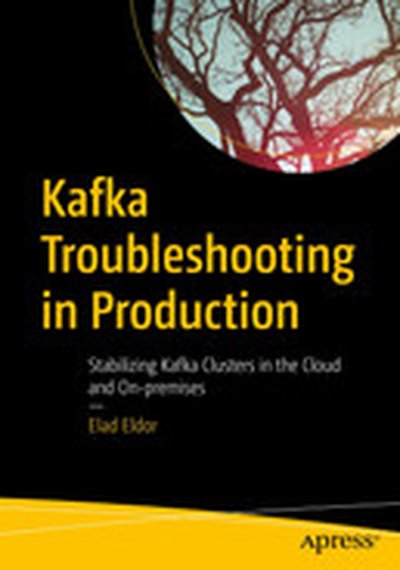
This book provides Kafka administrators, site reliability engineers, and DataOps and DevOps practitioners with a list of real production issues that can occur in Kafka clusters and how to solve them. The production issues covered are assembled into a comprehensive troubleshooting guide for those engineers who are responsible for the stability and performance of Kafka clusters in production, whether those clusters are deployed in the cloud or on-premises. This book teaches you how to detect and troubleshoot the issues, and eventually how to prevent them. Kafka stability is hard to achieve, especially in high throughput environments, and the purpose of this book is not only to make troubleshooting easier, but also to prevent production issues from occurring in the first place. The guidance in this book is drawn from the author's years of experience in helping clients and internal customers diagnose and resolve knotty production problems and stabilize their Kafka environments. The book is organized into recipe-style troubleshooting checklists that field engineers can easily follow when under pressure to fix an unstable cluster. This is the book you will want by your side when the stakes are high, and your job is on the line. What You Will Learn Monitor and resolve production issues in your Kafka clusters Provision Kafka clusters with the lowest costs and still handle the required loads Perform root cause analyses of issues affecting your Kafka clusters Know the ways in which your Kafka cluster can affect its consumers and producers Prevent or minimize data loss and delays in data streaming Forestall production issues through an understanding of common failure points Create checklists for troubleshooting your Kafka clusters when problems occur Who This Book Is For Site reliability engineers tasked with maintaining stability of Kafka clusters, Kafka administrators who troubleshoot production issues around Kafka, DevOps and DataOps experts who are involved with provisioning Kafka (whether on-premises or in the cloud), developers of Kafka consumers and producers who wish to learn more about Kafka
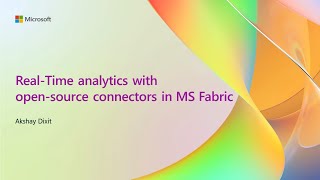
This session focuses on the use of open-source connectors to enable real-time analytics in Microsoft Fabric and will cover the use of connectors such as Apache Kafka, Apache Flink, Apache Spark, Open Telemetry, Logstash etc. to ingest and process data in real-time. Attendees will learn how to analyze data ingested via open-source connectors to generate insights.
𝗦𝗽𝗲𝗮𝗸𝗲𝗿𝘀: * Akshay Dixit
𝗦𝗲𝘀𝘀𝗶𝗼𝗻 𝗜𝗻𝗳𝗼𝗿𝗺𝗮𝘁𝗶𝗼𝗻: This video is one of many sessions delivered for the Microsoft Ignite 2023 event. View sessions on-demand and learn more about Microsoft Ignite at https://ignite.microsoft.com
OD46 | English (US) | Data
MSIgnite
Summary
Building streaming applications has gotten substantially easier over the past several years. Despite this, it is still operationally challenging to deploy and maintain your own stream processing infrastructure. Decodable was built with a mission of eliminating all of the painful aspects of developing and deploying stream processing systems for engineering teams. In this episode Eric Sammer discusses why more companies are including real-time capabilities in their products and the ways that Decodable makes it faster and easier.
Announcements
Hello and welcome to the Data Engineering Podcast, the show about modern data management Introducing RudderStack Profiles. RudderStack Profiles takes the SaaS guesswork and SQL grunt work out of building complete customer profiles so you can quickly ship actionable, enriched data to every downstream team. You specify the customer traits, then Profiles runs the joins and computations for you to create complete customer profiles. Get all of the details and try the new product today at dataengineeringpodcast.com/rudderstack This episode is brought to you by Datafold – a testing automation platform for data engineers that finds data quality issues before the code and data are deployed to production. Datafold leverages data-diffing to compare production and development environments and column-level lineage to show you the exact impact of every code change on data, metrics, and BI tools, keeping your team productive and stakeholders happy. Datafold integrates with dbt, the modern data stack, and seamlessly plugs in your data CI for team-wide and automated testing. If you are migrating to a modern data stack, Datafold can also help you automate data and code validation to speed up the migration. Learn more about Datafold by visiting dataengineeringpodcast.com/datafold You shouldn't have to throw away the database to build with fast-changing data. You should be able to keep the familiarity of SQL and the proven architecture of cloud warehouses, but swap the decades-old batch computation model for an efficient incremental engine to get complex queries that are always up-to-date. With Materialize, you can! It’s the only true SQL streaming database built from the ground up to meet the needs of modern data products. Whether it’s real-time dashboarding and analytics, personalization and segmentation or automation and alerting, Materialize gives you the ability to work with fresh, correct, and scalable results — all in a familiar SQL interface. Go to dataengineeringpodcast.com/materialize today to get 2 weeks free! As more people start using AI for projects, two things are clear: It’s a rapidly advancing field, but it’s tough to navigate. How can you get the best results for your use case? Instead of being subjected to a bunch of buzzword bingo, hear directly from pioneers in the developer and data science space on how they use graph tech to build AI-powered apps. . Attend the dev and ML talks at NODES 2023, a free online conference on October 26 featuring some of the brightest minds in tech. Check out the agenda and register today at Neo4j.com/NODES. Your host is Tobias Macey and today I'm interviewing Eric Sammer about starting your stream processing journey with Decodable
Interview
Introduction How did you get involved in the area of data management? Can you describe what Decodable is and the story behind it?
What are the notable changes to the Decodable platform since we last spoke? (October 2021) What are the industry shifts that have influenced the product direction?
What are the problems that customers are trying to solve when they come to Decodable? When you launched your focus was on SQL transformations of streaming data. What was the process for adding full Java support in addition to SQL? What are the developer experience challenges that are particular to working with streaming data?
How have you worked to address that in the Decodable platform and interfaces?
As you evolve the technical and product direction, what is your heuristic for balancing the unification of interfaces and system integration against the ability to swap different components or interfaces as new technologies are introduced? What are the most interesting, innovative, or unexpected ways that you have seen Decodable used? What are the most interesting, unexpected, or challenging lessons that you have learned while working on Decodable? When is Decodable the wrong choice? What do you have planned for the future of Decodable?
Contact Info
esammer on GitHub LinkedIn
Parting Question
From your perspective, what is the biggest gap in the tooling or technology for data management today?
Closing Announcements
Thank you for listening! Don't forget to check out our other shows. Podcast.init covers the Python language, its community, and the innovative ways it is being used. The Machine Learning Podcast helps you go from idea to production with machine learning. Visit the site to subscribe to the show, sign up for the mailing list, and read the show notes. If you've learned something or tried out a project from the show then tell us about it! Email [email protected]) with your story. To help other people find the show please leave a review on Apple Podcasts and tell your friends and co-workers
Links
Decodable
Podcast Episode
Understanding the Apache Flink Journey Flink
Podcast Episode
Debezium
Podcast Episode
Kafka Redpanda
Podcast Episode
Kinesis PostgreSQL
Podcast Episode
Snowflake
Podcast Episode
Databricks Startree Pinot
Podcast Episode
Rockset
Podcast Episode
Druid InfluxDB Samza Storm Pulsar
Podcast Episode
ksqlDB
Podcast Episode
dbt GitHub Actions Airbyte Singer Splunk Outbox Pattern
The intro and outro music is from The Hug by The Freak Fandango Orchestra / CC BY-SA
Sponsored By:
Neo4J: 
NODES 2023 is a free online conference focused on graph-driven innovations with content for all skill levels. Its 24 hours are packed with 90 interactive technical sessions from top developers and data scientists across the world covering a broad range of topics and use cases. The event tracks: - Intelligent Applications: APIs, Libraries, and Frameworks – Tools and best practices for creating graph-powered applications and APIs with any software stack and programming language, including Java, Python, and JavaScript - Machine Learning and AI – How graph technology provides context for your data and enhances the accuracy of your AI and ML projects (e.g.: graph neural networks, responsible AI) - Visualization: Tools, Techniques, and Best Practices – Techniques and tools for exploring hidden and unknown patterns in your data and presenting complex relationships (knowledge graphs, ethical data practices, and data representation)
Don’t miss your chance to hear about the latest graph-powered implementations and best practices for free on October 26 at NODES 2023. Go to Neo4j.com/NODES today to see the full agenda and register!Rudderstack: 
Introducing RudderStack Profiles. RudderStack Profiles takes the SaaS guesswork and SQL grunt work out of building complete customer profiles so you can quickly ship actionable, enriched data to every downstream team. You specify the customer traits, then Profiles runs the joins and computations for you to create complete customer profiles. Get all of the details and try the new product today at dataengineeringpodcast.com/rudderstackMaterialize: 
You shouldn't have to throw away the database to build with fast-changing data. Keep the familiar SQL, keep the proven architecture of cloud warehouses, but swap the decades-old batch computation model for an efficient incremental engine to get complex queries that are always up-to-date.
That is Materialize, the only true SQL streaming database built from the ground up to meet the needs of modern data products: Fresh, Correct, Scalable — all in a familiar SQL UI. Built on Timely Dataflow and Differential Dataflow, open source frameworks created by cofounder Frank McSherry at Microsoft Research, Materialize is trusted by data and engineering teams at Ramp, Pluralsight, Onward and more to build real-time data products without the cost, complexity, and development time of stream processing.
Go to materialize.com today and get 2 weeks free!Datafold: 
This episode is brought to you by Datafold – a testing automation platform for data engineers that finds data quality issues before the code and data are deployed to production. Datafold leverages data-diffing to compare…
Que ce soit pour vos besoins retail, e-commerce ou même gaming, il n’a jamais été aussi facile de pousser vos données “temps réels” dans votre Data Warehouse. Nous allons, en live coding et à l’aide de la plateforme Aiven, monter une stack de data streaming Open Source en moins de 30 minutes avec la gestion des logs et du monitoring ainsi que ses connecteurs vers les services Google.
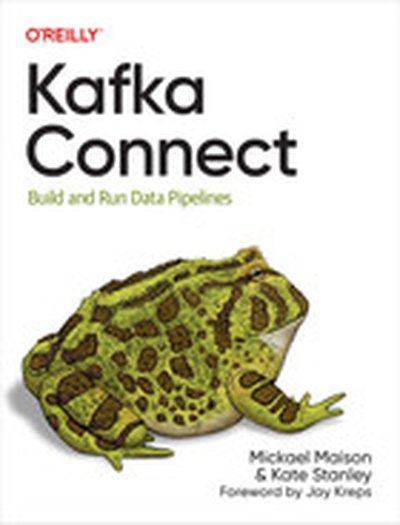
Used by more than 80% of Fortune 100 companies, Apache Kafka has become the de facto event streaming platform. Kafka Connect is a key component of Kafka that lets you flow data between your existing systems and Kafka to process data in real time. With this practical guide, authors Mickael Maison and Kate Stanley show data engineers, site reliability engineers, and application developers how to build data pipelines between Kafka clusters and a variety of data sources and sinks. Kafka Connect allows you to quickly adopt Kafka by tapping into existing data and enabling many advanced use cases. No matter where you are in your event streaming journey, Kafka Connect is the ideal tool for building a modern data pipeline. Learn Kafka Connect's capabilities, main concepts, and terminology Design data and event streaming pipelines that use Kafka Connect Configure and operate Kafka Connect environments at scale Deploy secured and highly available Kafka Connect clusters Build sink and source connectors and single message transforms and converters
Gain deep insight into real-time analytics, including the features of these systems and the problems they solve. With this practical book, data engineers at organizations that use event-processing systems such as Kafka, Google Pub/Sub, and AWS Kinesis will learn how to analyze data streams in real time. The faster you derive insights, the quicker you can spot changes in your business and act accordingly. Author Mark Needham from StarTree provides an overview of the real-time analytics space and an understanding of what goes into building real-time applications. The book's second part offers a series of hands-on tutorials that show you how to combine multiple software products to build real-time analytics applications for an imaginary pizza delivery service. You will: Learn common architectures for real-time analytics Discover how event processing differs from real-time analytics Ingest event data from Apache Kafka into Apache Pinot Combine event streams with OLTP data using Debezium and Kafka Streams Write real-time queries against event data stored in Apache Pinot Build a real-time dashboard and order tracking app Learn how Uber, Stripe, and Just Eat use real-time analytics
From the printing press to the robotic assembly line, each advancement in automation has improved our quality of life and freed up employees to do higher value work. The current generation of automation leverages AI to perform activities that can’t be performed at human scale, such as helping customer service calculate in real time the probability of customer churn or recommending a way to optimize AWS resources for performance and cost. The new generation of AI-driven automation will empower business teams to better engage customers and employees, as well as to optimize cost across the entire hybrid cloud environment. Join Madhu Kochar, VP of Product Development, to learn how breakthrough automation technologies leverage conversational AI, Kafka event streams, and AI-driven optimization to meet these challenges and empower the next generation of business and IT.
In this session, we will explore the stream processing capabilities for Kafka and compare the three popular options: Kafka Streams, ksqlDB, and Apache Flink®. We will dive into the strengths and limitations of each technology, and compare them based on their ease of use, performance, scalability, and flexibility. By the end of the session, attendees will have a better understanding of the different options available for stream processing with Kafka, and which technology might be the best fit for their specific use case. This session is ideal for developers, data engineers, and architects who want to leverage the power of Kafka for real-time data processing.
Bio:
Before Jan Svoboda started his Apache Kafka journey at Confluent, he worked as an Advisory Platform Architect at Pivotal and DevOps Solutions Architect at IBM, among others. Jan joined Confluent in April 2020 as a Solutions Engineer, establishing microservices development as his favourite topic. Jan holds degrees in Management of Information Systems from UNYP and Computer Science from UCF.
Salomon will showcase our open-source approach helping data engineers to define complex Kafka pipelines consisting of multiple interconnected Kafka Streams applications, Kafka Producers/Consumers, and Kafka Connectors in a straightforward manner. Our ready-to-use approach provides automated lifecycle management of Kafka pipelines on Kubernetes, i.e., handling deployment, update, destroy, reset, and clean-up transparently. In addition, we demonstrate how this approach provides a comprehensible view of all Kafka pipelines and their metrics.
Salomon will showcase our open-source approach helping data engineers to define complex Kafka pipelines consisting of multiple interconnected Kafka Streams applications, Kafka Producers/Consumers, and Kafka Connectors in a straightforward manner. Our ready-to-use approach provides automated lifecycle management of Kafka pipelines on Kubernetes, i.e., handling deployment, update, destroy, reset, and clean-up transparently. In addition, we demonstrate how this approach provides a comprehensible view of all Kafka pipelines and their metrics.