talk-data.com talk-data.com

Topic

Kafka

Apache Kafka

distributed_streaming message_queue event_streaming

240

tagged

Activity Trend

20 peak/qtr
2020-Q1 2026-Q1

Activities

240 activities · Newest first

Practical Pipelines: A Houseplant Alerting System with ksqlDB

Taking care of houseplants can be difficult; in many cases, over-watering and under-watering can have the same symptoms. Remove the guesswork involved in caring for your houseplants while also gaining valuable experience in building a practical, event-driven pipeline in your own home! This session explores the process of building a houseplant monitoring and alerting system using a Raspberry Pi and Apache Kafka. Moisture and temperature readings are captured from sensors in the soil and streamed into Kafka. From there, we use stream processing to transform the data, create a summary view of the current state, and drive real-time push alerts through Telegram.

In this session, we will talk about how to ingest the data followed by the tools, including ksqlDB and Kafka Connect, that help transform the raw data into useful information, and finally, You'll be shown how to use Kafka Producers and Consumers to make the entire application more interactive. By the end of this session, you’ll have everything you need to start building practical streaming pipelines in your own home. Roll up your sleeves – let’s get our hands dirty!

Talk by: Danica Fine

Here’s more to explore: Big Book of Data Engineering: 2nd Edition: https://dbricks.co/3XpPgNV The Data Team's Guide to the Databricks Lakehouse Platform: https://dbricks.co/46nuDpI

Connect with us: Website: https://databricks.com Twitter: https://twitter.com/databricks LinkedIn: https://www.linkedin.com/company/databricks Instagram: https://www.instagram.com/databricksinc Facebook: https://www.facebook.com/databricksinc

Optimizing Batch and Streaming Aggregations

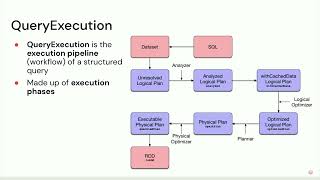
A client recently asked to optimize their batch and streaming workloads. It happened to be aggregations using DataFrame.groupby operation with a custom Scala UDAF over a data stream from Kafka. Just a single simple-looking request that turned itself up into a a-few-month-long hunt to find a more performant query execution planning than ObjectHashAggregateExec that kept falling back to a sort-based aggregation (i.e., the worst possible aggregation runtime performance). It quickly taught us that an aggregation using a custom Scala UDAF cannot be planned other than ObjectHashAggregateExec but at least tasks don't always have to fall back. And that's just batch workloads. When you throw in streaming semantics and think of the different output modes, windowing and streaming watermark optimizing aggregation can take a long time to do right.

Talk by: Jacek Laskowski

Here’s more to explore: Big Book of Data Engineering: 2nd Edition: https://dbricks.co/3XpPgNV The Data Team's Guide to the Databricks Lakehouse Platform: https://dbricks.co/46nuDpI

Connect with us: Website: https://databricks.com Twitter: https://twitter.com/databricks LinkedIn: https://www.linkedin.com/company/databricks Instagram: https://www.instagram.com/databricksinc Facebook: https://www.facebook.com/databricksinc

How Coinbase Built and Optimized SOON, a Streaming Ingestion Framework

Data with low latency is important for real-time incident analysis and metrics. Though we have up-to-date data in OLTP databases, they cannot support those scenarios. Data need to be replicated to a data warehouse to serve queries using GroupBy and Join across multiple tables from different systems. At Coinbase, we designed SOON (Spark cOntinuOus iNgestion) based on Kafka, Kafka Connect, and Apache Spark™ as an incremental table replication solution to replicate tables of any size from any database to Delta Lake in a timely manner. It also supports Kafka events ingestion naturally.

SOON incrementally ingests Kafka events as appends, updates, and deletes to an existing table on Delta Lake. The events are grouped into two categories: CDC (change data capture) events generated by Kafka Connect source connectors, and non-CDC events by the frontend or backend services. Both types can be appended or merged into the Delta Lake. Non-CDC events can be in any format, but CDC events must be in the standard SOON CDC schema. We implemented Kafka Connect SMTs to transform raw CDC events into this standardized format. SOON unifies all streaming ingestion scenarios such that users only need to learn one onboarding experience and the team only needs to maintain one framework.

We care about the ingestion performance. The biggest append-only table onboarded has ingress traffic at hundreds of thousands events per second; the biggest CDC-merge table onboarded has a snapshot size of a few TBs and CDC update traffic at hundreds of thousands events per second. A lot of innovative ideas are incorporated in SOON to improve its performance, such as min-max range merge optimization, KMeans merge optimization, no-update merge for deduplication, generated columns as partitions, etc.

Talk by: Chen Guo

Here’s more to explore: Big Book of Data Engineering: 2nd Edition: https://dbricks.co/3XpPgNV The Data Team's Guide to the Databricks Lakehouse Platform: https://dbricks.co/46nuDpI

Connect with us: Website: https://databricks.com Twitter: https://twitter.com/databricks LinkedIn: https://www.linkedin.com/company/databricks Instagram: https://www.instagram.com/databricksinc Facebook: https://www.facebook.com/databricksinc

Real-Time Reporting and Analytics for Construction Data Powered by Delta Lake and DBSQL

Procore is a construction project management software that helps construction professionals efficiently manage their projects and collaborate with their teams. Our mission is to connect everyone in construction on a global platform.

Procore is the system of record for all construction projects. Our customers need to access the data in near real-time for construction insights. Enhanced reporting is a self-service operational reporting module that allows quick data access with consistency to thousands of tables and reports.

Procore data platform rebuilt the module (originally built on the relational database) using Databricks and Delta lake. We used Apache Spark™ streaming to maintain the consistent state on the ingestion side from Kafka and plan to leverage the fully capable functionalities of DBSQL using the serverless SQL warehouse to read the medallion models (built via DBT) in Delta Lake. In addition, the Unity Catalog and the Delta share features helped us share the data across regions seamlessly. This design enabled us to improve the p95 and p99 read time by xx% (which were initially timing out).

Attend this session to hear about the learnings and experience of building a Data Lakehouse architecture.

Talk by: Jay Yang and Hari Rajaram

Connect with us: Website: https://databricks.com Twitter: https://twitter.com/databricks LinkedIn: https://www.linkedin.com/company/databricks Instagram: https://www.instagram.com/databricksinc Facebook: https://www.facebook.com/databricksinc

Taking Your Cloud Vendor to the Next Level: Solving Complex Challenges with Azure Databricks

Akamai's content delivery network (CDN) processes about 30% of the internet's daily traffic, resulting in a massive amount of data that presents engineering challenges, both internally and with cloud vendors. In this session, we will discuss the barriers faced while building a data infrastructure on Azure, Databricks, and Kafka to meet strict SLAs, hitting the limits of some of our cloud vendors’ services. We will describe the iterative process of re-architecting a massive scale data platform using the aforementioned technologies.

We will also delve into how today, Akamai is able to quickly ingest and make available to customers terabytes of data, as well as efficiently query Petabytes of data and return results within 10 seconds for most queries. This discussion will provide valuable insights for attendees and organizations seeking to effectively process and analyze large amounts of data.

High Volume Intelligent Streaming with Sub-Minute SLA for Near Real-Time Data Replication

Attend this session and learn about an innovative solution built around Databricks structured streaming and Delta Live Tables (DLT) to replicate thousands of tables from on-premises to cloud-based relational databases. A highly desirable pattern for many enterprises across the industries to replicate on-premises data to cloud-based data lakes and data stores in near real time for consumption.

This powerful architecture can offload legacy platform workloads and accelerate cloud journey. The intelligent cost-efficient solution leverages thread-pools, multi-task jobs, Kafka, Apache Spark™ structured streaming and DLT. This session will go into detail about problems, solutions, lessons-learned and best practices.

Talk by: Suneel Konidala and Murali Madireddi

Connect with us: Website: https://databricks.com Twitter: https://twitter.com/databricks LinkedIn: https://www.linkedin.com/company/databricks Instagram: https://www.instagram.com/databricksinc Facebook: https://www.facebook.com/databricksinc

Taking Your Cloud Vendor to the Next Level: Solving Complex Challenges with Azure Databricks

Akamai's content delivery network (CDN) processes about 30% of the internet's daily traffic, resulting in a massive amount of data that presents engineering challenges, both internally and with cloud vendors. In this session, we will discuss the barriers faced while building a data infrastructure on Azure, Databricks, and Kafka to meet strict SLAs, hitting the limits of some of our cloud vendors’ services. We will describe the iterative process of re-architecting a massive scale data platform using the aforementioned technologies.

We will also delve into how today, Akamai is able to quickly ingest and make available to customers terabytes of data, as well as efficiently query Petabytes of data and return results within 10 seconds for most queries. This discussion will provide valuable insights for attendees and organizations seeking to effectively process and analyze large amounts of data.

Talk by: Tomer Patel and Itai Yaffe

Connect with us: Website: https://databricks.com Twitter: https://twitter.com/databricks LinkedIn: https://www.linkedin.com/company/databricks Instagram: https://www.instagram.com/databricksinc Facebook: https://www.facebook.com/databricksinc

Apache Kafka is a distributed system. At the heart of Apache Kafka is a set of brokers that contain topics. Topics are split into partitions. Dividing topics into smaller pieces allows us to work with data in parallel and achieve higher data throughput.\n\nSuch parallelization is the key to a performant cluster, however it comes with a price. First, reading from multiple partitions will eventually mess up the order of records, meaning that the resulting order will be different from when the data was pushed into the cluster. Another big challenge is uneven distribution of data across partitions.\n\nOverloaded partitions present a dangerous issue for performance of all involved parties, but especially for brokers and consumers. Therefore, when building our product architecture we should carefully weigh up how many partitions we need, how to ensure proper message ordering, how to balance records across partitions, not forgetting about data load distribution over time. And do all of this while still maintaining good performance of the cluster.\n\nIf you're fresh to Apache Kafka, or looking for good practices to design your partitions and avoid common pitfalls, you'll find this session useful!

We talked about;

Antonis' background The pros and cons of working for a startup Useful skills for working at a startup and the Lean way to work How Antonis joined the DataTalks.Club community Suggestions for students joining the MLOps course Antonis contributing to Evidently AI How Antonis started freelancing Getting your first clients on Upwork Pricing your work as a freelancer The process after getting approved by a client Wearing many hats as a freelancer and while working at a startup Other suggestions for getting clients as a freelancer Antonis' thoughts on the Data Engineering course Antonis' resource recommendations

Links:

Lean Startup by Eric Ries: https://theleanstartup.com/ Lean Analytics: https://leananalyticsbook.com/ Designing Machine Learning Systems by Chip Huyen: https://www.oreilly.com/library/view/designing-machine-learning/9781098107956/ Kafka Streaming with python by Khris Jenkins tutorial video: https://youtu.be/jItIQ-UvFI4

Free MLOps course: https://github.com/DataTalksClub/mlops-zoomcamp Join DataTalks.Club: https://datatalks.club/slack.html Our events: https://datatalks.club/events.html

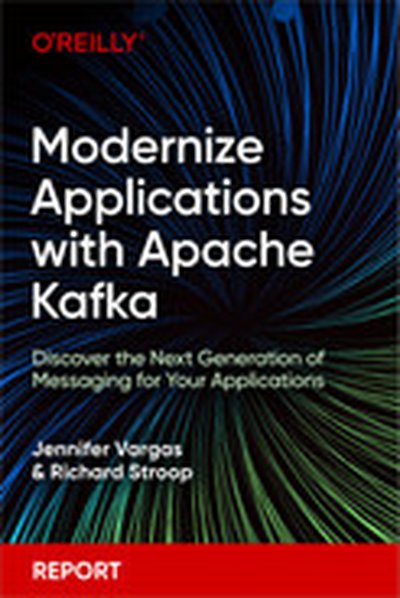
Modernize Applications with Apache Kafka

Application modernization has become increasingly important as older systems struggle to keep up with today's requirements. When you migrate legacy monolithic applications to microservices, easier maintenance and optimized resource utilization generally follow. But new challenges arise around communication within services and between applications. You can overcome many of these issues with the help of modern messaging technologies such as Apache Kafka. In this report, Jennifer Vargas and Richard Stroop from Red Hat explain how IT leaders and enterprise architects can use Kafka for microservices communication and then off-load operational needs through the use of Kubernetes and managed services. You'll also explore application modernization techniques that don't require you to break down your monolithic application. This report helps you: Understand the importance of migrating your monolithic applications to microservices Examine the various challenges you may face during the modernization process Explore application modernization techniques and learn the benefits of using Apache Kafka during the development process Learn how Apache Kafka can support business outcomes Understand how Kubernetes can help you overcome any difficulties you may encounter when using Kafka for application development

CDC Stream Processing with Apache Flink

ABOUT THE TALK: In this talk, we highlight what it means for Apache Flink to be a general data processor that acts as a data integration hub. Looking under the hood, we demonstrate Flink's SQL engine as a changelog processor that ships with an ecosystem tailored to processing CDC data and maintaining materialized views. We will discuss the semantics of different data sources and how to perform joins or stream enrichment between them. This talk illustrates how Flink can be used with systems such as Kafka (for upsert logging), Debezium, JDBC, and others.

ABOUT THE SPEAKER: Timo Walther is a long-term member of the management committee and among the top committers in the Apache Flink project. Timo worked as a software engineer at Data Artisans and lead of the SQL team at Ververica. He was a Co-Founder of Immerok which was acquired by Confluent in 2023. In Flink, he is working on various topics in the Table & SQL ecosystem to make stream processing accessible for everyone.

ABOUT DATA COUNCIL: Data Council (https://www.datacouncil.ai/) is a community and conference series that provides data professionals with the learning and networking opportunities they need to grow their careers.

Make sure to subscribe to our channel for the most up-to-date talks from technical professionals on data related topics including data infrastructure, data engineering, ML systems, analytics and AI from top startups and tech companies.

FOLLOW DATA COUNCIL: Twitter: https://twitter.com/DataCouncilAI LinkedIn: https://www.linkedin.com/company/datacouncil-ai/

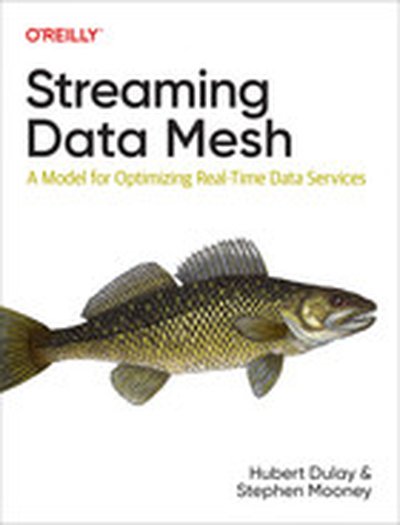
Streaming Data Mesh

Data lakes and warehouses have become increasingly fragile, costly, and difficult to maintain as data gets bigger and moves faster. Data meshes can help your organization decentralize data, giving ownership back to the engineers who produced it. This book provides a concise yet comprehensive overview of data mesh patterns for streaming and real-time data services. Authors Hubert Dulay and Stephen Mooney examine the vast differences between streaming and batch data meshes. Data engineers, architects, data product owners, and those in DevOps and MLOps roles will learn steps for implementing a streaming data mesh, from defining a data domain to building a good data product. Through the course of the book, you'll create a complete self-service data platform and devise a data governance system that enables your mesh to work seamlessly. With this book, you will: Design a streaming data mesh using Kafka Learn how to identify a domain Build your first data product using self-service tools Apply data governance to the data products you create Learn the differences between synchronous and asynchronous data services Implement self-services that support decentralized data

Summary

Real-time capabilities have quickly become an expectation for consumers. The complexity of providing those capabilities is still high, however, making it more difficult for small teams to compete. Meroxa was created to enable teams of all sizes to deliver real-time data applications. In this episode DeVaris Brown discusses the types of applications that are possible when teams don't have to manage the complex infrastructure necessary to support continuous data flows.

Announcements

Hello and welcome to the Data Engineering Podcast, the show about modern data management RudderStack helps you build a customer data platform on your warehouse or data lake. Instead of trapping data in a black box, they enable you to easily collect customer data from the entire stack and build an identity graph on your warehouse, giving you full visibility and control. Their SDKs make event streaming from any app or website easy, and their extensive library of integrations enable you to automatically send data to hundreds of downstream tools. Sign up free at dataengineeringpodcast.com/rudderstack Your host is Tobias Macey and today I'm interviewing DeVaris Brown about the impact of real-time data on business opportunities and risk profiles

Interview

Introduction How did you get involved in the area of data management? Can you describe what Meroxa is and the story behind it?

How have the focus and goals of the platform and company evolved over the past 2 years?

Who are the target customers for Meroxa?

What problems are they trying to solve when they come to your platform?

Applications powered by real-time data were the exclusive domain of large and/or sophisticated tech companies for several years due to the inherent complexities involved. What are the shifts that have made them more accessible to a wider variety of teams?

What are some of the remaining blockers for teams who want to start using real-time data?

With the democratization of real-time data, what are the new categories of products and applications that are being unlocked?

How are organizations thinking about the potential value that those types of apps/services can provide?

With data flowing constantly, there are new challenges around oversight and accuracy. How does real-time data change the risk profile for applications that are consuming it?

What are some of the technical controls that are available for organizations that are risk-averse?

What skills do developers need to be able to effectively design, develop, and deploy real-time data applications?

How does this differ when talking about internal vs. consumer/end-user facing applications?

What are the most interesting, innovative, or unexpected ways that you have seen Meroxa used? What are the most interesting, unexpected, or challenging lessons that you have learned while working on Meroxa? When is Meroxa the wrong choice? What do you have planned for the future of Meroxa?

Contact Info

LinkedIn @devarispbrown on Twitter

Parting Question

From your perspective, what is the biggest gap in the tooling or technology for data management today?

Closing Announcements

Thank you for listening! Don't forget to check out our other shows. Podcast.init covers the Python language, its community, and the innovative ways it is being used. The Machine Learning Podcast helps you go from idea to production with machine learning. Visit the site to subscribe to the show, sign up for the mailing list, and read the show notes. If you've learned something or tried out a project from the show then tell us about it! Email [email protected]) with your story. To help other people find the show please leave a review on Apple Podcasts and tell your friends and co-workers

Links

Meroxa

Podcast Episode

Kafka Kafka Connect Conduit - golang Kafka connect replacement Pulsar Redpanda Flink Beam Clickhouse Druid Pinot

The intro and outro music is from The Hug by The Freak Fandango Orchestra / CC

FastKafka is a Python library that makes it easy to connect to Apache Kafka queues and send and receive messages. In this talk, we will introduce the library and its features for working with Kafka queues in Python. We will discuss the motivations for creating the library, how it compares to other Kafka client libraries, and how to use its decorators to define functions for consuming and producing messages. We will also demonstrate how to use these functions to build a simple application that sends and receives messages from the queue. This talk will be of interest to Python developers looking for an easy-to-use solution for working with Kafka.

The documentation of the library can be found here: https://fastkafka.airt.ai/

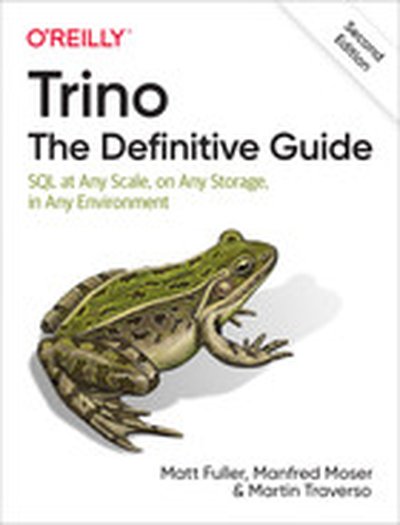
Trino: The Definitive Guide, 2nd Edition

Perform fast interactive analytics against different data sources using the Trino high-performance distributed SQL query engine. In the second edition of this practical guide, you'll learn how to conduct analytics on data where it lives, whether it's a data lake using Hive, a modern lakehouse with Iceberg or Delta Lake, a different system like Cassandra, Kafka, or SingleStore, or a relational database like PostgreSQL or Oracle. Analysts, software engineers, and production engineers learn how to manage, use, and even develop with Trino and make it a critical part of their data platform. Authors Matt Fuller, Manfred Moser, and Martin Traverso show you how a single Trino query can combine data from multiple sources to allow for analytics across your entire organization. Explore Trino's use cases, and learn about tools that help you connect to Trino for querying and processing huge amounts of data Learn Trino's internal workings, including how to connect to and query data sources with support for SQL statements, operators, functions, and more Deploy and secure Trino at scale, monitor workloads, tune queries, and connect more applications Learn how other organizations apply Trino successfully

Connecting the Dots with DataHub: Lakehouse and Beyond

You’ve successfully built your data lakehouse. Congratulations! But what happens when your operational data stores, streaming systems like Apache Kafka or data ingestion systems produce bad data into the lakehouse? Can you be proactive when it comes to preventing bad data from affecting your business? How can you take advantage of automation to ensure that raw data assets become well maintained data products (clear ownership, documentation and sensitivity classification) without requiring people to do redundant work across operational, ingestion and lakehouse systems? How do you get live and historical visibility into your entire data ecosystem (schemas, pipelines, data lineage, models, features and dashboards) within and across your production services, ingestion pipelines and data lakehouse? Data engineers struggle with data quality and data governance issues constantly interrupting their day and limiting their upside impact on the business.

In this talk, we will share how data engineers from our 3K+ strong DataHub community are using DataHub to track lineage, understand data quality, and prevent failures from impacting their important dashboards, ML models and features. The talk will include details of how DataHub extracts lineage automatically from Spark, schema and statistics from Delta Lake and shift-left strategies for developer-led governance.

Connect with us: Website: https://databricks.com Facebook: https://www.facebook.com/databricksinc Twitter: https://twitter.com/databricks LinkedIn: https://www.linkedin.com/company/data... Instagram: https://www.instagram.com/databricksinc/

Improving Apache Spark Application Processing Time by Configurations, Code Optimizations, etc.

In this session, we'll go over several use-cases and describe the process of improving our spark structured streaming application micro-batch time from ~55 to ~30 seconds in several steps.

Our app is processing ~ 700 MB/s of compressed data, it has very strict KPIs, and it is using several technologies and frameworks such as: Spark 3.1, Kafka, Azure Blob Storage, AKS and Java 11.

We'll share our work and experience in those fields, and go over a few tips to create better Spark structured streaming applications.

The main areas that will be discussed are: Spark Configuration changes, code optimizations and the implementation of the Spark custom data source.

Connect with us: Website: https://databricks.com Facebook: https://www.facebook.com/databricksinc Twitter: https://twitter.com/databricks LinkedIn: https://www.linkedin.com/company/data... Instagram: https://www.instagram.com/databricksinc/

Near Real-Time Analytics with Event Streaming, Live Tables, and Delta Sharing

Microservices is an increasingly popular architecture much loved by application teams, for it allows services to be developed and scaled independently. Data teams, though, often need a centralized repository where all data from different services come together to join and aggregate. The data platform can serve as a single source of company facts, enable near real time analytics, and secure sharing of massive data sets across clouds.

A viable microservices ingestion pattern is Change Data Capture, using AWS Database Migration Services or Debezium. CDC proves to be a scalable solution ideal for stable platforms, but it has several challenges for evolving services: Frequent schema changes, complex, unsupported DDL during migration, and automated deployments are but a few. An event streaming architecture can address these challenges.

Confluent, for example, provides a schema registry service where all services can register their event schemas. Schema registration helps with verifying that the events are being published based on the agreed contracts between data producers and consumers. It also provides a separation between internal service logic and the data consumed downstream. The services write their events to Kafka using the registered schemas with a specific topic based on the type of the event.

Data teams can leverage Spark jobs to ingest Kafka topics into Bronze tables in the Delta Lake. On ingestion, the registered schema from schema registry is used to validate the schema based on the provided version. A merge operation is sometimes called to translate events into final states of the records per business requirements.

Data teams can take advantage of Delta Live Tables on streaming datasets to produce Silver and Gold tables in near real time. Each input data source also has a set of expectations to ensure data quality and business rules. The pipeline allows Engineering and Analytics to collaborate by mixing Python and SQL. The refined data sets are then fed into Auto ML for discovery and baseline modeling.

To expose Gold tables to more consumers, especially non spark users across clouds, data teams can implement Delta Sharing. Recipients can accesses Silver tables from a different cloud and build their own analytics data sets. Analytics teams can also access Gold tables via pandas Delta Sharing client and BI tools.

Connect with us: Website: https://databricks.com Facebook: https://www.facebook.com/databricksinc Twitter: https://twitter.com/databricks LinkedIn: https://www.linkedin.com/company/data... Instagram: https://www.instagram.com/databricksinc/

Optimizing Speed and Scale of User-Facing Analytics Using Apache Kafka and Pinot

Apache Kafka is the de facto standard for real-time event streaming, but what do you do if you want to perform user-facing, ad-hoc, real-time analytics too? That's where Apache Pinot comes in.

Apache Pinot is a realtime distributed OLAP datastore, which is used to deliver scalable real time analytics with low latency. It can ingest data from batch data sources (S3, HDFS, Azure Data Lake, Google Cloud Storage) as well as streaming sources such as Kafka. Pinot is used extensively at LinkedIn and Uber to power many analytical applications such as Who Viewed My Profile, Ad Analytics, Talent Analytics, Uber Eats and many more serving 100k+ queries per second while ingesting 1Million+ events per second.

Apache Kafka's highly performant, distributed, fault-tolerant, real-time publish-subscribe messaging platform powers big data solutions at Airbnb, LinkedIn, MailChimp, Netflix, the New York Times, Oracle, PayPal, Pinterest, Spotify, Twitter, Uber, Wikimedia Foundation, and countless other businesses.

Come hear from Neha Power, Founding Engineer at a StarTree and PMC and committer of Apache Pinot, and Karin Wolok, Head of Developer Community at StarTree, on an introduction to both systems and a view of how they work together.

Connect with us: Website: https://databricks.com Facebook: https://www.facebook.com/databricksinc Twitter: https://twitter.com/databricks LinkedIn: https://www.linkedin.com/company/data... Instagram: https://www.instagram.com/databricksinc/

Backfill Streaming Data Pipelines in Kappa Architecture

Streaming data pipelines can fail due to various reasons. Since the source data, such as Kafka topics, often have limited retention, prolonged job failures can lead to data loss. Thus, streaming jobs need to be backfillable at all times to prevent data loss in case of failures. One solution is to increase the source's retention so that backfilling is simply replaying source streams, but extending Kafka retention is very costly for Netflix's data sizes. Another solution is to utilize source data stored in DWH, commonly known as the Lambda architecture. However, this method introduces significant code duplication, as it requires engineers to maintain a separate equivalent batch job. At Netflix, we have created the Iceberg Source Connector to provide backfilling capabilities to Flink streaming applications. It allows Flink to stream data stored in Apache Iceberg while mirroring Kafka's ordering semantics, enabling us to backfill large-scale stateful Flink pipelines at low retention cost.

Connect with us: Website: https://databricks.com Facebook: https://www.facebook.com/databricksinc Twitter: https://twitter.com/databricks LinkedIn: https://www.linkedin.com/company/data... Instagram: https://www.instagram.com/databricksinc/